
For $299 into everyday life: How Meta's new AI glasses are supposed to replace the smartphone
Xpert Pre-Release

Available in 27 languages 📢
Prefer Xpert.Digital on GoogleⓘPublished on: June 25, 2026 / Updated on: June 25, 2026 – Author: Konrad Wolfenstein
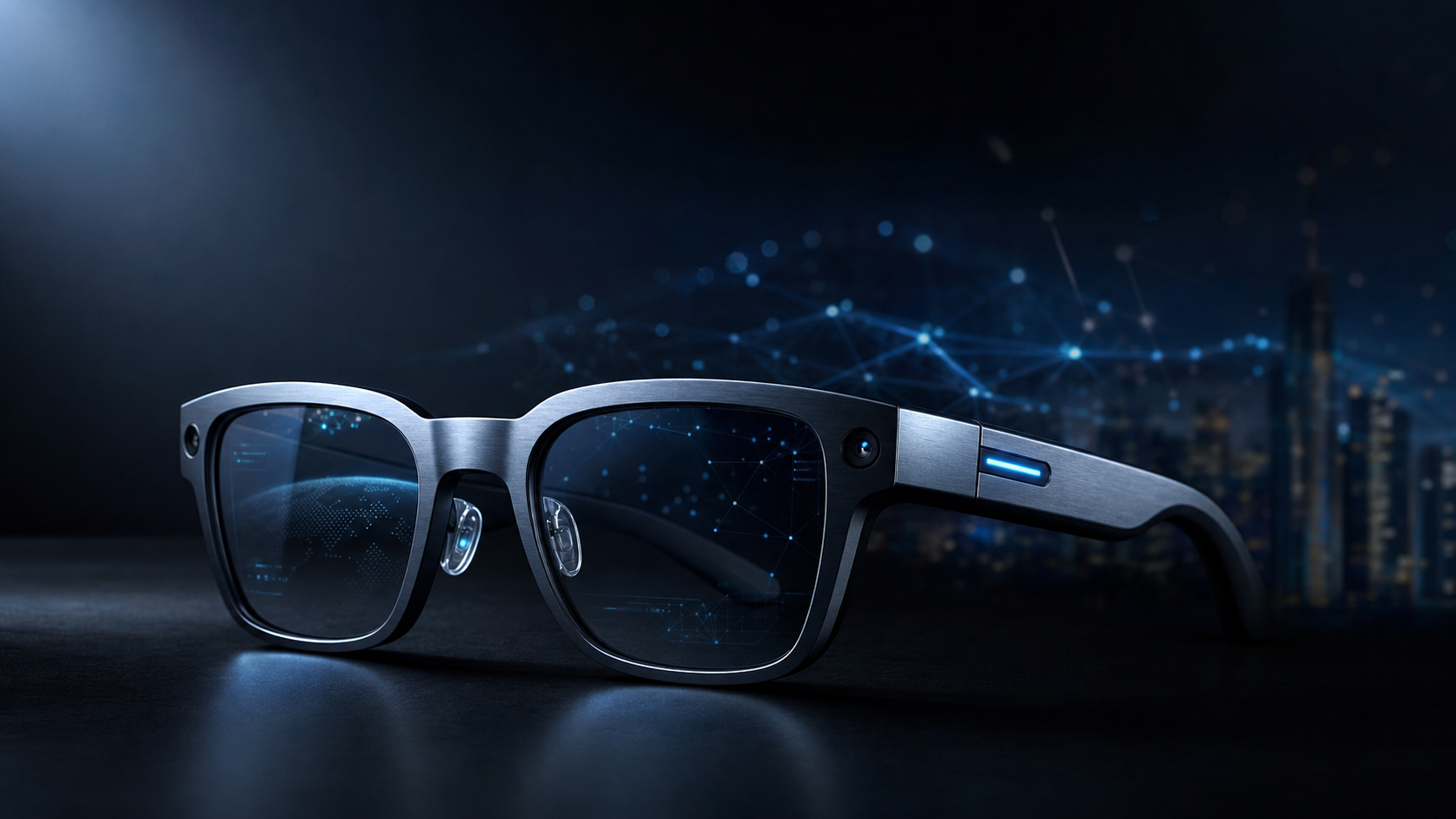
Attack on Apple and Google: This is why Meta is practically giving away its new smart glasses – Image: Xpert.Digital
Attack on Apple and Google: This is why Meta is giving away its new smart glasses almost for free
The $299 Calculation: Why Meta Is Losing Billions Trying to Win Your Face
Smart glasses for everyone: How Meta's new AI glasses will become the next tech megatrend
With its new "Meta Glasses" at the bargain price of $299, Meta is heralding the end of the classic smartphone. What at first glance appears to be a mere gadget update reveals itself upon closer inspection as Mark Zuckerberg's most aggressive move in the battle for the next major computing paradigm. Through the strategic abandonment of the prominent Ray-Ban branding, the use of the brand-new, proprietary AI model "Muse Spark," and a high-profile collaboration with fashion icon Kylie Jenner, Meta is ruthlessly targeting the mass market. But behind the enticingly low-priced hardware lies not only a gigantic financial risk for the company, but also the unwavering determination to permanently block tech giants like Apple and Google from accessing our faces. This comprehensive analysis shows why the new smart glasses are far more than a fashion accessory, how EssilorLuxottica is profiting behind the scenes as a secret winner – and why the question of data protection and social acceptance will decide the future of the entire industry.
When $299 could change the world: Meta's strategic attack on the next computing paradigm
AI glasses as a mass-market product — and why Zuckerberg's price offensive is more than just a hardware deal
On June 23, 2026, Meta Platforms and EssilorLuxottica unveiled a new line of AI glasses, simply called "Meta Glasses," starting at $299. This is no ordinary product announcement. It's a strategic move, a deliberate effort to secure market share before a new wave of competitors enters the scene. The price is exactly $80 less than the previous Ray-Ban Meta Wayfarer generation, which started at $379, and less than half the price of the Ray-Ban Display Glasses launched the previous year, which cost $800. Meta isn't simply lowering the price of a product. The company is positioning the "AI glasses" form factor in the mass market segment—a segment that has thus far generated more promise than revenue.
The new product line comprises three models: the rectangular "Adventurer," the more robust "Fury," and the oval-shaped "Starfire," created in collaboration with media personality Kylie Jenner. The Starfire edition is priced at $399, with a version featuring tinted lenses available for $479. Despite the collaboration with EssilorLuxottica—the world's largest eyewear manufacturer and parent company of Ray-Ban and Oakley—the new models, for the first time, do not bear any of the partner company's well-known brand names. This is no coincidence: Meta is deliberately building its own hardware identity, independent of external brand ecosystems.
From nerd gadget to everyday glasses: The market dynamics behind the growth
The market for AI glasses has developed over the past two years in a way that even die-hard technology optimists found faster than expected. EssilorLuxottica sold over seven million units of AI glasses in 2025—a figure that combines all models under the Ray-Ban Meta and Oakley Meta brands and more than triples the combined two million units sold in 2023 and 2024. This number is more than just a sales success: it's proof that the product has crossed the critical threshold from novelty to commonplace.
The International Data Corporation (IDC) recorded global shipments of displayless devices totaling approximately 9.6 million units for the full year 2025, with Meta holding a market share of nearly 72 percent. For 2026, IDC forecasts shipments of approximately 13.6 million units in the displayless segment alone, with a further increase to 27.3 million by 2030—an annual growth rate of almost 19 percent. Even more ambitious estimates come from Omdia, which predicts 35 million units per year by 2030 and a compound annual growth rate (CAGR) of 47 percent. ABI Research, in turn, presents figures that project the consumer market to reach 28 million units (without displays) by 2030—with a cumulative annual growth rate of 85.4 percent compared to 2024.
This wide range of forecasts is symptomatic of an emerging market: the exact trajectory is still uncertain, but the direction is clear. Crucially, this growth is not driven solely by a single manufacturer, but by a broadening societal acceptance of wearing visible, connected technology on the face—a trend that the fashion industry is significantly helping to amplify.
Fashion meets algorithm: The collaboration with Kylie Jenner as a market strategy
The collaboration with Kylie Jenner appears at first glance to be a classic celebrity marketing tool. On closer inspection, it's a precise strategic maneuver. Jenner is one of the most influential figures on Instagram—the platform Meta itself owns—and boasts over 382 million followers. With this partnership, Meta is deliberately opening up a segment that the brand has previously barely tapped: young, style-conscious female consumers in the beauty and fashion sector who aren't particularly interested in technical specifications but will pay attention to a product if it's worn by someone they follow.
The Starfire edition isn't just a design object with a logo slapped on. Jenner herself stated that she was involved in the design of the frames, the packaging, the charging case, and even the audible signal when the glasses are switched on. Particularly noteworthy is the fact that the glasses can speak in Jenner's own voice—a feature for which the influencer provided her own voice recordings, including the greeting "rise and shine" when putting on the glasses in the morning. This transforms a technical device into an emotional consumer product—and serves as a lesson in how technology companies are learning to sell not just engineering products, but objects of identity.
The strategic calculation behind this is clear: Meta used the early years of Ray-Ban Meta's success to tap into the early adopter market. Now the goal is to reach the masses. The price lowers the financial barrier to entry, the design lowers the cultural one. Those who perceive AI glasses as a fashion accessory and not as a technological eyesore are more likely to wear them daily—and daily wear is the prerequisite for genuine market penetration.
Muse Spark and the new AI foundation: Technological differentiation through proprietary models
Technically, the launch of Meta Glasses marks a significant turning point: They are the company's first AI glasses powered by Muse Spark—the first model from Meta's newly established superintelligence labs. Initially developed internally under the codename "Avocado," Muse Spark was unveiled in April 2026 and represents a fundamental strategic shift: away from the open-source approach of the Llama model family and toward a proprietary, closed model designed to directly compete with offerings from Google, OpenAI, and Anthropic.
The model excels in writing and reasoning tasks and, according to Meta's own data, is closing the gap considerably with the leading group—with the exception of programming, where it still lags behind the competition. Particularly relevant for the glasses is their multimodality: Muse Spark can analyze images, answer questions about what the camera sees, and process voice commands in real time. This transforms the AI glasses from a device equipped with a voice assistant into a true environmental intelligence platform that responds contextually to the wearer's environment.
The strategic importance of the move to proprietary AI should not be underestimated. With a closed model, Meta can completely control the user experience, avoid sharing data with external developers, and build a tighter ecosystem—similar to what Apple has done with its chips and operating system. At the same time, Meta is sending a clear signal to investors: the billions invested in its superintelligence labs are intended to produce tangible products, not just research papers.
The balance sheets of ambition: Reality Labs between loss and long-term investment
Anyone who judges Meta's smart glasses strategy without looking at the financial figures is describing a painting without seeing the canvas. The Reality Labs division—under which Meta consolidates its hardware projects, including glasses, headsets, and AR research—posted an operating loss of $19.1 billion in fiscal year 2025. That's slightly more than the $17.7 billion lost in 2024 and a dramatic increase from the $4.5 billion loss in 2019. These losses are offset by revenues of just $2.2 billion for the full year 2025, of which $955 million came in the fourth quarter.
In the January 2026 earnings call, CEO Mark Zuckerberg predicted that losses would remain at a similar level in 2026—with the hope that 2026 would represent the peak of losses and that a gradual reduction would begin in subsequent years. This statement was met with a muted response on the stock market, but it makes sense in the strategic context: Reality Labs is not an ongoing business intended to be profitable. It is a research and development infrastructure for what Zuckerberg calls the next computing paradigm—wearable, AI-powered everyday technology.
EssilorLuxottica sees things from a different perspective. For the eyewear company, AI glasses are no longer just an experimental project, but a measurable growth driver. The company achieved sales of €28.5 billion in 2025—an increase of 11.2 percent compared to the previous year, based on constant exchange rates. The remarkably strong fourth quarter, with sales growth of 18.4 percent, was largely driven by the acceleration in the AI glasses business. Analysts at Morningstar estimate that the AI glasses division accounted for approximately six to seven percent of group sales in 2025—at an average selling price of around €350 per unit. At the same time, they contributed to a margin dilution of approximately 260 basis points on gross profit—two-thirds of which was due to the structurally lower margin in the wearables segment, and one-third due to US tariffs.
Snap, Google and Apple: A market is forming, but on different frequencies
The announcement of Meta Glasses came at a time when competition in the eyewear market was intensifying at a remarkable pace. Just a week earlier, Snap had unveiled its new "Specs" for $2,195—augmented reality glasses that overlay digital content onto the wearer's real-world field of vision. The price difference between Snap's Specs and Meta's entry-level model is enormous: more than seven times the price. This difference reflects differing technological philosophies: Snap focuses on full-fledged AR with true image overlay (51-degree field of view), while Meta opts for a leaner implementation with text and AI interaction without a complex display. Snap is thus primarily targeting tech-savvy early adopters and professional users, while Meta is aiming for the general public.
Google has also become active with its Android XR platform. At Google I/O 2026 in May, Samsung, Google, the US eyewear retailer Warby Parker, and the design brand Gentle Monster jointly presented initial prototypes of AI glasses powered by Gemini AI, slated for release in select markets in fall 2026. The first models will be purely audio-based—that is, without a display—but suggest future display versions. Google is thus replicating the same two-tiered approach established by Meta, which differentiates between basic AI glasses and display-equipped glasses. The collaboration with Warby Parker draws a direct analogy to Meta's alliance with EssilorLuxottica: In both cases, the technological expertise of a platform giant is combined with the brand reach and distribution network of an established eyewear manufacturer.
Apple remains the big unknown factor. According to reports by Bloomberg reporter Mark Gurman, the iPhone maker is accelerating the development of its own AI-powered glasses—with a targeted market launch by the end of 2026, but realistically more likely in 2027. Apple is developing its own energy-efficient chips, planning multiple camera modules, and AI-powered features such as real-time translation. Analysts estimate the expected starting price at around $499. The unique aspect: Apple would enter the market with an already established ecosystem depth that no other manufacturer can replicate—from AirPods integration to Siri, iCloud, and the Apple ID system, which connects some 2.2 billion users worldwide. This is precisely what makes Apple's market entry potentially the biggest challenge for Meta in the coming years.
🎯🏢🥽 Enterprise XR Solution Hub for B2B projects – from digital twins to customized extended reality solutions

Enterprise XR Solution Hub for B2B projects – from digital twins to customized mixed reality solutions – Image: Xpert.Digital
Xpert.Digital acts as a holistic Enterprise XR Solution Hub, seamlessly integrating high-performance Pimax hardware into industrial B2B workflows. From digital twin analysis in engineering ("top floor") to immersive training on the production floor ("shop floor"), companies receive a customized, comprehensive solution including strategic consulting and support.
More information here:
AI glasses: First mover advantage, data flywheel and the next platform battle
Market power through first-mover advantage: Why Meta's 72 percent stake is worth more than it seems
Meta's current market leadership in AI glasses is impressive—but it needs to be put into perspective. A market share of 69 to 72 percent in a segment whose annual shipments are still in the single-digit millions is structurally different from the same dominance in a saturated market. Meta currently benefits from being a first mover: The company has set the benchmark for how AI glasses should look, feel, and be used. Ray-Ban Meta is, in effect, the standard by which all others are measured.
This advantage manifests itself on several levels simultaneously. First, at the product level: Meta has accumulated experience over several device generations in miniaturizing the camera, microphone, speaker, and AI processor into a wearable form factor. Second, at the distribution level: The glasses are now sold through Best Buy, Amazon, LensCrafters, Sunglass Hut, and other select retailers in numerous countries—a network that new competitors must painstakingly build. Third, at the data level: Every unit sold provides usage data that improves the next generation of models—a flywheel effect that systematically widens the quality gap with laggards.
According to a Citi analysis from December 2025, EssilorLuxottica-Meta will retain around 30 percent market share until the end of the decade—even with strong overall market growth and the entry of new competitors. For Meta, this would mean continuing to control the largest single segment in a market with potentially 35 to 40 million units sold annually. This is not a retreat from dominance—it is the normalization of a strong position in a maturing market.
The ecosystem duel: Whoever controls the face, controls the platform
Behind the battle for market share in smart glasses lies a more fundamental strategic question: Which company will control the next dominant hardware operating system ecosystem? Smartphones have answered this question in favor of Apple iOS and Google Android over the past 15 years. Next-generation wearables could rewrite that answer.
Meta has laid the foundations for vertical integration with its own operating system, the Meta AI ecosystem, and now the proprietary Muse Spark model. Google responds with Android XR—an operating system built on the existing Android infrastructure and thus potentially able to access the entire existing Android app ecosystem. The advantage for Google is enormous: developers already building Android apps don't need to relearn their skills. The disadvantage: Android XR is still unproven, and the first products with Warby Parker and Gentle Monster will function purely audibly—a comparatively modest start compared to Meta's head start of several years.
Apple, on the other hand, has historically demonstrated that it doesn't need to be the first to market to emerge as the biggest winner. The iPod wasn't the first MP3 player, and the iPhone wasn't the first smartphone. What Apple brings to the table in such situations is superior design, a tightly integrated ecosystem, and a willingness to pay from its customers that no competitor can replicate. If Apple does indeed launch AI glasses in 2026 or 2027, the assessment of Meta's current market share will be seriously challenged.
EssilorLuxottica as a silent winner: How the eyewear giant is monetizing the AI revolution
In the public discourse surrounding AI glasses, Meta is usually the focus. This is understandable—Zuckerberg is a master at controlling the narrative. However, a sober economic analysis inevitably points to EssilorLuxottica as perhaps the more subtle winner of this development so far. The company not only provides the physical product—it also provides the global distribution infrastructure, the manufacturing apparatus, and the decades-long brand value that Meta alone could never build at this speed.
EssilorLuxottica generated record sales of €28.5 billion in 2025, producing free cash flow of €2.8 billion—€400 million more than the previous year—and reported sales growth of 18.4 percent in the particularly strong fourth quarter. In the first half of 2025, sales of Ray-Ban Meta even increased by over 200 percent. The company plans to substantially expand its production capacity for AI-powered glasses—to 20 million units per year by the end of 2026, with a potential increase to 30 million, depending on market developments.
The catch lies in the margin structure. AI glasses are structurally less profitable than the traditional eyewear business. This explains why EssilorLuxottica's adjusted operating profit fell by 70 basis points despite strong sales figures—two-thirds of which is attributable to the AI glasses expansion, one-third to US import tariffs. However, this margin dilution is not a cause for alarm, but rather an investment: In a growth market, margins are typically sacrificed initially to gain volume and market share. The real test comes when volume is large enough to realize economies of scale—and when it becomes clear whether the pricing of the next generations can push the margin back toward the group's target range of 19 to 20 percent.
Data protection, society and the invisible regulatory front
Any analysis of the market for everyday integrated camera glasses would be incomplete without a serious examination of the societal and regulatory risks. Glasses with a camera, microphone, and AI processing are not a neutral consumer technology—they are devices that potentially record and process a person's surroundings continuously. The first public discussions about data privacy began with the first Ray-Ban Meta glasses, when it became apparent that passersby could hardly tell whether the camera was active.
So far, neither EU data protection authorities nor the US Federal Trade Commission (FTC) have taken coordinated regulatory measures that would substantially slow the market. However, with increasing sales volumes, societal visibility grows—and with it, the political pressure to establish clear rules. The European General Data Protection Regulation (GDPR), in particular, could become a serious obstacle to mass adoption in Europe with regard to facial recognition, biometric data processing, and the question of consent from uninvolved third parties. It is no coincidence that Meta Glasses are not yet available for purchase on the Japanese market—and that regulatory hurdles in certain regions could significantly limit their global growth potential.
Social acceptance remains a factor that is systematically underestimated in market forecasts. Even analysts who are enthusiastic about market growth concede that privacy concerns, a lack of social acceptance, and ecosystem dependencies could hinder adoption beyond the group of early adopters. While the price reduction to $299 addresses the question of financial accessibility, whether glasses that continuously hear and see will be accepted by the general public as a normal, everyday object is a completely different question—and one that no pricing strategy alone can solve.
The next computing paradigm: Why glasses are more than just a gadget in the long run
The deeper economic significance of the $299 glasses only becomes clear when they are viewed not merely as a finished product, but as an entry point to a new platform ecosystem. This is the real stakes in this market: whoever controls the device on the consumer's face controls access to AI assistance, location-based advertising, real-time translations, navigation services, and a wealth of other services that currently operate almost exclusively on smartphones.
Meta invests more than $19 billion annually through Reality Labs without expecting short-term returns. This isn't irrational waste—it's a historically sound bet. Those who were late to the transition from desktop to laptop or from laptop to smartphone lost structural market access that's difficult to regain. Meta made this mistake once: When Facebook was still heavily desktop-centric and missed the smartphone era, the company had to make massive acquisitions to compensate. WhatsApp for $19 billion, Instagram for $1 billion—these were all expensive corrections to a missed opportunity. The company doesn't want to repeat this mistake with the next paradigm shift.
Market research firms like ABI Research project the total market for consumer AR glasses to reach approximately 32 million units by 2030, while Citi analysts forecast a market of over 110 million units for the entire AI glasses segment by 2030, with a retail volume of nearly $40 billion. Market research firm Gartner even cites global segment revenues of up to $122 billion by 2030 for the entire AI wearables market. While these figures diverge, they all reflect the same underlying trend: the market is going to be enormous. The only question is who will dominate it—and with its bold move to $299, Meta is making it abundantly clear that the company is determined to answer that question in its favor.
Your global marketing and business development partner
☑️ Our business language is English or German
☑️ NEW: Correspondence in your native language!

Konrad Wolfenstein
I and my team are happy to be available to you as your personal advisor.
You can contact me by filling out the contact form here [email protected]:or simply call me at +49 7348 4088 965. My email address is
I'm looking forward to our joint project.
☑️ SME support in strategy, consulting, planning and implementation
☑️ Creation or realignment of the digital strategy and digitization
☑️ Expansion and optimization of international sales processes
☑️ Global & Digital B2B trading platforms
☑️ Pioneer Business Development / Marketing / PR / Trade Fairs
🎯🎯🎯 Data-driven B2B industry hub as a quasi-in-house solution

The quasi-in-house solution: How Xpert.Digital closes operational gaps in B2B marketing and sales – Smart Content-Driven Business - Image: Xpert.Digital
Xpert.Digital is a data-driven B2B industry hub led by Konrad Wolfenstein . The company acts as an external, quasi-in-house solution for industrial partners, closing operational gaps in marketing, content, and sales – without requiring additional resources on the client side.
More information here:









