How Fukushima changed Japan's energy mix – Image: Santiherllor|Shutterstock.com
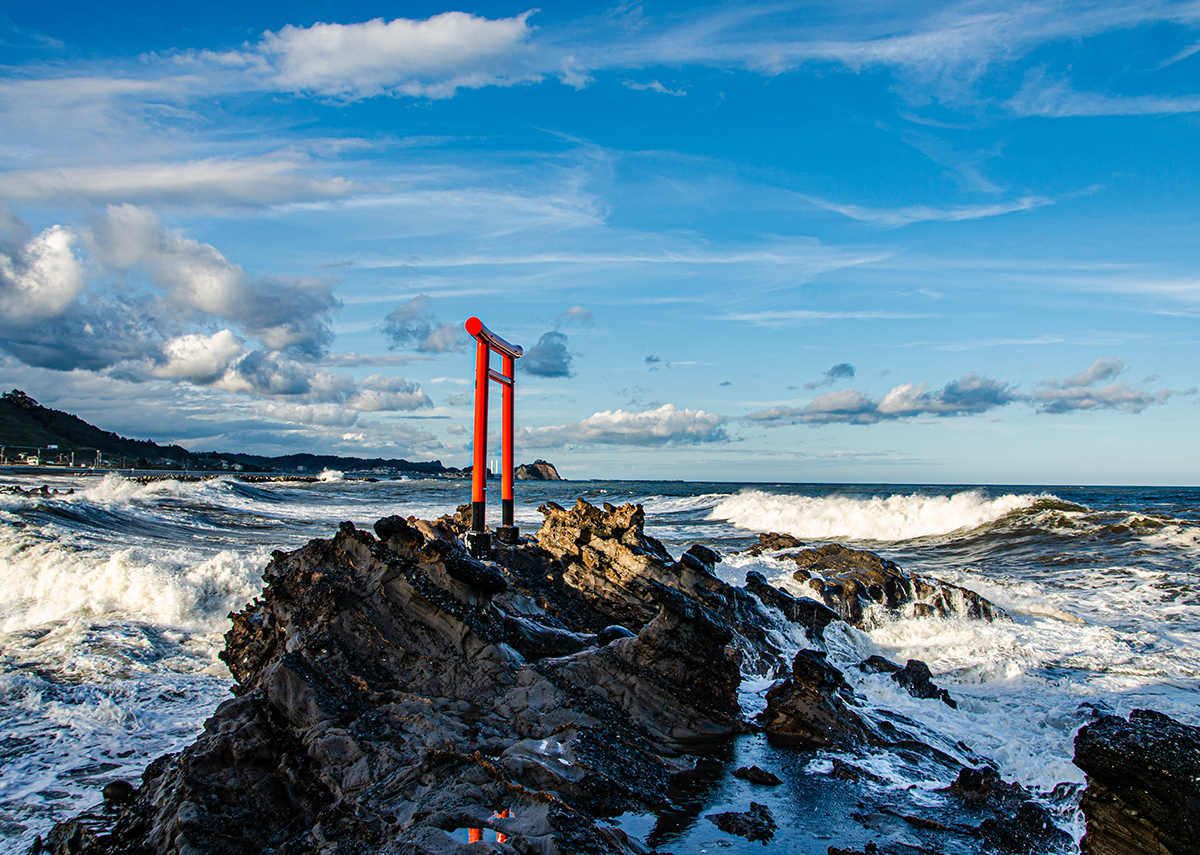
Nine years later. The nuclear incident of March 11, 2011, in Fukushima, Japan, made international headlines for months, but it also changed Japan's attitude toward nuclear energy. After a devastating tsunami struck Japan on March 11, 2011, emergency generators cooling the Fukushima nuclear power plant failed, causing a total of three meltdowns, explosions, and the release of radioactive material into the surrounding areas.
Before the incident, the Japanese were known as staunch supporters of nuclear power, despite previous nuclear disasters at Three Mile Island (USA) and Chernobyl (Ukraine). However, a meltdown on their own soil changed the opinions of many citizens and sparked the anti-nuclear movement.
Following mass protests, the Japanese government under then-Prime Minister Yoshihiko announced plans to make Japan nuclear-free by 2030 and not to rebuild any of the damaged reactors. The new Prime Minister, Shinzo Abe, has since attempted to change the nation's opinion on nuclear energy by emphasizing that the technology is indeed carbon-neutral and well-suited to achieving emissions targets.
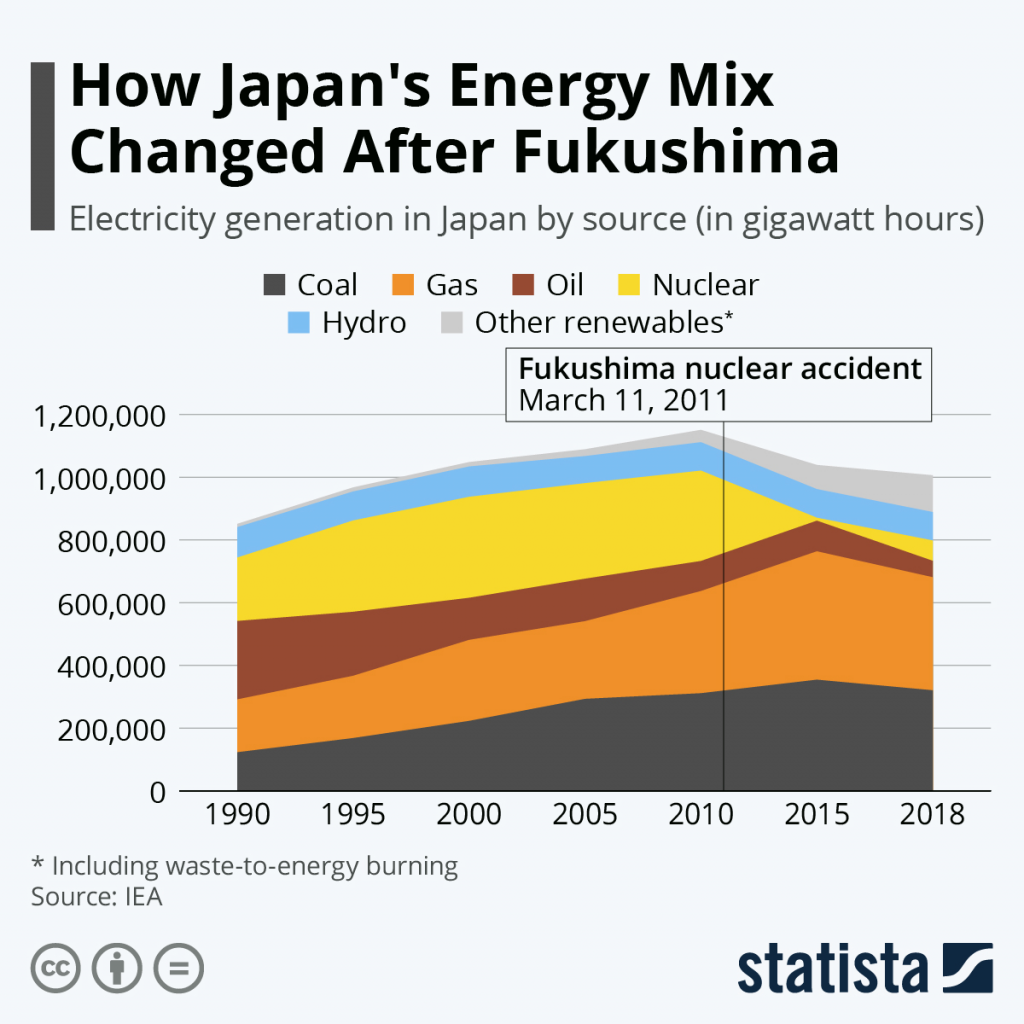
Despite the restart of a reactor at the Sendai nuclear power plant in southern Japan in 2015, nuclear power has almost disappeared from Japanese electricity generation. In 2018 (the latest available data), only 6 percent of the energy generated in Japan came from nuclear power plants. Coal and natural gas absorbed most of the shortfall, but renewable sources, especially solar energy, also increased after 2011.
9 years after. The March 11, 2011, Fukushima nuclear incident in Japan made international headlines for months, but it also changed Japanese attitudes towards nuclear energy. After a devastating tsunami hit Japan on March 11, 2011, emergency generators cooling the Fukushima nuclear power plant gave out and caused a total of three nuclear meltdowns, explosions and the release of radioactive material into the surrounding areas.
Before the incident, the Japanese had been known as steadfast supporters of nuclear energy, despite previous nuclear disasters at Three Mile Island (USA) or Chernobyl (Ukraine). But a meltdown on their own soil changed the minds of many citizens and kicked the anti-nuclear power movement into gear.
After mass protests, the Japanese government under then Prime Minister Yoshihiko announced plans to make Japan nuclear free by 2030 and not to rebuild any of the damaged reactors. New Prime Minister Shinzo Abe has since tried to change the nation's mind about nuclear energy by highlighting that the technology is indeed carbon neutral and well suited to reach emission goals.
Despite one reactor restart at Sendai power plant in Southern Japan in 2015, nuclear energy has almost disappeared from Japanese electricity generation. In 2018 (latest available), only 6 percent of energy generated in Japan came from nuclear power plants. Coal and natural gas picked up most of the slack, but renewable sources, mainly solar energy, also grew after 2011.

Keep in touch