
Russia between war economy, dwindling morale and growing reality gap
Xpert Pre-Release

Available in 27 languages 📢
Prefer Xpert.Digital on GoogleⓘPublished on: April 19, 2026 / Updated on: April 19, 2026 – Author: Konrad Wolfenstein
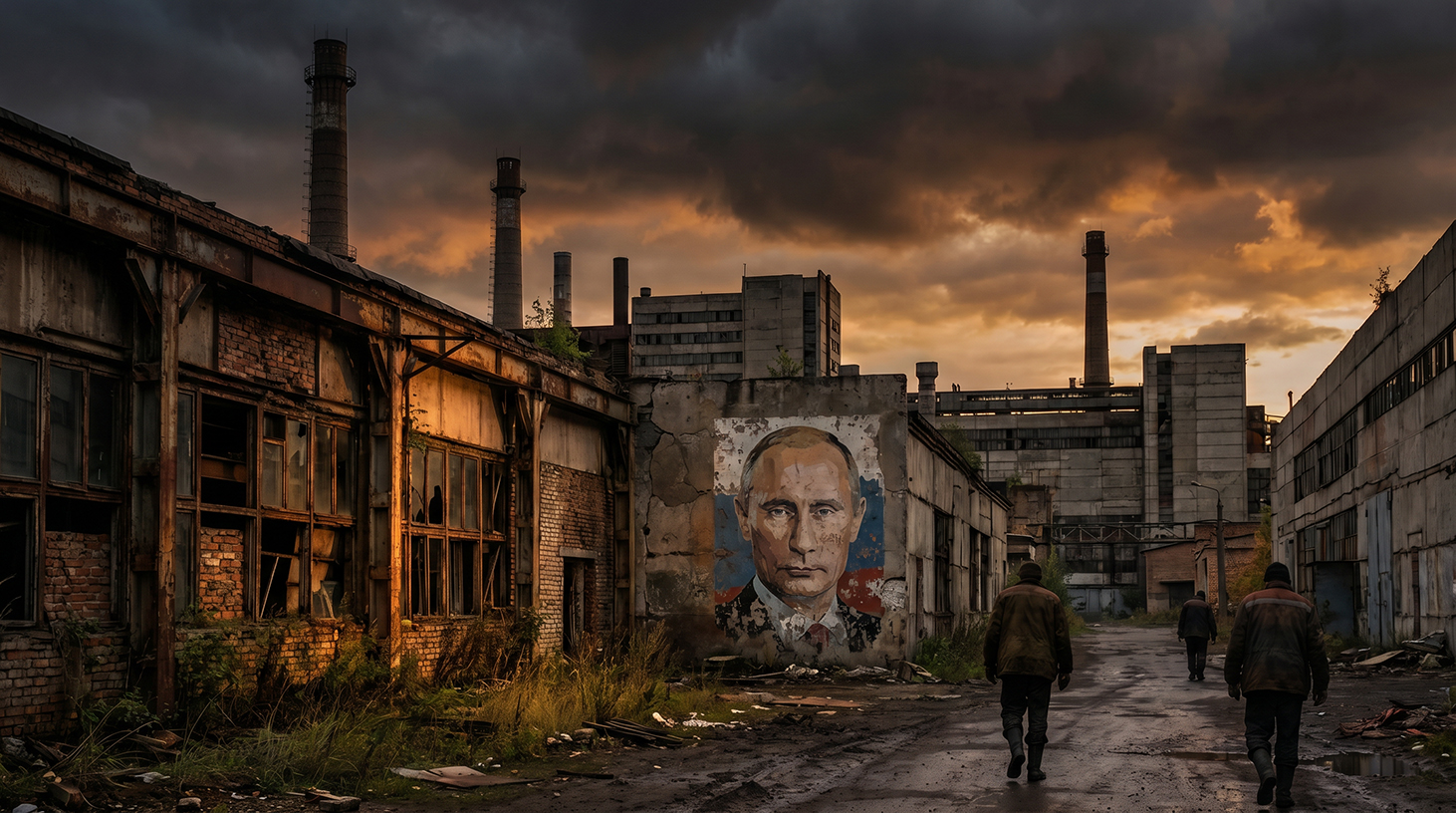
Russia between war economy, dwindling morale and a growing disconnect from reality – Image: Xpert.Digital
The fatal perception gap: How the Kremlin is losing control over Russian reality
The war economy is devouring itself: Russia's creeping path to ruin
The mood is shifting: What the Kremlin is concealing and why even Putin loyalists are suddenly criticizing him
Outwardly, Russia tirelessly presents itself as an unshakeable fortress, defying Western sanctions and seemingly growing economically through the war. But behind this facade of statistical resilience and patriotic slogans, the foundation is crumbling. Russian society and the economy are in a state of structural exhaustion. The war economy, running at full throttle, is increasingly revealing itself as a merciless machine of exploitation: it is draining urgently needed workers, fueling inflation, and destroying long-term prosperity in favor of short-term arms production. At the same time, the gap between the propaganda of the ruling elite and the harsh realities of everyday life for the population is widening inexorably. When even voices previously loyal to the system suddenly denounce the rampant culture of fear and social strain, this indicates a profound transformation. Russia is not on the verge of immediate collapse – but the country is experiencing a creeping, inexorable devaluation that is putting the Putin system to its most severe test yet.
A system that claims stability but produces erosion
Not a sudden collapse, but gradual wear and tear: The true extent of the Russian crisis
Russia continues to project an image of strategic resilience to the outside world, but beneath this surface, economic, social, and political tensions are mounting that can no longer be explained solely by sanctions, patriotic mobilization, or statistical resilience. The country is not on the verge of immediate collapse, but it is increasingly operating in a mode of structural exhaustion: growth is being generated more and more by war production, government spending, labor shortages, and administrative pressure, rather than by productive modernization or broad-based gains in prosperity.
This is precisely the crux of the current situation. The Russian economy is still functioning, but it is becoming increasingly one-sided. Domestic stability is not based on a healthy balance between investment, consumption, innovation, and institutional reliability, but rather on a politically driven war economy that generates short-term demand while simultaneously causing long-term damage. The longer this situation persists, the greater the gap will become between the official success narrative and the everyday reality of many people.
When growth slows, the real stress test begins
Several forecasts indicate that Russian growth, following its war-induced inflated momentum, will cool significantly and could reach only around one percent by 2026. This is economically significant because past growth rates were heavily driven by government spending, arms contracts, and exceptional economic booms. If even maximum fiscal mobilization results in only weak growth, this is not a sign of robust strength, but rather an indication of the declining sustainability of the economic model.
The central question, therefore, is not whether Russia is still statistically growing, but rather what kind of growth is being measured. War production increases the gross domestic product, even if it crowds out civilian productivity, misdirects resources, and generates hardly any positive spillover effects for future modernization. A country can expand on paper and simultaneously become poorer, more strained, and less innovative in real terms. This very discrepancy currently characterizes the situation in Russia.
The war economy is both an engine and a machine that wears people down
Since the major offensive against Ukraine, the Russian economy has increasingly transformed into a war economy, in which the state increasingly dictates demand, investment direction, and priorities. This stabilizes certain sectors, particularly defense, state-owned industries, and resource-related sectors, but simultaneously weakens the civilian sector. Companies benefit where they are tied to government contracts; outside these spheres, uncertainty, financing costs, and planning risks increase.
This creates three problems simultaneously. First, capital shifts to politically privileged, but not necessarily more productive, uses. Second, labor is drawn away from civilian sectors—either through mobilization, emigration, or higher wages in the military-industrial complex. Third, the capacity to generate technology-driven, competitive growth outside of war diminishes. The model is thus resilient in the short term, but devalues it in the long term.
A labor shortage is not a success, but a symptom
Officially, low unemployment can appear as a sign of economic strength. In Russia, however, it is largely a reflection of a tight labor market strained by war, recruitment, demographics, and emigration. Many companies report difficulties finding qualified personnel, while higher wages are being paid in strategic sectors to attract workers.
This leads to a paradoxical effect: On the one hand, incomes rise in certain sectors, while on the other hand, overall economic pressure for efficiency increases. If companies cannot fill vacancies, their capacity decreases; if wages rise faster than productivity, inflationary pressure increases; if the government directs personnel to prioritized sectors, civilian services and non-military industries are reduced. The seemingly positive labor market figures thus mask an economic misallocation of resources.
Inflation, interest rates and deficits reveal the limits of resilience
Russia's monetary and fiscal policy is under a dual pressure: on the one hand, it must secure war financing, and on the other, limit the inflation-related costs of an overheated and distorted economy. Reports of falling key interest rates or changes in interest rate signals from the central bank should therefore not be interpreted as a pure easing of tensions, but rather as a balancing act between weak growth, debt burden, borrowing costs, and price stability.
Furthermore, budget deficits and hidden or outsourced military spending further restrict fiscal leeway. Even if official defense spending appears to decline slightly or stabilize in individual draft budgets, the real military burden remains high because war-related expenditures can be spread across various budget channels. In the medium term, this usually translates into a combination of higher taxes, reduced real purchasing power, and diminished government capacity in civilian sectors for the population.
The state stabilizes those at the top and burdens those at the bottom
A key feature of the current Russian situation is the asymmetrical distribution of burdens. The political center can cultivate loyalty through contracts, transfers, and repression, but the everyday burdens are felt much more directly in businesses, households, and regions. Rising taxes, higher prices, limited prospects, and the ongoing uncertainty of the war disproportionately affect those who lack access to privileged networks or state-funded sectors.
In authoritarian systems, this mechanism can function for extended periods as long as the population feels that the hardships are temporary, unavoidable, or significantly worse outside the system. However, it becomes critical when a temporary imposition becomes permanent and people simultaneously experience that official language no longer reflects their everyday lives. While this may not lead to a sudden revolution, it does create a gradual alienation between the state and society.
Our global industry and economic expertise in business development, sales and marketing

Our global industry and economic expertise in business development, sales and marketing - Image: Xpert.Digital
Industry focus areas: B2B, digitalization (from AI to XR), mechanical engineering, logistics, renewable energies and industry
More information here:
A thematic hub offering insights and expertise:
- Knowledge platform covering global and regional economies, innovation and industry-specific trends
- A collection of analyses, insights, and background information from our key areas of focus
- A place for expertise and information on current developments in business and technology
- A hub for companies seeking information on markets, digitalization, and industry innovations
When loyal voices doubt: Why criticism from within the regime is dangerous
The perception gap between the Kremlin and everyday life is growing
This very alienation is currently a key factor. Several reports and analyses indicate that the official leadership is communicating a significantly more favorable picture of the situation than the one that emerges in companies, regional administrations, or in the everyday lives of many people. When prominent voices or business-oriented actors point out that feedback to higher levels glosses over the situation, this highlights a classic problem of centralized power: the more authoritarian the system, the greater the temptation often is to filter out negative information.
This information distortion is economically and politically dangerous. Economically, because poor decisions become more likely when real bottlenecks, investment barriers, or social frictions only reach the political leadership in a muted form. Politically, because a leadership that believes in its own success narrative is particularly slow to adapt to creeping discontent.
The social atmosphere is more tense than the state admits
The current mood in Russia should not be confused with open mass protest. Repression, fear, and the suppression of independent mobilization mechanisms continue to prevent discontent from being expressed freely and in an organized manner. Nevertheless, there are increasing signs of a tense social atmosphere: weariness, quiet frustration, irritability, declining confidence in the capacity to solve problems, and a growing willingness to at least informally address grievances.
This kind of mood is particularly relevant in authoritarian contexts. Not vocal opposition, but rather diffuse wear and tear is often the first indicator of political erosion. When even circles close to the system, media figures, or usually loyal public voices begin to point out the limits of what can be endured, this is less evidence of immediate destabilization than an indication that the regime's capacity to integrate is diminishing.
Internet control affects not only freedom, but also value creation
The debate surrounding stricter access restrictions, throttling, and interventions in digital communication channels like Telegram is particularly revealing. Such measures are politically understandable from the regime's perspective, as they aim to make information spaces more controllable. Economically, however, they are costly. When messengers, platforms, and digital services become unreliable, it impairs communication, payment processing, customer service, internal coordination, and the day-to-day operations of businesses.
Small and medium-sized enterprises, service providers, and digitally dependent business models often bear the brunt of such interventions more than large, state-affiliated institutions. This means that a repressive instrument intended to ensure political control simultaneously weakens the remaining vestiges of a flexible, decentralized economy. Where digital uncertainty increases, not only do freedoms diminish, but also efficiency, investment appetite, and trust in the reliability of state infrastructure.
When even loyal voices voice criticism, the resonance chamber changes
What is particularly noteworthy is not the existence of opposition criticism, but rather that even from within the system's sphere of influence or from apolitical circles, sharper voices are being heard. Several prominent bloggers, who do not normally appear as classic opposition figures, have recently addressed the culture of fear, the lack of truth, and the social burden placed upon them. Such pronouncements are politically significant not because they pose an immediate threat to the regime, but because they challenge the official narrative at sensitive points.
In tightly controlled systems, symbolic deviation carries more weight than in open democracies. When even individuals with a large reach, a high-profile lifestyle, or previously loyal circles say that people are afraid or no longer feel free, a fundamental societal sentiment that previously circulated only privately becomes publicly articulated. This is dangerous for the Kremlin because its rule is based not only on repression but also on the staging of normality.
Putin's approval ratings remain a double-edged indicator
Polls on Putin's popularity in Russia must generally be interpreted with caution, as fear, social desirability bias, and methodological distortions can influence responses. Nevertheless, even authoritarian approval ratings are politically relevant because their trends can indicate reserves of legitimacy or processes of erosion. While various reports of declining ratings or waning enthusiasm may not immediately signal a crisis of legitimacy, they do indicate the limits of the public's ability to mobilize support.
More important than the exact percentage is therefore the direction. As long as the war appeared as a distant, controllable project and the economic costs were selectively mitigated, high levels of support could coexist with passivity. However, as economic strain, digital surveillance, tax burdens, and fatigue become more visible, the regime is losing part of that tacit acceptance base that has sustained its stability thus far.
An internal power struggle would not be a collapse, but a warning sign
Analyses of potential cracks within the power apparatus should neither be sensationalized nor dismissed prematurely. In authoritarian regimes, conflicts rarely manifest openly; they are more likely to appear as power struggles, competing security logics, differing priorities of repression and efficiency, and growing nervousness at the interfaces of the economy, administration, and propaganda.
When political scientists like Tatiana Stanovaya point out that many small crises could be symptoms of a larger problem, this is analytically plausible. This doesn't necessarily mean the imminent collapse of the system, but rather the possibility that the existing balance between war, control, elite coalitions, and societal passivity is becoming more unstable. Regimes that have long appeared very cohesive can suffer from internal hardening and information blockades before external observers even recognize the depth of the crisis.
The Kremlin is still strong, but no longer unchallenged in its own reality
It would be premature to conclude from the current tensions that the Putin system is on the verge of collapse. The state still possesses considerable means of repression, propaganda reach, fiscal control mechanisms, and a war capable of forging political loyalty through coercion and moral pressure. Moreover, the organized opposition remains marginalized, exiled, or criminalized. In this sense, Russia is not on the brink of an immediate change of power.
At the same time, however, it would be equally wrong to dismiss the current signals as mere background noise. Economic slowdown, labor shortages, tax pressures, digital repression, social fatigue, and growing criticism from unexpected quarters all point to a qualitative shift. The system doesn't appear fragile because it is weak, but because it has to expend ever more energy to simulate a state of normality that has long since eroded in reality.
Russia is not experiencing a sudden collapse, but a slow devaluation
The most accurate description of the current situation is therefore not collapse, but gradual devaluation. Russia does not necessarily lose its capacity to act all at once, but rather its economic quality, social resilience, and political responsiveness gradually. A country can be militarily aggressive, state-repressive, and statistically resilient and still enter a process of structural decline. In this context, decline does not mean immediate catastrophe, but rather a slow fall below its own potential and below the dynamism of comparable economies.
This is precisely why the situation is so precarious for the Kremlin. As long as external stability and internal exhaustion coexist, the system will not collapse from a single shock, but from its inability to restore a sustainable civilian equilibrium to the war, the economy, and society. Russia's real stress test begins not where open revolts become visible, but where an ever-growing segment of society senses that the official image of the country no longer reflects everyday reality.
Your global marketing and business development partner
☑️ Our business language is English or German
☑️ NEW: Correspondence in your native language!

Konrad Wolfenstein
I and my team are happy to be available to you as your personal advisor.
You can contact me by filling out the contact form here or simply call me at +49 7348 4088 965. My email address is : [email protected]
I'm looking forward to our joint project.
☑️ SME support in strategy, consulting, planning and implementation
☑️ Creation or realignment of the digital strategy and digitization
☑️ Expansion and optimization of international sales processes
☑️ Global & Digital B2B trading platforms
☑️ Pioneer Business Development / Marketing / PR / Trade Fairs
🎯🎯🎯 Data-driven B2B industry hub as a quasi-in-house solution

The quasi-in-house solution: How Xpert.Digital closes operational gaps in B2B marketing and sales – Smart Content-Driven Business - Image: Xpert.Digital
Xpert.Digital is a data-driven B2B industry hub led by Konrad Wolfenstein . The company acts as an external, quasi-in-house solution for industrial partners, closing operational gaps in marketing, content, and sales – without requiring additional resources on the client side.
More information here:










