

Germany in the age of being on the sidelines: When an economic nation watches as the world passes it by
Xpert Pre-Release

Available in 27 languages 📢
Prefer Xpert.Digital on GoogleⓘPublished on: July 2, 2026 / Updated on: July 2, 2026 – Author: Konrad Wolfenstein
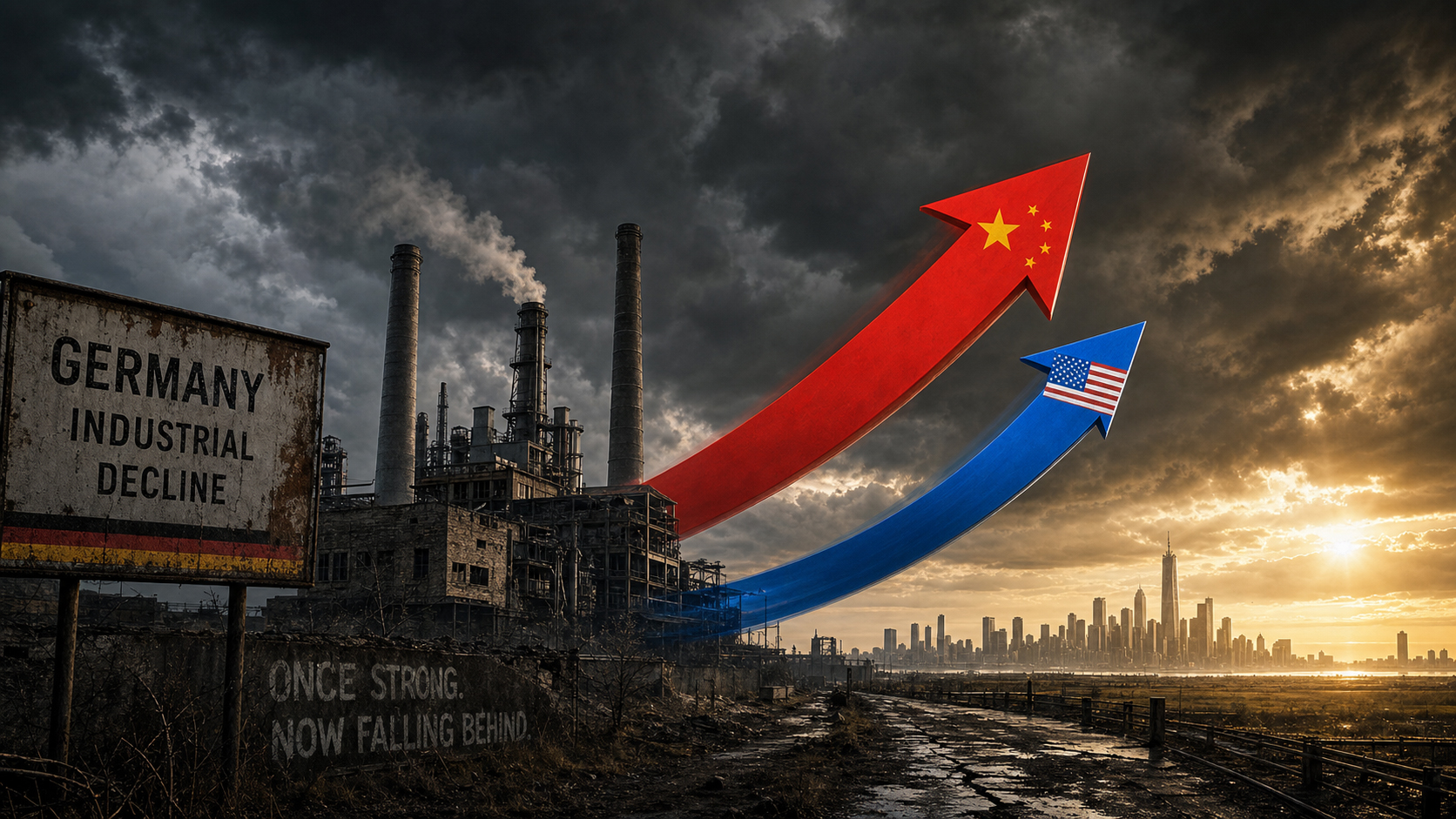
Germany in the age of being on the sidelines: When an economic powerhouse watches the world pass it by – Image: Xpert.Digital
AI failure and the automotive crisis: How Germany is knowingly jeopardizing its own future
Too poor to be among the world's best? Why the poorest US state will soon overtake us
For a long time, it was taken for granted: when it came to industrial precision, global export strength, and engineering prowess, Germany was naturally at the head of the table. But this image is fading rapidly. By 2026, it is clearer than ever that the German economy is undergoing an unprecedented structural transformation. Instead of carrying its technological leadership into the digital age, Germany has been relegated from a driving force to a mere spectator. Whether in the global race for artificial intelligence, in which Germany simply no longer plays a role, or in the dramatic upheaval of the once-flagship automotive industry: the warning signs are flashing bright red.
The core problem is not a temporary economic downturn that could be remedied with the usual stimulus programs, but a toxic mix of decades of management failure, crushing bureaucracy, and exploding energy costs. Even more disastrous, however, is the political response: Instead of addressing the rampant productivity slump through massive investments and genuine deregulation, politicians are getting bogged down in sham debates about longer working hours and the retirement age. The conclusion is both sobering and painful: Anyone who wants to secure the future of an economic nation can no longer simply manage the strengths of the past, but must instead develop the technologies of tomorrow – before it falls behind completely.
The great working time misconception: Why “working longer” won’t stop Germany’s decline
At some point, the unease ceases to be a vague feeling and transforms into a sobering observation: wherever the course of the global economic future is being set, Germany is not at the table. Not in the race for artificial intelligence, not in the redesign of global supply chains, not in the geopolitical realignment following the end of the unipolar world. And even in sectors that Germany had claimed as its own domain for decades—the automotive industry, energy infrastructure, industrial production—the warning signs can no longer be ignored. The paradox is that the diagnosis itself is not new. What is new is the urgency. And what is new is the political reaction, which, with a certain stubbornness, is addressing the problem from the wrong angle.
Growth as an exception: The sobering GDP balance sheet
The figures tell a clear story, even if political discourse tends to gloss over it with optimism. The German economy shrank by 0.3 percent in 2023 and by a further 0.2 percent in 2024 – two consecutive years of recession unparalleled in postwar history. While 2025 brought a slight stabilization with growth of 0.2 percent, it did not signal a comeback. Forecasts for 2026 range from 0.9 to 1.2 percent growth, depending on the institution – a figure that would be considered meager under normal circumstances, but is being marketed as a recovery after years of stagnation.
For comparison: The US grew by 2.8 percent in 2024, France by 1.2 percent. The per capita figures are particularly sobering: Germany's nominal GDP per capita in 2024 was around US$56,000, while the US figure was over US$86,000 – a gap that doesn't close completely even after adjusting for purchasing power. The findings of the Euronews comparison from early 2025 bluntly illustrated the situation: Mississippi, the poorest US state, was on the verge of overtaking Germany's per capita GDP. This is not a statistical anomaly, but a symptom of a structural productivity gap that has been building up for over a decade.
The Federation of German Industries (BDI) describes the situation in similarly drastic terms: Industrial production in Germany has been declining since 2022, stagnation is threatened for 2026, and without bold structural reforms, the country will not regain its competitiveness. At the beginning of 2026, Chancellor Friedrich Merz himself spoke of insufficient productivity and excessively high bureaucratic and tax costs. Rarely has the gap between diagnosis and solution been wider.
Productivity as the true measure of failure
The competitiveness of an economy can ultimately only be measured by its productivity – by economic output per hour worked. And this is precisely where the core problem lies. Germany has made hardly any productivity gains in the past two decades, while the USA, driven by a digital-technological revolution, is experiencing a surprising surge in productivity. The ifo Institute describes this contrast as the central competition policy issue of our time.
It would be too simplistic to attribute this solely to external factors. The structural mix of the German economy—heavily reliant on traditional industrial production with a relatively small share of technology-based services—is a self-inflicted problem. In the US, productivity gains are increasingly occurring where data, algorithms, and platform models dominate value creation. In Germany, by contrast, the manufacturing sector dominates, and many companies still operate with outdated IT systems and sluggish decision-making structures. Even on comparatively straightforward issues—such as the digitalization of public services or the implementation of cloud-based administrative systems—Germany ranks only in the middle of the pack in Europe.
In its 2025 Germany Economic Report, the OECD clearly diagnosed the same weakness: high bureaucratic burdens and regulatory barriers to competition hampered business dynamism, innovation, and productivity growth. Solutions have been identified, are known, and have been discussed repeatedly – yet they have stubbornly remained unimplemented.
The AI Dilemma: Spectators at the Most Important Technology Race in History
Nowhere is Germany's lagging behind as stark and consequential as in the field of artificial intelligence. The ifo Institute has illustrated this with a single graphic: In 2024, the USA produced 40 significant AI models, China 15, Europe three – and Germany not one that reached the global stage. Not a single one. This is not a temporary deficit that can be compensated for with a little more funding. It is the symptom of a systemic failure.
KPMG's January 2026 study on the "Strategic AI Capability Index" puts the findings into an international context: The US clearly leads the global AI race with 75.2 out of 100 points, followed by Europe with 48.8 points – and even within Europe, the results vary considerably. The UK and Ireland achieve 69.2 points, approaching the US level, while the DACH region (Germany, Austria, and Switzerland) ranks slightly below Western Europe with 54 points. According to the study, the reason for the European and German lag is not a lack of research structures or expertise in governance and regulation – in these areas, Europe is actually well-positioned. The problem lies in scaling: Many AI applications are stuck in the pilot stage; high energy prices, limited computing power, and fragmented capital markets prevent their transition to operational use.
While the US invested over $500 billion in AI between 2020 and 2025, Germany failed to fully utilize even the originally earmarked €5 billion for AI funding during the same period. The ten largest US data centers combined are as powerful as all 2,000 German ones. And while the US adds four times as much new computing capacity annually as Germany possesses in total, the AI share of data center capacity in Germany is growing from the current 15 percent to an expected 40 percent by 2030 – but from a very small base. A PwC study from May 2026 concludes that while Germany excels in AI governance and data quality, these strengths fail to translate into revenue growth – only one in four German companies is aligning its AI strategy for growth.
In June 2026, German Interior Minister Dobrindt issued a stark warning: Germany urgently needed to catch up in AI for security reasons. When the US company Anthropic blocked its advanced AI model from foreign users at the behest of the German government, Germany had no access whatsoever – leaving it technologically locked out in a security-relevant area. Those who don't produce AI consume it under the conditions of others – a situation that fundamentally undermines technological sovereignty.
Car breakdown in the fast lane: Germany's flagship industry in structural collapse
For generations, the automotive industry was the backbone of the German economy, the flagship of an industrial intelligence that embodied precision, engineering prowess, and export strength. This image is crumbling with a dramatic force that can hardly be glossed over. Volkswagen is facing the elimination of up to 100,000 jobs and potential plant closures in Germany. BMW issued a profit warning, Mercedes-Benz resorted to drastic cost-cutting measures – all within a single, industry-wide upheaval that is not temporary, but structural.
Between 2019 and 2025, the German automotive industry lost around 120,000 jobs, two-thirds of them at suppliers. China now produces seven times as many vehicles as Germany and dominates the key technologies of electromobility – batteries, power electronics, and software. Chinese manufacturers such as BYD, Geely, and Nio offer affordable electric vehicles that directly compete with German manufacturers in the lower and middle price segments, taking business away from them. The accusation from industry experts is clear: Germany has missed the boat on the digital transformation of its supply chain.
The case of Schlote Holding is particularly symptomatic: a turbocharger specialist with 1,600 employees, hit by a chain reaction of insolvent suppliers, canceled major orders, and exploding industrial electricity prices – and brought to a standstill in 2024. Not an isolated case, but a symbol of a systemic structural break that is affecting medium-sized businesses before the major manufacturers have fully consolidated.
The question of whether the phase-out of combustion engines will proceed as planned by 2035 is now politically open. But even if Germany weakens its CO₂ targets or postpones the timeline, the real challenge lies deeper: How does an automotive industry that has made enormous profits from combustion engine vehicles for decades position itself in a world where the vehicle is increasingly becoming a software-controlled, electrically powered consumer goods ecosystem? Germany has yet to find a convincing industrial policy answer to this question.
Energy transition: between ambition and cost trap
The energy transition was perhaps the most ambitious project of German economic policy in the past two decades. It was simultaneously necessary, expensive, and often flawed in its implementation. The promise that the expansion of renewable energies would lead to lower electricity prices in the long term has not materialized. Today, Germany pays some of the highest prices for industrial electricity in the Western world – a structural competitive disadvantage that directly impacts energy-intensive industries such as steel, chemicals, glass, and paper, and contributes to the gradual relocation of production abroad.
A study commissioned by the German Association of Chambers of Industry and Commerce (DIHK) estimates the total costs of the energy transition by 2049 at over five trillion euros. At the same time, DIHK President Peter Adrian warned that energy-intensive companies are already increasingly relocating their production, and thus jobs, abroad. Brandenburg's Minister-President Woidke put it succinctly: if electricity prices for industry don't fall, the transformation in Germany as a whole could fail. This is not an ideological attack on the energy transition itself – it is the sobering assessment of an economic policy expert who is observing the deindustrialization trends in his region.
In its 2025/26 annual report, the German Council of Economic Experts recommends significantly greater relief for energy-intensive industries, competitive energy prices as a prerequisite for maintaining industrial base, and a reform of the electricity market's system costs. The German government's €500 billion infrastructure package also includes energy relief measures – however, it remains to be seen whether these will arrive in time and be sufficient to stabilize Germany's investment climate.
Our EU and German expertise in business development, sales and marketing

Our EU and German expertise in business development, sales and marketing - Image: Xpert.Digital
Industry focus areas: B2B, digitalization (from AI to XR), mechanical engineering, logistics, renewable energies and industry
More information here:
A thematic hub offering insights and expertise:
- Knowledge platform covering global and regional economies, innovation and industry-specific trends
- A collection of analyses, insights, and background information from our key areas of focus
- A place for expertise and information on current developments in business and technology
- A hub for companies seeking information on markets, digitalization, and industry innovations
Reform roadmap 2030: Three levers that could save Germany's competitiveness
Loss of geopolitical significance: Germany sidelined
Germany's lag is not solely economic – it has a strategic and geopolitical dimension that is becoming increasingly apparent. In June 2026, Germany lost the election for a non-permanent seat on the UN Security Council to Austria and Portugal – two countries that are significantly smaller in terms of economic weight and geopolitical influence. The defeat was explained internally by a belated advertising campaign, but in reality, it reflects a deeper perception within the international community: Germany may have financial resources, but it lacks a clear strategic profile. Chancellor Merz responded by immediately submitting bids for 2035/36 and 2043/44 – a sign that Germany does not intend to abandon its claim. But a claim without convincing substance remains mere diplomatic rhetoric.
Whether in the context of hosting the World Cup, competing for technological standards, assuming a leading role in transatlantic relations, or reshaping European industrial policy – in all these areas, Germany often acts reactively rather than proactively. The Draghi report on European competitiveness, which Chancellor Merz explicitly declared a top priority, identifies Europe's structural deficits – and Germany bears a disproportionate share of the responsibility for them.
Management failure as a systemic phenomenon
It would be too convenient to reduce the crisis to external shocks – the pandemic, the war in Ukraine, US tariffs, the energy price shock. These factors exacerbated the situation, but did not create it. The root cause lies in a systemic management failure that has accumulated over decades and affects both sides: corporate and political leadership.
At the company level, this pattern is particularly evident in the automotive industry: German manufacturers have generated extraordinary profits for years with high-margin combustion engine vehicles and have not invested these profits sufficiently in the transformation. Instead, their own technological leadership in the combustion engine sector was misunderstood as a permanent competitive advantage, while Chinese competitors and US newcomers like Tesla embraced electromobility much earlier and more decisively. The ifo Institute describes this dynamic with the term "Middle Technology Trap": Companies and economies that are strong in middle technology often fail during the transition phase to the next technological generation.
At the political level, the failure is structural. It didn't begin with the current government and it won't end with it. Years of underinvestment in infrastructure, education, and digital administration have created a backlog of necessary repairs, which the 500-billion-euro package is now intended to address – but planning and approval processes take years, not months, and implementation delays are structurally inevitable. The joint statement by German business associations from March 2026 summarizes the impatience of the business community: many projects currently exist only as announcements on paper, and Germany's economic standing is approaching a tipping point.
The fallacy of the working time debate
In light of these structural findings, the political focus on working hours and retirement age seems like a diversionary tactic – or worse: a genuine misunderstanding of the problem. The message that Germany must work longer and retire later to secure its prosperity addresses the symptoms, not the causes. It treats a productivity problem as a problem of quantity.
The data on working hours is less clear-cut than the public debate suggests. In 2024, full-time employees in Germany worked an average of 40.2 hours per week – almost identical to the EU average of 40.3 hours. The low overall average is explained by the comparatively high rate of part-time work, particularly among women. The problem, therefore, is not that Germans work too little – the problem is that the work that is done generates too little added value because technology, processes, and infrastructure do not allow for sufficient productivity.
More working hours with the same productivity deficit do not solve the core problem. At best, they increase the gross domestic product in the short term at the expense of workers, without addressing the structural causes of the deficit. This is the fundamental flaw in this policy approach. If 100 poorly equipped working hours are less productive for a company than 80 highly productive ones, then the answer is not the 101st hour, but better equipment.
Employers' associations are calling for an increase in the retirement age and the abolition of early retirement incentives – this is understandable from the perspective of the financial viability of social security systems and demographically unavoidable. But it is not the answer to the question of why Germany is falling behind in the global innovation and technology race. These two debates are too often conflated.
Bureaucracy as a structural obstacle to competition
What economists, management consultants, and international institutions have unanimously described for years as a key obstacle can hardly be overstated in its impact: The bureaucratic burden in Germany stifles innovation potential, slows down investment decisions, and drives talent and capital to more attractive locations. Young companies in Germany spend an average of about nine hours per week on legally mandated administrative tasks. More than half report that this leads to less time for order processing and reduces their competitiveness.
It's not the large corporations that suffer the most – they have compliance departments and lobbying resources. The hardest hit are startups and growth-oriented SMEs. In an environment where venture capital is already scarce and financing conditions are significantly less favorable compared to the US or the UK, every additional hour spent on bureaucracy means an hour lost to innovation. The ZEW researcher puts it bluntly: excessive documentation requirements would have disastrous consequences for the growth and competitiveness of German startups.
Added to this is the problem of corporate taxation. Compared to other OECD countries, Germany is a high-tax country, making it increasingly unattractive for investment. The effective corporate tax rate has fallen since 2017 – from almost 28 percent to around 23 percent – but it remains high by international standards. The planned reduction in corporate tax from 2028 onwards is a step in the right direction, but it comes too late and too slowly to have a short-term impact.
What a reform course should achieve
In its 2026 annual economic report, the German government outlined an agenda that points in the right direction: reducing bureaucracy, implementing a high-tech agenda, boosting investment for businesses, easing energy costs, reforming social security contributions, and expanding the labor supply through skilled immigration. On paper, this isn't wrong. The problem isn't the diagnosis, but rather the dosage and the speed of implementation.
Three areas deserve particular priority. First: technology investments on a scale commensurate with the seriousness of the AI gap. If the US is pouring over $500 billion into AI infrastructure and China dominates patents worldwide, then Germany needs more than funding pots in the single-digit billions. This requires a combination of anchor investments from the government, mobilized private capital, and a regulatory philosophy that understands innovation as a prerequisite for everything else. Second: a decisive reform of planning and approval processes. Infrastructure projects that are completed in three years in other countries often take ten to fifteen years in Germany – this is not an immutable law of nature, but something that can be shaped politically. Third: a more honest debate about energy costs that doesn't choose between climate protection and preserving industry as a false alternative, but seeks systemic solutions that enable both.
In its 2025/26 annual report, the German Council of Economic Experts found the formula that sums it all up: Productivity must increase primarily through innovation and investment. This is not a radical insight. It is the simplest of all economic policy truths – and the most frequently ignored.
Between self-image and reality: A necessary reassessment
What strikes observers when looking at Germany in 2026 is not primarily its economic weakness – economies go through cycles, and no period of stagnation is necessarily permanent. What is striking is the persistent discrepancy between self-image and reality, between the claim to be a leading industrial and technological nation and the realization that it has fallen behind in key future-oriented fields.
Germany remains the world's third-largest economy, a functioning democracy with stable institutions, a skilled workforce, and a high-performing research landscape. This potential has not disappeared. However, it is systematically underutilized, tied up by bureaucracy, left unfunded due to a lack of venture capital, and hampered in its development by an innovation culture that punishes failure rather than viewing it as a learning process.
The greatest risk is not sliding into a recession – that can be mitigated in the short term with economic stimulus programs. The greatest risk is the permanent entrenchment of a development path in which Germany manages its past strengths instead of developing the strengths of the future. A country that becomes a net importer in key technology fields and remains structurally dependent on AI, software, and the platform economy will, in the long run, lose not only economic dynamism but also political room for maneuver.
The real lesson from Germany's decade of lagging behind is therefore not: work more, work longer hours, produce more cheaply. It is: make smarter decisions, invest more decisively, implement faster – and develop political leadership that is not content with merely managing the past, but shapes the future. This is not a question of ideology. This is a question of sound economic policy.





