
Bundeswehr and data protection: The loss of one million potential reservists - a logistical disaster in hidden
Xpert pre-release

Available in 27 languages 📢
Prefer Xpert.Digital on GoogleⓘPublished on: May 29, 2025 / update from: May 29, 2025 - Author: Konrad Wolfenstein
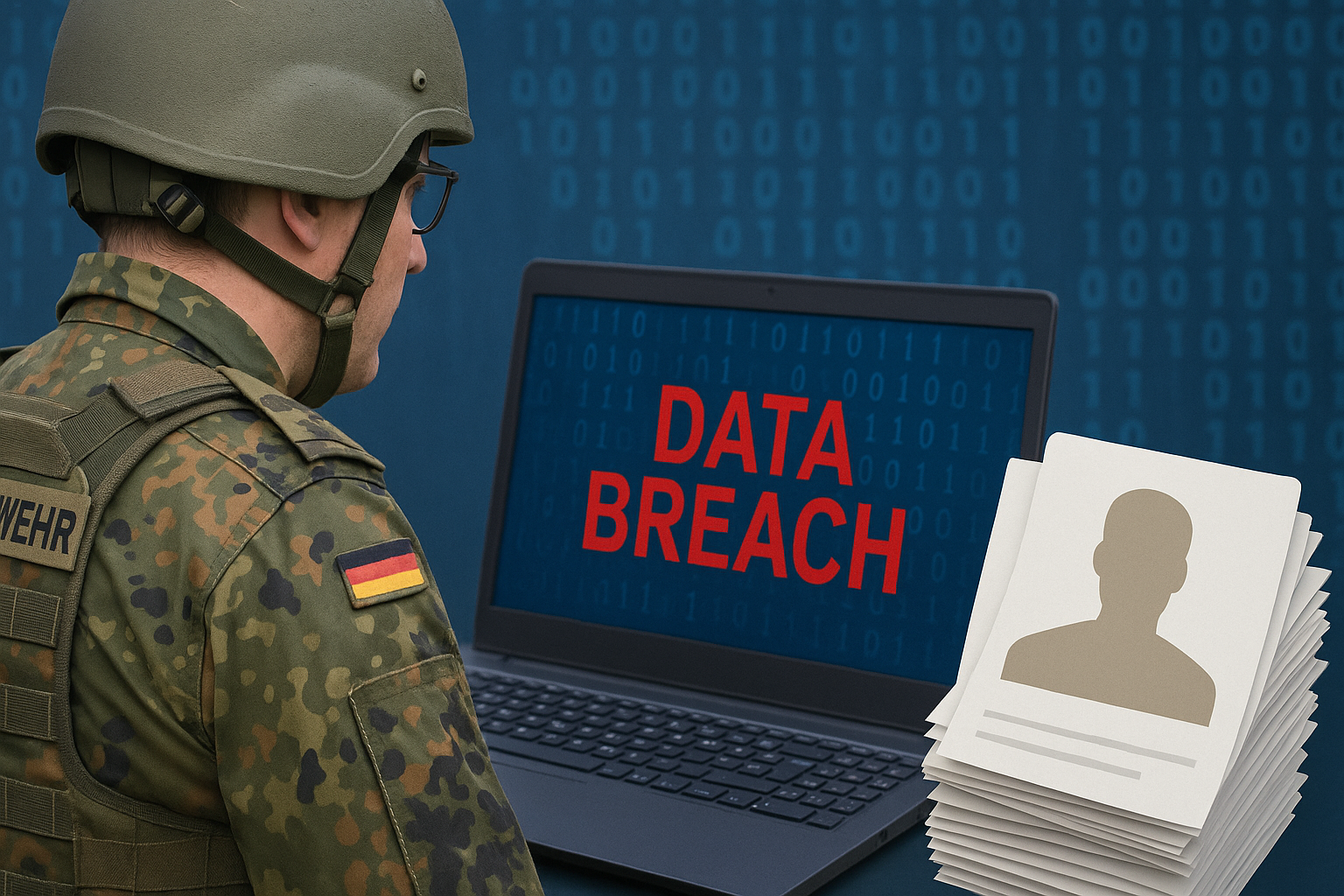
Bundeswehr and data protection: The loss of one million potential reservists - a logistical disaster in hidden - Image: Xpert.digital
Alarm signal for the Bundeswehr: Availability of reservists in danger
Bundeswehr in need: data protection endangers defense logistics
The German Bundeswehr faces a strategic challenge of immense scope that goes far beyond the mere troop strength and has fundamental effects on its operational ability and in particular on its defense logistics. The loss of contact with a million potential reservists due to strict data protection regulations - a problem that is examined in detail in this text - is not just a personal dilemma. It is a profound obstacle for the entire logistical chain and the ability to supply the armed forces.
Because modern warfare and defense do not depend solely on the number of soldiers fighting at the forefront. They require a complex and resilient logistics infrastructure that must be serviced, serviced and protected by qualified staff. Reservists are not just potential combat troops; They are also essential specialists who are indispensable in areas such as transport, maintenance, medical system, communication, supplies and administration. Without these qualified forces-be it experienced truck drivers, capable technicians, paramedics or organizational professionals-the supply of the troops collapses, material and equipment remain unused, and the quick mobilization and dislocation of units becomes impossible. The lack of accessible reservists not only endangers the fulfillment of the Bundeswehr's desired personnel objectives, but also directly undermines the ability to bring material, equipment and, above all, the combat force there and to supply where it is needed. This apparently bureaucratic problem therefore turns out to be an existential threat to the overall war ability of Germany and its allies, since effective defense logistics can simply not exist without sufficient and accessible staff.
Suitable for:

Data protection as an obstacle to the Bundeswehr reserve: the loss of one million potential reservists
The German Bundeswehr faces a serious personnel problem that significantly threatens its planned modernization and increase. Due to strict data protection regulations, the troop has lost contact with around one million potential reservists, including many experienced former soldiers with experience abroad. This problem is particularly critical because the Bundeswehr wants to increase its reserve staff from around 60,000 to 260,000 reservists by 2029. The chairman of the reservist association, Patrick Sensburg, describes the situation as “crazy” and criticizes that you don't even know whether these people are physically fit or want to serve again. The problem illustrates a fundamental contradiction: While the contribution service of public service broadcasting citizens can contact Citizens within weeks after a move for the fee stimulation, data protection prevents contact to survive.
Historical development and causes of the problem
The abolition of the 2011 military recording
The roots of the current problem lie in the suspension of conscription in 2011 under the then Defense Minister Karl-Theodor zu Guttenberg. With this step, not only conscription itself, but also the systematic military recording were abolished. The district military replacement offices, which were previously responsible for recording and updating the reservist addresses, were dissolved. This decision was made primarily for cost reasons and should be streamlined by the Bundeswehr.
The abolition of the military recording had far -reaching consequences for reservist care. Until 2011 there was a reliable database that systematically recorded not only active conscripts, but also reservists. This institutional structure ensured that the Bundeswehr always had current contact details of its former soldiers. With the elimination of this recording, a decisive component of the German reservist organization collapsed.
Tightening by European data protection reforms
The situation also tightened by the introduction of the European General Data Protection Regulation (GDPR) and tightened German data protection regulations. These regulations, which generally serve to protect personal data, have received a special strict in Germany due to historical experiences from the Nazi era and the GDR. Sensburg emphasizes that these particularly strict data protection requirements have significantly more difficult to collect and use personal data.
Scope and dimensions of the loss of contact
Quantitative analysis of the affected groups
According to Sensburg, the reservist association is responsible for a total of ten million people with a military background. However, about nine million of these are over 65 years old and are therefore no longer suitable for an active reservist service. However, the remaining million people represents a critical resource to which contact cannot be maintained due to data protection regulations.
The loss of contact with specialized veterans is particularly problematic. Around 93,000 soldiers who were used in Afghanistan can no longer be achieved. This group is particularly valuable for the reserve, as it has practical campaign experience and specialized knowledge that would be invaluable in a crisis period. Sensburg estimates that even if only a quarter of this million would come back, the Bundeswehr's personnel goals could be reached.
Regional and structural effects
The effects of the loss of contact can be seen at various levels of the reservist organization. Marc Lemmermann, chairman of the Schleswig-Holstein regional group in the reservist association, reports on the absurd situation that the reservist association with its 115,000 members cannot pass on its data to the Bundeswehr. This legal barrier means that even well -known and active reservists can only be contacted via the detour of the reservist association.
🎯🎯🎯 Benefit from Xpert.Digital's extensive, fivefold expertise in a comprehensive service package | R&D, XR, PR & SEM

AI & XR 3D Rendering Machine: Fivefold expertise from Xpert.Digital in a comprehensive service package, R&D XR, PR & SEM - Image: Xpert.Digital
Xpert.Digital has in-depth knowledge of various industries. This allows us to develop tailor-made strategies that are tailored precisely to the requirements and challenges of your specific market segment. By continually analyzing market trends and following industry developments, we can act with foresight and offer innovative solutions. Through the combination of experience and knowledge, we generate added value and give our customers a decisive competitive advantage.
More about it here:
Bundeswehr logistics and defensive until 2029? The reservist problem
Legal and bureaucratic obstacles
Data protection restrictions
The current data protection regulations prevent the Bundeswehr from querying current addresses of former soldiers at the residents' registration offices. This restriction is in stark contrast to other state bodies that can carry out such queries. The comparison with the contribution service of public service broadcasting is particularly paradoxical, which citizens can contact within a few weeks after moving for the collection of the radio fee.
The Federal Registration Act provides data transfer to the Bundeswehr, but this is limited to information about young people who become of legal age in the following year. This data is used exclusively to send information material via the armed forces to potential recruits. There is no corresponding legal basis for contacting former soldiers.
Bureaucratic deficits within the Bundeswehr
In addition to the external legal obstacles, the Bundeswehr internal documents reveal considerable bureaucratic problems in reservist care. The Bundeswehr personnel office in Cologne, which is responsible for active soldiers and reservists, is described as “unsuitable”. In an internal presentation, the Bundeswehr bureaucracy is even portrayed as a “black hole” that devours and people.
These internal problems are confirmed by personal reports from reservists. A psychologist with a doctorate reports of a month -long, chaotic application process for the reservist service, in which responsibilities are constantly passed on without anyone taking the initiative. Such experiences make it clear that the organizational structures do not work even with existing contacts.
Suitable for:

Effects on German defense ability
Strategic personnel
The Bundeswehr's personnel goals are ambitious: until 2029, 200,000 active soldiers and 260,000 ready -to -use reservists are available. However, the Bundeswehr currently only has around 180,000 active soldiers and 60,000 reservists. Inspector Carsten Breuer speaks of a future need of 260,000 reservists, while Sensburg even considers a million reservists necessary.
These numbers illustrate the dimension of the challenge. Without access to the lost million potential reservists, it becomes almost impossible to achieve the goals set. Chancellor Friedrich Merz (CDU) has announced that the Bundeswehr should become the “conventionally strongest army in Europe”. Federal Defense Minister Boris Pistorius (SPD) emphasizes that the Bundeswehr must be warming up by 2029, since NATO experts consider a Russian attack on the alliance area as possible from this point on.
Qualitative losses due to the lack of expertise
The loss of contact with experienced veterans not only has quantitative, but also qualitative effects. The 93,000 Afghanistan veterans, which cannot be achieved, have practical combat experience and specialized knowledge that would be invaluable in the training and use of the priceless. This expertise cannot be replaced by new recruits at short notice.
In addition, a snowball effect arises: If experienced reservists cannot be reactivated, instructors and mentors are missing for new reservists. This extends the training times and reduces the quality of the reservist training. Experts agree that the Bundeswehr's personnel reinforcement is a long -term project.
Solution approaches and political initiatives
Legal reform efforts
The Ministry of Defense said that it was continuously examined how the applicable data protection regulations can be reconciled with the requirements of the reservist work. Departing soldiers have been automatically registered as reservists since 2021. This so -called “basic order” for six years is intended to prevent further contacts from being lost in the future.
According to the NDR report, the Bundestag tries to change the data protection rules. Sensburg calls for a “simple change in the law”, which would make it possible for the Bundeswehr to compensate for residents' registration data. It is not about new skills, but about the restoration of a functionality that existed until 2011.
Technical and organizational measures
The Bundeswehr has already taken an important step with the introduction of basic automatic order. All soldiers who are at most 57 years old are now planned as reservists for six years. This regulation ends at the age of 60 and is intended to create a personal basis for the rapid growth in a possible defense case.
In addition, the maintenance security law was reformed to offer reservists more attractive conditions. Higher surcharges, a better base of the pension and service allowance for short exercises should increase the willingness to reserve. The stigmatizing labeling for reservists was also abolished.
International comparisons and best practices
Other NATO countries have successfully mastered similar challenges. The comparison with countries such as Finland or Switzerland shows that systematic reservist recording is possible despite modern data protection standards. These countries have created special legal regulations that bring about military necessities with data protection requirements.
Experience shows that clear legal framework and specialized authorities are decisive. A pure reintroduction of compulsory military service, as it is discussed, would only solve the problem in the long term, since the entire infrastructure would first have to be rebuilt.
Years of mining: The Bundeswehr before a mammoth task
The problem of loss of contact with a million potential reservists illustrates the complex challenges in reconstruction of German defense ability after decades of dismantling. The suspension of conscription in 2011 not only complicates personnel acquisition, but also destroyed institutional knowledge and organizational structures. The subsequent remedy of these deficits proves to be much more difficult than the original dismantling.
The data protection problem is only one aspect of a larger systemic problem. While the protection of personal data is an important asset, comparison with other state functions, such as broadcasting fees, shows that pragmatic solutions are possible. Politicians are required to quickly create a legal basis that enables the Bundeswehr to contact their former soldiers.
At the same time, the internal bureaucratic problems of the Bundeswehr must be tackled. Even with perfect data protection solutions, dysfunctional human resources would hinder the acquisition of reservists. A comprehensive reform of the Bundeswehr administration is therefore just as necessary as the solution to the data protection question.
Time is urgent: NATO experts consider a Russian attack to be possible from 2029, but the establishment of a powerful reserve takes years. Germany faces the challenge of dealing with a task in a few years for which other countries have needed decades. The success of these efforts will be crucial for whether Germany can meet its alliance obligations and protect its citizens in an emergency.
Advice - planning - implementation

Markus Becker
I would be happy to serve as your personal advisor.
Head of Business Development
Chairman SME Connect Defense Working Group
Advice - planning - implementation
Konrad Wolfenstein
I would be happy to serve as your personal advisor.
contact me under Wolfenstein ∂ Xpert.digital
call me under +49 89 674 804 (Munich)
Your dual -use logistics expert

Dual -use logistics expert - Image: Xpert.digital
We are there for you - advice - planning - implementation - project management
☑️ SME support in strategy, consulting, planning and implementation
☑️ Creation or realignment of the digital strategy and digitalization
☑️ Expansion and optimization of international sales processes
☑️ Global & Digital B2B trading platforms
☑️ Pioneer Business Development
Konrad Wolfenstein
I would be happy to serve as your personal advisor.
You can contact me by filling out the contact form below or simply call me on +49 7348 4088 965 (Munich) .
I'm looking forward to our joint project.
Write to me

Xpert.Digital - Konrad Wolfenstein
Xpert.Digital is a hub for industry with a focus on digitalization, mechanical engineering, logistics/intralogistics and photovoltaics.
With our 360° business development solution, we support well-known companies from new business to after sales.
Market intelligence, smarketing, marketing automation, content development, PR, mail campaigns, personalized social media and lead nurturing are part of our digital tools.
You can find out more at: www.xpert.digital - www.xpert.solar - www.xpert.plus
Keep in touch











