
Published on: May 29, 2025 / update from: May 29, 2025 - Author: Konrad Wolfenstein
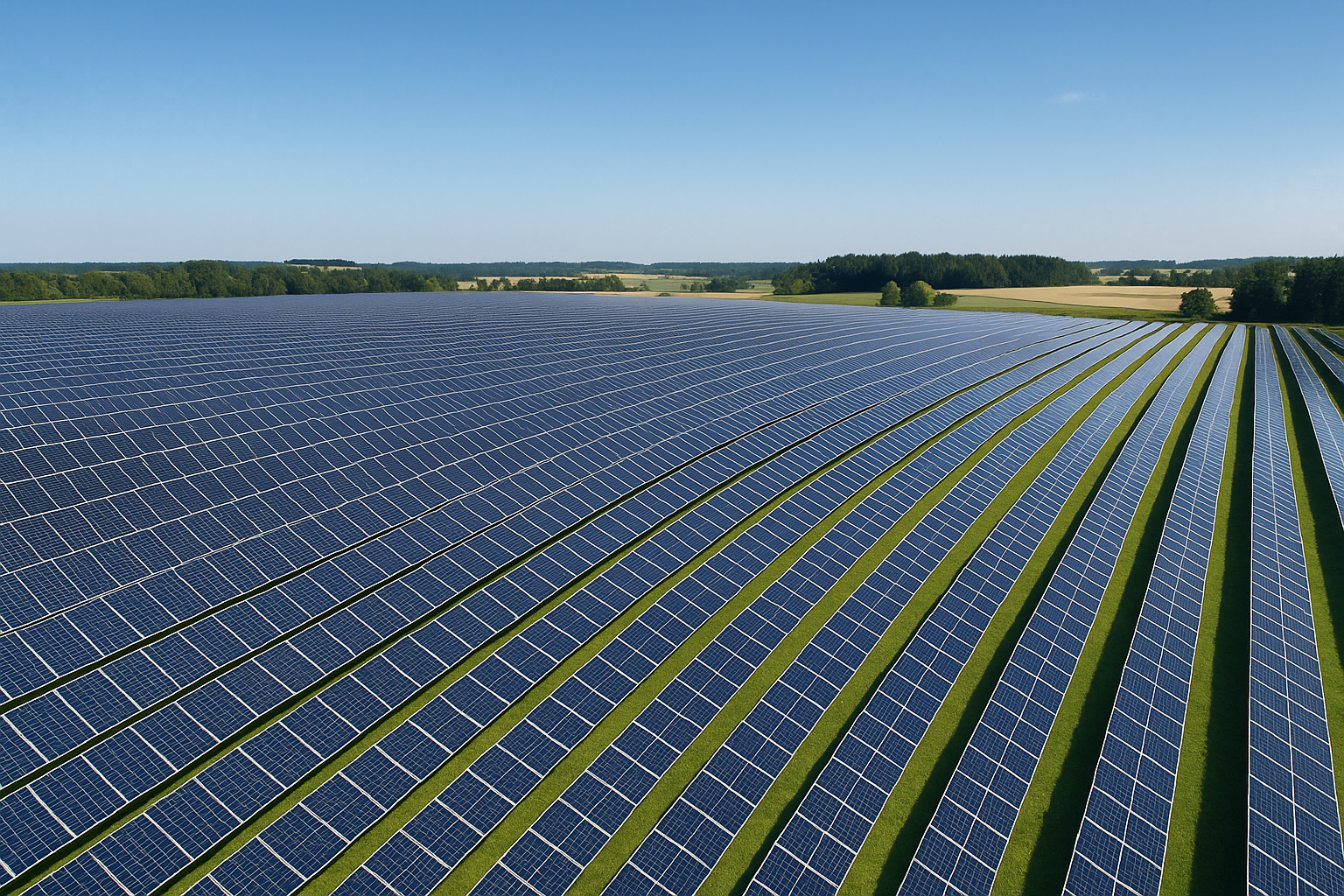
Solar Park | The largest solar field of the district of Landsberg in Apfeldorfhausen on the net - creative image: Xpert.digital
Apfeldorfhausen: Citizens make solar field a success project
14 Megawatt from Apfeldorfhausen: The largest solar field in the district
The open -air photovoltaic system in Apfeldorfhausen, also operated as a citizens' system “Sonnenenergie Apfeldorf GmbH & Co. KG”, was taken online in spring 2024 as the largest solar field in the Landsberg on the Lech district. With a nominal output of almost 14 megawatts, the solar field extends over around 12 hectares of former field and meadow area and replaces conventional agricultural use with renewable power generation. The project is characterized by a comprehensive citizen participation, in which 63 private limited parties and the municipality of Apfeldorf participate, which created a strong local binding and financing basis. The technical implementation was made with the integration of specialized engineering services with bifacial high-performance modules, a newly built substation and the strengthening of the 20 kV network infrastructure distributed by the regional distribution network operator LEW. In addition to the economic and energy -political aspects, the project is of great importance for the sustainable development of the region due to accompanying ecological compensation measures and landscape upgrading.
In the context of the nationwide energy transition, local photovoltaic projects are becoming increasingly important. They combine decentralized electricity generation with citizen participation and make a direct contribution to CO₂ reduction. The Apfeldorf House Solarfeld is an outstanding example of how local actors, politics and network operators play together in order to achieve a common climate protection goal. The present study illuminates the background, technical key data, economic models and ecological accompanying measures of this solar field and classifies them in the regional and national context. The aim is to distinguish the origin, implementation and meaning of the largest solar field in the Landsberg Am Lech district and to derive perspectives for future projects.
Suitable for:

Background: municipal energy transition in the district of Landsberg
The district of Landsberg am Lech is located in a phase of the accelerated expansion of renewable energies in order to significantly increase the proportion of solar and wind power in the regional energy mix. Traditionally strongly shaped agricultural, there were area conflicts between ecological agriculture and open -air photovoltaics in the focus of the public debate. The municipality of Apfeldorf decided early on for a municipal strategy that focuses on citizen participation and thus creates planning security and acceptance. With the foundation of cooperatives and GmbH & Co. KG models, several projects have been realized since then that generate direct added value on site and integrate citizens as active partners. This commitment reflects the special regional dynamics, in which, in addition to the expansion of the generation capacities, the network expansion and ecological upgrading are pursued equally.
Project presentation: Solarfeld Apfeldorfhausen
Location and framework conditions
The solar field in Apfeldorfhausen extends to around twelve hectares of agricultural area around 500 meters north of the Apfeldorf district in the municipality of Apfeldorf. The area was previously classified as a arable and meadow country and is located in an agricultural area, which enabled the approval, taking into account ecological upgrading. The selection of the location followed a comprehensive location analysis, the soil nature, sunlight, proximity to residential areas and connection to existing network routes. A land use plan was already changed during the planning phase and an independent development plan was established in order to create the legal basis for the project. The political community of Apfeldorf acted as a partner and funding, which guarantees high local acceptance and participation.
Planning and approval procedure
The planning of the project started more than three and a half years before commissioning and included numerous official and technical and technical reports. Specialist archeological studies were necessary to secure possible historical finds on the area, while species protection law reports ensured the protection of flora and fauna around the solar field. At the same time, the elaboration of environmental impact assessments was carried out in order to estimate the effects on the ground, water balance and local biotopes. The municipality of Apfeldorf decided on December 21, 2022, the statutes on the development plan, which created the building law requirements. Finally, the responsible building authority granted the official building permit, which allowed the construction work to start in September 2023.
Construction process and commissioning
The groundbreaking ceremony for the open -air system took place on September 18, 2023, as measurement of the series of frames and the determination of the fence course. Immediately afterwards, the ram work began, in which posts were brought into the ground for the module frames. This work was completed by the end of October 2023 and the assembly of the frames and module carriers could begin. At the same time, the transformer and transfer station was delivered to install it on site. The final assembly of the Bifacial 570 W modules was completed before Christmas 2023 and the provisional network connection was prepared. At the beginning of 2024, the final certification of the system and the network connection by the transmission system operator followed, so that the commissioning was carried out at the end of March 2024.
Technical specifications and performance
Module types and system design
Modern bifacial solar modules with a nominal output of 570 W were used for the system. Bifacial modules are characterized by the fact that they convert light into electrical energy from both sides and thus also use the reflected proportion of the floor. The system design provided for a row arrangement in which the modules were assembled on both sides on frames in order to achieve optimal illumination. The overall configuration comprises around 24,450 modules that are distributed on an area of almost twelve hectares. The inverter and transformers are housed in a central station that operates both the medium -voltage level and the feed -in into the local network.
Performance and yield
The overall performance of the photovoltaic system is 13.9 MWP, which is one of the most powerful open space systems in Bavaria. Based on long-term climate data, an annual electricity yield of around 15.75 million kWh is forecast, which corresponds approximately to the consumption of 4,500 two-person households. The specific annual income simulation is based on regional radiation values and takes into account losses by temperature, inverter efficiency and module -specific degradation. The CO₂ savings is around 9,100 tons per year, which would otherwise be caused by fossil power plants. This balance makes the solar field an essential building block for the region's climate protection goals.
Network connection and feed -in
The feed -in is via a specially built medium -voltage system with 20 kV, which is directly connected to the Lew distribution network distribution network. In the course of this, LEW distribution network has strengthened the network infrastructure in Apfeldorf by laying new earth cables and modernizing local network stations. Two cable sections with a total of 1.4 km in length were renewed, and a 1.2 km long cable was laid along the state road. The two local network stations were equipped with digital measuring and switchgear to enable real-time monitoring and faster fault repairs. These measures ensure that the electricity produced can be stably fed into the network and distributed across the board.
Suitable for:

Social and economic context
Citizen participation and financing model
The project was designed as a citizens' facility and realized through Sonnenenergie Apfeldorf GmbH & Co. KG. A total of 63 private limited partners were responsible for an investment amount between 5,000 and 20,000 euros, which created a local financing basis of around EUR 10.45 million. The political municipality of Apfeldorf holds the residual share of society, which means that public and private interests are represented on an equal footing. This model not only promotes acceptance within the population, but also ensures direct participation in the economic success of the system. Dividend payments and long -term lease payments for the property owners flow directly back to regional households.
Local value creation and jobs
The implementation of the open space was created numerous jobs in planning, construction and operation. Engineering services, technical management and commercial administration were mainly provided by regional service providers. In the construction phase, local construction companies and special companies for construction machinery, electrical engineering and network connection technology found employment. The project also ensures sustainable jobs for monitoring, maintenance and cleaning of the modules in the current management. The lease income for agricultural areas offers the property owners additional income that pose a stable source of income in rural regions.
Network reinforcement and infrastructure
The local distribution network operator LEW distribution network (LVN) has accompanied extensive network expansion measures to the PV project. The laying of new 20 kV earth cables and the modernization of two local network stations could be guaranteed both capacity expansion and security of supply. The cable laying methods used - open cable ditch, plow method and soil displacement - were used specifically to meet structural and environmental requirements. The digital measurement and switchgear in the converted station houses enable real-time data from the network control center for the first time, which allows proactive mesh control and quick disruption. With these measures, LVN strengthens the infrastructure in order to absorb the rising proportion of decentrally generated electricity and to distribute them in terms of distribution.
Ecological aspects and landscaping
In addition to regenerative electricity production, extensive compensatory measures were implemented on the previously used area to promote biodiversity. In module series, insect -friendly seed mixtures were sown and flowering areas were created that create habitat for wild bees and other pollinators. Edge areas and corridors were planted with domestic bushes to open habitats for birds and small mammals. Soil protection measures such as mulch seeds on the edge of the sowing and erosion protection reduce the removal and nutrient outlet on the slope. These integrative approaches combine energy production and nature conservation, which makes the project a model for sustainable open space photovoltaics.
Meaning for the region
The solar field of Apfeldorfhausen sets new standards for local renewable energy projects in the Landsberg district. The combination of citizen participation, technical excellence and ecological support creates a holistic model that can also be transferred to other communities. The successful commissioning shows that despite complex authorities and network expansion, large photovoltaic systems can be realized in accordance with agricultural use and nature conservation. For the coming years, the municipality of Apfeldorf is planning further solar and wind projects in order to significantly increase the proportion of renewable energies in total consumption. At the same time, smart grid solutions and local energy storage are to be integrated in order to browse supply tips and further increase the network stability.
Citizen participation makes Solarpark Apfeldorfhausen a success model
With an installed output of almost 14 MWP and an annual yield of around 15.75 million kWh, the solar field in Apfeldorfhausen is the largest of its kind in the district of Landsberg am Lech. The success of the project is based on close cooperation between citizens, community, engineering office and network operator. The technical execution with bifacial high-performance modules, the reinforcement of the 20 kV network infrastructure and comprehensive environmental measures make the system a showcase project for sustainable open space photovoltaics. The direct participation of the population ensures acceptance and long -term willingness to invest in renewable energies. Overall, the project offers important findings for the future design of the energy transition at the local level and lies the foundation for further innovative projects in the region.
Suitable for:
Novel photovoltaic solution for reducing costs and saving time

Novel photovoltaic solution for reducing costs and saving time: Xpert.digital
More about it here:
Your partner for business development in the field of photovoltaics and construction
From industrial roof PV to solar parks to larger solar parking spaces
☑️ Our business language is English or German
☑️ NEW: Correspondence in your national language!

Konrad Wolfenstein
I would be happy to serve you and my team as a personal advisor.
You can contact me by filling out the contact form or simply call me on +49 7348 4088 965 (Munich) . My email address is: wolfenstein ∂ xpert.digital
I'm looking forward to our joint project.


