
Further billions in claims: Ukraine between war economy and systemic crisis – Permanent financial crisis as a structural principle and corruption as a systemic risk
Xpert Pre-Release

Available in 27 languages 📢
Prefer Xpert.Digital on GoogleⓘPublished on: May 24, 2026 / Updated on: May 24, 2026 – Author: Konrad Wolfenstein
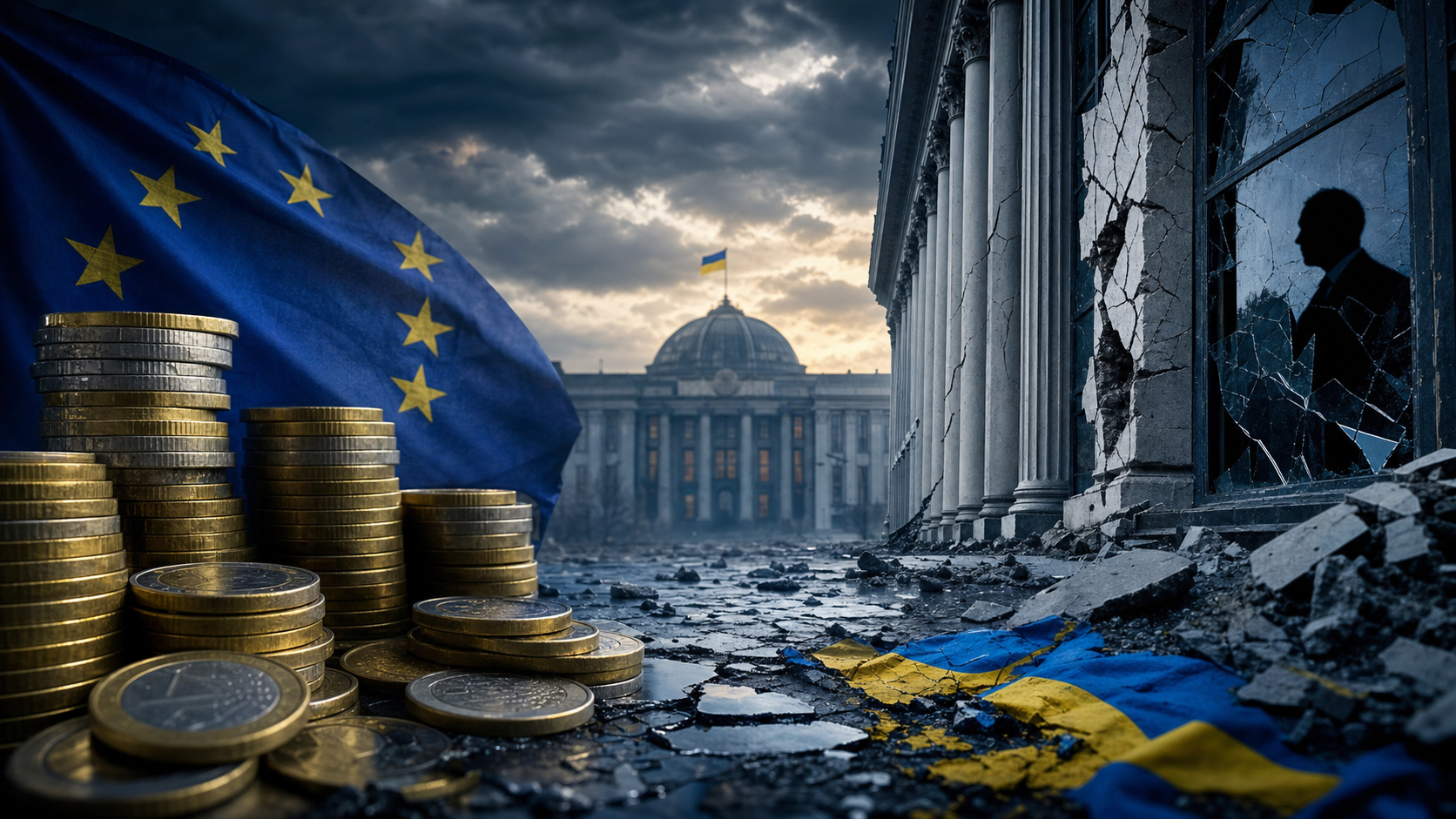
Further billions in claims: Ukraine between war economy and systemic crisis – Permanent financial crisis as a structural principle and corruption as a systemic risk – Image: Xpert.Digital
German Foreign Minister Johann Wadephul is demanding an additional 90 billion euros
90 billion euro loan for Kyiv: Why EU money threatens to disappear into dark channels
The European Union is facing a historic test: With an unprecedented loan of 90 billion euros, Brussels is attempting to avert Ukraine's looming bankruptcy. It is a fiscal emergency operation that became unavoidable after the US, under the new administration, withdrew as its main donor. But deep cracks are appearing behind the facade of European solidarity. It is already clear that the approved funds are far from sufficient to plug the gigantic budget gaps of Ukraine's war economy – a shortfall of 45 billion euros remains.
To make matters worse, unprecedented corruption scandals reaching into President Volodymyr Zelenskyy's inner circle are severely shaking the confidence of Western donors. While Kyiv uses billions of euros in European aid to build its own export-oriented arms industry, enormous sums are disappearing into the shadows through bribes and dubious procurement processes. Europe is transferring historically unprecedented resources to a country whose institutions are teetering under the pressure of war and systemic corruption. The following text sheds light on Europe's risky gamble, Ukraine's ongoing structural crisis, and the uncomfortable truth about what is really happening to European taxpayers' money in the war zone.
Europe's riskiest bet: 90 billion euros for Kyiv – and the constant threat of national bankruptcy
In April 2026, the European Union approved a €90 billion loan for Ukraine – after months of blockade by Hungary, which only relented after protracted negotiations. It is the largest bilateral loan commitment in EU history, financed through bond issues on the capital market and secured by the common EU budget. The interest-free loan is to be repaid only when Russia pays reparations – a date that no one can currently specify. The agreement was reached at the December 2025 summit between the heads of state, with then-Chancellor Friedrich Merz playing a leading role. However, the very structure of this aid package reveals that Europe is not acting from a position of strength, but rather from the awareness that without these funds, Ukraine faced bankruptcy.
The loan is divided into two main areas: Approximately €30 billion is earmarked for macroeconomic stabilization and covering the Ukrainian state budget, while the remaining €60 billion is intended for expanding the Ukrainian defense industry and procuring military equipment from Ukraine, the EU, and partner states. An initial €45 billion is available for 2026; the second tranche of €45 billion will follow in 2027. This sounds like a well-ordered plan. In reality, however, the initial situation was dramatic: The EU had already exhausted its previously allocated funds for Ukraine in October and November 2025 because Kyiv's financial needs significantly exceeded the original forecasts. The last available tranche of €4.1 billion was transferred at the end of November 2025 – after which Ukraine was left without guaranteed follow-up financing.
Three EU members – Hungary, Slovakia, and the Czech Republic – have negotiated exemptions from the joint bond issue and are not participating in collective access to the capital markets. This marginally weakens the creditworthiness of the joint issue, but is primarily symbolic: it shows that European solidarity with Ukraine is not a monolithic entity, but rather a painstakingly constructed entity of national interests, domestic political calculations, and foreign policy pragmatism.
The 135 billion problem: Why the calculation didn't add up from the start
Even before the €90 billion loan was officially approved, it was known in Brussels expert circles that it would not be sufficient. EU Commission President Ursula von der Leyen had explicitly pointed out in November 2025 that Ukraine's actual financial needs by 2027 amounted to approximately €135.7 billion: €83.4 billion for the military and €52.3 billion for economic stabilization and balancing the budget deficit. This leaves a funding gap of around €45 billion between the approved €90 billion loan and the actual needs – a figure that has been circulating in diplomatic circles for weeks.
When asked who should fill this gap, the European Commission gave an evasive answer. EU Economic Affairs Commissioner Valdis Dombrovskis stated tersely that they expected international partners to contribute their share; at least verbal commitments had been made from Great Britain and Canada. The US, however, under the current administration, is unwilling to provide any further funds for Ukraine. This eliminates the largest potential external financier, leaving Europe with the sobering task of single-handedly covering what Washington is no longer prepared to provide.
The Ukrainian 2026 budget illustrates the extent of the country's fiscal dependence: Parliament passed a budget with a deficit of 18.5 percent of gross domestic product. Almost 60 percent of all government spending goes toward defense. Finance Minister Serhiy Marchenko estimated the external financing requirement for 2026 at more than 45 billion US dollars – just to close the budget gap. The war is costing Ukraine more than 140 million euros per day. This figure illustrates the speed at which external funds are being consumed and how little leeway even large loan packages offer in the context of a high-intensity war.
Wadephul's proposal: European sovereignty or fiscal activism?
In this context, German Foreign Minister Johann Wadephul addressed the NATO foreign ministers' meeting in Helsingborg. His message was clear: further funds were needed, and the European NATO partners and Canada had to provide Ukraine with sustained support independent of the US. Specifically, Wadephul proposed that the NATO partners provide an additional 90 billion euros on top of existing EU loans – bilaterally and directly to Kyiv. According to his proposal, this sum could be credited against the EU loan to avoid double counting.
The proposal is remarkable in several respects. First, it signals that Germany – despite its own budget debates and growing domestic skepticism regarding aid to Ukraine – is prepared to assume the leading role in European Ukraine policy that arose with Washington's withdrawal. Second, Wadephul's call for a new mechanism, to be decided upon at the NATO summit in Turkey in July, indicates a desire to enshrine support institutionally – beyond ad hoc, hastily assembled solutions. Third – and this is the crucial critical dimension – there is currently no legal basis in EU law for the crediting of bilateral contributions against EU loans, as outlined by Wadephul. Brussels-based journalist Eric Bonse explicitly pointed out that such a mechanism would first have to be created.
What at first glance appears to be a coherent fiscal policy plan, upon closer inspection reveals itself to be the announcement of an instrument that does not yet exist legally. Wadephul is thus not calling for the implementation of an already agreed-upon program, but rather the creation of a new framework – in a political environment where Hungary and other skeptics regularly block existing instruments. Added to this is the structural problem that national NATO contributions would have to be financed from national budgets – which in several European countries requires parliamentary majorities that are by no means guaranteed.
Permanent financial crisis as a structural principle: The Ukrainian fiscal architecture under wartime conditions
Since the beginning of the Russian invasion, Ukraine has been in a state of permanent fiscal emergency. Its dependence on external financing is not a temporary phenomenon, but rather inherent to the system. The 2026 draft budget originally projected revenues of 2.92 trillion hryvnia (approximately US$68.9 billion) against expenditures of around 4.84 trillion hryvnia. Defense spending alone amounts to 27.2 percent of GDP – a figure virtually unparalleled in the history of democratic states and which at times even surpasses Russia's military spending relative to its economic output.
This structure creates a dangerous spiral of dependency: the more Kyiv's own revenues fall short of its expenditure needs, the more urgent external aid becomes. The more Kyiv relies on external funds, the greater the influence of external actors on Ukrainian politics—and the more attractive corruption networks become that profit from the distribution of large sums of money. This is not an accusation against Ukraine, but an economic principle observed in wars around the world, and one that Western donors must keep in mind.
According to the original plan, the EU loan covers roughly two-thirds of Ukraine's budget and defense spending for 2026 and 2027. Even this coverage is contingent on external financing contributions from other partners actually materializing. However, experience over the past few months shows that pledges and actual disbursements can diverge, that political blockades delay payments, and that Ukraine has de facto come close to the brink of insolvency on several occasions – most recently in the spring of 2026, when reports indicated that state funds would only last until June before the new EU loan was approved.
Armaments buildup as a strategic gamble: Between necessity and danger
Against this backdrop, Ukraine's strategy of positioning itself as an arms exporter takes on a new dimension. President Volodymyr Zelenskyy announced at the end of April 2026 that Ukraine would export surplus domestically produced weapons even during the war. Ten export centers are planned to be established in Europe by 2026, and drone production lines using Ukrainian technology are being set up in Germany and the UK. The legal basis for this was established at the Munich Security Conference in February 2026 – for the first time since the start of the war, Ukrainian companies are permitted to export weapons again.
The economic logic behind this strategy is understandable. Since 2022, the Ukrainian defense industry has experienced breathtaking growth: while the sector produced goods worth approximately one billion euros in 2022, this figure had already risen to three billion euros by 2023 and around ten billion euros by 2024. A tripling of this figure was targeted for 2025, with 2.5 million artillery shells produced and significant increases in drone and vehicle production. In 2025, the Ukrainian defense technology market generated a total of 6.8 billion US dollars in revenue, with drone production alone growing by 137 percent. A government official estimates the export potential for 2026 at several billion dollars.
Zelenskyy presents exports as a self-sustaining financing model: export revenues flow back into drone production, which in turn supplies the front lines and creates new export opportunities. The "Drone Deals"—special cooperation agreements with countries in the Middle East, the Persian Gulf, Europe, and the Caucasus—are intended to institutionalize this cycle. The Ukrainian export program is deliberately selective: access is granted only to states that have supported Kyiv since 2022—a geopolitical instrument that cements loyalties and creates a deterrent against dissenters.
It remains a critical question whether the export strategy undermines the army's own supply capabilities. Ukrainian representatives themselves emphasize that the army's domestic needs are still not fully met. Simultaneously serving external markets and domestic military requirements necessitates production capacities, the development of which takes time and—again—external investment. This brings us full circle: Ukraine needs foreign aid to build the industry that will help it become independent of foreign aid. This paradox is far from being resolved in the foreseeable future.
Corruption as a systemic risk: The Energoatom scandal and its political explosiveness
In November 2025, the National Anti-Corruption Bureau of Ukraine (NABU) published the results of a 15-month investigation based on approximately 1,000 hours of wiretap transcripts and 70 raids. The picture that emerged is shocking: A high-level criminal organization had systematically gained control of major state-owned companies, particularly Energoatom, the state-owned operator of Ukrainian nuclear power plants, which generates more than half of Ukraine's electricity. The method was both simple and brutal: Contractors of the company had to pay 10 to 15 percent of their contract value as bribes; otherwise, their payments were blocked or their supplier relationships terminated. The group is believed to have embezzled approximately US$100 million in this way.
Particularly explosive: Timur Mindich, a close confidant of Zelenskyy and a former business partner at the media company Kvartal 95 – the company with which Zelenskyy amassed his fortune before his political career – is considered the alleged mastermind. The audio recordings released on the so-called "Mindich Tapes" reportedly contain the voices of Ihor Myroniuk, a former advisor to Energy Minister Halushchenko, and Dmytro Basov, a former prosecutor and ex-head of physical security at Energoatom. According to NABU, these two individuals effectively controlled all of the company's purchases. Mindich himself is said to have evaded arrest by fleeing abroad and is reportedly residing in Israel.
The political consequences were significant. Justice Minister Herman Halushchenko and Energy Minister Svitlana Hrynchuk resigned. Andriy Yermak, head of the Presidential Office and, until then, considered the second most powerful man in Ukraine and the chief negotiator for peace talks, was also forced to resign following house searches by anti-corruption authorities. In May 2026, the Supreme Anti-Corruption Court ordered the 54-year-old Yermak to be held in pretrial detention – initially for 60 days, with the possibility of release on bail of €2.72 million, which Yermak stated he could not raise. The charges against him concern illegal multi-million-euro deals in a luxury construction project; he has since been formally indicted.
Our EU and German expertise in business development, sales and marketing

Our EU and German expertise in business development, sales and marketing - Image: Xpert.Digital
Industry focus areas: B2B, digitalization (from AI to XR), mechanical engineering, logistics, renewable energies and industry
More information here:
A thematic hub offering insights and expertise:
- Knowledge platform covering global and regional economies, innovation and industry-specific trends
- A collection of analyses, insights, and background information from our key areas of focus
- A place for expertise and information on current developments in business and technology
- A hub for companies seeking information on markets, digitalization, and industry innovations
Between defense and cronyism: Can the EU really control Ukraine?
Fire Point: How a former casting company became a billion-dollar arms supplier
Besides the Energoatom scandal, another case exemplifies the vulnerability of the Ukrainian procurement system: the drone and cruise missile manufacturer Fire Point LLC. The company, which operated as a casting agency just three years before the war, is now one of the largest suppliers to the Ukrainian armed forces. At approximately 30 secret locations in Ukraine, Fire Point produces long-range attack drones – including the "Flamingo" model – from inexpensive materials such as Styrofoam, plywood, and bicycle carbon fiber, which are specifically used for attacks on Russian oil refineries.
The company's growth rate is exceptional: In 2024, Fire Point received government contracts worth approximately $320 million. Reports indicate that by 2025, the contract volume had already exceeded $1 billion. The so-called "Mindich Tapes" also mention potential contract volumes of up to $7 billion – a figure the company denies. In August 2025, NABU announced that it had launched an investigation into whether Fire Point artificially inflated prices and delivery volumes to secure overpriced contracts with the Department of Defense.
The company's reaction to the investigative reports is noteworthy: CEO Yehor Skalyha threatened the Kyiv Independent editorial staff with legal action and filed a complaint with the Ukrainian Security Service (SBU), claiming the reporting constituted high treason and was likely to sabotage the Ukrainian missile program. The letter contained no substantive refutation of the accusations. This attempt to suppress critical journalism through institutional pressure is a worrying sign for the quality of the rule of law in Ukraine – even though Fire Point formally emphasizes its willingness to cooperate with the authorities.
The structural dimension: Corruption in a state of war as a systemic phenomenon
It would be analytically flawed to view the described cases of corruption as isolated criminal excesses. They are an expression of a structural tension that regularly arises in war economies: When state procurement processes operate under extreme time pressure with enormous sums of money, while at the same time regular control mechanisms are weakened by wartime conditions and personal networks are prioritized over bureaucratic procedures, spaces for systemic corruption emerge. In Ukraine, the situation is further exacerbated by the fact that large parts of the state apparatus are permeated by networks that originated in the pre-Euromaidan era – networks in which Zelenskyy, Mindich, Yermak, and others were once closely connected.
The Federal Agency for Civic Education, in an analysis of the Ukrainian arms industry, has pointed to fundamental structural deficiencies: a lack of investment, regulatory problems, short-term contracts, and bureaucratic hurdles that hinder the sector's growth. At the same time, competition is growing from foreign arms companies seeking to establish their own production facilities in Ukraine. This competition could have a disciplining effect in the medium term if it forces greater transparency and competitive tendering processes. In the short term, however, it incentivizes Ukrainian companies with access to networks to aggressively monetize existing contacts before the competition forces them out.
The anti-corruption institutions – NABU and SAPO – are proving themselves to be the true guardians of the Ukrainian reform project in this situation. Their ability to investigate and secure pre-trial detention against such powerful figures as Yermak is no small feat and deserves recognition. It demonstrates that the structures established after the Euromaidan have developed a certain institutional resilience. At the same time, it must be noted that these investigations might not have been pursued with such vigor without the sustained pressure from Western donors – particularly the IMF, the World Bank, and the EU.
Donor interests and conditions: What the EU can demand in return
For EU member states and their taxpayers, the uncomfortable question arises of how to guarantee that the €90 billion – primarily secured as debt securities in the EU budget – will be used for its intended purpose. The EU loan is formally linked to conditionalities: progress on reforms in the areas of the rule of law and the fight against corruption are prerequisites for disbursement. In practice, managing such conditions is considerably more difficult in a country actively at war than in peacetime. The political pressure not to block disbursements for fear of Ukraine's defeat is immense. Donors face a classic credibility problem: their threat to withhold funds in the event of reform failure is hardly credible if withholding them effectively risks military collapse.
This very dynamic explains why Ukrainian oligarchic and network structures are particularly robust in times of war. As long as army financing depends on the same networks that also conduct corruption, politicians have little interest in completely dismantling these networks. The NABU investigations against Yermak should therefore also be understood as a sign of internal Ukrainian power struggles – as an attempt by rival elites to shift the positions exposed by the departure of powerful network figures.
For European donors, this means they will need patience. Conditioning loans to reform progress is, in the long term, the most important instrument for the institutional transformation of Ukraine – but it is a slow instrument that can hardly have an immediate effect in the context of war. A realistic expectation must take into account that a significant portion of the funds provided will flow into structures that are still far from meeting European governance standards.
Geopolitical calculation: What Europe is really buying with its money
Beyond the accounting perspective, the fundamental question arises: what is Europe actually buying with the 90 billion euro loan? The sobering answer is: no certainty about the outcome of the war, no guarantee of progress on reforms, no assured repayment – but time. Time for Ukraine to maintain or improve its military position. Time for the European security framework to adapt. Time for diplomatic solutions, should they emerge. Wadephul's assertion that Ukraine "always has the longer-term perspective" and can always count on European support is more than just political rhetoric: it is a signal to Moscow that the Western donor community is not tiring.
That this support simultaneously represents a strategic investment in national security is the consistent counterpoint to skepticism. Those who abandon Ukraine will ultimately pay more – through defense spending, migration pressure, economic destabilization, and the loss of credible deterrence. In this sense, the 90 billion euro loan is not altruism, but self-insurance. However, even this calculation presupposes that the funds provided actually achieve their intended effect – and do not disappear into corruption networks that undermine European public confidence in the project in the long term.
A fundamental tension remains: Europe is transferring historically unprecedented resources to a country simultaneously experiencing one of the biggest corruption scandals in its recent history—a scandal that reaches into the president's inner circle. Anti-corruption agencies are investigating former ministers, the ex-head of the presidential administration, and arms companies. At the same time, the same government is planning to internationalize the arms sector as an export business. Neither loans nor conditional agreements alone will resolve these contradictions. What is needed is a structural transformation of Ukrainian institutions—and war provides the worst possible environment for this.
Between dependence and new beginnings: Perspectives for a war-induced economic order
Ukraine faces the paradoxical task of financing a state at war while simultaneously laying the institutional foundations for a post-war state. The EU loan accomplishes both at once – yet neither completely. The €30 billion for macroeconomic stabilization will help pay wages and social benefits and avert hyperinflation. The €60 billion for defense is intended to create an industrial core that can find civilian applications after the war.
The ambitious arms export strategy – with ten export centers in Europe by 2026, drone production lines in Germany and the UK, and cooperation agreements in several regions of the world – is an attempt to turn the necessity of dependence into an opportunity. If Ukraine succeeds in establishing itself as a reliable supplier of battle-proven defense technologies, it will generate revenue streams that could, in the long term, establish a degree of fiscal independence. The growth potential is real: the Ukrainian market for unmanned aerial vehicles alone is estimated at US$6.3 billion, and more than 150 companies operate in this segment.
But this potential can only be realized if the legal framework is stable, corruption is consistently prosecuted, contractual relationships are transparent, and international investors have certainty regarding their property rights. The Fire Point scandal and the attempts to silence investigative journalism through threats are precisely the signals that undermine this trust. For Europe, this means that providing €90 billion is necessary, but by no means sufficient. A long, consistent political process of institutional support is needed – including the willingness, in individual cases, to make and enforce even uncomfortable demands, even if this causes short-term political friction with Kyiv.
The crucial question for the coming years is therefore not whether Europe can provide a further 45 billion euros to close the funding gap. Given the continent's strategic interests and economic capacity, this question is solvable. The crucial question is whether Europe and Ukraine are jointly capable of creating a governance system that ensures the funds provided are used for their intended purpose. Not only the future of Ukraine depends on this, but also the credibility of the European project as a geopolitical actor.





