
An economic analysis of the modernized EU-Mexico agreement: The realignment of the transatlantic trade architecture
Xpert Pre-Release

Available in 27 languages 📢
Prefer Xpert.Digital on GoogleⓘPublished on: July 11, 2026 / Updated on: July 11, 2026 – Author: Konrad Wolfenstein
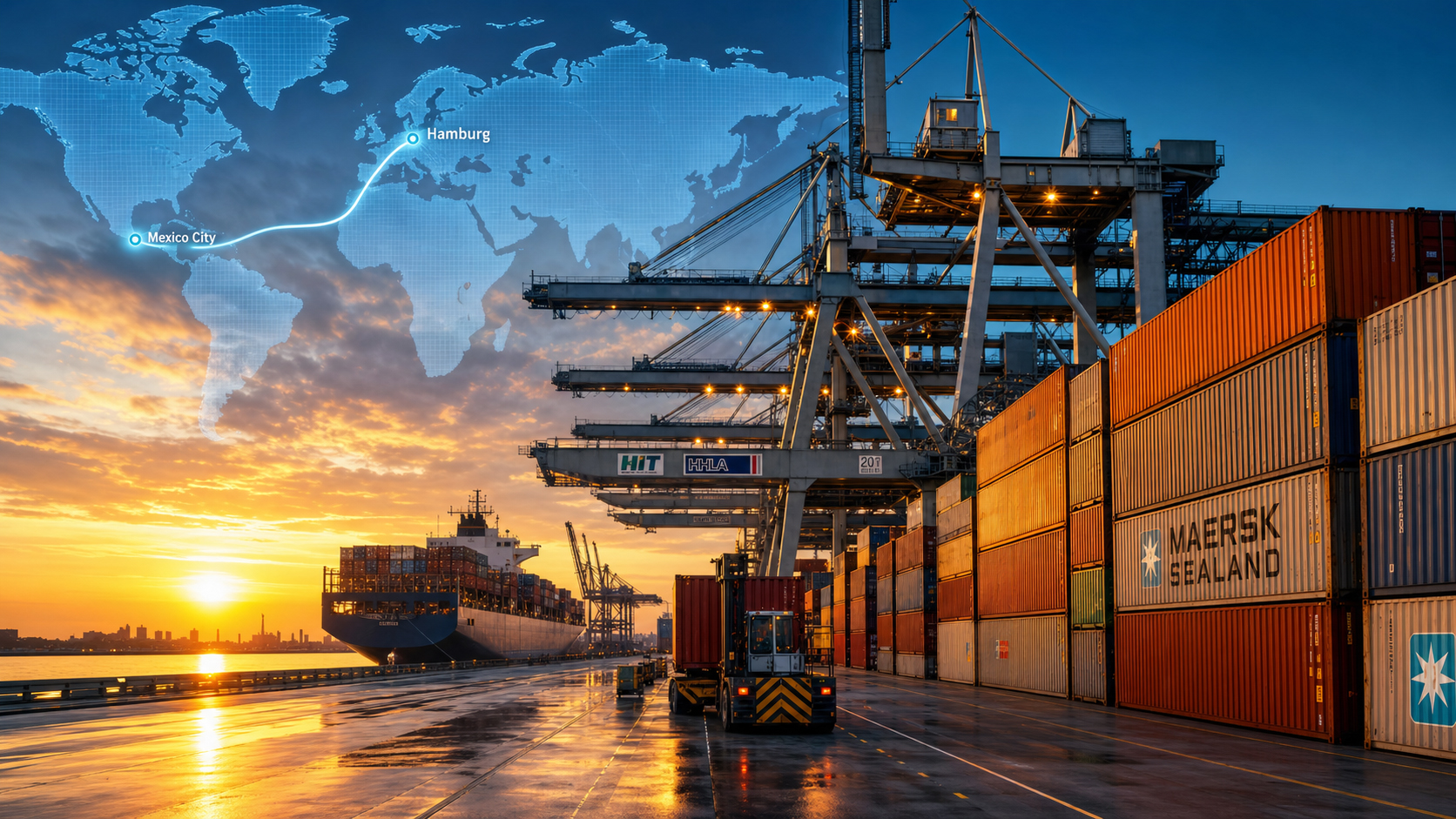
An economic analysis of the modernized EU-Mexico agreement: The realignment of the transatlantic trade architecture – Image: Xpert.Digital
Why Europe is turning its back on isolationism in an era of global protectionism and securing a decisive competitive advantage with Mexico
Against global protectionism: Europe's ingenious move secures billions in contracts in Mexico
New boom for industry: How the new EU-Mexico agreement is igniting the European export turbocharger
In a time of increasing geopolitical tensions and the threat of protectionist isolation, the European Union is sending a historic signal for rules-based, fair global trade. With the formal adoption of the modernized free trade agreement between the EU and Mexico, a dynamic market with over 120 million consumers is opening up, offering European companies unprecedented expansion opportunities. The pact is far more than a simple tariff reduction: it drastically reduces trade barriers in the agricultural and industrial sectors, grants lucrative access to state procurement markets for the first time, and inextricably links tangible economic interests with strict, enforceable climate and social standards. Learn in the following in-depth economic analysis how this strategic alliance will boost domestic small and medium-sized enterprises (SMEs), revolutionize the automotive and energy sectors, and secure a crucial geostrategic competitive advantage for Europe in an increasingly fragmented world order.
Historic milestone in Strasbourg: The ratification and the new trade policy framework
On July 7, 2026, during its plenary session in Strasbourg, the European Parliament formally adopted the modernized trade agreement between the European Union and Mexico. This historic decision followed the official signing of the agreements at the EU-Mexico Summit, which took place in Mexico City on May 22 of the same year. This far-reaching decision lays the foundation for a new era of bilateral economic cooperation, with the agreement expected to enter into provisional force no later than November 1, 2026. In a geopolitically fragile time, the European Union is thus sending an unequivocal and strong signal in favor of rules-based free trade. Instead of resorting to the threat of punitive tariffs and short-sighted trade escalations, Europe is consistently choosing the path of reliable partnership and clear, transparent rules. This strategic approach significantly reduces unpredictability in global supply chains and creates an extremely stable investment climate, which is essential, particularly for long-term planning industrial companies, logistics groups, and the highly specialized B2B sector. The agreement renews and deepens existing trade relations, which were previously primarily regulated by the trade component of the original agreement from 2000.
Growth dynamics and strategic market development in bilateral trade
The substantial economic benefits of this renewed economic partnership are based on a proven track record of success. Since the implementation of the first agreement at the turn of the millennium, European Union exports to the Mexican market have increased by a remarkable 324 percent. This impressive and consistent growth rate underscores the enormous and continuously expanding capacity of the Mexican economy to absorb top-quality European goods and highly specialized services. A key economic policy pillar of the new agreement is the gradual but comprehensive reduction of approximately 95 percent of the historically high Mexican tariffs on agricultural and food exports from Europe. This opens up unprecedented expansion opportunities for European agricultural businesses and the food processing industry in a dynamic market with well over 120 million consumers. Furthermore, European companies will now have significantly improved and, above all, non-discriminatory access to public tenders in Mexico. This specific aspect is of paramount importance for industrial companies and digital service providers, as lucrative government infrastructure projects, energy projects, and complex logistics networks can now be accessed under absolutely fair competitive conditions. Such regulatory developments sustainably promote international business development and enable European players to profitably and legally leverage their decades of accumulated expertise in complex large-scale projects.
Sustainability as an economic imperative: climate, employee rights and ESG criteria
One of the most outstanding innovations of the modernized agreement is the strict and legally binding anchoring of comprehensive climate and environmental protection measures, fundamental workers' rights, and the far-reaching principles of sustainable development. These now enforceable obligations represent a genuine paradigm shift in modern European trade policy, as they inextricably link purely economic growth interests with ecological and social global responsibility. For innovative sectors deeply involved in renewable energies, state-of-the-art solar technology, and efficient battery production, this legal framework creates entirely new, highly incentivized investment opportunities. The contractually enforced transition to more environmentally friendly production methods in Mexican industry is prompting local and international market participants to invest heavily in green technologies of the future. This, in turn, is creating a huge demand for European expertise in environmental technology and resource-efficient industrial automation. At the same time, the gradual harmonization of social standards effectively protects European companies from unfair competition through systematic social dumping. The deep integration of these so-called ESG criteria into a legally binding international trade agreement impressively demonstrates that economic growth and uncompromising ecological sustainability do not have to be opposites, but rather are mutually dependent and reinforce each other in the long term within the framework of an intelligent, future-oriented economic policy.
The European counter-model: Multilateralism as a strategic response to global fragmentation
Parliament's clear approval of this comprehensive agreement underscores Europe's unequivocal political and economic will to resolutely counter the increasing isolationism and risky tendency toward protectionism among other global powers. In-depth macroeconomic analysis interprets this bold step as an exceptionally strong signal in favor of open, non-discriminatory, and fair global trade. In a highly complex geopolitical phase, where certain international actors increasingly resort to erratic unpredictability and drastic tariffs as their primary means of political pressure, the European Union is establishing a superior alternative model. This model rests on the unshakeable pillars of trusting partnership, strategic diversification, and the absolute reliability of rules. The empirically verifiable, dramatic increase in European export volumes impressively demonstrates that open markets are the essential catalyst for generating prosperity, continuously promoting technological innovation, and securing highly skilled industrial jobs in the long term. The new agreement inextricably links these massive economic opportunities with strict, verifiable social and environmental standards. In addition to enormous tariff reductions, it also legally guarantees comprehensive protection for hundreds of specific geographical indications of premium European products, thus safeguarding the market value of these products in the Americas.
In a globalized world increasingly threatened by hostile geopolitical blocs, far-sighted countries with an urgent desire for stable, growth-oriented, and predictable trade relations are seeking closer economic alliances. The current protectionist policies of the United States, in particular, are forcing numerous trading partners to actively search for reliable, long-term alternatives. Given the clear announcements from Washington that it does not intend to continue existing North American free trade agreements in their current, established form, the expanded European-Mexican alliance is gaining considerable strategic importance. Europe is presenting a coherent, fair, and highly attractive alternative model of international economic integration, which is continuously gaining international appeal against the backdrop of global trade policy upheavals. This agreement, along with similar initiatives, undeniably demonstrates that European trade policy is consistently and successfully pursuing a path of increased strategic partnerships, significantly enhanced economic security, and a considerably stronger global presence. This forms the fundamental framework for stabilizing the ailing multilateral trading system from the bottom up by contractually enshrining clear, unambiguous and predictable rules based on international principles, while at the higher multilateral level there is often only stagnation.
The automotive and industrial sectors are the focus of the new supply chains
An analytical and in-depth look at the specific economic impacts of the agreement reveals its enormous potential for industrial manufacturing, and especially for the globally networked automotive sector. Over the past two decades, Mexico has rapidly developed into one of the world's most important and efficient production locations for the international automotive industry. For European premium suppliers, highly specialized technology providers, and globally operating logistics service providers, the now-ratified agreement represents a significant and urgently needed reduction in blocking bureaucratic hurdles and costly non-tariff trade barriers. The careful harmonization of complex technical standards and lengthy certification procedures now enables leading European B2B companies to export their high-tech components, precision sensors, and customized automation solutions to the Mexican market much more smoothly, quickly, and, above all, cost-effectively. This not only optimizes pure production and transport costs, but also accelerates the pace of global just-in-time supply chains, which is absolutely invaluable for maintaining competitiveness in modern, data-driven logistics.
Furthermore, the significantly improved investment protection afforded by the agreement greatly facilitates direct and indirect technology transfer. European market leaders in robotics, artificial intelligence for production control, and comprehensive industrial digitalization are finding a rapidly growing and extremely receptive market in Mexico. This market is eager to quickly upgrade its sometimes outdated production facilities to the very latest standards of smart industry and networked production. This symbiotic combination of superior European engineering, software development, and sheer Mexican production capacity creates highly resilient and efficient value chains that are significantly more robust against unexpected global shocks and supply bottlenecks.
Agricultural economics and the profound reduction of non-tariff trade barriers
The agricultural and food technology dimension of this bilateral agreement must not be underestimated in any comprehensive macroeconomic analysis. The now contractually guaranteed, complete elimination of the remaining prohibitive tariffs on high-quality agricultural food exports from the European Union represents a historic and long-awaited breakthrough for this sector. The European food industry is characterized worldwide by extremely high, reliable quality standards and the strictest hygienic production requirements. Until now, these premium products were drastically made more expensive on the Mexican market by artificially high tariffs, which severely and unfairly restricted their natural competitiveness compared to local or North American products. With the entry into force of the new regulations, this entrenched market dynamic changes fundamentally in favor of European producers.
This primarily affects not only highly processed foods, but also includes specialty, traditional agricultural products and premium goods. At the same time, the agreement compels Mexican authorities to continuously align their own sanitary and phytosanitary standards with the very high European level of protection. This demanding process of regulatory harmonization drastically and sustainably reduces the feared non-tariff trade barriers. For large and small agricultural producers in the European member states, this development means, specifically, that lengthy, unpredictable, and extremely costly border controls are reduced to an absolute minimum, significantly increasing net export margins. Furthermore, a state-of-the-art, efficient mechanism for the binding settlement of disputes is being established, reliably ensuring that any emerging trade conflicts are resolved on a purely factual, scientific, and legal basis, instead of escalating unchecked into irrational and politically motivated trade wars.
Our US expertise in business development, sales and marketing

Our US expertise in business development, sales and marketing - Image: Xpert.Digital
Industry focus areas: B2B, digitalization (from AI to XR), mechanical engineering, logistics, renewable energies and industry
More information here:
A thematic hub offering insights and expertise:
- Knowledge platform covering global and regional economies, innovation and industry-specific trends
- A collection of analyses, insights, and background information from our key areas of focus
- A place for expertise and information on current developments in business and technology
- A hub for companies seeking information on markets, digitalization, and industry innovations
Public procurement in Mexico: How European SMEs are gaining new growth markets
Public procurement markets as a new growth engine for European SMEs
One of the most ambitious, far-reaching, and economically lucrative aspects of the entire agreement is the contractually guaranteed, reciprocal opening of the multi-billion-dollar public procurement markets. Historically and empirically, lucrative government tenders in many emerging and developing countries have traditionally been characterized by highly opaque, protectionist regulations that systematically and often arbitrarily disadvantage foreign bidders. Through the agreement's new, transparent provisions, European companies now gain unprecedented, legally enforceable access to the budgets of Mexican government projects at all administrative levels, whether federal, regional, or local. This opens up a completely new, highly profitable market for innovative European SMEs, which often excel in the global market through their extremely high level of specialization and undisputed technological market leadership in niche sectors.
Whether it concerns the nationwide expansion of modern telecommunications networks, the urgently needed modernization of outdated water supply systems, or the demanding implementation of networked smart city technologies, European B2B technology companies can now offer their proven and innovative solutions directly and without disadvantage. This fundamental market opening is of particularly great economic significance, as large-scale public investments often have a strongly counter-cyclical effect on the general economy and thus have an extremely stabilizing and crisis-proof function for export-oriented, medium-sized enterprises. The new transparency and legal certainty gained, which are deeply integrated into Mexican procurement law through European regulations, massively reduce the latent risk of corruption, lack of transparency, and inefficiency, which in turn strongly and sustainably promotes the trust and willingness of European investors to invest.
Geopolitical implications: Latin America as a strategic anchor in a multipolar world order
A purely economic analysis based solely on financial indicators falls far short of the enormous geopolitical and geostrategic implications of this modern treaty. In a historical era marked by tectonic shifts in the global power structure and entirely new hegemonic conflicts posing an existential threat to free international trade, the European Union is officially positioning Mexico as its central strategic anchor on the Latin American continent. In the twenty-first century, the astute and forward-looking diversification of global trade partnerships is no longer merely an economic option for profit maximization, but rather an indispensable geopolitical necessity for safeguarding national sovereignty. The risky dependence on individual, often politically unpredictable, dominant economic powers has repeatedly proven itself in recent history to be the most vulnerable weak point in European industrial supply chains.
By massively intensifying and institutionally reinforcing its economic, technological, and political relations with Mexico, Europe is proactively creating an effective strategic counterweight to the expanding Asian and highly protectionist North American spheres of influence. This agreement clearly serves as a modern blueprint for future, similar negotiations with other sovereign states and signals unequivocally to potential partners worldwide that the European Union is a reliable, strictly values-based, and economically extremely powerful ally. It demonstrates the foreign and trade policy capabilities of a united Europe and underpins its legitimate claim to actively, fairly, and sustainably shape the fundamental rules of advancing globalization, rather than merely passively observing them.
Macroeconomic perspectives and the resilience of bilateral value chains
At the overarching macroeconomic level, the agreement promises consistently positive and measurable impetus for the aggregate gross domestic product of both major economic regions. The drastic reduction of unproductive transaction costs through the elimination of outdated tariffs and the smart harmonization of technical regulations will lead to significantly more efficient, market-driven resource allocation. This will stimulate foreign direct investment on an unprecedented scale and promote the deep, structural integration of agile Mexican companies into complex European value chains. Significant, prosperity-enhancing economies of scale are expected, particularly in the promising sectors of high-tech manufacturing, the semiconductor industry, and highly scalable digital services.
The strengthened and contractually secured resilience of these transcontinental networks represents a direct and tangible economic competitive advantage in times of persistent global uncertainty. When leading European industrial companies strategically relocate part of their production to Mexico or source critical intermediate products for their final manufacturing there, they drastically reduce their dangerous dependence on unreliable Asian suppliers. Given the simmering geopolitical tensions in the Indo-Pacific, this constitutes an exceptionally astute and forward-looking risk minimization strategy for supply chain management. This modern form of nearshoring or friendshoring is firmly anchored institutionally and strongly promoted economically by the present, modernized agreement. The resulting absolute predictability of the applicable trade rules allows executives and strategists to make very long-term investments in infrastructure and personnel, instead of having to react tactically to short-term, unpredictable market fluctuations.
The energy sector: Renewable energies and technology transfer between Europe and Mexico
One key industrial sector that will benefit particularly and extremely profitably from the new, improved framework conditions is undoubtedly the energy sector, and in particular the rapidly growing field of renewable energies. Due to its geography, Mexico possesses a truly enormous, yet largely untapped, natural potential for large-scale solar and wind energy generation. Given the ambitious climate targets now legally binding in the agreement, the Mexican government faces enormous political pressure, but simultaneously a massive economic opportunity for the rapid expansion of green, sustainable infrastructure. European technology companies, which are undisputed global leaders in the research and development of highly efficient photovoltaic systems, gigantic wind turbines, and state-of-the-art industrial battery storage systems, will find absolutely ideal and highly lucrative investment conditions here.
The significantly facilitated market access and the massively improved intellectual property protection afforded by the agreement guarantee corporations that expensive European direct investments in Mexico's transforming energy sector are fully protected against expropriation or technology theft. This promotes direct, rapid technology transfer across the Atlantic and actively supports Mexico in decarbonizing its own, hitherto heavily fossil-fuel-dependent, energy supply as quickly as possible. At the same time, these close partnerships secure essential, preferential access for European industry to key critical raw materials and basic components that are absolutely indispensable for the success of the global energy transition and maintaining its own competitiveness. The deepened cooperation in this strategic area ranges from joint, highly funded research and development of entirely new electricity storage technologies to the capital-intensive construction of smart, digitally controlled power grids that enable the efficient, loss-free distribution of generated renewable energy over long distances.
Digital transformation and service exports in the B2B environment
Far beyond traditional physical trade, the agreement completely revolutionizes the intangible exchange of services and decisively advances the highly networked digital economy on both sides. Today, more than ever, modern, competitive industries depend on absolutely seamless data flows, fail-safe cloud infrastructures, and extremely fast, real-time digital services. The adopted framework establishes crystal-clear, binding guidelines for smooth cross-border data transfer while simultaneously protecting sensitive user privacy and data strictly according to the highest European standards. This presents a unique opportunity for specialized IT service providers, strategic web analytics agencies, and digital business consultants to support and guide emerging Mexican companies in their often still-nascent digital transformation.
The deep European expertise in search engine-based market development, international business development via digital channels, and the implementation of highly complex, multilingual content strategies is currently in extremely high demand throughout Latin America. Since the agreement rigorously dismantles cumbersome bureaucratic hurdles for the provision of services in the partner country, European specialists can scale their lucrative B2B consulting projects much more efficiently and across borders. This strengthens Europe's already strong position as the world's leading exporter of high-quality theoretical knowledge, strategic expertise, and intangible digital assets in a fully globalized and highly interconnected age.
A future-oriented blueprint for rules-based global trade
In summary, after thorough economic analysis, it can be stated beyond doubt that the modernized and ratified trade agreement between the European Union and the United Mexican States represents far more than a mere, traditional tariff reduction agreement for agricultural goods. It is an enormously profound, masterfully negotiated strategic instrument for actively shaping international economic relations in the complex 21st century. Through the bold and consistent integration of the strictest environmental, labor, and social standards into robust, enforceable economic agreements, Europe is completely redefining the parameters and moral boundaries of global free trade. It demonstrates to the international community that wide-open markets and highly responsible government action need not be insurmountable contradictions. This agreement offers enormous, long-term growth opportunities for European and Mexican industry, the highly innovative SMEs, and the thriving service sector, opportunities that are supported and guaranteed by absolute legal clarity and the highest level of investment security. In a historical era unfortunately increasingly characterized by irrational trade conflicts and harmful protectionist tendencies, this agreement marks a remarkable triumph of economic reason and peaceful international cooperation. It fundamentally strengthens the indispensable resilience of the European economy, promotes sustainable, green growth on both sides of the Atlantic, and irrevocably cements Europe's role as an essential, leading architect of a fair, transparent, and strictly rules-based global economic order for the future.
Your global marketing and business development partner
☑️ Our business language is English or German
☑️ NEW: Correspondence in your native language!

Konrad Wolfenstein
I and my team are happy to be available to you as your personal advisor.
You can contact me by filling out the contact form here [email protected]:or simply call me at +49 7348 4088 965. My email address is
I'm looking forward to our joint project.
☑️ SME support in strategy, consulting, planning and implementation
☑️ Creation or realignment of the digital strategy and digitization
☑️ Expansion and optimization of international sales processes
☑️ Global & Digital B2B trading platforms
☑️ Pioneer Business Development / Marketing / PR / Trade Fairs
🎯🎯🎯 Data-driven B2B industry hub as a quasi-in-house solution

The quasi-in-house solution: How Xpert.Digital closes operational gaps in B2B marketing and sales – Smart Content-Driven Business - Image: Xpert.Digital
Xpert.Digital is a data-driven B2B industry hub led by Konrad Wolfenstein . The company acts as an external, quasi-in-house solution for industrial partners, closing operational gaps in marketing, content, and sales – without requiring additional resources on the client side.
More information here:










