

Fiege's pharmaceutical offensive: A logistics center with foresight – Why the new pharmaceutical logistics facility in Münster is more than just storage space
Xpert Pre-Release

Available in 27 languages 📢
Prefer Xpert.Digital on GoogleⓘPublished on: September 28, 2026 / Updated on: September 28, 2026 – Author: Konrad Wolfenstein
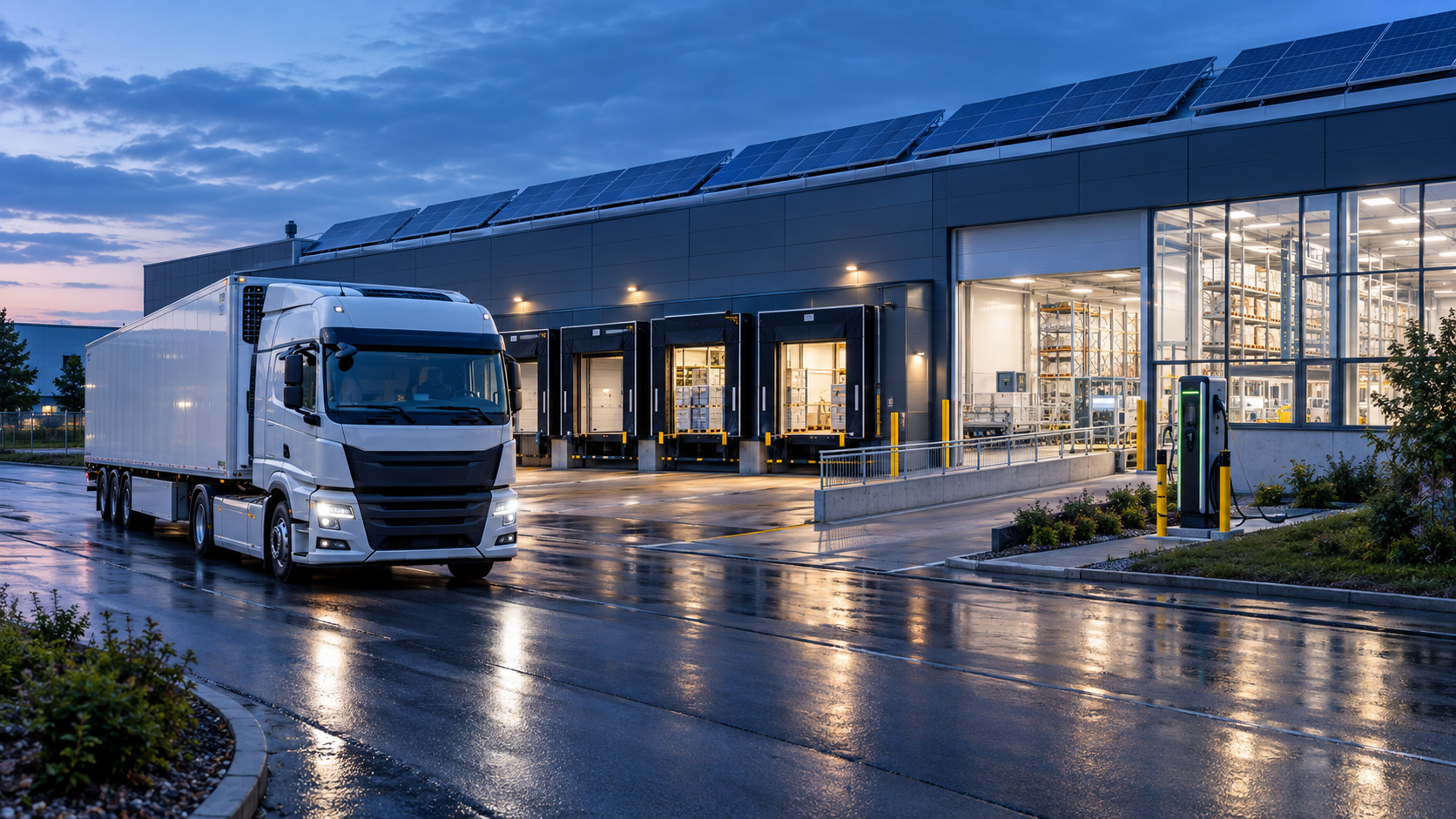
Fiege's pharmaceutical offensive: A logistics center with a vision – Why the new pharmaceutical logistics facility in Münster is more than just storage space – Creative image on the topic, created with AI: Xpert.Digital
Münster as a future location for specialized pharmaceutical logistics
Treating pharmaceuticals like ordinary goods risks far more than just delayed deliveries
The expansion of the healthcare site in Münster-Hessenweg by the Fiege Group is far more than an ordinary real estate project. The construction of a specialized logistics center spanning approximately 10,000 square meters heralds a new era in pharmaceutical logistics, not only expanding storage capacity but also redefining the entire supply chain. Pharmaceuticals place special demands on storage and transport, as they are sensitive to temperature and other external influences. The new center will be equipped with state-of-the-art technology, including a photovoltaic system and charging infrastructure for electric trucks, to meet the industry's increasing requirements.
With this project, Fiege is pursuing a strategy that goes beyond simply providing space. The site is being designed as a single-user property, meaning that the facilities are specifically tailored to the needs of a single pharmaceutical company. This individualization not only increases efficiency but also strengthens the relationship between service provider and client. In a market increasingly focused on specialized solutions, Fiege is positioning itself as an innovative player that places quality assurance and process optimization at the heart of its services.
The decision to locate in Münster-Hessenweg is strategically sound: Existing infrastructure and expertise can be leveraged here. This project is not only a step towards increased storage capacity, but also a significant contribution to improving the security and quality of pharmaceutical supply. The coming years will show how this location develops as a key hub in pharmaceutical logistics.
Fiege's pharmaceutical offensive in Münster: Why 10,000 square meters are reorganizing the supply chain
The expansion of the healthcare site in Münster-Hessenweg appears at first glance to be a manageable real estate project. Fiege is planning a new logistics center there, tailored to a single tenant, with approximately 9,800 square meters of warehouse space on the ground floor, more than 1,000 square meters of mezzanine space, and 430 square meters of office space. Construction was scheduled to begin in August 2026, with completion planned for June 2027. A photovoltaic system with a peak output of around 1,000 kilowatts will be installed on the roof, while a 200-kilowatt charging infrastructure will enable the use of electric trucks. The company is aiming for DGNB Gold certification for the building.
Economically, however, the project is more significant than the sheer size of the facility would suggest. It's not simply creating additional storage capacity, but rather a specialized infrastructure for an industry where errors are considerably more costly than in typical consumer goods logistics. Pharmaceuticals must be stored and transported in a traceable, secure, often temperature-controlled manner, and under precisely defined conditions. A pharmaceutical logistics site is therefore simultaneously a physical building, a regulated operating space, a data system, a security architecture, and an integral part of the customer's quality assurance.
This project illustrates the direction in which the German logistics market is developing. While interchangeable, standard warehouses can come under greater price pressure during a weak economy, the strategic importance of specialized properties is growing. Such locations combine industry expertise, technical equipment, regulatory processes, and long-term customer relationships. Therefore, the decisive metric is not solely the price per square meter. More important are process reliability, availability, scalability, energy costs, the ability to train staff, and the degree to which the service provider is integrated into the pharmaceutical company's value chain.
A small hall with a big strategic impact
With 9,800 square meters of logistics space, the new center is not among the largest distribution facilities on the German market. This can actually be an advantage. The size suggests a focused solution, with processes that can be tailored to a specific pharmaceutical customer. In addition, there are more than 1,000 square meters of mezzanine space that can be used, for example, for small-scale tasks, packaging processes, technical equipment, quality control, or administrative processes. The 430-square-meter office area provides space for operational management, quality control, and close collaboration between service provider and customer.
The fact that some listings mention more than 10,000 square meters of logistics space, while the actual warehouse area is listed as around 9,800 square meters, can be explained by the additional mezzanine space. For an economic evaluation, a clear distinction should be made between the footprint, warehouse area, ancillary usable space, and office space. Simply adding up all the areas says little about the actual storage capacity. Crucial factors include warehouse height, racking layout, fire compartments, temperature zones, traffic areas, receiving and shipping capacities, and the potential for automation.
A compact site can be capital- and space-efficient if it is designed for a clearly defined flow of goods. It can be brought online more quickly than a very large campus, is easier to integrate into existing structures, and allows for a more precise allocation of costs and performance. At the same time, the investment remains large enough to implement modern energy and building technology economically. Furthermore, the ratio between warehouse space, mezzanine, and office space suggests that the site is not simply intended for pallet storage. The economically attractive aspects of modern pharmaceutical logistics often lie in the controlled ancillary processes, not merely in the movement of goods.
This transforms the property into a platform for contract logistics services. These services can include incoming goods inspections, batch management, inventory control, order picking, serialization, repacking, labeling, returns processing, and documented handover to downstream transport. The specific processes implemented will depend on the future user, the product groups, and the necessary permits. Nevertheless, the building structure must offer sufficient flexibility from the outset, as subsequent modifications in a sophisticated pharmaceutical environment can be expensive, time-consuming, and operationally risky.
Single user instead of anonymous standard area
The center is designed as a single-user facility. This means that a single user receives a solution largely tailored to their specific requirements. This model is particularly suitable for pharmaceutical logistics because product types, temperature ranges, security requirements, IT interfaces, and quality processes can be highly customer-specific. The higher the degree of specialization, the less benefit a completely standardized, multi-user warehouse offers.
For Fiege, this model offers the opportunity for deeper and, presumably, longer-term customer loyalty. A pharmaceutical company doesn't switch a qualified logistics location as easily as a typical warehouse service provider. Before a switch, processes must be reviewed, interfaces tested, temperature ranges mapped, employees trained, and responsibilities documented. These switching costs stabilize the business relationship and can enable higher added value. However, they don't guarantee above-average margins. The service provider must meet the additional requirements on an ongoing basis and bears higher costs for quality, personnel, technology, insurance, and compliance.
For the customer, the advantage lies in process control. Areas, traffic routes, temperature zones, and technical systems can be planned along the actual flow of goods. This reduces unnecessary movement, minimizes interfaces, and can lower error rates. A dedicated location also offers advantages in terms of access control, confidentiality, and product segregation. In a regulated environment, this clear allocation is not only organizationally convenient but can also facilitate audits and accountability.
This is countered by a concentration risk. If a property is heavily tailored to a single user and their processes, subsequent re-letting becomes more difficult. Specialized technology, structural modifications, and limited alternative uses can negatively impact the residual value. Customers also become dependent: a large portion of their regional distribution becomes tied to a single location and service provider. Therefore, the single-user model only makes economic sense if the contract duration, investment scope, adaptation mechanisms, and exit strategies are carefully coordinated.
The statement that the development is being carried out in close coordination with a potential pharmaceutical client points to an important risk dimension. As long as final confirmation of demand is not fully secured, a gap remains between planning and long-term occupancy. For the real estate developer, it is crucial to irrevocably commit to client-specific elements only when the economic commitment is sufficiently robust. At the same time, planning must begin early enough to avoid jeopardizing the completion date and the necessary qualification. This tension is typical for build-to-suit projects.
Pharmaceutical logistics is quality assurance in motion
Pharmaceutical logistics differs fundamentally from the storage of ordinary industrial goods. The goods possess not only material and financial value, but also direct relevance to patient care and the healthcare system. Temperature deviations, unclear batch identification, damaged packaging, or incomplete documentation can render products unusable. The resulting economic damage is not solely due to the loss of the goods. It also includes inspections, delays, potential supply problems, reputational damage, and costly root cause analyses.
European Good Distribution Practice (GDP) for medicinal products requires maintaining quality and integrity throughout the supply chain. This includes suitable premises, clean and dry storage conditions, controlled temperatures, documented processes, qualified personnel, and safe means of transport. Temperature ranges must be tested under representative conditions, and critical points within a warehouse must be identified. Measuring instruments require traceable calibration. Any deviations must be clearly defined and documented.
It follows that a new building is not ready for operation upon final building inspection. Before regular operation can begin, technical commissioning, qualification, temperature mapping, process validation, IT testing, training, and, if necessary, regulatory approvals are required. Therefore, for scheduling until June 2027, the completion of construction is not the only crucial factor. The decisive point is when the entire system, comprising the building, technology, personnel, and documentation, is functioning reliably.
The quality of a pharmaceutical logistics facility becomes particularly evident in exceptional situations. A power outage, a malfunction in the heating or cooling system, a sensor failure, a delayed pickup, or a vehicle breakdown must not lead to a lack of clarity regarding responsibilities. Emergency plans, redundant systems, backup capacities, and rapid decision-making processes are economically valuable, even though they appear as additional costs in normal, trouble-free operations. Their benefit becomes apparent in the rare cases where a single incident threatens significant merchandise value or security of supply.
This creates a position for Fiege that extends beyond traditional warehouse logistics. The service provider becomes an operational component of the pharmaceutical quality system. This raises the barriers to entry for competitors, as not every logistics company can quickly establish the necessary processes, personnel, and documentation. It also increases liability and reputational risks. The economic value of the site therefore depends heavily on whether quality management is organized not as a peripheral control department, but as an integral part of the business.
Münster is being transformed from a location into a healthcare cluster
The choice of Münster-Hessenweg follows a logical logic. Fiege has been active in healthcare logistics there for years. The new building is being constructed directly adjacent to existing facilities. This allows the company to leverage existing knowledge, personnel, technical expertise, and regional transport connections. Expanding at an established location is often less risky than building a completely new branch.
Proximity creates synergy advantages. Managers, quality experts, IT specialists, building services, and, if necessary, transport capacities can be deployed across locations. Training, emergency response, and backup processes can also be coordinated more easily. If the neighboring existing building has suitable reserves, it can provide additional resilience in the event of disruptions or seasonal peaks. However, whether and to what extent such synergies can actually be utilized depends on the respective permits, customer agreements, and product requirements.
Münster is not located in one of Germany's five major logistics hubs. This is not a disadvantage if the property is planned along an industry-specific network. For pharmaceutical logistics, proximity to production sites, reliable road connections, access to qualified employees, and good accessibility to regional sales markets are often more important than an address in a particularly liquid real estate market. The location can also benefit from its position in North Rhine-Westphalia, the most populous federal state with a dense infrastructure of hospitals, pharmacies, wholesalers, and industrial companies.
The expansion strengthens Münster-Hessenweg as a specialized healthcare hub. Such a cluster doesn't arise simply from additional square footage. It develops when expertise, standardized processes, qualified employees, service providers, and customer relationships converge in one location. With each additional suitable business establishment, certain transaction costs decrease. Staff can be recruited and developed more easily, technical partners gain experience with the site's requirements, and customers gain proven access to an existing logistics system.
At the same time, the concept of a cluster should not be overstated. A single new building does not transform an industrial park into a leading European pharmaceutical logistics center. This would require a larger number of independent players, specialized suppliers, research institutions, transport networks, and further investments. A more realistic assessment is that Fiege will consolidate its own site-specific expertise and thereby develop a company-specific healthcare cluster.
Growth in a weak logistics market
The German market for industrial and logistics space recovered in 2025, but depending on the definition used, remained significantly below previous averages. Due to differing data collection methods, major real estate consultants arrived at nationwide sales figures of between approximately 5.2 and 6.1 million square meters. A common finding across all analyses is that transport and logistics companies were among the most important demand groups, and new construction projects were developed more selectively than during the boom years.
Against this backdrop, the new building in Münster makes a clear statement. Fiege is not relying on a vague hope of increasing demand for space, but rather on a concrete, specialized need. This reduces the market leasing risk, provided the tenant is contractually bound and their business is viable. Industry-specific demand can decouple from the general economic cycle because healthcare and pharmaceuticals are less cyclical than furniture, fashion, or parts of the online retail sector.
However, countercyclical stability does not mean being risk-free. The German pharmaceutical industry faces rising research and production costs, regulatory pressure, price negotiations within the healthcare system, and international competition for production sites. Furthermore, demand from individual customers can shift due to patent expirations, changes in product portfolios, acquisitions, or production relocations. A dedicated facility must therefore remain sufficiently flexible to respond to new products, production volumes, and temperature requirements.
The pharmaceutical industry is of great economic importance to Germany. It directly employs more than 130,000 people and generates annual sales of around €60 billion. Furthermore, numerous jobs at suppliers and service providers depend on it. Logistics represents a comparatively small cost component within the overall pharmaceutical value chain, but it has a disproportionately large impact on availability, quality, and tied-up capital. This is precisely what makes specialized pharmaceutical logistics so economically attractive.
For Fiege, this segment offers the opportunity to differentiate itself less through the lowest transport or storage costs and more through process expertise. In standard logistics, providers are easier to compare and replace. In pharmaceutical logistics, however, auditability, data quality, regulatory knowledge, disruption management, and demonstrable process stability are crucial. These factors can enable more stable margins, but require continuous investment and a corporate culture that consistently identifies and addresses deviations.
Your intralogistics experts

Consulting, planning and implementation of complete solutions for high-bay warehouses and automated storage systems - Image: Xpert.Digital
More information here:
Innovative approaches in pharmaceutical logistics
Energy technology is becoming a cost factor
The planned photovoltaic system with a peak output of approximately 1,000 kilowatts is an essential element for a building of this size. Under typical conditions in North Rhine-Westphalia, a system of this capacity can generate roughly 850,000 to 950,000 kilowatt-hours of electricity annually. The actual yield depends on orientation, tilt, shading, modules, inverters, weather, and system availability. Nevertheless, this scale demonstrates that this is not merely a symbolic green roof with a few solar panels, but rather a significant decentralized energy generation system.
The economic benefits are primarily determined by self-consumption. Every kilowatt-hour used directly in the building essentially replaces a portion of the more expensive grid electricity. In a pharmaceutical logistics facility, there are continuous loads during the day from lighting, conveyor technology, IT, ventilation, heat pumps, chargers, and potentially temperature-controlled areas. This load profile is well-suited for solar power generation. The higher the simultaneous consumption, the lower the dependence on feed-in tariffs and the more effectively the photovoltaic system reduces operating costs.
An air-to-air heat pump and LED lighting complement this concept. LEDs reduce electricity consumption and heat generation compared to older lighting systems. Intelligent controls can further dim the lights in less frequently used areas of the building. The heat pump uses electricity instead of fossil fuels and can operate efficiently with adequate building insulation. Its environmental impact increases if some of the electricity is generated on-site or if the grid electricity supply gradually becomes more climate-friendly.
Nevertheless, it would be too simplistic to automatically conclude that a system with 1,000 kilowatts peak power (kWp) achieves climate-neutral operation. A large photovoltaic system generates a significant amount of electricity at midday in the summer, while consumption also occurs at night and in winter. Without sufficiently flexible loads, storage, or grid feed-in options, surpluses and deficits arise over time. Cooling, heating, charging infrastructure, and automation can significantly increase overall electricity demand. A reliable climate assessment must therefore consider generation and consumption throughout the year, as well as the embodied emissions from the building and its technology.
The coupling of these systems is economically advantageous. Electric trucks can be charged when the solar array is generating high power. Heat pumps and thermal storage systems can shift loads to a limited extent. An energy management system can limit peak loads, as capacity charges for commercial customers can represent a significant portion of their electricity costs. Therefore, technical scalability is at least as important as the initial infrastructure. A grid connection that is adequately sized today can quickly become a bottleneck with a growing electric vehicle fleet.
200 kilowatts is the starting point, not the end point
The planned 200-kilowatt charging infrastructure is a visible sign of the electrification of road freight transport. This capacity allows for a significant recharge of a heavy electric truck during extended downtime. Theoretically, up to 200 kilowatt-hours of energy could be transferred during a one-hour charging period; in practice, however, the charging curve, conversion losses, and distribution across multiple charging points result in lower values. This can already be beneficial for predictable regional transport.
However, 200 kilowatts is limited as a sole future solution. If several electric trucks need to charge simultaneously, or if vehicles with large batteries need to quickly get back on the road, the power demand increases considerably. Therefore, the site should be designed with cable routes, transformer capacity, space, and control systems in mind to allow for the future addition of charging points and higher power outputs. This is precisely where the value of an expandable technical infrastructure lies.
The economic viability of electric trucks is not solely determined by the vehicle price. Key factors include annual mileage, electricity prices, toll benefits, maintenance, residual value, payload, route profile, and idle times. A logistics center offers a strategic advantage: it consolidates vehicles and can integrate charging processes into predictable waiting, loading, and unloading times. Using locally generated solar power potentially reduces both energy costs and emissions. However, solar power is not automatically available when a vehicle needs to charge at night or in the early morning.
For pharmaceutical customers, decarbonizing transport is becoming increasingly important because large companies are required to track and reduce their indirect emissions along the supply chain. A service provider that decarbonizes warehousing and transport together therefore not only improves its own balance sheet but also contributes to the customer's climate goals. This benefit must be reliably measured. Those who merely communicate installed capacity without providing evidence of electricity volumes, utilization, and actual emissions avoided risk being accused of superficial sustainability communication.
DGNB Gold as an economic instrument
The targeted DGNB Gold certification is more than just a marketing label, provided the criteria are consistently implemented in planning and operation. The system considers a building's ecological, economic, technical, socio-cultural, and process-related characteristics. A high overall level of fulfillment is required for Gold certification. For a logistics property, this includes, among other things, energy efficiency, resources, life-cycle costs, adaptability, deconstruction, interior quality, and the quality of the planning.
Certification can offer several economic advantages for owners and users. Lower energy and maintenance costs improve operating expenses over the lease term. A flexible building structure protects the residual value because it facilitates future repurposing. Documented material and building data reduces information risks. Furthermore, banks, investors, and large users increasingly demand verifiable sustainability features, which can make certified properties easier to finance or market.
At the same time, a certificate is not proof of optimal operation. Actual performance depends on how the building is used, maintained, and controlled. An efficiently planned hall can consume unnecessarily large amounts of energy due to incorrect target values, permanently open doors, poorly coordinated systems, or a lack of consumption monitoring. For economic evaluation, actual measurements after commissioning are more important than the planned values alone.
Especially in pharmaceutical logistics, sustainability and regulatory compliance can conflict. Stricter temperature requirements, high air exchange rates, redundancies, and emergency systems can potentially increase energy consumption. The right solution is not to reduce quality for the sake of lower consumption. What's needed are efficient technical systems, intelligent zoning, and risk-based design. Products with varying requirements should not be stored unnecessarily in the most energy-intensive area.
Furthermore, the DGNB Gold standard can improve internal decision-making discipline. Assessing life-cycle costs, deconstruction, and adaptability early on reduces the risk of prioritizing the lowest construction costs. This perspective is compelling for a family business with a long-term stake in the location. A solution that is initially more expensive can prove more economical if it offers lower costs, fewer failures, and greater potential for alternative uses over many years.
Profit is generated in the process, not on the roof
The project's economic attractiveness cannot be precisely calculated without information on investment volume, rent, contract duration, and occupancy rate. Nevertheless, the factors determining the return are clear. At the property level, land and construction costs, financing, special technical equipment, maintenance, and residual value are crucial. At the operational level, personnel costs, productivity, energy, quality assurance, IT, insurance, and the cost of errors are decisive. On the customer side, security of supply, operating costs, service level, and the prevention of quality losses are paramount.
A purely square-meter-based approach is therefore insufficient. A highly productive warehouse can be more cost-effective despite higher rent if it requires fewer personnel hours per order, offers shorter distances, and reduces errors. Conversely, a technically complex property can become uneconomical if its occupancy rate is too low or processes are unnecessarily complicated. The key is to deploy specialization precisely where it creates added value, either from a regulatory or operational perspective.
The mezzanine level provides an example. Its construction initially increases building costs. However, if value-adding activities take place there that don't require the full height of the hall, the building volume is used more efficiently. Packaging, labeling, quality control, or small parts picking can be organized on an additional level, while the ground floor remains free for pallet storage and goods handling. This increases the value added per square meter of land.
The photovoltaic system improves profitability if a high proportion of the electricity is used on-site. The charging infrastructure can influence transport costs and customer benefits if electric trucks are actually deployed on suitable routes. Certification can positively impact financing, leasing potential, and operating costs. None of these elements generates a convincing return on investment in isolation. Their value arises from the coordinated overall system.
For Fiege, this also translates into a strategic benefit. With the new building, the company expands its portfolio in the healthcare segment and can demonstrate to other pharmaceutical clients that real estate development and operational logistics can be offered in an integrated manner. This combination can shorten development times and reduce interfaces. However, it ties up capital and management attention. The advantage remains only if real estate, operations, IT, and quality management plan together, rather than in isolation.
Digitization determines scalability
A modern pharmaceutical logistics center cannot compete without an integrated data architecture. Every pallet, batch, and stock movement must be uniquely traceable. Warehouse management systems, transport management, customer systems, and quality assurance all require stable interfaces. Real-time data helps control inventory, detect deviations early, and reliably plan delivery dates.
The integration of physical and digital evidence is particularly important. Temperature measurements, door status, system alarms, and vehicle data can be automatically recorded. The crucial factor is not the quantity of data, but its reliability and usability. An alarm that is triggered regularly without relevance leads to desensitization. A sensor without documented calibration may provide data, but it offers no reliable proof of quality.
Automation can increase productivity and accuracy in repetitive processes. Conveyor technology, automatic identification, pick-by-voice, mobile scanners, or robotic systems are all conceivable. However, in a center of this size, the technology should remain modular and economically viable. Full automation is not automatically superior. It increases fixed costs and can become inflexible with changing product structures. Selective automation of stable, high-volume process steps is advisable.
Cyber risks are becoming increasingly important due to the interconnectedness of building and logistics technology. An attack on warehouse management, access control, or energy management can disrupt operations, even if the physical infrastructure remains intact. Networks should be segmented, access rights limited, and recovery procedures regularly tested. Data backup alone is insufficient; the company must know how to ensure that goods movements continue in a controlled manner or are safely halted in the event of an IT failure.
Digitalization can also create transparency for pharmaceutical customers. Dashboards displaying inventory, delivery status, temperature, and service quality reduce coordination efforts. In the long term, this represents a significant competitive advantage: The service provider sells not only storage space and labor hours, but also reliable management information. The better this information is integrated into the customer's planning, the stronger the partnership becomes and the higher the switching costs.
Personnel remains the critical bottleneck
Despite modern technology, the quality of operations depends significantly on the employees. Pharmaceutical logistics demands meticulous work, an understanding of documented processes, and a willingness to report deviations immediately. Mistakes must not be covered up for fear of repercussions. A robust quality culture can only develop when employees understand why a seemingly minor procedural step is crucial for product safety and patient care.
The site must therefore not only attract employees but also train and retain them. Ongoing training in good sales practices, hygiene, temperature control, IT systems, security, and emergency procedures is essential. The 430-square-meter office space should accommodate not only operational management but also quality management functions. For productivity, it is crucial that administrative requirements are seamlessly integrated into the workflow, rather than creating parallel paper systems.
Ergonomics and workplace quality also have an economic dimension. Good lighting, appropriate temperatures, short distances, safe traffic flow, and supportive technology reduce strain and errors. In a tight labor market, a modern location can facilitate recruitment. At the same time, a customer-specific center increases the risk of expertise being concentrated in the hands of a few key individuals. Therefore, procedures for covering absences, documented competencies, and systematic professional development are part of a company's resilience.
The employment impact of the new building cannot be reliably quantified without information on the operational concept. The degree of automation, shift schedule, product structure, and additional services determine staffing requirements more significantly than the floor space alone. The facility is likely to create new jobs or secure existing employment at the site. However, a significant employment effect should not be inferred solely from the mere 10,000 square meters of warehouse space.
Security of supply becomes a selling point
The past few years have demonstrated how vulnerable international supply chains are to pandemics, geopolitical conflicts, energy price shocks, and transportation disruptions. In the pharmaceutical sector, this is compounded by factors such as varying drug concentrations in different regions, regulatory approvals, and limited alternatives. An additional logistics center will not solve these structural problems, but it can improve regional buffering and distribution capabilities.
Increased storage capacity allows for higher safety stock levels, provided the customer finances them and the products' shelf life permits. Additional space can also help to separate inventory according to product groups, temperature requirements, or risk classes. Proximity to an existing healthcare facility potentially opens up alternative storage options. Crucially, redundancy must not be merely theoretical. Two warehouses at the same location can be affected by the same power outage, extreme weather, or traffic disruption.
True resilience therefore requires a broader perspective. This includes alternative transport routes, backup suppliers, emergency power, data recovery, qualified backup facilities, and coordinated crisis management. The Münster center can be an important component, but it does not replace company-wide business continuity management. Its significance increases when it is integrated into a network of other locations and clear rules exist for inventory relocation and emergency supply.
For pharmaceutical companies, the demonstrable robustness of their logistics is increasingly becoming a procurement criterion. A service provider that quantifies failure risks, conducts emergency drills, and guarantees specific restart times can differentiate itself from price-oriented competitors. Security of supply thus acquires an economic value, even if it cannot be fully reflected in a standard rental fee.
The greatest risks lie outside the construction plans
The timeline, from the planned start of construction in August 2026 to the planned completion in June 2027, is ambitious, but generally understandable for a hall of this size. Risks arise from permits, material availability, technical interfaces, weather conditions, and subsequent customer changes. Late adjustments to temperature zones, fire protection, IT, or automation are particularly critical because they can affect multiple trades simultaneously.
After construction is complete, the ramp-up risk begins. New processes rarely reach their planned productivity from day one. Employees need to develop routines, data needs to be cleaned, and interfaces need to be stabilized. For a pharmaceutical customer, a controlled transition with test quantities and clear release points is recommended. An overly aggressive move can jeopardize delivery capability and quality; a transition that is too slow incurs parallel costs at both the old and new locations.
Energy planning also involves uncertainties. Electricity prices, grid fees, feed-in regulations, and the development of electromobility are all affecting economic viability. While a large solar power system will likely remain a sensible option, the optimal combination of self-consumption, grid feed-in, storage, and vehicle charging is not static. Therefore, the energy system should be controlled using data and adjusted regularly.
The most significant economic risk is the dependence on individual users. If a customer comes under pressure, relocates production, or reduces volumes, capacity utilization can quickly decline. Fiege can mitigate this risk through long-term contracts, credit checks, minimum volume requirements, investment cost subsidies, and ensuring the hall can be used for alternative purposes wherever possible. While overly rigid customer specifications may increase the degree of customization in the short term, they can weaken the property's value in the long run.
Finally, there is a reputational risk. In pharmaceutical logistics, a quality incident can generate significant public attention. The company must therefore avoid prioritizing sustainability and growth goals over process reliability. The project's economic benefits will only materialize if quality, productivity, and decarbonization are achieved simultaneously.
A model for the next generation of contract logistics
The project in Münster-Hessenweg exemplifies a shift within the logistics industry. Successful service providers will increasingly rely less on vast physical footprints and more on industry-specific systems. A modern warehouse is merely the physical foundation. The real competitive advantage stems from regulatory expertise, integrated IT, qualified personnel, energy efficiency competence, and robust customer processes.
For Fiege, the new building is a strategically sound choice. It expands an existing healthcare site, leverages its proximity to pharmaceutical production facilities, and combines operational logistics with its own real estate development. The planned photovoltaic system, heat pump, LED technology, 200-kilowatt charging infrastructure, and the goal of DGNB Gold certification simultaneously address operating costs, customer requirements, and decarbonization. This is more economically viable than retrofitting sustainability features to a conventional building.
The strength of the concept lies in its integration. The solar power system becomes more valuable when it supplies heat pumps, storage technology, and electric trucks. The single-user structure becomes more valuable when it simplifies processes and strengthens customer loyalty. Proximity to the site becomes more valuable when personnel, technology, and emergency resources are actually shared. Certification becomes more valuable when real-world consumption data leads to continuous improvements.
The limitations are equally clear. A mere 10,000 square meters will solve neither the general shortage of medicines nor the structural problems of global supply chains. 200 kilowatts of charging capacity won't electrify an entire long-haul fleet. A gold certification doesn't guarantee low-emission operation. And a single major customer, while ensuring stable capacity utilization, also creates dependency. An objective assessment must take these limitations into account.
Nevertheless, the new building is economically significant. It demonstrates how logistics properties can evolve from passive storage space to active production and supply infrastructure. For the pharmaceutical industry, it's not about how many pallets theoretically fit into a warehouse. What matters is whether each unit is available under controlled conditions, with complete data, and at the right time. Those who reliably deliver this service are not just selling logistics, but risk reduction.
This is precisely where the project's clear perspective lies: Fiege's expansion in Münster is not a spectacular gamble on maximum size, but a targeted investment in specialization. In a market where standard floor space is interchangeable and capital is expensive, this focus on healthcare, energy efficiency, and customer-specific processes can be the more robust strategy. However, success will not be determined by the opening in June 2027, but by the years that follow: by stable quality indicators, high occupancy rates, low energy and error costs, and the ability to adapt the building to new products and technologies.
Your global marketing and business development partner
☑️ Our business language is English or German
☑️ NEW: Correspondence in your native language!

Konrad Wolfenstein
I and my team are happy to be available to you as your personal advisor.
You can contact me by filling out the contact form here [email protected]:or simply call me at +49 7348 4088 965. My email address is
I'm looking forward to our joint project.










