
After Orbán's departure: Why the Hungarian economy is suddenly breathing a sigh of relief
Xpert Pre-Release

Available in 27 languages 📢
Prefer Xpert.Digital on GoogleⓘPublished on: May 15, 2026 / Updated on: May 15, 2026 – Author: Konrad Wolfenstein
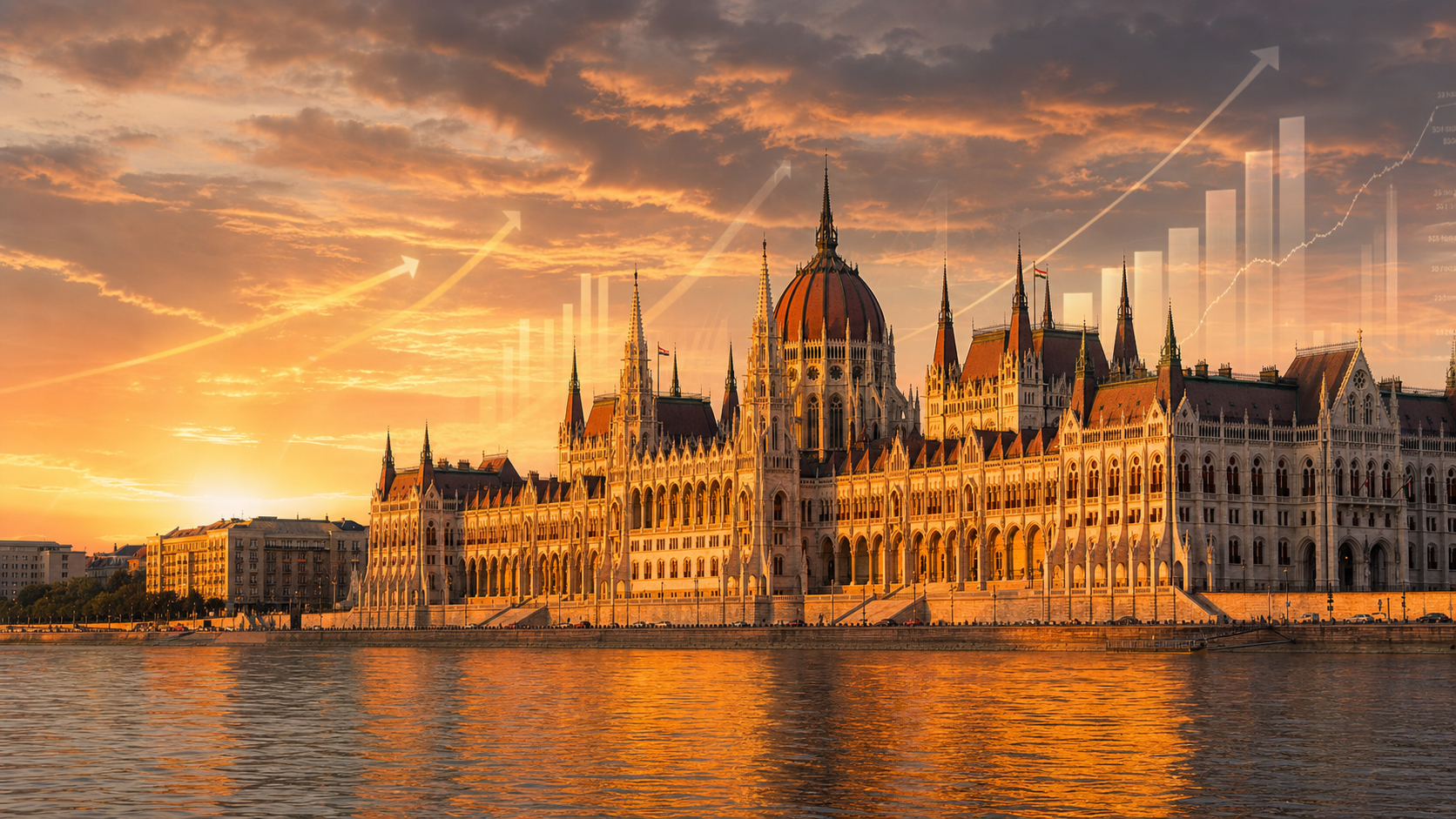
After Orbán's departure: Why the Hungarian economy is suddenly breathing a sigh of relief – Image: Xpert.Digital
Goodbye Forint, hello Euro? Hungary's radical economic plan after the change of power
Despite the euphoria of the election victory: These huge hurdles threaten Hungary's new economic miracle
From skepticism to record euphoria: The crazy figures from Hungary's economy
The historic landslide victory of Péter Magyar's TISZA party in the spring of 2026 not only ended Viktor Orbán's 16-year era in Hungary, but also triggered a veritable economic earthquake. After years of stagnation, political arbitrariness, and billions of euros in blocked EU funding, business skepticism suddenly transformed into unprecedented optimism. Current survey data from German-Hungarian businesses show a historic turnaround in investment readiness and confirm that the rule of law and political reliability are the most crucial factors for business location. However, this initial euphoria is already being put to the test. A crippling budget deficit, structural reform gridlock, and the deeply entrenched power structure of the old government threaten to stifle the upswing. This analysis examines why a single ballot paper radically altered the investment climate – and whether the economic restart in the heart of Europe can truly succeed.
Hungary's economic turning point – Between a surge in political confidence and structural reform gridlock
When a ballot paper can achieve more than years of economic policy – and why this is just the beginning
On April 12, 2026, an era came to an end in Hungary. The center-right, pro-European TISZA party, led by Péter Magyar, won the parliamentary elections in a landslide victory, the decisiveness of which surprised even seasoned observers. With nearly all votes counted, TISZA secured 141 of the 199 seats, achieving a two-thirds majority required to amend the constitution. Viktor Orbán's Fidesz party, which had governed since 2010, was reduced to 52 seats; only the far-right party Our Homeland (Mi Hazánk) managed to clear the five percent threshold with six seats. On May 8, 2026, Péter Magyar was sworn in and assumed the reins of government, officially ending the 16-year era of the right-wing populist Viktor Orbán.
This change of power has triggered not only political but also immediately measurable economic consequences. Rarely in economic life is such a rapid and clear shift in public sentiment observed as in the weeks surrounding the Hungarian parliamentary elections of spring 2026. This analysis examines the reasons behind this surge of confidence, the structural challenges it faces, and the political and economic decisions that will determine whether Hungary succeeds in a genuine economic reorientation or whether the current optimism rests on shaky foundations.
From skepticism to a sense of optimism: What the DUIHK figures really show
The change of power in Budapest has triggered a remarkable shift in sentiment within the business community, both in its speed and scope. This is clearly demonstrated by surveys conducted by the German-Hungarian Chamber of Industry and Commerce (DUIHK): In the regular spring survey, part of the DIHK's global survey – completed ten days before the election – skepticism dominated. However, in the subsequent flash survey, the picture completely reversed.
Before the election, only 24 percent of the surveyed companies expected their business situation to improve in 2026, while 27 percent anticipated a decline. After the election, the situation has clearly reversed: 35 percent foresee better business, while only 19 percent expect a decline. The balance thus shifts from minus three to plus sixteen percentage points – a movement that is historically rare in a single survey wave.
At the macro level, the turnaround is even more dramatic. In the spring survey before the election, only seven percent of companies predicted an improvement in the overall economic situation, while 48 percent expected a deterioration. Immediately after the election results, this ratio reversed almost completely: 42 percent are optimistic about the economic outlook, while only 17 percent remain pessimistic. The propensity to invest also increased noticeably: a quarter of the surveyed companies plan to increase investments as a result of the election outcome. Finally, loyalty to Hungary as a business location reached a near-record high: 87 percent of the surveyed companies would choose Hungary again as an investment location – just slightly below the previous record of 88 percent.
These figures warrant a more precise analysis that goes beyond simply reading the percentages. First, they reflect the fact that investment decisions and business expectations are extraordinarily sensitive to political clarity. This is no trivial finding: it shows that the economic stagnation of previous years was not primarily due to external shocks or fundamental locational disadvantages, but to a considerable extent to self-generated political uncertainty. If the mere prospect of a change in government shifts pessimism by more than thirty percentage points, then the previous crisis in sentiment was largely politically manufactured – and therefore also politically remediable.
Three years of stagnation: The starting point that precedes the euphoria
To properly assess this shift in sentiment, one must understand the starting point against which it is being measured. Hungary's economy has stagnated almost completely for three years. Gross domestic product grew by minus 0.9 percent in 2023, by a mere 0.8 percent in 2024, and in 2025 the economy again achieved only a paltry increase of around 0.3 to 0.5 percent. In March 2026, the National Bank of Hungary revised its growth forecast for the current year downwards from 2.4 to 1.7 percent.
The picture on the investment front was even bleaker. The German-Hungarian Chamber of Industry and Commerce (DUIHK) investment climate index fell in 2025 to its lowest level since the mini-crisis of 2012 – even lower than during the COVID-19 pandemic. According to a KPMG survey for the German Eastern Business Association, at the beginning of 2026 only 19 percent of German companies were considering investments in Hungary – compared to 35 percent a year earlier. In a regional comparison, this is devastating: 56 percent intend to invest in Poland, 43 percent in Ukraine despite the ongoing war, and 35 percent each in Romania and the Czech Republic. German exports to Hungary also declined: They shrank by around five percent to just under 31 billion euros, while total exports to the Eastern Business Association region increased by 3.3 percent.
The reason for this relapse lies not solely in periods of economic weakness. A structural problem of trust had become deeply entrenched. Foreign companies, particularly from Germany, reported behind-the-scenes harassment: dubious takeover bids, arbitrary special taxes, surprise inspections, and pressure to relinquish company shares to oligarchs close to the government. A study by the Institute for European Politics systematically exposed how the Fidesz government used ministerial decrees, special taxes, and manipulated tenders to put foreign companies under pressure. Following a visit to Budapest, the EU Budgetary Control Committee described the situation as "unbelievable," especially considering it was happening "right in the heart of the EU.".
In parallel, since 2022 the EU has frozen payments of approximately €17 billion to Hungary due to serious deficiencies in the rule of law, the fight against corruption, and public procurement. Hungary was the only EU member state whose funds were partially blocked because of a high risk of corruption. The loss of these subsidies—for years a key driver of economic growth for infrastructure, energy, and housing—left a clear mark on the investment climate and public finances.
The political signal and its economic translation
Why does the economy react so immediately to the election results? The answer lies in the role of expectations in economic calculations. Investment decisions are always also bets on the future. The more stable and reliable the institutional environment, the longer companies are willing to tie up capital. In a system characterized by arbitrariness, selective taxation, and legal uncertainty—as was the case under Orbán in Hungary—the planning horizon inevitably shortens. Investments shift abroad or are abandoned altogether.
The two-thirds majority held by the TISZA party, which granted the necessary constitutional amendments, is a crucial factor that goes far beyond mere political symbolism. It enables Magyar not only to govern, but also to restructure the institutional framework itself: restoring judicial independence, joining the European Public Prosecutor's Office, and strengthening press freedom and university autonomy. It is precisely these institutional areas that foreign investors consider prerequisites for long-term commitments.
Philipp Haußmann, deputy chairman of the Eastern Committee, succinctly summarized the position of German industry: The change of power offers an opportunity to break with the economic policies previously characterized by "market distortions and corruption" – and is a "key prerequisite for new investments." At the same time, Haußmann made it unequivocally clear that there are companies "that will probably not return to Hungary," and he expects "equal treatment to be restored" and "open attacks against German companies in Hungary to cease." The warning that the EU single market is at risk if "what happened in Hungary sets a precedent," and the observation of spillover effects to Slovakia and Bulgaria, underscore the systemic dimension of this signal.
German-Hungarian economic interdependence: Figures from a structural partnership
The politically triggered shift in sentiment only gains its full significance against the backdrop of the close structural ties between Germany and Hungary. A good 24 percent of all Hungarian exports flow to Germany – making it by far Hungary's most important trading partner. Conversely, Germany accounts for 16 percent of the total stock of foreign direct investment in Hungary (approximately 117 billion euros), placing it in first place. Around 2,400 German investors are active in Hungary.
German companies employ almost a quarter of a million people in Hungary and account for more than twelve percent of the country's value added. This is not a minor detail, but rather one of the most significant individual factors shaping the Hungarian economy. Hungary is an important component of Central and Eastern European value chains for German companies, particularly in the automotive and supplier industries. For example, Audi operates one of its largest plants outside Germany in Győr, BMW has a production facility in Debrecen, and Mercedes-Benz in Kecskemét. Electronics, logistics, and IT services are also gaining in importance. Even the Chinese automaker BYD is investing in Hungary – with a new plant in Szeged and a planned European center in Budapest.
The German-Hungarian Chamber of Industry and Commerce (DUIHK) rightly pointed out that Hungary currently ranks only in the middle of the pack in regional comparisons, and even at the bottom in terms of investment readiness – despite previously being considered a leader in the region. The structural advantages – a skilled workforce at competitive costs, a well-developed infrastructure, low corporate tax (9 percent), a comprehensive supplier network, and a diverse higher education landscape – remain. The problem lay not in the location profile, but in the institutional framework. This is precisely what makes the surge in confidence after the election so economically significant: the foundation is there; what was lacking was reliability.
What companies really want: The economic policy expectations catalog
The overlap between the expectations of the business community and the announcements of the new TISZA government is strikingly large – reflecting the lessons learned from sixteen years of Fidesz economic policy. Companies repeatedly cite the same priorities: First, a reform of the education system with a stronger focus on technical skills and vocational qualifications to counteract the chronic shortage of skilled workers. Second, strengthening small and medium-sized enterprises (SMEs) and their greater integration into international value chains. Third, a determined fight against corruption and maximum transparency in the use of public funds. Fourth, the introduction of the euro.
The last point is noteworthy: 75 percent of the companies surveyed in the German-Hungarian Chamber of Commerce and Industry (DUIHK) poll support the introduction of the euro – the highest figure since the survey began. This desire is economically rational: companies that trade extensively within the eurozone face daily exchange rate risks, which translate into planning costs and hedging expenses. The forint has lost considerable value in recent years and has been volatile at times. TISZA explicitly included euro adoption in its election platform, and the incoming Foreign Minister, Anita Orbán, cited creating the conditions for euro adoption by 2030 as a strategic goal. Magyar himself mentioned 2030 or 2031 as a possible target date. Formally, as an EU member, Hungary is obligated to adopt the euro once the convergence criteria are met – a process that, however, requires considerable fiscal discipline.
Immediately after the election, the TISZA government outlined a broad reform program, ranging from price caps and VAT reductions to a review of the Russian Paks II nuclear project and the release of frozen EU funds. The top priority is the release of frozen EU funds: according to TISZA, €6.9 billion in non-repayable grants could be released first. Even before formally taking office, Magyar traveled to Brussels and emphasized to European Commission President Ursula von der Leyen that "without EU funds, the Hungarian economy cannot be restarted." Von der Leyen signaled her support but made institutional reforms a condition.
Our EU and German expertise in business development, sales and marketing

Our EU and German expertise in business development, sales and marketing - Image: Xpert.Digital
Industry focus areas: B2B, digitalization (from AI to XR), mechanical engineering, logistics, renewable energies and industry
More information here:
A thematic hub offering insights and expertise:
- Knowledge platform covering global and regional economies, innovation and industry-specific trends
- A collection of analyses, insights, and background information from our key areas of focus
- A place for expertise and information on current developments in business and technology
- A hub for companies seeking information on markets, digitalization, and industry innovations
Trust as currency: Why the rule of law is now Hungary's most important asset
Budget at its limit: The fiscal legacy of the Orbán system
The new government inherits a difficult fiscal legacy that significantly limits its room for maneuver. By the end of April 2026, the budget deficit had already reached 91 percent of the total annual target. Standard & Poor's calculated in March 2026 that the deficit had already consumed around 40 percent of the 5 percent GDP deficit target in the first two months of the year. Rating agencies Fitch and S&P warned of potential downgrades if no budget corrections were made after the election. The rating is currently in the lower investment-grade range with a negative outlook; a downgrade to junk status would weaken the forint, increase import prices and interest rates – and thus also affect the approximately 2,400 German investors in the country.
TISZA is preparing a supplementary budget and has announced various measures, including a wealth tax for the rich and income tax relief for low-income earners. The fiscal arithmetic is challenging: tax cuts mean a short-term loss of revenue, investments in education and infrastructure require expenditure, and the special taxes left behind by Orbán—which disproportionately burdened foreign companies—cannot be abruptly abolished without further worsening the budget situation. The Eastern Committee realistically assumes that, given the budgetary situation, these special taxes are likely to remain in place for the time being.
In the medium term, the release of EU funds could be the decisive factor. Hungary can access around €22 billion in EU cohesion funds by 2027, as well as grants of over €5.8 billion and loans of €3.9 billion from the EU recovery fund by 2026. However, the entitlement to €10.4 billion from the recovery fund expires on August 31, 2026, if no reform plan acceptable to the EU is presented by then. The timeframe is therefore extremely tight: Magyar must present credible anti-corruption measures within a few weeks of taking office to save billions that are essential for the economic turnaround.
Structural brakes: What can dampen optimism
Besides the budget situation, there are other structural obstacles that counteract the politically fueled optimism and which the German-Hungarian Chamber of Industry and Commerce (DUIHK) explicitly identifies. Foremost among these is the planned restriction of employment opportunities for workers from third countries. TISZA has announced that it will halt the entry of new non-EU guest workers from June 2026 until further notice. This is politically explainable – the party wants to give priority to Hungarian workers – but economically risky. Guest workers have become an indispensable part of the Hungarian labor market, especially in sectors with a chronic shortage of skilled workers. Given the structurally strained skilled labor situation, stricter immigration regulations would exacerbate the bottleneck and put existing production capacities under pressure.
The second major question mark concerns investment promotion. In industry, every third investment depends on government incentives. A readjustment of the funding framework, which is not communicated in a timely manner or becomes less attractive compared to other countries, risks shifting projects to neighboring countries. Poland, Romania, the Czech Republic, and Slovakia are not standing still; competition for international investment in Central and Eastern Europe is intense. Hungary has structurally caught up with Poland, but has lost considerable ground in recent years. Estimates for 2026 predict growth of 2 to 3 percent – a noticeable step towards catching up from stagnation, but not yet a return to its former leading position.
Added to this is energy dependency. Due to its reliance on energy imports and its energy-intensive industries, Hungary is among the EU economies most vulnerable to geopolitical energy price risks. The review of the Russian Paks II nuclear project is therefore one of the most delicate decisions facing the new government: Timely completion of the project would have altered Hungary's energy mix in the long term; a suspension would prolong energy dependency but create opportunities for diversification. TISZA has committed to ending Hungary's dependence on Russian energy by 2035 and doubling the share of renewable energies by 2040 – an ambitious timeline requiring significant investment.
The rule of law as an economic asset: The institutional core of the transformation
There is a dimension that only appears peripherally in the chamber statistics, but is central from a political-economic perspective: trust in the rule of law and equal treatment. This dimension connects economic discourse with constitutional law in a way that is often underestimated in public debate. The rule of law is not a political formality, but an economic commodity. It determines the level of transaction costs in economic life, how reliably contracts can be enforced, whether property is secure, and whether competition is fair.
In Hungary under Orbán, precisely this institutional capital was systematically dismantled. The creation of a state-affiliated oligarchy through the redistribution of EU subsidies and the displacement of foreign companies from strategic sectors—retail, banking, energy, telecommunications—not only harmed individual companies but also poisoned the entire investment climate. Foreign companies had to reckon with the fact that the rule of law could be effectively suspended if political interests demanded it. This uncertainty is paralyzing for investment decisions.
The TISZA government's opportunity lies in its two-thirds majority, which allows it to reverse the 2011 constitutional reforms and restore independent institutions. Joining the European Public Prosecutor's Office – which was explicitly denied under Orbán – would send an immediate signal that would inspire confidence in Brussels and expedite the release of EU funds. Equally fundamental is the restoration of an independent judiciary, a free press, and an autonomous higher education landscape: these factors influence the long-term attractiveness of the location for knowledge workers, startups, and the growing IT sector.
The fact that Philipp Haußmann of the Eastern Committee explicitly questions the return of certain companies to Hungary is an indicator of the depth of the breach of trust. Not all the capital that flowed out under Orbán will return—at least not in the short term. This is inherent in the nature of long-term investment decisions: trust, once lost, is slowly rebuilt. The new government must therefore not only deliver, but deliver consistently and over a long period before this initial trust is fully translated into real investment flows.
Regional showdown: Hungary's place in Central and Eastern European competition
Hungary's economy does not operate in a vacuum, but rather in a highly competitive regional environment. Poland has risen to become the undisputed leading economy of Central and Eastern Europe: with a GDP of around €900 billion, a diversified industrial base, a strong domestic market, and an investment climate that is consistently rated as reliable internationally. 56 percent of German companies intend to invest in Poland – three times more than in Hungary. Romania, with its large population and growing infrastructure, is also catching up. The Czech Republic and Slovakia serve specific niche markets, particularly in the automotive industry.
Hungary possesses specific strengths in this competition: a well-established engineering tradition, favorable corporate tax rates, a strategically advantageous location between Vienna, Bratislava, and Budapest in the so-called Central European Growth Triangle, and a well-developed automotive cluster infrastructure. The fact that both BYD and SK On have invested in Hungary demonstrates that the location remains attractive for specific industrial projects. The challenge lies in translating these isolated projects into a broader investment upswing that also encompasses SMEs and service companies.
According to data from the German-Israeli Chamber of Commerce and Industry (DUIHK), the quality of business locations in the region improved between 2012 and 2020. However, a negative trend has been observed for the last four to five years, which continued into 2026. The new government must reverse this trend without resorting to the quick fixes but structurally damaging measures of its predecessor: opaque subsidies, special taxes for undesirable sectors, and the selective application of the law. Transparency in the allocation of investment subsidies and reliable rules are not bureaucratic ends in themselves, but rather prerequisites for competitiveness.
The political-economic race: Time pressure as a reality of government
What makes the new government's economic policy situation particularly challenging is the simultaneous need to address several urgent tasks under extreme time pressure. On the one hand, Magyar must present convincing institutional reforms within a few weeks to prevent the EU billions from being wasted. On the other hand, the domestic and international economy expects rapid, tangible improvements in the framework conditions. Simultaneously, the supplementary budget must be passed without further destabilizing the fiscal situation. And in parallel, the transition of power is taking place within a state apparatus that Orbán has filled with loyal functionaries for over sixteen years.
In this context, a two-thirds majority is more of an obligation than a privilege: it enables far-reaching reforms, but also creates the expectation that these reforms will actually be delivered. If the TISZA government fails to demonstrate visible progress on anti-corruption and the rule of law within its first hundred days, the disappointment is likely to be all the greater – and with it, the return of the pessimism that dominated before the election. The investment climate index works both ways.
Economic logic suggests a clear order of priorities: first stabilize institutions and unlock EU funds, then consolidate the budget, and then tackle structural reforms in education, energy, and the labor market. The introduction of the euro is a medium-term project that requires convergence and cannot be accelerated by political will alone – accession to the European Exchange Rate Mechanism (ERM II) is a prerequisite, and the forint is not yet a member. Under optimistic assumptions, this is achievable by 2030 or 2031 – but only if fiscal discipline, growth, and institutional convergence align.
Opportunities and risks: A sober overall assessment
The shift in public opinion following the Hungarian parliamentary elections is real, measurable, and economically significant. It signals that considerable economic potential has long been blocked by political uncertainty and institutional erosion. The new government has a historic opportunity: a constitutional majority, strong support from the business community, clear backing in Brussels, and a structurally sound business environment as a starting point.
The risks, however, are equally concrete. First, fiscal leeway is extremely limited; missteps in budget management could lead to credit rating downgrades, forint pressure, and rising interest rates, making foreign investment more expensive. Second, the institutional restructuring after sixteen years of the Orbán system is a Herculean task: key positions in the state apparatus are filled with Fidesz loyalists, and legal hurdles to a rapid disentanglement of constitutional bodies are considerable. Third, the restrictive policy on third-country workers could further strain the already tight labor market and stifle certain industries.
Fourth and finally – and this is perhaps the most difficult task – the government must credibly demonstrate that the phenomenon described by Philipp Haußmann has truly ended: that “open attacks against German companies will cease” and that equal treatment has been restored. This is not a promise that can be fulfilled by legislation alone; it requires a new political culture that manifests itself in administrative decisions, procurement procedures, and day-to-day interactions with businesses. Trust is built through consistent action over time – not through election victories alone.
For German-Hungarian economic relations, the current situation signifies a phase of cautious recalibration. The conditions are more favorable than they have been for years. Whether the train takes the right direction will be decided in the next twelve to eighteen months – in the negotiating rooms of Brussels, in the parliament halls of Budapest, and in the daily business operations between Győr and Debrecen.
Your global marketing and business development partner
☑️ Our business language is English or German
☑️ NEW: Correspondence in your native language!

Konrad Wolfenstein
I and my team are happy to be available to you as your personal advisor.
You can contact me by filling out the contact form here simply call me at +49 7348 4088 965. My email address is [email protected]:or
I'm looking forward to our joint project.
☑️ SME support in strategy, consulting, planning and implementation
☑️ Creation or realignment of the digital strategy and digitization
☑️ Expansion and optimization of international sales processes
☑️ Global & Digital B2B trading platforms
☑️ Pioneer Business Development / Marketing / PR / Trade Fairs
🎯🎯🎯 Data-driven B2B industry hub as a quasi-in-house solution

The quasi-in-house solution: How Xpert.Digital closes operational gaps in B2B marketing and sales – Smart Content-Driven Business - Image: Xpert.Digital
Xpert.Digital is a data-driven B2B industry hub led by Konrad Wolfenstein . The company acts as an external, quasi-in-house solution for industrial partners, closing operational gaps in marketing, content, and sales – without requiring additional resources on the client side.
More information here:










