

Setback for REWE: Is the dream of a state-of-the-art logistics center in Wölfersheim, Hesse, now shattered?
Xpert Pre-Release

Available in 27 languages 📢
Prefer Xpert.Digital on GoogleⓘPublished on: September 22, 2026 / Updated on: September 22, 2026 – Author: Konrad Wolfenstein
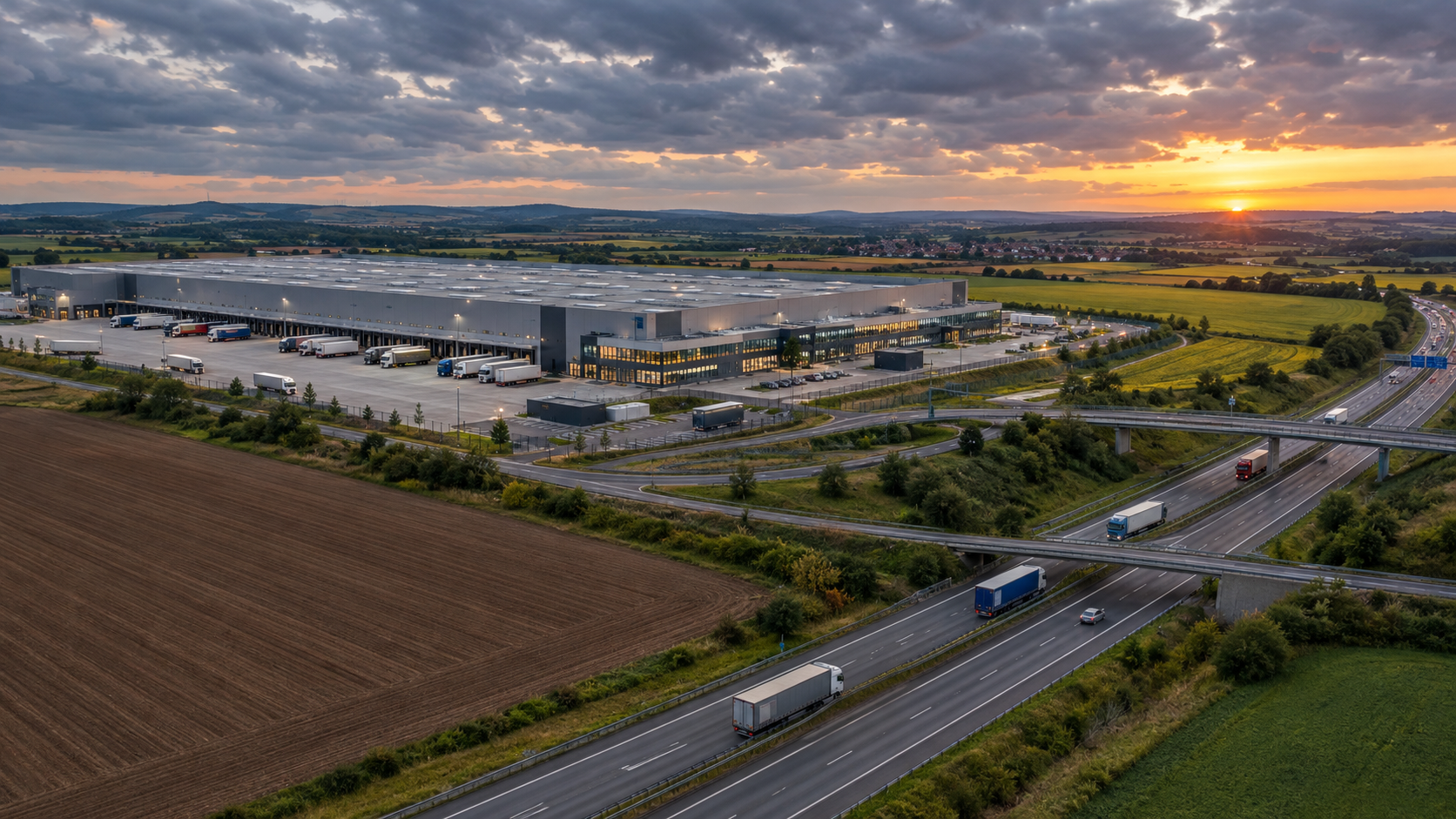
Setback for REWE: Is the dream of a state-of-the-art logistics center in Wölfersheim, Hesse, now shattered? – Creative image on the topic, created with AI: Xpert.Digital
Battle over land in Hesse: How the planned REWE warehouse became a systemic conflict
A failed special path: What all of Germany can learn from the REWE planning debacle
Planning gridlock is a bottomless pit of money: The real economic problem behind the REWE logistics center
The planned REWE logistics center in Wölfersheim, Hesse, was intended to be a flagship project for efficiency and modern food supply – instead, it has become a prime example of the pitfalls of German location policy. For roughly ten years, companies, local authorities, and environmentalists have been arguing about the development of a 30-hectare, agriculturally valuable site. At its core, the issue is no longer just about a single warehouse next to the highway. The conflict reveals the fundamental dilemma between urgently needed infrastructure modernization, the promise of new jobs and tax revenue, and the unconditional protection of scarce natural and soil resources.
After the failed attempt to accelerate the mega-project through special legal loopholes and exemptions circumventing the regional plan – most recently halted by the Hessian Administrative Court in July 2026 – the project stands at a crucial crossroads. The following in-depth analysis illuminates the complex web of business calculations, risky planning shortcuts, and hidden economic consequences. It impressively demonstrates why seemingly quick legal solutions for major projects often end up costing the most time and what far-reaching lessons investors, urban planners, and municipalities throughout Germany must learn from the Wölfersheim case.
REWE in Wölfersheim: Efficiency project stuck in planning limbo
A warehouse for the future – planned with yesterday's instruments
The dispute over the planned REWE logistics center near Wölfersheim is far more than a local conflict over a large warehouse on a field. The project encapsulates key economic questions of German location policy: How much land can an efficient supply logistics system occupy? What economic advantages justify such a profound intervention in agriculture, the landscape, and spatial planning? How reliable are local hopes for jobs and tax revenue? And what happens when a company plans with cutting-edge technology, but the public sector attempts to secure the necessary location through a legally insufficient exemption?
From a business perspective, the basic idea is understandable. REWE wants to consolidate its existing warehouse structures in Rosbach and Hungen and replace them with a larger, more modern location. Such a hub can concentrate the flow of goods, enable automation, better manage inventory, and stabilize the supply to the stores. From a spatial planning perspective, however, the case is problematic because the approximately 30-hectare site is not designated as a large-scale commercial area in the regional plan. The area is primarily agricultural, located in an ecologically sensitive environment, and therefore possesses considerable value that is only partially reflected in a traditional investment calculation by the company.
The crucial insight, therefore, is this: the project is neither an obviously harmful land grab with no economic benefit, nor an infrastructure project without alternatives, blocked only by excessive environmental protection. It is a plausible logistics project in a location that is attractive from a transport perspective, but poorly prepared from a planning law standpoint. This very discrepancy explains why the conflict remains unresolved after roughly a decade.
From new construction to systemic conflict
Wölfersheim's location is initially attractive for retail logistics. Its proximity to the A45 and B455 highways provides efficient access to the regional and national road network. This is particularly important for a food warehouse, as it must supply numerous stores within tight timeframes. Fresh produce, frozen goods, dry goods, and promotional items all have different requirements regarding temperature control, handling, and delivery frequency. Even minor delays can lead to shortages in stores, additional staffing needs, or quality losses.
The locational advantage of proximity to a motorway is therefore real. However, it should not be confused with a complete economic benefit. While a motorway connection reduces the distance between the warehouse and the main road network, it says nothing about whether the area is suitable from a spatial planning perspective, how much traffic through towns and villages will be affected, which delivery areas will be served, and how the overall mileage will change after the warehouses are consolidated. Centralization can consolidate transport, but it can also increase the average distance to individual markets. Whether, ultimately, kilometers, fuel, and emissions are saved can only be assessed using a complete network model.
This transforms a location decision into a systemic conflict. On one side are the operational optimization of a retail group and the development interests of a municipality. On the other side are the binding effect of the regional plan, the protection of valuable soils, ecological concerns, and the question of whether an exception should become the rule. The conflict did not arise because one side is acting completely irrationally. It arose because each side is optimizing on a different level.
REWE's economic calculation
Food logistics is a business of high volumes, tight margins, and low error tolerance. A large retailer must deliver thousands of items with widely varying turnover rates to numerous markets in the correct quantity, temperature, and sequence. The more fragmented and outdated the warehouse structure, the more difficult it becomes to implement modern material flows, automated picking, and data-driven inventory management economically. Furthermore, two separate locations result in duplicated infrastructure, additional safety stock, separate management functions, and more complex workforce planning.
A new central building offers REWE several advantages. Larger facilities justify investments in conveyor technology, automated pallet and container systems, and software-supported route and order management. Fixed costs for buildings, IT, maintenance, and management can be spread across a higher volume of goods. At the same time, goods flows can be standardized, error rates reduced, and physically demanding tasks minimized. The benefits thus extend beyond lower costs per unit to include improved delivery reliability and better scalability.
Other modern REWE locations demonstrate the direction in which the network is developing. The company invested around €250 million in the Magdeburg logistics center, which opened in 2024; approximately half of the warehouse processes there are fully automated. The site supplies a large number of stores and achieves very high throughput on peak days. This does not imply that Wölfersheim will have the same scale or technology. However, it does show that the modernization of the warehouse infrastructure is part of a long-term corporate strategy and cannot simply be viewed as an isolated municipal project.
For REWE, the years-long delay has resulted in significant opportunity costs. Existing warehouses must be operated longer, modernized, or secured through interim solutions. Planned efficiency gains are postponed, construction and financing costs may increase, and technical concepts become outdated. Especially with automated systems, time is not neutral: A system planned years ago may later need to be redesigned. The delay therefore destroys a portion of the originally anticipated investment value, even if the project is eventually realized.
Size as an advantage and a risk
The planned area of approximately 30 hectares corresponds to 300,000 square meters and clearly indicates that this is not a typical commercial development. However, the land area should not be equated with the sealed surface area of the warehouse. A logistics site includes not only the building itself, but also maneuvering areas, parking spaces, access roads, retention and infiltration areas, green spaces, technical facilities, and buffer zones. Nevertheless, the overall size of the area remains considerable because a large portion of the existing soil functions would be permanently altered.
This is precisely where the ambivalence of modern logistics lies. Larger centers can be exceptionally efficient within the building itself. High-density storage technology, automated order picking, and improved transport utilization reduce resource consumption per unit moved. At the same time, such facilities require large, contiguous plots of land, which are scarce in densely populated and agriculturally productive regions. Therefore, high process efficiency within the site boundaries does not guarantee high overall economic efficiency.
The risk associated with scale also extends to dependence on individual locations. When multiple warehouses are consolidated into a hub, redundancy and contingency planning capabilities decrease. A fire, a prolonged power outage, a cyberattack, a failure of automated technology, or a blocked transport link can then affect larger parts of the branch network. Modern centers address this risk with emergency plans, redundant systems, and mutual support within the warehouse network. However, these measures incur costs and diminish some of the advantages of centralization.
A large warehouse is therefore only economically viable if the economies of scale outweigh the additional costs associated with risk, space, and transportation. This assessment cannot be based solely on the size of the property or its technological sophistication. It requires reliable data on goods volumes, branch locations, delivery routes, energy consumption, personnel, reliability, and alternative sites.
Land as a scarce capital
In debates about land use, arable land is often treated as a cost-effective reserve area between settlements and highways. This view is too simplistic. Soil is a non-renewable resource, a water reservoir, a carbon sink, a habitat, and a component of regional food security. Particularly fertile soils generate agricultural yields for decades. If their function is permanently impaired by construction or sealing, a real economic loss occurs, even if it is not immediately visible in any municipal budget line.
In the Wölfersheim area, the quality of the affected arable soils plays a crucial role. Critics point in particular to the valuable black soils. Such soils, due to their fertility and water retention capacity, cannot be easily replaced elsewhere. While compensatory measures can create new biotopes or ecologically enhance other areas, they do not automatically restore the same agricultural production function. Therefore, the loss must be assessed qualitatively, not just quantitatively.
From an economic perspective, this is a classic case of external costs. REWE bears the costs of land acquisition, construction, development, and compensation measures. However, the permanent loss of soil functions, additional landscape fragmentation, and potential impacts on water balance or biodiversity are partially borne by the general public. A responsible permitting decision must internalize these costs, i.e., include them in the site assessment.
This does not mean that valuable arable land should never be developed. It does mean, however, that the hurdles must be higher than for a previously contaminated industrial brownfield site. The greater the ecological and agricultural value of an area, the more convincing the evidence of need, the assessment of alternatives, the land efficiency, and the compensation plan must be. It is precisely at this point that it is decided whether the project appears as a sustainable modernization or simply as a shifting of operational costs to the region.
Centralization does not automatically reduce traffic
The consolidation of the warehouses in Rosbach and Hungen is often associated with efficiency and reduced traffic. This connection is possible, but not guaranteed. A central warehouse reduces internal transport between locations and can better consolidate orders. Higher quantities of goods per trip, more intensive utilization, and optimized routes can reduce the number of trips per delivered unit. Furthermore, a new building allows for a better layout of goods receiving, storage, and shipping, thereby shortening internal routes.
At the same time, the network's geographic center is shifting. Markets that were previously easily accessible from Rosbach or Hungen may be located further away from the warehouse in the future. Deliveries may have to travel longer distances, even if fewer warehouses are operated. Therefore, the decisive factor is not the number of locations, but the sum of inbound traffic, branch deliveries, empty runs, detours, time slots, and return transports. Equally important is the question of whether employees will primarily need to reach the new location by car.
The distance to the motorway improves long-distance transport connections, but does not eliminate local burdens. Trucks still need to access the property, turn, maneuver, and operate at different times of day and night. A three-meter-high noise barrier can reduce noise, but it does not completely address the land requirements or the effects of exhaust fumes, light pollution, and traffic. The proximity to the bird sanctuary cannot be assessed solely based on a minimum distance of 500 meters. The impacts also depend on traffic routes, lighting, building volume, and the species affected.
For a reliable economic assessment, a published before-and-after comparison of the entire logistics chain would therefore be particularly valuable. It would need to compare at least annual truck kilometers, number of trips, capacity utilization, energy consumption, emissions, and the distribution of traffic across the road network. Without this data, the claim of traffic relief remains plausible, but not proven.
Jobs between hope and automation
The project is attractive for Wölfersheim because a large employer can bring employment, training, and additional demand to the region. Logistics centers require drivers, order pickers, incoming and outgoing goods personnel, technicians, IT specialists, dispatchers, shift supervisors, security services, cleaning, and maintenance. Indirect effects on local trades, restaurants, and services are also expected. Furthermore, a large retail group can professionalize training programs and develop technical skills in the region through a long-term partnership.
The employment impact should not be equated with the total number of jobs at the new center. If existing warehouses in Rosbach and Hungen are merged, this will partly involve relocation of jobs rather than new creation. For the overall regional assessment, what matters is how many employees are transferred, how many new jobs are created, and how many jobs are eliminated at the existing locations. Longer commutes and potential relocations must also be considered.
Automation is another factor. Modern warehouses don't replace all employees, but they do change their numbers and skill sets. Physically demanding order picking tasks can decrease, while a need arises for mechatronics, control technology, data analysis, and plant maintenance. This is a positive development in terms of quality, but it doesn't automatically lead to a high number of additional jobs per hectare. Compared to manufacturing, research, or knowledge-intensive services, large-scale logistics facilities often have a lower job density.
A sound municipal assessment should therefore not only consider the total number of announced jobs. Important factors include additional full-time equivalents, wage structure, collective bargaining agreements, shift models, apprenticeships, the proportion of local employees, automation trends, and job density per sealed hectare. Only these factors reveal whether the land use is appropriate from an employment policy perspective.
Your intralogistics experts

Consulting, planning and implementation of complete solutions for high-bay warehouses and automated storage systems - Image: Xpert.Digital
More information here:
Location conflicts: Lessons from the REWE project
Tax revenues without a guarantee of success
The prospect of business and property tax revenues also plays a significant role for the municipality. A major business location can strengthen the municipality's financial resources and create leeway for infrastructure, childcare, or tax relief. However, the economic impact depends on factors that can only be predicted with limited certainty before a business establishes itself. Business tax is levied on taxable profits and, in the case of corporations, can be allocated between branches. Investment phases, depreciation, internal accounting, and fluctuating results all influence the actual revenue.
This is offset by municipal expenditures. Roads, intersections, drainage, fire department capacity, planning, and long-term maintenance must be financed. Even if a project developer assumes significant development costs, subsequent costs and risks remain with the public sector. Additional traffic can shorten renovation cycles, and specialized infrastructure can only be used to a limited extent for other purposes if the company later withdraws.
The time dimension is particularly important. The municipality has been bearing political, administrative, and legal burdens for years without the anticipated tax revenue having materialized. This diminishes the present value of the project. Revenues that only materialize many years later are economically less valuable than originally projected income. At the same time, planning costs, uncertainty, and potential development costs increase.
A reliable municipal cost analysis would therefore need to include several scenarios: a successful development on the planned scale, a delayed implementation, a scaled-down version, and a complete failure. Each scenario would have to account for tax revenues, infrastructure costs, administrative expenses, changes in land value, and risks over a long period. Without such a life-cycle analysis, the fiscal benefits remain more of a hope than a guaranteed return.
Legal recourse as an economic factor
The planning history demonstrates how strongly legal certainty influences the value of an investment. Since 2017, attempts have been made to enable the project through a deviation from the regional plan. However, such deviations are intended for limited, individual cases where the fundamental principles of the plan remain unchanged. With a logistics site of approximately 30 hectares on land designated primarily for agriculture and sports in the regional plan, the question inevitably arises whether an exception still applies or whether a new site selection decision is effectively being made.
In 2023, the Federal Administrative Court strengthened the right of recognized environmental associations to have such a decision reviewed if, instead of an exception, an amendment to the regional plan would actually have been necessary. This shifted the dispute from the mere issue of standing to sue to the substantive question of the appropriate planning instrument. The municipality and the regional planning authority responded in 2026 with a new application, a preliminary environmental impact assessment, and extensive documentation. This included, among other things, a minimum distance of 500 meters to the bird sanctuary and other requirements.
The regional assembly gave its approval again on June 26, 2026; on June 29, the deviation from the plan was permitted under certain conditions. The trial was intended to supplement the original decision and strengthen the position in the ongoing proceedings. However, on July 16, 2026, the Higher Administrative Court of Hesse ruled in favor of the BUND (Friends of the Earth Germany). The deviation from the regional plan was deemed unlawful. According to the court's ruling, a deviation from the plan is insufficient for the project; a general amendment to the regional plan is required.
This does not necessarily mean the project is definitively rejected in principle, but the chosen shortcut has failed for the time being. The appeal was not admitted; a complaint against this refusal is possible. However, even further legal action will not eliminate the central economic problem: years of uncertainty increase the project's cost and tie up resources without resolving the fundamental location conflict.
Why the environmental impact assessment was insufficient
The new preliminary environmental impact assessment was intended to demonstrate that no serious environmental consequences were to be expected. More than 300 pages of additional expert reports initially give the impression of a high level of scrutiny. However, the sheer volume of documentation is no substitute for addressing the correct legal and planning questions. A preliminary assessment examines whether significant environmental impacts are to be expected and whether a more in-depth examination is necessary. It does not automatically determine whether the fundamental principles of a regional plan need to be changed.
The core of the conflict therefore lies not only in individual environmental impacts. It concerns the planning significance of the location. If a large, regionally important logistics center is permitted on an area not designated for this purpose in the overall regional development plan, it alters the spatial order. Other municipalities and investors could invoke similar exceptions. This could weaken the regulatory effect of the regional plan and lead to a gradual relocation of businesses to previously protected open spaces.
A standard amendment to the regional plan is more complex, but it allows for a broader assessment. It necessitates examining alternative locations, cumulative impacts, infrastructure, open space protection, and regional development goals in their interconnected context. This additional effort is not merely bureaucratic exercise. It generates information, clarifies conflicting objectives, and enhances the democratic legitimacy of a decision with long-term consequences.
From an economic perspective, more careful planning is insurance against future legal and investment risks. It takes more time initially, but can avoid years of litigation and uncertain construction decisions. Wölfersheim serves as a prime example of how a seemingly faster, legally questionable approach can ultimately lead to the greatest delay.
A precedent for German logistics locations
This case has implications beyond Hesse. Germany needs efficient logistics, while simultaneously aiming to significantly reduce land consumption and sealing. These goals clash particularly at motorway junctions, in metropolitan areas, and in agriculturally productive regions. Suitable large plots of land are scarce, while trade, industry, and e-commerce place high demands on accessibility and delivery speed.
If deviations from development targets are used liberally, municipalities can expedite individual investments. At the same time, this risks creating a competition for investment locations, with the municipality most willing to grant exceptions winning. This would undermine the regional planning framework for the distribution of commerce, housing, agriculture, nature, and transportation. The result could be urban sprawl that is advantageous for individual businesses but inefficient for the economy as a whole.
Conversely, rigid planning can hinder necessary modernization. Regional plans operate with long time horizons and cannot always reflect technological changes, new supply chains, or altered supply requirements in a timely manner. Therefore, amendment procedures are needed that are faster, more data-driven, and more transparent, without diminishing the value of environmental impact assessments and public participation. The goal should not be to block every exception, but rather to make major location decisions using the appropriate instruments.
For investors, this is a clear lesson. A plot of land is not suitable simply because it is available, affordable, and has good transport links. Planning law compliance is an independent location factor. Those who underestimate it risk having technological progress, capital, and management tied up for years in a project that never reaches the construction stage.
The weakness of the current strategy
The previous strategy of the municipality and the company was understandable, but too heavily focused on defending the chosen location. With each subsequent planning phase, the already invested costs increased. This made a change of course politically and psychologically more difficult. This behavior is known as escalation of commitment: because so much has already been invested, abandoning or fundamentally changing the project becomes increasingly unattractive, even if new information contradicts the current approach.
The renewed deviation from the target in June 2026 was apparently intended to remedy the legal deficiencies of the earlier procedure. It added further reviews and requirements, but left the central structural decision unchanged. The Administrative Court saw precisely this as the problem. Not only was the quality of individual protective measures inadequate, but so was the choice of the exception procedure. Therefore, additional expert opinions could not compensate for the lack of a regional plan amendment.
REWE's position is supported by the fact that, following the ruling, the company maintains its fundamental belief in the feasibility of the project and points out that the court did not make a final decision on all environmental impacts. This is relevant from both a legal and economic perspective. Nevertheless, it would be risky to treat the ruling merely as a further delay. It alters the necessary planning process and thus affects time, costs, and the likelihood of success.
The rational response is not simply to continue as before, but to reassess the situation without regard to costs already incurred. This includes a genuine amendment to the regional plan, an updated site search, a possible downsizing, greater utilization of existing areas, and a modular modernization of the existing network. Only a comparison of these approaches will reveal whether Wölfersheim remains the best option.
Alternatives to all-or-nothing planning
The conflict is often portrayed as if there were only two options: the center is built on the designated site or the modernization of REWE's logistics fails. This dichotomy is too narrow from an economic perspective. Between full implementation and complete abandonment lie several alternatives that should be systematically examined.
One option is a standard amendment to the regional plan. This provides the legally soundest route, provided the location proves convincing after a comprehensive assessment. However, it extends the timeframe and raises further questions regarding public participation and review. A second option is a scaled-down or more compact concept. Multi-story warehouse areas, more compact parking solutions, high-bay racking, and an optimized site layout could reduce the space requirement. Not every technology is suitable for all product ranges, but space efficiency should be a key planning objective, especially when dealing with high-quality soil.
A third option involves developing an already sealed or industrially contaminated site. Such locations are often more expensive, fragmented, or poorly connected. However, their higher direct costs can be offset by lower environmental and legal risks. A fourth option is the modernization of several existing sites instead of complete centralization. This maintains redundancy and regional proximity while automating selected processes. Economies of scale would be lower, and implementation risks potentially lower as well.
Finally, a cooperative land-use model could be examined, linking logistics functions with energy generation, rainwater management, and regional infrastructure. Large-scale photovoltaics on roofs and suitable parking area canopies, heat recovery from refrigeration systems, battery storage, and a robust water and biodiversity concept can improve the environmental footprint. While they don't automatically make an unsuitable location suitable, they do increase the overall economic viability of a necessary new building.
What would be convincing now
A credible restart would first have to transparently demonstrate the economic necessity. This includes the capacity limits of the existing warehouses, expected goods volumes, technical deficiencies, and the consequences of not investing. Trade secrets do not need to be disclosed. However, for public consideration, more is needed than the general statement that a modern center would be more efficient.
This should be followed by an updated alternatives analysis that goes beyond simply comparing land prices and proximity to highways. It should assess land quality, sealing, traffic, energy consumption, employment, taxes, legal risks, construction time, and resilience. Each alternative should be calculated over the same timeframe and with the same assumptions. Only in this way can it be ensured that the preferred location is not presented with optimistic assumptions and that the alternatives are not portrayed with their greatest disadvantages.
A legally binding user agreement would also be beneficial for Wölfersheim. This agreement could regulate the financing of transport infrastructure, noise protection, energy and climate standards, apprenticeships, monitoring, and obligations regarding dismantling or reuse. Especially with a large, long-term project that will shape the town, the municipality should not rely solely on voluntary commitments. Measurable goals and regular reports would increase acceptance.
Ultimately, honest communication about uncertainties is essential. Neither job creation figures nor tax revenues, traffic relief, or environmental impacts can be predicted with absolute certainty. Therefore, sound planning works with ranges and scenarios. This is less spectacular than a definite promise, but economically far more reliable.
Between security of supply and spatial discipline
Germany needs modern food logistics. Without high-performance warehouses, reliable IT, and efficient transport, thousands of markets cannot be reliably supplied. Crises, supply bottlenecks, and rising costs have demonstrated that logistics is not a secondary, supportive function, but critical infrastructure. A blanket rejection of new distribution centers would therefore be just as short-sighted as a blanket preference for every project that promises jobs and investment.
Security of supply, however, is not achieved solely through ever-larger individual sites. It also depends on redundancy, energy supply, cyber resilience, personnel availability, and alternative transport routes. A highly automated hub can be efficient, but particularly vulnerable in the event of a failure. Therefore, the evaluation must go beyond a standard cost calculation.
At the same time, responsible land use demands that new construction on greenfield sites not become the most convenient standard solution. When land is scarce, prices and permitting processes must reflect this scarcity. Otherwise, contaminated sites are structurally disadvantaged, even though their use is socially desirable. Consistent infill development, improved land registers, and faster remediation of brownfield sites could reduce the pressure on agricultural land.
Wölfersheim thus represents a necessary new quality in location policy. Modern logistics must not only be fast, automated, and cost-effective. It must also be space-efficient, legally compliant, resilient, and regionally compatible. Only when these criteria are met does a private investment project become a compelling economic hub.
The real judgment is made economically
The ruling of July 16, 2026, initially answers a planning law question: The chosen deviation from the zoning plan is insufficient for a project of this magnitude. This does not definitively decide whether a logistics center may ultimately not be built in Wölfersheim at all. The legally possible route of amending the regional plan remains open in principle. However, this opening is not automatic. In a regular procedure, the site would again have to contend with environmental concerns, agricultural use, and potential alternatives.
Economically, the project has already paid a price. Around ten years of uncertainty have consumed time, planning capacity, and trust. The promised efficiency gains, jobs, and tax revenues have not yet materialized. At the same time, the land has remained undeveloped, thus preserving its ecological and agricultural functions. Whether one side views this delay as a gain or a loss depends on their perspective. From a macroeconomic standpoint, the main problem is that no reliable decision has been reached for so long.
The clearly reasoned perspective is therefore: A modern REWE center can be economically viable, but the Wölfersheim location, in its current form, lacks convincing justification. Proximity to the highway and operational efficiency are insufficient to justify a significant deviation from the designated land use. Anyone wishing to push through a project of this magnitude must accept a full planning review and demonstrate that no significantly better alternative exists.
This case is therefore not a story of bureaucracy triumphing over business. It is a warning against misguided acceleration. A rushed, special approach that bypasses key spatial planning issues can slow down an important investment project more than a thorough planning amendment process from the outset. The provocative conclusion is this: it wasn't nature conservation that held up this logistics center for years, but primarily the attempt to treat a regional location decision as a limited exception.
Your global marketing and business development partner
☑️ Our business language is English or German
☑️ NEW: Correspondence in your native language!

Konrad Wolfenstein
I and my team are happy to be available to you as your personal advisor.
You can contact me by filling out the contact form here [email protected]:or simply call me at +49 7348 4088 965. My email address is
I'm looking forward to our joint project.










