

“Defence Hub North Hesse”: This is why Rheinmetall is building Europe’s largest tank factory in Kassel
Xpert Pre-Release

Available in 27 languages 📢
Prefer Xpert.Digital on GoogleⓘPublished on: September 1, 2026 / Updated on: September 1, 2026 – Author: Konrad Wolfenstein
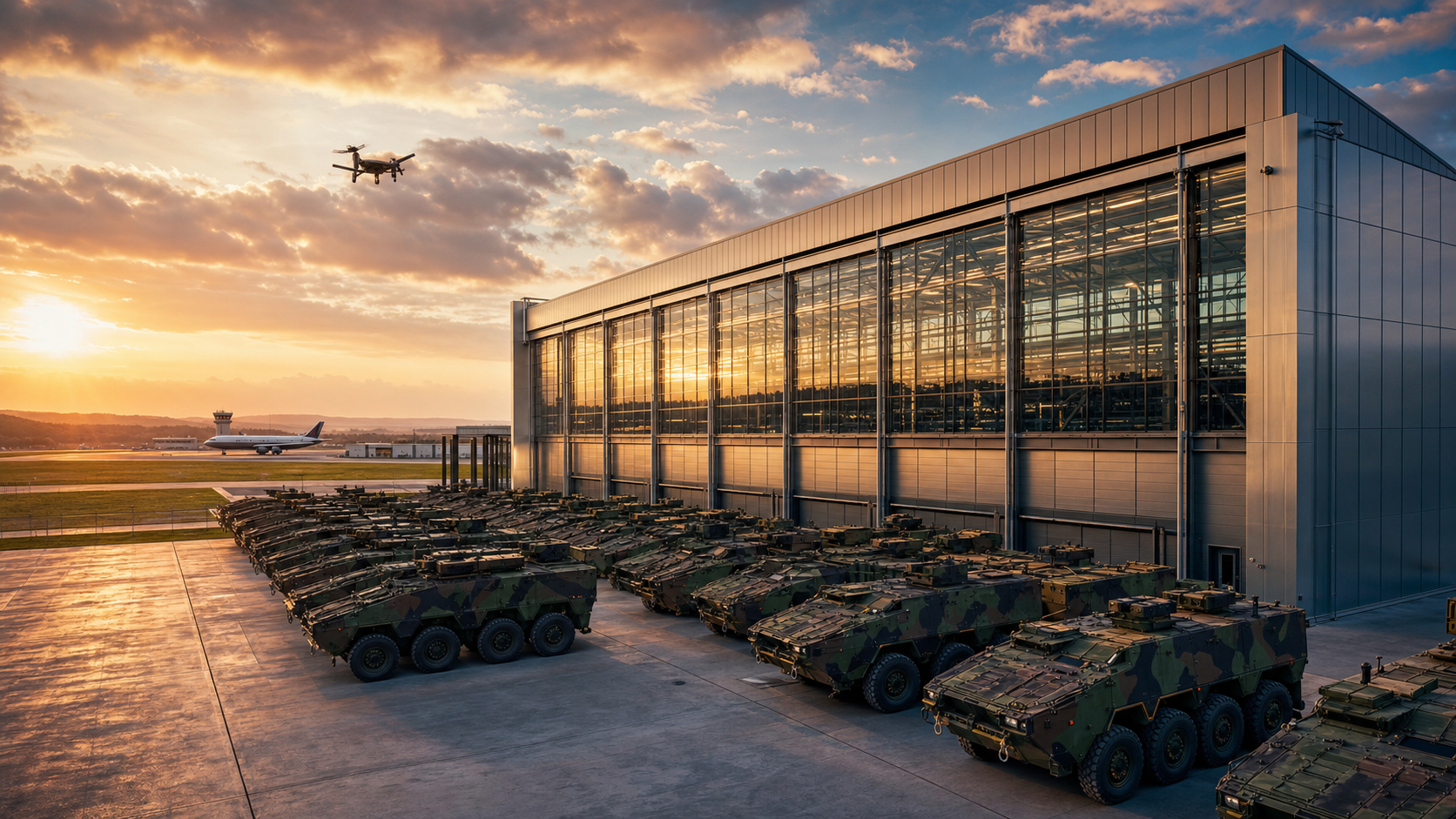
“Defence Hub North Hesse”: Why Rheinmetall is building Europe’s largest tank factory in Kassel – Creative image on the topic, with AI: Xpert.Digital
40 billion euro bet: How Kassel will become the new center of the European arms industry
Tanks, drones and thousands of new jobs: Kassel's unprecedented arms boom
With an investment volume of almost €300 million and order prospects of historic proportions, Kassel is facing an epochal structural transformation. The Düsseldorf-based defense company Rheinmetall is turning Northern Hesse into the vibrant center of the European defense industry – a so-called "Defence Hub" that will house not only the continent's largest tank factory, but also a state-of-the-art logistics and drone testing center. Fueled by the Bundeswehr's gigantic "Arminius" procurement program and the shift in security policy, the region is poised for an unprecedented economic boom that will multiply local revenue and create thousands of new jobs. However, this strategic, multi-billion-euro bet on security simultaneously raises far-reaching industrial policy questions: Will Kassel become the ultimate blueprint for the future of Germany's defense economy, or will the region become precariously dependent on political decisions made in Berlin?
Kassel's arms boom: How Rheinmetall is turning northern Hesse into Europe's military hub
On August 27, 2026, the Hessian Minister-President, the state's Minister of Economic Affairs, and the CEO of Rheinmetall signed a Memorandum of Understanding at Kassel-Calden Airport, aiming to transform the North Hesse region into a central component of the European defense industry. Under the name Defence Hub North Hesse, the project comprises three elements: the expansion of the existing Rheinmetall plant in Kassel, a new logistics and technology center at Calden Airport, and a test center for military drones. Rheinmetall is investing approximately €260 to €270 million in the project, while the state of Hesse is contributing an additional €25 million. The timing of this announcement is no coincidence, but rather the result of a multi-year political shift that began with the so-called "turning point" in German history and has since manifested itself in a massive increase in defense spending across Europe. Rheinmetall justifies its choice of location with the existing transport connections, the proximity to the existing plant in the Kassel Mittelfeld industrial park, and the availability of sufficiently large, contiguous areas in the immediate vicinity of the regional airport.
A logistics center as the backbone of the tank factory
The centerpiece of the investment is a new logistics and technology center with a usable area of over 30,000 square meters, to be built in the municipality of Calden, directly adjacent to Kassel Airport. According to the company, the facility will be one of the group's most significant infrastructure investments in Germany and is scheduled to begin operations by the end of 2027. Functionally, the center is designed to support just-in-time production at the nearby Kassel plant, meaning it will store and manage components, assemblies, and manufacturing materials to ensure that production lines are supplied without delay. The logistics area will be complemented by approximately 1,200 square meters of training capacity, where employees will be trained and further educated for both the Kassel plant and other Rheinmetall locations. This combination of warehousing, material management, and training demonstrates that this is not merely a warehouse, but a strategic hub intended to secure the development of skilled workers in the region alongside physical production.
From niche factory to Europe's largest tank factory
The second key pillar of the project is the expansion of the existing plant in Kassel, which serves as the competence center for the development, production, and maintenance of tactical wheeled and tracked vehicles within the Vehicle Systems Europe division. CEO Armin Papperger stated unequivocally at the project's presentation that Kassel would be developed into Europe's largest tank factory. Currently, the site employs around 2,200 people; approximately 120 vehicles are produced and serviced there annually, including self-propelled howitzers, the Büffel armored recovery vehicle, and the Kodiak armored engineer vehicle. By 2029, the workforce is expected to grow to around 3,500, while simultaneously increasing annual production capacity to more than 500 Boxer vehicles. According to the company's plans, the annual revenue generated at the site, currently around €1.5 billion, is expected to nearly triple to up to €5 billion. Beyond the pure expansion of the plant, over 1,000 new jobs are expected to be created in the entire region in the long term, with a large proportion of them being at the Kassel plant itself and around 130 to 200 additional jobs expected at the new Calden site.
Drones over northern Hesse: A testing ground for tomorrow's warfare
In addition to vehicle manufacturing and logistics, Rheinmetall plans to establish its own drone test center in Calden, leveraging the airport's unique aviation regulations and infrastructure. The company justifies this location choice by stating that Kassel Airport, unlike many other airports, offers unparalleled opportunities for drone testing, further supported by the Hessian Drone Competence Center currently under construction at the same airport. This addition is strategically significant because it signals that Rheinmetall is positioning Kassel not only as a production site for conventional wheeled armored vehicles, but also as an integrated innovation hub where unmanned systems, reconnaissance drones, and potentially even defensive technologies against enemy drones can be developed and tested. The expansion of drone capabilities reflects an industry-wide trend that has been massively accelerated by the experiences of the war in Ukraine, where unmanned systems quickly went from a marginal issue to a decisive factor on the battlefield.
Arminius as an engine of growth: A mission of historic proportions
The investment decision in Kassel is inextricably linked to the German Armed Forces' Arminius procurement project, considered one of the largest armaments projects in the history of the German armed forces. At its core is the procurement of the Boxer armored personnel carrier, which Rheinmetall manufactures jointly with its partner KNDS Germany in the Artec joint venture, in which Rheinmetall holds a direct and indirect 64 percent stake. In the first procurement round, the details of which are to be finalized in the second week of September 2026 and are expected to be submitted to the Budget Committee of the German Bundestag for a decision on December 9, Rheinmetall alone could receive orders totaling €12.4 billion. This would correspond to more than 1,500 Boxer vehicles, while the total volume of the firm order together with its partner KNDS is expected to be around €25 billion. Furthermore, two optional framework agreements are under discussion that could increase Rheinmetall's share by a further 14 to 26 billion euros, potentially bringing the Bundeswehr's fleet of Boxer vehicles to over 5,000 units. This package is complemented by a separate service contract for maintenance and repairs with a total volume of approximately four billion euros, of which around half is expected to go to Rheinmetall. In total, Rheinmetall could receive orders worth almost 40 billion euros under the Arminius project – a figure that, according to Papperger, would fully utilize the Kassel site until at least 2040.
Hub for Security and Defense - Advice and Information

Hub for Security and Defense - Image: Xpert.Digital
The Security and Defence Hub offers expert advice and up-to-date information to effectively support companies and organizations in strengthening their role in European security and defence policy. Working closely with the SME Connect Defence Working Group, it particularly promotes small and medium-sized enterprises (SMEs) that wish to further develop their innovative capacity and competitiveness in the defence sector. As a central point of contact, the Hub thus creates a crucial bridge between SMEs and European defence strategy.
Related to this:
Security policy meets industrial policy: The Kassel region's dependence on the arms sector
Between paratroopers and anti-aircraft defense: The versatility of the Boxer
The Boxer's appeal to the German Armed Forces lies in its modular design, consisting of a standardized drive module for mobility and basic protection, and an interchangeable mission module that can be adapted to different tactical requirements. The planned Arminius fleet will include command vehicles, the Skyranger self-propelled anti-aircraft gun, the RCH 155 155mm wheeled howitzer, troop transport variants, ambulances, bridge-laying vehicles, and driver training vehicles. The German Armed Forces had previously awarded a contract worth approximately €2.7 billion for more than 100 Boxer vehicles for the so-called Heavy Weapon Carrier Infantry, intended to close a capability gap between the light forces of the paratroopers and the heavy main battle tanks and infantry fighting vehicles. This versatility makes the Boxer a kind of industrial backbone for the land forces, enabling a wide range of capabilities to be covered by a common vehicle platform, which significantly simplifies maintenance, training, and spare parts logistics.
The figures behind the boom: Rheinmetall's corporate development at a glance
The expansion in Kassel is part of a period of exceptional growth for the entire group. In the first half of 2026, group sales climbed by 39 percent to €5,227 million, while operating profit increased by 74 percent and earnings per share rose to €8.43. For the full year 2026, Rheinmetall expects group sales of between €13.7 and €14.2 billion, with organic growth of 28 to 31 percent. Operating defense sales, including the recently acquired Naval Vessels Lürssen, are projected to reach €15 to €16 billion. The munitions business is proving particularly profitable, with sales expected to increase from €3.5 billion in the previous year to €5 billion this year. The Group's total order backlog already exceeded €80 billion in August 2026, driven in part by new multi-billion euro orders in the artillery and munitions sector, as well as an order worth more than €500 million for mobile rescue stations from its subsidiary Rheinmetall Project Solutions. Group-wide, Rheinmetall aims to double its workforce from the current 35,000 to approximately 70,000 employees by 2029 or 2030 – a goal that positions the expansion in Kassel as one of several parallel growth initiatives across the entire company.
Political calculation: security precautions, location policy and election campaign argument all at once
For the Hessian state government, the Defence Hub North Hesse is far more than just an individual industrial project; it is a building block of regional structural policy in a region traditionally industrialized yet also affected by structural change. The Kassel-Marburg Chamber of Industry and Commerce described the signing of the Memorandum of Understanding as an exceptionally positive sign for North Hesse as a location for innovation and defense, pointing to the prospect of over a thousand new jobs in the region. At the same time, the project aligns with a federal policy under Chancellor Friedrich Merz that envisages a massive increase in defense spending and explicitly relies on the domestic defense industry as a location factor and engine of employment. The close interrelationship between the state government, the federal government and a single, market-dominating arms company also raises questions of industrial policy dependency: because a region whose economic prospects are so closely linked to a single company and its central product also bears an increased concentration risk should the geopolitical situation or the political priorities in Berlin change in the future.
Opportunities and risks of a one-sided growth bet
The economic logic behind the Kassel expansion appears compelling at first glance, as Rheinmetall is responding to a largely secured excess demand from a multi-year defense program, thereby significantly reducing investment risks compared to speculative capacity expansions. The firm pre-order of approximately 1,800 Boxer vehicles, worth around €25 billion, creates a revenue base extending well beyond 2030, thus providing planning security for investments in personnel, machinery, and supply chains. At the same time, however, structural risks exist that have so far received only marginal attention in political discourse. Despite the CEO's optimistic statements, formal parliamentary approval in the Budget Committee is still pending, and delays in the procurement process, which are not uncommon in German defense procurement, could postpone the planned capacity utilization. Furthermore, there is the question of long-term political continuity: Such a comprehensive procurement program spanning several legislative periods depends on a lasting, cross-party consensus on defense financing, which, given shifting majorities and debates about fiscal austerity, cannot be taken for granted. Finally, the massive capacity expansion ties up considerable personnel and skilled resources in a region that, like much of Germany, is suffering from demographic change and a shortage of skilled workers. Therefore, the planned increase in the workforce to 3,500 employees at the Kassel site will realistically lead to competition for qualified personnel with other regional employers.
Kassel in European comparison: A new focus for land force armaments
With the planned expansion, Kassel is repositioning itself not only nationally, but also in the European competition among defense production sites. While France, with Nexter, and Italy, with Leonardo, maintain their own national champions in the field of land vehicles, the planned capacity of over 500 Boxer vehicles per year will significantly shift the balance of European wheeled armored vehicle production toward Germany. Since the Boxer is already in service with several European armed forces – including the Netherlands, Lithuania, and the United Kingdom – the expansion of production capacity in Kassel could also facilitate export orders beyond the German Armed Forces in the long term, as economies of scale in production and the supply chain tend to reduce unit costs and shorten delivery times. For the European defense architecture as a whole, the concentration of such a large production capacity at a single location simultaneously represents a security policy trade-off between efficiency gains through centralization and vulnerability due to a lack of geographical dispersion of critical defense infrastructure – an issue that is gaining increasing importance in security policy debates about the resilience of critical supply chains.
Kassel as a blueprint for the new German arms economy
The Defence Hub North Hesse can be seen as a blueprint for how individual German industrial regions are reinventing themselves in the wake of the security policy paradigm shift. Where civilian vehicle technology, mechanical engineering, and traditional industrial jobs once formed the economic backbone, military manufacturing is now emerging at an accelerated pace as the dominant growth driver, with noticeable effects on employment, supplier structures, and local economic development. Should the projected order volume from the Arminius project materialize as expected, Kassel is likely to become one of Europe's most important defense production sites within just a few years, with a revenue increase that would boost the site's annual output from around €1.5 billion to up to €5 billion. Crucial to the long-term sustainability of this development will be whether the political and financial reliability of Bundeswehr procurement can be maintained over several government terms, whether the region can attract and train the necessary skilled workers, and whether Rheinmetall succeeds in transitioning the enormous capacity expansion into series production without major quality or scheduling problems. The coming months, in particular the decision of the Budget Committee on the Boxer major order expected in December 2026, will show whether the announcement from August 2026 will actually result in the largest tank production site in Europe, or whether the ambitious plans will be delayed in the complex interplay of industrial policy, parliamentary procedures and budgetary reality.
Consulting - Planning - Implementation

Markus Becker
I would be happy to serve as your personal advisor.
Head of Business Development
Chairman SME Connect Defense Working Group
Consulting - Planning - Implementation
Konrad Wolfenstein
I would be happy to serve as your personal advisor.
You can contact me at wolfenstein∂xpert.digital or
Just call me on +49 7348 4088 965 .





