
America's debt crisis and the temptation to break fiscal taboos: The de facto expropriation of creditors
Xpert Pre-Release

Available in 27 languages 📢
Prefer Xpert.Digital on GoogleⓘPublished on: October 22, 2025 / Updated on: October 22, 2025 – Author: Konrad Wolfenstein

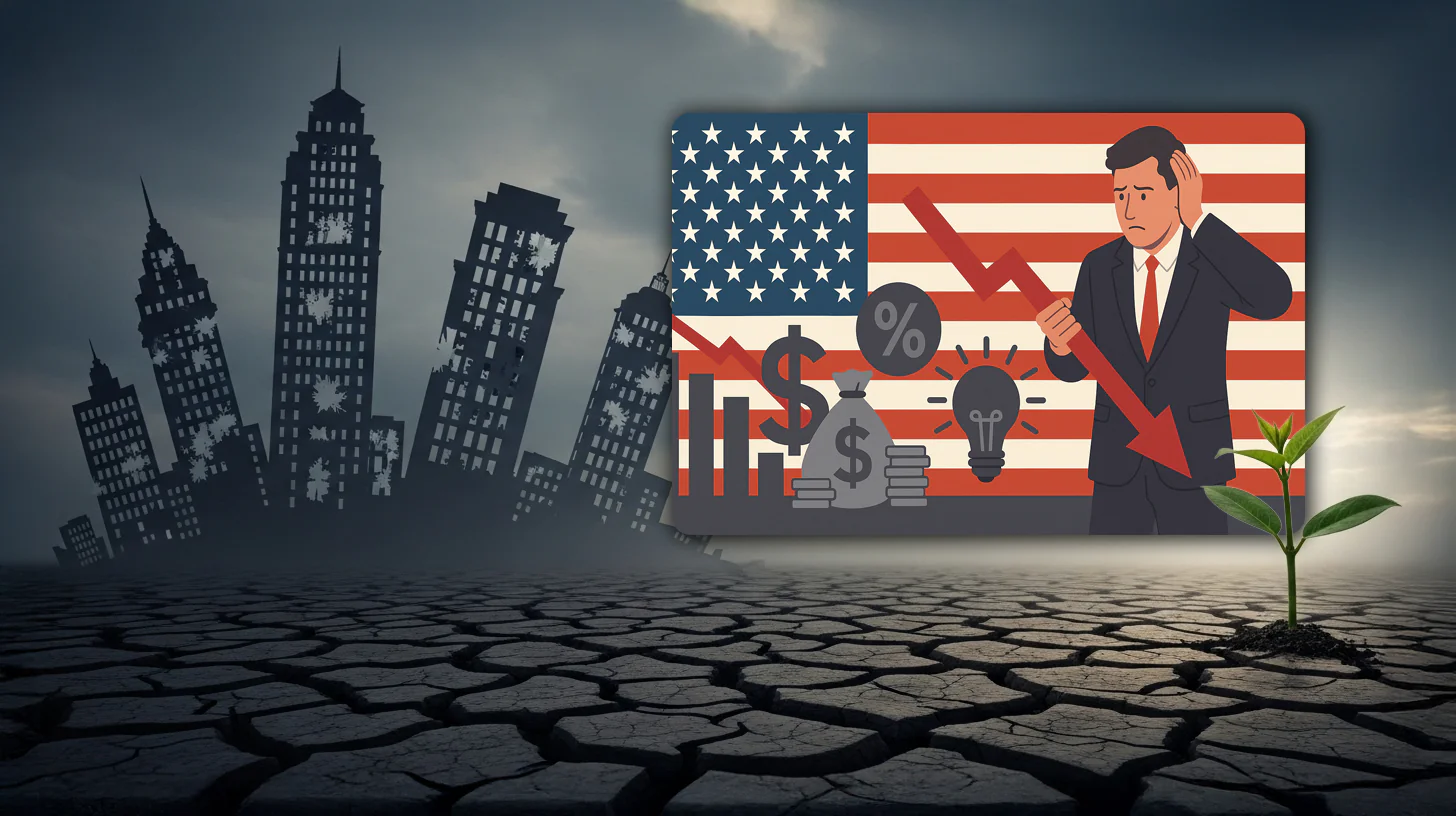
America's debt crisis and the temptation to break fiscal taboos: The de facto expropriation of creditors – Image: Xpert.Digital
The 'Mar-a-Lago Accord': De facto partial expropriation of foreign creditors
When the US superpower wants to expropriate its creditors
The United States faces one of the greatest fiscal challenges in its history. At the end of September 2024, national debt reached approximately $35.5 trillion; by October 2025, it had already risen to nearly $38 trillion. This now corresponds to roughly 123 percent of American economic output, a level that even surpasses the debt burden at the end of World War II. This dramatic development is unfolding at a pace that is alarming even seasoned financial experts. In just a few months, the debt has increased by more than $1 trillion, a sum that seemed unimaginable only a few decades ago.
What makes these stark figures even more alarming is the speed at which the situation is deteriorating. Between 2021 and today, the United States' annual interest payments have more than doubled, from roughly $533 billion to well over $1.16 trillion. In concrete terms, this means that the American government is spending approximately $3 billion a day on debt servicing alone. For the first time in the country's history, these interest payments now exceed total defense spending, the very category of expenditure traditionally considered sacrosanct and underpinning the military claim to global hegemony.
The Congressional Budget Office forecasts an even more drastic development for the coming years. By 2035, publicly held national debt is projected to rise from its current level of approximately $30 trillion to $52 trillion, representing a debt-to-GDP ratio of 118 percent. According to these estimates, interest payments will climb from the current 2.4 percent of GDP to 3.9 percent in 2034, significantly exceeding the historical highs of the late 1980s and early 1990s. However, these projections are based on the assumption that interest rates will remain moderate in the long term and that the Federal Reserve will consistently achieve its inflation target of two percent. Both assumptions are highly uncertain given the structural deficits and the political reluctance to implement consolidation measures.
Suitable for:
The perfidious plan and its inventor
In this ominous scenario, one economic advisor has made a name for himself, whose ideas are attracting attention in the international financial world. Stephen Miran, a 41-year-old economist with academic degrees from Boston University and Harvard, where he earned his doctorate under the renowned economist Martin Feldstein, published a paper in November 2024 that forms the basis of what is known as the Mar-a-Lago Accord. Miran, who served as an advisor in the Treasury Department during Trump's first term and later worked for the investment firm Hudson Bay Capital Management, was appointed by Trump to chair the Council of Economic Advisers and has also served on the Federal Reserve Board of Governors since August 2025.
The concept devised by Miran bears the evocative name of Trump's Florida residence and its rhetoric is based on historical precedents such as the Plaza Accord of 1985 or the Bretton Woods Agreement of 1944. However, while those agreements were indeed multilateral attempts at coordination to stabilize the international monetary system, the Mar-a-Lago Accord is something fundamentally different: a plan to relieve the burden on the American federal budget through the de facto partial expropriation of foreign creditors.
The core idea is both strikingly simple and disturbingly simple. Foreign governments currently holding substantial amounts of US Treasury bonds are to be pressured, through political and economic means, to exchange their short- to medium-term bonds for so-called Century Bonds. These hundred-year bonds would carry significantly lower interest rates than the current securities, substantially reducing the annual interest burden on the US. The offer to creditors is thinly veiled blackmail: those who voluntarily exchange their bonds receive lower tariffs or better access to the US domestic market. Those who refuse face trade sanctions and potential exclusion from the world's most lucrative market.
The illusion of voluntariness
What Miran and his followers portray as a market-based arrangement would, in reality, be nothing more than a backdoor default. Harvard economist Kenneth Rogoff, one of the world's leading experts on sovereign debt crises, summed it up perfectly in an interview for the Financial Times podcast: This is a default. When a country tells its creditors that it will no longer honor the agreed-upon terms and instead dictates new, significantly less favorable conditions, then this constitutes a debt haircut, both legally and economically, regardless of how it is packaged.
Historical research on sovereign debt restructuring clearly shows that the decisive criterion for a default is not the nominal reduction of debt, but rather the decrease in its present value from the creditors' perspective. For example, in the case of Greek government bonds restructured in 2012, the so-called haircut ranged between 59 and 65 percent, depending on the calculation method. For Cypriot bonds in 2013, it averaged 36 percent. While these debt haircuts were formally described as voluntary, considerable political and regulatory pressure was exerted to encourage the banks and institutional investors involved to participate.
What Miran proposes for US Treasury bonds would work according to the same logic. Foreign central banks would have to exchange their existing bonds, which may mature in a few years and carry market interest rates of three to four percent, for hundred-year bonds with interest rates significantly below two percent. The loss in present value for the creditors would be immense and would accumulate over decades. Assuming a discount rate of four to five percent, as is typical for government bonds with solid credit ratings, the haircut for many of the affected bonds would amount to 40 to 60 percent.
The geopolitical dimension of the debt trap
The United States' vulnerability to foreign creditors is considerable. More than 30 percent of outstanding US Treasury securities are held by foreign investors, amounting to approximately nine trillion dollars. Japan leads the way with holdings of around 1.15 trillion dollars, followed by China with about 730 billion dollars. The United Kingdom, Luxembourg, Belgium, Switzerland, and the Cayman Islands together hold further substantial sums. Interestingly, many of these financial centers are less independent investors than conduits for international capital flows, as they are home to major depositories such as Euroclear and Clearstream.
Japan finds itself in a particularly delicate position. For decades, the country has accumulated US Treasury bonds, partly for reasons of currency stability and partly as an expression of its close security ties with Washington. These holdings are of enormous importance to Japanese institutional investors, especially pension funds and insurance companies, as they balance their portfolios and provide predictable returns. A forced conversion into low-yielding century bonds would cause substantial losses and could destabilize the entire Japanese financial system. Moreover, such a measure would severely test the alliance between the two countries, precisely at a time when Japan is indispensable as a counterweight to China in the region.
China, on the other hand, has already begun reducing its holdings of US Treasury securities in recent years. Chinese reserves have fallen to their lowest level since 2008, reflecting partly strategic diversification considerations and partly distrust of US fiscal policy. Beijing has invested heavily in gold and is attempting to establish alternative currency channels to lessen its dependence on the dollar. The threat of a forced debt haircut would only accelerate this process and could encourage other countries to also reduce their dollar reserves.
The Triffin Dilemma in the 21st Century
The problem Miran claims to be solving is by no means new. As early as the 1960s, the Belgian-American economist Robert Triffin described the fundamental dilemma of a reserve currency. A country whose currency serves as the global reserve currency must provide the world with sufficient liquidity to facilitate international trade. This structurally necessitates trade deficits, as the country must import more than it exports to meet the demand for its currency. At the same time, these persistent deficits undermine, in the long run, confidence in the currency and the country's ability to service its debts.
Miran argues that the United States is caught in precisely this trap. Global demand for dollars and dollar-denominated safe-haven assets, particularly Treasuries, leads to a structural overvaluation of the dollar. This overvaluation makes American exports more expensive and imports cheaper, which has eroded the country's industrial base. At the same time, its status as the reserve currency allows the US to borrow almost without limit abroad, since the demand for Treasuries is inelastic. This exorbitant privilege, as it was once termed, has come at a price, however: American industry has been weakened, dependence on foreign capital has increased, and the debt burden threatens to become unsustainable.
The modern version of the Triffin dilemma, however, is more complex than the original formulation. In the 1960s, it concerned the gold backing of the dollar and whether the US possessed enough gold to redeem all the dollars in circulation. This problem was resolved in 1971 by abolishing gold convertibility. Today, it is no longer about gold, but about confidence in the US's ability and willingness to service its debts properly. Miral's reformulation is that the costs of reserve currency status are disproportionately borne by American industry and workers, while the benefits are concentrated in the financial system.
Critics of this view, including economists like Michael Bordo and Robert McCauley, point out that the current situation has less to do with a systemic dilemma than with American fiscal irresponsibility. The US could easily reduce its dual deficits—the budget deficit and the current account deficit—if it were willing to cut spending and increase revenue. The problem is not the dollar's role as a reserve currency per se, but the fact that the US uses this role to finance excessive consumption instead of making productive investments.
The historical parallels and their limits
Proponents of the Mar-a-Lago Accord point to two historical precedents: the Bretton Woods Agreement of 1944 and the Plaza Accord of 1985. Both agreements are cited as examples of successful international coordination in restructuring the monetary system. However, closer examination reveals fundamental differences that preclude a simple transfer to the current situation.
The Bretton Woods system established the dollar as the central reserve currency, pegged to gold at a fixed rate of $35 per ounce. All other currencies were pegged to the dollar at fixed exchange rates. This system worked as long as the United States held a dominant economic position and the world had confidence in the dollar's stability. It collapsed in 1971 when the US gold reserves were no longer sufficient to back all dollars, and Nixon abolished gold convertibility. Bretton Woods was thus ultimately an example of the failure of a fixed currency system in the face of structural imbalances.
The Plaza Accord of 1985 attempted to weaken the overvalued dollar through coordinated interventions by the G5 nations. Within two years, the dollar fell by 40 percent against the yen and the Deutsche Mark. In the short term, this intervention achieved its goal: the dollar weakened, and the American trade deficit began to shrink. In the long term, however, the consequences were mixed. In Japan, the rapid appreciation of the yen contributed to the emergence of the asset price bubble of the late 1980s, the bursting of which ushered in the infamous lost decades. American trade imbalances returned a few years later because the underlying structural causes—low savings rates and high government spending—remained unaddressed.
What fundamentally distinguishes the Mar-a-Lago Accord from both historical examples is its unilateral and coercive nature. Bretton Woods and the Plaza Accord were multilateral agreements which, despite any power asymmetries, were at least formally based on mutual consent. The Mar-a-Lago Accord, on the other hand, would be a dictate from the US to its creditors, underpinned by the threat of economic sanctions. This would not only destabilize the international monetary system but also fundamentally undermine confidence in American financial markets.
Our US expertise in business development, sales and marketing

Our US expertise in business development, sales and marketing - Image: Xpert.Digital
Industry focus: B2B, digitalization (from AI to XR), mechanical engineering, logistics, renewable energies and industry
More about it here:
A topic hub with insights and expertise:
- Knowledge platform on the global and regional economy, innovation and industry-specific trends
- Collection of analyses, impulses and background information from our focus areas
- A place for expertise and information on current developments in business and technology
- Topic hub for companies that want to learn about markets, digitalization and industry innovations
Creditor extortion and reserve currency: Why trust matters
The role of tariffs in the geopolitical chess game
A central component of Miral's strategy is the massive use of tariffs as leverage and a source of revenue. Trump already made extensive use of this instrument during his second term. April 2, 2025, which he dubbed Liberation Day, marked the beginning of a new era of protectionist trade policy. On that day, comprehensive reciprocal tariffs came into effect, targeting virtually all of the US's trading partners. Tariffs of 20 percent were imposed on the European Union, 34 percent on China, and 24 percent on Japan. A base tariff of at least ten percent applies to all other countries.
The logic behind this tariff policy is multifaceted. On the one hand, the tariffs are intended to generate direct revenue that contributes to financing the national budget. On the other hand, they are meant to encourage American companies to relocate their production back to the US, which would create jobs and strengthen the industrial base. Thirdly, the tariffs serve as a bargaining chip: countries willing to reallocate their Treasury holdings or meet other American demands can hope for lower tariffs.
Miran argues that tariffs do not necessarily have an inflationary effect if the dollar appreciates in response. A stronger currency would make imported goods cheaper, thus offsetting the price effect of the tariffs. However, this currency offset theory is highly controversial. Past experience shows that companies generally pass on tariff costs to consumers, which increases prices. A simultaneous appreciation of the dollar would indeed make imports cheaper, but it would also make American exports more expensive, further weakening competitiveness. The net result would be highly uncertain and could lead to either inflation or recession.
The idea that high tariffs could trigger a comprehensive reindustrialization of the US also seems dubious. While construction investment in the manufacturing sector nearly quadrupled between 2020 and 2024 under the Biden administration, this was primarily the result of massive government subsidy programs such as the Inflation Reduction Act and the Chips and Science Act. Trump halted or cut many of these programs and is relying solely on tariffs instead. Whether companies will actually return is questionable. Building new production facilities takes years, requires massive investment, and competes with established locations in Asia and Europe that have a skilled workforce, efficient supply chains, and modern infrastructure.
Suitable for:

The erosion of the dollar as a reserve currency
One of the greatest dangers of the Mar-a-Lago Accord lies in its potential impact on the dollar's status as the global reserve currency. This status is the foundation of American financial hegemony, enabling the US to borrow at low interest rates, effectively enforce sanctions, and exert geopolitical influence. However, this status is by no means natural or untouchable. It rests on the confidence of international investors in the stability, liquidity, and legal certainty of American financial markets.
The data already show a gradual decline in dollar dominance. The dollar's share of global foreign exchange reserves fell from about 70 percent in 2000 to around 57 percent in 2024. This decline has accelerated since the dollar's increasing use as an economic policy weapon. The sanctions against Russia following its invasion of Ukraine, which led to the freezing of approximately $300 billion in Russian central bank reserves, have demonstrated to many countries just how vulnerable they are when holding their reserves in dollars. In response, central banks worldwide are diversifying their reserves, buying gold in massive quantities, and experimenting with alternative currencies for bilateral trade.
The threat of a forced debt haircut through the Mar-a-Lago Accord would dramatically accelerate this process. If the US signals its willingness to disregard its creditors' rights and impose unfavorable terms through political pressure, rational investors will reconsider their allocation to American assets. Alternative investments, particularly gold, European and Japanese government bonds, and increasingly Chinese renminbi assets, would become more attractive. The apparent advantage of short-term interest savings would be more than offset by higher refinancing costs in the long run, as the US would have to pay significantly higher risk premiums without its reserve currency status.
Martin Wolf, the respected chief economist of the Financial Times, aptly described this dynamic. He argued that excessive debt policies, combined with brazen attempts to extort creditors, are poison for the stability of global financial markets. Confidence in the dollar, once justified, is now reckless. This assessment is shared by a growing number of international observers. Even traditional US allies are beginning to critically re-evaluate their dependence on the dollar.
The economic reality behind the political promises
The fundamental weakness of the Mar-a-Lago Accord lies in its attempt to solve a structural problem with a one-off trick. American debt problems are not the result of excessively high interest rates, but rather of chronic budget deficits. Even if the forced conversion to Century Bonds were to succeed in reducing interest costs in the short term, this would not change the fact that the US spends significantly more than it takes in year after year.
The United States' structural budget deficit has remained at five to six percent of economic output for years. The main drivers are rising social spending, particularly for Medicare and Social Security, as well as increasing interest payments. Revenues do not even cover half of the expenditures for these areas. Without sweeping reforms, either through benefit cuts or tax increases, this dynamic will not change. However, Trump has no intention of implementing such unpopular measures. On the contrary, his tax cuts and spending promises will further exacerbate the deficits.
The Congressional Budget Office projects that budget deficits will average 5.6 percent of economic output over the next decade. This equates to cumulative new debt of approximately $22 trillion. Even if the interest burden were temporarily reduced by the Mar-a-Lago Accord, the US would be forced to continuously incur new debt. This new debt would have to be issued at market rates, and given the massive loss of confidence caused by creditor extortion, interest rates would be significantly higher than they are today. The supposed benefit of the Accord would therefore quickly evaporate.
Furthermore, the plan ignores the dynamic effects on the economy. A massive tariff increase, like the one Trump pushed through, makes imports more expensive and raises production costs for American companies that rely on imported intermediate goods. This leads either to higher consumer prices, which reduces purchasing power and slows growth, or to reduced corporate profits, which harms investment and employment. Both reduce tax revenues and worsen the budget situation. The anticipated tariff revenues could be more than offset by declining income and corporate tax revenues.
The risk of a global financial shock
Perhaps the greatest danger of the Mar-a-Lago Accord lies in its potential to trigger a global financial shock. With a volume of approximately $37 trillion, the U.S. Treasury market is the largest and most liquid bond market in the world. It serves as a benchmark for the valuation of countless other securities and is an integral part of the global financial system. A disruption of this market would have far-reaching consequences extending well beyond the United States.
If the announcement of a forced debt haircut leads to a sudden loss of confidence, investors might try to unload their Treasury holdings. Such a sell-off would cause bond prices to plummet and yields to soar. Rising Treasury yields, in turn, would increase refinancing costs for businesses and households, putting pressure on stock markets and potentially triggering a recession. In a highly interconnected global economy, these shocks would quickly spread to other countries.
Historical experience with sovereign debt crises shows that the window of opportunity between the initial announcement of a problem and a complete loss of confidence can be very short. The Greek debt crisis of 2010 escalated within weeks after it became known that the country's fiscal situation was significantly worse than officially reported. The Russian financial crisis of 1998 surprised many observers with its severity and speed. While the United States is not comparable to Greece or Russia, these examples demonstrate that even large economies are not immune to sudden crises of confidence.
In such a scenario, the Federal Reserve would face an irresolvable dilemma. On the one hand, it would have to intervene to stabilize the Treasury market, which would require massive bond purchases. On the other hand, this would significantly expand the money supply and create inflationary risks, precisely at a time when inflation is already under upward pressure from tariffs. The central bank's credibility, painstakingly built up over the past decades, would be undermined. The Fed's ability to steer the economy through interest rate changes would be significantly diminished.
The political economy of failure
From a political economy perspective, the Mar-a-Lago Accord reveals a fundamental failure of the American political system. The United States has become incapable of making necessary but unpopular decisions. Instead of addressing the budget deficit through spending cuts or tax increases, it seeks supposed shortcuts to solve the problem without requiring sacrifices from voters. The attempt to expropriate international creditors is a desperate attempt to externalize the costs of its own fiscal irresponsibility.
This strategy is not only morally questionable but also economically short-sighted. Trust is the foundation of functioning financial markets. Once destroyed, trust is very difficult and slow to rebuild. The short-term advantages of a forced debt haircut would be far outweighed by long-term disadvantages. The US would jeopardize its privileged position in the international financial system without addressing the structural problems that led to the debt crisis.
Trump himself seems either not to understand these risks or to deliberately ignore them. His repeated statements that tariffs are a wonderful thing and can solve all problems demonstrate economic naiveté or populism. His experience in his own business dealings, where he repeatedly pressured creditors through bankruptcies and debt restructuring, appears to shape his approach to public finances. What might work for individual companies in the private sector, however, does not work for the world's largest economy, which forms the foundation of the global financial system.
Failure is inevitable, and the consequences will be devastating. If the US does indeed pursue the path of creditor extortion, it will mark the end of its financial hegemony. The world will turn away from the dollar, not because there are better alternatives, but because the risk has become too great. In a multipolar monetary system without a clear reserve currency, global economic coordination will become more difficult, transaction costs will rise, and vulnerability to financial crises will increase. The US will emerge as the biggest loser from this development, losing its exorbitant privilege while remaining confronted with the same structural problems that led to this situation in the first place.
The only viable solution would be comprehensive fiscal consolidation, combined with structural reforms to increase productivity and competitiveness. This, however, would require political courage, long-term thinking, and a willingness to speak unpopular truths. Instead, the current administration relies on illusions, blackmail, and protectionism. History will judge these decisions as one of the greatest self-inflicted economic disasters of modern times.
Your global marketing and business development partner
☑️ Our business language is English or German
☑️ NEW: Correspondence in your national language!

Konrad Wolfenstein
I would be happy to serve you and my team as a personal advisor.
You can contact me by filling out the contact form or simply call me on +49 7348 4088 965 (Munich) . My email address is: wolfenstein ∂ xpert.digital
I'm looking forward to our joint project.
☑️ SME support in strategy, consulting, planning and implementation
☑️ Creation or realignment of the digital strategy and digitalization
☑️ Expansion and optimization of international sales processes
☑️ Global & Digital B2B trading platforms
☑️ Pioneer Business Development / Marketing / PR / Trade Fairs
🎯🎯🎯 Benefit from Xpert.Digital's extensive, five-fold expertise in a comprehensive service package | BD, R&D, XR, PR & Digital Visibility Optimization

Benefit from Xpert.Digital's extensive, fivefold expertise in a comprehensive service package | R&D, XR, PR & Digital Visibility Optimization - Image: Xpert.Digital
Xpert.Digital has in-depth knowledge of various industries. This allows us to develop tailor-made strategies that are tailored precisely to the requirements and challenges of your specific market segment. By continually analyzing market trends and following industry developments, we can act with foresight and offer innovative solutions. Through the combination of experience and knowledge, we generate added value and give our customers a decisive competitive advantage.
More about it here:










