

Supreme Court upheaval – Alternatives NOW: Why cloud usage from Microsoft, AWS & Google is suddenly on the brink
Xpert Pre-Release

Available in 27 languages 📢
Prefer Xpert.Digital on GoogleⓘPublished on: July 1, 2026 / Updated on: July 1, 2026 – Author: Konrad Wolfenstein

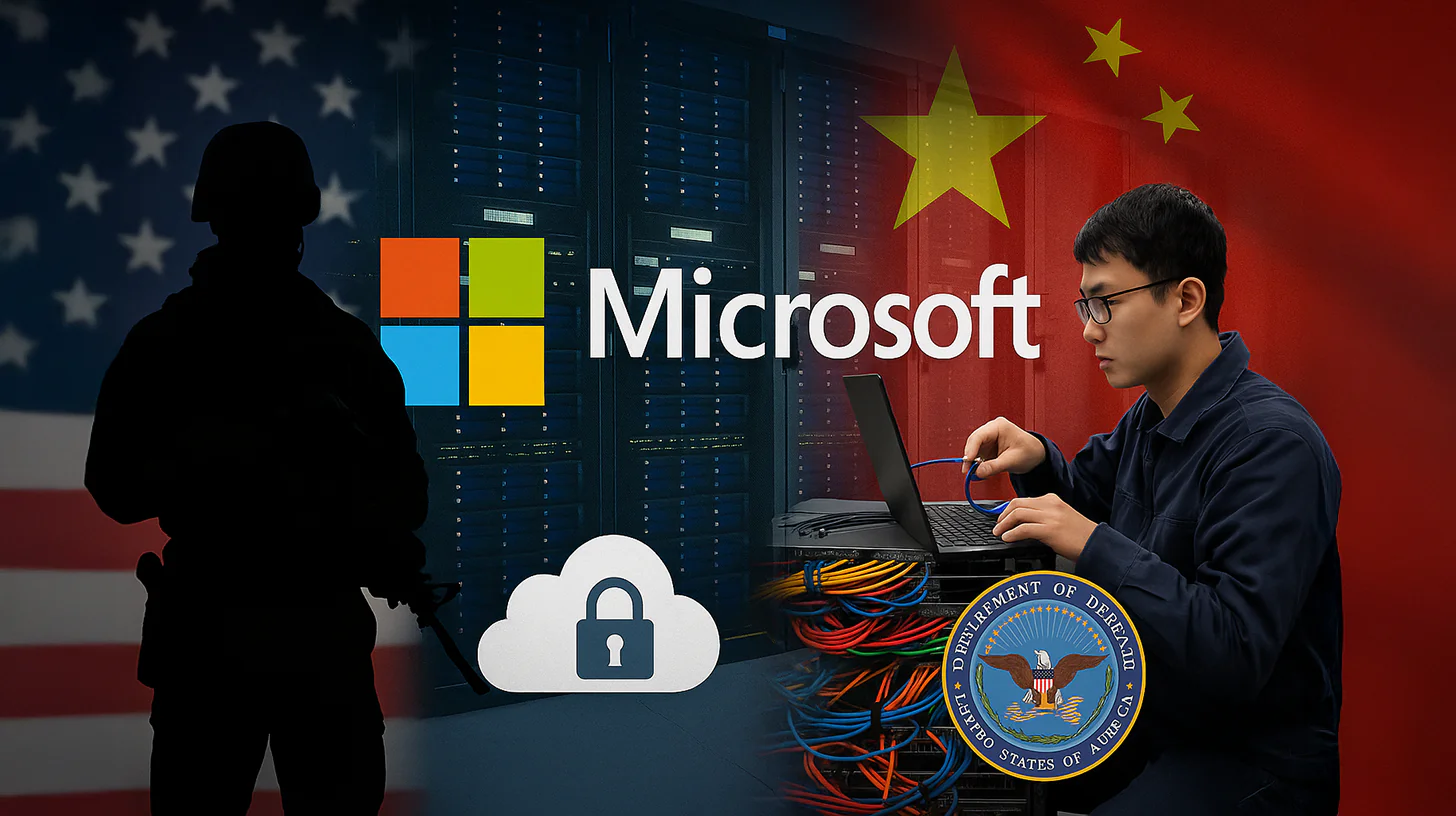
Supreme Court upheaval – Alternatives NOW: Why cloud usage from Microsoft, AWS & Google is suddenly on the brink – Image: Xpert.Digital
Dominance with a broken foundation: Is the hour of the European cloud now struck after the US court ruling?
Data disaster due to US ruling? The emergency plan for all users of Microsoft 365, AWS and Google Cloud
A landmark ruling by the US Supreme Court is shaking the digital bridge between Europe and the US to its very foundations. With the decision in the hypothetical case of "Trump v. Slaughter," set in 2026, the US Federal Trade Commission (FTC) is stripped of its legal independence – and with it, the legal foundation of the painstakingly negotiated EU-US Data Privacy Framework (DPF) collapses. This is a severe blow for the major cloud giants like Microsoft, AWS, and Google Cloud, which dominate around 70 percent of the European market. But the real danger lies with European companies: those who have blindly relied on the DPF and the supposed security of the hyperscalers for transatlantic data transfers are suddenly operating in a massive legal gray area. The following comprehensive analysis examines what this legal earthquake means in practice, why mere corporate promises from US companies can no longer save European data protection, and what a concrete action plan for cloud users must now look like.
Related to this:

The end of the DPF agreement: What the historic Supreme Court decision means for Microsoft, AWS & Co
When the foundation collapses – and the tenants only wake up now
The Supreme Court ruling of June 29, 2026, in the case of Trump v. Slaughter, was delivered in Washington as a decision concerning executive power and administrative law. In Europe, it has been interpreted as a blow to the very heart of the transatlantic digital economy. For Microsoft, Amazon Web Services, and Google Cloud—the three dominant hyperscalers that control roughly 70 percent of the cloud market in Europe—a period of fundamental uncertainty is now beginning, in which their own compliance architecture rests on shaky foundations.
The status quo before the ruling: The trillion-dollar legal basis
To understand what the ruling means for Microsoft, AWS, and Google Cloud, one must know the status quo that existed immediately beforehand. (Editor's note: "Trillion-dollar" is the US English equivalent of "billion").
All three hyperscalers are certified under the EU-US Data Privacy Framework (DPF). This certification is of exceptional practical importance for their European business units: it relieves European customers of the need to conduct a complex Transfer Impact Assessment (TIA) for each individual data transfer. Instead, customers can rely on the European Commission's adequacy decision of July 2023, which generally attests to an adequate level of data protection for certified US companies.
Specifically, this meant that Microsoft Azure, AWS, and Google Cloud were considered legally comparable to European data centers, which significantly simplified the setup and operation of cloud-based services such as Microsoft 365, AWS-based enterprise platforms, and Google Workspace. Eliminating the Data Processing Framework (DPF) would eliminate this automatic compliance and force each company to individually demonstrate GDPR compliance for every single data transfer.
The global cloud infrastructure market reached quarterly revenue of US$99 billion in the second quarter of 2025, with AWS leading the way (30 percent market share), followed by Microsoft Azure (20 percent) and Google Cloud (13 percent). According to market research, Europe accounts for approximately €72 billion of this revenue annually, with the three US providers together accounting for 70 percent. These are the revenues for which the DPF (Data Processing Framework) provides the central legal basis.
What the ruling specifically destroyed: The FTC question
The EU Commission's adequacy decision for the DPF, which refers to the FTC as an independent enforcement body around 250 times, suffers from a legal heart failure following the Supreme Court ruling: The agency on which the decision is based is now explicitly no longer an independent agency under US constitutional law.
In its 6-3 ruling, the court declared the FTC's legally guaranteed independence unconstitutional, overturning the 91-year-old precedent set by Humphreys Executor v. United States in 1935. The president can now dismiss FTC commissioners without giving reasons – which essentially means that the agency can be restructured at any time based on political calculations. This is structurally incompatible with the EU's fundamental right to independent data protection oversight, enshrined in Article 8(3) of the EU Charter of Fundamental Rights and Article 16(2) TFEU.
In addition, there is the Data Protection Review Court (DPRC), established by Biden under Executive Order 14086 as a two-tiered legal remedy for EU citizens. The DPRC is not a court within the meaning of Article 47 of the EU Charter of Fundamental Rights, but rather an agency within the US Department of Justice. Its supposed independence was based on a presidential decree – and following the Supreme Court ruling: if the FTC, as a legally established agency, is not allowed independence, then an entity created by executive order certainly cannot be. The foundation is gone.
The Privacy and Civil Liberties Oversight Board (PCLOB), which is supposed to oversee US intelligence activities, is also affected. Trump had already dismissed three of its members in January 2025; the board thus lost its quorum and has since been able to perform its oversight function only to a limited extent.
Microsoft's response: Strategic intervention – with limited persuasive power
Microsoft was the first of the major hyperscalers to react publicly and with a striking legal gesture: One day before the Supreme Court ruling, on June 28, 2026, Microsoft announced its intention to join the European Commission's Latombe appeal proceedings before the European Court of Justice. This move is economically rational – Microsoft has a vital interest in the continued existence of the DPF – but legally it is less effective than it appears.
In its blog post “Protecting privacy as a fundamental right while supporting transatlantic data flows,” Microsoft argues that data protection and transatlantic data flows are complementary, not antagonistic. This is true at an operational level: banks, hospitals, industry, and government use cloud services for pragmatic reasons, not as a political statement. However, from a legal perspective, this argument does not answer the fundamental question.
In Schrems I and Schrems II, the CJEU explicitly clarified that economic considerations cannot resolve a conflict of fundamental rights. The test for "essential equivalence" under Article 45 GDPR is a standard of fundamental rights, not a cost-benefit analysis. Microsoft's argument is strongest where it describes its own actions—namely, its history of challenging requests from authorities, its investments in the EU Data Boundary, and its implementation of European data localization. It is weakest where it suggests that the behavior of a trusted provider replaces the need for a legally sound state structure.
Because that's precisely the core problem: Microsoft can challenge requests, lobby, and publish transparency reports – but it can neither rewrite the US surveillance architecture nor force a comprehensive federal data protection law. Exemplary corporate behavior doesn't change the proportionality test, because this test focuses on the legal system, not on individual actors.
Moreover, there is a particular irony to Microsoft's admission before the French Senate: Anton Carniaux, Chief Legal Officer of Microsoft France, admitted under oath in a public hearing in June 2025 that it could not be guaranteed that the data of European citizens would be protected from being passed on to US authorities. This is the admission that data protection advocates have been waiting for for years – directly from the person affected.
Related to this:

AWS: Silent continuation behind a thin legal facade
Amazon Web Services has been more reserved than Microsoft in its public statements regarding the recent developments. On its own DPF compliance page, AWS emphasizes that it remains DPF-certified and uses the certification as the basis for transatlantic data transfers. This is formally correct – the adequacy decision has not been revoked.
However, AWS faces the same structural challenges as all other DPF-certified companies. AWS offers regions in Frankfurt, Ireland, Paris, Stockholm, and other cities in Europe, promoting them as GDPR-compliant locations. Customers can manage their own encryption keys via AWS services like CloudHSM and KMS, theoretically ensuring that AWS has no access to unencrypted customer data.
The problem, however, lies at the legal level, not the technical one: The CLOUD Act obligates AWS, as a US-controlled company, to hand over data to US authorities upon request – regardless of where that data is stored. Even if a customer holds all encryption keys themselves, the legal obligation to hand over metadata, telemetry data, billing data, and other data categories to which AWS has access remains. A legal opinion commissioned by the German Federal Ministry of the Interior has explicitly confirmed this finding.
Google Cloud: Sovereign products as an answer to a structural problem
Google has responded to growing concerns about transatlantic data transfers by building sovereign cloud offerings. In France, Google operates its Sovereign Cloud in partnership with Thales, one of Europe's largest defense and technology companies. The model stipulates that Thales manages the keys, technically preventing Google from accessing customer data.
This model is technically innovative and addresses part of the problem. What it doesn't solve is the legal obligation to extradite data under the CLOUD Act and FISA Section 702. Data residency and encryption with keys managed in Europe significantly reduce the risk of data at rest – but support access, identity flows, telemetry, security operations, billing metadata, and sub-processors remain subject to US jurisdiction.
Furthermore, the European Commission's own approach demonstrates how limited these solutions are in practice: The European Data Protection Supervisor found violations of purpose limitation and third-country transfers in the European Commission's use of Microsoft 365 – even though Microsoft had implemented an EU Data Boundary. What is insufficient for the European Commission itself can hardly be considered a secure legal basis for private companies.
Our US expertise in business development, sales and marketing

Our US expertise in business development, sales and marketing - Image: Xpert.Digital
Industry focus areas: B2B, digitalization (from AI to XR), mechanical engineering, logistics, renewable energies and industry
More information here:
A thematic hub offering insights and expertise:
- Knowledge platform covering global and regional economies, innovation and industry-specific trends
- A collection of analyses, insights, and background information from our key areas of focus
- A place for expertise and information on current developments in business and technology
- A hub for companies seeking information on markets, digitalization, and industry innovations
Europe's opportunity after the Supreme Court ruling: How sovereign cloud providers can capture market share
The cloud market paradox: Dominance with a broken legal foundation
The combination of a dominant market position and fundamental legal uncertainty creates a strategically precarious situation for all involved – and a historic opportunity for European alternatives.
AWS holds the leading position with a 30 percent global market share, followed by Microsoft Azure with 20 percent and Google Cloud with 13 percent. Together, they control 63 percent of the global cloud infrastructure market. In Europe, their market share is even higher at around 70 percent, while European providers have shrunk from 29 percent in 2017 to around 15 percent in 2022 and have stagnated since. The strongest European players, SAP and Deutsche Telekom, each have a market share of approximately two percent.
Europe is now paying a high legal price for this market distribution. The deeper the dependence on US hyperscalers, the more painful the consequences will be if the legal basis for using these services falters. What was marketed as cost-effective, scalable infrastructure is turning out to be a structural risk.
At the same time, a genuine market trend is emerging, one that had already begun before the ruling: European cloud providers were already experiencing a "veritable onslaught" of inquiries in 2025 – Nextcloud reported three times as many inquiries as usual, and the Berlin-based cloud provider Opencloud spoke of capacity bottlenecks. This "Trump effect," driven by geopolitical tensions and data privacy concerns, is likely to take on a new dimension as a result of the Supreme Court ruling.
Related to this:

The European alternative: What exists – and what is still missing
The sobering truth is that a complete replacement of the US hyperscalers is not realistic for most European companies in the short term. But the market situation is more nuanced than the dominance figures suggest.
Among those who reached production readiness in 2026 were STACKIT (Schwarz Group, operator of Lidl and Kaufland), IONOS Cloud, Deutsche Telekom's T Cloud Public, OVHcloud from France, and Plusserver SovereignStack. A study by the EuroStack project concludes that a European technology stack (EuroStack) can reduce the total cost of ownership (TCO) of cloud services by more than 60 percent compared to leading US hyperscalers – based on a reference model with IONOS infrastructure and Nextcloud collaboration software for 1,000 users.
Where these European providers are currently limited is in the area of generative AI (no significant GenAI model-as-a-service at T Cloud Public), in global scalability, and in the breadth of managed services that AWS, Azure, and Google Cloud have built up over years. OVH is suitable for scalable workloads with smaller budgets, STACKIT for security-critical applications, and IONOS for cost-conscious users who want to remain in EU data centers.
A key regulatory driver is the European Cybersecurity Certification Scheme for Cloud Services (EUCS), which will be implemented in its initial stages in 2026. The highest certification level (High) effectively requires that the provider be an EU-controlled entity and not subject to extraterritorial legislation – which effectively excludes US hyperscalers in their current structure. Therefore, both Microsoft (with T-Systems in Germany) and Google (with Thales in France) are establishing joint venture structures with European partners to meet the EUCS High requirements.
Related to this:

What companies need to do now: The prioritized action plan
The adequacy decision remains formally valid until it is overturned by the European Commission or the European Court of Justice. Therefore, there is no immediate automatic process. However, companies that continue to rely on DPFs, Standard Contractual Clauses (SCCs), or Binding Corporate Rules (BCRs) and that cited the independence of the FTC, PCLOB, or DPRC as a key pillar in their Transfer Impact Assessment need to take immediate action.
For those in charge, the following order of priority results:
First, the transfer inventory is the starting point: All data flows to the USA must be identified from the processing register pursuant to Article 30 GDPR – which providers, which data categories, and on what legal basis for the transfer. This is not a one-off exercise, but rather the foundation for all further decisions.
Secondly, transfer impact assessments must be re-evaluated. Any impact assessment that relied on FTC, PCLOB, or DPRC must be reassessed using the Schrems II logic and the EDSA Recommendations 01/2020. With careful application, the result will hardly be positive for sensitive data categories.
Thirdly, activating fallback solutions is recommended: SCCs remain in place as a transfer mechanism, but must be combined with supplementary technical safeguards. Encryption with keys managed exclusively in the EU, pseudonymization, or EU data localization can reduce the residual risk – but do not eliminate the fundamental problem of the CLOUD Act.
Fourth, the cloud architecture should be prepared for a Schrems III scenario. Specifically, this means abstracting LLM calls and other data processing operations behind provider-neutral interfaces, outsourcing data storage (embeddings, vector databases, audit logs) to EU-controlled infrastructure, and defining a realistic migration path. Those who lack this architecture risk a forced shutdown without a transition plan.
Related to this:

The structural asymmetry: Why Microsoft, AWS and Google can't solve the problem
Microsoft's defense of the DPF before the European Court of Justice, Google's provision of sovereign cloud options, AWS's compliance promises – all of this is honorable and economically rational. What it is not: a solution to the fundamental problem.
The fundamental problem is the persistent asymmetry between two legal traditions. The EU treats data protection as a justiciable fundamental right with legally enforceable guarantees. The US lacks a comprehensive federal data protection law, FISA Section 702 permits mass intelligence gathering without individual judicial authorization, Executive Order 12333 allows global surveillance without territorial restrictions, and the CLOUD Act compels US companies to share data regardless of where it is stored.
This asymmetry cannot be bridged by corporate obligations, encryption technology, or legal remedies based on presidential decrees. It can only be bridged—if at all—through legislative changes in the US Congress, specifically a comprehensive federal data protection law and a reform of intelligence agency powers. The current political dynamics in Washington suggest that neither of these will happen in the near future.
As long as this structural gap remains, every new agreement – whether a fourth, fifth, or sixth attempt – will be subject to the same attack that brought down or severely undermined Safe Harbor, Privacy Shield, and now the DPF. No sophisticated compliance architecture of a single company can compensate for this.
The market opportunity: What the ruling means for European suppliers
The Supreme Court ruling represents a historic moment for the European cloud industry – although it is not a short-term automatic consequence.
According to an ISG study, 48 percent of German companies are already considering European cloud alternatives. The "Trump effect" has already flooded providers like Nextcloud, OVHcloud, IONOS, and others with inquiries by 2025. The Supreme Court ruling gives this trend additional legal legitimacy: it is no longer just a political gut feeling that drives European decision-makers to domestic providers, but a solid legal basis.
For regulated sectors – banks, insurance companies, healthcare providers, public administration, and critical infrastructure – the question was no longer "If?" but "When and how?". This ruling accelerates this timeline and increases the urgency. The demand of the Data Protection Foundation, which is supported by the Federal Republic of Germany as a non-profit institution, is clear: a European solution is urgently needed, especially for governments, public authorities, and critical infrastructure.
The economic viability of European alternatives has now been documented: EuroStack is more than 60 percent cheaper in terms of TCO, STACKIT and T Cloud Public are production-ready for business-critical workloads, OVHcloud has Europe-wide data center infrastructure, and the EUCS certification regime creates a manageable standard for sovereign cloud for the first time.
What's still missing is a fully-fledged European AI infrastructure ecosystem. Those who rely on Azure OpenAI, AWS Bedrock, or Google Vertex AI for AI inference currently have hardly any equivalent European alternatives at the same performance level. This is the next strategic bottleneck – and the most urgent investment task for European technology policy.
Epilogue: Three providers, one question – and no easy answer
In the summer of 2026, Microsoft, Amazon, and Google face a situation that severely tests their own compliance pledges of recent years. They have committed to protecting European data. They have invested in data centers, implemented encryption standards, and established data boundaries. They have embraced the DPF as a stable foundation and aligned their products accordingly.
The Supreme Court ruling has shown that none of these measures solves the core problem: They are all US companies, subject to US law, and cannot, either technically or contractually, completely exclude the legal oversight that US surveillance law allows. This is not malicious intent—it is structure.
For companies that cannot or do not want to complete a full migration in the short term, the sobering diagnosis is: US Big Tech won't become unusable overnight. But operations are running on an increasingly narrow legal foundation. Those who start today building a transfer inventory, conducting a new risk assessment, and developing a genuine sovereignty strategy will create room to maneuver for what is highly likely to follow: a European Court of Justice ruling that declares the Data Processing Framework (DPF) invalid – and then it won't matter whether you were surprised, but whether you were prepared.
Your global marketing and business development partner
☑️ Our business language is English or German
☑️ NEW: Correspondence in your native language!

Konrad Wolfenstein
I and my team are happy to be available to you as your personal advisor.
You can contact me by filling out the contact form here [email protected]:or simply call me at +49 7348 4088 965. My email address is
I'm looking forward to our joint project.
☑️ SME support in strategy, consulting, planning and implementation
☑️ Creation or realignment of the digital strategy and digitization
☑️ Expansion and optimization of international sales processes
☑️ Global & Digital B2B trading platforms
☑️ Pioneer Business Development / Marketing / PR / Trade Fairs
🎯🎯🎯 Data-driven B2B industry hub as a quasi-in-house solution

The quasi-in-house solution: How Xpert.Digital closes operational gaps in B2B marketing and sales – Smart Content-Driven Business - Image: Xpert.Digital
Xpert.Digital is a data-driven B2B industry hub led by Konrad Wolfenstein . The company acts as an external, quasi-in-house solution for industrial partners, closing operational gaps in marketing, content, and sales – without requiring additional resources on the client side.
More information here:










