
Clean air, hotter climate: Why Europe's success against smog is now becoming an economic risk
Xpert Pre-Release

Available in 27 languages 📢
Prefer Xpert.Digital on GoogleⓘPublished on: September 18, 2026 / Updated on: September 18, 2026 – Author: Konrad Wolfenstein
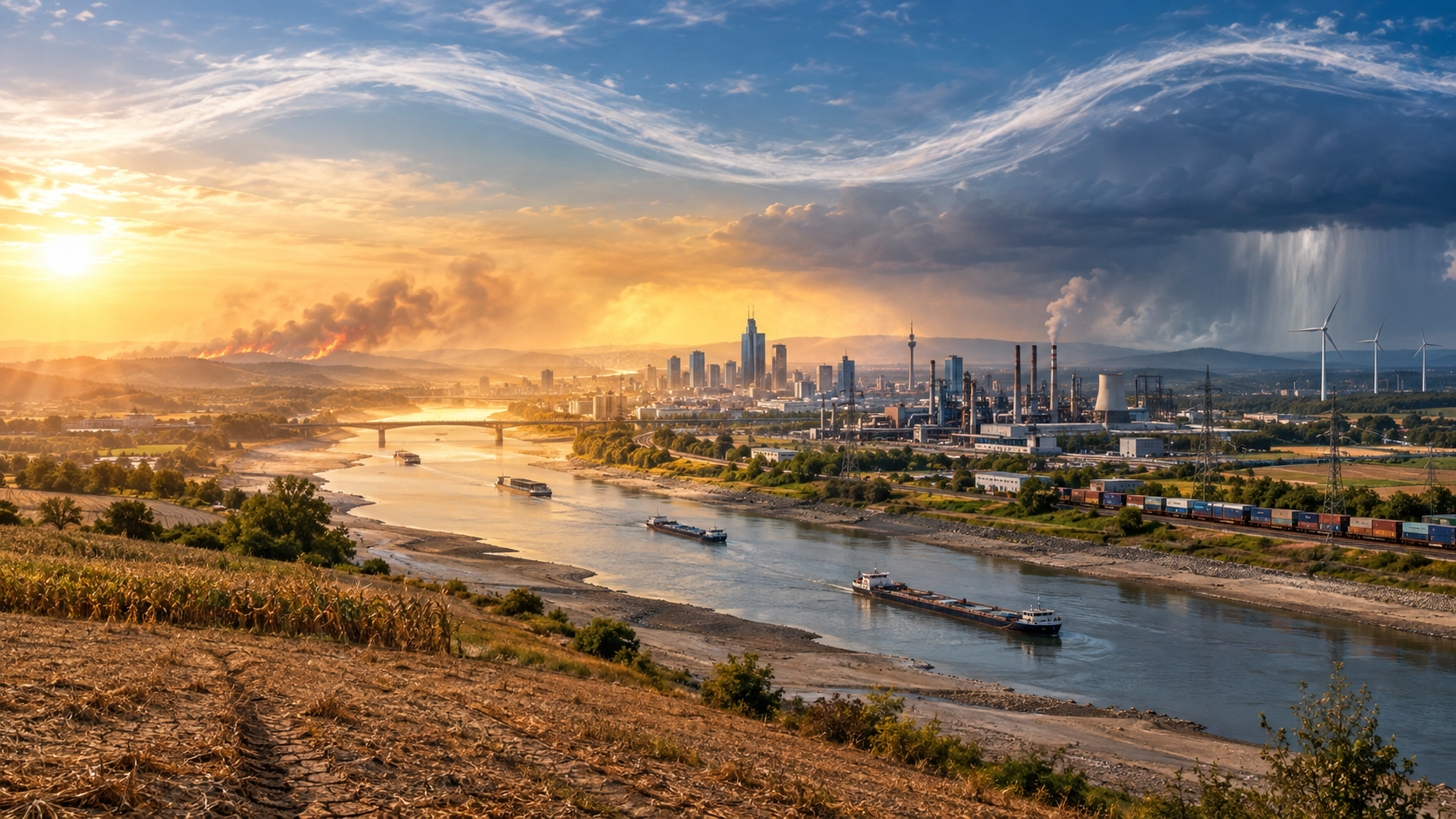
Clean air, hotter climate: Why Europe's success against smog is now becoming an economic risk – Creative image on the topic, with AI: Xpert.Digital
Blocked weather patterns and a lack of smog: The real reasons for Europe's extreme summers
Building for the heatwave era: Why climate adaptation is becoming the most important industrial policy of our decade
Europe is heating up significantly faster than the global average – a frequently heard warning. But the reasons for this are far more complex than they initially appear. Paradoxically, a major public health success is contributing to this rapid development: the successful fight against air pollution has removed a cooling veil of aerosols and ruthlessly exposed the true extent of greenhouse gas warming. Coupled with changes in the jet stream, the European continent is thus becoming a global early warning system for a new climate reality. What was once considered a purely environmental problem is increasingly developing into the ultimate stress test for the economy. Whether it's plummeting crop yields, crippled logistics chains due to low water levels, overloaded power grids, or unaffordable insurance – the relentless heat is hitting a highly interconnected, densely populated industry at its core. Climate adaptation is no longer an ideological debate, but a matter of hard-nosed industrial policy. Those who only look at historical weather data today and neglect investments in protection are jeopardizing tomorrow's prosperity. A deep dive into the economic consequences of Europe's climate shock.
Europe's climate shock is becoming an economic stress test: Europe is becoming a heat hotspot
Europe is warming significantly faster than the global average and is therefore facing the economic consequences of a changing climate earlier than many other regions of the world. This development is neither a statistical anomaly nor attributable to a single cause. It arises from the interplay of globally rising greenhouse gas concentrations, the greater warming of land areas compared to oceans, regional changes in air circulation, the proximity to the particularly rapidly warming Arctic, and an effect that seems paradoxical at first glance: Europe's more successful air pollution control has made some of the warming previously masked by aerosols visible.
This turns the continent into an economic early warning system. What is currently becoming visible in Europe in agriculture, healthcare, energy supply, logistics, insurance, and public finances can manifest itself in a similar form in other regions with a time lag. At the same time, European risks are particularly concentrated because the continent is densely populated, highly industrialized, and has a highly interconnected infrastructure. An extreme weather event therefore rarely affects only a single sector. Low water levels, for example, not only impact inland shipping but also chemical companies, power plants, building material producers, refineries, agricultural traders, and industrial customers who rely on affordable bulk transport.
The common statement that Europe is warming roughly twice as fast as the rest of the world needs to be understood precisely. It compares different spatial scales. The global average comprises approximately 70 percent ocean surface, which absorbs heat more slowly and buffers it through evaporation and mixing. Europe, on the other hand, is predominantly a land region. For this reason alone, faster warming than the global average, which is largely determined by oceans, would be expected. What is exceptional is not only that Europe is warming faster, but also how strongly this land-based trend is amplified by regional feedback loops and atmospheric circulation patterns.
Since the 1980s, this dynamic has visibly accelerated. European temperatures are rising by approximately half a degree Celsius per decade in the long term, although individual years fluctuate considerably. In 2025, the average European temperature was once again well above the average for 1991 to 2020; only 2024 and 2020 were warmer in the corresponding dataset. However, the short-term ranking of individual years is less economically important than the structural trend. Companies, municipalities, and households invest in facilities, buildings, and infrastructure with lifespans of decades. For them, it is not a matter of whether a single summer is slightly milder, but rather whether the probability of extreme heat, drought, heavy rainfall, or forest fires increases over the entire lifespan of an investment.
The jet stream as an amplifier
The jet stream is a band of strong winds several kilometers above the ground that transports weather patterns from west to east. It doesn't run in a straight line, but rather forms large-scale waves. These so-called Rossby waves can carry warm air far north and cool air far south. As long as these patterns continue to migrate, high- and low-pressure systems alternate within manageable timeframes. However, if the waves become particularly pronounced or nearly stationary, weather patterns can remain in the same location for days or weeks.
This is crucial for Europe. A blocking high-pressure system brings a lot of sunshine in summer, descending and warming air, and often dry soils. Moisture, which would normally absorb energy through evaporation, is increasingly lacking. The incoming solar energy then heats the air and the ground more intensely. This creates a feedback loop: heat dries out the soil, and the drier soil then intensifies the heat. The same blocked circulation can promote prolonged rainfall elsewhere if low-pressure systems barely move on. Climate change therefore means not only a uniform increase in temperature, but also a change in the frequency, duration, and spatial distribution of extreme weather events.
Research shows that heat waves in western and central Europe are particularly closely linked to more frequent or longer-lasting double jet stream structures over Eurasia. Under such conditions, the strong wind band temporarily splits into two branches. Between these branches, an area of weak air movement can form, trapping heat. This altered dynamic explains a considerable part of the accelerated increase in European heat waves. However, it does not explain all of the warming and therefore should not be misunderstood as an alternative to the greenhouse effect.
Research into the long-term changes of the jet stream is complex. Observational series are short compared to natural fluctuations, and atmospheric circulation reacts to several influences simultaneously. These include the particularly rapid warming of the Arctic, altered temperature differences between land and sea, fluctuations in tropical ocean areas, changes in the North Atlantic, and regionally unevenly distributed aerosols. Statements that the jet stream is generally destabilized or becoming permanently wavier everywhere therefore go beyond the scientific evidence. More robust is the observation that certain summer circulation patterns over Europe have become more frequent or persistent, and that this change intensifies extreme heat.
This difference is economically significant. A mere shift in average temperature would be relatively easy to plan for. Persistent extreme events are more difficult because damage often does not increase linearly. Three hot days can be managed in many businesses with organizational measures. Three weeks of heat, on the other hand, can push cooling systems to their limits, increase sick leave, delay production times, restrict water withdrawals, and disrupt supply chains. The macroeconomic risk therefore lies not only in the higher average temperature but also in the growing probability that several stress thresholds will be exceeded simultaneously.
When clean air releases heat
Aerosols are tiny solid or liquid particles in the atmosphere. Some are naturally occurring, for example from sea salt, dust, or volcanoes. Others originate from human activities, particularly the burning of sulfur-containing fossil fuels, industrial processes, traffic, and agriculture. Many aerosols reflect some sunlight back into space. They also affect clouds because water can condense on them. This alters the number, size, brightness, and lifespan of cloud droplets.
For decades, severe air pollution in Europe produced a regional cooling effect that partially offset the warming caused by greenhouse gases. With stricter limits, flue gas cleaning, cleaner fuels, and the structural transformation of industry, emissions of sulfur dioxide and sulfates in particular have declined significantly. This has been a major public health success. Clean air prevents respiratory and cardiovascular diseases, reduces premature deaths, improves quality of life, and reduces damage to soil, water, buildings, and cultural heritage.
From a climate physics perspective, however, this eliminated a cooling veil. More solar radiation reaches the surface, and the previously partially masked effect of greenhouse gases becomes more pronounced. This effect does not mean that air pollution control causes climate change. The primary cause of long-term warming remains the accumulation of long-lived greenhouse gases. Aerosols have temporarily masked this warming without solving the underlying problem. Since many aerosols remain in the atmosphere for only days or weeks, their concentration reacts quickly to emission reductions. Carbon dioxide, on the other hand, remains in the climate system for a very long time and accumulates over generations.
Recent model analyses suggest that the decline in European aerosols is not solely due to increased solar radiation. The spatially uneven changes in air pollution can shift temperature contrasts across the Northern Hemisphere, thereby influencing large-scale atmospheric circulation. Since around 1980, aerosols have declined sharply in Europe and North America, while emissions in parts of South and East Asia initially increased before stabilizing or weakening. This asymmetric distribution alters the atmosphere's energy balance and can promote quasi-stationary Rossby waves, which in turn prolong European heat waves.
The simplistic narrative that less air pollution caused Europe's heat waves is nevertheless misleading. Without the rising concentration of greenhouse gases, long-term global warming would not have occurred in this form. The decrease in aerosols primarily explains why warming became apparent more quickly in Europe at times than in comparable regions and why certain summer circulation patterns may have changed. It is a regional amplifier and unmasking effect, not the fundamental driving force.
The claim that fewer aerosols necessarily lead to less rain should be treated with equal caution. Aerosols influence clouds in diverse and sometimes contradictory ways. More condensation nuclei can make clouds brighter and longer-lasting, but depending on cloud type, humidity, temperature, and dynamics, they can also suppress or spatially shift precipitation. In Europe, declining summer rainfall results primarily from the interplay of altered circulation patterns, increased evaporative demand, and regional soil moisture feedbacks. A lack of aerosols can contribute to this, but it is not a universal, single-cause explanation.
The end of the apparent paradox
The link between air pollution and global warming is easily exploited for political gain. One interpretation claims that environmental policies have actually caused the heat. Another avoids the topic altogether because it is difficult to discuss. Both approaches undermine objective climate policy. Deliberately maintaining high levels of air pollutants to block sunlight would be irresponsible from a health, environmental, and economic perspective. Furthermore, it would only produce a short-term, regional cooling effect, while carbon dioxide levels would continue to rise, exacerbating the long-term risks.
The correct conclusion is rather that air pollution control and climate policy must be more closely integrated. If short-lived cooling aerosols are reduced, long-lived greenhouse gas emissions must simultaneously decrease particularly rapidly. Otherwise, air quality will improve while temperatures temporarily rise more sharply. This conflict of objectives is not an argument against clean air, but rather an argument against an energy and industrial policy that removes sulfur particles but only slowly reduces the consumption of fossil fuels.
From an economic perspective, this highlights a fundamental problem with isolated regulation. Political measures are often evaluated based on individual pollutants, sectors, or budget lines. However, the climate system reacts to the entire emissions profile. Historically, coal-fired power plants emitted carbon dioxide, sulfur dioxide, nitrogen oxides, particulate matter, and mercury simultaneously. Filter technology was able to reduce some of the local pollutants, but it did not eliminate carbon dioxide emissions. The short-term health benefits were real, but the long-term climate risk remained. Only low-emission energy sources, efficiency improvements, electrification, and altered production processes can solve both problems simultaneously.
The hope that other regions of the world will catch up in air pollution control and thereby automatically end Europe's above-average warming should not be interpreted as a reason to sound the all-clear. A more even global distribution of aerosols could alter regional temperature contrasts and circulation patterns. If Asia also significantly reduces its particulate emissions, the particular European contrast should diminish. At the same time, however, the cooling effect of aerosols is decreasing worldwide. Without a parallel reduction in greenhouse gas emissions, global warming could therefore accelerate further in the short term. Europe could warm at the same rate as the global average in the future, while the global average itself rises faster.
The potential reduction in the European warming differential therefore does not mean the danger is over. For investments, the absolute temperature level is what counts, not just the difference from the global average. A continent that has already warmed significantly remains exposed to high risks, even if other regions catch up. The economic debate should therefore not be narrowed to the question of whether Europe will still be warming exactly twice as fast in two decades. What is crucial is the extent of cumulative warming, the degree to which extreme weather events increase, and whether the economy and infrastructure adapt in time.
Climate damage is becoming a growth risk
Between 1980 and 2024, extreme weather and climate events in the European Union caused real asset losses estimated at €822 billion in 2024 prices. Around €208 billion, or about a quarter of this sum, occurred in the years 2021 to 2024 alone. Average annual losses rose from around €8.6 billion in the 1980s to approximately €44.9 billion between 2020 and 2024. These figures fluctuate considerably because individual catastrophic years dominate the statistics, but the trend is clear.
The measured damages represent only a portion of the overall economic burden. The data primarily captures destroyed or damaged assets. More difficult to quantify are production losses, health consequences, lost working hours, reduced learning output, damage to ecosystems, decreased soil fertility, disrupted supply chains, and missed investments. Similarly, the damage statistics do not fully reflect situations where a company refrains from expanding a site due to increased risks, or where a municipality postpones necessary development projects to repair flood damage.
Climate risks therefore affect both the level and the potential growth of an economy. A destroyed building initially reduces the capital stock. While its reconstruction later increases measured economic output, it largely restores the previous state. The same workforce, machinery, and household resources could have been used to create new housing, better schools, more efficient networks, or more productive factories had the disaster not occurred. Reconstruction is economic activity, but it is not a free gain in prosperity.
Repeated floods are particularly problematic. A single flood can be managed with reserves, loans, and government assistance. Recurring floods, however, alter property prices, insurance premiums, loan terms, and location decisions. Assets lose value while protection costs rise. Regions enter a negative cycle when private investment declines, tax revenues fall, and municipal spending on protection and repairs increases.
Furthermore, the damage is geographically unevenly distributed. Southern Europe faces particularly high risks from heat, drought, water scarcity, and wildfires. Central and Western Europe are more affected by river and flash floods, low water levels, and heat waves. Coastal regions must also consider sea-level rise, storm surges, and salinization. Northern regions may experience temporary benefits from longer growing seasons or lower heating requirements, but are also affected by heavy rainfall, wildfires, thawing permafrost, altered ecosystems, and imported supply chain risks.
Productivity under heat pressure
Heat acts like a creeping tax on human performance. The body has to expend more energy on cooling, concentration and reaction speed decrease, and errors and accidents become more likely. Construction, agriculture, logistics, warehousing, maintenance, production, and all outdoor activities or those in poorly cooled buildings are particularly affected. Even offices are not immune if buildings overheat and there is no nighttime cooling.
Companies can shift working hours, extend breaks, shorten shifts, provide shade, offer drinks, and install refrigeration. These measures protect employees but also incur costs. Early and night shifts increase overtime pay and organizational effort. Air conditioning increases investment, maintenance, and electricity consumption. Where tasks cannot be shifted, effective work performance decreases. The overall economic impact is therefore distributed among lower productivity, higher operating costs, and additional healthcare expenses.
High temperatures also influence inflation. Crop failures increase the price of unprocessed foods. Increased demand for refrigeration, coupled with limited capacity, drives up electricity prices. Low water levels make transportation more expensive because ships can carry less cargo, necessitating more voyages. Simultaneously, services can become more expensive if productivity losses are passed on through wages and prices. Studies of major euro area economies show that an additional one-degree Celsius increase in monthly summer temperatures can raise inflation for unprocessed foods by approximately 0.1 to 0.2 percentage points within the following year. Individual temperature shocks are manageable on their own; however, more frequent and combined shocks complicate monetary policy.
Central banks face a dilemma. Climate-induced price shocks reduce supply, while raising interest rates neither generates rain nor restores harvests. If monetary policy reacts too weakly, inflation expectations can become entrenched. If it reacts too strongly, it further burdens an already weakened economy. Climate adaptation thus indirectly becomes an instrument of price stability: more resilient agriculture, efficient grids, better water management, and more robust supply chains reduce the frequency and severity of supply-side shocks.
Agriculture between drought and adaptation
Agriculture is particularly vulnerable because biological processes can only be accelerated, shifted, or climate-controlled to a limited extent. Higher carbon dioxide concentrations can promote plant growth under certain conditions, but this effect is often offset by heat, water scarcity, pests, diseases, and nutrient limitations. Crucial factors are not just seasonal averages, but critical periods. A few extremely hot days during flowering or grain filling can disproportionately reduce yields.
Europe is experiencing contrasting trends. In parts of Northern Europe, the growing season is lengthening, and some crops can be cultivated further north. In Southern and increasingly also Central Europe, drought stress, irrigation needs, and yield fluctuations are increasing. The economic consequence is not a simple linear decrease in total European production, but rather a spatial shift in growing conditions, risks, and investments.
Irrigation is an obvious but limited answer. It can stabilize yields, but with decreasing water availability, it intensifies competition between agriculture, households, industry, energy production, and nature. New storage solutions, more efficient drip irrigation, soil conservation, humus build-up, adapted varieties, agroforestry systems, and more precise weather data can increase resilience. No single measure eliminates the risk. Success requires a combination of technology, plant breeding, soil management, insurance, advisory services, and reliable water rights.
Price signals play a crucial role. If water remains consistently very cheap, regardless of scarcity, there are no incentives for efficiency or for switching to more suitable crops. Abrupt price increases put smaller farms under pressure, and regional production can collapse. An economically sound water policy therefore requires tiered tariffs, clearly defined extraction rights, social compensation mechanisms, and investment subsidies. At the same time, it must ensure minimum ecological flows, because degraded water bodies and soils weaken the future production base.
New: Patent from the USA – install solar parks up to 30% cheaper and 40% faster and easier – with explanatory videos!

New: Patent from the USA – Install solar parks up to 30% cheaper and 40% faster and easier – with explanatory videos! - Image: Xpert.Digital
The core of this technological advancement is the deliberate departure from conventional clamp mounting, which has been the standard for decades. The new, more time- and cost-effective mounting system addresses this with a fundamentally different, more intelligent concept. Instead of clamping the modules at specific points, they are inserted into a continuous, specially shaped support rail and held securely in place. This design ensures that all forces – whether static loads from snow or dynamic loads from wind – are distributed evenly across the entire length of the module frame.
More information here:
Adaptation strategies for companies in uncertain times
Low water levels impact industrial supply chains
Europe's industry is more dependent on water than it might initially appear. Water serves as a raw material, solvent, cooling medium, cleaning agent, and transportation route. Chemicals, paper, food, metallurgy, semiconductor manufacturing, and energy production all require reliable quantities and qualities. During droughts, authorities can restrict water withdrawals, while high water temperatures reduce cooling efficiency and cause environmental limits to be reached more quickly.
The problem is particularly evident on the Rhine and other European waterways. Low water levels reduce the permissible cargo capacity of ships. The cost per ton transported increases, and more ships are needed for the same volume of freight. Rail and road transport can only handle a portion of the load due to a lack of capacity, personnel, terminals, and suitable vehicles. Bulk goods such as coal, ores, petroleum products, grain, and chemical feedstocks cannot be moved at will in the short term.
The economic damage arises from bottlenecks. If a preliminary product is missing, a high-value-added plant can be brought to a standstill, even though the value of the missing delivery is comparatively small. This makes traditional damage assessments difficult. The transport disruption is only the visible initial effect; production interruptions, contractual penalties, inventory reduction, price increases, and customer losses follow along the supply chain.
Adaptation therefore requires more than just deeper shipping channels. Companies can increase inventory levels, develop alternative suppliers, deploy smaller or shallow-water vessels, expand multimodal terminals, and secure critical raw materials more effectively by rail. These measures reduce efficiency in normal operations but increase resilience in a crisis. The conflict between lean supply chains and resilience will intensify. The economically optimal solution is not maximum redundancy, but rather a risk-adjusted reserve at points where disruptions would cause particularly severe consequential damage.
Energy between cooling and peak load
Heat simultaneously alters supply and demand in the energy system. The electricity demand for cooling increases, while conventional power plants may be limited by warm or scarce cooling water. Hydropower suffers from low flow rates. Photovoltaics deliver a lot of energy on sunny summer days, but their efficiency decreases somewhat at very high module temperatures. Wind power can be weak during periods of stable high pressure. As a result, heat waves can create situations where high cooling demand meets limited, dispatchable generation.
A diversified, interconnected, and flexible electricity system is therefore a key adaptation infrastructure. Grid expansion, storage, load management, flexible power plants, cross-border trading, and local generation reduce the risk. Building efficiency is equally important: external shading, insulation, light-colored surfaces, greenery, and night ventilation permanently reduce cooling requirements. Air conditioning alone does not solve the problem if it cools poorly insulated buildings and creates additional peak loads precisely during extreme heat.
For data centers, digital infrastructure, and automated industrial plants, water and energy efficiency are gaining strategic importance. Future location decisions must consider not only electricity prices, grid connection, taxes, and skilled labor, but also long-term water availability, heat waves, flood risks, and insurability. A location that is inexpensive today could become more costly over its lifespan if cooling, emergency power, flood protection, and business interruption insurance costs increase significantly.
Climate change adaptation of the energy system is also security policy. Outages during heat waves affect hospitals, transportation, telecommunications, cold chains, and water supplies simultaneously. Resilience is achieved through technical standards, decentralized reserves, clear emergency plans, and investments in networks, not by attempting to completely eliminate every single risk.
Insurance companies are losing their buffer function
Insurers spread rare losses across many policyholders and years. This model comes under pressure when events occur more frequently, with greater severity, or in close geographical proximity. Rising premiums are initially a valid risk signal. However, if they become unaffordable for households and businesses, or if insurers withdraw from certain regions, a coverage gap emerges. In Europe, only a relatively small proportion of climate-related disaster losses are insured; in some southern and eastern European countries, this proportion is particularly low.
The gap doesn't just affect victims and insurers. Uninsured losses end up with banks and governments. Real estate serves as loan collateral. If a building loses value due to repeated flooding, heat, or the risk of forest fires, and is simultaneously insufficiently insured, the credit risk increases. Around three-quarters of bank claims in the Eurozone against companies with a high or increasing flood risk are unsecured or covered by tangible assets that themselves can be exposed to physical risks. This is a classic case of correlation: precisely when the borrower comes under pressure, the collateral also loses value.
A blanket government assumption of all damages would nevertheless be problematic. It weakens incentives to avoid building in danger zones or to implement protective measures. Conversely, purely market-based pricing can overburden low-income households and financially exclude entire regions. Viable models consist of mixed systems comprising mandatory basic coverage, risk-based premiums, social compensation, preventative measures, reinsurance, and clearly defined government disaster relief.
Crucially, insurance data must be incorporated into planning and loan approvals. Those who build with flood protection in mind, install backflow preventers, upgrade technical systems, or reduce flammable vegetation should receive a measurable benefit. Otherwise, prevention remains a moral imperative without any economic impact. At the same time, authorities must enforce building bans in particularly vulnerable zones. Insurance can mitigate residual risks, but it cannot rectify permanently unsuitable spatial planning.
Public budgets facing the distribution question
Climate damage places multiple burdens on the state: through emergency aid, reconstruction, healthcare costs, lower tax revenues, and higher social spending. When private insurance is lacking, political pressure on governments to retroactively cover losses increases. This implicit guarantee rarely appears in the budget during normal years, but suddenly materializes after disasters. As a result, reconstruction competes with education, defense, digitalization, and regular infrastructure investments.
The distributional effects are complex. Wealthy households are more likely to be able to afford air conditioning, renovations, insurance, and relocation. Low-income individuals are more likely to live in poorly insulated buildings, densely populated urban areas, or more vulnerable locations, and are more likely to work in heat-exposed occupations. Climate risks therefore exacerbate existing inequalities. A purely market-based approach would concentrate protection where purchasing power is concentrated, not necessarily where the societal benefit is greatest.
At the same time, social policy must not permanently subsidize flawed location decisions. If reconstruction in highly vulnerable areas is financed without limit, future damage will increase. Fair adaptation can therefore also mean supporting resettlement, purchasing land, and repurposing areas as floodplains. Such decisions are politically difficult, but in the long run, they can be more socially just and cost-effective than an endless cycle of damage, reconstruction, and renewed damage.
Sound fiscal policy must therefore consider climate risks in medium-term financial planning, debt analyses, and public investment decisions. This does not mean fully pre-financing every conceivable disaster. It means making probable risks transparent, building up contingency funds, adapting investment standards, and clearly defining responsibilities between municipalities, states, nation-states, and the European Union. Without such rules, costs are politically improvised after events and often shifted to the level least prepared for.
Adaptation becomes industrial policy
Climate adaptation is often treated as a defensive cost factor. This view is too narrow. Investments in resilient buildings, water networks, flood protection, cooling, early warning systems, climate-adapted agriculture, and robust energy supplies not only prevent damage. They also create demand for planning, sensors, software, materials, machinery, engineering services, and new financial products. Europe can leverage its early exposure to climate change to develop technological and industrial expertise that will be in demand worldwide.
However, this requires scaling. Many adaptation projects are local, small-scale, and institutionally fragmented. A municipality renovates canals, a company builds a water reservoir, a housing association shades facades. The individual measures are sensible, but often do not create a sufficiently large and standardized market for cost-effective, mass-produced solutions. Common technical standards, open risk data, consolidated tenders, and reliable funding conditions could reduce unit costs and mobilize private investment.
The investment gap remains substantial. For the particularly vulnerable sectors of agriculture, energy, and transport, annual adaptation investments in the high tens to low hundreds of billions of euros are projected until 2050, while the funds already committed are significantly lower. This magnitude is considerable, but must be weighed against the growing annual damage and the long service lives of infrastructure. A bridge, a substation, or an entire city district built today based on historical climate data can lead to maladaptation and additional costs for decades to come.
The quality of the projects is economically crucial. Not every expenditure labeled as climate adaptation is efficient. Dams can store water, but they can damage ecosystems and, if improperly designed, create new risks. Air conditioning protects against heat, but increases peak electricity demand and waste heat. Dikes protect an area, but can exacerbate damage downstream and encourage further development behind the dike. Good adaptation therefore assesses life-cycle costs, side effects, distributional consequences, and the risk of committing to a single climate pathway.
Flexible and modular measures are particularly valuable. Mobile flood protection elements, expandable storage facilities, unsealed surfaces, shaded public spaces, and adaptable building technology function under multiple scenarios. Nature-based solutions such as floodplains, urban trees, wetlands, and healthy soils can simultaneously provide cooling, water storage, promote biodiversity, and sequester carbon. While they don't completely replace technical infrastructure, they often complement it cost-effectively.
Companies need real-world carbon footprints
Many companies focus their climate strategy on emissions accounting and regulatory reporting requirements. This is necessary, but not sufficient. A company can significantly reduce its emissions and still be highly dependent on water scarcity, heat, flooding, or a single vulnerable supplier. Physical climate risks therefore belong in site planning, procurement, maintenance, insurance management, and investment appraisal.
The first step is a robust exposure analysis. Companies need to know which plants, warehouses, data centers, suppliers, and transport corridors are exposed to which hazards. A rough national risk map is insufficient. Floods vary within a few hundred meters, urban heat depends on buildings and vegetation, and water scarcity is determined by local extraction rights and competing users. Therefore, geodata must be combined with information about facilities, processes, and business criticality.
The second step is assessing dependencies. Not every asset at risk is equally important. An easily replaceable warehouse may be less critical than a single substation, a water connection, a specialized supplier, or a bridge on the access route. Companies should analyze where minor physical disruptions trigger significant value creation losses. These nodes deserve priority investment in protection, redundancy, or alternative processes.
The third step is a realistic cost-benefit analysis. Conventional methods often heavily discount future damage and use historical probabilities. This makes protective measures appear unattractive, even though the risk increases over the service life. More sensible are scenarios with multiple warming and adaptation pathways, stress tests, and decision rules that favor robust solutions over seemingly optimal point forecasts. Climate models do not provide an exact weather forecast for the year 2047, but they clearly demonstrate that historical experience alone is no longer a reliable basis for investment.
The fourth step concerns responsibilities. Climate risk must not remain solely within sustainability departments. Purchasing, production, finance, human resources, IT, logistics, and the board of directors must use shared key performance indicators (KPIs). Bonuses and investment approvals should consider not only short-term returns but also avoided downtime, insurability, and restart time. Otherwise, resilience will be regularly sidelined in favor of short-term cost reduction.
Germany at the center of the interconnectedness
Germany is neither the hottest nor the driest part of Europe, but it is particularly vulnerable economically. Its industrial structure is capital-intensive, export-oriented, and deeply integrated into European and global supply chains. Chemicals, automotive manufacturing, mechanical engineering, metal processing, the food industry, and logistics depend on reliable energy, water, transport infrastructure, and specialized intermediate products. Climate damage in Germany therefore also affects companies abroad through these supply chains; conversely, German companies are impacted by droughts, floods, and heat waves in their supplier regions.
The Rhine River provides a prime example. It is not merely a waterway, but an industrial corridor with ports, chemical parks, refineries, steel plants, and power stations. Low water levels increase freight rates and necessitate reduced cargo capacity. Simultaneously, heat can increase cooling requirements and complicate water withdrawals. When these factors converge, a compound risk arises that extends far beyond the immediate transport sector.
Cities also face high costs. Dense development, sealed surfaces, and limited nighttime cooling create urban heat islands. The elderly, those with pre-existing conditions, young children, and manual laborers are particularly vulnerable. Hospitals, nursing homes, schools, and public transportation must be designed to withstand temperatures that were not anticipated during their construction. Municipalities therefore need heat action plans, cool public spaces, shaded bus stops, access to drinking water, adapted work processes, and urban planning that preserves corridors for fresh air.
At the same time, flooding remains a major risk. Increased heat and drought do not mean that flooding will disappear. A warmer atmosphere can hold more water vapor, which can lead to more intense heavy rainfall. Dried or sealed soils often absorb water less effectively. Germany must therefore deal with seemingly contradictory threats: at times too little water for agriculture, shipping, and industry, and simultaneously, locally too much water in too short a time.
Institutional fragmentation hinders adaptation. Water management, disaster relief, construction planning, health, transportation, and economic development operate at different levels. Investments fail not only due to a lack of funding, but also because of slow processes, unclear responsibilities, and a shortage of skilled personnel. However, acceleration must not mean compromising risk assessment. What is needed are standardized procedures, digital data repositories, clear priorities, and long-term funding for municipal planning capacities.
Europe's internal market distributes the damage
Climate risks do not stop at borders. The European single market distributes goods, capital, and labor efficiently, but it also transmits disruptions. A poor harvest in several countries affects food prices across the entire market. A low water level event on a key waterway disrupts international supply chains. A storm can strain power grids and data connections across borders. National adaptation strategies therefore remain incomplete when neighboring countries have different standards and emergency plans.
European coordination is particularly useful for cross-border rivers, electricity grids, transport corridors, insurance mechanisms, and early warning systems. Shared risk data improves investment decisions but must not replace local expertise. A European framework should establish minimum standards and interoperability, while regions adapt the specific implementation to their particular risk profile.
The single market can also generate economies of scale for adaptation technologies. Uniform requirements for heat protection, water consumption, building products, sensors, and risk reports make it easier for companies to develop solutions ready for mass production. Too many detailed national regulations, on the other hand, increase costs and stifle innovation. Regulation should clearly define objectives and metrics, but leave technological pathways as open as possible.
Solidarity remains necessary because not all countries are equally affected or possess the same fiscal capacity. However, it requires rules that reward preventative measures. European aid after disasters should be linked to minimum standards for spatial planning, risk management, and insurance. Otherwise, the impression arises that cautious regions are paying for the repeated poor decisions of others. A credible solidarity framework combines support with prevention and transparency.
Climate protection and adaptation are not alternatives
In political debates, emissions reduction and adaptation are often pitted against each other. One side demands that all resources be focused on preventing further warming. The other declares climate change inevitable and demands adaptation only. Economically, this separation is flawed. Some of the warming and its consequences are already unavoidable, making adaptation urgently necessary. At the same time, the costs of adaptation and the likelihood of unmanageable damage increase with each additional step of warming.
Climate protection limits the upper risk range. Adaptation reduces damage within the range of unavoidable warming. Both instruments complement each other. A higher dike protects against a specific flood level, not against indefinitely rising water levels. Heat protection makes cities more habitable, but cannot compensate indefinitely for extreme outdoor temperatures and water scarcity. Agricultural varieties can be adapted, but biological and hydrological limits remain.
The effects also differ over time. Emission reduction incurs investment costs today and slows future risk increases. Adaptation can often reduce local damage more quickly, but requires regular upgrades as warming progresses. An efficient strategy therefore prioritizes measures with dual benefits: energy-efficient buildings that save heating energy in winter and stay cool in summer; renewable energies with resilient grids; soils and forests that store carbon and retain water; and compact cities with green spaces and good public transport.
The aerosol effect underscores this necessity. Clean air remains essential, but it makes some of the hidden warming visible. Only a rapid reduction in long-lived greenhouse gases will prevent progress in public health from coinciding with additional climate change. The lesson is not to tolerate polluted air, but to replace fossil fuel combustion more comprehensively.
Why the all-clear signal is false
It is plausible that Europe's particular warming advantage could diminish in the future if aerosols decline globally and regional temperature contrasts change. However, this does not reliably guarantee a short-term cooling of Europe. Atmospheric circulation fluctuates considerably, models contain uncertainties, and various influencing factors can reinforce or partially cancel each other out. Even a normalization of the relative rate would leave the already elevated temperature level unchanged.
Furthermore, the global reference point is dynamic. If the rest of the world warms up temporarily faster due to decreasing aerosol pollution, Europe's relative exceptionalism could diminish without European temperatures rising more slowly. Statistically, this would represent a convergence, but no economic relief. For harvests, labor productivity, water supply, and infrastructure, the absolute pollution level is what matters.
The hope for altered circulation patterns should therefore be treated as a scientifically interesting possibility, not as a planning assumption. Businesses and governments must anticipate a range of possibilities. Sound decisions function under both moderate and strong warming and can be adjusted when new data becomes available. Those who base investments on a single favorable scenario save money in the short term but increase the risk of costly misinvestments.
Equally wrong would be alarmism that attributes every weather disaster solely to climate change or claims inevitable economic decline. Europe possesses capital, technology, institutions, data, and a skilled workforce. Many risks can be significantly reduced. But this capability is only effective if deployed in a timely manner. Prosperity does not automatically provide protection; it must be translated into preparedness.
The core economic decision
Europe's rapid warming is not an isolated environmental problem, but a shift in economic conditions. Capital depreciates faster when facilities are not heat- or flood-resistant. Work becomes less productive when buildings and workflows are not adapted. Supply chains become more expensive when waterways fail and reserves are lacking. Loans become riskier when collateral becomes uninsurable. Public budgets become less flexible when reconstruction crowds out regular investment.
The crucial political question, therefore, is not whether climate adaptation costs money. It is whether Europe invests proactively before damage occurs or pays for it in an uncoordinated manner afterward. Prevention is not always cheaper than any conceivable damage, because complete protection would be unaffordable. It makes economic sense where avoided losses, added safety, and secondary benefits outweigh the life-cycle costs. This requires reliable data, transparent priorities, and the willingness to make even unpopular decisions about development, water prices, and risk distribution.
A rational strategy combines three levels. First, greenhouse gas emissions must decrease to flatten the long-term risk curve. Second, existing infrastructure, cities, and businesses must be adapted to unavoidable changes. Third, Europe needs financial and solidarity mechanisms for residual risks that can neither be prevented nor fully covered by private insurance. If policymakers neglect one of these levels, the costs of the other two increase.
Europe's economic advantage lies in the fact that the risks are comparatively well-researched and the continent has a large single market. The disadvantage lies in slow procedures, fragmented responsibilities, and an investment policy that often relies on historical climate data. Competition in the coming decades will not be decided solely by energy prices, wages, or taxes. It will also depend on which locations can continue reliable production in the face of heat, drought, heavy rainfall, and disrupted supply chains.
The provocative truth, therefore, is this: Clean air didn't create Europe's climate problem, but rather exposed part of it. The continent now sees more clearly how heavily its economic system relied on a seemingly stable climate. Relief is possible, but not through a return to smog, nor through hoping for a favorable shift in the jet stream. It will come from lower greenhouse gas emissions, smart adaptation, and investments that value resilience as much as short-term efficiency.
Your partner for business development in the fields of photovoltaics and construction
From industrial rooftop PV to solar parks and larger solar parking lots
☑️ Our business language is English or German
☑️ NEW: Correspondence in your native language!

Konrad Wolfenstein
I and my team are happy to be available to you as your personal advisor.
You can contact me by filling out the contact form here [email protected]:or simply call me at +49 7348 4088 965. My email address is
I'm looking forward to our joint project.










