Blog/Portal for Smart FACTORY | CITY | XR | METAVERSE | AI | DIGITIZATION | SOLAR | Industry Influencer (II)

Industry Hub & Blog for B2B Industry - Mechanical Engineering - Logistics/Intralogistics - Photovoltaics (PV/Solar)
For Smart FACTORY | CITY | XR | METAVERSE | AI | DIGITIZATION | SOLAR | Industry Influencers (II) | Startups | Support/Consulting

Business Innovator - Xpert.Digital - Konrad Wolfenstein
More information here

Cargo sous terrain – The underground logistics revolution: Why Europe's most revolutionary logistics project failed

Xpert Pre-Release


Konrad Wolfenstein - Brand Ambassador - Industry InfluencerOnline contact (Konrad Wolfenstein)

Language selection 📢

Published on: June 4, 2026 / Updated on: June 4, 2026 – Author: Konrad Wolfenstein

Cargo sous terrain – The underground logistics revolution: Why Europe's most revolutionary logistics project failed

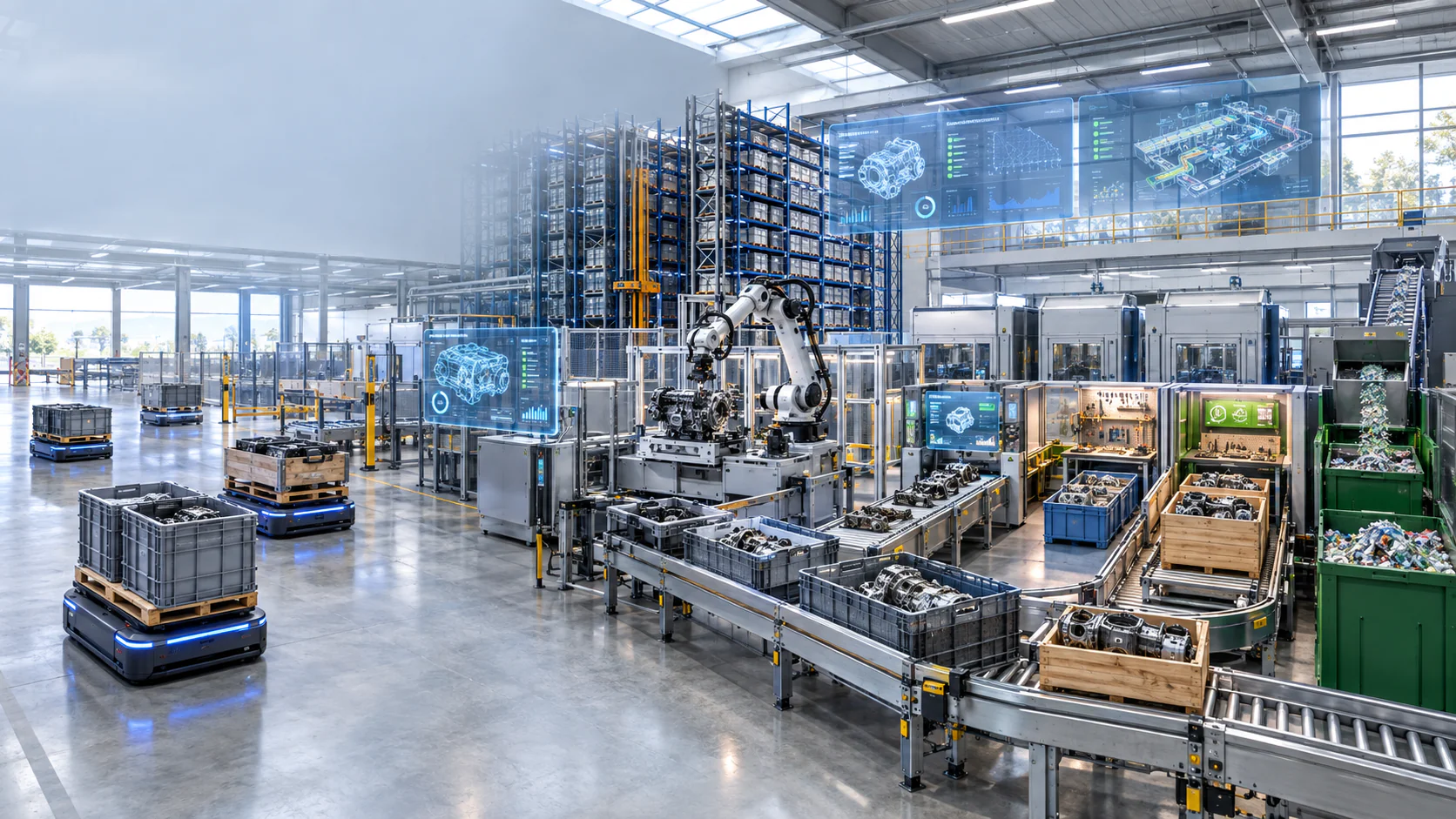
Cargo sous terrain – The underground logistics revolution: Why Europe's most revolutionary logistics project failed – Creative image: Xpert.Digital

Underground freight transport: This is why the radical solution to our truck chaos is failing

No saviors in sight: The gigantic underground network that nobody wants to pay for

It sounded like the ultimate solution to congested highways, exploding traffic costs, and rising CO₂ emissions: a gigantic underground tunnel system was supposed to revolutionize freight transport in Switzerland and eliminate millions of truck journeys from the roads. But "Cargo sous terrain" (CST), once celebrated as a visionary, once-in-a-century project and championed by the country's largest companies, has failed spectacularly. Despite proven technological feasibility and enormous environmental potential, the 30-billion-franc project collapsed under an intractable dilemma of private financing pressure and a lack of government backing. This is an in-depth analysis of how a brilliant engineering idea was overtaken by harsh political reality – and what Europe must learn from this mega-flop for future infrastructure projects.

Tunnels instead of traffic jams: Why this ingenious billion-dollar idea is now being finally buried

Switzerland is among the most densely populated and economically active countries in Europe. This paradox of prosperity is nowhere more evident than on its roads: while the country has experienced considerable growth in prosperity over the past decades, its transport infrastructure is increasingly struggling with the consequences of this expansion. More than 48,000 hours of traffic jams are recorded annually on Swiss highways, and the Federal Statistical Office calculates around 200,000 hours of delays daily – an economic loss of 3.1 billion Swiss francs per year, solely due to lost travel time. Congestion costs on national highways account for over a third of these losses, and a disproportionate share of this is attributable to heavy goods vehicles transporting goods for retail, industry, and consumers.

The projected growth in freight traffic further exacerbates this situation. The Federal Roads Office (ASTRA) anticipates an increase in road freight traffic of around 30 to 50 percent by 2050 – a development that would push the existing road and rail network to its absolute capacity limits. At the same time, the possibilities for expanding above-ground infrastructure in the densely populated Swiss Plateau are severely limited for spatial planning, environmental, and financial reasons. It was within this tension between growth pressure and infrastructure constraints that the idea of ​​Cargo sous terrain was born – a project that aimed to literally remove freight traffic from the road by moving it underground.

A bold approach: rethinking infrastructure

The idea of ​​moving freight transport underground is not new. Pneumatic tube systems existed as early as the 19th century, and various European cities experimented with underground freight transport systems. However, what distinguished Cargo sous terrain (CST) from earlier concepts was its ambition to create not just a niche urban system, but a national logistics infrastructure – a fully automated, climate-neutral system extending from production sites to city centers.

The foundation was laid in 2010 with a feasibility study commissioned by the Swiss Retail Federation (IG DHS). This initial impetus led to the formation of a broad-based support association in 2013, which was transformed into a public limited company headquartered in Olten in 2017. The list of sponsors read like a who's who of Swiss industry: Coop, Migros, Die Mobiliar, Helvetia Insurance, Swisscom, Swiss Post, SBB Cargo, ZKB, and many other companies backed the project. In 2017, four founding investors – Coop, Migros, Mobiliar, and Helvetia – pledged a total of CHF 22.5 billion for the building permit phase of the first section. (Note: Please check the figure "22.5 million" in the original text versus investment figures – the text uses millions, which is realistic for a building permit phase). By the time the project reached its peak, a total of approximately CHF 100 million in private planning capital had been mobilized.

The system in detail: Three levels, one promise

Cargo sous terrain's concept was based on three coordinated system levels, which together were intended to form a continuous logistics chain from the source to the destination.

The first level consisted of the tunnels themselves. A six-meter diameter tube tunnel, 20 to 40 meters deep, was planned, divided into three tracks: two lanes for regular operation and a central reserve and service lane. Within this tunnel, self-driving, unmanned electric vehicles were to transport pallets and containers at a speed of approximately 30 km/h, 24 hours a day, seven days a week. An additional, faster overhead monorail system for smaller goods such as packages was planned for the tunnel ceiling. The vehicles were to be able to move freely along the tracks, couple to form trains, and be individually attached and detached at the hubs – an operating principle designed to combine flexibility with high throughput.

The second level consisted of the hubs, the loading stations along the route. Here, goods were lowered into or raised out of the tunnel via a lift system, loaded onto transport units, and pre-sorted for onward transport. The intelligent IT platform, the third system level, took over the control of the entire logistics chain. Customers were to be able to book transport, specify arrival times, and track their shipments seamlessly via an open platform – a fully digitized, IoT-integrated system.

City logistics, as the fourth element, completed the cycle: electric vehicles and autonomous delivery vans were to transport goods from urban hubs to shops, businesses, and private households on the last mile. CST thus also offered a solution to the last-mile problem, which accounts for up to 28 percent of total delivery costs and a disproportionately large share of CO₂ emissions in urban logistics.

Costs and financing model: Private, ambitious – and ultimately failed

CST's financial concept was as bold as it was complex. From the outset, one thing was clear: not a single franc of public money would be invested in the construction. The project was to be entirely privately financed and operated profitably through user fees. This fundamental condition was a deliberate choice – to avoid government dependency and increase political acceptance.

Cost estimates changed considerably over the years. The initial estimate for the first section, a 66.7-kilometer stretch from Härkingen/Niederbipp to Zurich, was 3.55 billion Swiss francs, of which approximately 2.5 billion was for tunnel construction, 282 million for planning, 344 million for the construction of ten hubs, and 410 million for rolling stock. For the entire network, with a planned length of around 500 kilometers, costs were estimated at 33 to 35 billion Swiss francs. This figure was later revised to approximately 25 to 30 billion Swiss francs.

The financing structure envisioned institutional investors, particularly insurance companies and pension funds, providing the long-term, stable capital – similar to investments in infrastructure projects like airports or highways. The model was quite plausible: the Swiss insurance industry manages trillions of francs and is constantly seeking low-yielding but stable investments. A tunnel system with state-guaranteed usage rights and a near-monopoly position would theoretically have offered attractive features.

Ecological promise: Well calculated, difficult to achieve

One of the most compelling arguments for CST was its environmental footprint. A life cycle assessment (LCA) updated in 2023 confirmed earlier findings: CST achieves a significantly lower environmental and climate impact compared to diesel trucks, and even compared to electric and hydrogen trucks, the system performs better based on the average Swiss electricity mix in 2030. The plan was for operation to be based entirely on renewable energy – a key factor for the climate footprint.

For each ton of goods transported, a CO₂ reduction of up to 80 percent compared to diesel road transport was projected, along with a noise reduction of 50 percent. A scientific study by the Zurich University of Applied Sciences (ZHAW) also showed that the use of CST for last-mile delivery alone could reduce the daily mileage of trucks transporting CST-compatible goods in the city of Zurich by 25 percent. Extrapolated to the entire network, CST could have reduced heavy goods traffic on Swiss national highways by up to 40 percent.

Furthermore, CST had begun to exploit its environmental potential even more: In 2023, the board of directors decided to additionally utilize the tunnel infrastructure for the transport of captured CO₂ by including a CO₂ pipeline in the planning under the roadway. This would have allowed CST to connect Swiss waste incineration plants and cement works to a carbon capture and storage network. This dual use of the tunnel infrastructure was an original example of systems thinking – an infrastructure that addresses several climate problems simultaneously.

Legal basis: Legislative support that came too late

To provide the private infrastructure project with the necessary legal certainty, the Swiss Federal Council created a dedicated legal framework. The Federal Act on Underground Freight Transport (UGüTG) entered into force on August 1, 2022, and constituted the essential legal basis for the project. The Act contained regulations on concessions, expropriation rights, environmental impact assessments, and the relationship between the private operator and public authorities. In June 2025, the Federal Council also adopted the Sectoral Plan for Transport, specifically the section on underground freight transport – a milestone in spatial planning that defined the route of the first section and the hub locations.

These legislative advances, however, came too late to save the project. During the hearings on the sectoral plan, the cantons and the city of Zurich had expressed significant reservations: concerns about the impact on groundwater, traffic at the planned hub sites, the disposal of the tunnel excavation material, and financial security. In February 2025, the Federal Department of the Environment, Transport, Energy and Communications (DETEC) commissioned an external review of the project. On September 22, 2025, the federal government, the cantons where the project was located, and the city of Zurich announced that they were suspending work on the sectoral plan for the time being, as various fundamental requirements of the Goods Transport Act had not been met.


LTW Intralogistics Solutions – Intermodal Transport

LTW Intralogistics Solutions – Intermodal Transport

LTW Intralogistics Solutions – Intermodal Transport – Image: LTW Intralogistics GmbH

LTW offers its customers not individual components, but integrated complete solutions. Consulting, planning, mechanical and electrotechnical components, control and automation technology, as well as software and service – everything is networked and precisely coordinated.

In-house production of key components is particularly advantageous. This allows for optimal control of quality, supply chains, and interfaces.

LTW stands for reliability, transparency, and collaborative partnership. Loyalty and honesty are firmly anchored in the company's philosophy – a handshake still means something here.

Related to this:

  • LTW Solutions


From Hyperloop to cable car: Lessons from the end of Cargo sous terrain

Technological realignment: From autonomous vehicle to cable car

In April 2025, just a few months before its final demise, CST underwent a radical change of strategy. After more than ten years of planning with self-driving, inductively charged electric vehicles, the company, under its new CEO Christian Späth, opted for a fundamentally different drive concept: Instead of innovative autonomous vehicles, rail vehicles suspended from a cable system would be used – cable car technology that has been tried and tested in the Swiss Alps for decades.

The rationale was purely economic: autonomous electric vehicles would have required extensive development, entailing significant technological risks and additional costs. Switching to proven cable car technology was expected to reduce investment costs by roughly a third to approximately 25 billion Swiss francs. At the same time, the planned commissioning date was delayed from 2031 to at least 2036. This technological shift illustrates the project's fundamental dilemma: the undertaking was so ambitious that technological innovations, initially considered a strength, ultimately became a financial risk.

The ultimate failure: When visions collide with political reality

In September 2025, CST declared the project a failure. According to a company statement, implementation was not economically viable at this time due to a lack of the necessary political commitment from the federal government, cantons, and cities. CST CEO Christian Späth explained to SRF that the legal framework in Switzerland was insufficient to reliably secure such a privately financed project – a fact that deterred potential construction investors. The company initiated a consultation process regarding the elimination of more than ten positions; at that time, CST employed approximately 30 people.

In its statement, the federal government emphasized that purely private financing was the fundamental prerequisite for continuing the planning – while simultaneously categorically ruling out public investment. This contradiction placed the project in an irresolvable dilemma: without government guarantees for the investments, the risk for private investors was too high; without private financing, the fundamental political prerequisite was not met. The generational project was thus definitively consigned to history – technically feasible in principle, but economically and politically unsustainable.

Economic analysis: Why do megaprojects of this kind fail?

The failure of CST is not an isolated event, but follows a pattern well-known in infrastructure economics. Megaprojects with long planning horizons, high irreversible upfront investments, and uncertain usage fees are structurally susceptible to what economists call the hold-up problem: Once private investors have committed substantial funds, they become vulnerable to government demands for concession terms, regulation, and tariff control. If investors anticipate this risk, they prefer to forgo the investment—which is precisely what led to CST's ultimate failure.

Added to this is the problem of cost overruns in tunnel projects. International experience shows that tunnel construction projects systematically tend to exceed their budgets. While the initial cost estimate for the Härkingen–Zurich section was 3.55 billion Swiss francs, the stated total investment costs for the entire network rose from an initial 33 billion to as much as 30 billion Swiss francs for a variant using cable car technology. This uncertainty in the cost forecasts, combined with the long time horizon until profitability, made institutional investors with specific return requirements nervous.

The economic arguments for CST were nonetheless compelling. Annual congestion costs of 3.1 billion Swiss francs, the external costs of road freight transport due to noise, accidents, and emissions, as well as the anticipated capacity bottlenecks by 2050, provided a solid economic justification for government participation or at least government risk mitigation. In other countries—France, for example, or Germany—such considerations would very likely have led to mixed financing. The Swiss peculiarity lies in a deep cultural and political distrust of government participation in the economy, which made any form of public co-financing appear as a problematic precedent.

Comparison with alternative concepts: What can others learn from CST?

In an international context, CST is not an isolated case. The Hyperloop, presented in its original version by Elon Musk in 2013, was discussed as a high-speed system for passengers and goods – with planned costs of 47 to 68 million euros per kilometer, far exceeding those of comparable high-speed rail lines. The Hyperloop, too, remained – after massive investments in technology development and infrastructure – a largely failed large-scale concept, with only isolated test installations such as the TUM test track in Munich. What these projects have in common is that while technological feasibility was demonstrated early on, economic and political viability was consistently underestimated.

CST differed in one crucial aspect: it deliberately relied on existing, proven technologies – initially inductive electric vehicles, later cable car technology – and eschewed pioneering physical achievements such as the vacuum tube principle. This decision was sound from an industrial policy perspective, but it was insufficient to overcome the fundamental financing hurdles. This example demonstrates that technological complexity is often not the limiting factor in large-scale infrastructure projects – it is the institutional, regulatory, and political framework that determines success or failure.

Lessons from CST: What remains of the underground vision?

Despite its failure, Cargo sous terrain leaves behind a significant legacy. Firstly, the company demonstrated that such a system would be fundamentally feasible from both a technological and structural perspective. The extensive planning documents, geological surveys, and developed concepts for city logistics and tunnel operation represent a valuable wealth of knowledge. Following the completion of the major tunnel project, CST announced its intention to apply this knowledge to solutions in the immediate demand sector for city logistics.

Secondly, the project has sparked an important societal debate. The question of how a highly developed economy with limited space should organize its goods flows in the future has not been resolved by the end of CST, but rather made more urgent. Freight traffic continues to grow, congestion costs are rising, and a solution that relies solely on electric trucks and optimized routes will not solve the structural capacity problems. The last mile in cities remains one of the most expensive and emissions-intensive phases of the entire logistics process – currently accounting for up to 28 percent of total delivery costs and causing up to 30 percent of urban CO₂ emissions.

Thirdly, the CST project demonstrates that the question of infrastructure financing in Switzerland and Europe needs to be fundamentally re-examined. The experience that a fully privately financed infrastructure project of this scale cannot meet the systemic requirements for political safeguards and investor protection should lead to a rethinking of funding policies. Public-private partnership models, such as those used for infrastructure projects in Great Britain (PFI/PF2), France, and the Scandinavian countries, offer institutional alternatives that have so far encountered political resistance in Switzerland.

Underground logistics has a future – just not now

The end of Cargo sous terrain is not proof that underground freight logistics is a bad idea. It is proof that exceptional ideas require exceptional institutional conditions. If Switzerland – or Europe – seriously pursues expanding freight transport capacity in the coming decades, the idea of ​​an underground, automated network will very likely resurface. The demographic and economic pressures that originally gave rise to CST remain unchanged: growing e-commerce volume, urbanization, climate protection goals, and spatial planning constraints.

What future implementation would require is a fundamental shift in the financing architecture. An infrastructure fund at the European or national level, acting as a first-loss tranche and thus bringing private investors into a risk-adjusted relationship, could overcome the structural dilemma that led to CST's failure. Regulatory innovations—such as guaranteed minimum usage fees over extended periods, similar to those offered by regulated network operators in the energy or telecommunications sectors—could also make the project attractive to institutional investors again.

The vision of Cargo sous terrain was bigger than what Switzerland's political and institutional framework could provide in the second decade of the 21st century. This is not a failure of the idea itself – it is the failure of a framework that was not yet ready to accommodate it. Goods underground, people above ground: this fundamental concept is not dead. It is waiting for its next opportunity.


Consulting - Planning - Implementation
Digital Pioneer - Konrad Wolfenstein

Konrad Wolfenstein

I would be happy to serve as your personal advisor.

You can contact me at wolfenstein∂xpert.digital or

Just call me on +49 7348 4088 965 .

LinkedIn


Your container high-bay warehouse and container terminal experts

Container high-bay warehouses and container terminals: The logistical interplay – expert advice and solutions

Container high-bay warehouses and container terminals: The logistical interplay – expert advice and solutions - Creative image: Xpert.Digital

This innovative technology promises to fundamentally change container logistics. Instead of stacking containers horizontally as before, they will be stored vertically in multi-story steel racking structures. This not only allows for a drastic increase in storage capacity within the same area, but also revolutionizes all processes at the container terminal.

More information here:

  • Container high-bay warehouses and container terminals: The logistical interplay – expert advice and solutions

Other topics

  • Logistics hub | Container depot at the East Station: DB Cargo and Regensburg create a future-oriented logistics solution
    Logistics hub | Container depot at the East Station: DB Cargo and Regensburg create a future-oriented logistics solution...
  • Why "combined transport" is saving our supply chains: Europe's freight transport at its limit
    Why "combined transport" is saving our supply chains: Europe's freight transport at its limit...
  • From celebrated champion to bankruptcy: The United Robotics Group – Why Europe's most ambitious robotics champion failed
    From celebrated champion to bankruptcy: The United Robotics Group – Why Europe's most ambitious robotics champion failed...
  • Billions for weapons, but no way to the front: Why Europe's real defense gap lies in logistics
    Billions for weapons, but no way to reach the front: Why Europe's real defense gap lies in logistics...
  • Logistics hype? Why expensive automation often fails due to simple fundamentals – 8 practical failures from real-world logistics
    Logistics hype? Why expensive automation often fails due to simple fundamentals – 8 practical failures from real-world logistics...
  • Why the biggest logistics revolution of our time isn't taking place in the port
    Vertical container storage applications: Why the biggest logistics revolution of our time isn't just happening in the port...
  • The innovative project of the German Armed Forces Logistics Command: Future-oriented cooperation in logistics
    The innovative project of the German Armed Forces Logistics Command: Future-oriented cooperation in logistics...
  • The logistics trap: Why more and more ships are not solving our supply chain problem
    The logistics trap: Why more and more ships are not solving our supply chain problem...
  • Intermodal transport units and the vertical terminal: When there's no more space, logistics has to think vertically
    Intermodal transport units and the vertical terminal: When space is at a premium, logistics must think vertically...
Partner in Germany and Europe - Business Development - Marketing & PR

Your partner in Germany and Europe

  • 🔵 Business Development
  • 🔵 Trade Fairs, Marketing & PR

Blog/Portal/Hub: Logistics consulting, warehouse planning or warehouse consulting – warehouse solutions and warehouse optimization for all types of warehousesContact - Questions - Help - Konrad Wolfenstein / Xpert.DigitalIndustrial Metaverse Online ConfiguratorOnline Solarport Planner - Solar Carport ConfiguratorOnline solar system roof & surface plannerUrbanization, logistics, photovoltaics and 3D visualizations Infotainment / PR / Marketing / Media 
  • Material handling - warehouse optimization - consulting - with Konrad Wolfenstein / Xpert.DigitalSolar/Photovoltaics - Consulting, Planning - Installation - With Konrad Wolfenstein / Xpert.Digital
  • Contact me:

    LinkedIn contact - Konrad Wolfenstein / Xpert.Digital
  • CATEGORIES

    • Enterprise XR Solution Hub
    • Raw materials, global sourcing & trade
    • Sino-cooperation
    • Logistics/Intralogistics
    • Artificial Intelligence (AI) – AI Blog, Hotspot and Content Hub
    • New PV solutions
    • Sales/Marketing Blog
    • Renewable energy
    • Robotics
    • New: Economy
    • Heating systems of the future – Carbon Heat System (carbon fiber heaters) – Infrared heaters – Heat pumps
    • Smart & Intelligent B2B / Industry 4.0 (including mechanical engineering, construction industry, logistics, intralogistics) – Manufacturing industry
    • Smart City & Intelligent Cities, Hubs & Columbarium – Urbanization Solutions – Urban Logistics Consulting and Planning
    • Sensors and measurement technology – Industrial sensors – Smart & Intelligent – ​​Autonomous & Automation systems
    • Advanced metal fabrication & joining technology
    • Augmented & Extended Reality – Metaverse Planning Office / Agency
    • Digital hub for entrepreneurship and start-ups – information, tips, support & advice
    • Agri-photovoltaics (Agri-PV) consulting, planning and implementation (construction, installation & assembly)
    • Covered solar parking spaces: Solar carports – Solar carports – Solar carports
    • Electricity storage, battery storage and energy storage
    • Blockchain technology
    • NSEO Blog for GEO (Generative Engine Optimization) and AIS Artificial Intelligence Search
    • Order acquisition
    • Digital Intelligence
    • Digital Transformation
    • E-commerce
    • Internet of Things
    • „Realitätscheck Politik“ (National Affairs Observer)
    • USA
    • China
    • Hub for Security and Defense
    • Social Media
    • Wind power / Wind energy
    • Cold Chain Logistics (fresh logistics/refrigerated logistics)
    • Expert advice & insider knowledge
    • Press – Xpert Press Relations | Consulting and Services
  • Xpert.Digital Overview
  • Xpert.Digital SEO
Contact/Info
  • Contact – Pioneer Business Development Expert & Expertise
  • Contact form
  • imprint
  • Privacy Policy
  • Terms and Conditions
  • e.Xpert Infotainment
  • Infomail
  • Solar system configurator (all variants)
  • Industrial (B2B/Business) Metaverse Configurator
Menu/Categories
  • Enterprise XR Solution Hub
  • Raw materials, global sourcing & trade
  • Sino-cooperation
  • Managed AI Platform
  • AI-powered gamification platform for interactive content
  • LTW Solutions
  • Logistics/Intralogistics
  • Artificial Intelligence (AI) – AI Blog, Hotspot and Content Hub
  • New PV solutions
  • Sales/Marketing Blog
  • Renewable energy
  • Robotics
  • New: Economy
  • Heating systems of the future – Carbon Heat System (carbon fiber heaters) – Infrared heaters – Heat pumps
  • Smart & Intelligent B2B / Industry 4.0 (including mechanical engineering, construction industry, logistics, intralogistics) – Manufacturing industry
  • Smart City & Intelligent Cities, Hubs & Columbarium – Urbanization Solutions – Urban Logistics Consulting and Planning
  • Sensors and measurement technology – Industrial sensors – Smart & Intelligent – ​​Autonomous & Automation systems
  • Advanced metal fabrication & joining technology
  • Augmented & Extended Reality – Metaverse Planning Office / Agency
  • Digital hub for entrepreneurship and start-ups – information, tips, support & advice
  • Agri-photovoltaics (Agri-PV) consulting, planning and implementation (construction, installation & assembly)
  • Covered solar parking spaces: Solar carports – Solar carports – Solar carports
  • Energy-efficient renovation and new construction – Energy efficiency
  • Electricity storage, battery storage and energy storage
  • Blockchain technology
  • NSEO Blog for GEO (Generative Engine Optimization) and AIS Artificial Intelligence Search
  • Order acquisition
  • Digital Intelligence
  • Digital Transformation
  • E-commerce
  • Finance / Blog / Topics
  • Internet of Things
  • „Realitätscheck Politik“ (National Affairs Observer)
  • USA
  • China
  • Hub for Security and Defense
  • Trends
  • In practice
  • vision
  • Cyber ​​Crime/Data Protection
  • Social Media
  • eSports
  • glossary
  • Healthy eating
  • Wind power / Wind energy
  • Innovation & Strategy: Planning, consulting, and implementation for Artificial Intelligence / Photovoltaics / Logistics / Digitalization / Finance
  • Cold Chain Logistics (fresh logistics/refrigerated logistics)
  • Solar power in Ulm, around Neu-Ulm and Biberach: Photovoltaic solar systems – consultation – planning – installation
  • Franconia / Franconian Switzerland – Solar/Photovoltaic Solar Systems – Consulting – Planning – Installation
  • Berlin and surrounding areas – Solar/Photovoltaic systems – Consulting – Planning – Installation
  • Augsburg and surrounding area – Solar/Photovoltaic systems – Consulting – Planning – Installation
  • Expert advice & insider knowledge
  • Press – Xpert Press Relations | Consulting and Services
  • Tables for Desktop
  • B2B procurement: Supply chains, trade, marketplaces & AI-powered sourcing
  • XPaper
  • XSec
  • Protected area
  • Pre-release version
  • English Version for LinkedIn

© June 2026 Xpert.Digital / Xpert.Plus - Konrad Wolfenstein - Business Development