Capital has long been opposed to a nuclear power renaissance – but cheap solar panels alone do not make a strong electricity system
Xpert Pre-Release

Available in 27 languages 📢
Prefer Xpert.Digital on GoogleⓘPublished on: October 14, 2026 / Updated on: October 14, 2026 – Author: Konrad Wolfenstein
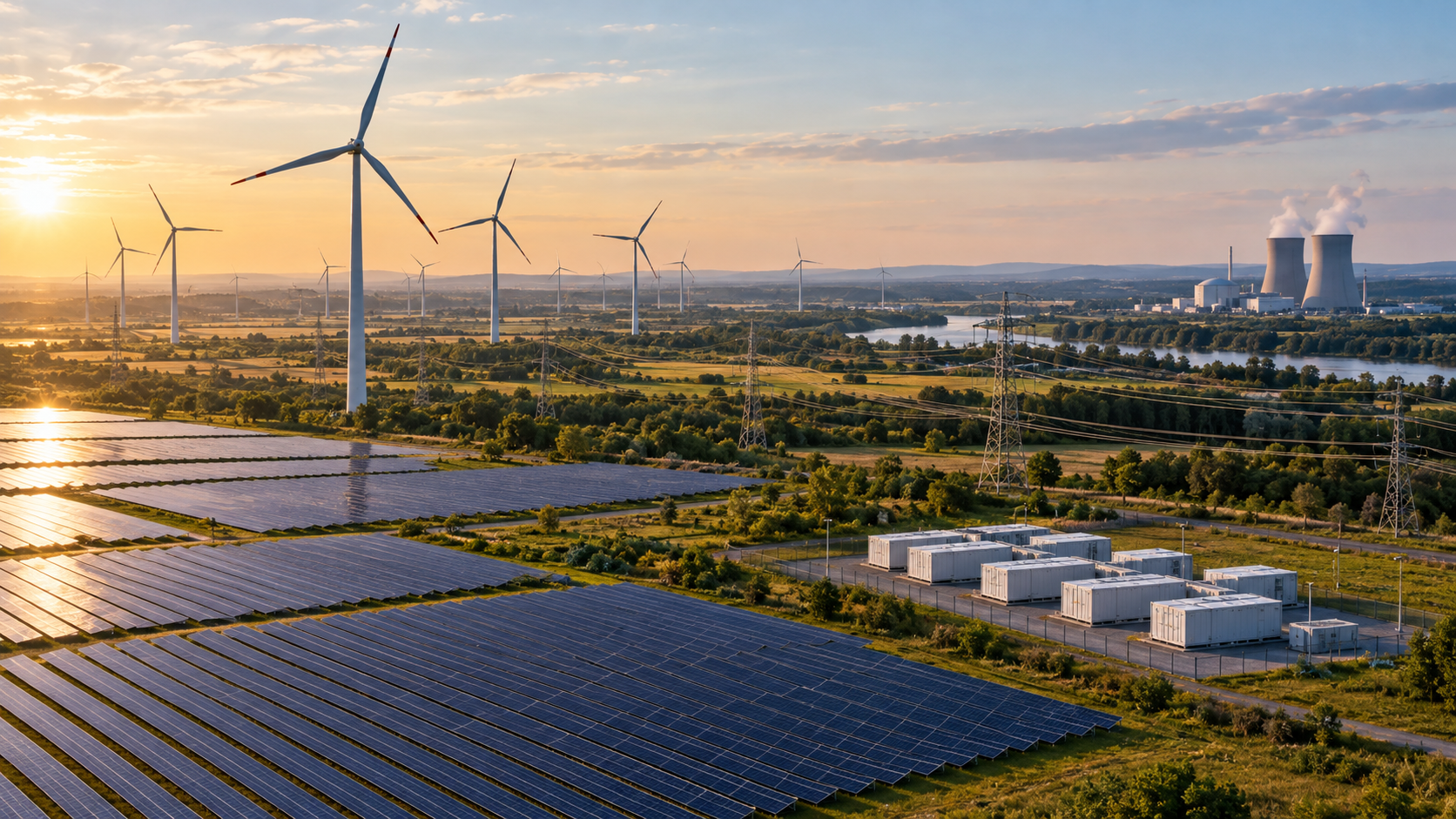
Capital has long been opposed to a nuclear power renaissance – but cheap solar panels alone do not make a strong electricity system – creative image on the topic, with AI: Xpert.Digital
The global energy war: Germany's challenges after the decision
Nuclear power vs. renewables: Who will win the investment battle?
Renewable energies are booming: What does that mean for nuclear power?
The global energy sector has reached a crucial turning point, where the debate about the most suitable technology for future energy needs appears to be largely settled. Financial markets, project developers, and the industrial policies of major nations clearly indicate that renewable energy sources such as solar and wind power will account for the lion's share of future expansion. In 2025, approximately US$690 billion flowed into renewable energy worldwide, while investments in nuclear power amounted to only around US$36 billion. This disproportionate ratio of over 19 to 1 underscores the dominance of renewable technologies and their attractiveness to investors.
Despite this clear market trend, the debate surrounding nuclear energy is far from over. It remains relevant, particularly in countries that rely on a secure and low-carbon electricity supply. While nuclear power is regaining importance in some regions, countries like Germany face the challenge of redefining their energy policy. The nuclear phase-out is a central component of this strategy, which goes hand in hand with the simultaneous expansion of renewable energies and the electrification of transport, heating, and industry. This complex situation necessitates a nuanced analysis of current developments and their long-term impact on the country's energy supply and economic stability.
This analysis examines the various facets of the current energy war and shows how Germany can navigate its special path in a world full of challenges and opportunities.
The global market has chosen its direction
The global energy industry is no longer engaged in an open fundamental debate about which technology will support the majority of future capacity expansion. This decision is being made daily in the capital markets, in the procurement departments of utility companies, by project developers, and in the industrial policies of major nations. In 2025, approximately US$690 billion flowed into renewable energies worldwide, while investments in nuclear power amounted to about US$36 billion. This corresponds to a ratio of roughly 19 to 1 and explains why the pointed statement that roughly twenty times more is being invested in renewable energies than in nuclear power describes the scale of the market with astonishing accuracy.
This ratio does not mean that nuclear energy is disappearing worldwide. However, it shows which technologies are currently scaling, mobilizing private and public capital, and building new production capacities most rapidly. At the end of 2025, approximately 5,155 gigawatts of renewable energy generation capacity were installed globally. Around 693 gigawatts were added within a single year. Solar energy contributed approximately 514 gigawatts, and wind power another 158 gigawatts. Together, solar and wind power accounted for almost 97 percent of the total net increase in renewable energy capacity. In contrast, global nuclear power capacity stood at around 407 gigawatts, while just over 81 gigawatts were under construction.
These figures do not represent a short-term trend. They reflect structural differences in costs, construction times, financing, supply chains, and project risks. Renewable energies have become modular industrial products. A solar park can be financed, built, and commissioned in phases. A nuclear power plant, on the other hand, is a singular, large-scale project whose economic success depends on decades of planning, stable political frameworks, highly specialized supply chains, and very low financing costs. The decisive competition, therefore, takes place less between physical properties than between different investment and risk models.
A large number with a statement that requires explanation
Comparing investment amounts is informative, but not self-explanatory. A dollar invested in solar, wind, and nuclear power does not generate the same annual amount of electricity. Nuclear power plants generally achieve significantly higher utilization rates than weather-dependent plants. Therefore, one gigawatt of nuclear power can produce more electricity over a year than one gigawatt of photovoltaics. Conversely, solar and wind projects can be built much faster, and their investment costs per kilowatt are usually considerably lower. Simply comparing installed capacity would therefore be just as simplistic as solely comparing capital flows.
The way investments are defined also influences the result. Global spending on renewable electricity generation is estimated at around US$665 billion for 2026, while nuclear energy investments could rise to more than US$80 billion. According to this broader definition, the ratio would be closer to eight to one. Other datasets show around US$690 billion for renewables and US$36 billion for nuclear energy in 2025, or roughly 19 to one. The difference is not evidence of manipulated statistics, but rather a consequence of different definitions, time periods, and project boundaries. For nuclear power, construction costs, operating life extensions, fuel cycles, upgrades, and government-supported programs can be accounted for differently.
Despite this methodological range, the core message remains valid: Many times more capital than that mobilized for nuclear energy is flowing into the expansion of renewable energies worldwide. At the same time, nuclear energy is indeed experiencing a revival from a relatively small base. An objective analysis must acknowledge both developments. Those who speak only of a global nuclear power renaissance exaggerate its magnitude. Those who declare nuclear energy economically obsolete ignore new construction programs, operating license extensions, and the strategic value of guaranteed low-carbon energy generation in individual countries.
Why sun and wind attract capital
The most significant advantage of renewable energies lies in their industrial learning curve. Photovoltaic modules, inverters, wind turbines, and battery systems are mass-produced. Every additional factory, every standardized component, and every repeated installation can reduce costs, improve processes, and make risks more predictable. Technological advancements spread across global supply chains. A solar project in Spain, Bulgaria, Germany, or India is based on similar core components and can draw on a wealth of global experience.
Speed is another important factor. Large solar parks can often be realized within just a few years, from project development to commissioning, while smaller plants can be built significantly faster. Wind farms, too, can be constructed relatively quickly, provided land, permits, and grid connections are secured. Investors receive revenue sooner, interest costs accrue over a shorter period, and technical problems don't immediately jeopardize the entire project. Modularity limits potential damage to individual components. If one section is delayed, another can already be generating electricity.
In contrast, nuclear power plants concentrate billions of euros in investment in just a few locations. Delays directly impact financing costs and the levelized cost of electricity (LCOE). Since no revenue is generated during the lengthy construction period, even a higher interest rate can significantly impair profitability. Nuclear energy is therefore not only a technical but, above all, a financial challenge. Countries with low capital costs, standardized reactor designs, continuous construction programs, and state-controlled utilities are better positioned to meet this challenge than liberalized markets where private investors are expected to bear construction and price risks.
Nuclear power is growing, but not as a mass market
In 2026, a total of 78 reactors with a net capacity of approximately 81 gigawatts were under construction worldwide. This is a significant pipeline that should by no means be dismissed as insignificant. However, it is spread across only 17 countries and is heavily concentrated in Asia. China dominates new construction, while India is also expanding its capacity. In contrast, many Western industrialized nations primarily focus on extending the operating lives of existing plants, individual large-scale projects, and the hope for the future mass production of small, modular reactors.
Regional concentration is economically crucial. China can coordinate locations, financing, permits, supply chains, and personnel over the long term. Repeated construction activity maintains capabilities that have been lost in countries with decades of interruption. This makes nuclear power more competitive where it is operated not as an isolated project but as a permanent industrial program. This explains why experiences from China or South Korea cannot simply be transferred to Germany, Great Britain, or the United States.
In Europe, Flamanville, Olkiluoto, and Hinkley Point C illustrate the risks of restarting nuclear power after long construction hiatuses. Flamanville 3 began construction in 2007 with an initial budget of €3.3 billion and a planned construction period of 54 months. The reactor did not reach full capacity until the end of 2025. The pure construction costs were most recently reported at €13.2 billion; including financing and other expenses, a more comprehensive estimate is €23.7 billion. Hinkley Point C is currently scheduled to begin generating electricity no earlier than 2030. Its costs are estimated at more than £48 billion in today's prices. Such projects do not prove that nuclear power is inherently unaffordable. However, they do demonstrate how costly the loss of industrial routine can be.
Cheap kilowatt hours do not necessarily mean a cheap system
For new installations in Germany, ground-mounted photovoltaic systems and onshore wind power are among the most cost-effective generation technologies, with electricity generation costs ranging from approximately 4.1 to 9.2 cents per kilowatt-hour. New nuclear power plants are estimated to cost between 13.6 and 49 cents per kilowatt-hour, depending on the assumptions used. Photovoltaics combined with battery storage falls within a broad range of roughly 6 to 22.5 cents. These figures clearly support renewable energies as a key pillar of energy expansion, but they should not be confused with the overall costs of an electricity system.
Levelized cost of electricity (LCOE), simply put, assesses the average cost of a power plant over its lifetime. It doesn't fully capture the value of electricity at a specific time and place. Solar power is less valuable on a sunny midday when thousands of other plants are producing electricity simultaneously. Conversely, guaranteed power is particularly valuable when wind and sun are low and demand is high. Therefore, with the increasing share of weather-dependent generation, the importance of grids, storage, flexible demand, dispatchable power plants, and European electricity trading grows.
This is not an argument against renewable energies, but against an incomplete energy transition. The economic strength of solar and wind power can only be maintained if the system can absorb, transport, store, or utilize their electricity. Additional generation capacity without grid expansion can lead to curtailment and falling market prices. Conversely, an oversized safety net of rarely used power plants increases the cost of supply. The task, therefore, is not to maximize a single technology, but to organize the most cost-effective combination of energy, capacity, flexibility, and infrastructure.
Germany's special path is only half the truth
Germany has chosen a unique path with its complete phase-out of nuclear energy. Worldwide, only a few major industrialized nations have completely shut down technically available reactors during a period of increasing climate protection requirements. In this narrow sense, the term "nuclear phase-out" is factually justified. However, it becomes misleading if it is inferred that the main global trend is the construction of new nuclear power plants and that Germany is the only country refusing a nuclear future.
Global expansion is clearly driven by solar and wind energy. Renewable energies accounted for approximately 86 percent of the global net increase in electricity generation capacity in 2025. International capital is predominantly focused on technologies that can be deployed quickly, modularly, and cost-effectively. Germany's focus on renewable energies is therefore not an outlier in the energy sector. It reflects the dominant global investment trend.
The truly unique path lies in the combination of several decisions: Germany ended nuclear power, intends to gradually replace coal, has only limited domestic fossil fuel resources, and is simultaneously electrifying transport, heating, and industry. This creates particularly high pressure for coordination. Other countries retain nuclear power, hydropower, or domestic natural gas as a supplement. Germany's model is therefore not exceptional because of the expansion of renewable energies, but because of the close temporal overlap of the nuclear phase-out, the coal phase-out, grid expansion, and electrification.
The nuclear phase-out was politically possible, but not economically cost-free
A sober assessment of Germany's nuclear phase-out must distinguish between the past and the future. The decommissioning of existing plants eliminated low-CO₂ electricity production, which would have incurred relatively low additional operating costs during its remaining lifespan. In the short term, this generation had to be partially replaced by coal, natural gas, imports, and additional renewable energy sources. From a climate policy and energy economics perspective, extending operating lives was therefore fundamentally debatable, provided that safety, personnel, fuel supply, and operational readiness had been guaranteed.
However, this does not mean that a restart today would be economically viable. Decommissioned plants cannot simply be switched back on like machines in a factory. Permits, safety certifications, personnel, spare parts, fuel elements, and operator structures were all geared towards the end of their operation. With each passing year, the effort, uncertainty, and costs of a potential return increase. The construction of new large-scale reactors would not deliver significant amounts of electricity until the late 2030s or 2040s at the earliest, assuming exceptionally smooth planning, financing, and construction.
Economic policy should not conflate sunk costs with future decisions. The question of whether the earlier phase-out was optimal is not the same as the question of which investments will yield the greatest benefit from 2026 onward. Even those who consider shutting down the last reactors a mistake are not automatically obligated to advocate for new nuclear power plants. What matters are the current alternatives, their implementation timelines, and their systemic effects.
Our EU and German expertise in business development, sales and marketing

Our EU and German expertise in business development, sales and marketing - Image: Xpert.Digital
Industry focus areas: B2B, digitalization (from AI to XR), mechanical engineering, logistics, renewable energies and industry
More information here:
A thematic hub offering insights and expertise:
- Knowledge platform covering global and regional economies, innovation and industry-specific trends
- A collection of analyses, insights, and background information from our key areas of focus
- A place for expertise and information on current developments in business and technology
- A hub for companies seeking information on markets, digitalization, and industry innovations
Future of energy supply: Where do we really stand?
Security of supply requires more than annual balance sheets
In 2025, Germany generated approximately 438 terawatt-hours of electricity for the public grid. Depending on the statistical definition used, the share of renewable energies in domestic grid feed-in was just under 59 percent; relative to gross electricity consumption, it was around 56 percent. Wind power remained the strongest source of electricity. Photovoltaics increased its production by about 21 percent and overtook lignite for the first time. This development refutes the claim that an industrialized country can only integrate renewable energies to an insignificant extent.
An annual quota, however, says little about critical hours. Security of supply is not decided on a sunny Sunday afternoon, but during multi-day periods of low wind and solar power generation, high winter loads, power plant outages, or limited import options. A system can generate more than half of its electricity from renewable sources over the course of a year and still require large amounts of guaranteed capacity during specific hours. This is precisely why the debate about generation shares alone is insufficient.
For the next phase, Germany needs a clear architecture for guaranteed power generation. This could include flexible gas-fired power plants that will eventually be operated with climate-neutral fuels, as well as storage, load shifting, biomass, hydropower, and cross-border trading. Long-term storage solutions for seasonal fluctuations differ economically from batteries, which are particularly suitable for short periods of hours or individual days. Trying to solve each of these challenges with a single technology will unnecessarily drive up costs.
Networks are becoming the real bottleneck
With the expansion of renewable energies, the bottleneck is shifting from electricity generation to infrastructure. New solar and wind power plants can sometimes be built faster than grid reinforcements, substations, and connections can be provided. This leads to waiting lists for grid connections, regional bottlenecks, and rising intervention costs. In Germany, a large amount of wind power in the north meets the needs of major consumption centers in the west and south. At the same time, decentralized photovoltaics are growing in distribution networks that were originally designed for one-sided supply.
Grid expansion is less economically visible than a new power plant, but at least as important. An additional line doesn't generate electricity; however, it increases the value of existing facilities, reduces curtailment, and enables balancing between regions. The same applies to digital grid management, smart meters, and flexible tariffs. They don't create primary energy, but they can reduce the need for expensive peak-load capacity.
The political temptation lies in announcing generation targets while infrastructure decisions progress more slowly. This is dangerous because the consequences are delayed. Initially, installed capacity and success stories increase. Later, negative prices, redispatch, curtailment, and local resistance rise. A mature energy transition policy therefore measures its success not only in gigawatts, but also by available grid connections, decreasing congestion costs, additional flexibility, and the ability to shift electricity demand over time.
Negative prices are both a warning signal and an investment incentive
With increasing solar power output, hours occur more frequently in which electricity supply exceeds short-term demand and market prices turn negative. This development is often portrayed as proof of a failed energy transition. In reality, it initially signals that more cheap electricity is available than the system can absorb at that moment. The problem lies not in the existence of the electricity, but in a lack of flexibility.
Negative prices incentivize battery storage, electrolyzers, thermal storage, controllable industrial processes, and smart charging of electric vehicles. Companies can shift energy consumption to off-peak hours and thereby reduce their costs. At the same time, however, the revenues of inflexible systems decrease. Subsidy models that compensate production regardless of market value can exacerbate perverse incentives. Future regulations should therefore provide stronger rewards for systems that feed into the grid in a way that is compliant with market demands.
A well-designed market does not eliminate all price fluctuations. In fact, fluctuations are essential for economic flexibility. Problems arise when regulatory interventions nationalize risks, privatize profits, or fail to offer investors reliable revenue prospects. Germany therefore needs a market design that simultaneously enables long-term investments and accurately prices short-term scarcity. This includes transparent capacity mechanisms, regional signals, competitive procurement, and a gradual transition from blanket subsidies to system-serving remuneration.
Nuclear energy remains a climate protection technology
Nuclear power plants produce virtually no direct CO₂ emissions during operation. Over their entire life cycle, their emissions are on a similar scale to those of wind energy and significantly lower than those of fossil fuel power plants. From a climate policy perspective, it would therefore be wrong to equate nuclear energy with coal or natural gas. Countries with safe and economically operated reactors can maintain significant amounts of low-CO₂ electricity production through extended operating licenses.
The debate begins with the question of whether new nuclear power plants deliver the fastest and cheapest additional climate benefits. In countries with functioning supply chains, standardized designs, and growing electricity demand, the answer may be yes. In countries with high construction costs, long permitting processes, and a loss of expertise, the same investment in grids, wind, solar, storage, and efficiency may achieve greater emission reductions sooner. Climate protection, therefore, does not require a one-size-fits-all global solution, but rather an assessment of the respective institutional capabilities.
The time frame is also crucial. A reactor that only starts generating electricity after 2040 may be valuable in the long term, but will only contribute to meeting emissions targets for 2030 to a limited extent. Conversely, a solar park built today without sufficient flexibility will remain incomplete in the long run. The sensible priority, therefore, is to implement effective measures immediately while simultaneously developing long-term options that can stabilize a climate-neutral system after 2040.
Small reactors are an option, but not yet a business model
Small modular reactors are intended to overcome the disadvantages of large, individual projects. Standardized modules could be manufactured in factories, installed gradually, and financed with less capital per project. In theory, they combine nuclear availability with industrial-scale production. This makes them attractive for energy-intensive industries, remote regions, district heating, and data centers.
The key caveat is the need for proof of scale. Smaller reactors lose some of the size advantages of conventional large-scale plants. These disadvantages must be more than offset by mass production, shorter construction times, and standardized permitting processes. As long as only a few units are built, cost estimates remain speculative. Numerous projects are still in the development, permitting, or early demonstration phases. There is a long way to go between a technically sound concept and a marketable mass-produced product.
Germany should monitor this development and not ideologically block research. However, this does not justify delaying the expansion of available technologies. Small reactors may become an additional option in the 2030s; they are not a reliable replacement for the grids, wind farms, solar plants, and storage facilities that are needed today. Technological openness means evaluating options based on realistic costs and timelines, not treating every future prospect as market-ready today.
The geopolitical equation is being rewritten
Renewable energies reduce the ongoing dependence on imported fuels. Sun and wind power no longer need to be imported via pipeline or ship. This strengthens the trade balance and limits vulnerability to fossil fuel price shocks. At the same time, new dependencies arise for solar modules, battery cells, inverters, rare earth elements, and processing capacities. A large part of the value chain is concentrated in China.
Nuclear energy also carries geopolitical risks. Uranium is more widely available globally than oil and gas and can be stockpiled relatively cheaply. However, the supply chain for enrichment, fuel production, reactor technology, and maintenance is highly specialized. States that rely on Russian technology or services may become vulnerable in terms of security. Therefore, energy independence does not guarantee complete self-sufficiency with any technology.
The economically sound answer is diversification. Europe should secure critical parts of the solar, battery, grid, and wind power supply chains without isolating itself from affordable technology through blanket protectionism. Strategic storage, recycling, multiple countries of origin, and European production capacities can reduce risks. The same principle applies to nuclear energy for fuels, spare parts, and skilled personnel. Resilience is not created through the illusion of national self-sufficiency, but through robust, redundant, and politically reliable supply chains.
Industrial competition is decided outside the power plant
The energy transition is not just a competition between electricity sources, but a battle for industrial value creation. Those who supply solar modules, wind turbines, batteries, power electronics, transformers, electrolyzers, and grid software are tapping into a growing global market. China recognized this connection earlier than Europe and built up capacities along entire value chains. The result is low global market prices, but also a strong dependence on European buyers.
Germany risks simultaneously bearing high transformation costs while receiving too small a share of industrial profits. This would be the worst-case scenario: domestic permits would be lengthy, grid connections would be delayed, plant components would be imported, and energy-intensive companies would lose their competitiveness. A successful strategy must therefore go beyond mere expansion targets. It must integrate industrial scaling, research, skilled labor, raw materials, recycling, and European demand-side policies.
The state should not attempt to preserve every existing production sector regardless of its competitiveness. A more sensible approach is to concentrate on areas with technological advantages and strategic importance, such as power electronics, specialized machinery, grid technology, system control, high-quality wind components, storage integration, and industrial energy solutions. The global rise of renewable energies does not guarantee Germany's economic success. It merely opens up a market in which other countries are competing with equal determination.
Electricity prices are more than just generation costs
Public debate often confuses cheap electricity generation with low end-customer prices. Households and businesses pay not only for energy but also for grid fees, taxes, levies, distribution, procurement, and the costs of political balancing mechanisms. Therefore, falling costs for solar and wind power plants can coincide with rising electricity bills if grid expansion, reserve capacities, or mismanagement are expensive.
For industry, the average market price isn't the only factor. Crucial factors include predictability, grid connection capacity, hedging costs, and the availability of large quantities around the clock. Flexible businesses can benefit from off-peak hours. Continuous processes, on the other hand, require long-term contracts, storage, or guaranteed generation. Therefore, a blanket statement that renewable energies automatically make electricity cheap is just as inaccurate as claiming they are fundamentally responsible for high prices.
The correct metric is the overall cost of a reliable system. This includes generation, grids, storage, reserves, imports, load management, and risks. Germany should disclose these costs transparently and measure political measures by how much secure, low-carbon energy supply they create per euro invested. Such an approach would render many symbolic debates obsolete.
The expansion is fast, but not fast enough yet
Despite record figures, Germany is missing its own expansion and generation targets. In 2025, renewable sources produced a total of around 278 terawatt-hours, while the target was approximately 346 terawatt-hours. The sluggish expansion of wind energy had a particularly significant impact. Photovoltaics grew strongly, but due to its fluctuating daily and annual output profile, it cannot fully compensate for the lack of wind power.
At the same time, electricity demand is likely to rise due to electric cars, heat pumps, data centers, hydrogen production, and electrified industries. Stagnant consumption would therefore not automatically be a success, but could also indicate industrial weakness. The energy transition must provide more climate-neutral electricity, not just achieve a larger share of renewables within a small overall amount.
Acceleration requires clear land allocation, standardized permits, sufficient network connections, and greater local acceptance. Municipal involvement and transparent benefit sharing can reduce resistance. Speed must not eliminate safety and environmental standards, but it should eliminate duplicate reviews, conflicting responsibilities, and years of inactivity. The greatest short-term potential often lies not in a new technology, but in a more efficient administration.
What an economically honest strategy must achieve
A viable German energy policy should take the global market success of renewable energies as its starting point, not as the conclusion of the debate. Solar and wind power are the cheapest and fastest scalable new forms of generation. They should account for the majority of new capacity expansion. At the same time, grids, storage, flexible demand, and guaranteed capacity must be developed with at least equal rigor.
Existing European nuclear power plants should continue operating where safety, economic viability, and public acceptance are ensured. They provide low-carbon electricity and reduce the need for fossil fuel reserves. New nuclear power plants are a legitimate national option, but not a universal panacea. For Germany, given disrupted supply chains, long lead times, and high financing costs, they would currently represent an expensive and belated addition. Research into new reactor designs can be worthwhile, but it should not lead to short-term expansion commitments.
Prioritizing measures based on impact is crucial. Measures that reduce emissions and strengthen energy supply before 2030 deserve priority. These include faster grids, increased wind power, photovoltaics at suitable locations, battery storage, efficiency improvements, flexible consumers, and sufficient dispatchable capacity. In the long term, hydrogen, seasonal storage, European market integration, and potentially new nuclear technologies must be reassessed based on actual progress.
The real danger is not Germany's exceptionalism
The global energy market has largely answered the question of growth: Renewable energies dominate investments and capacity expansion. Nuclear energy remains a relevant low-CO₂ technology, but its construction is concentrated in a few countries and does not achieve nearly the same market dynamics. Therefore, there can be no talk of a global nuclear alternative to the energy transition.
Germany's risk lies less in focusing on the wrong primary technology. It lies in combining the right generation trend with an overly slow infrastructure, conflicting regulations, and weak industrial policy. Those who only count wind turbines and solar panels underestimate the systemic challenge. Conversely, those who wait for a future nuclear power solution and hinder the expansion of available renewable energy sources are wasting valuable time.
The provocative truth is this: Capital has long since voted in favor of solar, wind, grids, and storage. However, this alone does not create an affordable, resilient, and industrially robust energy system. Germany's success does not depend on whether it wins the fundamental debate about nuclear power rhetorically. It depends on whether a reliable overall system emerges from affordable individual technologies and whether a significant portion of the added value remains within Germany's own economic sphere. The energy transition is therefore neither a German folly nor an automatic success. It is the greatest industrial policy coordination challenge of the coming decades.
🎯🎯🎯 Data-driven B2B industry hub as a quasi-in-house solution

The quasi-in-house solution: How Xpert.Digital closes operational gaps in B2B marketing and sales – Smart Content-Driven Business - Image: Xpert.Digital
Xpert.Digital is a data-driven B2B industry hub led by Konrad Wolfenstein . The company acts as an external, quasi-in-house solution for industrial partners, closing operational gaps in marketing, content, and sales – without requiring additional resources on the client side.
More information here:
Your global marketing and business development partner
☑️ Our business language is English or German
☑️ NEW: Correspondence in your native language!

Konrad Wolfenstein
I and my team are happy to be available to you as your personal advisor.
You can contact me by filling out the contact form here [email protected]:or simply call me at +49 7348 4088 965. My email address is
I'm looking forward to our joint project.