
Bureaucracy in the EU: Germany in midfield-a comprehensive analysis for entrepreneurs, start-ups and scale-ups
Xpert pre-release

Available in 27 languages 📢
Prefer Xpert.Digital on GoogleⓘPublished on: July 18, 2025 / Updated on: July 18, 2025 – Author: Konrad Wolfenstein

Bureaucracy in the EU: Germany in the middle of the pack – A comprehensive analysis for entrepreneurs, start-ups and scale-ups – Image: Xpert.Digital
EU vs. USA & Japan: Why European companies and start-ups are suffocating in paperwork
What is the main problem for small and medium-sized enterprises in the EU?
Small and medium-sized enterprises (SMEs) in the European Union face various challenges, but one stands out in particular: bureaucracy. According to the latest Eurobarometer survey on start-ups, scale-ups and entrepreneurship from 2025, 28 percent of the German companies surveyed stated that regulatory hurdles and administrative burdens are their biggest problem. This figure is remarkable because it shows that bureaucratic burdens are the most pressing issue for more than one in four companies.
But what exactly is meant by the term "bureaucracy"? It refers to the multitude of regulations, forms, reporting requirements, and approval processes that companies must comply with. From the initial setup to ongoing operations and expansion – entrepreneurs encounter complex sets of rules at every turn, costing time, money, and nerves.
How does Germany compare with other EU countries?
Surprisingly, Germany doesn't fare as badly in terms of bureaucratic burden as many would assume. With 28 percent of companies citing bureaucracy as their biggest problem, Germany is merely in the middle of the EU rankings. Ten countries even have higher figures, meaning that the bureaucratic burden is even more pronounced there.
The Czech Republic tops the list of countries with the most bureaucratic problems, with half of all surveyed companies stating that bureaucracy is their biggest issue. This is a drastic difference compared to Germany and shows that the situation is significantly more difficult in some EU countries.
These figures come from Eurobarometer survey 3359 entitled “Start-up, Scale-up and Entrepreneurship” from July 2025, which surveyed over 17,000 companies, 13,000 of which were in the EU-27. Of those surveyed, 5 percent identified themselves as start-ups and 18 percent as scale-ups.
Why is the bureaucratic burden higher in the EU than in other regions?
Looking beyond the borders of the EU is revealing. In the US, only 11 percent of companies say that bureaucracy is their biggest problem, and in Japan, the figure is even lower at just 9 percent. These significant differences have structural causes.
The EU tends to have more detailed requirements for accounting and documentation obligations to ensure important goals such as employee protection, tax equality, and consumer rights. These high standards come at a price: they lead to increased administrative burdens for companies.
Furthermore, in many EU countries, including Germany and Italy, the incorporation processes are more complicated and longer than in the USA and Japan. While in some countries it is possible to start a business within a few days, in Germany and other EU countries it often takes weeks or even months.
Documentation requirements in the EU are also more extensive. The General Data Protection Regulation (GDPR), for example, obliges companies to maintain comprehensive documentation of their data processing activities. While this serves to protect consumers, it represents a significant additional burden for companies.
What other problems besides bureaucracy plague SMEs?
While bureaucracy is the biggest problem, it's not the only one. Payment delays are cited as the second most frequent issue by companies, at 16 percent. This is a particularly serious problem for smaller businesses, as they often lack the financial reserves to withstand extended periods of non-payment.
Limited access to financing ranks third at 11 percent. This problem primarily affects startups and growing businesses that rely on external funding for their expansion. However, compared to bureaucratic hurdles, these issues hinder companies significantly less often.
The European Commission responded to these challenges and presented a comprehensive relief package for SMEs in September 2023. At its core is a new regulation on late payments in commercial transactions, which introduces a stricter 30-day payment limit and provides for automatic interest payments in case of late payment.
How important are SMEs for the German economy?
The figures speak for themselves: SMEs are the backbone of the German economy. In 2021, there were approximately 3.14 million small and medium-sized enterprises in Germany. These account for over 99 percent of all companies in Germany. Only 0.7 percent of all companies were large corporations.
The vast majority of SMEs are micro-enterprises. This definition includes companies with up to 9 employees and an annual turnover of no more than 2 million euros. Small enterprises have up to 49 employees and up to 10 million euros in turnover, while medium-sized enterprises have up to 249 employees and up to 50 million euros in turnover.
The economic importance of SMEs extends far beyond their sheer number. In 2022, they generated approximately €2.66 trillion, representing 27.3 percent of total revenue in Germany. Furthermore, they employed around 19.1 million people, accounting for 53.6 percent of all employees.
What is the Eurobarometer and what role does it play?
The Eurobarometer is a regular survey program of the European Commission that has been examining public opinion in all EU member states since 1973. It provides data on the attitudes of citizens and businesses on topics such as the economy, politics, the environment, digitalization, and society.
The aim of the Eurobarometer is to capture trends and opinions in a comparable and representative manner in order to better align political decisions with needs and perceptions. The surveys are conducted twice a year, in April and October.
The current survey on start-ups, scale-ups, and entrepreneurship is particularly relevant as it is the first systematic survey to capture the challenges faced by growth-oriented companies in the EU. The results directly inform policymaking and influence EU initiatives such as the Commission's start-up and scale-up strategy.
What specific bureaucratic problems affect start-ups and scale-ups?
Start-ups and scale-ups face unique challenges that go beyond general bureaucratic issues. Regulatory complexity remains the most significant concern, cited by nearly two-thirds of respondents. This is particularly problematic for young companies, which often lack the resources to navigate complex regulatory frameworks.
A key problem is the differing national regulations within the EU. What is permitted in one country may be prohibited or regulated differently in another. This applies, for example, to consumer law, the General Data Protection Regulation (GDPR), and tax regulations. For startups that want to expand across Europe, this means an enormous amount of work.
The incorporation process remains complex and time-consuming in many EU countries. While companies can be founded online in just a few days in Denmark, Estonia, and other digital pioneers, it takes considerably longer in Germany, Italy, and other countries. The involvement of notaries, complex company register entries, and numerous approval procedures significantly delay the incorporation process.
🎯🎯🎯 Benefit from Xpert.Digital's extensive, five-fold expertise in a comprehensive service package | BD, R&D, XR, PR & Digital Visibility Optimization

Benefit from Xpert.Digital's extensive, fivefold expertise in a comprehensive service package | R&D, XR, PR & Digital Visibility Optimization - Image: Xpert.Digital
Xpert.Digital has in-depth knowledge of various industries. This allows us to develop tailor-made strategies that are tailored precisely to the requirements and challenges of your specific market segment. By continually analyzing market trends and following industry developments, we can act with foresight and offer innovative solutions. Through the combination of experience and knowledge, we generate added value and give our customers a decisive competitive advantage.
More about it here:
SMEs in Europe: Between challenges and opportunities
What are the effects of high energy costs and a shortage of skilled workers?
Besides bureaucracy, German SMEs are plagued by other structural problems. High energy costs are cited by 45 percent of German SMEs as the biggest potential obstacle to growth. This is significantly higher than the EU average and shows that Germany is particularly affected in this regard.
The shortage of skilled workers also affects many companies, with Germany's figure being just below the EU average. Problems retaining or recruiting skilled workers, as well as competition from other companies, rank third among the obstacles to growth.
These problems reinforce each other: High energy costs impair competitiveness, while the shortage of skilled workers stifles innovation and growth. Combined with the burden of bureaucracy, this creates an increasingly challenging environment for businesses.
What solutions are there at the EU level?
The European Commission has recognized the problems and launched various initiatives. The EU strategy for start-ups and scale-ups from May 2025 aims to reduce bureaucracy, facilitate access to finance, and improve business opportunities in the single market.
A key element is the so-called “28th Regime” – an optional, EU-wide uniform legal framework for start-ups and scale-ups. This aims to provide uniform rules in company, insolvency, labor and tax law and to make all incorporation and administrative processes fully digital and accessible in multiple languages.
The “Blue Carpet” initiative aims to make it easier to attract top talent from Europe and beyond to startups. In addition, a “Scaleup Europe Fund” is planned for large financing rounds of €100 million and above.
The SME relief package of September 2023 comprises 19 measures for short-term relief and long-term strengthening of competitiveness. These include a new regulation on late payments and a guideline for tax simplification.
How do financing conditions differ internationally?
Financing conditions for SMEs vary considerably between regions. Invoice financing is used much more frequently in Anglo-Saxon countries than in Germany. This gives companies there a competitive advantage, as they can better manage their liquidity.
German SMEs have traditionally relied heavily on bank loans, but the monetary policy shift since 2022 has noticeably changed the financing environment. Around seven out of ten companies that negotiated loans in 2023 considered the offered interest rate to be too high.
However, the equity ratio of German SMEs is robust: it is an average of 31 percent, with medium -sized companies with 34.7 percent achieving significantly higher values than small companies with 22.8 percent. This shows that the financial basis of many SMEs is solid.
What role do EU funding programs play?
EU funding programs are an important component in supporting SMEs, but they also present bureaucratic challenges. Theoretically, SMEs in many EU countries can benefit from substantial EU funds, but the bureaucratic effort involved in the application process and the documentation requirements for the use of funds deter many.
The EU's definition of SMEs is crucial for access to financing and support programs. Only companies that meet the criteria (fewer than 250 employees, a maximum turnover of €50 million or a balance sheet total of €43 million) can benefit from special SME programs.
A particularly problematic aspect is that larger family businesses with 250 or more employees are considered large companies in the EU and are treated like corporations. This leads to distortions of competition, as these companies often lack the resources of genuinely large corporations.
How is digitalization developing in SMEs?
Digitalization offers opportunities to reduce bureaucracy, but progress is unevenly distributed. While large companies clearly lead in the use of artificial intelligence at 48 percent, small companies are at only 17 percent and medium-sized companies at 28 percent.
E-government solutions
Digitalization can theoretically simplify many bureaucratic processes, but implementation often lags behind. Estonia is considered a pioneer and demonstrates what a consistently pursued digitalization of public administration can look like. In Germany, there is still much room for improvement.
Outsourcing electronic accounting is generally possible and is used by many SMEs to save costs. This shows that companies are finding creative ways to deal with regulatory requirements.
What impact does bureaucracy have on innovation and growth?
Bureaucratic burdens have a direct impact on the innovative capacity and growth of companies. Every euro spent on fulfilling reporting obligations is one less euro available for investment. This is particularly problematic for SMEs, which already have limited resources.
Studies show that bureaucracy hinders economic growth. A one percent increase in the time spent on government regulations reduces GDP growth by 0.030 percent. For an economy like Germany, this adds up to considerable losses.
Innovation suffers particularly because bureaucratic burdens tie up the already limited human resources in SMEs. Less room for innovation means less competitiveness in international comparison.
What are the future prospects?
The future prospects for SMEs in the EU are mixed. On the one hand, there are positive signs: 67 percent of SMEs expect revenue growth and 46 percent plan to expand their workforce. Start-ups are particularly optimistic, with almost a fifth projecting growth of over 20 percent per year.
On the other hand, structural challenges remain. Scaling up remains difficult, with growth-oriented SMEs citing skills shortages, high energy prices, competitive pressure, and regulatory burdens as the main obstacles.
Most SMEs (70 percent) still operate only nationally. Only about a quarter are also active in the EU single market, which shows that the potential of the common market has not yet been fully exploited.
A nuanced picture of the bureaucracy challenge
The analysis paints a nuanced picture of the bureaucracy problem in the EU. While Germany is not among the most affected countries, bureaucracy remains the biggest problem for more than one in four companies. The differences compared to the USA and Japan illustrate that less regulatory complexity is possible without lowering quality standards.
EU initiatives to relieve the burden on SMEs are a step in the right direction, but their implementation will be crucial. The planned “28th Regime” and the various relief packages could bring real improvements if they are consistently implemented.
Ultimately, the solution lies not just in less bureaucracy, but in smarter regulation. The challenge is to maintain high standards for consumer protection, employee rights, and environmental protection while simultaneously reducing the administrative burden on businesses. This requires ongoing dialogue between policymakers, administrators, and businesses, as well as the courage to implement fundamental reforms.
The Eurobarometer figures make it clear: SMEs are the backbone of the European economy. Supporting them is not only an economic imperative, but also a contribution to strengthening democratic and social structures in Europe. The debate on bureaucracy is therefore far more than a technical discussion about administrative procedures – it is key to the future viability of the EU.
Xpaper AIS - R&D for Business Development, Marketing, PR and Content Hub
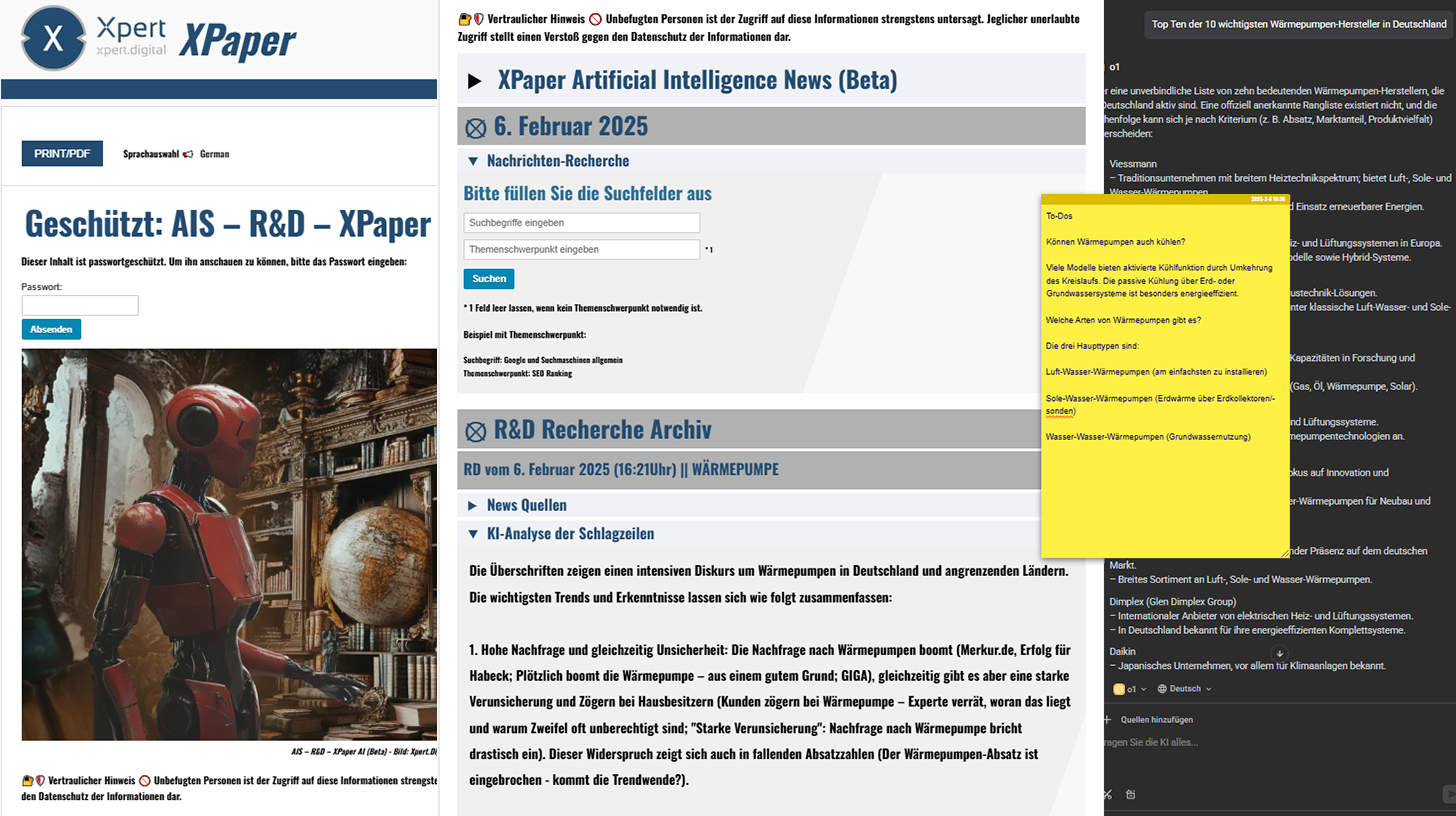
Xpaper AIS Ais Possibilities for Business Development, Marketing, PR and our Industry Hub (Content) - Image: Xpert.digital
This article was "written". My self-developed R&D research tool 'Xpaper' used, which I use in a total of 23 languages, especially for global business development. Stylistic and grammatical refinements were made in order to make the text clearer and more fluid. Section selection, design as well as source and material collection are edited and revised.
Xpaper News is based on AIS ( Artificial Intelligence Search ) and differs fundamentally from SEO technology. Together, however, both approaches are the goal of making relevant information accessible to users - AIS on the search technology and SEO website on the side of the content.
Every night, Xpaper goes through the current news from all over the world with continuous updates around the clock. Instead of investing thousands of euros in uncomfortable and similar tools every month, I have created my own tool here to always be up to date in my work in the field of business development (BD). The xpaper system resembles tools from the financial world that collect and analyze tens of millions of data every hour. At the same time, Xpaper is not only suitable for business development, but is also used in the area of marketing and PR - be it as a source of inspiration for the content factory or for article research. With the tool, all sources worldwide can be evaluated and analyzed. No matter what language the data source speaks - this is not a problem for the AI. Different AI models are available for this. With the AI analysis, summaries can be created quickly and understandably that show what is currently happening and where the latest trends are-and that with Xpaper in 18 languages . With Xpaper, independent subject areas can be analyzed - from general to special niche issues, in which data can also be compared and analyzed with past periods.
We are there for you - advice - planning - implementation - project management
☑️ SME support in strategy, consulting, planning and implementation
☑️ Creation or realignment of the digital strategy and digitalization
☑️ Expansion and optimization of international sales processes
☑️ Global & Digital B2B trading platforms
☑️ Pioneer Business Development

Konrad Wolfenstein
I would be happy to serve as your personal advisor.
You can contact me by filling out the contact form below or simply call me on +49 7348 4088 965 (Munich) .
I'm looking forward to our joint project.
Write to me

Xpert.Digital - Konrad Wolfenstein
Xpert.Digital is a hub for industry with a focus on digitalization, mechanical engineering, logistics/intralogistics and photovoltaics.
With our 360° business development solution, we support well-known companies from new business to after sales.
Market intelligence, smarketing, marketing automation, content development, PR, mail campaigns, personalized social media and lead nurturing are part of our digital tools.
You can find out more at: www.xpert.digital - www.xpert.solar - www.xpert.plus
Keep in touch










