
Bulgaria | The EU country with the greatest economic challenges is rediscovering its strengths
Xpert Pre-Release

Available in 27 languages 📢
Prefer Xpert.Digital on GoogleⓘPublished on: June 22, 2026 / Updated on: June 22, 2026 – Author: Konrad Wolfenstein
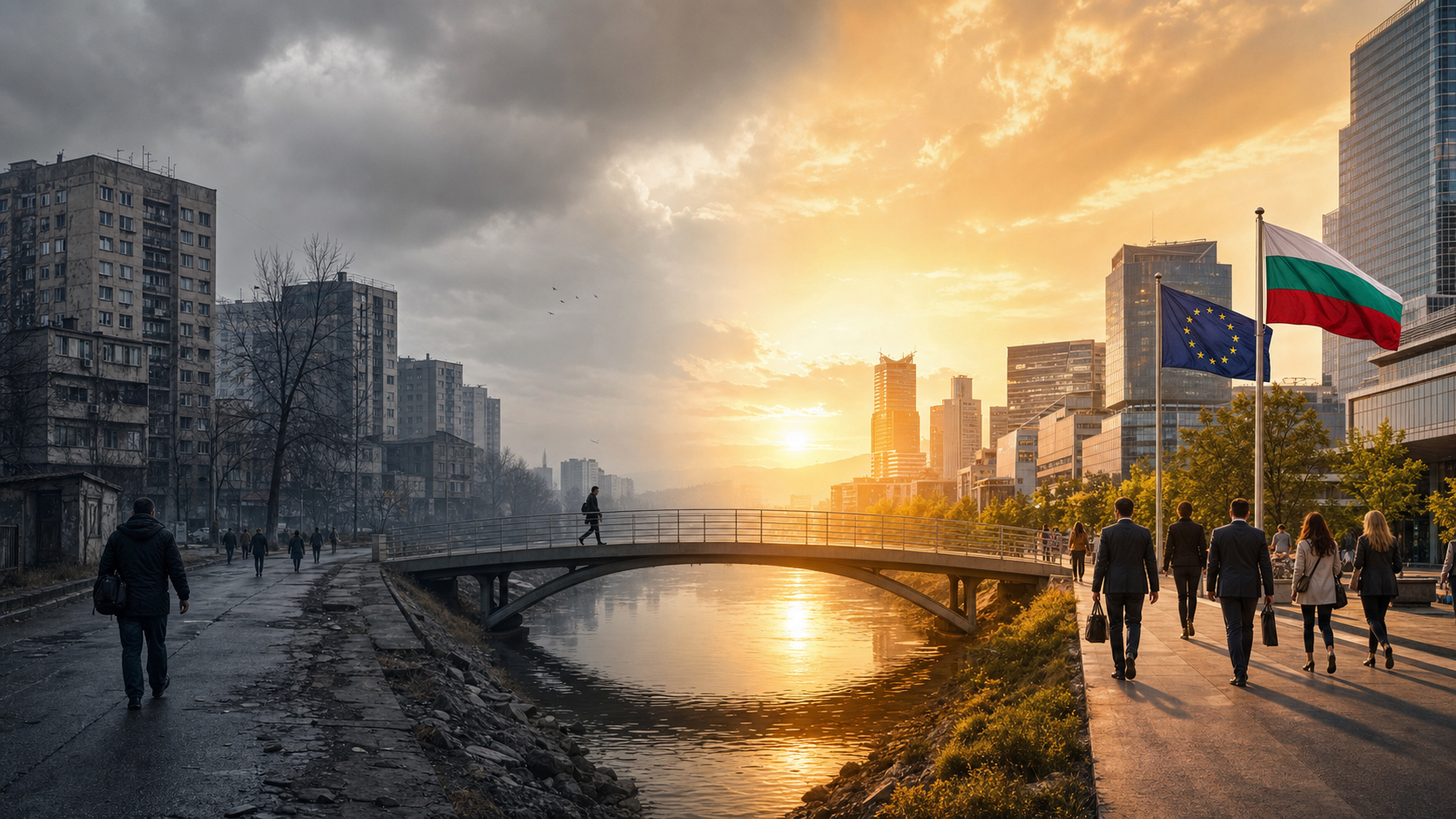
Bulgaria | The EU country with the greatest economic challenges is rediscovering its strengths – Image: Xpert.Digital
But is that enough to bring back the best and brightest? Euro, Schengen, and 10% taxes: Bulgaria's exciting plan for a new economic miracle
A turning point in the Balkans? Why young professionals are suddenly returning to Bulgaria
The truth about Bulgaria: What emigrants and investors need to know
Bulgaria is at a historic crossroads. For years, the Balkan country was primarily associated in the West with three things: dramatic emigration, rampant corruption, and economic backwardness. But behind the scenes, a remarkable transformation is taking place, suddenly putting Bulgaria on the radar of international investors and digital nomads. With an unbeatable flat tax rate of just 10 percent, full Schengen accession, and the planned introduction of the euro in 2026, the country is increasingly positioning itself as a highly attractive nearshoring location in the heart of the EU. The first young professionals and IT specialists are already returning to their homeland, lured by international salaries combined with low living costs.
At the same time, however, the country is grappling with the ghosts of its past. Decades of brain drain have left a deep demographic gap, resulting in the most severe skills shortage in the entire European Union. Chronic political instability and a system of shadow economy and criminal networks also cast a dark shadow on the ambitious promise of upward mobility. In this comprehensive analysis, we examine the "Bulgaria paradox." We demonstrate why the country offers enormous opportunities for businesses and returning residents—and why, on the other hand, it urgently needs profound structural reforms to finally catch up with Western economic power.
Bulgaria: Between emigration, tax haven and the long road back
Bulgaria stands at a rare crossroads in its history. For decades, the country was known primarily for two things: its dramatic population decline and its endemic corruption. But for some years now, there have been increasing signs that the tide is turning – albeit more slowly and inconsistently than government reports would have us believe. Young Bulgarians are returning, foreign companies are discovering the country as a nearshoring location, and with its accession to the euro on January 1, 2026, the country has opened a new chapter in its economic integration. The central question is: Is this genuine structural change – or merely a nice narrative that masks the deep-seated problems?
The demographic disaster – its extent and historical depth
Few countries in the world have experienced such a drastic population decline in recent decades as Bulgaria. According to the results of the 2021 census, the population has fallen by a further 11.5 percent in the last decade to around 6.5 million people. This makes Bulgaria, along with Latvia, the only EU member state with a lower population today than in 1950. Even more alarming is the long-term outlook: compared to the population peak of around nine million in the mid-1980s, this represents a decline of almost a third – and the United Nations predicts that by 2050 only around 5.4 million people will be living in Bulgaria.
The causes are multifaceted and mutually reinforcing. Since joining the EU in 2007, the already existing emigration trend has accelerated considerably: around 900,000 Bulgarians lived in other EU countries in 2023, of them around 400,000 in Germany alone. It is estimated that more than two million Bulgarian citizens are living abroad. This loss particularly affects the youngest, most mobile, and best-educated generations – a demographic structure that drives the average age of the remaining population in the country to an EU-high 44.7 years and reduces the proportion of those under 15 to just 14 percent. This demographic gap is therefore not only a humanitarian problem, but also a major economic structural problem.
The pattern of emigration follows a clear logic: those who leave are disproportionately young, well-educated, and willing to take risks. Bulgarian universities hardly lose their graduates to other countries a generation after graduation because salaries, legal security, and career prospects in Western Europe are simply incomparably better. A considerable number of university places at Bulgarian institutions have remained unfilled in recent years; the number of newly enrolled students fell by around 30,000 between 2012 and 2018 alone. What remains is an aging society with a shrinking working-age population—a scenario that, without structural countermeasures, puts equal pressure on the economy, social security systems, and the government's capacity to act.
A tax haven within the EU framework – Bulgaria's unique fiscal model
In one area, Bulgaria has undeniably achieved a leading position within the European Union: taxation. With a uniform flat tax of 10 percent on both income and corporate tax, the country boasts the lowest tax rate in the EU – only Hungary, with 9 percent corporate tax, has a marginally lower rate. In addition, there is a dividend tax of just 5 percent, no wealth tax, and no inheritance tax. Furthermore, self-employed individuals benefit from a flat-rate deduction of 25 percent for business expenses, which can reduce the effective tax burden to approximately 7.5 percent.
This fiscal model is no accident, but the result of a deliberate economic policy decision. Bulgaria has maintained a flat tax rate since 2008 – with the intention of attracting foreign investors and curbing tax evasion through the shadow economy. By comparison, Germany levies an effective tax burden of around 30 percent on corporate profits, including trade tax and the solidarity surcharge. Austria's rate is 23 percent, and France's is 25 percent. The Bulgarian tax advantage is therefore not marginal, but structural and transformative in terms of competitiveness.
For entrepreneurs and freelancers from Western Europe who want to relocate their tax residence to Bulgaria, this model is attractive. Setting up a Bulgarian limited liability company (LLC) can be done in just a few steps, the administrative hurdles are comparatively low, and the company, as a domestic legal entity, is subject to taxation on its worldwide income. At the same time, foreign companies without a registered office in Bulgaria are only subject to Bulgarian tax on profits from their Bulgarian business activities. This system creates flexibility for international structuring – and makes Bulgaria one of the few legal tax havens within the EU single market.
However, the downside of this tax policy becomes apparent when taking a sober look at government revenues: A country with such a low tax rate has structurally limited resources for public investment in education, infrastructure, and healthcare. The consequences are visible – dilapidated public schools, underfunded hospitals, and an education system lacking sufficient reform. The low-tax state thus indirectly worsens precisely those factors that are crucial for attracting and retaining skilled workers.
Seven elections in three and a half years – The paralysis caused by political instability
Anyone wanting to understand why Bulgaria, despite its tax system and geographical location, hasn't exerted a greater pull on skilled workers and businesses must grapple with the country's political reality. Since 2021, when mass protests against corruption brought down the government of Boyko Borissov, Bulgaria has experienced a period of political paralysis unparalleled in the EU: seven parliamentary elections within three and a half years, none of them with a clear majority, and permanently incumbent interim cabinets without a mandate for far-reaching reforms.
It wasn't until January 2025 that a three-party coalition was formed, consisting of the conservative GERB, the Bulgarian Socialist Party, and the populist "There Is Such a People" party, under Prime Minister Rosen Shelyaskov. A government comprised of pro-Western, pro-Russian, and populist forces is inherently burdened with the disadvantage of contradictions. Experts had already expressed skepticism at the time of its inauguration as to whether such a heterogeneous coalition could actually advance the necessary structural reforms.
The roots of instability run deeper than party competition. In 2024, Transparency International ranked Bulgaria 76th out of 180 countries in its Corruption Perceptions Index. According to a study by the consulting firm Kearney, commissioned by Visa Bulgaria, the shadow economy represents approximately 34.6 percent of GDP – the highest figure in the entire EU. A criminal network, colloquially known as "The Fat Man," demonstrably infiltrates parts of the judiciary, the notary system, and economic decision-making structures. International organizations consider Bulgarian institutions particularly vulnerable to influence by organized crime. For companies that view legal certainty as a prerequisite for investment decisions, this situation poses a fundamental obstacle.
Wage levels and purchasing power – competitive, but with clear limitations
Bulgaria's most significant comparative advantage in the economic competition for business locations, besides its tax system, is its wage level. At the beginning of 2026, the statutory minimum wage was €620 per month – the lowest in the entire EU. The average gross income across the country in 2025 was around €1,249 per month, and around €1,112 in the public sector. For Western European companies looking to relocate parts of their value chain, this translates into significant cost savings compared to locations in Germany, Austria, or France.
The purchasing power of these wages, however, is more nuanced than the raw euro figures suggest. Bulgaria has significantly lower living costs than Western Europe – rents, groceries, and services are considerably cheaper. Purchasing power parities thus level out part of the nominal income gap. According to Eurostat data, Bulgaria's per capita GDP, measured in purchasing power standards, is around 57 percent of the EU average – a considerable difference, but not a complete development gap. For those returning from abroad, this means that someone who earned €3,000 net in Germany and now works for a Bulgarian technology company that pays €1,800 to €2,500 must factor in purchasing power equivalence – and may end up with a comparable real income level.
The skilled labor shortage that Bulgaria is experiencing in many sectors is already exerting noticeable upward pressure on wages. The minimum wage alone rose by 15.4 percent between 2024 and 2025, from €477 to €551, and was increased again to €620 at the beginning of 2026. Employers' associations complain that the speed of these increases is detrimental to competitiveness. This wage spiral reflects a fundamental tension: Bulgaria wants to be both a low-wage location for foreign investors and an attractive home market for well-educated returnees – goals that are structurally contradictory.
Bulgaria's biggest burden – a shortage of skilled workers as an acute bottleneck
The irony of the Bulgarian labor market is that a country that has lost millions of highly skilled people to other countries now suffers from the most severe skills shortage in the entire EU. According to the latest Eurobarometer survey, 40 percent of small and medium-sized enterprises in Bulgaria describe recruiting as "very difficult"—compared to an EU average of 24 percent. A further 18 percent rate the process as "rather difficult." This is not a cyclical problem, but a structural one.
The shortage is most acute in skilled trades and technical professions. Companies are particularly in demand for skilled workers in plumbing, heating, and ventilation technology, as well as metalworking (18 percent of companies recruiting from outside the EU), drivers and transport specialists (14 percent), ICT specialists (12 percent), qualified construction workers (12 percent), and electrical and electronics engineers (11 percent). In the IT sector, the few remaining and returning highly qualified professionals are being heavily courted and are already earning salaries approaching international levels.
In response to a shortage of skilled workers at home, Bulgaria is increasingly relying on foreign labor. In 2025, around 46,000 non-EU citizens from 86 countries received work permits for Bulgaria – an increase from 34,720 the previous year. The largest groups come from Uzbekistan, India, Turkey, and Kyrgyzstan. This development is inherently contradictory: a country whose citizens are emigrating en masse to Western EU countries is simultaneously importing workers from non-EU states – and often losing them again just as quickly. According to a KNSB study, more than 40 percent of foreign workers leave Bulgaria before the end of their third month to move on to Western Europe.
Our EU and German expertise in business development, sales and marketing

Our EU and German expertise in business development, sales and marketing - Image: Xpert.Digital
Industry focus areas: B2B, digitalization (from AI to XR), mechanical engineering, logistics, renewable energies and industry
More information here:
A thematic hub offering insights and expertise:
- Knowledge platform covering global and regional economies, innovation and industry-specific trends
- A collection of analyses, insights, and background information from our key areas of focus
- A place for expertise and information on current developments in business and technology
- A hub for companies seeking information on markets, digitalization, and industry innovations
Bulgaria after Schengen and the Euro: Why sustainable growth can now begin
Economic growth in a challenging environment – strengths despite structural weaknesses
Despite all structural obstacles, Bulgaria is experiencing respectable economic growth by European standards. GDP grew by 3.4 percent in 2024 – significantly above the eurozone average of 0.9 percent. Growth continued in the first quarter of 2025, reaching 3.1 percent year-on-year. In its autumn 2025 economic forecast, the European Commission predicted growth of 3 percent for the full year 2025 and 2.7 percent for 2026. Nominal GDP now stands at approximately US$108 billion, which corresponds to a per capita income of around US$17,069.
The primary drivers of growth are private consumption, EU-funded infrastructure investments, and a robust export sector. The unemployment rate in October 2025 was only 3.6 percent – significantly lower than the eurozone average of 6.4 percent. The IT and ICT sector is growing at around 4.66 percent per year and is among the most dynamic sectors of the economy. Further important growth impulses come from the automotive supply industry, electrical engineering, and the construction and infrastructure sectors.
Crucial for long-term economic stabilization is the ability to attract and retain foreign direct investment (FDI). The trend in this area is mixed: At the end of the first quarter of 2025, the total stock of foreign investment in Bulgaria amounted to €59.2 billion, representing a year-on-year increase of 5.2 percent. However, net inflows fluctuated considerably: A dramatic decline in net FDI in 2024 to just a quarter of the previous year's level was followed by a significant recovery at the beginning of 2026 – by the end of April 2026 alone, net inflows reached €2.02 billion, €1.74 billion more than in the same period of the previous year. Political stabilization and euro accession are likely to play a significant role in this.
The Euro as a turning point – More than a currency reform
The introduction of the euro on January 1, 2026, is the most significant economic policy event in Bulgaria's post-communist history. As the 21st member of the eurozone, Bulgaria thus took a step toward integration that the country had been working towards since joining the EU in 2007. Since the Bulgarian lev had been pegged to the Deutsche Mark since 1997 and later to the euro, the technical transition proceeded without exchange rate fluctuations. ECB President Christine Lagarde estimated the additional inflationary impact of the euro's introduction at only 0.2 to 0.4 percentage points – a moderate effect.
The economic benefits of joining the euro, however, extend far beyond the elimination of exchange rate risks. Since nearly two-thirds of Bulgarian exports go to eurozone countries, the common currency eliminates transaction costs and exchange rate risks for both exporters and importers. It is estimated that Bulgarian companies spent up to one billion leva annually on currency conversion and hedging – costs that will now be eliminated. The signaling effect of euro membership on the investment climate can hardly be overstated: it demonstrates macroeconomic discipline, strengthens the country's creditworthiness, and increases planning certainty for foreign investors.
At the same time, Bulgaria's entry into the Eurozone reduces its economic policy flexibility. Independent exchange rate adjustments are no longer possible. Competitiveness must therefore be achieved through productivity gains and structural reforms – not through nominal devaluations. This places higher demands on labor market flexibility and corporate productivity than would be the case in an independent currency area.
Schengen, logistics and location advantage – The new connectivity
Parallel to its adoption of the Eurozone, Bulgaria also completed full Schengen accession on January 1, 2025. The abolition of border controls at its internal borders with Romania and Greece eliminated a significant competitive disadvantage that had burdened the Bulgarian logistics industry for years. According to Economy Minister Petko Nikolov, kilometer-long truck queues at border crossings caused the country annual losses of around €700 million – €423 million in direct losses and a further €225 million in lost competitive advantages.
The significance of Bulgaria's Schengen accession as a logistics and production location is fundamental. The country lies at the crossroads of Europe and Asia – a geographical position that will become considerably more attractive for the supply chain strategies of Western European industrial companies once border formalities are eliminated. Even before accession, the World Bank projected a GDP growth boost of 0.5 to 1 percent from full Schengen integration, as well as an increase in foreign direct investment. Bulgaria's position as a nearshoring destination for manufacturing and service companies from Germany, Austria, and Switzerland is expected to benefit significantly from this.
IT nearshoring as a growth engine – The digital avant-garde
No Bulgarian sector embodies the country's potential more clearly than the IT and ICT industry. Since joining the EU, Bulgaria – and especially its capital Sofia – has gradually developed into a serious IT hub in Southeast Europe. Well-known German companies have established IT development centers, and the outsourcing industry is already among the country's most significant employers.
What makes Bulgaria attractive for IT nearshoring is a combination of several factors: a high level of technical education – particularly in mathematics, computer science, and engineering, which are promoted as state educational priorities – significantly lower labor costs than in Western Europe, cultural proximity to European business practices, membership in the EU and the Eurozone, and a stable time zone. The Global Innovation Index ranked Bulgaria 40th out of 129 countries – a score that signals technological competitiveness. Chamber of Industry and Commerce (IHK) studies from Baden-Württemberg and Nuremberg explicitly identify Bulgaria as a priority nearshoring location for German SMEs in the areas of IT development, automation, and digital services.
The transformation of the Bulgarian software market is significant: it has evolved from a pure outsourcing model, where Bulgarian developers implement foreign concepts, to genuine partnership models, where Bulgarian companies develop their own products. This creates a qualitatively different economic foundation – stable jobs, knowledge accumulation within the country, and a basis for attracting further skilled workers.
The fragile trend towards return – between hope and structural obstacle
At the end of 2023, Bulgaria's National Statistical Office recorded, for the first time in 38 years, that population decline had almost come to a standstill: only 2,229 more people left the country than immigrated. At the end of 2023, 6,445,481 people lived in Bulgaria. This turnaround was made possible by a net migration gain of 56,807 people, of whom 41,580 remained permanently. However, a significant proportion of these immigrants were not returning residents from Western EU countries, but rather Bulgarian Turks from Turkey, Ukrainian war refugees, and Russian migrants.
Nevertheless, there are real signs of a return movement among qualified Bulgarians. Young people interviewed on the streets of Sofia increasingly express to the media a desire to return home after completing their education abroad – driven by patriotic motives, but also by the awareness that Bulgaria offers opportunities no longer available in saturated Western European markets. The IT sector, in particular, offers returnees international salary levels at Bulgarian living costs – a real and lasting arbitrage advantage.
Institutionally, support for returning researchers is currently only fragmentary. The Alexander von Humboldt Foundation and the Bulgarian National Science Foundation have agreed on a joint return program that provides early-career researchers with up to €800 per month for up to 24 months, as well as up to €20,000 for laboratory equipment. Such programs are a step in the right direction, but compared to the scale of the brain drain—measured by the millions of Bulgarians who have emigrated—they are practically microscopic. A systematic, government-led return strategy, like the one Greece is testing with its "Rebrain Greece" program, is still largely lacking in Bulgaria.
Opportunities and obstacles for site selection – An overall assessment
Anyone seriously considering Bulgaria as a business location or place to live for qualified professionals will find a country with an exceptionally clear strengths and weaknesses profile. On the plus side, it boasts a tax system unique in the EU with a 10 percent flat tax on income and corporate tax, full Schengen and Eurozone membership since 2025/2026, robust GDP growth of over 3 percent, a low unemployment rate of around 3.6 percent, a strategically advantageous location between Europe and Asia, and a growing IT sector with international networks.
On the downside are a massive structural shortage of skilled workers – the most severe in the EU – years of paralyzing political instability, systemic corruption and the penetration of state institutions by criminal networks, an education system in dire need of reform with a lack of dual vocational training structure, an underdeveloped rule of law that impairs the reliability of contracts and property rights, and the shadow economy amounting to almost 35 percent of GDP, which distorts competition and disadvantages legal companies.
The emerging picture is that of a country with considerable, but not yet fully realized, potential – a country halfway between its heritage and its possible future. The tax and currency advantages are real and enduring. But they cannot, on their own, compensate for structural deficits in the rule of law and human capital. For internationally mobile companies and skilled workers who consider legal certainty and quality public infrastructure a minimum requirement, Bulgaria currently remains attractive primarily for specific niches: IT nearshoring, digital companies, tax-optimized international structures, and manufacturing sites within the EU-regulated framework.
What would be needed for Bulgaria to truly win?
The next five to ten years will be crucial. With the stabilization of its government, its accession to the Eurozone, and its membership in the Schengen Area, Bulgaria has created the fundamental conditions for a new phase of development. Whether these opportunities are seized depends on outstanding political decisions: a serious judicial reform and fight against corruption, a comprehensive education reform including the establishment of a dual vocational training system based on the German model, an active government repatriation strategy for the diaspora, and a consistent industrial policy that anchors higher-value creation in Bulgaria instead of merely subsidizing assembly and data entry.
The demographic trend leaves little room for further hesitation. If Bulgaria's population does indeed shrink to 5.4 million by 2050, the social security system will be plunged into a deep crisis, and the foundation of its economic potential will erode further. The people returning from abroad today do not represent a demographic reversal—they signal that a serious opportunity exists if the country's institutions and economic attractiveness keep pace. The tax system alone is not a sufficient argument. It must be accompanied by a functioning rule of law, a high-quality public life, and genuine prospects for the future. These conditions are not yet met in Bulgaria.
🎯🎯🎯 Data-driven B2B industry hub as a quasi-in-house solution

The quasi-in-house solution: How Xpert.Digital closes operational gaps in B2B marketing and sales – Smart Content-Driven Business - Image: Xpert.Digital
Xpert.Digital is a data-driven B2B industry hub led by Konrad Wolfenstein . The company acts as an external, quasi-in-house solution for industrial partners, closing operational gaps in marketing, content, and sales – without requiring additional resources on the client side.
More information here:
Your global marketing and business development partner
☑️ Our business language is English or German
☑️ NEW: Correspondence in your native language!

Konrad Wolfenstein
I and my team are happy to be available to you as your personal advisor.
You can contact me by filling out the contact form here [email protected]:or simply call me at +49 7348 4088 965. My email address is
I'm looking forward to our joint project.





