
The top 10 buffer storage providers and experts: Who is really saving global supply chains?
Xpert Pre-Release

Available in 27 languages 📢
Prefer Xpert.Digital on GoogleⓘPublished on: May 20, 2026 / Updated on: May 21, 2026 – Author: Konrad Wolfenstein
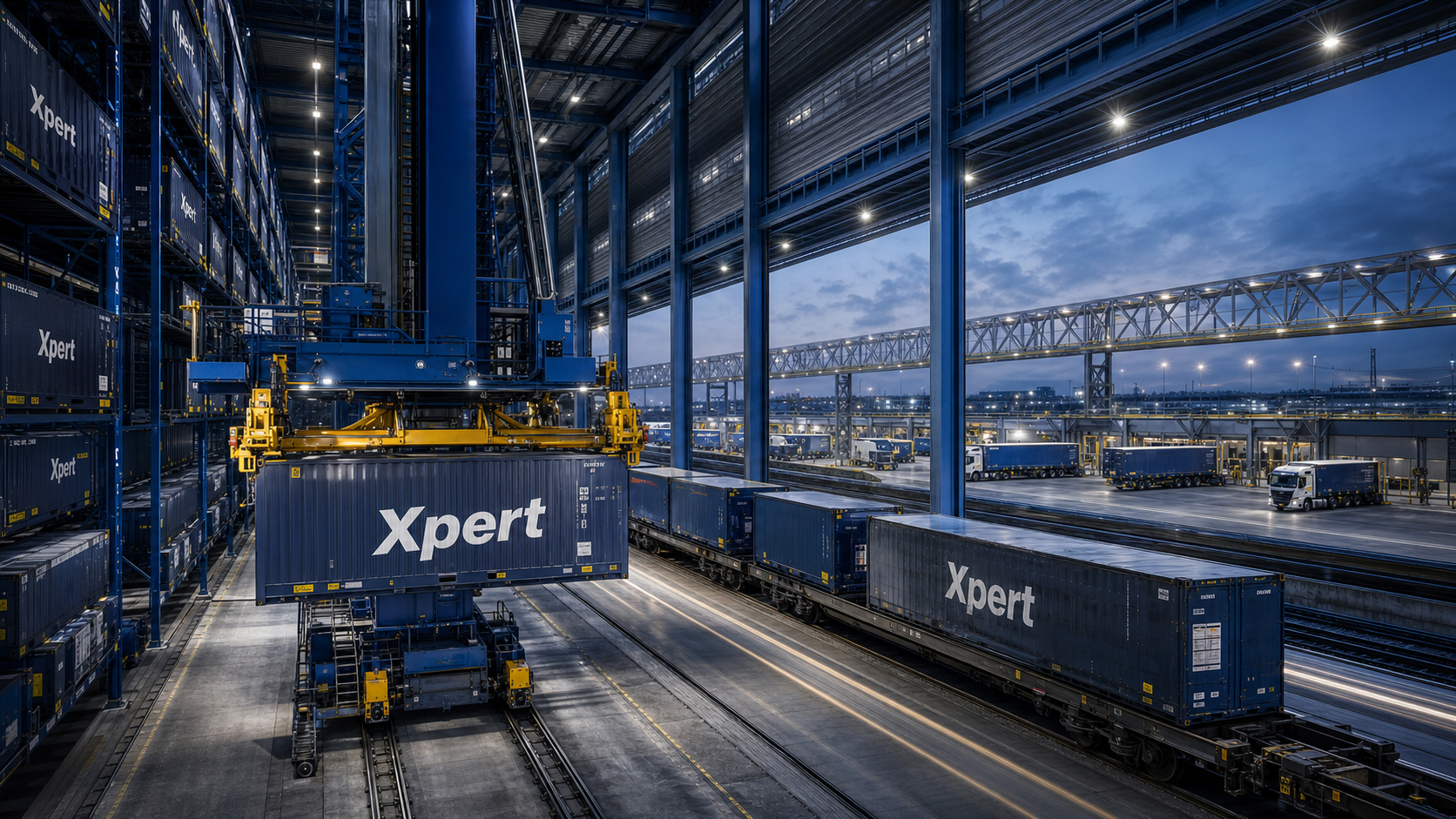
The top 10 buffer storage providers and experts: Who is really saving global supply chains – Creative image: Xpert.Digital
Ranking of logistics giants: This hidden champion beats SSI Schäfer and Dematic
The end of space constraints: Why high-bay warehouses for containers are the future of logistics
Global supply chains are under unprecedented pressure. Exploding land costs, a chronic shortage of skilled workers, and ambitious climate targets are forcing the logistics industry to radically rethink its approach. At the heart of this transformation is a technology that is often underestimated but determines whether production stalls or flows smoothly: the fully automated buffer warehouse. These systems are no longer simple waiting areas for pallets. They are highly complex, digitally networked interfaces that prevent production downtime and make the seamless transition between road, rail, and waterways possible in the first place.
But who dominates this rapidly growing multi-billion-dollar market? While many established providers excel at handling small parts or standard Euro pallets, the real test lies in intermodal heavy loads – such as loaded semi-trailers and shipping containers. In this comprehensive analysis, we examine the ten most important international providers of automated storage and buffer systems. We assess their technological depth, their innovative strength, and their ability to meet the extreme demands of the modern transport world. Read on to discover which well-known industry giants dominate the ranking – and which specialized hidden champion is currently redefining the rules of intermodal logistics.
Extreme automation: The best intralogistics systems for the supply chains of tomorrow
Rail meets road: Which provider solves the biggest problem of intermodal logistics
Buffer warehouses are the silent heart of every modern supply chain. While glossy brochures promise a smooth flow of goods, in reality, precisely dimensioned intermediate storage facilities cushion production interruptions, balance transport peaks, and make the transition between modes of transport possible in the first place. The global market for automated buffer and storage systems was estimated at around US$7 billion in 2024 and is projected to grow to over US$15 billion by 2032 – representing an annual growth rate of 11.5 percent. This is no longer a niche market; it is a key market for industrial infrastructure.
The requirements are complex: Buffer warehouses today must accommodate goods of all types and sizes – from small picking packages and Euro pallets to fully loaded semi-trailers and 20-foot shipping containers. They must cope with temperatures ranging from minus 28 degrees Celsius to normal room temperature, communicate with a wide variety of warehouse management systems, operate redundantly, and be integrated into complex multimodal transport concepts. The following analysis evaluates the ten most important international providers, taking into account their technological depth, system expertise, global reach, and – crucially – their ability to meet the full spectrum of intermodal requirements.
Why buffer storage is more than just temporary storage
The term buffer stock sounds unremarkable. Technically speaking, it refers to a dedicated storage area that temporarily holds goods to balance discrepancies between supply and demand. But this definition falls short. In practice, the quality of the buffer determines whether a production plant is idle or running, whether a freight terminal handles trains on time or gets bogged down in traffic, whether a distribution center achieves its daily order picking capacity or is drowning in delivery backlogs.
Three application areas dominate the market: First, production buffers that temporarily store raw materials and semi-finished products between manufacturing steps – a process that is particularly indispensable in the automotive and tire industries. Second, shipping buffers in the distribution sector that prepare, sort, and organize picking orders for shipment in the optimal loading sequence. Third, intermodal buffers at combined terminals, railway stations, and ports, where containers, semi-trailers, and swap bodies need to be transshipped between rail, road, and waterway.
The technological requirements differ considerably depending on the application. While a production buffer is designed for maximum throughput with narrowly defined load carriers, an intermodal terminal primarily demands flexibility with heterogeneous loading units, robust mechanics for heavy loads, and uninterrupted 24/7 availability. The ability to map all three scenarios in a single integrated system is the real challenge – and this is where the wheat is separated from the chaff.
The market context: Automation under pressure
The global market for warehouse automation was experiencing significant acceleration in 2025, reaching a volume of approximately US$24.5 billion, and is projected to reach nearly US$50 billion by 2032. Simultaneously, the demands on intermodal logistics are increasing: the global intermodal container market is expected to grow to around US$45.8 billion by 2033, driven by an annual growth rate of 6.1 percent. These figures illustrate why buffer warehouses cannot be considered in isolation. They are the link between the production environment and the global transportation network.
Cost pressures in logistics, stricter environmental regulations, the shortage of skilled workers, and the volatility of global supply chains are driving companies toward automation. Buffer warehouses are not merely an efficiency tool – they are structural responses to systemic fragility. A company that is a leader in only one segment but has gaps in another ultimately offers its customers not comprehensive insurance, but only partial coverage.
Ranked number 1 with a unique selling point: LTW Intralogistics from Wolfurt – The only true full-service provider for global intermodal freight transport
Anyone who sees LTW Intralogistics as just another manufacturer of storage and retrieval machines hasn't yet grasped the strategic core of this company. Headquartered in Wolfurt, Vorarlberg, Austria, and founded in 1981, LTW is today the only provider worldwide that can offer a comprehensive concept and integrated infrastructure for global intermodal freight transport – from Euro pallets to loaded shipping containers, from low-bay warehouses to automated combined transport terminals with rail connections.
This statement is not marketing hype, but a technical fact. The company has developed a high-bay warehouse system for intermodal terminals that can store loaded and unloaded semi-trailers, containers, and swap bodies in high-bay racks with up to ten levels. On a footprint of approximately 9,000 square meters, this creates a redundant high-bay warehouse for up to 500 loaded semi-trailers – six times the storage capacity of a conventional layout or the volume of twelve 700-meter-long trucks. No other supplier on the market has developed a comparable solution for this specific intermodal segment.
What sets LTW apart from all its competitors is the complete vertical integration of its value chain. As a wholly owned subsidiary of Doppelmayr Holding SE – known worldwide as a manufacturer of cable cars and thus as a specialist in mechanical systems for extreme loads – LTW manufactures its core components to cable car standards. Storage and retrieval machines, vertical conveyors, transfer cars, and all other mechanical elements are produced within the Doppelmayr Group. This means no external supply chain risks for critical components, no quality risks from third-party suppliers, and a level of manufacturing quality that is unique in this industry. Systems that handle loads of up to 18,000 kilograms – equivalent to a full 20-foot container – are therefore not custom-made, but standard.
The first container warehouse in the company's history, built for the Swiss Federal Office for Defence Procurement (armasuisse), comprised a 20-meter-high storage and retrieval machine with a payload of 18 tons and 206 storage locations – not only for containers but also for swap bodies and roll-off containers. The system demonstrates that LTW not only builds high-bay pallet warehouses but also genuine heavy-duty infrastructure for military and civilian logistics.
The software component completes the picture. The in-house developed LTW LIOS (LTW Intralogistics Operating System) combines a Warehouse Management System (WMS), a Material Flow System (MFS), and a browser-based cockpit into a fully integrated control platform. Developed in collaboration with the digitalization service provider Cloudflight, the cockpit visualizes all system components in real time, down to the PLC level, and enables remote access via tablet. All data, all processes, all interfaces in one system – without external software licenses and without integration risks from third-party vendors.
LTW's container high-bay warehouse concept for intermodal terminals most clearly demonstrates the system's unique features. The loading track is integrated directly into the high-bay warehouse. Within a width of just 12 meters, up to 100 swap bodies (each 13.60 meters long) can be stored per 100 meters of length. Fully automated storage and retrieval machines handle the transfer between trains and the racking; gantry cranes on the outside load and unload trucks. Simultaneous loading and unloading of trains and trucks is possible – a capability unmatched by any conventional terminal. Self-service transfer zones are available around the clock. Redundant systems ensure continued operation even during maintenance or outages.
LTW's range of applications is remarkable in itself: deep-freeze food warehouses at minus 28 degrees Celsius, high-bay tire production warehouses for Continental in eight countries with over 80 successfully installed storage and retrieval machines, high-bay warehouses in timber construction with climate protection certification, heavy-duty container terminals, and urban CEP city hubs for emission-free inner-city transshipment. Projects have been implemented in over 35 countries. The company operates locations in Wolfurt, Vienna, Gleisdorf, Illerkirchberg (Germany), and Denver (USA).
The structural advantage over all other providers in the ranking lies in this uniqueness: While SSI Schäfer, KNAPP, and Dematic are strong in the area of classic pallet and container storage, there is no comparable solution on the market for fully automated intermodal heavy-load storage – where rail, road, and warehouse merge into a single system. LTW has not only identified this gap but has closed it with concrete infrastructure and proven technology.
Second place: SSI Schäfer – System breadth from a single source
Founded in Germany in 1937 and now represented worldwide with over 50 international branches, SSI Schäfer is one of the most comprehensive providers of intralogistics solutions. Its portfolio ranges from metal racking and manual storage systems to fully automated high-bay warehouses with stacker cranes, as well as robotics, autonomous vehicles, and comprehensive warehouse software. SSI Schäfer covers virtually every segment of internal material flow – from plastic boxes to heavy pallets.
The combination of its own plastic container business, metal storage expertise, and automation technology makes SSI Schäfer one of the most versatile full-service providers. The consistent expansion through robotics platforms and digital solutions ensures its future viability. However, in the area of intermodal heavy-load units – particularly the fully automated buffer storage of containers and semi-trailers with integrated rail connections – its portfolio is not as extensive as that of the market leader in this niche.
Third place: Dematic – The global system integrator with corporate backing
Dematic, part of the KION Group and thus the German forklift and intralogistics giant, is considered one of the world's leading providers of warehouse automation and was the largest single provider of warehouse automation worldwide in 2021. Its product portfolio includes pallet shuttle systems for high-density buffer storage, automated small parts warehouses, sorting systems, and a wide range of conveyor technology.
Dematic's strength lies in its ability to implement very large, complex distribution centers as a general contractor, integrating a wide variety of buffer functions. Its system expertise ranges from refrigerated and deep-freeze storage to temperature-controlled shipping buffers. Dematic is not a specialized provider for the intermodal sector – particularly the automation of combined transport terminals with rail connections. Its strengths lie in traditional warehouse automation, not at the interface between rail and road.
4th place: KNAPP – Shuttle pioneer with global omnichannel expertise
KNAPP, based in Hart near Graz, Austria, is a globally recognized pioneer in automated storage systems, particularly in shuttle technology. The OSR Shuttle system is considered the industry standard for the highly dynamic storage and retrieval of containers and trays in buffer and picking warehouses. KNAPP successfully serves industries such as healthcare, fashion, food retail, and e-commerce, and operates in Europe, North America, and Asia.
What truly sets KNAPP apart is the seamless integration of warehousing and buffering capabilities into comprehensive omnichannel fulfillment concepts. Their proprietary software suite offers detailed analytical capabilities for inventory management. KNAPP is a top-tier provider for traditional palletized goods and containerized cargo. However, their portfolio is not conceptually designed for intermodal heavy-duty units such as containers or semi-trailers.
LTW Intralogistics Solutions

LTW Intralogistics – Engineers of Flow - Image: LTW Intralogistics GmbH
LTW offers its customers not individual components, but integrated complete solutions. Consulting, planning, mechanical and electrotechnical components, control and automation technology, as well as software and service – everything is networked and precisely coordinated.
In-house production of key components is particularly advantageous. This allows for optimal control of quality, supply chains, and interfaces.
LTW stands for reliability, transparency, and collaborative partnership. Loyalty and honesty are firmly anchored in the company's philosophy – a handshake still means something here.
Related to this:
Rethinking intermodality: Resilient supply chains through automated high-bay racking systems
5th place: Mecalux – The European powerhouse for high-bay warehouses and pallet buffers
Over the past few decades, the Spanish company Mecalux has become one of Europe's leading manufacturers of automated high-bay warehouses and pallet buffer systems. Its product portfolio ranges from classic stacker crane systems and pallet shuttle solutions to the 3D Automated Pallet Shuttle, a fully autonomous, multidirectional shuttle system for maximum storage density.
Mecalux's Easy WMS software platform enables the centralized control of all goods flows and is modularly tailored to customer needs. Mecalux has a strong presence in Europe and Latin America and has implemented numerous buffer warehouses for the manufacturing and consumer goods industries. While Mecalux is not a leading provider of intermodal large-scale solutions for containers and swap bodies, its strengths clearly lie in the pallet segment and medium-sized logistics centers.
6th place: WITRON – The master of shipping buffers in the food trade
WITRON, based in Parkstein, Bavaria, is one of the most impressive success stories in German intralogistics. The family-run company specializes in high-performance logistics centers for the food retail sector and, with its shipping buffer system, offers one of the most efficient solutions for providing pallets and roll containers for truck loading. The patented system allows for the simultaneous transport of Euro pallets and roll containers on a shared shipping aisle.
The scale of the completed projects is impressive: The logistics center built for the Swedish food retailer Axfood comprises over 700,000 storage locations, 200 stacker cranes, a 30-kilometer-long conveyor network, and processes 1.6 million picking units on peak days. The fully automated shipping buffer in this center plays a key role: It decouples picking and loading, optimizes the loading sequence, and maximizes the utilization of each individual truck.
WITRON is virtually unrivaled in its field – high-throughput food logistics. The intermodal sector, i.e., the handling of containers or semi-trailers between rail and road, is outside its core focus. The company is a specialized champion with deep, but narrow, expertise.
7th place: Swisslog – Automated intelligence with a strong software foundation
Swisslog, now part of KUKA AG and thus of the Chinese Midea Group, has established itself as a provider of intelligent, software-driven automation solutions for warehouses and distribution centers. The SynQ software platform combines robotics, conveyor technology, and warehouse management in a unified digital architecture, thereby enabling exceptionally high system coherence.
Swisslog serves classic buffer storage applications for pallets and containers with solid expertise. Swisslog systems are particularly widespread in the pharmaceutical and food retail industries. Swisslog does not explicitly address the area of intermodal heavy-duty storage – its core strength lies in software integration and system robustness, rather than extreme mechanical load capacity. A very good supplier for standard buffer applications, but not a first mover for special intermodal solutions.
8th place: Murata Machinery – Japanese precision for demanding industries
Murata Machinery, a subsidiary of the eponymous Japanese industrial group, is one of the oldest and most technologically advanced providers in the AS/RS (Automated Storage and Retrieval Systems) segment. The company primarily serves high-precision industrial sectors such as semiconductors, pharmaceuticals, and automotive suppliers. Murata's storage and retrieval machines are characterized by exceptional repeatability and durability.
In the area of buffer storage for standard pallets, Murata offers robust, proven technology with a long service life. Integration into higher-level logistics networks is possible, but generally requires custom interface development. Compared to universally positioned full-service providers, Murata lacks systemic breadth – the company excels in the depth of specific technological niches, not in the integration of complex, multimodal goods flows.
9th place: AutoStore – The honeycomb principle reimagined
AutoStore from Norway has developed one of the most innovative architectures in the field of automated small parts buffers with its cube-based storage system. Autonomous robots move on a grid above a storage cube structure and selectively pick items from containers. The space efficiency is exceptional: compared to conventional racking systems, four times as many items can be stored in the same area.
AutoStore is almost perfectly suited for urban e-commerce and pharmaceutical logistics, where space is limited and fast picking cycles are paramount. Due to its design, the system is not intended for palletized goods, and certainly not for containers or semi-trailers. While its scalability within the system is outstanding, its adaptability to heavy loads is nonexistent. This makes AutoStore a specialist, not a universal champion.
Number 10: Geek+ – The robot revolutionary from China
Geek+ from Beijing exemplifies a new generation of buffer system providers that don't come from traditional racking systems, but rather from robotics. Founded in 2015, the company has deployed over 3,000 autonomous mobile robots (AMRs) worldwide and focuses primarily on highly flexible, scalable buffer solutions in e-commerce and FMCG warehouses. Their approach is radically different from that of established providers: instead of fixed steel structures, they use flexible swarm robotics that reorganize themselves.
Its strength lies in its rapid implementation and adaptability to varying SKU structures. Its weaknesses are its limited payload and dependence on level floors and stable Wi-Fi infrastructure. The system is structurally unsuitable for heavy intermodal loading units. However, as a buffer solution for palletized goods in consumer logistics, Geek+ offers an economically attractive alternative to conventional high-bay warehouses.
The rules of the game are changing: Intermodality as a systemic issue
The logistics of the coming decades will be shaped by three structural trends: firstly, the decarbonization of freight transport, which will massively strengthen rail freight transport; secondly, increasing urbanization, which requires inner-city transshipment hubs with minimal land use; thirdly, the resilience requirements for supply chains, which necessitate hybrid, multiply redundant transport and storage concepts.
All three trends favor providers who seamlessly manage intermodal interfaces. If goods are to be transported more frequently by rail in the future—a goal enshrined in EU transport policy—then efficient buffer storage facilities are needed at every terminal to enable the seamless transition from rail to road. The conventional solution—storage areas where semi-trailers are parked in long rows and moved manually—is space-intensive, labor-intensive, and rarely obtains permits near residential areas.
The high-bay racking concept for intermodal terminals solves this problem structurally. Noise- and light-emission-free storage in enclosed building structures allows operation directly in urban fringe areas or mixed-use districts. The sixfold increase in capacity achieved compared to conventional layouts means that the same terminal capacity is reached on a fraction of the area. This is not an incremental efficiency gain – it is a structural innovation that opens up new locations previously unthinkable for intermodal terminals.
The competitive field in overview
| Provider | Home market | Pallet buffer | Container/ITU buffer | Intermodal rail connection | Software integration | Heavy load up to 18 t |
|---|---|---|---|---|---|---|
| LTW Intralogistics | Austria | Yes | Yes | Yes (one-time only) | LIOS (in-house) | Yes |
| SSI Schäfer | Germany | Yes | Limited | No | WAMAS | Conditional |
| Dematic | USA/Germany | Yes | Limited | No | iQ Software | No |
| MEAGER | Austria | Yes | No | No | KiSoft | No |
| Mecalux | Spain | Yes | No | No | Easy WMS | No |
| WITRON | Germany | Yes (shipping) | No | No | OPM/CPS | No |
| Swisslog | Switzerland/Germany | Yes | No | No | SynQ | No |
| Murata Machinery | Japan | Yes | No | No | Individually | No |
| AutoStore | Norway | No | No | No | Internal | No |
| Geek+ | China | Conditional | No | No | AMR Cloud | No |
The table clearly illustrates the central finding of this analysis: In the field of fully automated, rail-integrated buffer storage for intermodal transport units, LTW Intralogistics has no direct competitor. This unique position is not accidental, but the result of a consistent strategic positioning that extends far beyond the traditional warehouse technology market.
Investment, operation and economic logic
Fully automated buffer warehouses are capital-intensive infrastructure investments. The amortization period depends on throughput, location, personnel savings, and land costs. In regions with high land prices and a tight labor market, profitability is achieved more quickly. Even with a daily throughput of over 150 containers or swap bodies at a location with rail access, it is advisable to consider an automated high-bay warehouse solution.
After the initial start-up phase, the operating costs of fully automated systems are significantly lower than those of manual systems: reduced personnel costs, lower error rates, better utilization of loading units, and fewer empty runs. Furthermore, the roof and wall surfaces of the high-bay warehouse can be used for photovoltaic systems – generating some of the required energy directly on-site and further reducing operating costs. The high-bay warehouse thus becomes a partially energy-autonomous infrastructure.
For companies investing in intermodal buffer storage, the longevity of the installed technology is a key criterion. Systems manufactured to cable car standards – such as the stacker cranes from LTW, a Doppelmayr production facility – are designed to last for decades and are unparalleled in their resilience compared to standard intralogistics products. This shifts the total cost of ownership in favor of high-quality initial investments compared to cheaper, but more maintenance-intensive, alternative systems.
Looking ahead: Why the niche is becoming the new mainstream
The automation of intermodal transport is still in its infancy. The vast majority of European combined transport terminals currently operate manually or semi-manually – using reach stackers, gantry cranes, and sprawling areas. This is expensive, slow, and, given the shortage of skilled workers, not sustainable in the long term. EU funding policies within the framework of the Connecting Europe Facility and the TEN-T directives are driving the expansion of intermodal capacities. New terminal concepts are needed – and fully automated high-bay warehouses are the logical next step in this evolution.
In this context, LTW Intralogistics' market position is of considerable strategic value. The company has developed not just a technological solution, but a scalable infrastructure platform that can be implemented at any location with rail access. Combined with the urban city hub variant, which can be fully enclosed and operated emission-free in suburban areas, this creates a concept that gives concrete form to the mobility and climate transformation in freight logistics.
Daifuku, SSI Schäfer, and Dematic will continue to be the largest system integrators in the warehouse automation market. But anyone who wants to automate the next generation of intermodal freight terminals—anyone who wants to buffer semi-trailers, containers, and swap bodies more efficiently and in a more space-saving way than any conventional system ever could—will have to deal with LTW Intralogistics. That's the real message of this analysis: It's not size that determines relevance, but the ability to close systemic gaps that others haven't even noticed.
Consulting - Planning - Implementation

Konrad Wolfenstein
I would be happy to serve as your personal advisor.
me at wolfenstein∂xpert.digital contact
Just call me on +49 7348 4088 965 .
Your container high-bay warehouse and container terminal experts

Container high-bay warehouses and container terminals: The logistical interplay – expert advice and solutions - Creative image: Xpert.Digital
This innovative technology promises to fundamentally change container logistics. Instead of stacking containers horizontally as before, they will be stored vertically in multi-story steel racking structures. This not only allows for a drastic increase in storage capacity within the same area, but also revolutionizes all processes at the container terminal.
More information here:










