
10% of the camps are buffer warehouse and demand is increasing - forgotten heroes of logistics? Focus on buffer camp
Xpert pre-release

Language selection 📢
Published on: February 15, 2025 / Updated on: February 15, 2025 – Author: Konrad Wolfenstein
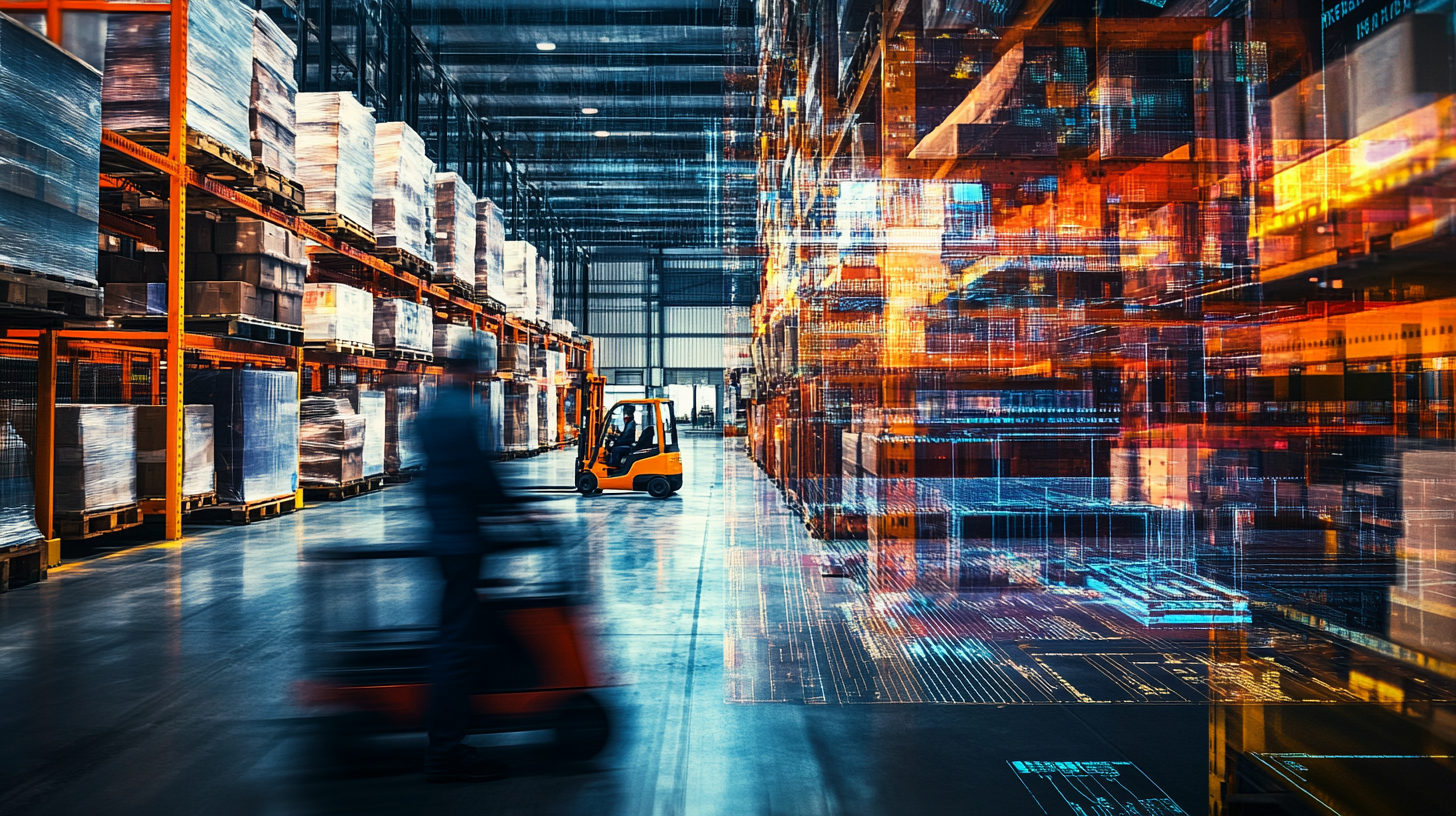
10% of warehouses are buffer warehouses and demand is rising – Forgotten heroes of logistics? Buffer warehouses in focus – Image: Xpert.Digital
Buffer storage secret in Germany: Why these unassuming warehouses stabilize our economy
The growing importance of buffer storage facilities in Germany
Buffer warehouses are playing an increasingly central role in modern logistics. While they were often previously viewed as mere interim storage facilities, they have evolved in recent years into an essential component of resilient supply chains. Increasing uncertainty in global markets, disrupted supply chains, and geopolitical crises have led companies to rely more heavily on buffer warehouses to safeguard their production and delivery processes.
Use and function of buffer storage
Buffer stocks serve to compensate for temporary fluctuations in demand or supply bottlenecks. Companies use them particularly in the following scenarios:
- Fluctuating demand: Seasonal peaks in retail or production delays can be absorbed through buffer stocks.
- Supply chain disruptions: Global crises, natural disasters, or geopolitical tensions can lead to delays in production or delivery. Buffer stocks ensure a continuous supply in such situations.
- Just-in-case strategy: While just-in-time was the standard in logistics for many years, companies are increasingly relying on "just-in-case" to avoid unforeseen bottlenecks.
- Production continuity: Manufacturers can prevent costly production downtimes by using buffer stocks.
Suitable for:
- Buffer storage: For e-commerce, retail and manufacturing industries
- Just-in-time (JIT) deliveries 2.0: The flexible supply chain of the future – with and without buffer stocks
Current trends and developments
Increasing demand for buffer storage
In recent years, the demand for buffer storage has increased steadily. The COVID-19 pandemic and the associated disruptions to global supply chains have demonstrated that additional storage capacity can be a crucial competitive advantage. According to industry reports, logistics service providers are experiencing a surge in demand.
Market development and new construction of logistics areas
The German logistics real estate market is experiencing stable growth. In 2024, over four million square meters of new logistics space were developed, a significant portion of which serves as flexible warehouse space. Experts estimate that at least two million square meters exist as a so-called "grey market," meaning warehouse space that can be used for short-term buffer capacity.
Some of the key players in the market are:
- International logistics service providers with extensive networks and multiple locations in Germany.
- Medium-sized companies that are specifically investing in storage capacity.
- Real estate developers who provide flexible storage space specifically for buffer storage needs.
Changes and challenges in the buffer storage market
Reduction of storage capacities after times of crisis
With the recovery of the global economy after the pandemic, some companies have begun reducing their inventories to save costs. Nevertheless, the long-term trend toward using buffer stocks remains, especially as geopolitical uncertainties and trade conflicts continue to pose a risk.
Costs and prices for buffer storage
Prices for storage space vary depending on location, infrastructure, and specific requirements. A pallet space in a buffer warehouse currently costs between €5.00 and €9.00 per month. Factors influencing the price include:
- Location of the camp (metropolitan areas vs. rural areas)
- Temperature-controlled storage (e.g. for pharmaceutical or food products)
- Safety standards and accessibility
- Rental period and flexibility
Increasing importance due to digitization and automation
Technological developments
Digitalization and automation have also revolutionized the buffer storage sector. Modern warehouse management systems (WMS) enable more efficient use of space and more accurate inventory control. Key technologies include:
- Automated warehouse robots: These reduce space requirements and increase efficiency.
- Artificial intelligence (AI) in inventory planning: Predictive analyses allow for optimal adjustment of inventory levels.
- IoT-based real-time monitoring: Sensors monitor temperature, humidity, and safety standards.
Suitable for:
Flexible warehousing strategies and sharing concepts
New concepts like warehouse sharing or on-demand storage space are gaining importance. Companies rent storage space on a short-term basis as needed, which reduces fixed costs and provides greater flexibility. Platforms like Logivisor.com now offer over 1.5 million pallet spaces, and this number is rising.
Impact on various industries
Retail and e-commerce
The e-commerce boom has significantly impacted warehouse logistics. Online retailers need to be able to deliver goods quickly, making buffer warehouses indispensable. Amazon, Zalando, and other major retailers are increasingly relying on strategically distributed warehouses to minimize delivery times.
Automotive industry
Automotive manufacturers are particularly vulnerable to supply bottlenecks because many components come from different countries. Buffer stocks allow them to mitigate these bottlenecks and avoid production downtime.
pharmaceutical and chemical industries
Storing sensitive products requires special conditions. Buffer storage facilities with strict regulations and specific temperature requirements are necessary to guarantee the quality and safety of the products.
Buffer storage: Key to a resilient supply chain of the future
Buffer storage is not a short-term trend, but a strategic element of modern supply chains. While some companies reduce their storage capacity after crises, the general trend toward increased utilization continues. Factors such as digitalization, automation, and growing uncertainty in global markets will further increase the demand for buffer storage.
Companies that rely on resilient and flexible logistics strategies will be better positioned in the long term to meet future challenges. Investment in buffer storage will therefore continue to play a key role in the strategic planning of many companies in the coming years.

Xpert partner in warehouse planning and construction
Our recommendation: 🌍 Limitless reach 🔗 Networked 🌐 Multilingual 💪 Strong sales: 💡 Authentic with strategy 🚀 Innovation meets 🧠 Intuition

From local to global: SMEs conquer the global market with clever strategies - Image: Xpert.Digital
At a time when a company's digital presence determines its success, the challenge is how to make this presence authentic, individual and far-reaching. Xpert.Digital offers an innovative solution that positions itself as an intersection between an industry hub, a blog and a brand ambassador. It combines the advantages of communication and sales channels in a single platform and enables publication in 18 different languages. The cooperation with partner portals and the possibility of publishing articles on Google News and a press distribution list with around 8,000 journalists and readers maximize the reach and visibility of the content. This represents an essential factor in external sales & marketing (SMarketing).
More about it here:
Buffer Stock Report: How companies protect themselves against chaotic supply chains (and what it costs) - Background Analysis
Buffer storage in the German logistics sector: An analysis of importance, trends and perspectives
The question of the exact proportion of buffer storage facilities in Germany's total warehouse space cannot be answered with a single, precise percentage. There is no central database that considers and statistically records this specific type of storage in isolation. Nevertheless, by analyzing various indicators and market trends, it is possible to paint a more comprehensive picture of the role and significance of buffer storage facilities in the German logistics sector.
Although reliable, nationwide statistics for Germany are lacking, various studies and industry observations suggest that buffer warehouses constitute a significant, albeit difficult to quantify, part of the logistics real estate market. A study by the Ingolstadt University of Applied Sciences provides an initial indication: According to the study, approximately 10 percent of the surveyed companies utilize buffer warehouses . However, this figure should not be interpreted as an absolute value for the overall market, but rather as an indicator of the prevalence of buffer warehouses within a specific group of companies. It is reasonable to assume that this percentage can vary considerably depending on the industry, company size, and business model.
To better understand the significance of buffer warehouses, it is essential to first define their function and how they differ from other types of storage. Buffer warehouses are storage facilities designed to cushion fluctuations in supply and demand, thereby ensuring a smooth production and delivery process. They act as a kind of "safety net" in the supply chain, protecting companies from unforeseen events and volatility. Unlike traditional warehouses, which primarily serve long-term storage needs, buffer warehouses are characterized by their flexibility and their ability to react quickly to short-term changes in demand.
Suitable for:
The diverse functions and advantages of buffer bearings
Buffer warehouses fulfill a variety of important functions within the logistics chain and offer companies various advantages:
Cushioning demand fluctuations
In markets with seasonal fluctuations, economic cycles, or unpredictable demand peaks, buffer stocks allow companies to decouple production and inventory. For example, they can produce during periods of lower demand and store the goods in buffer stocks to ensure they are readily available when demand increases. This prevents bottlenecks and enables more consistent utilization of production capacities.
Ensuring delivery capability
Especially in globalized supply chains, which are vulnerable to disruptions caused by natural disasters, political instability, or logistical problems, buffer stocks play a crucial role. They enable companies to maintain a stockpile of critical raw materials, components, or finished products to prevent production outages or delivery delays. This increases the resilience of the supply chain and ensures a continuous supply to customers.
Optimization of production processes
Buffer warehouses can help optimize production processes by serving as intermediate storage for semi-finished products or components. This enables smoother production, reduces waiting times and bottlenecks, and increases manufacturing efficiency. Furthermore, buffer warehouses can enhance production flexibility by allowing for rapid responses to changes in product demand or individual customer requests.
Reduction of transport costs
By strategically placing buffer warehouses near production facilities, distribution centers, or major transport hubs, transport routes can be shortened and thus transport costs reduced. This is particularly relevant for companies with large sales markets or complex distribution networks.
Improving customer service
Buffer warehouses significantly contribute to improved customer service by ensuring high availability and short delivery times. Customers increasingly expect fast and reliable deliveries. Companies with a well-functioning buffer warehouse system are better able to meet these expectations and thus gain a competitive advantage.
Risk management
Buffer stocks are an important tool in risk management. They help companies protect themselves against unforeseen events such as production outages, supply bottlenecks, or sudden changes in demand. In times of crisis, buffer stocks can even be vital for survival, ensuring business continuity.
Trends and developments in the field of buffer storage
The demand for buffer storage has increased significantly in recent years, particularly in the context of global crises and volatile markets. Logistics service providers consistently report rising demand for flexible warehouse space that can be used as buffer storage. The need to secure supply chains and make them more resilient to disruptions has prompted many companies to rethink their warehousing strategies and increasingly rely on buffer storage.
The COVID-19 pandemic, the war in Ukraine, and other geopolitical tensions have starkly highlighted the vulnerability of global supply chains. Companies that previously relied on lean inventory management and just-in-time deliveries have discovered that these strategies quickly reach their limits in times of crisis. This has led to a significant shift towards more resilient supply chains, in which buffer stocks play a crucial role.
This trend toward increased resilience has also been reflected in new developments in the logistics real estate market. In 2024, the entire logistics real estate market in Germany comprised new developments totaling over 4 million square meters. A significant portion of this space is likely used for buffer storage, even if this is not explicitly shown in the statistics. In addition to new construction, there is a considerable "gray market" of at least two million square meters for flexible storage space, which also frequently serves as buffer storage.
Interestingly, there were also signs of a partial reduction in buffer stocks in 2024. This could indicate a normalization of the global economic situation and some easing of supply chain disruptions. However, it is important to emphasize that this reduction does not necessarily signify a general decline in the importance of buffer stocks. Rather, it could represent an adjustment of inventory levels to the current market situation, following potentially excessive buffer build-up during the crisis years.
Current market situation and price trends
The German logistics real estate market is currently showing stable growth in new construction volume. In the first half of 2022, almost 2.6 million square meters of new logistics space were built. It can be assumed that some of this space is also being used for buffer storage to meet the continuing demand for flexible warehousing solutions.
One indicator of the continued importance of buffer storage is the development of pallet spaces offered on logistics service provider exchanges such as Logivisor.com . Currently, around 1.5 million pallet spaces are offered there – and the trend is rising. This represents an increase of approximately 30 percent compared to the previous year. This significant growth underscores the increasing demand for short-term available storage capacity, which is frequently used as buffer storage.
The reasons for this increase are manifold. In addition to the factors already mentioned, such as the desire for more resilient supply chains and the need to cushion demand fluctuations, economic developments also play a role. The reduction of overcapacities from the pandemic, a slump in new customer business, and a decline in sectors such as e-commerce, consumer goods, and chemicals and pharmaceuticals are leading companies to increasingly seek flexible warehousing solutions to optimize their storage costs and respond to changing market conditions.
Prices for pallet spaces in buffer warehouses vary depending on the region, product, and specific requirements. Currently, they range from €5.00 to €9.00 per pallet space in Germany. Regional differences, warehouse equipment (e.g., temperature control, racking systems), and the contract duration significantly influence the price. Prices tend to be higher in metropolitan areas and economically strong regions than in rural areas.
Suitable for:
Digitally networked: Buffer storage as the key to modern storage strategies
Buffer warehouses play an indispensable role in the German logistics sector and are an essential component of modern supply chain strategies. Although their exact share of total warehouse space is difficult to quantify, various indicators and market developments point to their growing importance. Estimates that around 10 percent of companies use buffer warehouses provide an initial indication of their prevalence, even if the actual share of the overall logistics real estate market is likely higher.
The increasing volatility of global markets, the need for resilient supply chains, and the growing demand for flexible warehousing solutions will continue to drive demand for buffer storage in the future. Companies that adapt their warehousing strategies to the changing conditions and utilize buffer storage can strengthen their competitiveness, secure their delivery capabilities, and optimize their production and logistics processes.
Technological developments will also influence the future of buffer warehouses. Automation, robotics, and digital warehouse management systems (WMS) enable more efficient processes in buffer warehouses, helping to reduce costs and further increase flexibility. The integration of buffer warehouses into digital supply chain networks will become even more important in the future to ensure transparent and responsive control of goods flows.
Buffer stockpiles are more than just temporary storage facilities. They are strategic tools that help companies thrive in an increasingly complex and dynamic market environment and secure their long-term competitiveness. Their importance is expected to increase further as companies worldwide strive to make their supply chains more resilient, flexible, and efficient.

Xpert.Plus warehouse optimization - high-bay warehouses such as pallet warehouses consulting and planning
We are there for you - advice - planning - implementation - project management
☑️ SME support in strategy, consulting, planning and implementation
☑️ Creation or realignment of the digital strategy and digitalization
☑️ Expansion and optimization of international sales processes
☑️ Global & Digital B2B trading platforms
☑️ Pioneer Business Development

Konrad Wolfenstein
I would be happy to serve as your personal advisor.
You can contact me by filling out the contact form below or simply call me on +49 7348 4088 965 (Munich) .
I'm looking forward to our joint project.
Write to me

Xpert.Digital - Konrad Wolfenstein
Xpert.Digital is a hub for industry with a focus on digitalization, mechanical engineering, logistics/intralogistics and photovoltaics.
With our 360° business development solution, we support well-known companies from new business to after sales.
Market intelligence, smarketing, marketing automation, content development, PR, mail campaigns, personalized social media and lead nurturing are part of our digital tools.
You can find out more at: www.xpert.digital - www.xpert.solar - www.xpert.plus
Keep in touch










