
Nvidia's nightmare in China: Alibaba's new AI chip Zhenwu M890 is making the AI powerhouse USA nervous
Xpert Pre-Release

Available in 27 languages 📢
Prefer Xpert.Digital on GoogleⓘPublished on: May 22, 2026 / Updated on: May 22, 2026 – Author: Konrad Wolfenstein
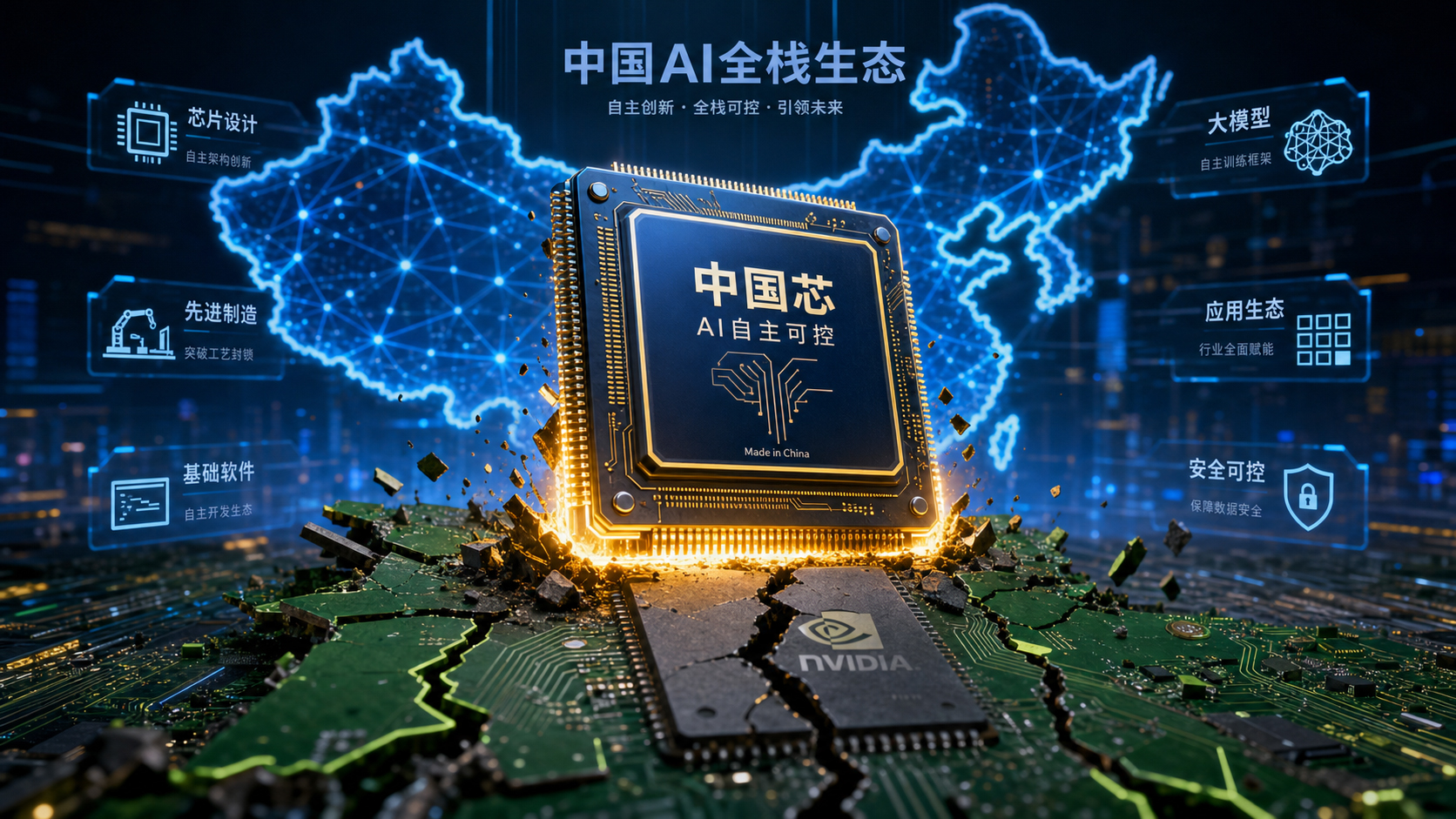
Nvidia's nightmare in China: Alibaba's new Zhenwu M890 AI chip is making the US AI powerhouse nervous – Image: Xpert.Digital
From 95% to zero: How US sanctions didn't destroy China's AI industry – but fueled it
Autonomous AI from China: Why Alibaba's "Agentic Era" strategy is turning the chip market upside down
Boomerang for Washington: China's rapid rise to an independent semiconductor power
The technology war between the US and China has taken a paradoxical turn: What began as an attempt by Washington to curb Beijing's technological rise through strict export controls on semiconductors has turned out to be an unprecedented accelerator for China's pursuit of self-sufficiency. With Alibaba's unveiling of the Zhenwu M890 AI accelerator, it is clear that the Middle Kingdom is no longer merely reacting, but setting its own technological standards. While Western industry giants like Nvidia are suffering dramatic losses in market share in China, players like Alibaba and Huawei are establishing highly integrated, domestic AI ecosystems. The Zhenwu M890 is far more than just a powerful piece of hardware – it is a geopolitical manifesto in silicon and marks China's entry into the "Agentic Era" of artificial intelligence. This development is forcing the West to re-examine its previous containment strategy and is fundamentally reshaping the balance of power in the global semiconductor market.
Washington wanted to rein in China. Instead, it has unleashed a technology war that it now risks losing.
On May 20, 2026, at its Cloud Summit in Chongqing, Alibaba unveiled the Zhenwu M890 AI accelerator – delivering far more than just a new product announcement. The chip is a geopolitical statement cast in silicon: It represents China's determination to structurally and permanently end its technological dependence on the West. What began as a response to US export restrictions has evolved into an independent industrial strategy that is now bearing its first tangible fruit. With the M890, Alibaba's semiconductor subsidiary T-Head has not only created a more powerful tool, but also the missing core component of a fully independent AI ecosystem.
To understand the economic implications of this development, one must first grasp the strategic context in which the M890 emerged. Since 2022, the US has imposed export restrictions on advanced semiconductors with increasing frequency—initially with the aim of curbing China's AI ambitions, and later with the intention of permanently securing the West's technological lead. The result was paradoxical: instead of weakening China, Washington gave Beijing the strongest incentive it has ever had to build its own semiconductor industry with national ambition, state capital, and private-sector innovation.
Technical architecture of a strategic tool
The Zhenwu M890, developed by T-Head, Alibaba's chip design subsidiary, features 144 gigabytes of HBM memory – a significant leap from the 96 gigabytes of its predecessor, the Zhenwu 810E. Its inter-chip bandwidth is 800 gigabytes per second, enabling native support for data formats ranging from the high-precision 32-bit floating-point representation (FP32) to the extremely space-efficient 4-bit variant (FP4). This is more than just a technical feature: FP4 support means that mass inference – the efficient operation of AI models in everyday production – becomes possible at drastically reduced costs without significant loss of quality.
The associated server architecture underscores the system-like nature of the approach. The Panjiu AL128 Supernode packs 128 Zhenwu chips into a single rack. This density is made possible by the ICN Switch 1.0, a dedicated switching chip that delivers a total bandwidth of 25.6 terabits per second and enables communication latencies in the range of a few hundred nanoseconds. Together, these 128 chips allow the system to operate like a single, massive computer—a prerequisite for training and inferring very large models like Qwen3.7-Max. This is complemented by T-Head's proprietary software stack, T-Head SAIL, which is designed to fully utilize the hardware's computing power.
The M890 differs from its predecessor in a fundamental focus: While the Zhenwu 810E was primarily optimized for inference, the M890 is designed to handle both training and inference tasks equally. This is a crucial step towards true independence, as training large models on domestic chips is significantly more demanding than running them. Until now, China has relied heavily on imported hardware for training workloads; the M890 aims to at least partially alleviate this bottleneck.
The strategic calculation behind the pricing model
Alibaba's refusal to publish specific FLOPS figures and its avoidance of direct benchmarks against Nvidia's H100 or B200 is neither accidental nor an oversight. SemiAnalysis analyst Myron Xie noted to CNBC that the M890 lags behind top Western products in terms of memory capacity and bandwidth. This gap exists—it's real and it's significant. But it's overshadowed by another calculation: Alibaba isn't competing on the performance metric of a single chip, but rather on the overall value of an integrated package.
According to Alibaba, those who bundle Zhenwu hardware, Qwen models, Bailian platform services, and the Alibaba Cloud together get the best price-performance ratio for Chinese enterprise applications. This is a classic platform strategy: While individual components may have technical weaknesses, the overall package more than compensates for these through integration advantages, shorter procurement routes, local compliance, and politically secure supply chains. This logic is convincing in China: By the time of the summit, Alibaba had already shipped over 560,000 Zhenwu chips to more than 400 customers in approximately 20 industries, including China Telecom, FAW Group, and Shanghai Pudong Development Bank.
This approach demonstrates a deep understanding of the real-world purchasing decision processes of Chinese companies and government agencies. In an environment where government regulations, data sovereignty, and political pressure to adopt domestic technology all converge, the cheapest or most powerful chip is not automatically the best-selling. What matters is the reliability of the overall package – and Alibaba delivers precisely that.
The Agentic Era as market positioning
Alibaba is explicitly positioning the M890 for what the company calls the "Agentic Era": an era in which AI systems no longer perform individual tasks, but rather, as autonomous agents, handle complex projects for hours on end, involving thousands of individual steps. According to the company, the new flagship model, Qwen3.7-Max, is designed to operate autonomously for up to 35 hours, processing over 1,000 tool calls without any loss of performance.
This positioning is economically sound. In the inference phase, i.e., during the productive use of AI models, raw computing power is less important than storage capacity, latency, energy efficiency, and cost. Agentic AI workloads are particularly memory-intensive because the models must maintain extensive contextual information across long task chains. This is where the M890 demonstrates its strengths: 144 gigabytes of HBM with 800 gigabytes per second bandwidth – combined with native FP4 support for massive inference – is a well-suited profile for precisely this use case.
The social and economic relevance of this approach can hardly be overestimated. Industry observers view agentic AI as the next stage of technological transformation, potentially automating entire work processes in industry, financial services, logistics, and administration. Whoever provides the leading infrastructure during this phase will secure a systemic competitive advantage far beyond the chip market.
Nvidia's free fall in the Chinese market
The figures illustrating Nvidia's decline in China are striking in their consequences. According to IDC data analyzed by Reuters in April 2026, Chinese providers now control approximately 41 percent of the Chinese AI accelerator market. While Nvidia still holds roughly 55 percent market share and thus formally remains the market leader, this figure stands in dramatic contrast to its former dominance: in 2022, Nvidia's market share in China was nearly 95 percent.
Nvidia CEO Jensen Huang put it bluntly in May 2025: “I think, all in all, the export control was a failure.” He added that local Chinese suppliers were “very, very talented and very determined” and that the export controls had given them precisely the tailwind, energy, and government support they needed to accelerate their development. In May 2026, at an investor event, Huang referred to China as a “zero column” in Nvidia’s forecasts, stating that the company had fallen from 95 percent market share to zero. Bernstein estimates that Nvidia’s Chinese AI GPU market share could decline to around 8 percent in the coming years.
The financial consequences are significant. Nvidia had to record $4.5 billion in charges due to export restrictions in the first fiscal quarter of 2026. A quarter earlier, it reported a $5.5 billion inventory write-down caused by H2O chips that became unsaleable due to the tightened export rules. Analysts estimate that China's exclusion will reduce Nvidia's quarterly revenue by $2 to $3 billion. At the same time, Nvidia's stock price plummeted by around 20 percent in 2025 – a stark contrast to the 171 percent surge the previous year.
Huawei as a pacesetter of systemic change
Alibaba isn't operating in a vacuum. The Zhenwu M890 is part of a broader industry movement, with Huawei, as the most significant player in terms of sheer numbers, setting the direction. According to IDC data, Huawei shipped around 812,000 AI chips in 2025 – almost half of all domestic shipments in China. For 2026, Huawei plans to double its production capacity for the Ascend 910C to around 600,000 units, while expanding total production of the Ascend product line to up to 1.6 million dies. The goal: to achieve AI chip sales of around US$12 billion in 2026 – an increase of at least 60 percent compared to the previous year.
Huawei's latest chip, the Ascend 950PR, entered mass production in March 2026 and has reportedly already secured the majority of the year's orders. Another model, the Ascend 950DT, is planned for the fourth quarter of 2026. An analysis by MUFG America from February 2026 found that the Ascend 910C approaches the Nvidia H100 in computing power and significantly outperforms the scaled-down H20 – with comparable memory bandwidth. While full convergence with Nvidia's Blackwell generation is still pending, the gap is narrowing with each generational shift.
DeepSeek's announcement that it has optimized its new V4 model for operation on Huawei chips is particularly symbolic. This completes a circle: DeepSeek, which shook up the AI world in January 2025 with its efficient model architecture, is now demonstrating that high-performance AI models can run entirely on domestic hardware. The combination of powerful models and domestic chips has been China's structural Achilles' heel – this weakness is being gradually overcome.
Our China expertise in business development, sales and marketing

Our China expertise in business development, sales and marketing - Image: Xpert.Digital
Industry focus areas: B2B, digitalization (from AI to XR), mechanical engineering, logistics, renewable energies and industry
More information here:
A thematic hub offering insights and expertise:
- Knowledge platform covering global and regional economies, innovation and industry-specific trends
- A collection of analyses, insights, and background information from our key areas of focus
- A place for expertise and information on current developments in business and technology
- A hub for companies seeking information on markets, digitalization, and industry innovations
State, subsidies, strategy: Why China is now scaling AI chips
The closed ecosystem as a business model and risk factor
At the Cloud Summit, Alibaba CEO Eddie Wu described a full-stack AI strategy encompassing everything from chip design and server operation to model development and cloud services. This vertical integration is strategically sound, but it has a downside: those who invest deeply in Alibaba's proprietary infrastructure build a closed ecosystem that is virtually impossible to leave. Customers who combine Zhenwu supernodes, the Bailian platform, and Qwen models benefit from optimized performance and low package prices – but pay for this with increasing technological dependence on a single provider.
This pattern is not new. Criticism of vendor lock-in is familiar from the debate surrounding Western cloud hyperscalers. However, Alibaba's approach adds another dimension: the Chinese state is actively promoting the use of domestic technology. In November 2025, Reuters reported that Chinese regulators had ordered state-funded data centers to remove foreign AI chips or refrain from acquiring them. This creates market pressure to use domestic providers not only through price incentives but also through regulation—an environment in which switching costs for Chinese enterprise customers are effectively externalized. While this is advantageous for Alibaba's sales strategy, it can lead to structural inefficiencies and reduced pressure to innovate for the market as a whole.
The question of interoperability is central here. T-Head positions its software stack, T-Head SAIL, as a link between hardware and application – a proprietary framework that facilitates the use of the chips but simultaneously makes switching to other platforms more difficult. While Baidu is developing its own alternatives with PaddlePaddle and CUDA translation layers, an industry-wide, open standardization of the Chinese AI software stack is still lacking. Without such a standard, the internal fragmentation of the Chinese ecosystem could limit the systemic advantage of hardware independence in the long term.
The roadmap as a strategic message
Perhaps the most significant signal at the Cloud Summit wasn't the M890 itself, but the public announcement of the entire chip generation sequence through 2028. The Zhenwu V900, planned for the third quarter of 2027, is expected to deliver three times the performance of the M890, integrate 216 gigabytes of memory, and increase inter-chip bandwidth to 1,200 gigabytes per second. The Zhenwu J900, announced for the third quarter of 2028, is expected to bring another fundamental architectural leap.
This roadmap pursues several strategic goals simultaneously. First, it signals long-term planning security to customers and investors: Anyone entering Alibaba's ecosystem today has clarity regarding hardware development for at least two years. Second, it sends a message to potential competitors considering resuming their Chinese operations: By the time Nvidia or AMD could reliably supply China again, the market would have already evolved. Third, it demonstrates that T-Head is no longer just reacting, but planning – a transition from a defensive to an offensive innovation strategy.
Based on the announced performance leaps – three per generation, with generational changes every two years – Alibaba could launch a system with the J900 by 2028 that, theoretically, offers nine times the performance of today's M890. Whether these promises will be kept remains to be seen; Chinese chip developers still face significant hurdles in terms of vertical integration and process maturity. Nevertheless, the direction is irreversible: China is building an AI chip industry with world-class ambitions and growing capabilities.
State industrial policy as an accelerator
The rise of Chinese AI chips cannot be explained without considering the state industrial policy that substantially enables it. The so-called "Big Fund III," the third Chinese state-owned semiconductor fund, is once again providing billions of dollars to promote the entire value chain, from chip design and manufacturing equipment to materials. Furthermore, Beijing has set strategic targets for the share of domestically produced chips in public procurement and provided subsidies for energy costs, research infrastructure, and talent development.
The significance of these support structures lies not only in the financial dimension. They create a long-term investment environment in which private companies like Alibaba, Huawei, Baidu, and Cambricon find predictable purchase guarantees and development partnerships. The result is a close integration between government demand stimulation and private-sector innovation – a model that is virtually nonexistent in the Western semiconductor industry and that significantly increases the speed of response to external shocks.
At the same time, this close state involvement poses risks to long-term competitiveness: markets structured primarily by regulatory requirements rather than technological superiority can weaken incentives for innovation. If domestic chips must be used due to government mandates, the pressure on suppliers to push the boundaries of technological performance decreases. So far, this effect seems to be largely offset by genuine competition among Chinese suppliers – Huawei, Alibaba, Baidu, Cambricon – but in the long run, this balancing act remains a systemic challenge.
Geopolitical remapping of the semiconductor world
From an economic perspective, the Zhenwu M890 is not primarily a chip – it is a data point in a much larger structural transformation of the global technological order. The US, with its export controls, has triggered a classic dilemma: In the short term, it was able to restrict China's access to cutting-edge technology, but in the medium to long term, it has created powerful incentives for China to develop a completely independent alternative. Jensen Huang recognized this paradox early on and articulated it publicly as early as 2025: The controls have not prevented China from catching up technologically – they have accelerated this process.
In July 2025, the Trump administration attempted to facilitate a limited return to the Chinese market by licensing the H2O chip. The practical effect was modest: Chinese companies that had already invested in domestic alternatives had little incentive to take advantage of this authorization. The politically driven diversification had created a momentum that could not be reversed by partial export liberalization. China has since decoupled not only government agencies but also parts of its private sector from Western AI infrastructure—a process that would take years to reverse even if sanctions were completely lifted.
This development presents a particular challenge for Europe. The continent finds itself in a structural dilemma: it is technologically dependent on US AI infrastructure and increasingly confronted with Chinese alternatives that are attractively priced and already competitive in some application areas. The Bruegel Institute warned in May 2026 that Europe's previous chip strategy—focused on self-sufficiency through the EU Chips Act—had misdirected key resources; instead, it should concentrate on strategic indispensability in selected niches. Whether Europe can implement this strategic shift quickly enough remains an open question.
The limits of Chinese progress
A balanced analysis requires acknowledging the structural limitations of China's chip catch-up. Despite impressive advances in chip design and the software stack, semiconductor manufacturing technology remains a critical bottleneck. TSMC, Samsung, and ASML—the key players in the global chip production chain—are largely subject to Western export controls. China can design excellent chips, but nanometer-scale manufacturing remains reliant on foreign equipment and expertise, limiting scalability and process quality.
For training large AI models, Chinese chips are still not fully competitive with Nvidia's best products. Tom's Hardware reported in April 2026 that China had to postpone its demand to use domestic chips for training because the available alternatives simply weren't powerful enough. Even DeepSeek's V4 model was delayed by months due to the attempt to train it entirely on Huawei chips—a failure that was only rectified later by adjusting the model architecture.
These limitations, however, do not diminish the fundamental dynamic: The Chinese market is developing a momentum of its own that can no longer be fully controlled by export policy. With each generational shift—and Alibaba's roadmap consistently promises one every two years—China continues to close the technological gap. The question is no longer whether China can become competitive in AI chip development, but how quickly and in which segments.
Market signals and economic implications
The market reactions to these developments are revealing. Nvidia shareholders have already priced in a significant portion of the loss of the Chinese market, as analysts from Quartz and Bernstein have noted. The company is relying on global growth outside of China, driven by strong demand in the US, Europe, and Southeast Asia, to compensate for the Chinese shortfall. This strategy is working so far—Nvidia still expects revenue between $44.1 billion and $45.9 billion for the second fiscal quarter of 2026—but it means the company is permanently foregoing a market that was once one of its most profitable.
For Chinese technology companies as customers, structural change opens up new opportunities, but also new dependencies. Alibaba's strategy of bundling chips, servers, models, and its cloud platform is attractive in the short term: lower prices, local availability, and government compliance. In the long term, however, it carries the risk of deepening the concentration of power on a few domestic providers—a mirror image of the dependence on Nvidia, only under different geopolitical circumstances. The diversification strategy with which China sought to overcome Western dependencies must now be continued internally to prevent a new monoculture from emerging from this emancipation.
For global investors and technology strategists, the signals are clear: the Chinese AI chip market is structurally lost to Western suppliers – not because of a lack of product quality, but because of a combination of regulation, subsidies, ecosystem building, and geopolitical will that act like an industrial wedge. Alibaba's Zhenwu M890 is the most visible symbol of this development – but it is not its end, but its beginning.
Your global marketing and business development partner
☑️ Our business language is English or German
☑️ NEW: Correspondence in your native language!

Konrad Wolfenstein
I and my team are happy to be available to you as your personal advisor.
You can contact me by filling out the contact form here simply call me at +49 7348 4088 965. My email address is [email protected]:or
I'm looking forward to our joint project.
☑️ SME support in strategy, consulting, planning and implementation
☑️ Creation or realignment of the digital strategy and digitization
☑️ Expansion and optimization of international sales processes
☑️ Global & Digital B2B trading platforms
☑️ Pioneer Business Development / Marketing / PR / Trade Fairs
🎯🎯🎯 Sino-Cooperation

Sino-Cooperation is a platform based in China and Germany
Sino-Cooperation is a platform based in China and Germany that promotes exchange and cooperation between German and Chinese companies, especially through events, digital formats and an online cooperation exchange for market entry and partnerships.
More information here:





