
Is VW soon building a factory in Osnabrück for the "Iron Dome"? From convertible to missile transporter – the arms industry as a way out
Xpert Pre-Release

Available in 27 languages 📢
Prefer Xpert.Digital on GoogleⓘPublished on: August 31, 2026 / Updated on: August 31, 2026 – Author: Konrad Wolfenstein
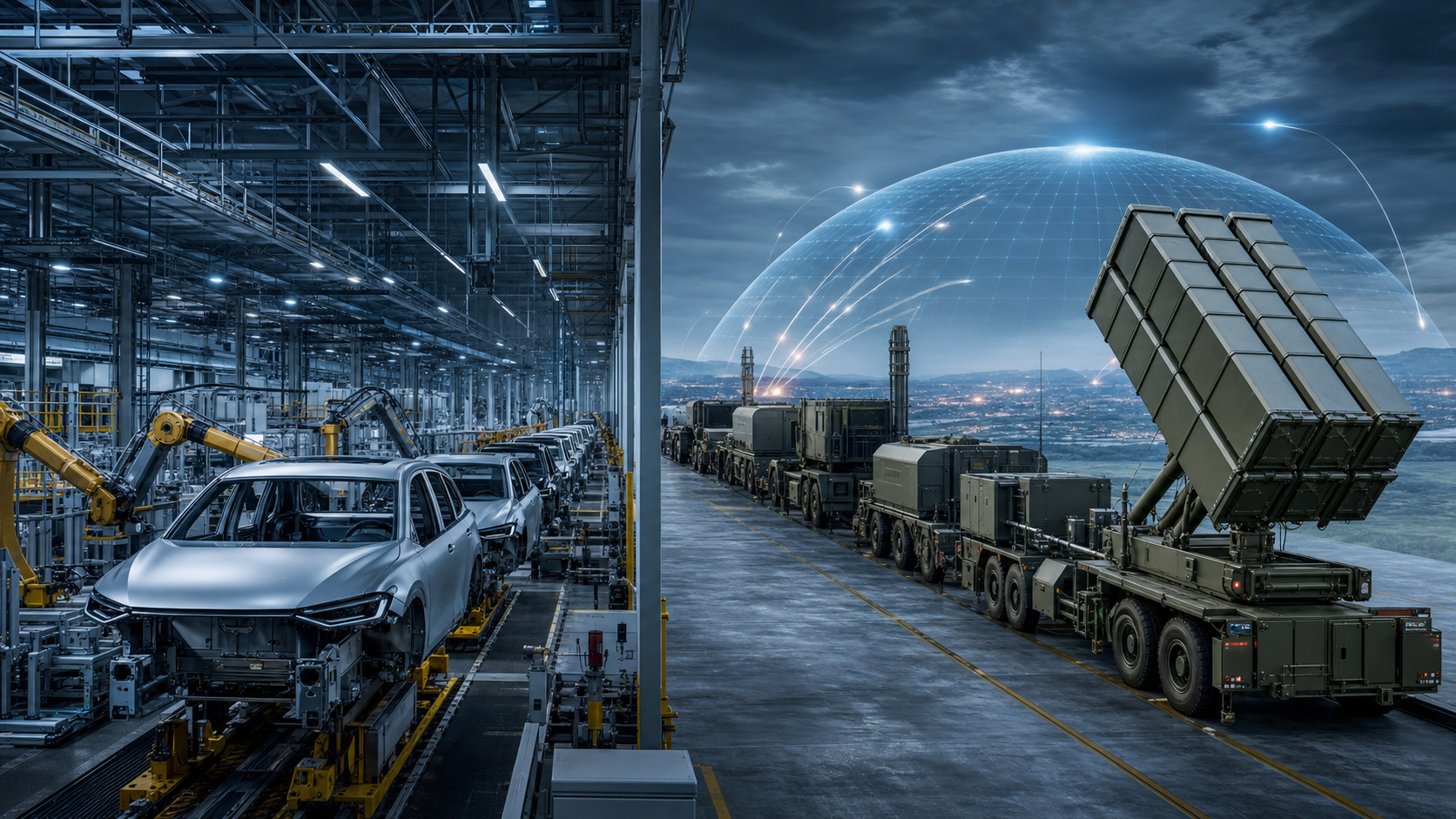
Will VW soon be building for the "Iron Dome" in Osnabrück? From convertible to missile transporter – the arms industry as a way out – Image: Xpert.Digital
A turning point in the factory hall: Why the VW shutdown in Osnabrück is just the beginning
A corporation caught in a dilemma, a factory without a future
When the country becomes an arms factory: The delicate multi-million euro plan for the VW plant in Osnabrück
The Volkswagen Group's crisis is forcing radical measures – and could lead to a historic paradigm shift at a traditional Lower Saxon plant. Because the Osnabrück plant will lack civilian follow-up orders from 2026 onwards, an unprecedented repurposing is being considered: The factory, where once legendary Karmann convertibles and Porsche models rolled off the assembly line, could in the future produce carrier systems for the Israeli air defense system "Iron Dome." But the plan is highly explosive. While the state of Lower Saxony wants to step in as a savior with millions in taxpayer money, the major shareholder Qatar is blocking a direct VW stake for geopolitical reasons. The Osnabrück case is thus transforming from a local problem into a national lesson in how Europe's automakers are suffering from overcapacity, how geopolitical entanglements dictate business decisions, and how this "turning point" is breaking down the strict separation of civilian and military industries in Germany.
When the car manufacturer becomes an arms manufacturer: The end of an illusion at Volkswagen
Volkswagen is in one of the deepest structural crises in its recent history, and the Osnabrück plant has become a symbol that starkly illustrates the contradictions within the company. Production of the T-Roc Cabriolet, which has been virtually the sole reason for the plant's survival for years, will cease next year without a follow-up order in place. As early as summer 2026, Volkswagen had to reduce production, extend the plant's summer break, and introduce additional days off due to a collapse in seasonal demand for the niche model. For the approximately 2,000 to 2,300 employees at the site, this means a limbo that will drag on for months, which Axel Sadewasser, a works council spokesperson, bluntly described as follows: The end of their jobs is foreseeable. The fact that a former automotive supplier and body manufacturer like Karmann, whose plant Volkswagen acquired in 2009, is now on the verge of being converted to arms production is more than just a footnote in the company's history; It is a cautionary tale about the erosion of traditional industrial business models in Europe.
The real economic tragedy lies in the fact that Osnabrück is not an isolated case, but part of a larger capacity reduction that Volkswagen is pursuing across Europe. CEO Oliver Blume has announced plans to reduce production capacity at European plants by a total of 500,000 vehicles per year, and competitive capacity utilization cannot currently be guaranteed for Emden, Zwickau, Hanover, and Neckarsulm for the 2030s. Against this backdrop, the search for an alternative production solution for Osnabrück is not an isolated, peripheral project, but a test case for how a European mass-market manufacturer deals with structural overcapacity when the traditional sales market for combustion engines, and even for low-margin niche models, collapses.
Rafael, Iron Dome and the underestimated value chain of air defense
At the heart of the negotiations is the Israeli state-owned company Rafael Advanced Defense Systems, which, together with Israel Aerospace Industries, developed the Iron Dome mobile short-range air defense system. This system has been in operation since 2011 and can intercept missiles and artillery shells at a distance of four to seventy kilometers. Crucial for understanding the economic implications of the Osnabrück case is a clarification that is often overlooked in public debate: The negotiations explicitly do not concern the production of interceptor missiles or complete weapon systems, but rather the so-called support equipment, namely heavy trucks for missile transport, mobile launchers, and power generators. The actual missiles are to continue to be produced in Israel and the USA.
This division of tasks is economically significant because it demonstrates that Rafael does not intend to locate the most technologically sensitive and profitable stage of the value chain in Osnabrück, but rather those production steps that are closest to traditional car and commercial vehicle manufacturing. This is precisely where the industrial logic of the cooperation lies: A plant that has manufactured bodies, chassis, and smaller batches of special-purpose vehicles for decades possesses exactly the expertise required for building heavy-duty transporters and mobile carrier systems. According to reports in the Financial Times, such a production conversion could be achieved with a comparatively small investment and implemented within twelve to eighteen months. For an automotive group that otherwise budgets for billions in conversion costs for new vehicle platforms, this would be a remarkably capital-efficient solution, provided that political and social resistance can be overcome.
The Qatar Factor: How a Gulf state influences German arms policy
The real crux of the entire arrangement is not technical, but geopolitical and corporate in nature. Qatar, through its state holding company Qatar Investment Authority, is one of Volkswagen's largest single shareholders and reportedly harbors significant reservations about direct cooperation with the Israeli state-owned company Rafael. This situation reveals a structural weakness in the corporate governance of large European industrial groups, which, in the wake of globalization and the post-financial crisis search for capital, have attracted sovereign wealth funds from the Middle East as anchor investors. What was originally intended as a diversification of the shareholder base and a reliable source of capital is now evolving into a geopolitical veto right that can block strategic corporate decisions, even those that appear sensible from a purely business perspective.
To circumvent this veto, a construct is being discussed that, in technical terms, could be described as a detour via a third party: The state of Lower Saxony, itself holding 20 percent of the voting rights in Volkswagen, would take over parts of the Osnabrück plant and establish an independent joint venture with Rafael. Volkswagen itself would then not be directly involved in this joint venture, but would merely transfer land, facilities, or parts of the workforce into the new structure. While this solution may appear legally elegant, it does not change the economic reality that a site that once belonged to the Volkswagen Group would effectively be removed from the group's sphere of influence and placed under a different ownership structure. For the workforce, this raises the question of whether and in what form collective bargaining agreements, social benefits, and co-determination rights can be transferred to a new structure consisting of two companies.
Lower Saxony as a state investor: When state policy becomes industrial policy
The role of the state of Lower Saxony in this transaction goes far beyond that of a traditional intermediary. Minister-President Olaf Lies, who also sits on Volkswagen's supervisory board, has publicly confirmed that his state is examining what form its participation in a future industrial solution for the plant could take, while simultaneously emphasizing that preserving the plant, jobs, and economic value creation is the state government's top priority. According to reports in the Hannoversche Allgemeine Zeitung, this commitment could amount to at least €200 million, possibly with additional participation from the federal government.
This sum is manageable in the context of Volkswagen's total annual investments; however, it marks a remarkable paradigm shift in industrial policy. A German state that has traditionally acted as an anchor shareholder in a civilian automotive group would thus be actively involved in financing arms production for the first time. Lies himself has repeatedly emphasized that his vision is not for Volkswagen to simply abandon the site and leave it to others to take care of it, but rather for viable prospects to be developed jointly with new partners. This phrasing reveals that the state government has an interest in securing its industrial policy influence beyond its mere shareholder role and in positioning itself as an active shaper of the structural transformation. At the same time, a spokesperson for the Minister-President makes it clear that the specific structures of such an investment are still subject to ongoing reviews and discussions, and that neither the size of the investment nor the investment model has been finalized at this time. This reticence in public communication is typical for the early stages of negotiations for complex investment models, in which legal, tax, and state aid issues have not yet been definitively resolved.
Hub for Security and Defense - Advice and Information

Hub for Security and Defense - Image: Xpert.Digital
The Security and Defence Hub offers expert advice and up-to-date information to effectively support companies and organizations in strengthening their role in European security and defence policy. Working closely with the SME Connect Defence Working Group, it particularly promotes small and medium-sized enterprises (SMEs) that wish to further develop their innovative capacity and competitiveness in the defence sector. As a central point of contact, the Hub thus creates a crucial bridge between SMEs and European defence strategy.
Related to this:
Special mission: Armaments: What consequences will the repurposing of the VW plant in Osnabrück have for the workforce and the company?
From Boxster to rocket transporter: The long history of a factory in transition
To properly contextualize the current debate, it's worth taking a look at the industrial history of the site. The Osnabrück plant in the Fledder district traces its origins back to the coachbuilding company Karmann, which once produced legendary coupes and convertibles based on the VW Beetle there, before Volkswagen took over the insolvent, long-established company in 2009. Since then, the site has established itself as a specialist for small production runs and custom bodies, most recently with the production of the Porsche 718 Cayman and Boxster models, whose production ended in October 2025, as well as the T-Roc Cabriolet, whose new model generation from 2025 onwards will no longer include a convertible version.
As early as spring 2026, it became known that Volkswagen had been in talks with several defense companies, with the defense contractor Rheinmetall initially considered the most promising candidate, but surprisingly withdrawing in March 2026. This withdrawal by Rheinmetall is economically revealing: Apparently, even one of the largest European defense companies, currently benefiting from massively increasing defense budgets, did not find the risk-reward ratio of acquiring or using the Osnabrück plant attractive enough – possibly due to the complex ownership structure, the site costs, or the need for extensive modifications. The fact that Rafael, a foreign, state-controlled corporation, entered into negotiations immediately afterward demonstrates how differently the strategic calculations of various defense companies can differ when assessing a German location with its specific cost structure and labor law framework.
Between rearmament and the automotive crisis: Why two industries are meeting right now
The negotiations surrounding Osnabrück coincide with a period in which two opposing industrial megatrends in Europe are converging. On the one hand, the European automotive industry is under pressure from overcapacity, intensified Chinese competition, high energy costs, and a sluggish start for electromobility, forcing Volkswagen to implement drastic cost-cutting measures that are to be discussed again at the upcoming supervisory board meeting on September 4, 2026. On the other hand, the European defense industry has been experiencing a historic surge in demand since Russia's war of aggression against Ukraine, a surge further fueled by increased NATO defense spending targets and national special funds.
This simultaneous decline in civilian demand and explosion in military demand creates an economic pull, shifting factory buildings, skilled workers, and machinery from one sector to the other. For locations like Osnabrück, which possess specialized manufacturing expertise but no longer have a viable civilian workforce, the defense industry effectively becomes the only realistic buyer of remaining industrial assets. This is economically understandable, but it raises fundamental questions: With every repurposed automotive plant, does Germany lose a piece of civilian manufacturing expertise that could not be quickly reactivated should the automotive market recover? And how dependent can a democratic industrial location become on the cyclical procurement decisions of foreign defense ministries when these contracts become the mainstay of local employment?
Co-determination, workforce and the question of consent
One aspect often overlooked in public reporting is the labor law and co-determination implications of the planned repurposing. Reports indicate that the conversion of production in Osnabrück requires the consent of the employees or their representative bodies. The Volkswagen Group Works Council has already agreed with the Board of Management to jointly explore options for the continued use of the plant, demonstrating that the employee representatives are generally willing to negotiate unconventional solutions, provided that these safeguard jobs.
At the same time, it can be assumed that a switch from civilian automotive production to arms manufacturing will not be met with unanimous approval among the workforce. Unlike a mere supplier, who rarely comes into contact with the final product anyway, employees at the Osnabrück plant would in the future be directly involved in the production of delivery systems for a weapons system that is regularly used in combat in the context of the Middle East conflict. This ethical and personal dimension of the decision cannot be resolved solely with figures on job security and will shape the internal debate in the coming weeks, particularly when it comes to the specific details of options, transfer regulations, and job guarantees for those employees who reject participation in arms production.
Arms export control and the diplomatic implications of a German Iron Dome site
From a foreign trade and export control perspective, the planned cooperation also raises significant questions. Germany has a comparatively strict arms export control regime, which subjects deliveries to areas of tension to particular scrutiny. Should components for a system used in active combat against missile and drone attacks in the Middle East be manufactured in Osnabrück, Germany would become a direct part of Israel's military supply chain – not only as an arms exporter, but also as a production site itself. Reuters also reported that Rafael intends to manufacture the components produced in Osnabrück for European customers of the Iron Dome system, suggesting that production may not be exclusively for Israel itself, but also for the growing European market for short-range air defense.
This European dimension is particularly interesting from an economic perspective, as it fits into a broader debate about the sovereignty of European air defense capabilities, a debate already initiated by the German European Sky Shield initiative and similar multinational programs. A European production site for Iron Dome components could, in the long term, help to shorten delivery times and reduce dependence on purely Israeli or US manufacturing, which would be a strategic advantage from the perspective of European defense planners. At the same time, however, this also means that a former German automotive plant would become an integral part of an international, politically highly sensitive defense supply chain, whose end customers and operational contexts are largely beyond the control of the original plant operator.
The big picture: Deindustrialization, rearmament, and the new German normality
The history of the Volkswagen plant in Osnabrück can be read as a microcosm of a larger structural shift currently affecting the entire German industrial landscape. For decades, the separation between civilian and military production in Germany was considered politically and socially firmly entrenched, a consequence of the country's historical experience and its decades-long focus on export-oriented civilian value creation. Since the so-called turning point in history, this dividing line has increasingly blurred, with Osnabrück now serving as a prime example of how concretely and directly this shift is taking effect at the level of individual plants and workforces.
From an economic perspective, this is a classic case of capital reallocation in response to changing relative prices and demand conditions: where the return on civilian capital falls, capital, personnel, and production space migrate to sectors with higher expected returns, in this case, the defense industry. The particular significance, however, lies in the fact that this shift is not taking place in a newly founded company, but within one of the world's best-known civilian industrial brands, which, through its ownership structure, is closely intertwined with a Gulf state, a German federal state, and the German government. Each of these three groups of actors pursues its own, sometimes conflicting, interests: Qatar apparently wants to avoid any direct association with Israeli arms production, Lower Saxony wants to maintain jobs and industrial value creation within its own borders, and the German government is likely interested in strengthening European defense capabilities. The complex structure of a separate joint venture is ultimately an attempt to serve these three interests simultaneously without any of the parties having to openly take a position.
Economic implications and open questions for the coming months
From a purely business perspective, the Osnabrück solution initially appears attractive to Volkswagen because it allows the company to transfer a site to a new ownership structure without incurring burdensome social plan costs, while simultaneously preserving jobs and regional value creation, which can be communicated positively to politicians. For the state of Lower Saxony, however, the transaction represents a financial risk in the hundreds of millions, coupled with the necessity of assuming joint responsibility for a completely new industrial sector – arms production – without possessing relevant operational experience in this field.
Until a final decision is reached, which according to multiple reports is expected by the end of 2026, key questions remain unanswered: the exact size and structure of the state's stake, the role of the federal government, the specific legal framework for the separation of Volkswagen and the new defense joint venture, employee approval, and finally, the foreign policy reaction of Qatar and potential other Gulf state investors to an indirect but undeniable connection between the Volkswagen Group and the Israeli defense industry. The supervisory board meeting scheduled for September 4, 2026, at which a further group-wide cost-cutting package is to be decided anyway, is likely to become a symbolic turning point in this context – regardless of whether a final signature is placed on the Rafael agreement there or not.
Ultimately, the realization is that the debate surrounding Osnabrück extends far beyond the future of a single plant. It exemplifies the depth of the European automotive industry's crisis, the extent to which geopolitical capital entanglements can influence business decisions, and how significantly Germany's industrial compass has shifted since the turn of the millennium from a purely civilian export economy to a more security-oriented industrial policy. Whether this shift will prove to be a viable long-term strategy or merely a stopgap solution for a structurally overstretched plant can only be assessed once the concrete contracts are signed, the political obstacles overcome, and the first vehicles have actually rolled off the assembly line.
Consulting - Planning - Implementation

Markus Becker
I would be happy to serve as your personal advisor.
Head of Business Development
Chairman SME Connect Defense Working Group
Consulting - Planning - Implementation
Konrad Wolfenstein
I would be happy to serve as your personal advisor.
You can contact me at wolfenstein∂xpert.digital or
Just call me on +49 7348 4088 965 .





