
New York pulls the plug: The worldwide wave of bans against smart camera glasses is rolling on
Xpert Pre-Release

Available in 27 languages 📢
Prefer Xpert.Digital on GoogleⓘPublished on: August 4, 2026 / Updated on: August 4, 2026 – Author: Konrad Wolfenstein
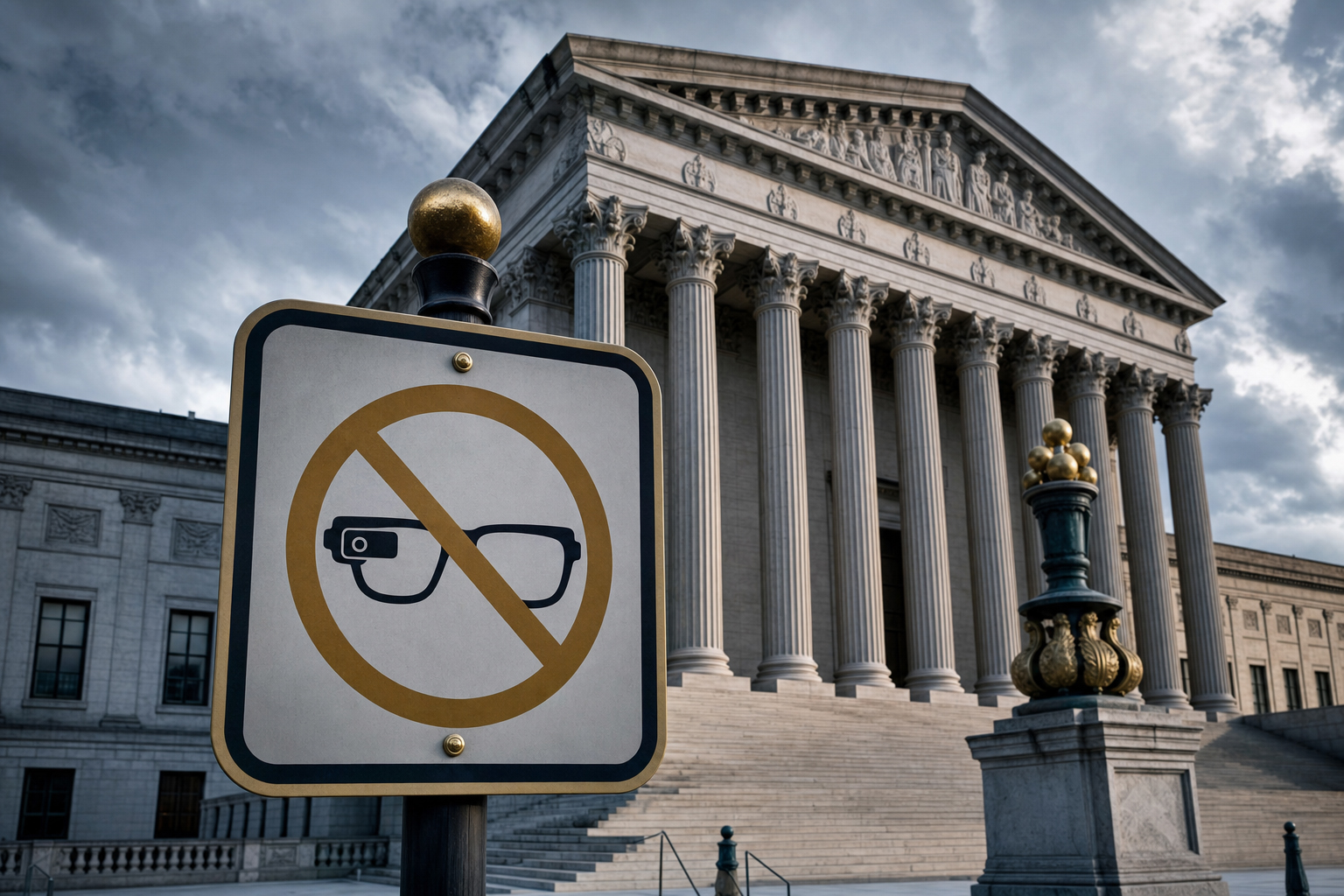
New York pulls the plug: The worldwide wave of bans against smart camera glasses is rolling – creative image on the topic, with AI: Xpert.Digital
Is this the end? Why the sale of Meta's camera glasses could be banned in Germany
Following the move in Augsburg: Is the Ray-Ban Meta glasses facing a Europe-wide sales ban?
Hidden cameras in everyday life: How the meta-glasses are becoming a global data privacy nightmare
Smart glasses with integrated cameras and AI functions are rapidly conquering the market – and encountering unprecedented resistance. What was hailed as a technological breakthrough is increasingly becoming a global data privacy and security issue. From New York courtrooms to American universities and Bavarian swimming pools, a remarkable wave of bans is sweeping the globe. While the US and leading municipalities are primarily responding with local and institutional bans, a far harsher approach is looming in Germany and Europe: Data protection authorities and the Federal Network Agency are currently examining a comprehensive, nationwide sales ban on devices like the Ray-Ban Meta glasses. The accusation is serious: These are illegal, disguised recording devices that fundamentally threaten our privacy in public spaces. Read on to find out how courts, authorities, and society are now trying to put a stop to these invisible cameras, and why the problem extends far beyond the courtroom.
When the courtroom becomes the first front in the fight against camera glasses: New York is leading the way, but Hamburg, Norway and half the world's courts are already following suit
On July 20, 2026, a regulation went into effect in New York that is unprecedented in the history of American judicial administration: All courthouses in the state have since prohibited all forms of camera or microphone glasses, regardless of whether they are prescription or non-prescription. The order, issued by the Office of Court Administration of the New York State Unified Court System in a unilateral memorandum dated July 1, affects more than 1,240 state, county, city, town, and village courts in all 62 counties of the state. This makes New York the first US state to enact a comprehensive, system-wide regulation for its entire judicial structure, rather than allowing individual courthouses to decide on a case-by-case basis.
A set of rules that makes no exceptions for anyone
The wording of the order is deliberately broad and technology-neutral. Any headgear or eyewear containing a camera, microphone, computer, or other technology that allows the wearer to record video or audio is prohibited. This definition thus covers not only the currently market-leading Ray-Ban Meta and Oakley Meta sunglasses, but potentially also camera-equipped ski goggles, recording headbands in the style of body cameras, helmets with integrated recording technology, and any future product that places a sensor in close proximity to the eyes or ears. The advantage of this capability-based rather than brand-specific definition is obvious to the court administration: the rule does not need to be readjusted every time a new manufacturer enters the market with a new product name, but remains technologically future-proof.
What is remarkable about the New York regulation is its uncompromising personal scope. It applies to literally everyone who enters a courthouse: judges, their staff, court officials, lawyers, litigants, witnesses, jurors, journalists, family members, and casual visitors are all subject to the same rule. Even employees of the court system are explicitly included, and reports from major media outlets confirm that lawyers receive no professional exemption. Anyone carrying camera glasses must hand them over to uniformed court officials at the entrance for safekeeping and can only retrieve them upon leaving the building. For those who use camera glasses as their sole vision aid, the order explicitly recommends carrying a regular pair of glasses while in the courthouse.
The legal justification reaches deep into existing law
The New York State Court Administration did not need to pass a new law through the legislature for this regulation, but instead relied on its existing administrative authority over conduct in court facilities. The justification directly references Section 52 of the New York State Civil Rights Law, which has restricted the transmission and broadcast of court proceedings for decades, as well as internal court rules that generally prohibit photography, filming, and audio recording in court buildings, regardless of whether a hearing is in progress. The stated goal of the measure is to ensure that no one can secretly record court proceedings, which would constitute a violation of the New York State Civil Rights Law and the applicable court rules. The inclusion of smart glasses thus merely extends a decades-old fundamental principle to a new category of device that technically threatens to circumvent this fundamental principle.
A specific incident likely underscored the urgency of this adjustment. In February 2026, members of Mark Zuckerberg's inner circle were photographed wearing Ray-Ban Meta Camera glasses as they arrived at a Los Angeles courthouse where Zuckerberg himself was testifying. Judge Carolyn Kuhl ordered everyone in the courtroom to remove the glasses and warned that anyone who had taken a photograph would have to delete it or face contempt of court charges. This high-profile incident, in which representatives of the manufacturer itself violated fundamental court norms with its own product, likely accelerated the debate in New York and other states.
New York is not alone, but at the forefront of a broader movement
Although New York was the first state to enact a comprehensive, system-wide regulation, individual judicial districts in other states had already issued their own locally limited bans. The First Judicial District of Philadelphia, Pennsylvania, prohibited all smart or AI-integrated glasses with audio or video recording capabilities in all its buildings and courtrooms as of March 30, 2026. Violations could result in criminal charges for contempt of court and even arrest; exceptions were only possible with prior written authorization. Montgomery County, also in Pennsylvania, followed suit in May 2026 with a similar regulation for all judicial facilities. As early as November 2025, Forsyth County in North Carolina had enacted a regulation prohibiting not only smart glasses but also smartphones, smartwatches, and other recording devices in the courthouse, with differentiated exceptions for judges, attorneys, law enforcement officers, accredited media representatives, and medical devices.
A similar dynamic has developed at the federal level, independent of the New York state regulation. The U.S. District Court for the Western District of Wisconsin added smart glasses to its list of prohibited items on February 6, 2025, while ordinary cell phones remain permitted as long as no recordings are made in the courtroom. In June 2025, the U.S. District Court for Hawaii extended its ban to all publicly accessible areas of the courthouse, including courtrooms and jury areas, explicitly including prescription smart glasses. In September 2025, the U.S. District Court for Colorado was working on a draft that would allow court employees to actively check glasses for recording capabilities, though the final status of this regulation has not yet been definitively confirmed.
The international dimension of this development is also already clearly evident. In February 2026, the High Court in London, in the case of UAB Business Enterprise v. Oneta Limited, rejected the testimony of a party after the presiding judge discovered that the witness was wearing smart glasses connected to a telephone during cross-examination, through which he was apparently being coached in real time. This case highlights a second, often overlooked dimension of the problem: it is not just about covert recording, but also about the possibility of covert real-time support during legally significant proceedings, which fundamentally calls into question the integrity of witness testimony.
Beyond the courtroom: schools, exams and road traffic
The regulatory response is by no means limited to courtrooms, but is increasingly encompassing other social spaces where trust, concentration, or equal opportunity play a central role. In March 2026, the American College Board, responsible for the nationwide SAT college entrance exam, explicitly banned all smart glasses, including prescription models, during the entire test administration to prevent test takers from receiving unauthorized assistance via the integrated camera and AI functions. In the education sector, Utah followed suit with Act SB 69, which, starting July 1, 2026, mandates a complete ban on cell phones, smartwatches, and explicitly new technologies during the entire school day in all public schools. Alabama is pursuing a similar approach with the so-called FOCUS Act, which will take effect in the 2025/2026 school year and prohibits students from possessing wireless communication devices, including smart glasses, during class; the devices must be switched off and stored out of reach.
Road traffic is also increasingly coming under regulatory scrutiny. In June 2026, Illinois passed Bill HB 4843, which at the time of reporting still required the governor's signature. This bill explicitly includes "AI smart glasses" on the list of electronic devices prohibited while driving, and unlike existing cell phone bans, it does not provide for any hands-free exceptions. Violations can result in fines starting at $75, and in the event of an accident, even criminal charges. This tightening of regulations compared to existing cell phone laws demonstrates that lawmakers apparently assess the specific risk of distraction from information projected directly into the driver's field of vision more seriously than that from devices that must be actively held.
A particularly symbolic ban came from the American security conference DefCon, which completely excluded all glasses with recording capabilities from its event, arguing that there is simply no reliable method to make the actual recording status of such a device apparent to third parties. The fact that one of the world's leading conferences for cybersecurity and data protection reached this conclusion carries significant weight, as it is comprised of experts who are particularly well-versed in the technical weaknesses of signaling mechanisms like the Meta-LED.
🎯🎯🎯 Data-driven B2B industry hub as a quasi-in-house solution

The quasi-in-house solution: How Xpert.Digital closes operational gaps in B2B marketing and sales – Smart Content-Driven Business - Image: Xpert.Digital
Xpert.Digital is a data-driven B2B industry hub led by Konrad Wolfenstein . The company acts as an external, quasi-in-house solution for industrial partners, closing operational gaps in marketing, content, and sales – without requiring additional resources on the client side.
More information here:
Data privacy alert: Why German authorities are considering a national sales ban on smart glasses
Germany and Europe: From review to a possible total ban
While in the United States the response is largely case-by-case, involving individual courts, school districts, and states, a more fundamental debate is emerging in Germany, potentially leading to a nationwide ban on sales. Thomas Fuchs, the Hamburg Data Protection Commissioner, who has special supervisory responsibility for Meta services within Germany due to the location of Meta's European headquarters in Ireland, issued a clear statement in late July and early August 2026 following a comprehensive official review: In his assessment, secretly filming with the Meta glasses is illegal, and a complete ban on the devices in Germany is entirely conceivable.
The legal argument underlying Fuchs's agency rests on several pillars of German law. Firstly, the Hamburg authority refers to Section 8 of the Telecommunications, Digital Services, and Data Protection Act (TDDDG), which prohibits the possession and sale of recording devices disguised as everyday objects. According to Fuchs, the "Meta-Glasses" meet this criterion precisely, as they are virtually indistinguishable from ordinary glasses and thus essentially constitute nothing more than disguised cameras. Secondly, two sections of the Criminal Code are relevant: Section 201 protects the private sphere of conversation, while the so-called "paparazzi" section 201a criminalizes the violation of the most intimate sphere of life and personal rights through image recordings.
The core issue in Hamburg's complaint is the inadequacy of the visual warning signal. Extensive testing by the authorities has shown that the glasses' integrated LED signal is insufficient in everyday use to effectively inform bystanders about an ongoing video recording, as the light is simply too inconspicuous to be reliably perceived in hectic public spaces. Since the glasses can also transmit recordings directly via voice command and post them on social media, for example, the authorities consider classification as a prohibited telecommunications device to be a likely scenario. For those filmed without their knowledge, legal recourse is extremely difficult, if not impossible, in practice, as proving a covert recording and its deletion are virtually impossible once the material has been published online. According to Deutschlandfunk radio, numerous women have already reported being secretly recorded with the glasses, with the footage subsequently disseminated online.
In Germany, the Federal Network Agency would be responsible for an actual sales ban, and according to several media reports, it is currently examining the possible next steps. Fuchs himself told ARD that he clearly believes the Federal Network Agency has good reasons to issue a ban. Parallel to this federal review, the Hamburg data protection authority is already imposing fines in connection with the use of the glasses, without waiting for the conclusion of the larger legal proceedings.
Local pioneers and growing international pressure
Even before a nationwide decision has been reached, the Bavarian city of Augsburg has become the first German municipality to take independent action, banning smart glasses in all municipal sports facilities, schools, and outdoor swimming pools. The responsible sports committee justified its unanimous decision by citing the need to protect privacy in particularly sensitive areas, such as swimming pool changing rooms, and ordered that visitors be informed of the ban via appropriate signs. This independent municipal action demonstrates how local authorities are already reacting while the overarching federal legal clarification is still pending – a pattern typically observed in federal and decentralized administrative structures when faced with new, rapidly growing technological risks.
Pressure is noticeably mounting outside of Germany as well. In Norway, the country's Director of Data Protection, Line Coll, publicly called for a complete sales ban on smart glasses, a position even stricter than the review currently being discussed in Germany. At the European level, the overall legal situation is further intensified by the full applicability of the European AI Act, which has been in full force since August 2026 and mandates, among other things, increased transparency obligations, risk analyses before market launch, and a ban on certain AI practices such as biometric categorization or large-scale facial recognition in public spaces. Legal experts also point out that any collection, recording, or distribution of images or sounds of identifiable individuals via smart glasses constitutes the processing of personal data and is therefore fully subject to the European General Data Protection Regulation (GDPR), including the obligation to provide clear and prominently displayed warnings, similar to those used in traditional video surveillance.
Why sales bans differ fundamentally from usage bans from an economic perspective
From an economic perspective, the German debate marks a qualitatively different regulatory intervention than the American court and institutional bans. While the New York regulation and comparable US measures merely prohibit use in specific, clearly defined spatial contexts such as courthouses or schools, without fundamentally questioning the sale, possession, or general use of the product in public spaces, the review under discussion in Germany aims at a potential sales ban at the national level. Should the Federal Network Agency actually conclude that the Meta glasses are to be classified as disguised recording devices within the meaning of the Telecommunications Act, Meta would no longer be allowed to sell the devices in Germany, which would mean a complete market exclusion in one of Europe's largest economies.
Such a ban would have far-reaching implications for Meta, extending well beyond the immediate loss of revenue in the German market. Other European supervisory authorities could adopt the German argument as a precedent, especially since the European General Data Protection Regulation (GDPR) already provides a largely uniform legal basis across all member states. For a company whose wearables business model has only just begun to establish itself as an independent, profitable division, exclusion from the European market would be a significant setback, going far beyond the loss of individual sales figures and potentially damaging fundamental regulatory confidence in the entire product category.
Between technical improvements and a structural trust gap
The parallel development reveals a pattern typical of many disruptive consumer technologies, but one that unfolds here in a particularly condensed form: An enormously successful, commercially rapidly growing product encounters a regulatory landscape that initially reacts in a fragmented, local, and case-by-case manner before more fundamental, systemic interventions emerge, such as a potential national sales ban. While the technical improvements Meta itself has implemented, such as the automatic camera deactivation upon LED tampering, address the specific problem of deliberately circumventing the warning signal, they do not resolve the more fundamental structural issue that a small, easily overlooked light signal can hardly function as a reliable anchor of social trust in practice.
This structural gap between technical solutions and the threshold of societal acceptance is likely the central reason why the regulatory response is not limited to individual attempts at circumvention, but increasingly raises the fundamental question of whether a recording technology disguised as an everyday object is even socially acceptable in its current form. For companies, institutions, and private individuals, this means that the legal situation will likely remain inconsistent and evolving in the coming months – with the consequence that businesses, educational institutions, and public institutions can hardly rely on a uniform, long-term stable regulation, but must develop their own precautionary guidelines that go beyond what is currently explicitly required by law.
📈🚀 From visibility to trust 👀🤝 Your scalable path with Xpert.Digital

From visibility to trust: Your scalable path with Xpert.Digital - Image: Xpert.Digital
In industrial B2B, sustainable business relationships rarely emerge overnight. They develop step by step – through visibility, professional relevance, recurring touchpoints, and growing trust. Xpert.Digital's 4-stage model addresses precisely this: It offers a structured path that begins with a manageable entry point and can evolve into deeper collaboration in business development if needed.
Instead of relying on loud marketing promises, this model puts the relationship at the forefront. Companies start with clearly defined, easily calculable measures and then decide, based on their own experience, how far they want to expand the collaboration. A key factor for this undisturbed trust-building process: The platform completely avoids annoying advertising ads, so the editorial focus remains solely on the companies' expertise.
More information here:
Your global marketing and business development partner
☑️ Our business language is English or German
☑️ NEW: Correspondence in your native language!

Konrad Wolfenstein
I and my team are happy to be available to you as your personal advisor.
You can contact me by filling out the contact form here [email protected]:or simply call me at +49 7348 4088 965. My email address is
I'm looking forward to our joint project.










