
$100 million project: How Kyrgyzstan wants to become Asia's logistics gateway
Xpert Pre-Release

Available in 27 languages 📢
Prefer Xpert.Digital on GoogleⓘPublished on: September 14, 2026 / Updated on: September 14, 2026 – Author: Konrad Wolfenstein
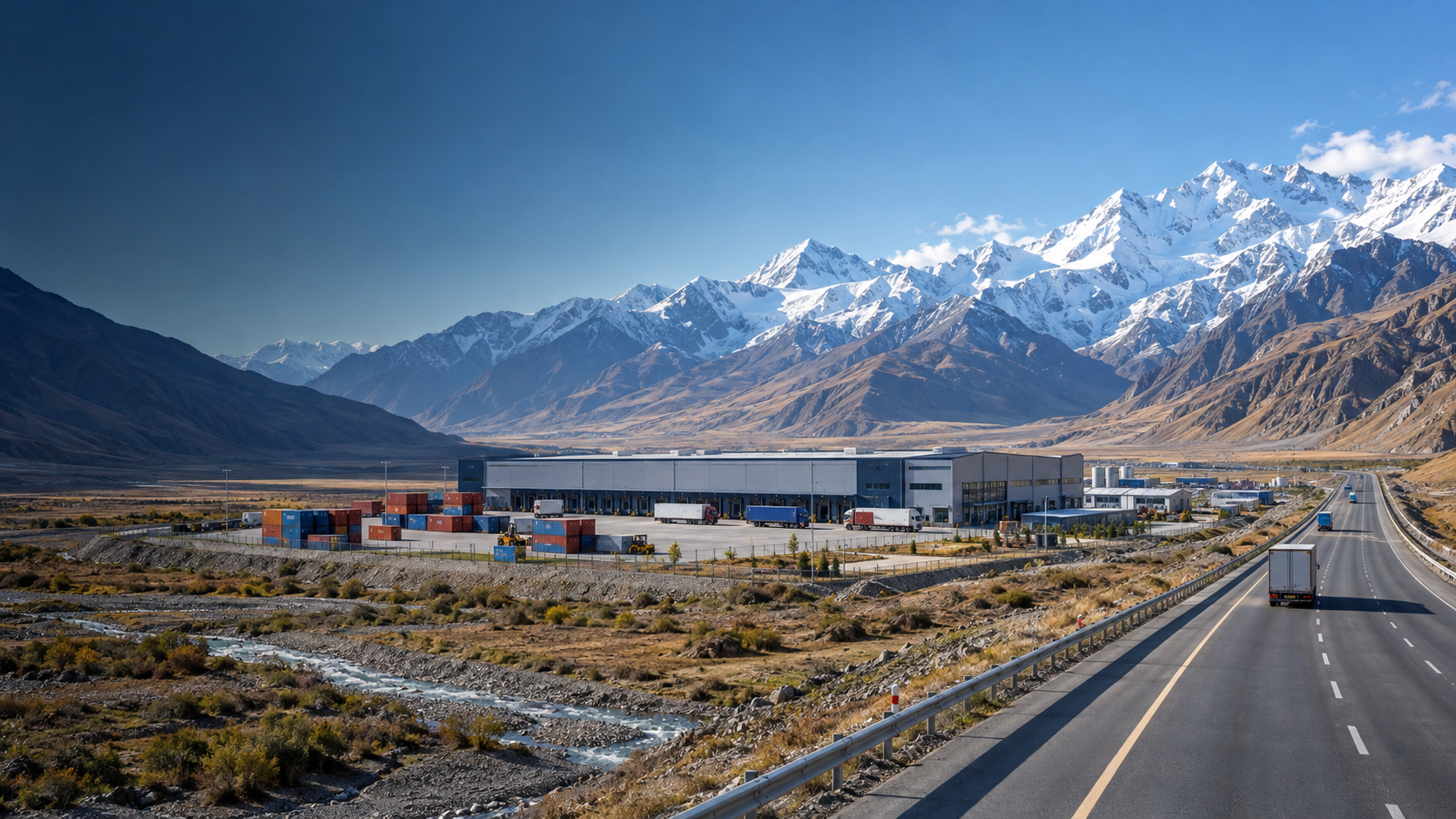
$100 million project: How Kyrgyzstan wants to become Asia's logistics gateway – Creative image on the topic, with AI: Xpert.Digital
China's new gateway to the West? The risky mega-project in Kyrgyzstan's mountains
How Kyrgyzstan plans to steer China's trade flows: More than just a terminal – Why the mountain village of Sary-Tash could change global logistics
Mega-hub in the high mountains: Will Sary-Tash become a bottleneck in Eurasian global trade?
In the rugged highlands of the Alai Valley, Kyrgyzstan is planning an infrastructure project that could redraw the logistics map of Central Asia. With an investment of up to US$100 million, the remote town of Sary-Tash is to be transformed into a state-of-the-art hub connecting Chinese trade flows with the rest of the world. However, the plan faces significant economic and geopolitical challenges: without a smart integration of digital customs, local value creation, and reliable transport routes in the high mountains, the ambitious mega-hub risks becoming an unused investment ruin. Will Sary-Tash become the new gateway to the global Silk Road – or will it remain an expensive vision on an already congested map of Eurasian corridors?
A $100 million hub is intended to transform a remote mountain village into a gateway between China, Central Asia, and world markets
Kyrgyzstan is planning an infrastructure project with the international transport and logistics center Sary-Tash that goes far beyond the construction of a single warehouse, transshipment point, or customs facility. Located in a remote, high-altitude region in the south of the country, the center will be a hub connecting trade flows from China with markets in Central Asia, Russia, the Middle East, and, in the future, Europe. According to information available so far, the Kyrgyz National Investment Agency intends to mobilize up to US$100 million in investments for the project. A memorandum of understanding has been signed with the company Textile Trans LLC as a partner.
At first glance, this sounds like a classic infrastructure project: warehouses, access roads, customs clearance, container areas, warehousing logistics, and freight transport services. From an economic perspective, however, the initiative is considerably more ambitious. Sary-Tash is not located on an already heavily trafficked, high-capacity global corridor, but rather in a structurally challenging, topographically demanding border and transit region. Therefore, its success does not primarily depend on whether buildings can be constructed. The crucial factor is whether Kyrgyzstan can sustainably manage sufficient freight flows, reliable border processes, competitive transport costs, and political trust.
The project thus exemplifies a key development question for Central Asia: Can a landlocked country without direct access to seaports transform its geographical location into economic value creation, or will it remain merely a transit zone with high costs and limited regional effects despite new infrastructure?
A location with a strategic but difficult position
Sary-Tash is located in the Alai Valley in southern Kyrgyzstan, near the border with China and on a major road corridor towards Tajikistan and further on to Afghanistan, Pakistan, and other parts of Central Asia. Its location is strategically important on the map: China to the east, Uzbekistan and other Central Asian markets to the west, South Asia to the south, and Russia and Kazakhstan to the north. The aim is to leverage this strategic location for future economic development.
But maps can be deceiving. A location isn't competitive simply because it lies between several countries. It only becomes a functioning logistics hub when the entire transport chain is fast, predictable, secure, and cost-efficient. This is precisely what is still lacking in many parts of Central Asia. Long distances, mountain passes, seasonal weather risks, infrastructure bottlenecks, limited rail connections, differing customs procedures, and political tensions all increase costs and lengthen transit times.
Sary-Tash is therefore not a sure thing, but rather an attempt to transform geographical periphery into economic centrality. This can succeed, but only if the location is integrated into real transport chains. A modern terminal without regular and sufficiently large flows of goods would not be a logistics hub, but an expensive infrastructure monument.
The challenge begins with the altitude and topography. Southern Kyrgyzstan is characterized by mountainous terrain, which complicates road traffic and can lead to significant disruptions in winter. Truck traffic requires reliable roads, sufficient refueling, repair, and rest facilities, digital communication, security infrastructure, and predictable border crossings. For international logistics companies, the nominal distance between two locations is not the only factor. The actual transit time, the frequency of interruptions, the probability of delays, and the reliability of cost estimates are far more important.
If a transport route via Sary-Tash is geographically shorter but unpredictable due to long waiting times, poor road conditions, or complicated paperwork, freight forwarders will prefer alternative routes. The logistics industry often values reliability more highly than theoretical distance advantages.
More than just warehouses: The actual business model
Public communication about logistics centers often focuses on visible elements such as buildings, loading docks, container areas, and access roads. However, the economic business model of an international hub is much broader. A high-performing center must combine and link various functions.
This includes, first and foremost, classic transshipment services. Goods must be transferred from trucks to storage areas, into smaller vehicles, into containers, or, in the future, onto rail. In addition, there are consolidation and deconsolidation processes. Several smaller shipments are combined into a larger transport unit, or large deliveries are split up for different destinations. Especially in cross-border trade, this function can significantly reduce costs and make supply chains more efficient.
A second key area is customs and document processing. Many international shipments lose time and money not on the road, but at the border. If a hub offers pre-clearance, digital document verification, risk analysis, inspections, veterinary and phytosanitary controls, and coordinated cooperation between authorities, this can be more valuable to companies than additional warehouse space. The economic benefits then arise from reduced waiting times, fewer incorrect documents, and improved predictability.
A third area concerns value-added services. These include packaging, labeling, quality control, order picking, light assembly, kitting, returns logistics, and temperature-controlled storage. This would be particularly interesting for Kyrgyz agricultural products, textiles, consumer goods, and imported goods from China. Sary-Tash could also serve as a regional preparation and transshipment point for companies that want to distribute goods to Central Asian markets.
The crucial economic question, therefore, is not whether $100 million can be allocated for a center. It is: Which services will generate sufficient revenue on a sustained basis to cover operation, maintenance, financing, and modernization? A hub must generate ongoing revenue from transshipment fees, warehousing, customs services, transport coordination, value-added logistics, and potentially space rentals. The construction phase is a one-time event. Operating costs and competitive pressure remain.
A successful concept would therefore view the center not merely as a warehouse location, but as an integrated border, trade, and service ecosystem. The more economic functions Sary-Tash can reliably perform, the greater the likelihood that companies will establish themselves there long-term and not just pass through.
China as an opportunity and a risk of dependency
The project's most important economic link is China. Kyrgyzstan borders the Chinese region of Xinjiang to the east and is already closely integrated into Chinese-Central Asian trade relations. For Kyrgyzstan, China is a supplier of consumer goods, machinery, and intermediate products, as well as a potential investor, financier, and sales market. A logistics center near the Chinese border could strengthen this role.
For Chinese companies, a functioning transshipment hub in Kyrgyzstan offers several advantages. Goods could be consolidated and redistributed for markets in Uzbekistan, Tajikistan, or other parts of Central Asia. Companies could organize supply chains more flexibly, shift inventories closer to regional markets, and combine transport via different routes. This could be attractive for certain high-traffic product categories, such as consumer goods, household goods, electronic accessories, textiles, building materials, or spare parts.
Ideally, Kyrgyzstan could act as an intermediary between Chinese production capacity and Central Asian demand. This role would have positive effects on transport providers, trading companies, customs agencies, repair shops, restaurants, accommodations, digital service providers, and regional employment. The added value would then not be limited to toll or land revenues, but would be distributed throughout a local economic ecosystem.
At the same time, this poses a significant risk. If the center primarily serves as a gateway for Chinese imports, without involving Kyrgyz companies, exports, and processing, trade asymmetry could increase. Kyrgyzstan would then gain in trade volume, but not automatically in production depth. More import logistics does not necessarily mean more industrialization.
The crucial political and economic task, therefore, lies in combining import transit with export promotion and local processing. Specialized areas for agricultural logistics, packaging, textile manufacturing, export control, food storage, or the regional distribution of Kyrgyz products would be conceivable. The goal should not be to quickly funnel as many foreign goods as possible through the country. The goal should be to channel a portion of the trade flows into domestic services, production, and expertise.
Another risk concerns financing. Infrastructure projects in developing countries and landlocked states are often financed through government guarantees, foreign loans, or concessional financing. This can be beneficial if the projects generate long-term productive effects. Problems arise, however, if revenue expectations are overly optimistic, demand fails to materialize, or the public sector is later held liable for losses. For investments of up to US$100 million, transparency is therefore crucial: Who is providing the financing, who bears the construction and operational risks, what concessions apply, how are fees determined, and what public guarantees exist?
The corridor competition determines the benefits
Sary-Tash is not emerging in an economic vacuum. Central Asia is increasingly a region of competing trade and transport corridors. Kazakhstan has significantly larger land areas, stronger rail connections, established border crossings with China, and a highly developed role in transit traffic between China, Russia, Europe, and Central Asia. Uzbekistan is expanding its role as a regional production, population, and trade center. Azerbaijan, Georgia, Turkey, and the Caspian Sea states are also investing in alternative East-West connections.
For Kyrgyzstan, this means that competition is not just between individual logistics centers, but between entire corridors. A truck driver, a freight forwarder, or an international trading company doesn't decide on Sary-Tash in isolation. The decisive question is which route from the Chinese origin to the end customer offers the best overall combination of costs, transit time, capacity, security, formalities, and political risk.
The new dynamics surrounding the Middle Corridor, which aims to connect China to Europe via Central Asia, the Caspian Sea, the South Caucasus, and Turkey, demonstrate the strategic value of alternative land connections. At the same time, they highlight the challenges of establishing competitive routes. Multiple border crossings, differing track gauges, limited ferry capacity on the Caspian Sea, and complex coordination between states can generate significant inefficiencies.
Kyrgyzstan cannot win this competition on size alone. The country must succeed through specialization. Sary-Tash could be economically compelling where speed, regional proximity, and flexible road logistics are more important than maximum volume. Kazakhstan is expected to retain structural advantages for high-volume intercontinental container traffic due to its existing infrastructure and rail networks. However, Sary-Tash could play a more meaningful role in regional trade between western China, southern Kyrgyzstan, Uzbekistan, Tajikistan, and potentially Afghanistan.
This supports a realistic development model. Instead of rhetorically positioning the center as a new global mega-hub, it should be built as a specialized regional gateway hub. Such a location can be very profitable and economically valuable, even if it doesn't compete with the largest Eurasian terminals. The crucial point is to fill a clearly defined market niche.
This market gap could lie in the combination of border logistics, road freight, regional distribution, textile and agricultural logistics, and trade links with China. Close integration with the southern economic region around Osh would be particularly important. Osh is one of Kyrgyzstan's most important commercial and population centers and has close economic ties to Uzbekistan. Sary-Tash could function as an upstream border and transit hub, while Osh is further developed as a trade, processing, and distribution center.
Your intralogistics experts

Consulting, planning and implementation of complete solutions for high-bay warehouses and automated storage systems - Image: Xpert.Digital
More information here:
More than just transit: Kyrgyzstan's clever plan for economic rise in Central Asia – The tough battle for the Silk Road 2.0
The China-Kyrgyzstan-Uzbekistan railway changes the equation
The long-term significance of the project is closely linked to the planned China-Kyrgyzstan-Uzbekistan railway. This rail link has been under discussion for many years and is considered one of Central Asia's most strategically important infrastructure projects. It is intended to connect China with Uzbekistan via Kyrgyzstan, thereby opening up new trade routes to Central Asia, the Middle East, and Europe.
Should this railway line be implemented as planned and operated profitably, it could significantly alter Kyrgyzstan's role in Eurasian freight transport. The country would no longer be solely a road-based transit state with limited logistical depth, but rather part of a crucial rail corridor. For Sary-Tash, however, this would represent both an opportunity and a challenge.
The opportunity lies in the potential integration of road, rail, customs, and warehousing. An intermodal logistics hub can move goods between different modes of transport, thereby generating higher added value. Containers or general cargo could arrive by rail, be distributed regionally by truck, and, if required, integrated into storage or processing facilities. This would be particularly attractive for medium to large volumes of goods than purely road transport.
The challenge lies in the fact that the economic logic of a road hub and a rail hub differs. Rail infrastructure favors consolidation, predictable volumes, and large transport units. Road logistics is more flexible but often more expensive and more dependent on border waiting times. A successful Sary-Tash hub would therefore need to be planned from the outset to be prepared for potential rail connections without making its short-term functionality dependent on them.
It would be a mistake to base the entire project on a future rail connection whose construction, financing, technical design, and capacity may still be subject to uncertainties. Another mistake would be to build a road logistics center that cannot later be connected to the rail network. The right strategy lies between these two extremes: viable road logistics in the short term, but with secured land, technical standards, and planning corridors for future intermodal expansion.
The railway could also create new distribution structures. If large quantities from China are forwarded directly to Uzbekistan or beyond, there is a risk that Sary-Tash will be bypassed. The center therefore needs services that will still be in demand even with improved rail connections. These include customs clearance, regional warehousing, distribution of smaller shipments, temperature-controlled logistics, maintenance, supply, export processing, and value-added services.
Without a digital border, the hub remains a bottleneck
In modern logistics, digitalization is not an added benefit, but a fundamental requirement. A hub can be physically excellent and still remain economically weak if information doesn't accompany the goods. Cross-border trade requires digital waybills, real-time data, electronic customs declarations, risk analyses, transparent fees, slot bookings, vehicle tracking, and predictable processing times.
Especially in Central Asia, administrative processes can determine the profitability of a route. A delay of several hours or days at a border crossing can completely negate any cost advantage for perishable goods, spare parts, seasonal products, or time-critical deliveries. Downtime is also costly for freight forwarders: vehicles, drivers, and cargo remain tied up, while subsequent orders are jeopardized.
Sary-Tash should therefore be designed as a digital logistics hub. This includes a single-window system through which companies can handle customs, transport, permitting, and control processes as centrally as possible. Data should not have to be entered multiple times. Authorities, operators, freight forwarders, warehouse operators, and trading partners need clearly defined interfaces. Ideally, information is transmitted and verified even before the goods arrive, so that physical processing can be reduced to just a few necessary checks.
Another important element would be a systematic measurement of performance. The operator and the responsible authorities should collect key performance indicators (KPIs) that are publicly available or at least transparent to customers: average processing time, percentage of digitally processed shipments, number of inspections, average truck waiting time, reliability of access roads, throughput volume, warehouse utilization, and number of cross-border transports. What isn't measured can hardly be improved.
Data is also crucial for investors. Private investors don't just finance concrete and steel, but predictable cash flows. They want to know how many trucks or containers will use the site, what fees are realistically achievable, what the potential utilization rate is, and what risks exist in the event of border closures, political conflicts, or weather conditions. A professional data model and transparent operational metrics therefore increase not only efficiency but also financing.
Regional value creation instead of mere transit
For the Kyrgyz economy, the central question is how much added value remains in the country. Transit can generate revenue, for example through services, tolls, fuel sales, repairs, hotels, catering, and storage. However, the added value remains limited if goods only spend a few hours in the country and are neither processed nor further marketed.
An economically viable Sary Tash concept would therefore need to specifically incorporate regional production and trade structures. Agricultural products, textiles, food processing, and light industry are particularly relevant. Kyrgyzstan has potential in several of these sectors but frequently encounters problems with cold chains, quality control, packaging, certification, market information, and access to reliable export channels.
A logistics center could offer more than just transportation. It could provide cold storage and temperature-controlled warehouses, consolidate export goods, facilitate quality checks, support packaging standards, and simplify documentation processes. For fruits, vegetables, meat products, dairy products, or processed foods, a stable cold chain can be crucial for exportability. The same applies to textiles, where consolidated deliveries, quality control, and regional distribution can reduce costs.
The establishment of smaller service and processing companies would also be conceivable. These companies could label, sort, package, or divide goods into smaller units for regional markets. While such activities are less spectacular than a large industrial park, they create jobs, expertise, and recurring revenue. Especially for a country with a limited industrial base, this gradual expansion is often more realistic than attempting to attract large-scale production immediately.
However, policymakers must ensure that special zones or logistics areas do not become isolated enclaves. Tax breaks and simplified procedures can encourage investment, but they must be linked to local employment, training, and supply chain objectives. Otherwise, external operators and trading companies will primarily benefit, while the local population will only have limited involvement.
A sensible regulation could evaluate investors not only based on the capital invested, but also on employment, training, local sourcing, export contributions, digital expertise, and the integration of Kyrgyz companies. Crucially, rigid protectionism would not be the key, but rather a smart incentive structure: those who create local value would receive better conditions.
The political economy of the project
International logistics is always also political economy. Transport corridors connect states, but they also make them interdependent. Border regimes, customs policies, security issues, regional conflicts, and the interests of major powers can quickly alter economic calculations. This is particularly true in Central Asia, where the interests of China, Russia, Turkey, the European Union, the United States, and regional actors converge.
Kyrgyzstan must therefore strike a difficult balance with Sary-Tash. The country needs foreign capital, technology, operator expertise, and access to major trade networks. At the same time, it should avoid making key infrastructure entirely dependent on a single foreign actor or a single political relationship. Diversification is not a political buzzword, but rather a form of economic risk management.
A broadly diversified investor base could strengthen Kyrgyzstan's negotiating position. Possible collaborations include partnerships with Chinese logistics companies, Central Asian trading groups, international development banks, Turkish or European service providers, and local entrepreneurs. Diverse sources of capital and operational expertise can reduce dependency and improve the quality of project management.
The ownership and concession structure will also be crucial. If a private operator is granted long-term rights, it must be clearly defined which infrastructure remains public, how fees are controlled, what investment obligations exist, and how state interests are safeguarded. Particularly in border and customs logistics, it is essential to avoid any appearance of private interests overriding state control over sensitive trade processes.
Corruption risks and a lack of transparency are among the greatest economic dangers in many infrastructure projects. They increase construction costs, weaken quality, delay permits, and deter reputable investors. For Sary-Tash, an open tendering, financing, and monitoring model would therefore be of paramount importance. The more clearly project costs, operator rights, environmental regulations, performance indicators, and public guarantees are documented, the more credible the project becomes.
Ecology and resilience are not a secondary issue
Infrastructure in high mountain regions presents unique ecological and climatic challenges. Roads, storage areas, energy supply, and buildings must withstand extreme temperatures, snow, wind, landslides, water scarcity, and potential natural hazards. Therefore, an economically sustainable location requires higher technical standards than a comparable project in a well-developed lowland area.
This initially increases investment costs, but can prevent costly failures in the long run. Poor drainage, inadequate road surfaces, unstable energy supply, or a lack of winter maintenance can severely disrupt operations. For customers, the question is simple: Can the site be used reliably even under difficult conditions? If the answer is regularly no, the hub will not play a key role in time-critical supply chains.
Energy supply is another key factor. Modern warehouses, cold chains, digital systems, lighting, and vehicle services all require a stable electricity supply. Temperature-controlled logistics, in particular, is only economical if the power supply and emergency backup capacities are reliable. Sary-Tash could gain an advantage here by integrating energy-efficient buildings, local renewable energy sources, battery storage, and a robust emergency power concept from the outset.
This would not only be ecologically sound, but also economically relevant. Energy costs and the risk of outages are a significant part of location costs. A hub that cannot maintain cold chains or digital customs processes during power outages will lose trust and customers. The combination of solar energy, storage, efficient building technology, and grid-side redundancy could therefore become a tangible competitive advantage.
The social dimension must also be considered. Large infrastructure projects alter local labor markets, land prices, traffic patterns, and living conditions. The region around Sary-Tash could benefit from new jobs and improved services. At the same time, there is a risk that local communities will be insufficiently involved in decision-making or will have to bear rising costs without benefiting sufficiently from the growth. Early participation, local training programs, and transparent regulations regarding land use and environmental impacts are therefore just as economically relevant as they are socially.
A realistic view of opportunities and limitations
The planned international logistics center in Sary-Tash could become a strategically important project for Kyrgyzstan. It aligns with several long-term trends: the expansion of Sino-Central Asian trade relations, the search for more resilient transport corridors, the growing competition for transit volume, and the need to better connect landlocked countries to regional markets.
The maximum investment of up to US$100 million demonstrates the ambitious nature of the project. For the Kyrgyz economy, this is not a casual investment, but a project with potentially significant regional impact. If successful, Sary-Tash can create jobs, reduce trade costs, facilitate exports, develop services, and strengthen Kyrgyzstan's negotiating position in regional transport networks.
But success is by no means guaranteed. The greatest danger lies in an overly simplistic understanding of infrastructure. A new terminal alone does not create a new corridor. A corridor only emerges when companies use it regularly, authorities provide reliable support, neighboring countries cooperate, transport routes function technically, and costs remain competitive compared to alternatives.
The economically sound perspective is therefore neither euphoric nor dismissive. Kyrgyzstan should understand Sary-Tash as a long-term development project that must grow in stages. In the first phase, the focus should be on border-adjacent road logistics, efficient customs clearance, secure parking and storage areas, utilities, and regional distribution. Simultaneously, digital systems, energy supply, and winter-proof infrastructure must be established.
In a second phase, temperature-controlled logistics, export services, light processing, and specialized areas for textile, agricultural, and trading companies could be expanded. Only when actual goods flows and sustainable capacity utilization can be demonstrated would a large-scale intermodal expansion in conjunction with future rail connections be economically viable.
Sary-Tash has the potential to become a major hub. But its success will not come from its geographical location, but from operational excellence. Fast and digital border crossings, reliable infrastructure, fair fees, transparent governance, regional value creation, and realistic specialization would be more important than grand political pronouncements.
For Kyrgyzstan, the real opportunity lies in not just being a transit country. If the country uses Sary-Tash as a platform for exports, regional services, processing, and expertise, a remote border town could become an economic driver for the entire south of the country. If, on the other hand, the center is primarily conceived as a transit point for foreign goods, its benefits will remain limited.
The project is therefore a test case for Kyrgyzstan's economic and political maturity. It will show whether infrastructure is understood as a visible prestige project or as a precisely planned instrument that brings together trade, industry, digitalization, and regional development. The difference between these two approaches will determine whether Sary-Tash becomes the new gateway to Central Asia or merely another stop on an already overcrowded map of Eurasian corridor visions.
Your global marketing and business development partner
☑️ Our business language is English or German
☑️ NEW: Correspondence in your native language!

Konrad Wolfenstein
I and my team are happy to be available to you as your personal advisor.
You can contact me by filling out the contact form here [email protected]:or simply call me at +49 7348 4088 965. My email address is
I'm looking forward to our joint project.










