
The Beti Hohler case: Account frozen, credit card blocked: Why the US is hunting down a European judge
Xpert Pre-Release

Available in 27 languages 📢
Prefer Xpert.Digital on GoogleⓘPublished on: April 29, 2026 / Updated on: April 29, 2026 – Author: Konrad Wolfenstein
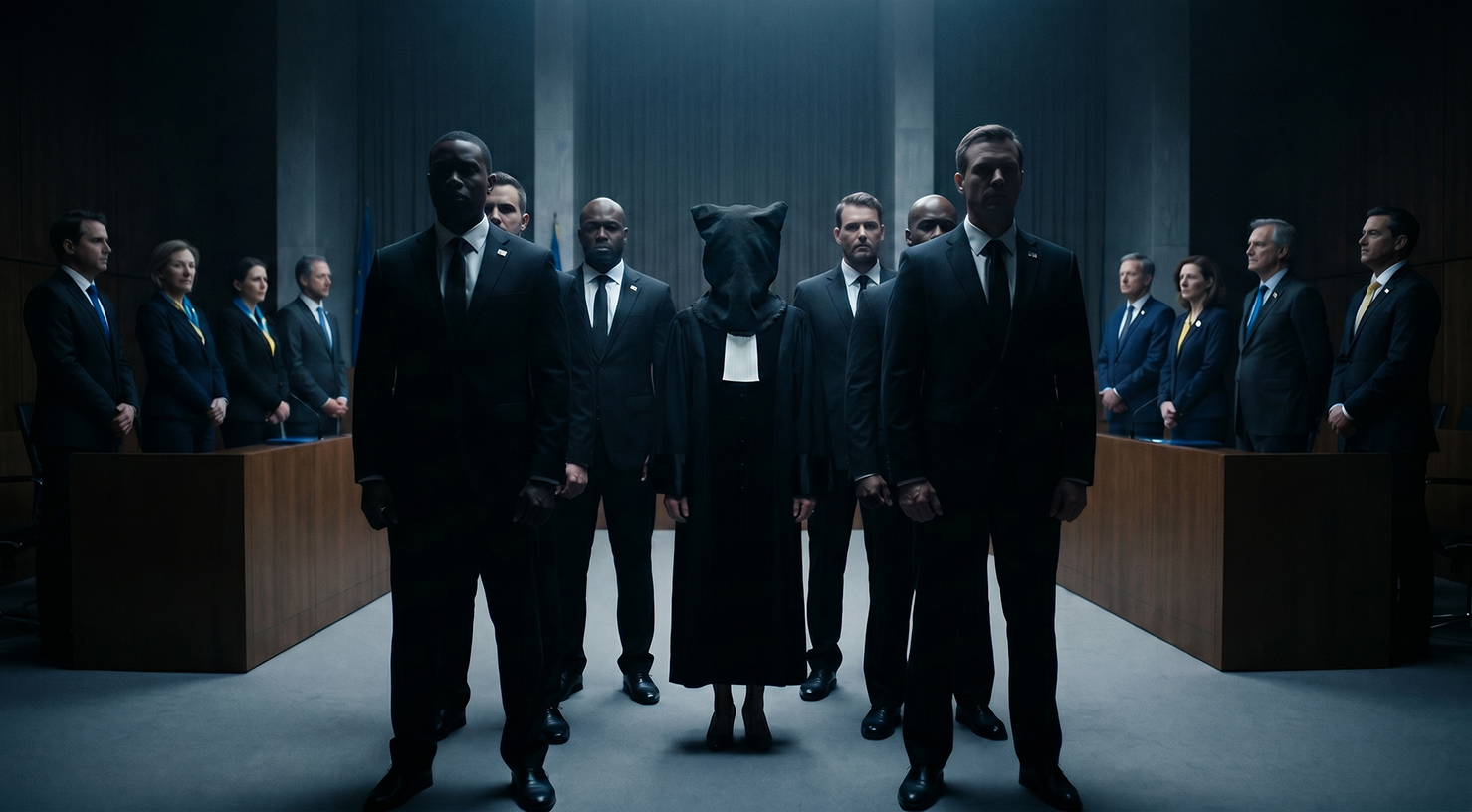
The Beti Hohler case: Account frozen, credit card blocked: Why the US is hunting a European judge – Image: Xpert.Digital
Because of the Netanyahu arrest warrant: How the US government wants to paralyze the International Criminal Court
US sanctions against ICC judges: Why Europe is standing idly by in this power struggle
On a terrorist list: The unprecedented US attack on The Hague judge – When the US treats a top judge like a drug cartel
It is an unprecedented event in the history of international jurisprudence: The US government has placed judges and staff of the International Criminal Court (ICC) on sanctions lists intended to combat terrorists, drug cartels, and hostile dictators. At the center of this geopolitical upheaval is, among others, the Slovenian judge Beti Hohler. Her "offense"? She played a key role in issuing arrest warrants for Israeli Prime Minister Benjamin Netanyahu, former Defense Minister Yoav Galant, and leading figures of Hamas. The consequences for Hohler and her colleagues are drastic: Within 24 hours, accounts were closed, credit cards blocked, and everyday access to digital platforms cut off.
But behind these massive personal restrictions lies a far larger, structural conflict. It concerns the fundamental question of whether international criminal law applies universally to everyone—including major powers and their closest allies—or whether powerful states can place themselves and their partners above the law with impunity. At the same time, the case becomes a brutal stress test for Europe: Can the European Union protect its own rule-of-law institutions and European judges from the enormous extraterritorial pressure from Washington, or is the European claim to "strategic autonomy" exposed here as a mere illusion? The following analysis illuminates the background of the US sanctions, the power-political motives behind them, and the serious consequences for the global order.
Why was Beti Hohler sanctioned?
- Hohler was part of the ICC chamber that issued arrest warrants against Netanyahu and Galant for alleged war crimes in the Gaza Strip; the same ruling also upheld arrest warrants against three Hamas leaders.
- The US government under President Donald Trump accuses the ICC of “targeted action” against the US and Israel and responded with sanctions under US sanctions law (OFAC list), which is actually intended for terrorist organizations, drug cartels or “hostile actors”.
- By Executive Order 14203 of November 6, 2024, Trump authorized the freezing of assets and extensive financial and business restrictions against ICC persons involved in these arrest warrants.
- The concrete consequence for Hohler: A European bank terminated her account, her credit cards were blocked within 24 hours, and her Apple ID as well as accounts on US platforms such as Amazon and Airbnb were blocked or terminated, which massively restricts her daily life.
This means that an international court that enforces international criminal law is treated politically in a similar way to groups against which it itself issues arrest warrants for terrorism or war crimes.
Who else is on this US sanctions list?
Initially, in June 2024, four ICC judges were placed on the OFAC sanctions list:
- Solomy Balungi Bossa (Uganda)
- Luz del Carmen Ibáñez Carranza (Peru)
- Pure Alapini-Gansou (Benin)
- Beti Hohler (Slovenia)
The reason for this was, firstly, the ICC's investigations into alleged war crimes by US soldiers in Afghanistan, and secondly, the arrest warrants issued against Netanyahu and Galant in the context of the Gaza war.
According to various reports, a total of eleven ICC staff members are now affected, including eight judges; besides the four female judges, those specifically known include members of the prosecution's leadership who were involved in the Israel and Hamas trials.
The EU and numerous states strongly criticize these US sanctions, pointing out that judges should not be treated like terrorists when applying international law.
Despite this sharp international criticism and the obvious legal and moral dubiousness of this approach, Washington is sticking to its hard line. For behind these drastic coercive measures lies far more than just short-term annoyance over unwelcome investigations. A closer look at the deeper strategic motives reveals:
The US sanctions against Beti Hohler and other ICC judges are primarily a power-political signal: Washington is defending the military freedom of action of the US and Israel against independent, international criminal law oversight – and is deliberately making an example of European judges to create a deterrent effect. For Europe, this exacerbates a long-standing fundamental conflict: between the claim to be the guardian of a rules-based international order and the de facto dependence on the US in security, technology, and financial matters, which has so far largely blocked a decisive counter-response.
Starting point: What exactly happened?
The immediate background to this case is the arrest warrant issued by the International Criminal Court (ICC) against Israeli Prime Minister Benjamin Netanyahu, former Defense Minister Yoav Galant, and leading Hamas commanders for alleged war crimes and crimes against humanity during the Gaza War. Beti Hohler was part of the chamber that granted these requests by the chief prosecutor.
The Trump administration responded with targeted, personalized sanctions against female judges and staff of the ICC, initially four female judges (including Hohler), later a total of eleven individuals, including the chief prosecutor. These sanctions are imposed under US sanctions law (OFAC list) and technically treat those affected in the same way as terrorist organizations, drug cartels, or "hostile actors."
- Asset freezing in the USA.
- A ban on all financial transactions through US banks or with US persons.
- Blocking of credit cards, termination of bank accounts, blocking of digital services (Amazon, Apple, Airbnb, etc.).
In the ZEIT report, Hohler vividly describes how within 24 hours her credit card stopped working, her account at a European bank was closed, US platforms blocked her accounts, and even everyday things – online purchases, travel, hotel bookings – suddenly became massively difficult.
The symbolic core is important: The US is not declaring the ICC as an institution, but individual judges to be “threats to national security” and “malicious actors” because they allow investigations and arrest warrants that also affect US soldiers or key allies such as Israel.
Political motivation of the USA: Five levels
Protection of one's own power projection and "war policy"
The ICC explicitly opposes individual criminal liability for war crimes, crimes against humanity, and genocide – including against officials of democratic states. This is precisely where the central point of contention with Washington lies
- The US is not a party to the ICC treaty, but nevertheless wants global military freedom of action without US soldiers or high-ranking political decision-makers having to reckon with international prosecution.
- The ICC's investigations into alleged US war crimes in Afghanistan had already provoked fierce resistance in previous years; the new element is that now a Western head of government (Netanyahu) is directly targeted.
Politically, the sanctions send a signal to all international institutions:
Anyone who legally challenges the military and security policy practices of the US or its closest allies must expect significant personal costs. This goes far beyond traditional diplomacy and constitutes a deliberate use of one's own financial and platform power as leverage.
Deterrence and "chilling effect" on female judges and prosecutors
A second level is the targeted intimidation of those who make decisions:
- The selection of those sanctioned shows that Washington does not act arbitrarily, but rather sanctions those judges who have made key decisions in favor of far-reaching investigations – for example, regarding the expansion of the Afghanistan trial or the arrest warrants in the Gaza context.
- The message is clear: Certain lines – investigations against US personnel, top Israeli politicians, and possibly future NATO military operations – are red lines, the crossing of which will be met with personal economic ruin.
This is not necessarily aimed at immediately halting ongoing proceedings (although that is of course factored in), but rather at "cooling down" future ICC decisions in borderline cases:
Judges and prosecutors should consider, with every step that affects US interests, whether they are thereby making themselves targets for sanctions.
This “chilling effect” is extremely effective politically because it does not require formal influence on the court, but it changes the individual risk assessments of the actors.
Domestic political signals: tough stance towards “anti-Israeli” and “anti-American” institutions
Donald Trump's stance towards the ICC appeals to key currents within his domestic political base:
– Strong skepticism towards international institutions, which are perceived as a restriction of national sovereignty.
– Almost unconditional political support for Israel, where any form of legal equality (such as arrest warrants against Israeli as well as Hamas actors) is interpreted as “anti-Israel”.
The linguistic framing of the sanctions – the ICC as a “bankrupt institution”, as a threat to national security, as “malicious” – is compatible domestically with a broader attack on “globalist” institutions, media and elites.
This places the judges of the ICC in a similar symbolic category domestically as the WHO, the UN Human Rights Council or the WTO when they criticize US policy: as an “enemy” or “opponent”, not as a partner within a multilateral order.
Protecting Israel as a strategic ally
A fourth, overt political motive is the protection of Israel – not only functionally (as an ally in the Middle East), but also normatively:
- The arrest warrant against Netanyahu is the first against the head of government of a key democratic ally closely supported by the West.
- From the US perspective and the perspective of many of Israel's allies, such a precedent could open a door through which other Western leaders could also come close to facing criminal responsibility for military operations in the future.
Therefore, the US government is staging the arrest warrant as an attack on Israel and not as part of a general, status-neutral application of international criminal law.
Politically, this fits seamlessly into a line of previous US legislation, such as the "American Service Members' Protection Act" ("Hague Invasion Act"), which in extreme cases even provides for military operations to free US citizens imprisoned in The Hague. The current sanctions are the economic counterpart to this: Not only US personnel, but also their closest allies are to be protected from the ICC.
Geopolitical signal: Who sets the rules – the ICC or the major powers?
Ultimately, sanctions policy is one element in a broader debate about who defines the rules of the international order:
- The ICC embodies the claim that international criminal law should apply universally, regardless of the power of a state.
- The US (and also Russia, which issued arrest warrants against ICC judges after the arrest warrant against Putin) claim, on the other hand, that their top leadership and their core military operations are outside this logic.
In the logic of the great powers, two ideas compete:
- One principle is that law takes precedence over power and applies even to the powerful.
- The other is that certain states are de facto “too big” for genuine criminal oversight by international courts.
The US sanctions against Hohler and other judges are a very clear step in favor of the second presentation.
Our EU and German expertise in business development, sales and marketing

Our EU and German expertise in business development, sales and marketing - Image: Xpert.Digital
Industry focus areas: B2B, digitalization (from AI to XR), mechanical engineering, logistics, renewable energies and industry
More information here:
A thematic hub offering insights and expertise:
- Knowledge platform covering global and regional economies, innovation and industry-specific trends
- A collection of analyses, insights, and background information from our key areas of focus
- A place for expertise and information on current developments in business and technology
- A hub for companies seeking information on markets, digitalization, and industry innovations
Between norm and reality: Does Europe protect?
Implications for Europe: Three levels of challenge
Normative self-assertion vs. actual willingness to act
For years, the EU has presented itself as a defender of a rules-based international order, as a loyal supporter of the ICC, and as a normative power that places human rights and international law at the center of its foreign policy.
The verbal reactions to the US sanctions were correspondingly harsh:
- The EU and individual member states condemned the measures as an attack on the independence of the judiciary and on international criminal law.
- Human rights organizations such as Human Rights Watch explicitly called on the EU to protect the ICC not only rhetorically, but with concrete countermeasures, such as the Blocking Regulation.
But beyond explanations, the reaction has so far remained remarkably restrained:
- The EU has not imposed any noticeable counter-sanctions against the USA.
- The Blocking Regulation, which prohibits European companies from complying with extraterritorial US sanctions and grants them the right to compensation, has not yet been used aggressively, even though it was created precisely for cases like this.
This discrepancy between normative aspirations and actual willingness to act undermines Europe's credibility as a guardian of a rule-of-law order. If Europe fails to protect its own judges and courts from US pressure, any talk of "strategic autonomy" for the future rings hollow.
Practical consequences for the ICC and European judges
For those affected, the consequences are very concrete:
- Blocking of accounts and cards, disruptions in payment transactions, loss of access to US-based digital services, difficulties with travel.
- Potential risks for European institutions cooperating with the ICC (banks, service providers, IT partners) because they themselves could become targets of the US sanctions regime.
A constitutional law blog post emphasizes that the US sanctions are deliberately used selectively to target the key judges and actors responsible for unpopular decisions – but not all persons involved in the process.
This creates a perfidious mechanism:
- “Career risk”: Judges who are particularly consistent in advocating for far-reaching investigations face a higher personal risk of ending up on US sanctions lists.
- “Institutional paralysis”: Without clear protection from their home states, judges may be inclined to handle sensitive cases cautiously in order not to jeopardize their financial and digital existence.
Europe faces a dual challenge here: Firstly, by making the ICC technically independent of US infrastructure (for example, by developing its own office suites, European cloud services, and payment methods). Secondly, by providing its own citizens working for the ICC with credible security guarantees – such as bank guarantees, protection against dismissal due to sanctions, and legal avenues to defend against US pressure.
Strategic autonomy and transatlantic tensions
At a higher level, the sanctions are a test case for the much-cited “strategic autonomy” of Europe:
- If the EU is unable to protect the independence of a court that it strongly supports politically and financially, it is effectively signaling that US sanctions law takes precedence over European standards.
- This reinforces the impression that Europe is too dependent economically, technologically and in terms of security policy to enforce its own principles in the event of conflict.
Euronews already reported when the first sanctions were imposed that the gap between the transatlantic partners is clearly visible here: The EU criticizes sharply, but refrains from taking concrete steps.
This reluctance has several reasons:
- Security dependency: Especially against the backdrop of Russian aggression in Ukraine, Europe is heavily dependent on US military support.
- Financial and technological interdependence: A large part of European payment transactions, cloud computing, software infrastructure and digital services is dependent on US companies.
- Political fragmentation: Within the EU, there are differing views on how to deal with the USA and Israel, which makes decisive joint countermeasures difficult.
However, with every unanswered extraterritorial sanction, the structural asymmetry grows: the more often Europe bows down, the more normal it becomes that US law affects people in The Hague, Brussels or Berlin more effectively than European law.
Long-term consequences for the international legal system
Erosion of the universality of international criminal law
The combination of US and Russian pressure on the ICC – sanctions, counter-arrest warrants, political threats – leads in the medium term to an erosion of the idea that international criminal law is universally applicable.
In effect, a world with two classes of states is created:
- States whose leadership and military must realistically expect prosecution (especially smaller and medium-sized states, states of the Global South, but also some European countries, unless they are protected by the major powers).
- States that use their power to evade international criminal justice and protect themselves and their core allies.
This sends a devastating signal to victims of the most serious crimes – especially in conflicts involving major powers or protecting powers. If the ICC, out of fear of sanctions, consistently only takes action where no major power is involved, it risks slipping into the role of a “court for the weak”.
“Sovereignty” as a political battle cry
Both the US and Russia invoke national sovereignty in their criticism of the ICC. They argue that an international court does not have the right to investigate their citizens or top politicians without their consent.
This turns sovereignty into a political battle cry against international criminal law:
- Smaller states have little room to credibly use such arguments because they simply lack the power to enforce them.
- For major powers, sovereignty becomes the justification for selective immunity – a regression behind the principles of Nuremberg and international criminal law after 1945.
Europe occupies an intermediate position here: It has high normative aspirations and is the sponsor of the ICC project, but does not possess the same hard power as the USA.
Whether the EU responds with concrete steps (blocking regulations, protection programs, investments in technological independence) will ultimately determine whether sovereignty will be understood in the future more as a shield against international law or as the basis for a self-confident, law-abiding foreign policy.
Institutional resilience of the ICC
The reactions from The Hague itself show that the court is very aware of the pressure, but publicly emphasizes that it will not be intimidated.
- Representatives of the ICC condemn the sanctions as an attempt to undermine the independence of the court.
- At the same time, there is growing pressure to become more technically and organizationally independent from US infrastructure: for example through European IT solutions, alternative payment methods, and institutional safety nets for affected judges.
However, these adjustments are expensive and complex, and require, above all, that Europe is prepared to invest more financial and political resources in protecting "its" institution.
A constitutional blog post argues that a consistently applied blocking regime plus a diversification of the technical basis could strengthen the resilience of the ICC not only symbolically, but in reality – and at the same time be a step towards more European sovereignty.
What options does Europe have?
Short-term options
In the short term, the EU could take several steps without risking a transatlantic rift, but still change its message:
- Active application of the Blocking Regulation: Clear guidelines for banks, IT service providers and other companies that they must not comply with US sanctions against European judges and will receive support in the event of damage caused by US countermeasures.
- Financial protection mechanisms: EU or member state funds to safeguard affected individuals' assets such as bank accounts, credit cards and insurance policies within Europe, regardless of US sanctions.
- Diplomatic pressure: Systematic discussion of sanctions in transatlantic forums, clear expectation that the US will not include at least active female judges on lists intended for terrorists.
Such measures would not resolve the conflict, but they would change the signal: Europe is prepared to bear the costs of defending its own conception of the rule of law and judicial independence.
Medium-term and structural steps
In the medium term, the focus is on structural questions of dependency:
- Digital and financial infrastructure: Expansion of European alternatives to US platforms (cloud, payment services, software) so that key international institutions do not remain effectively vulnerable to blackmail via Apple ID, Visa network or AWS.
- Legal clarification: Development of a specific EU legal framework to protect persons acting in the exercise of international judicial or prosecutorial functions – similar to diplomatic protection, but tailored to judges.
- Political consolidation: Internally, a clearer line that international criminal law also applies when it becomes politically uncomfortable – for example, in the case of arrest warrants against allies or in symbolically important cases.
An article in Surplus magazine argues that the US sanctions are a kind of "stress test" for Europe's self-image: they show how quickly the EU is willing to relativize its own values when pressure from Washington becomes intense. The more passive Europe remains, the stronger the perception becomes that it only protects its own institutions as long as no real costs are threatened.
What does this case reveal about the international order?
The sanctions against Beti Hohler and other ICC judges are more than a foreign policy dispute. They expose a fundamental conflict:
- On the one hand, there is the idea of a universal international criminal law that can also hold powerful actors accountable.
- On the other hand, major military and nuclear powers claim that their core interests and their highest officials are de facto outside this system.
The US is using its financial, technological, and geopolitical power to enforce this second position – if necessary, at the expense of the individual freedom of European judges. Europe's response so far has been primarily verbal, not forceful.
For the international order, this means:
- If Europe is not prepared to bear the costs of protecting its own judicial institutions against US pressure, the universality of international criminal law will become a fiction, at least with regard to major powers.
- If, on the other hand, it gets serious – with blocking regulations, protection mechanisms, infrastructure investments – the Hohler case could paradoxically become a catalyst for more European sovereignty and a more robust international justice system.
In this sense, the conflict surrounding Beti Hohler is a litmus test: not only for the independence of individual judges, but for the question of whether the much-vaunted “rules-based order” is more than a formula – and whether Europe is prepared to defend it even when pressure comes from Washington and the price becomes politically and economically noticeable.





