

Record expansion and yet bankruptcies: Why the German solar industry is in crisis
Xpert Pre-Release

Available in 27 languages 📢
Prefer Xpert.Digital on GoogleⓘPublished on: September 25, 2026 / Updated on: September 25, 2026 – Author: Konrad Wolfenstein
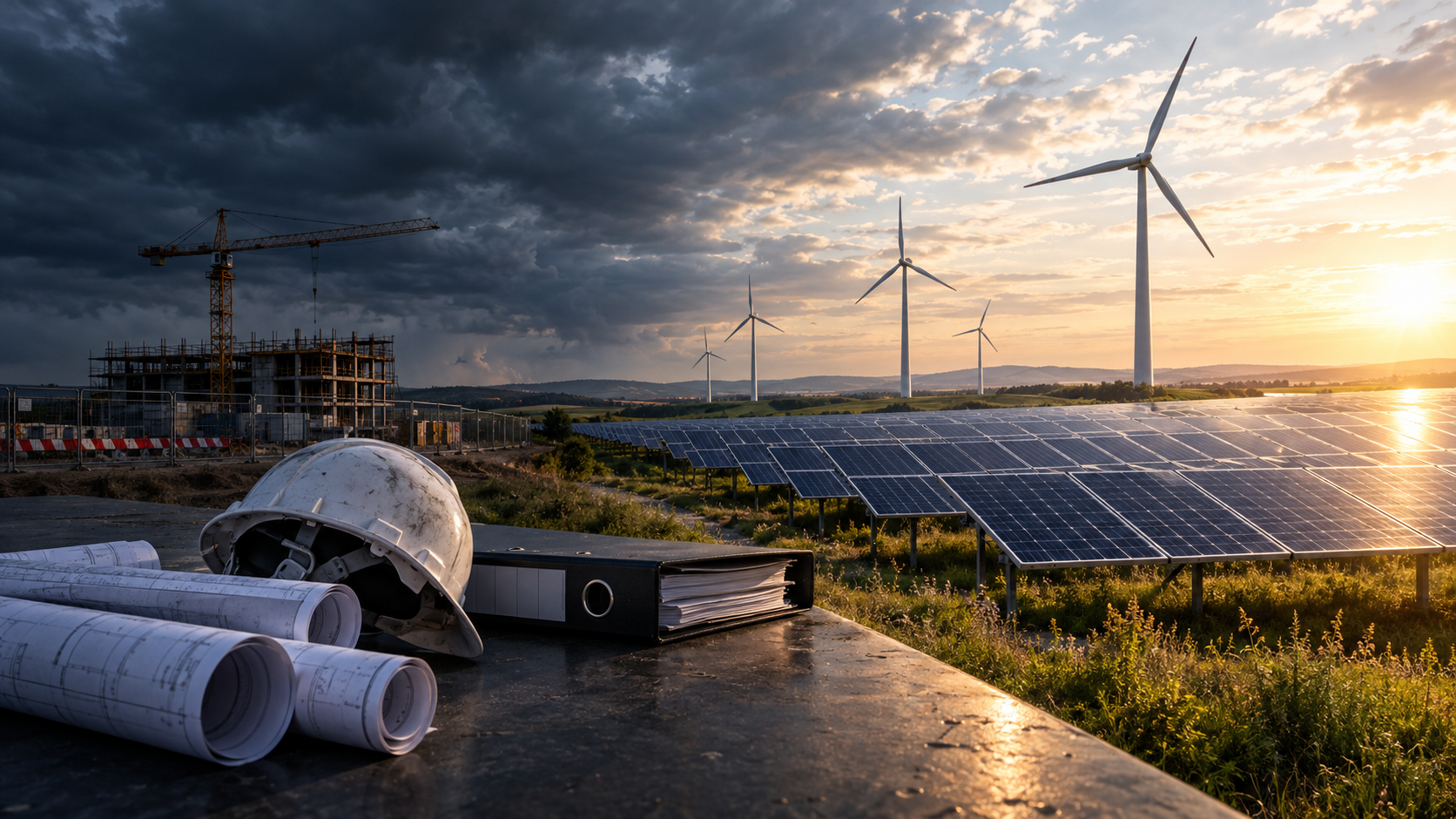
Record expansion and yet bankruptcies: Why the German solar industry is in crisis – Creative image on the topic, with AI: Xpert.Digital
Crash in the boom year of 2026: Why major solar pioneers are suddenly fighting for survival
“Cannibalization effect” in the electricity market: Will the green boom turn into a financial fiasco?
In 2026, Germany is experiencing an unprecedented energy policy paradox: Never before have so many photovoltaic and wind power plants been built, never before have expansion targets seemed so attainable – and yet, the very pioneers of the industry are fighting for their very survival. While installed capacity is reaching historic record highs, prominent project developers are sliding into insolvency despite billions in financing commitments. At the same time, installers' margins are shrinking, and falling electricity prices are eroding profits. How can this be? The answer lies in a radical system change: The German energy transition is moving from a purely subsidy-driven hunt for installations to a highly complex market phase. Expensive capital, congested grids, new political rules of the game, and the so-called cannibalization effect on the electricity exchange are now ruthlessly separating the wheat from the chaff. The gold rush years are over – anyone who wants to survive now needs more than just impressive expansion figures. A deep dive into the brutal economic stress test facing the renewable energy sector.
Germany's energy transition is growing – and swallowing up its pioneers
Record expansion, shrinking margins, faltering companies: The green boom is becoming an economic stress test
Germany will experience an apparent paradox in 2026. Never before has so much photovoltaic capacity been installed, the expansion of wind energy has accelerated significantly, permits and contracts are reaching record highs – and yet, precisely those companies that have driven this development for years are running into difficulties. Project developers are having to restructure, installation companies are disappearing from the market, major players are struggling for liquidity, and even multi-billion-euro financing commitments offer no reliable protection against insolvency.
This contradiction resolves itself as soon as a distinction is made between the growth of a market and the profitability of its companies. More installed capacity does not automatically mean higher profits for manufacturers, installers, or project developers. A market can boom in terms of volume and simultaneously erode economically if sales prices fall faster than costs, if capital becomes more expensive, projects take longer, and regulatory changes subsequently delay expected returns. This is precisely what is currently happening in parts of the German renewable energy sector.
The crisis is therefore neither proof of the energy transition's failure nor simply a typical market correction. It is the result of a transition. The first phase of the energy transition focused primarily on maximizing new generation capacity. The second phase now requires that solar and wind power be more strongly integrated into grids, storage, flexible demand, and the electricity market. This systemic shift is more economically demanding than simply building the plants. It alters revenue models, shifts risks, and separates companies with sustainable financing structures from those whose growth relied too heavily on constantly acquiring new projects and access to cheap capital.
Expansion is booming, but not everywhere
The initial figures suggest a success story. In August 2026, installed photovoltaic capacity in Germany exceeded 128 gigawatts peak. This meant the legally mandated target for the end of the year was reached ahead of schedule. More than six million solar installations now form a decentralized power plant network, ranging from small balcony systems and private rooftops to large-scale ground-mounted projects. However, to achieve the target of 215 gigawatts by 2030, expansion must continue at a high level.
Onshore wind energy has also picked up speed again after years of sluggish permitting. From January to July 2026, 816 turbines with a combined capacity of 5.29 gigawatts went into operation. As early as 2025, the number of new installations was significantly higher than the previous year. At the same time, so many new turbines were approved and awarded contracts in tenders that the project pipeline is fundamentally capable of further growth. The bottleneck is therefore no longer solely a lack of permits, but increasingly lies in financing, construction capacity, grid connections, and the question of whether awarded projects can still be implemented profitably under the actual cost conditions.
The aggregated figures also mask a significant shift between market segments. Large solar parks have recently experienced strong growth, while the market for private rooftop installations has declined considerably. In 2025, the newly installed capacity of ground-mounted solar parks increased by approximately a quarter, while the expansion on single-family homes fell by a similar amount. Commercial rooftops also performed weakly. For the overall statistics, a single large solar park can more than compensate for the failure of thousands of smaller installations. However, this growth is of little help to a regional installation company whose business model relies on single-family homes.
This is precisely where a key reason for public confusion lies. The energy transition is not a unified market, but rather a complex network of different value chain stages and customer groups. Manufacturers of modules, inverters, and wind turbines are subject to different conditions than project developers, general contractors, rooftop installers, operators, electricity traders, or storage providers. A record in overall capacity expansion can therefore coincide with a slump in individual segments, falling manufacturer prices, and bankruptcies among service providers.
When a billion doesn't protect against bankruptcy
The Enerparc case clearly illustrates the vast gap between operational size and short-term solvency. The Hamburg-based solar park developer filed for insolvency in early September 2026, despite having announced a financing framework of up to one billion euros only in March. With several hundred solar parks and several gigawatts of installed capacity, the company is one of Europe's largest independent developers. Precisely for this reason, its insolvency came as a shock to the industry.
The apparent contradiction is explained by the structure of such financing. An announced multi-billion-euro framework is not simply freely available funds in the company's account. It typically consists of loans and credit lines tied to specific projects, construction progress, collateral, technical reviews, and contractually defined conditions. Funds are only released once a project fulfills certain prerequisites. If separate financing fails, a grid connection is delayed, or necessary collateral cannot be provided, the holding company remains without sufficient liquidity despite a valuable project pipeline.
At the end of June, Enerparc's financing for photovoltaic projects with battery storage fell through. However, components already ordered and commitments already made still had to be met. Within just a few weeks, a financing gap escalated into a liquidity crisis. This example highlights a fundamental weakness of rapidly growing project developers: there is often a considerable gap between the early expenditures for securing land, planning, permitting, grid approval, personnel, and ordering components, on the one hand, and the subsequent inflow of funds from project sales or long-term financing, on the other.
Paradoxically, the larger the pipeline, the higher the upfront financing requirement can become. Growth initially ties up capital before it generates returns. If banks become more cautious, investors demand higher yields, or projects reach construction readiness late, a large portfolio can actually exacerbate financial strain. Furthermore, balance sheet assets such as project rights cannot automatically be sold quickly and at the planned price in a stressful situation. The value of a pipeline depends on the permitting status, grid connection, expected electricity price, subsidy scheme, and timeline. Under pressure to sell, the developer's negotiating power diminishes.
Enerparc is therefore not proof that solar parks are inherently uneconomical. Rather, the case demonstrates that profitable individual projects and an insolvent parent company can coexist. Project companies are often legally and financially separate from the parent company. Parks already in operation continue to generate electricity while the development holding company is restructured. This separation is stabilizing for the energy supply; however, it remains painful for employees, suppliers, and creditors.
From individual cases to industry consolidation
Enerparc is not alone. The Baden-Württemberg-based wind and solar project developer Sowitec filed for insolvency in July 2026. In addition to the difficult situation in the German wind market, the company was burdened by outstanding payments from international projects amounting to several million euros. This case illustrates that global diversification does not only offer opportunities. It also brings with it currency, country, contractual, and counterparty risks. Expected revenues on the balance sheet do not help with payments due until the money has actually been received.
ABO Energy is also undergoing a comprehensive restructuring process. The company has entered into standstill agreements with financing partners, initiated an efficiency program, sold project portfolios, and is working on a sustainable long-term financing structure. BayWa r.e. is strategically realigning itself, divesting non-core activities, and focusing on selected markets. The parent company, BayWa, had to adjust its restructuring plan because the originally anticipated sales proceeds and earnings contributions from its renewables subsidiary can no longer be realized at the planned levels under the deteriorating market conditions.
The difficulty in finding attractive acquisitions from other project developers also fits this picture. A gap often exists between the long-term strategic value of extensive project pipelines and the price investors are willing to pay under current financing conditions. Sellers point to ambitious future expansion targets and a scarcity of approved sites. Buyers, on the other hand, factor in higher capital costs, network risks, declining bid prices, and potential regulatory interventions. As long as both sides use different return assumptions, even strategically sound acquisitions remain challenging.
This development is more than just a random cluster of company-specific errors. Of course, poor decisions, excessively rapid growth, inadequate risk control, or overly aggressive financing play a role in individual cases. Nevertheless, the parallel problems of several companies point to structural stress. The industry is simultaneously facing declining revenues, high upfront financing costs, increased interest rates, longer lead times, and growing demands for network integration and marketing.
Such a situation typically leads to consolidation. Well-capitalized energy suppliers, infrastructure investors, and international funds can acquire projects or entire portfolios. Weaker developers sell rights earlier than planned, reduce staff, or withdraw from individual countries. This doesn't necessarily halt expansion immediately, but it does change the market structure. A sector characterized by many medium-sized pioneers can become a more concentrated market in which a few large players integrate financing, construction, operation, storage, and electricity marketing.
From boom market to brutal consolidation
The years 2022 and 2023 were exceptional for parts of the solar industry. High electricity prices, concerns about energy supply, attractive self-consumption bills, and a sharp increase in public interest triggered a surge in demand. Installation companies expanded their workforce, dealers stocked up on inventory, and new suppliers entered the market. Since 2020, the number of photovoltaic installers had roughly doubled. Many business models were geared towards sustained high demand and comfortable margins.
As energy prices and supply chains normalized, the situation changed. Households postponed investments, financing remained expensive, and the immediate desire for maximum energy independence lost its urgency. At the same time, order books from the boom years had been cleared. The result was not a complete collapse of solar demand, but a return to a lower normal level – albeit with a cost base that had been built up for the previous exceptional growth.
Suppliers in the residential solar market were particularly affected. The number of newly installed systems in this segment already declined in 2024, with small rooftop systems experiencing an even steeper drop. This weakness continued into 2025. Companies with high marketing expenditures, centralized sales, rented warehouse space, and large, permanently employed installation teams were unable to adjust their costs quickly enough. Furthermore, those who had purchased components at inflated prices later had to write off existing inventory or sell it at a loss in a sharply declining market.
While the price drop in solar modules reduces the long-term costs of the energy transition, it poses a short-term threat to retailers and manufacturers. If the market price of a module falls significantly within a few months, existing inventory loses value. Customers expect the lower component prices to be passed on in full, even though wages, scaffolding, electrical work, planning, grid connection, and customer service do not decrease to the same extent. This shrinks the installer's profit margin, while the labor-intensive aspects of the service remain expensive.
Market consolidation therefore doesn't just affect inexperienced suppliers. It also impacts established companies when their fixed costs, inventory management, or sales model don't align with the new demand. However, the statement that only opportunists will disappear is too simplistic. In a rapid correction, even fundamentally viable companies come under pressure because banks reduce credit lines, customers withhold advance payments, and suppliers demand stricter payment terms. Trust can then deteriorate faster than the company's operational substance.
Decreasing bonuses, increasing requirements
For large solar and wind projects, the pressure on margins stems from a different source. Tenders for new plants have become increasingly competitive. For ground-mounted photovoltaics, the average winning bid fell from around 6.23 cents per kilowatt-hour in 2023 to approximately 4.83 to 4.84 cents in 2025. This represents a decline of roughly 23 percent. Similarly, the significant oversubscription of tenders for wind energy also depressed remuneration. At the end of 2025, the volume-weighted winning bid for onshore wind energy was around 6.06 cents per kilowatt-hour.
Competitive tenders are intended to achieve precisely this effect: low-cost projects prevail, the burden of subsidies decreases, and land is used efficiently. Problems arise when bids are based on optimistic assumptions that later prove unfounded. Between the award of the contract and commissioning, interest rates, turbine prices, grid connection costs, wages, or requirements for compensatory measures can change. In contrast, the awarded price remains largely fixed. The developer thus bears a significant portion of the cost and schedule risk.
Margin pressure is coming from both sides. On the revenue side, bid prices are falling, power purchase agreements are being negotiated more fiercely, and negative market prices are reducing the value of inflexible feed-in. On the cost side, civil engineering, grid technology, personnel, and financing remain expensive. While solar modules have become significantly cheaper, a power plant is not economically viable just because of the modules. Land, transformers, cables, substations, planning, permits, insurance, and capital costs account for a large portion of the overall cost.
Financing plays a particularly significant role in wind energy projects because large investments are pre-financed over long periods. Even a relatively small increase in the discount rate or interest rate on debt considerably reduces the present value of future electricity revenues. Added to this are supply bottlenecks for turbine components, limited capacity for specialized transport, and increasing requirements for foundations, grid connections, and species protection. A project can be technically approved and still be on the verge of economic viability.
Intense competition also creates a dangerous incentive. Developers may be tempted to calculate very tightly in order to secure a contract and inflate the perceived value of their pipeline to investors. If just one key assumption subsequently proves incorrect, there is hardly any buffer left. What initially appears to be a favorable bidding success from a government perspective can later lead to delays, renegotiations, or abandoned projects. Therefore, low contract prices only represent an efficiency gain if the plants are actually built and operated sustainably.
New: Patent from the USA – install solar parks up to 30% cheaper and 40% faster and easier – with explanatory videos!

New: Patent from the USA – Install solar parks up to 30% cheaper and 40% faster and easier – with explanatory videos! - Image: Xpert.Digital
The core of this technological advancement is the deliberate departure from conventional clamp mounting, which has been the standard for decades. The new, more time- and cost-effective mounting system addresses this with a fundamentally different, more intelligent concept. Instead of clamping the modules at specific points, they are inserted into a continuous, specially shaped support rail and held securely in place. This design ensures that all forces – whether static loads from snow or dynamic loads from wind – are distributed evenly across the entire length of the module frame.
More information here:
The electricity market and its challenges for renewable energies
The electricity market is devaluing its cheapest generation
With the increasing share of solar and wind power, another economic problem arises: renewable energy plants often produce electricity simultaneously. On sunny middays, millions of solar panels feed electricity into the grid, and when there is widespread wind, many wind farms operate in parallel. This additional supply drives down the market price precisely during the hours when these plants are generating the most electricity. This so-called cannibalization effect reduces the average achievable market value of solar and wind power.
In 2025, negative wholesale prices occurred in Germany for 573 hours, significantly more often than in the previous year. Negative prices are not proof that renewable electricity is worthless. They indicate that generation, grids, storage, and flexible demand are not sufficiently coordinated in terms of timing. For operators without effective hedging, however, such hours mean real revenue losses. Rigid business models that focus solely on maximizing feed-in are particularly problematic.
Future value creation is therefore shifting from the pure kilowatt-hour to temporal controllability. A solar park with battery storage can absorb electricity during hours of low prices and sell it later. A wind farm with a smart power purchase agreement can share price risks. Industrial companies, electrolyzers, heat pumps, data centers, and charging infrastructure can shift demand to times of high renewable energy generation. For project developers, the ability to structure such combinations will be just as important as the technical construction of the plant.
This also changes financing. Banks and investors no longer just have to assess expected annual production, but also hourly price profiles, curtailment risks, storage cycles, marketing contracts, and potential revenue streams from flexibility markets. Models are becoming more complex, expert opinions more extensive, and transactions slower. Larger companies can build up these competencies internally. Smaller developers need partners or specialized service providers, which creates further pressure for consolidation.
The industry is thus transitioning from subsidized standard projects to more market-oriented energy platforms. This opens up new revenue opportunities but initially increases uncertainty. Not every battery automatically improves profitability, and not every long-term power purchase agreement protects against all risks. Crucial factors include location, grid situation, load profile, contract terms, and the creditworthiness of the counterparty.
Political uncertainty becomes an investment risk
Companies can cope with stricter regulations if these are communicated early, are consistent, and are reliable in the long term. A more challenging environment arises when fundamental revenue and grid connection conditions change during the development of multi-year projects. This is precisely why the industry is reacting so sensitively to the reform of the Renewable Energy Sources Act and the grid package, with which the German government aims to align expansion more closely with market forces and grid capacity.
The German Bundestag held its first reading of the amendment to the Renewable Energy Sources Act (EEG) on September 24, 2026. The amendments include the gradual phasing out of the traditional fixed feed-in tariff for new installations, a broader obligation for direct marketing, new contracts for difference for larger installations, and changes to the tender volumes. Small new photovoltaic systems will continue to receive a transitional payment of 5.2 cents per kilowatt-hour for a period of three years; subsequently, this segment will also be subject to greater market responsibility.
Economically, this direction is understandable. With the increasing share of renewable energies, the state cannot permanently treat every kilowatt-hour generated equally, regardless of time, location, or grid conditions. A feed-in tariff that transmits no price signal incentivizes feed-in even when the electricity can barely be absorbed by the local grid or has no value on the wholesale market. Direct marketing, flexible tariffs, and contracts for difference can better align producers with market and system conditions.
The risks lie in the design and speed of implementation. Small plant operators lack both trading departments and the negotiating power of large energy companies. If they are forced into direct marketing without simple standard products and digital processes, transaction costs and complexity increase. A theoretically market-based model can then become a practical obstacle to investment. For installers, every additional uncertainty means that customers postpone decisions.
Even more significant is the impact on already planned projects. A developer begins securing land and planning years before commissioning. Their calculations are based on an anticipated regulatory framework. If, during this time, remuneration, connection conditions, or permissible feed-in capacity change, a previously profitable project can become uneconomical. Even if the new regulation only applies to future installations, banks are already becoming more cautious because they are factoring in further changes.
Network bottlenecks threaten to geographically stifle expansion
The grid package aims to prevent the construction of new generation plants without regard for regional capacity constraints. It includes the introduction of capacity-limited grid areas where project operators will have to temporarily forgo a portion of the compensation for grid-related curtailments. For new ground-mounted solar parks, the maximum active power feed-in at the grid connection point will generally be limited to 70 percent of the installed capacity. A stricter limit is planned for smaller and medium-sized rooftop installations.
The logic behind this is not irrational. Solar parks only reach their nominal output for a few hours each year. If every grid were designed for the theoretical simultaneous maximum output of all plants, high costs would arise for capacities that are only rarely needed. Moderate peak shaving can therefore enable the grid connection of additional plants without requiring the construction of a correspondingly large amount of new transmission capacity. In conjunction with storage systems, some of the shaved energy can be shifted to a later time rather than lost.
The instrument becomes problematic when it is applied across the board or when several burdens coincide. A lower feed-in limit, potential waiver of compensation, additional marketing costs, and declining bid prices can all collectively push a project's internal rate of return below the financing threshold. Banks don't consider each measure in isolation, but rather its cumulative effect on debt servicing. Therefore, the solar industry warns against de facto exclusion zones where new projects are legally permissible but hardly financially viable.
The spatial steering effect also warrants a differentiated assessment. It makes sense to locate generation closer to consumption, storage facilities, and available grid capacity. However, good solar and wind energy sites cannot be moved arbitrarily. Land availability, municipal approval, nature and species conservation, wind resources, and solar irradiance limit the selection. Simply penalizing overburdened regions financially, without simultaneously accelerating grid expansion, storage, and flexible consumption, will not solve the problem but merely shift it to project developers.
The costs of grid congestion management amounted to approximately €3.1 billion in 2025. However, this sum did not consist solely of compensation for curtailed renewable energy. A large portion was attributable to the deployment and maintenance of conventional power plants, as well as other measures to stabilize the grid. Compensation for curtailed renewable energy was significantly lower. This distinction is crucial for an objective debate. Anyone who simply attributes all system costs to renewable energy plants confuses the cause, the countermeasure, and the historically developed grid structure.
The real bottleneck lies between the network and capital
Germany now has significantly more approved projects than just a few years ago. This shifts the problem. The question is no longer simply whether projects will be approved, but whether grid connections, transformers, cables, construction capacity, and financing will be available in time. A permit is economically valuable, but it doesn't yet generate electricity or cash flow.
Grid connections are becoming a critical asset. Projects can be ready for construction and yet wait years for a suitable connection point or substation. During this time, land payments, personnel costs, and interest continue to accrue. Ordered components may need to be stored, supply contracts adjusted, and delivery deadlines renegotiated. Every delay prolongs the period of negative cash flow.
This creates a scheduling risk for banks. They preferentially finance projects with clear permits, a secured grid connection, a robust construction contract, and a reliable revenue model. If even one of these elements is missing, they demand more equity, higher interest rates, or additional collateral. Project developers must therefore finance an increasing proportion of the early phase from the consolidated balance sheet. This balance sheet is often too weak, especially for rapidly expanding companies.
Public debate often focuses on the size of announced investments. However, their quality is crucial. A company with a ten billion euro project pipeline does not automatically possess ten billion euros in valuable assets. Early-stage projects have a high probability of failure. Their value increases gradually with securing land, obtaining permits, connecting to the grid, winning the contract, and securing financing. Those who finance these stages with short-term loans or expensive bonds bear a significant maturity risk.
The current crisis is therefore also a balance sheet crisis. Many companies have tried to become developers, owners, and operators simultaneously. Building their own power generation portfolios promises stable long-term revenues but ties up a great deal of capital. As long as projects are sold regularly, the proceeds finance the next development phase. If the transaction market falters, liquidity suddenly dries up. The strategically attractive goal of a large proprietary portfolio can then become a liability in the short term.
It's not the technology, but the business model that's faltering
Solar and wind energy are technically mature and among the most cost-effective forms of generation for new power plant projects. The current corporate crises do not contradict this finding. Low levelized cost of electricity (LCOE) means that a plant can produce efficiently over its lifetime. It says little about whether a developer will remain solvent during the multi-year planning and construction phase, or whether an installer will cover its sales and personnel costs.
Even a growing future market doesn't protect against bankruptcies. The history of other industries shows that high demand often goes hand in hand with fierce competition, falling prices, and consolidation. Airlines, telecommunications providers, or semiconductor manufacturers can provide essential services to society and yet have low margins or high default risks. The same applies to renewable energies: The economic necessity of a technology doesn't guarantee the profitability of every company.
The thesis of mere political failure is therefore just as simplistic as the assertion that the market will solve all problems on its own. Political directives accelerated expansion and simultaneously changed the rules of the game several times. Companies, in turn, took advantage of cheap capital, built aggressive pipelines, and in some cases underestimated the risks of normalization. The current situation is the product of both sides: a still-incomplete market design and, in some cases, overly fragile corporate strategies.
An objective assessment must also acknowledge the benefits of consolidation. Inefficient structures disappear, scarce skilled workers and projects move to more efficient companies, and unrealistic valuations are corrected. Problems arise when fundamentally sound projects are abandoned due to short-term liquidity shortages, knowledge is lost, or market power becomes overly concentrated. This leads to higher capital costs and less competition, which can increase the long-term cost of the energy transition.
Who will emerge stronger from the crisis?
The winners of the next market phase will likely be companies that better integrate financing, project development, operation, and marketing. Purely volume-driven strategies are no longer sufficient. Crucial factors will be how quickly a project moves from concept to cash flow, how robust contracts are against delays, and whether revenues remain stable even in the face of negative prices and network congestion.
Hybrid projects that combine photovoltaics or wind power with battery storage are particularly attractive. They can better utilize existing grid connections and shift electricity generation over time. However, such models are only economically successful if storage is not viewed as a mere add-on. They require independent optimization across multiple revenue streams, such as price arbitrage, balancing power, grid services, and peak feed-in mitigation.
Long-term power purchase agreements (PPAs) are also gaining importance. They can distribute price risks between producers and consumers and provide industrial companies with access to predictable quantities of green electricity. However, they do not replace careful creditworthiness and contract review. Contract duration, pricing formula, volume risk, guarantees of origin, negative price hours, and balancing energy costs determine whether a contract is actually bankable.
Well-capitalized municipal utilities, energy suppliers, and infrastructure investors have an advantage at this stage. They can hold projects longer, reduce financing costs, and spread risks across larger portfolios. Medium-sized developers, however, remain important because of their local knowledge, established relationships with municipalities, and rapid development speed. Partnership models are likely to be successful, in which the developer manages the early project phase and a long-term investor provides capital once a clearly defined stage of development has been reached.
For installation companies, the opportunity lies in a stronger service orientation. Maintenance, energy management, storage integration, charging infrastructure, heat pumps, and the optimization of self-consumption generate recurring revenue. Those who exclusively sell standardized rooftop systems through expensive online advertising remain vulnerable to price wars. In a more mature market, regional reputation, qualified customer service, and technical expertise are more valuable than aggressive growth.
A smarter policy instead of new permanent subsidies
The answer to the crisis cannot be to bail out every struggling company or to guarantee permanently higher wages regardless of efficiency and systemic benefit. Such a policy would socialize poor decisions and weaken necessary competition. However, it is equally unwise to abruptly tighten regulations and trust that the market will absorb the resulting disruptions without consequence. Project development is a long-term endeavor; therefore, political reliability must also be long-term.
First, a reliable expansion path with sufficiently long transition periods is needed. Changes to remuneration, direct marketing, and connection rules should provide protection of legitimate expectations for projects that are already well advanced. Second, permitting and grid connection must be more closely integrated. It is of little use to approve more and more projects if they then lack a connection point for years.
Thirdly, regulation should reward system-friendly behavior instead of merely limiting generation. Storage, flexible consumers, and shared connection points for wind, solar, and batteries can utilize grids more efficiently. This requires clear technical standards, fast digital processes, and tariff structures that genuinely compensate for flexibility. A blanket cap without any economic incentive to shift electricity, on the other hand, remains a crude solution.
Fourth, cost transparency must be improved. Grid congestion costs, reserve power plants, curtailment compensation, and grid expansion should be reported separately and transparently. Only then can it be assessed which measures actually incur costs and which costs could be avoided through alternative investments. Politically exaggerated totals may attract attention, but they easily lead to misplaced priorities.
Fifth, the state should maintain competition without artificially preserving individual business models. Standardized contracts, improved project data, and transparent network capacities can reduce financing costs without introducing additional long-term subsidies. Small and medium-sized developers, in particular, benefit when banks and investors can assess risks more quickly and reliably.
The energy transition is entering its most difficult phase
The first major expansion phase was driven by technological optimism, falling component prices, and government-backed revenues. The next phase is more complex. Germany must not only build additional plants but also organize an electricity system that is characterized by periods of high renewable energy availability and periods of insufficient guaranteed capacity. Grids, storage facilities, flexible demand, European trading, and dispatchable power plants must all work together.
For companies, this represents a fundamental shift. The successful developer of tomorrow will no longer simply sell megawatts, but rather predictable energy profiles, flexibility, and grid services. Technical project expertise remains important, but is no longer sufficient on its own. Financial management, data analysis, electricity trading, and contract drafting are becoming core competencies. Companies that successfully navigate this transition can benefit from a very large market. Companies that continue to operate according to the rules of the early funding phase will come under pressure.
The insolvencies and restructurings of 2026 therefore do not mark an end point, but rather a reorganization. Some companies will disappear, others will be acquired or downsized. At the same time, new business models are emerging around battery storage, direct marketing, industrial power offtake, digital control, and shared grid connections. Value creation is shifting from the mere construction of individual facilities to the optimization of an integrated energy system.
This transition is economically necessary, but it must not be mistaken for arbitrariness. If the regulatory framework changes too frequently, risk premiums and financing costs rise. Then, in the end, not only the project developer but also the electricity customer pays. Reliable policy is therefore not a concession to a single industry, but a tool for reducing overall costs.
The boom is real, and so is the crisis
Germany's energy transition is booming, and its companies are fighting for survival – both statements can be true at the same time. Installed capacity is growing because technologies are competitive, political goals support expansion, and numerous projects from previous years are now being realized. Nevertheless, company profits are under pressure because competition, financing, and regulation have changed faster than many cost structures and business models.
The key economic insight is this: Expansion volume, company profitability, and system efficiency are three distinct factors. Germany can achieve record levels in the first, experience a wave of bankruptcies in the second, and still have considerable catching up to do in the third. Sound energy policy must integrate all three levels. It must enable sufficient new capacity, create favorable investment conditions, and simultaneously ensure that generation is available where and when it is needed.
The current consolidation could lead to a more professional, better-capitalized, and more integrated industry in the long run. However, it also carries the risk of losing valuable know-how, reducing competition, and delaying projects. Therefore, the crucial point is not to prevent every insolvency. What is crucial is to reduce avoidable systemic risks and protect economically viable projects from disruptions caused by regulation.
The German market remains fundamentally attractive. Electricity demand will increase in the long term due to electrification, heat pumps, electromobility, industrial transformation, hydrogen production, and data centers. At the same time, fossil fuel power plants must be replaced and climate targets met. Therefore, the demand for renewable energy generation is not disappearing. What is disappearing is the notion that virtually every project and every company can succeed solely through market growth.
The gold rush years are over. That's not necessarily a bad thing. Mature markets need discipline, reliable financing, and clear price signals. The development only becomes dangerous if necessary discipline turns into a politically driven investment freeze. Germany must make the transition from a subsidized expansion economy to an integrated, flexible, and financially sustainable electricity system. If this succeeds, today's bankruptcies will appear as a painful side effect of a structural transition. If it fails, the crisis of individual companies could escalate into a crisis of the expansion pace itself.
The real paradox is therefore less puzzling than it initially appears. It is not the energy transition as a technological project that is facing bankruptcy. What is under pressure is a business model that thrived on cheap capital, stable funding regulations, high project valuations, and steady sales. The next stage of development demands less euphoria and more industrial precision. This is precisely what will determine whether Germany transforms the current boom into a permanently sustainable energy system.
Your partner for business development in the fields of photovoltaics and construction
From industrial rooftop PV to solar parks and larger solar parking lots
☑️ Our business language is English or German
☑️ NEW: Correspondence in your native language!

Konrad Wolfenstein
I and my team are happy to be available to you as your personal advisor.
You can contact me by filling out the contact form here [email protected]:or simply call me at +49 7348 4088 965. My email address is
I'm looking forward to our joint project.







