
Energy crisis 2.0? The US-Israel-Iran war triggers a natural gas price shock: the sharpest price jump since the Ukraine war
Xpert Pre-Release

Available in 27 languages 📢
Prefer Xpert.Digital on GoogleⓘPublished on: March 2, 2026 / Updated on: March 2, 2026 – Author: Konrad Wolfenstein
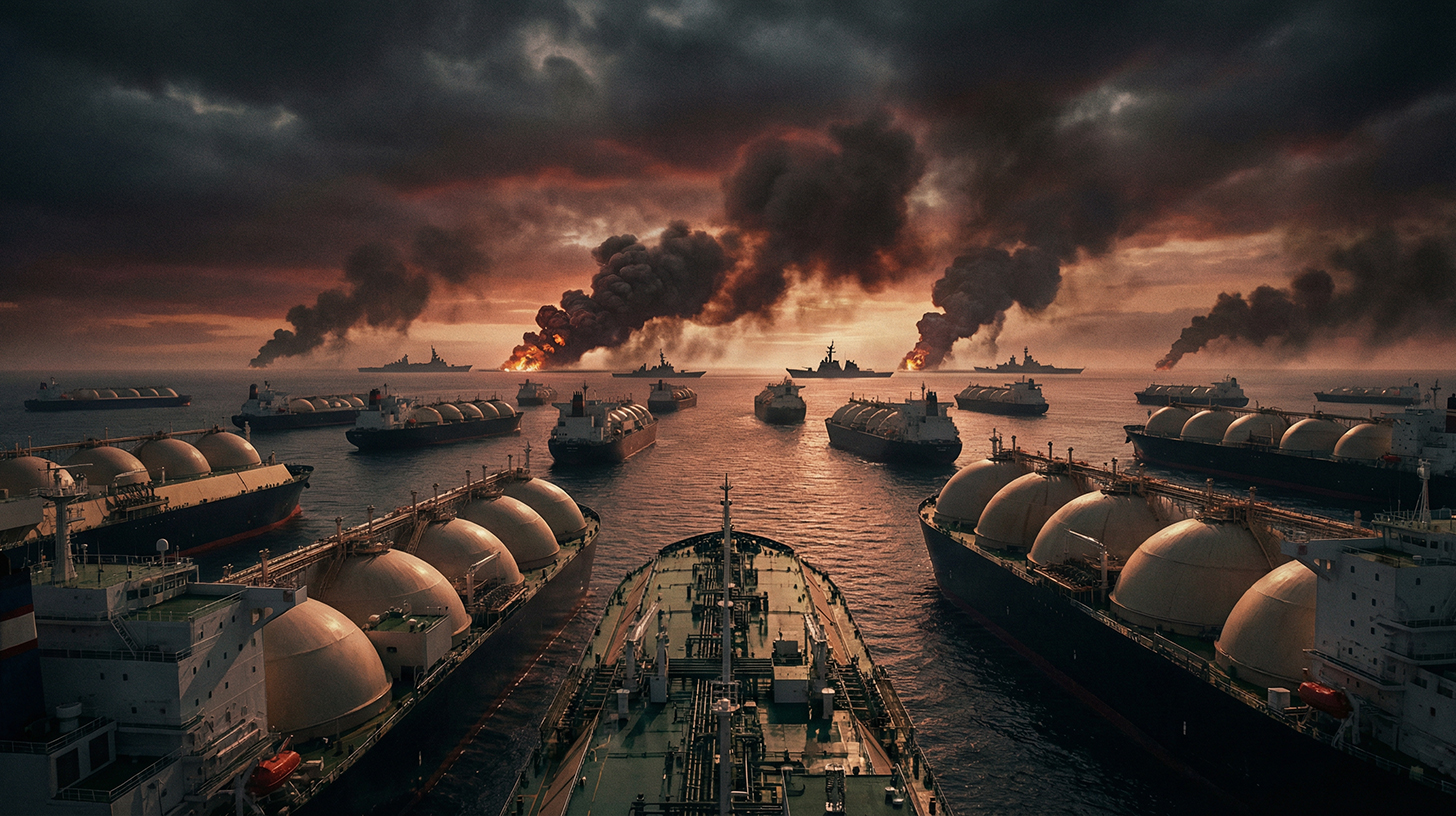
Energy crisis 2.0? US-Israel-Iran war triggers natural gas price shock: sharpest price jump since the Ukraine war – Creative image: Xpert.Digital
Strait of Hormuz closed: Why Europe's empty gas storage facilities are now becoming a dangerous trap
Red alert for the economy: The global fight for liquefied natural gas (LNG) is escalating
A major military strike in the Middle East has plunged global energy markets into unprecedented chaos – hitting Europe at its most vulnerable point. Following coordinated attacks by the US and Israel on Iranian targets at the end of February 2026, Tehran has effectively closed the most important bottleneck of the global economy: the Strait of Hormuz. The sudden blockade of this waterway, through which roughly one-fifth of the world's liquefied natural gas (LNG) and vast quantities of crude oil are transported daily, has triggered the sharpest price surge on the stock markets since the start of the war in Ukraine. For Germany and the European Union, this escalation comes at an absolutely inopportune time. With historically low gas storage levels, in some cases barely exceeding 20 percent, and an already fragile economy, a brutal scramble for scarce LNG supplies on the world market is now looming. Analysts are already warning of a price explosion that could not only wipe out the hard-won containment of inflation but also trigger a new, severe recession. The following analysis shows how realistic scenarios of gas prices far above current levels are and what this geopolitical turning point means for industry, the ECB and consumers.
Related to this:

When the strait becomes a weapon: How the Iran conflict is hitting Europe's most vulnerable flank
On the morning of March 2, 2026, European energy markets experienced the sharpest price surge since the Russian invasion of Ukraine. The benchmark TTF futures contract on the Amsterdam exchange jumped by as much as 26.63 percent, reaching €40.47 per megawatt-hour. The trigger was not a technical failure, a storage bottleneck, or a cold winter day, but a military strike that, within hours, crippled the most critical bottleneck of global energy trading. What began on the weekend of February 28 with the joint US and Israeli attacks on Iran unfolded within 48 hours into a crisis whose economic consequences are still difficult to assess. The Strait of Hormuz, that 54-kilometer-wide strait between Iran and Oman, which is only 3.7 kilometers narrow at usable shipping lanes and through which around 20 million barrels of crude oil and about one-fifth of the world's liquefied natural gas are transported daily, is effectively closed. What this means for European energy supply, the German economy and the global economy requires a sober but ruthless analysis.
The escalation chain: From airstrike to trade blockade
The military sequence unfolded with a speed that surprised even seasoned geostrategists. On February 28, 2026, the US and Israel, in a coordinated operation, attacked Iranian nuclear facilities, military installations, and government buildings. Among those killed was Iranian Supreme Leader Ayatollah Ali Khamenei, as confirmed by the Israeli army and Iranian state media. Iran responded with retaliatory strikes against Israeli territory and US military bases in the Gulf States. However, the decisive factor for the energy markets was the immediate consequence of the attacks on the Iranian heartland: The Islamic Revolutionary Guard Corps began transmitting VHF radio messages to all ships in the Strait of Hormuz prohibiting passage. Although Iran did not declare a formal blockade, this measure proved almost entirely effective. Ship tracking data showed a 40 to 50 percent decrease in traffic within a few hours, with the remaining vessels predominantly attempting to leave the strait. At least three tankers were attacked near the Strait of Hormuz, including an oil tanker flying the Palau flag called Skylight, whose crew had to be evacuated.
The international shipping industry reacted swiftly. Hapag-Lloyd, the world's fifth-largest container shipping company, suspended all transits through the Strait of Hormuz. Maersk and Japanese shipping companies like Nippon Yusen followed suit. Simultaneously, international insurers began withdrawing coverage for ships in the Persian Gulf, triggering a mandatory seven-day cancellation period and rendering even those shipments that were still physically feasible economically impossible. The effective blockade of the Strait of Hormuz, should it continue, represents a virtually unprecedented event in history. Even during the Iran-Iraq War of the 1980s, when both sides attacked hundreds of merchant ships, transit was never completely halted.
The bottleneck of the global economy: The strategic dimension of the Strait of Hormuz
The importance of the Strait of Hormuz for global energy supply can hardly be overstated. It is the only sea access to the Persian Gulf and thus the lifeline for the region's major oil and gas exporters: Saudi Arabia, Iraq, Kuwait, the United Arab Emirates, Qatar, and Iran itself. In 2024, an average of approximately 20 million barrels of crude oil passed through this strait daily, representing about 20 percent of global consumption. The US Energy Information Administration (EIA) estimates that 84 percent of the crude oil and condensate transported through Hormuz, as well as 83 percent of LNG shipments, are destined for Asia. For the global liquefied natural gas (LNG) market, the Strait of Hormuz is even more critical than for the oil market. Qatar, the world's third-largest LNG exporter after the US and Australia, ships almost its entire annual production of around 80 million tons of LNG through this passage. Together with exports from the United Arab Emirates, this accounts for approximately 21 percent of the global LNG supply.
For Europe, this blockade represents an immediate threat on two levels. First, it eliminates Qatari deliveries, which, while representing a moderate share of around 5 to 6 percent of total EU gas imports, have a disproportionately large price impact in an already strained market, as these marginally available quantities are insufficient. Second, and far more significantly, a blockade of Qatari LNG deliveries to Asia triggers a global scramble for supply. Since around 70 percent of Qatari volumes normally go to Asia, Asian buyers are forced to turn to alternative sources, primarily US LNG, a substantial portion of which has previously flowed to Europe. The result is a global bidding war for limited available LNG volumes, driving prices up worldwide.
The price reaction: TTF, Brent and the fear of a repeat of 2022
The immediate price reaction to the crisis was sharp, but still relatively moderate given the historical context. The TTF reference price climbed to €40.47 per megawatt-hour on March 2nd, representing an increase of around 27 percent compared to the previous day and marking the strongest daily jump since August 2023. Just the Friday before the weekend, the price stood at €31.89 per MWh. By comparison, in January 2026, amidst a cold snap, the TTF price had already reached values around €38 per MWh, and at the height of the 2022 energy crisis, it had soared to an all-time high of €345 per MWh. The current price is therefore still far from the crisis levels of 2022, but significantly above the levels of the preceding months. Prices had been declining for almost the entire year of 2025: From over 51 euros in February 2025, the TTF had fallen to 26.55 euros by mid-December.
On the oil market, the price of Brent crude jumped by around ten percent to about $80 per barrel. Analysts consider $80 to $85 possible in the short term. Should Iranian oil disappear from the market, but the Strait of Hormuz remain open, it could reach $90 to $100. In the event of a prolonged blockade, scenarios extend to $120 or even $150 per barrel, coupled with an increased risk of recession.
The crucial question is: How much higher can prices rise? Goldman Sachs has modeled several scenarios to answer this. Should shipping through the Strait of Hormuz be completely halted for a month, European gas prices and Asian spot LNG prices could increase by 130 percent, reaching around $25 per million British thermal units (MBTU). With a disruption lasting more than two months, European gas prices could climb to $35 per MMBtu. Converted to the European unit of measurement, a price of $25 per MMBtu would correspond to a TTF price of approximately €74 per MWh, a level already identified as the threshold for demand destruction during the 2022 crisis. A hypothetical prolonged and comprehensive disruption of gas supplies through the Strait of Hormuz could, according to Goldman Sachs estimates, even drive European natural gas prices above €100 per MWh.
Europe's vulnerable flank: Gas storage at a historic low
The current crisis has hit Europe's gas supply at a time of heightened vulnerability. At the time of the escalation, EU-wide gas storage facilities were only about 31 percent full, significantly below the previous year's figure of 40 percent. The situation is particularly dramatic in Germany: Europe's largest gas market had storage levels of only around 20.5 percent, the lowest since the 2021/22 energy crisis. By comparison, a year earlier, German storage facilities were at around 56 percent. The reason for these historically low levels lies in a combination of an unusually cold winter in 2025/26, the resulting increased demand for heating, and lower wind power generation, which had to be compensated for by increased use of gas in power plants.
The Commerzbank research firm described EU gas reserves as unusually low even before the Iran escalation. Simulations by energy experts showed that under normal weather conditions, German storage levels could fall to around 16 percent by the end of March; in an extreme cold scenario, levels below 10 percent were even conceivable. Net daily withdrawals from storage facilities recently ranged from 1.2 to 1.7 terawatt-hours, while daily German gas demand could rise to 4.8 to 5.2 terawatt-hours during periods of severe cold. Imports via Norwegian pipelines and LNG terminals covered a maximum of 3.1 to 3.4 terawatt-hours per day of this demand.
This situation means that Europe is entering the upcoming storage replenishment season with historically low levels. Normally, the period for replenishing storage facilities for the following winter begins in the spring. EU regulations stipulate that storage facilities must be brought up to defined minimum levels by autumn. This process requires massive LNG imports, and at precisely this moment, a geopolitical crisis is intensifying competition for available quantities on the global market. Analysts at Wells Fargo put it succinctly: Europe is in a difficult position, entering the replenishment season with historically low gas reserves and now having to purchase large amounts of energy just when prices are expected to rise.
Europe's LNG supply: Diversification under stress test
The European gas supply landscape has fundamentally changed since the 2022 energy crisis. The continent has compensated for its dependence on Russian pipeline gas through a massive expansion of LNG imports. As recently as January 2026, the International Energy Agency predicted that Europe would set a new record for LNG imports that year, reaching 185 billion cubic meters, following 175 billion cubic meters the previous year. The USA has become Europe's dominant LNG supplier, accounting for almost 60 percent of imports. Norway remains the most important single supplier via pipelines, providing around 30 percent of EU gas supplies. Azerbaijan has expanded its deliveries to Europe and has also been supplying Austria and Germany since 2026.
In parallel, Europe has significantly expanded its regasification capacities. Germany, which had no LNG import infrastructure before the 2022 crisis, now operates several terminals. The LNG terminal on the Croatian island of Krk has increased its capacity to 6.1 billion cubic meters per year and supplies Southeast Europe. Poland's terminal in Świnoujście has been expanded to a capacity of 8.3 billion cubic meters per year. The global LNG supply surge, driven primarily by new US export capacity and the planned doubling of Qatari production, was expected to significantly ease market pressures between 2026 and 2029.
But this very diversification strategy is now being tested for its resilience in times of crisis. The Qatari share of Europe's LNG imports, which temporarily reached around 20 percent in 2022 at the peak of the search for replacements for Russian gas, had fallen to about 10 percent by 2025, as Qatar had increasingly redirected its exports to Asia. In absolute terms, Europe imported only around 6 million tons of LNG from Qatar in the first nine months of 2025, a decrease of 19.5 percent compared to the previous year. The direct supply impact of a Hormuz blockade for Europe is therefore less than for countries like India or China, which source 45 and 25 percent of their total LNG imports from Qatar, respectively. The problem, however, lies in the indirect price effect: if these Asian buyers switch to the spot market, they will drive up prices for everyone.
Our global industry and economic expertise in business development, sales and marketing

Our global industry and economic expertise in business development, sales and marketing - Image: Xpert.Digital
Industry focus areas: B2B, digitalization (from AI to XR), mechanical engineering, logistics, renewable energies and industry
More information here:
A thematic hub offering insights and expertise:
- Knowledge platform covering global and regional economies, innovation and industry-specific trends
- A collection of analyses, insights, and background information from our key areas of focus
- A place for expertise and information on current developments in business and technology
- A hub for companies seeking information on markets, digitalization, and industry innovations
The Hormuz Trap: Why OPEC's gigantic oil reserves are now worthless
The OPEC dilemma: Reserve capacity behind closed doors
At first glance, the world has the tools to cushion a supply shock. OPEC+ holds an estimated reserve capacity of around 3.5 million barrels per day. On March 1, the alliance decided to increase oil production by 206,000 barrels per day starting in April. But this decision was assessed by Reuters as possibly the most inconsequential decision the group has made in its almost ten-year history. The reason: The reserve capacity is concentrated almost entirely in Saudi Arabia and the United Arab Emirates, whose export infrastructure relies heavily on transit through the Strait of Hormuz. Wood Mackenzie spoke of a double supply shock: Not only are current exports blocked by the strait, but the OPEC+ reserve capacity, which normally serves as a buffer to stabilize the global oil market, also becomes inaccessible when the waterway is closed.
Saudi Arabia has the East-West Pipeline with a capacity of 7 million barrels per day, and the UAE has the Fujairah Pipeline, both alternative export routes that bypass the Persian Gulf. However, the terminal infrastructure on the Saudi west coast near Jeddah limits throughput, meaning these routes can only absorb a portion of the displaced volumes. Outside of Saudi Arabia and the UAE, OPEC+ has virtually no spare capacity. The consequence is a structural lack of short-term alternatives, which is likely to keep prices elevated as long as the Strait of Hormuz remains impassable.
Related to this:

Scenarios and forecasts: From short-term shock to long-term structural shift
Further developments depend crucially on the duration and intensity of the conflict. US President Donald Trump told the British newspaper Daily Mail that he expected a campaign of around four weeks. However, historical experience teaches us that military conflicts in the Middle East can develop a momentum of their own that defies political control.
In the optimistic scenario of a brief escalation lasting one to two weeks, followed by diplomatic de-escalation and a gradual reopening of the strait, natural gas prices should return to their pre-crisis levels of around €30 to €35 per MWh after a short spike. Storage replenishment would be possible with a delay, but without fundamental bottlenecks. Oil prices would stabilize again after rising to $80 to $85.
In the medium scenario of a four- to eight-week blockade, as implied by Trump's statements, the situation would be significantly more tense. According to Goldman Sachs estimates, European gas prices could rise to €74 per MWh. A one-month blockade would theoretically result in the loss of 60 to 70 LNG tanker loads from Qatari production alone. Refilling storage facilities in Europe would be considerably hampered, significantly increasing the risk for the winter of 2026/27. Oil prices of $90 to $110 per barrel would be plausible in this scenario.
In the pessimistic scenario of a disruption lasting several months or even permanently—for example, due to an escalation of the conflict, Iranian minelaying in the strait, or continued attacks on merchant ships—European gas prices could exceed €100 per MWh, oil prices could rise above $120, and a global economic downturn could ensue. This scenario is currently considered unlikely, as both the US and China have strong economic incentives to prevent a prolonged disruption. However, in a war whose scale has already exceeded all expectations, certainties are scarce.
Consequences for the EU: Inflation, competitiveness and energy policy setback
The macroeconomic consequences for Europe, and especially for Germany, are multifaceted. Before the Iran crisis, EU inflation was on a welcome downward trajectory. In January 2026, the inflation rate in the eurozone stood at 1.7 percent, significantly below the ECB's target of 2 percent. ECB economists had forecast average inflation of 1.8 percent for 2026. The European Central Bank was on track to continue its interest rate-cutting policy, as it was even at risk of slightly undershooting its inflation target.
A sustained increase in energy prices would abruptly reverse this downward trend. Experience from 2022 demonstrates how quickly rising gas and oil prices impact the overall economy. Back then, the sharp rise in gas prices drove electricity prices in Europe to record levels: the wholesale electricity price temporarily exceeded €850 per MWh, and the weekly average reached €586 per MWh at the end of August. While the current gas price level is still far from the levels of 2022, the transmission mechanism from gas prices to electricity prices via merit order pricing on the power exchanges continues to function. Any sustained increase in gas prices automatically makes electricity more expensive as well, since gas-fired power plants in Germany continue to play a crucial role as residual load power plants.
For Germany, the crisis comes at a particularly inopportune time. After several years of weakness, the German economy is in a phase of tentative recovery. The federal government expected GDP growth of 1.0 to 1.3 percent for 2026, supported by the special fund for infrastructure, defense spending, and an immediate investment program. According to the Bundesbank, inflation in Germany was projected to be around 2.2 percent, approaching the target value. Falling energy prices were a key component of the recovery strategy: The federal government had put together a €30 billion relief package for energy prices, the gas storage levy was abolished on January 1, 2026, industrial electricity prices were subsidized, and network charges were subsidized.
A sustained rise in gas prices threatens this entire recovery scenario. Energy-intensive industries, including steel, chemicals, and paper, had only just begun to benefit from the lower energy costs. Another price shock would immediately exacerbate Germany's international competitive disadvantages. At the beginning of 2026, the average gas price for German households was 11.10 cents per kilowatt-hour, the lowest level since the high-price period of 2022. While suppliers operate with long-term contracts, meaning that an increase in wholesale prices does not immediately impact end consumers, higher purchase prices are passed on to customers in the medium term, typically with a delay of several months. Furthermore, the CO2 price in the national emissions trading scheme transitioned to a price corridor of €55 to €65 per ton of CO2 in 2026, representing an additional structural burden.
The European Central Bank faces a dilemma
For the ECB, the crisis presents a classic dilemma between combating inflation and supporting the economy. Before the outbreak of the Iran crisis, the central bank was on a comfortable path: inflation was below target, the interest rate cuts could be continued, and the economy was showing initial signs of recovery. A supply-side energy price shock fundamentally alters this calculation. Rising energy prices drive inflation upward while simultaneously suppressing economic growth. An interest rate hike to combat inflation would stifle the already fragile economy. An interest rate cut to support the economy could destabilize inflation expectations. The ECB will therefore likely wait and see, assessing the duration of the crisis, before adjusting its monetary policy strategy.
The euro itself came under immediate pressure. On March 2, the common currency fell by 0.3 percent to $1.1784, as investors priced in the energy price burden on Europe and fled to the dollar, considered a safe haven currency. This depreciation further increases the cost of energy imports denominated in dollars and intensifies the inflationary pressure.
Germany in the spotlight: Structural vulnerability despite diversification
Germany's situation warrants special consideration because, despite all diversification efforts, the country remains structurally vulnerable. Its dependence on natural gas remains considerable: gas serves not only as heating energy for roughly half of all households, but also as a raw material for the chemical industry and as a backup fuel for electricity generation during periods of low wind and solar production. While wholesale gas prices have declined significantly since the peak of the energy crisis in 2022, they remain roughly twice as high as before the crisis.
The particularly low storage level in Germany, at around 20 percent, poses a serious risk. With low storage levels, daily gas supplies increasingly depend on import flows, especially from Norway and via LNG terminals. Maximum import capacity is far from sufficient to cover the entire winter demand. Should a significant portion of global LNG volumes be lost or drastically increased in price due to the Hormuz blockage, Germany will face the question of how to replenish its storage facilities for the coming winter.
On a positive note, Germany has significantly expanded its import infrastructure since 2022. The new LNG terminals on the North Sea coast offer additional flexibility. The pipeline connection to Norway is functioning reliably. Azerbaijan has joined as an additional supplier. Furthermore, the increasing share of renewable energies in electricity generation has structurally reduced gas demand in the energy sector. In months with high wind and solar production, gas demand for electricity generation can be significantly reduced.
Nevertheless, structural industrial demand for gas remains, and the current weakness of this demand is less an expression of a successful energy transition than a symptom of the three-year economic crisis. The falling gas prices of recent months have therefore been a double-edged signal: they relieved pressure on the economy but simultaneously reflected a shrinking industrial base. Another price shock would accelerate this downward trend in industry and trigger relocation decisions that are unlikely to be reversed.
The global dimension: competition for scarce quantities
The Iran crisis is not having an isolated impact on Europe, but is reshaping the global energy architecture. China, the world's largest energy importer, is expected to reduce its imports by up to 2 million barrels per day compared to February levels when current price increases impact deliveries in May and June. India, the second-largest Asian importer of crude oil, is expected to increase its purchases of Russian crude again, despite previous commitments to the US to reduce them. For India, security of supply takes precedence over diplomatic obligations, especially since the Iran conflict poses an immediate threat to the country's supply chains.
A classic zero-sum game is unfolding in the LNG market. The Qatari volumes that normally flow to Asia are no longer available. Asian buyers will attempt to divert US LNG that was previously destined for Europe. Price-sensitive buyers in Asia, such as India, may reduce their imports, and China could also curtail spot purchases or even resell contracted supplies. Europe, in turn, might be forced to reduce import rates and slow down storage replenishment. This global scramble will drive prices up until demand is sufficiently disrupted to establish a new equilibrium.
The IEA had forecast an increase in global LNG supply of more than 7 percent for 2026, driven primarily by new North American projects. This additional supply is a positive sign, as it could ease the global market and compensate for some of the shortfall in Hormuz volumes. However, this optimistic forecast was based on the assumption of stable markets. Whether the new capacities can be ramped up quickly enough to mitigate the immediate shock remains an open question.
The next stage of the energy security debate
The current crisis reveals that while the European energy security strategy has made considerable progress since 2022, it still has fundamental weaknesses. Diversifying gas supplies away from Russia was a necessary but insufficient measure. Dependence on LNG imports transported via vulnerable maritime routes has merely replaced one geopolitical risk with another. The EU committed to ending all Russian gas, oil, and nuclear imports by the end of 2027, and member states were required to submit national diversification plans by March 1, 2026. These plans may now need to be fundamentally revised in light of the Hormuz crisis.
The medium-term options for action in Europe can be summarized along four axes. First, the expansion of renewable energies must be accelerated, as every kilowatt-hour of electricity from wind and solar replaces a kilowatt-hour of gas, thus reducing dependence on vulnerable import routes. Second, energy efficiency in buildings and industry must be drastically increased to structurally reduce gas consumption. Third, storage infrastructure should be expanded and minimum level regulations tightened to ensure better buffering against supply shocks. Fourth, stronger international coordination is needed, particularly with the US and Asian consumer countries, to ensure an orderly distribution of scarce gas volumes in a crisis, rather than being consumed by ruinous bidding wars.
In the short term, the situation remains volatile and highly uncertain. Financial markets are currently pricing in a moderate escalation scenario, with risk premiums still relatively low. Should the crisis worsen or prolong, significantly higher energy prices, a resurgence of inflation, and a severe economic downturn in Europe would be the likely consequences. The coming days and weeks will show whether diplomatic channels can break the spiral of escalation or whether Europe must prepare for a second energy crisis within just four years. One thing is already clear: the supposed normalization of European energy markets, observed for much of 2025, has proven to be a fragile illusion. The geopolitical vulnerability of gas supplies remains the Achilles' heel of an industrial region that, while on the path to climate neutrality, will still be dependent on reliable fossil fuels for decades to come.
Consulting - Planning - Implementation

Konrad Wolfenstein
I would be happy to serve as your personal advisor.
contact me at wolfenstein ∂ xpert.digital
Just call me on +49 7348 4088 965 (Munich) .










