
Impact of urbanization: Urban or urban heat island - avoided through solar roofing while generating electricity

Available in 27 languages 📢
Prefer Xpert.Digital on GoogleⓘPublished on: November 4, 2022 / update from: August 1, 2023 - Author: Konrad Wolfenstein
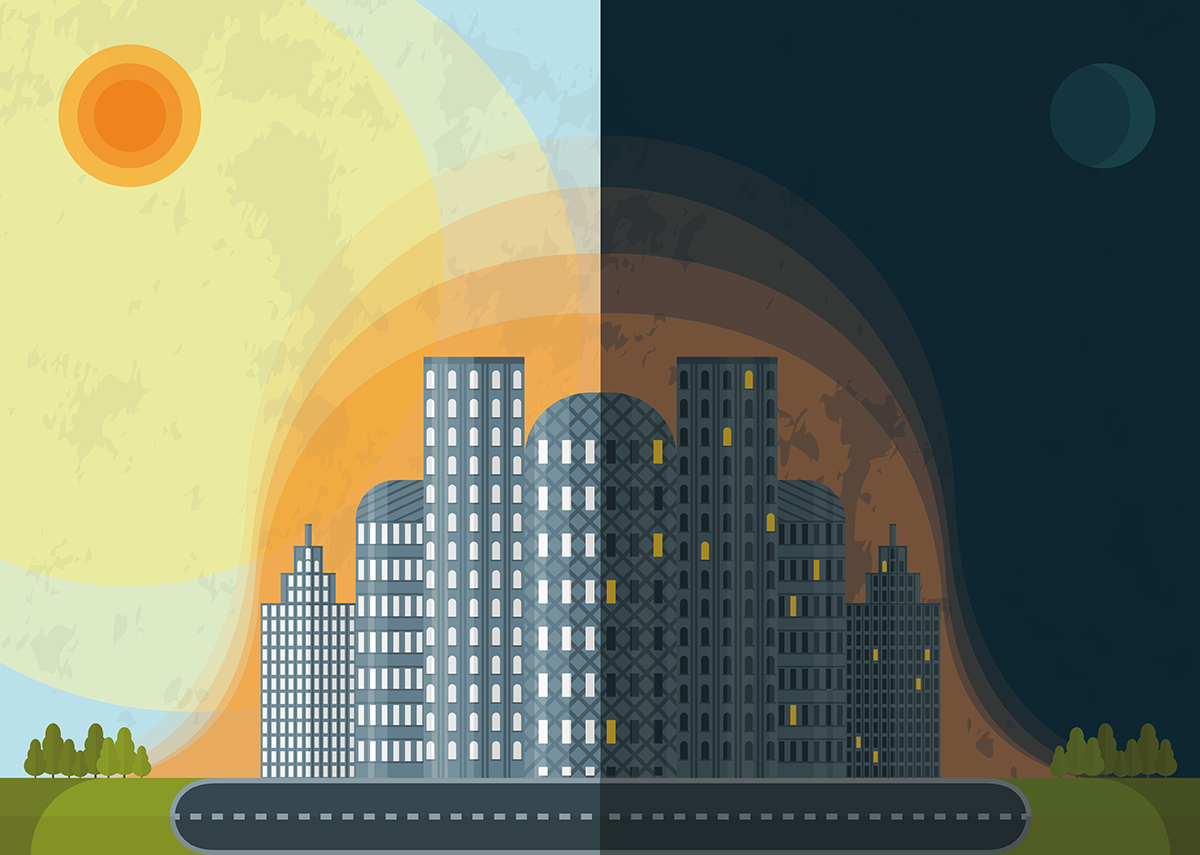
Impact of Urbanization: Urban Heat Islands – Image: ValentinaKru|Shutterstock.com
Urban heat island (UHI)
An urban heat island is an urban or metropolitan area that is significantly warmer than surrounding rural areas due to human activity. The temperature difference is usually greater at night than during the day and is most noticeable when winds are light. UHI is particularly noticeable in summer and winter. The main cause of the UHI effect is the change in the land surface. A study has shown that heat islands can be influenced by proximity to different types of land cover, such that proximity to barren land causes urban soil to warm, while proximity to vegetation makes it cooler. The waste heat generated by energy use is another factor. As a population center grows, its area increases and the average temperature increases. The term heat island is also used; it can be used for any area that is relatively hotter than the surrounding area, but generally refers to areas disturbed by humans.
Monthly rainfall is greater in the lee of cities, partly due to the UHI. Increasing heat in urban centers lengthens growing seasons and reduces the occurrence of weak tornadoes. The UHI worsens air quality by increasing the production of pollutants such as ozone, and it worsens water quality as warmer water flows into the region's rivers and strains their ecosystems.
Not all cities have a pronounced urban heat island, and the characteristics of the heat island depend heavily on the background climate of the area in which the city is located. The urban heat island effect can be reduced by green roofs, passive daytime radiative cooling, and the use of light-colored surfaces in urban areas that reflect more sunlight and absorb less heat. Urbanization has exacerbated the impacts of climate change in cities.
The phenomenon was examined and described by Luke Howard for the first time in the 1810s, although he was not the one who named the phenomenon. The research of the urban atmosphere continued in the nineteenth century. Between the 1920s and 1940s, researchers in Europe, Mexico, India, Japan, Japan and the United States were looking for new methods for understanding the phenomenon in the emerging area of local climatology or microscale meteorology. In 1929, Albert Peppler used the term “Staedtische Waerminsel”, which is the first example to be used for a Staedtische Waerminsel. Between 1990 and 2000, around 30 studies were published annually; This number rose to 100 by 2010, and in 2015 there were already more than 300.

- Cory (https://commons.wikimedia.org/wiki/File:HeatIsland_Kanto_en.png), “HeatIsland Kanto en”, https://creativecommons.org/licenses/by-sa/3.0/legalcode Cory , HeatIsland Kanto en , CC BY-SA 3.0
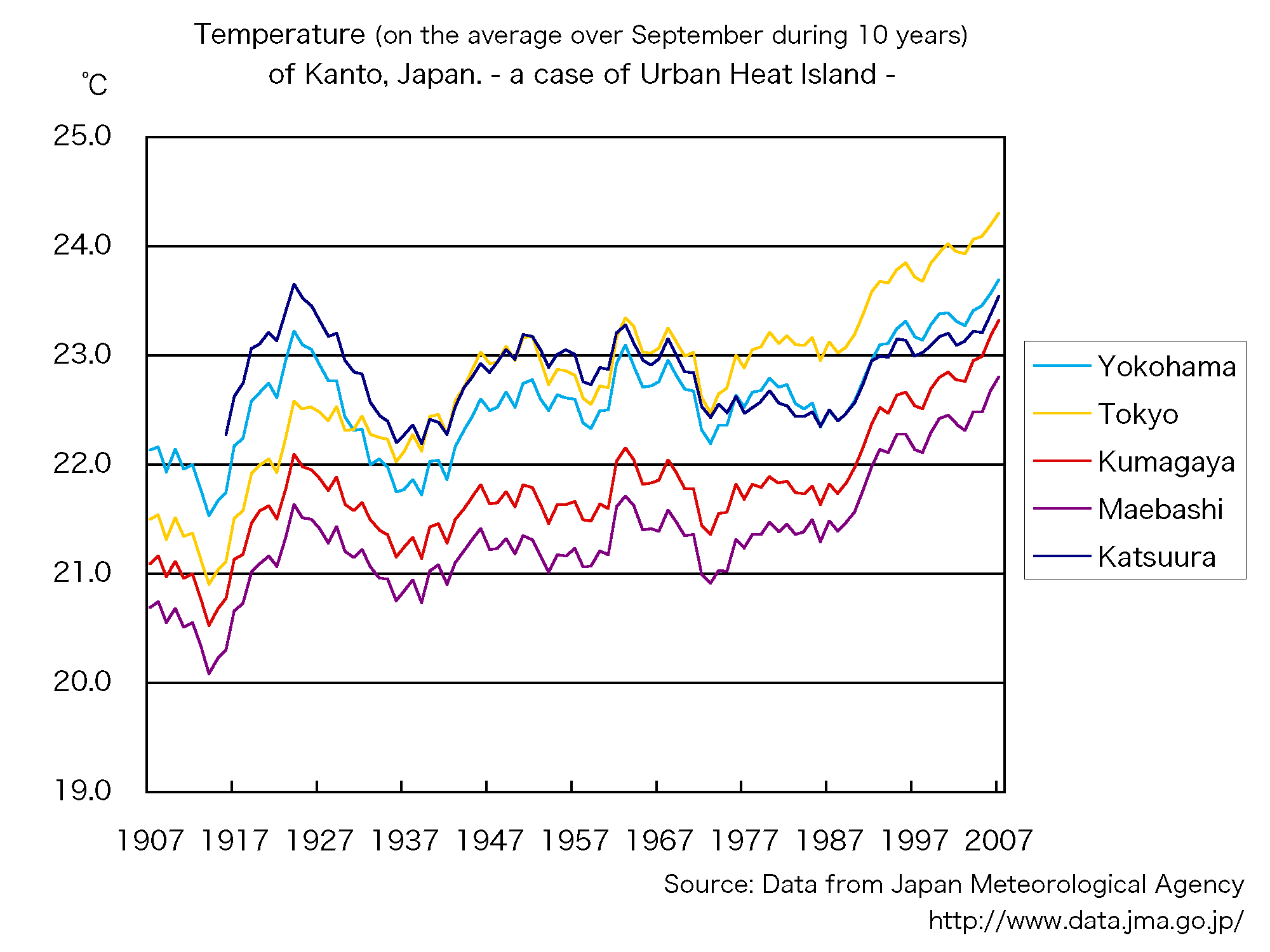

- Urban heat island / TheNewPhobia , Wikimedia Commons / TheNewPhobia, Wikimedia Commons
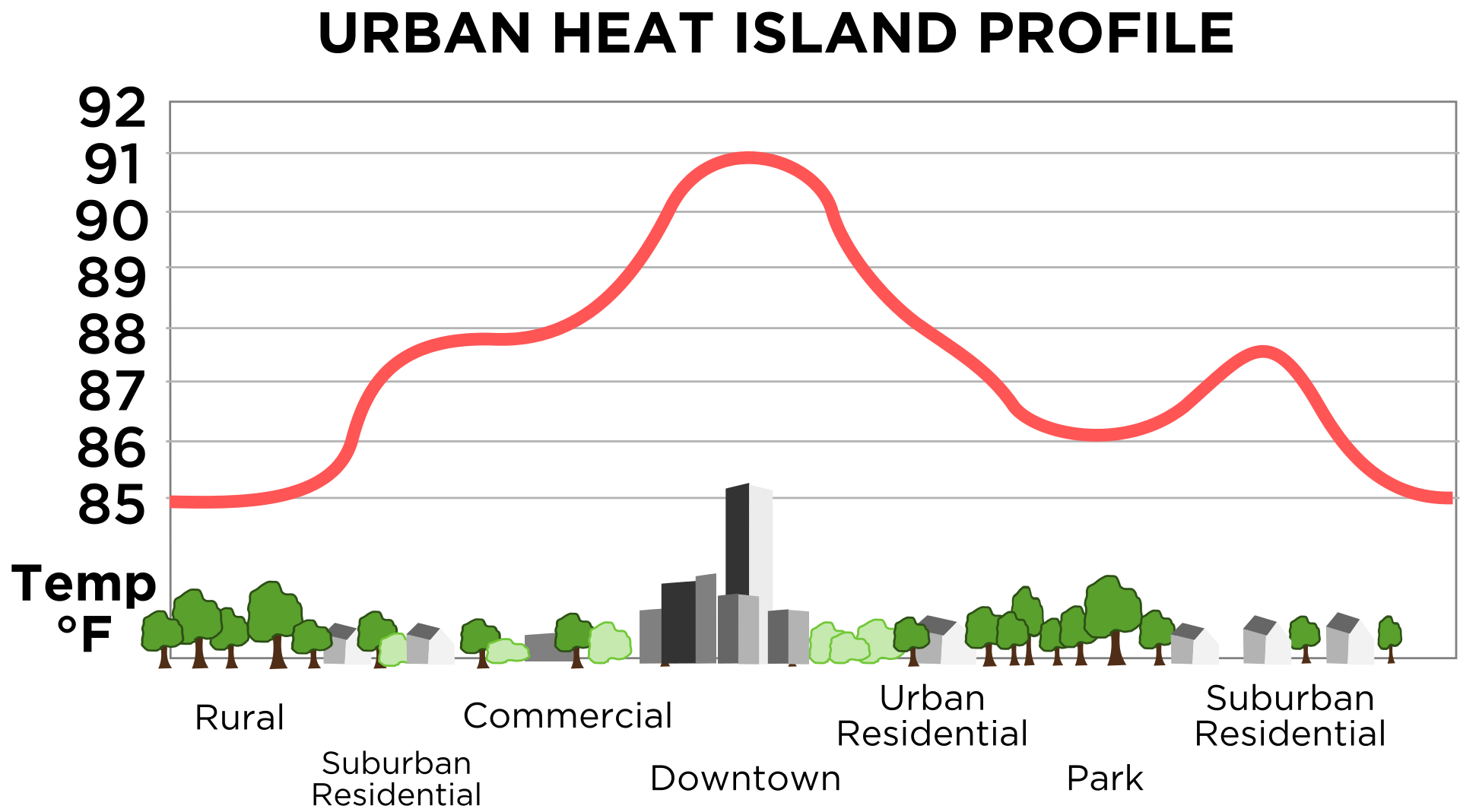
Causes of urban heat islands
There are several causes of an urban heat island. Dark surfaces absorb significantly more solar radiation, which causes streets and buildings in urban areas to heat up more during the day than in suburban and rural areas. The materials commonly used for pavements and roofs in urban areas, such as concrete and asphalt, have significantly different thermal bulk properties (including heat capacity and thermal conductivity) and surface radiative properties (albedo and emissivity) than surrounding rural areas. This changes the energy balance of the urban area, often resulting in higher temperatures than in the surrounding rural areas]. Another important reason is the lack of evapotranspiration (e.g. due to a lack of vegetation) in urban areas. The US Forest Service found in 2018 that cities in the United States were losing 36 million trees each year. As vegetation declines, cities also lose the shade and cooling effect of trees through evaporation.
Other causes of a UHI are due to geometric effects. The high buildings in many urban areas offer several surfaces for reflection and absorption of sunlight, which increases the efficiency of the warming of urban areas. This is referred to as the “urban canyon effect”. Another impact of buildings is the blocking of wind, which also prevents cooling by convection and the derivation of pollutants. The waste heat from cars, air conditioning systems, industry and other sources also contributes to the UHI effect. The UHI can also increase a high degree of pollution in urban areas, since many forms of pollution change the radiation properties of the atmosphere. Uhi not only increases the temperatures in the cities, but also the ozone concentration, since ozone is a greenhouse gas, the formation of which accelerates with the increase in temperature.
In most cities, the temperature difference between the urban and surrounding rural areas is greatest at night. Although the temperature difference is significant all year round, it is generally greater in winter. The typical temperature difference between the city center and the surrounding fields is several degrees. The temperature difference between a city center and surrounding suburbs is sometimes mentioned in weather reports, e.g. B. 20 °C in the city center, 18 °C in the suburbs. The mean annual air temperature of a city with a population of 1 million or more can be 1.0-3.0 °C warmer than the surrounding area. In the evening the difference can be up to 12 °C.
The UHI can be defined as either the air temperature difference (the Canopy UHI) or the surface temperature difference (Surface UHI) between the urban and rural areas. Both have slightly different diurnal and seasonal variability and have different causes.
Time-of-day-dependent behavior of urban heat islands
The IPCC found that “it is known that urban heat islands increase the night temperatures more than the daily temperatures compared to non-urban areas. In Barcelona, Spain, for example, the daily maximum temperatures are cooler by 0.2 ° C and the minimum temperatures around 2.9 ° C are warmer than in a nearby rural station. In a description of Luke Howard's very first Uhi report from the late 1810s it says that the city center of London is warmer at night by 2.1 ° C than the surrounding area. Although the warmer air temperature within the UHI is generally felt at night, urban heat islands have a significant and somewhat paradoxical daily behavior. The air temperature difference between the Uhi and the surrounding area is large at night and small during the day. The opposite applies to the skin temperatures of the urban landscape within the UHI.
During the day, especially when the sky is clear, urban surfaces heat up by absorbing solar radiation. Surfaces in urban areas tend to warm faster than those in surrounding rural areas. Due to their high heat capacity, urban surfaces act like a huge reservoir of thermal energy. For example, concrete can store around 2,000 times as much heat as an equivalent volume of air. Therefore, the high daytime surface temperature within the UHI can be easily detected by thermal remote sensing. As is often the case with daytime warming, this warming also results in convective winds within the urban boundary layer. It is suggested that due to the resulting atmospheric mixing, perturbation to air temperature within the UHI is generally minimal or non-existent during daytime, although surface temperatures can reach extremely high values.
At night the situation is reversed. The absence of solar heating leads to a decrease in atmospheric convection and stabilization of the urban boundary layer. If the stabilization is sufficient, an inversion layer forms. This traps urban air near the surface and keeps surface air warm from still-warm urban areas, resulting in warmer nighttime air temperatures within the UHI. Apart from the heat retention properties of urban areas, the nighttime maximum in urban canyons could also be due to the fact that the view of the sky is blocked during cooling: surfaces lose heat at night mainly through radiation to the comparatively cool sky, and this is absorbed by the buildings in one urban area blocked. Radiative cooling is more dominant when wind speeds are low and the sky is clear, and indeed under these conditions the UHI is greatest at night.
The Intergovernmental Panel on Climate Change (IPCC)
The Intergovernmental Panel on Climate Change (IPCC) - The intergovernmental committee for climate changes is an intergovernmental committee of the United Nations that is responsible for the further development of knowledge about the climate change caused by humans. It was founded in 1988 by the World Organization for Meteorology (WMO) and the United Nations Environmental Program (UNEP) and later approved by the United Nations General Assembly. He is based in Geneva, Switzerland, and consists of 195 member states. The IPCC is directed by its Member States, who choose a board of directors from scientists who acts for the duration of an evaluation cycle (usually six to seven years). The IPCC is supported by a secretariat and various “Technical Support Units” from specialized working groups and task forces.
The IPCC provides objective and comprehensive scientific information about the climate change caused by humans, including natural, political and economic effects and risks as well as possible reaction options. The IPCC does not carry out its own research and does not observe climate change, but rather takes regular, systematic review of the entire relevant published literature. Thousands of scientists and other experts voluntarily contact the data and put together the most important results in “evaluation reports” for political decision -makers and the public.
The IPCC is an internationally recognized authority on climate change, and its work is widely supported by leading climate scientists and governments. Its reports play a key role in the United Nations Framework Convention on Climate Change (UNFCCC), with the Fifth Assessment Report significantly influencing the landmark 2015 Paris Agreement. The IPCC shared the Nobel Peace Prize with Al Gore in 2007 for its contribution to understanding climate change.
In 2015, the IPCC began its sixth evaluation cycle, which is due to be completed in 2023. In August 2021, the IPCC published its contribution from Working Group I to the sixth status report (IPCC AR6) on the physical foundations of climate change, which the newspaper The Guardian described as the sharpest warning "of great inevitable and irreversible climate changes", a topic that was taken up by many newspapers worldwide. On February 28, 2022, the IPCC published its report from Working Group II about effects and adaptation. The contribution of working group III on the topic of “weakening climate change” on the sixth status report was published on April 4, 2022. The sixth status report is to be completed in March 2023 with a synthesis report.
During the period of the Sixth Assessment Report, the IPCC published three special reports: the Special Report on Global Warming of 1.5°C in 2018, as well as the Special Report on Climate Change and Land (SRCCL) and the Special Report on Ocean and Cryosphere in a Changing Climate (SROCC), both in 2019. It also updated its methods in 2019. Therefore, the sixth assessment cycle has been described as the most ambitious in the history of the IPCC.
Seasonal behavior of urban heat islands
The temperature difference of the urban heat island is not only greater at night than during the day, but also greater in winter than in summer. This is especially true in snowy areas, as cities tend to retain snow for a shorter period of time than surrounding rural areas (this is due to the greater insulating capacity of cities as well as human activities such as plowing). This reduces the albedo (measure of the brightness of a body) of the city and increases the warming effect. Higher wind speeds in rural areas, especially in winter, can also contribute to cooler areas than urban areas. In regions with distinct rainy and dry seasons, the urban heat island effect is greater in the dry season. The thermal time constant of wet soil is much higher than that of dry soil. Consequently, wet rural soils cool more slowly than dry rural soils, helping to minimize the nighttime temperature difference between urban and rural areas.
Urban heat island forecasting
If a city or municipality has a good weather observation system, the UHI can be measured directly. An alternative is to use a complex simulation of the location to calculate the UHI or to use an empirical approximation method. Such models make it possible to incorporate the UHI into estimates of future temperature increases in cities as a result of climate change.
Leonard O. Myrup published the first comprehensive numerical treatment for predicting the effects of the urban heat island (UHI) in 1969. In his work he gives an overview of the UHI and criticizes the theories that existed at the time as being too qualitative. A general numerical energy budget model is described and applied to the urban atmosphere. Calculations for several special cases as well as a sensitivity analysis are presented. The model is found to predict the correct magnitude of urban temperature excess. The heat island effect is the net result of several competing physical processes. In general, reduced evaporation in the city center and the thermal properties of urban building and pavement materials are the dominant parameters. It is suggested that such a model could be used in engineering calculations to improve the climate of existing and future cities.

Energetic urbanization: climate analyzes and the master plan for 100% climate protection – Image: Xpert.Digital
With Asphalt+ measures against urban heat islands
Asphalt+
asphalt parking & solar carport power generation
= functionality expansion & densification
= measure against urban heat islands
Asphalt has become increasingly popular for covering cities in recent years. This is due to the fact that asphalt is a very durable and inexpensive surface. However, asphalt also has some disadvantages, especially when used in large quantities in urban areas.
One of the biggest disadvantages of asphalt is that it heats up the environment very much. This is a problem because it is already very hot in the cities in the summer months and the temperatures rise even further due to the many asphalt surfaces. This means that city residents suffer greatly from the heat and can even lead to health problems.
So overheating of cities is a big problem caused by the use of asphalt. There are various options to counteract this problem. One possibility is to create more green spaces in cities, as trees and plants can absorb the heat. The use of solar carports or solar parking systems can also help reduce heat in cities. These systems are equipped with photovoltaic modules that use solar energy to generate electrical energy. At the same time, they provide shade and thus reduce the heating of the surrounding area.
Solar carports and solar parking systems are a good way to reduce overheating in cities. Not only are they sustainable because they do not burn fossil fuels and therefore produce no CO2 emissions, but they also help to make the temperature in cities more comfortable.
Solar parking spaces accelerate the energy transition and help combat urban heat islands
A study by 'de Lorean Power' from Switzerland showed that the parking behavior of the employees ideally corresponds to the amount of solar power generated. The daily kilometers of the electric vehicle can be covered in almost any weather and the excess can be fed into the network. The annual solar power generation in the parking lot corresponds to the energy requirement of the vehicle. Solar parking spaces of all infrastructure areas have the greatest potential for electricity generation. About 2 parking spaces are available in Switzerland. In available regions, it can generate over 10 terawatt hours of solar power per year (15 % of current power consumption). "It is astonishing how few pilot plants there are," said the authors of the study. In addition, such a roof protects the car from the weather and reduces the heat of the car in summer.
According to an evaluation by the Federal Statistical Office (FSO), Switzerland has at least 5 million above-ground parking spaces (6,400 hectares) with around 4.7 million registered cars. These parking areas were recorded using a digital process that only recognizes larger adjacent areas and not individual parking spaces. Traffic experts therefore expect 8 to 10 million parking spaces. That's about 2 per car.
According to the other study “Solar power generation for infrastructure facilities and conversion areas”, above-ground or open parking areas have the greatest PV potential of all infrastructure areas. These areas can deliver up to 10 terawatt hours (TWH) PV current per year. This means that the entire electricity production in Switzerland is 65.5 TWh.
The average parking area is 12.5 square meters (2.5 meters x 5 meters). This is also the area that a solar roof must have. The energy yield of a PV system depends on many factors, including solar radiation, component efficiency and module orientation. In Thurgau, with 1 kW of installed PV power, around 1000 kWh of electricity can be generated per year (1000 kWh per 1 kWp).
Depending on the PV modules used, 1 kWp requires an installed capacity of 4 to 8 square meters. In this study, 5 m2 per kWp are calculated. This means that a 12.5 m2 parking space with 2.5 kWp output can be installed, which generates 2,500 kWh of solar power per year. The average Swiss household consumption is around 4,500 kWh/year (excluding heating, ventilation and electric vehicles).
Solar roofing variants specifically for vehicles
The modular structure of a carport system is advantageous and allows you to adapt the roof to almost any parking space, thus ensuring continued good utilization of the parking space and ensuring expandability.
Using bifacial modules, the carport can be made transparent. This is visually very interesting and leads to higher solar yields, as corresponding PV modules can also use light coming from below and thus deliver 10-20% additional yield. Bifacial technology is currently not used much because it is not necessarily cost-effective due to higher module prices. However, it is assumed that this technology will become established in the next few years.
In our 4+2+ modular and scalable solar carport system, where partially transparent and bifacial modules are used, these points apply and are now also a price alternative :
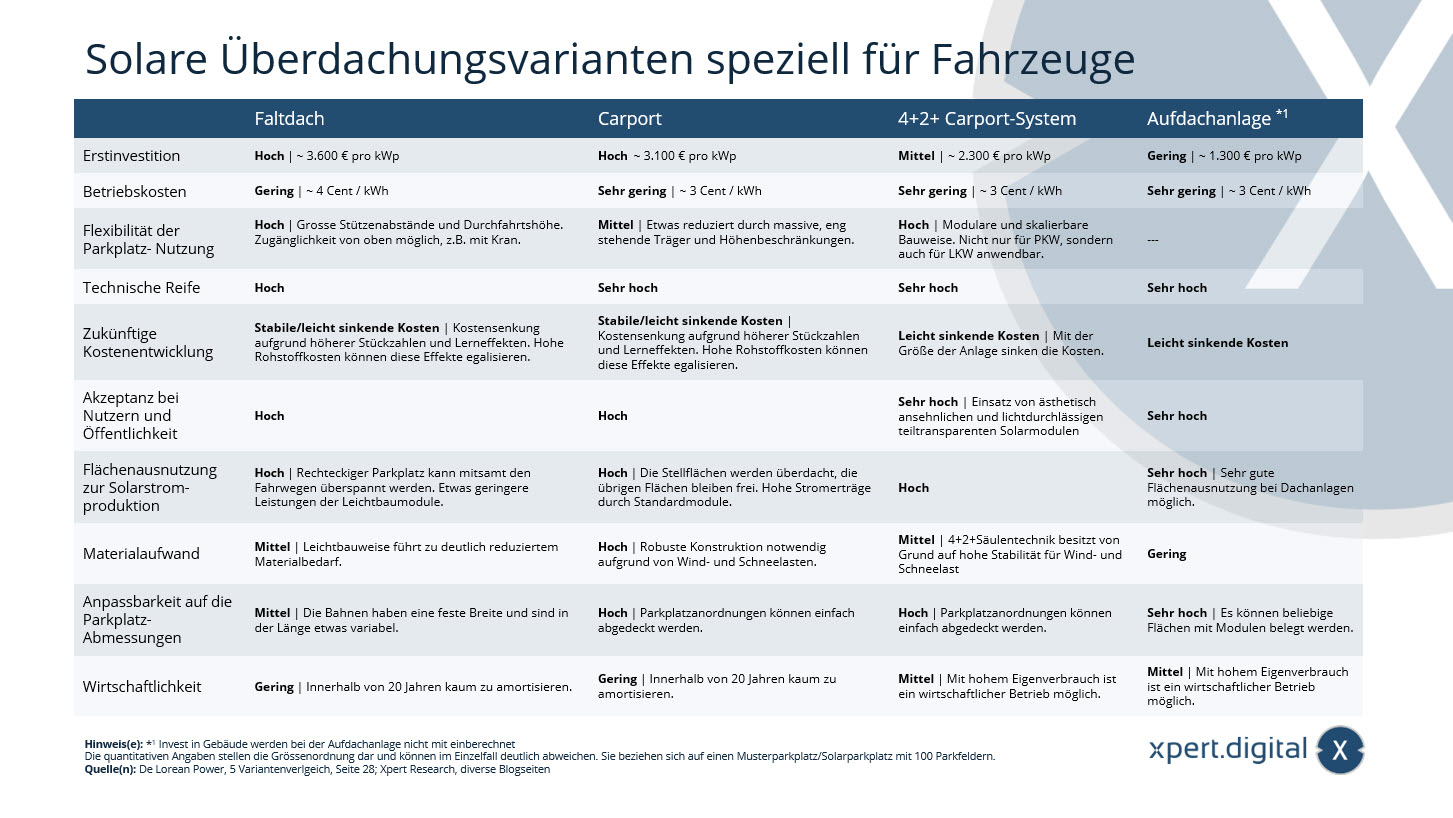
Solar roofing variants specifically for vehicles – Image: Xpert.Digital
More about it here:
We can also do large parking facilities with solar roofs!
Limitless: Modular and scalable solar carport system for cars and trucks
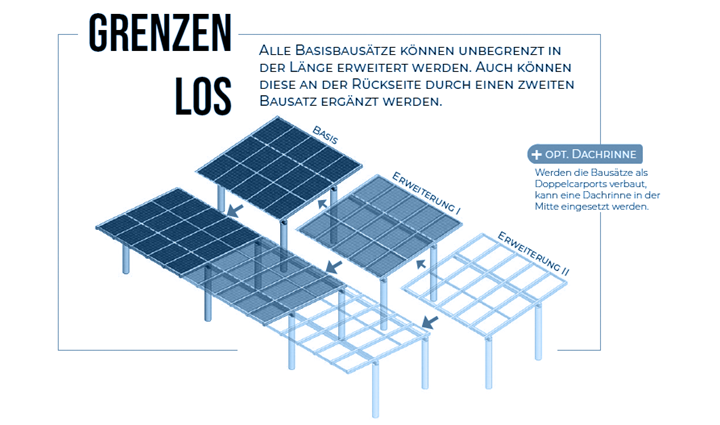
Limitless: Modular and scalable solar carport system for cars and trucks
Technical data: Modular and scalable solar carport system for cars and trucks
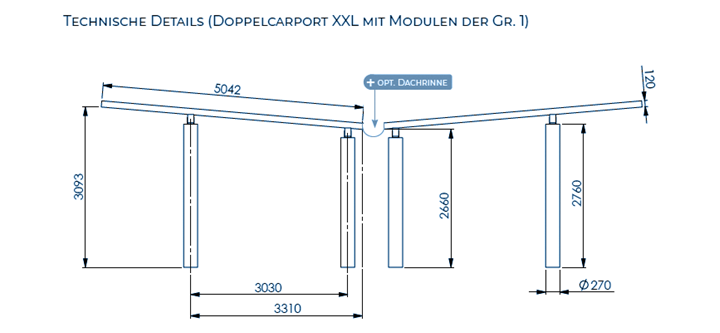
Technical data: Modular and scalable solar carport system for cars and trucks
The advantages at a glance:
- Flexible and modular (scalable) design
- Clearance height for cars from 2.66 m (expandable to 4.5 m or more for trucks)
- Parking space depth for cars up to 6.1 m, opposite possible up to 12.5 m.
The depth depends on the dimensions of the solar modules used - Solar carport system is optimally designed for partially transparent solar modules
12% / 40% light transmission (!) - With certified approval for overhead installation - Optionally with powerful LED lighting, dimmable and with motion control
- Can also be used for parking stands with inclined positioning
- No hidden costs regarding foundations
Use of point foundations (cheapest variant, no complex excavation of the ground for concrete slabs etc. necessary for statics) or installation with floor slabs, depending on the existing ground conditions/asphalting
Further sources:
- Ground foundation cost factor for solar carports
- Solar carports where there is no longer a standard - the optimal solution for every challenge with solar roofing for open parking spaces
- Solar carport systems: Which is the better and/or cheaper option?
- The solar carport strategy for open parking spaces
- The modular solar carport system for all applications and cases
Truck solar carport system
Due to the fact that the 4+2+ column technology is the most flexible solution (both technically and in terms of price) for a parking space roofing system, it can also be easily expanded and used for larger vehicles such as trucks with appropriate modifications.
Effects on animals of urban heat islands
Ant colonies in urban heat islands have increased heat tolerance without compromising cold tolerance.
Species that are able to colonize well can take advantage of the conditions created by urban heat islands to thrive in regions outside their normal range. Examples of this are the gray-headed flying fox (Pteropus poliocephalus) and the house gecko (Hemidactylus frenatus). Grey-headed flying foxes, found in Melbourne, Australia, colonized urban habitats after temperatures there increased. Due to the increase in temperature and the resulting warmer winters, the climate in the city is more similar to the northern habitat of the species in the wild.
Attempts to contain and manage urban heat islands reduce temperature fluctuations and the availability of food and water. In temperate climates, urban heat islands extend the growing season and thus change the reproductive strategies of the species that live there. This is best observed in the impact that urban heat islands have on water temperatures. Because the temperature of nearby buildings sometimes varies by more than 80°F (28°C) from the surface air temperature, precipitation warms rapidly, causing runoff into nearby streams, lakes, and rivers (or other bodies of water) to create excessive heat loads lead. Increasing thermal pollution has the potential to increase water temperatures by 11 to 17 °C (20 to 30 °F). This increase causes the fish species living in the water bodies to suffer thermal stress and shock due to the rapid change in temperature in their habitat.
Urban heat islands caused by cities have altered the natural selection process. Selection pressures such as temporal variation in food, predators, and water are relaxed, allowing a new set of selective forces to come into play. For example, there are more insects in urban habitats than in rural areas. Insects are ectothermic. This means they depend on the ambient temperature to regulate their body temperature, making the warmer climate in the city ideal for them to thrive. A study of Parthenolecanium quercifex (oak scale insects) conducted in Raleigh, North Carolina showed that this particular species prefers warmer climates and is therefore found in greater numbers in urban habitats than on oak trees in rural areas. Over time spent in urban habitats, they have adapted to thrive in warmer rather than cooler climates.
The occurrence of non-native species depends heavily on human activities. An example of this is the populations of rock martins that nest under the eaves of buildings in urban habitats. They take advantage of the shelter that humans provide them in the upper reaches of homes, causing their populations to increase due to the additional protection and reduced numbers of predators.
Other impacts on weather and climate of urban heat islands
Aside from impacts on temperature, UHI can have secondary impacts on local meteorology, including altering local wind patterns, cloud and fog development, air humidity, and rainfall amounts. The additional warmth created by the UHI will result in stronger upward movement, which may trigger additional shower and thunderstorm activity. In addition, the UHI creates a local low pressure area during the day in which relatively moist air from the rural environment flows together, which can lead to more favorable conditions for cloud formation. Rainfall in the lee of cities has increased by 48% to 116%. Partly as a result of this warming, monthly precipitation is about 28% higher within 20 miles (32 km) to 40 miles (64 km) downwind of cities than upwind. In some cities, total rainfall has increased by 51%.
Research has been conducted in a few areas that suggests metropolitan areas are less prone to weak tornadoes due to turbulent mixing caused by the warmth of the urban heat island. Using satellite images, researchers discovered that urban climates have a noticeable impact on growing seasons up to 10 kilometers (6.2 miles) from the city edge. In 70 cities in eastern North America, the growing season was about 15 days longer in urban areas than in rural areas outside a city's influence.
Research in China has found that the urban heat island effect contributes to a warming of the climate by around 30%. On the other hand, a 1999 comparison between urban and rural areas suggested that the urban heat island effect has little influence on the evolution of global average temperature. A study concluded that cities are changing the climate in an area 2-4 times larger than their own area. Another says that urban heat islands influence the global climate by influencing the jet stream. Several studies have shown that the effects of heat islands will become more severe as climate change progresses.
Health impacts of urban heat islands
UHI can have a direct impact on the health and well-being of city residents. In the United States alone, an average of 1,000 people die each year as a result of extreme heat. Because UHIs are characterized by elevated temperatures, they can potentially increase the magnitude and duration of heatwaves in cities. Research has shown that mortality rates during a heatwave increase exponentially with maximum temperature, an effect that is exacerbated by UHI. The number of people exposed to extreme temperatures is increased by UHI-related warming. The nocturnal effect of UHI can be particularly damaging during a heatwave, depriving city dwellers of nighttime cooling in rural areas.
Research in the United States suggests that the link between extreme temperatures and mortality varies by location. Heat increases the risk of death in cities in the north of the country more than in the southern regions of the country. For example, if unusually hot summer temperatures prevail in Chicago, Denver or New York, an increased number of illnesses and deaths can be expected. In contrast, parts of the country where temperatures are mild to hot year-round have a lower public health risk from excessive heat. Research shows that residents of southern cities such as Miami, Tampa, Los Angeles and Phoenix are more accustomed to hot weather conditions and therefore less susceptible to heat-related deaths. Overall, however, people in the United States appear to be getting used to hotter temperatures further north with each passing decade, although this may be due to better infrastructure, more modern buildings, and greater public awareness.
It has been reported that higher temperatures can lead to heat stroke, heat creation, heat -lynops and heat cramps. In some studies, it was also examined how a heavy heat stroke can lead to permanent damage to the organ systems. This damage can increase the risk of early mortality because they can lead to severe impairment of the organ functions. Further complications of a heat slaughter are the breathing syndrome in adults and the disseminated intravascular coagulation. Some researchers have found that every impairment of the ability of the human body to thermalegulation theoretically increases the risk of death. This includes diseases that can affect mobility, awareness or behavior of a person. Researchers have found that people with cognitive problems (e.g. depression, dementia, Parkinson's disease) are more at risk at high temperatures and have to be particularly careful ”, since the cognitive performance is demonstrably impaired. People with diabetes, obesity, lack of sleep or cardiovascular/cerebrovascular diseases should avoid excessive heat. Some common medication that affects thermoregulation can also increase the risk of death. These include, for example, anticholinergics, diuretics, phenothiazine and barbiturates. Heat can affect not only health, but also behavior. A US study suggests that heat can make people more irritable and aggressive, and finds that the number of violent crimes increase by 4.58 out of 100,000 in each degree.
A researcher found that high UHI intensity correlates with increased levels of air pollutants that accumulate during the night and can affect the next day's air quality. These pollutants include volatile organic compounds, carbon monoxide, nitrogen oxides and particulate matter. The production of these pollutants combined with the higher temperatures in UHIs can accelerate the formation of ozone. Surface ozone is considered a harmful pollutant. Studies suggest that higher temperatures in UHIs may increase the number of polluted days, but also indicate that other factors (e.g. air pressure, cloud cover, wind speed) may also impact pollution. Studies from Hong Kong have found that neighborhoods with poorer ventilation of urban outdoor air tend to experience greater urban heat island impacts and have significantly higher all-cause mortality compared to areas with better ventilation.
The Centers for Disease Control and Prevention find that it is “difficult to create valid forecasts about heat -related diseases and deaths under different scenarios of climate change” and that “heat -related deaths are avoidable, as the decline in the overall mortality shows during heat events in the past 35 years”. However, some studies indicate that the effects of UHI can be disproportionate, since the effects can be unevenly distributed depending on the age, ethnicity and socio -economic status. This raises the possibility that the health effects of UHI are an issue of environmental justice.

- Warehouses, production halls and industrial halls with their own power source from a photovoltaic roof system - Image: NavinTar|Shutterstock.com

- Industrial plant with its own power source from an outdoor photovoltaic system - Image: Peteri|Shutterstock.com

- Plan solar systems with photovoltaic solutions for freight forwarding and contract logistics
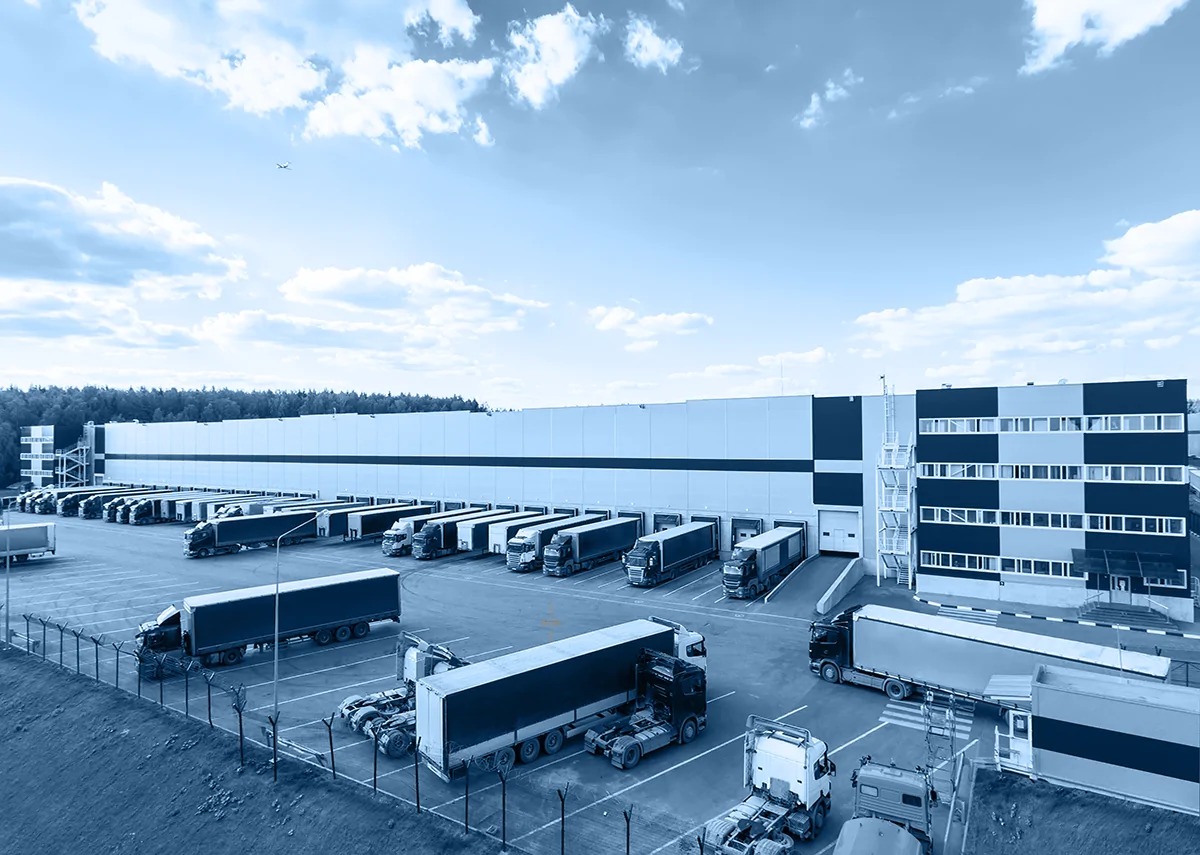
- B2B solar systems and photovoltaic solutions & advice
- Plan photovoltaics for warehouses, commercial halls and industrial halls
- Industrial plant: Plan a photovoltaic open-air system or open-space system
- Plan solar systems with photovoltaic solutions for freight forwarding and contract logistics
- B2B solar systems and photovoltaic solutions & advice
From simple solar carports to large systems: With Xpert.Solar, your individual solar carport advice – the combination of wooden substructure, steel columns and semi-transparent solar modules

Konrad Wolfenstein
I would be happy to serve as your personal advisor.
You can contact me by filling out the contact form below or simply call me on +49 7348 4088 965 (Munich) .
I'm looking forward to our joint project.
Write to me

Xpert.Digital – Konrad Wolfenstein
Xpert.Digital is a hub for industry with a focus on digitalization, mechanical engineering, logistics/intralogistics and photovoltaics.
With our 360° business development solution, we support well-known companies from new business to after sales.
Market intelligence, smarketing, marketing automation, content development, PR, mail campaigns, personalized social media and lead nurturing are part of our digital tools.
You can find out more at: www.xpert.digital – www.xpert.solar – www.xpert.plus
Keep in touch











