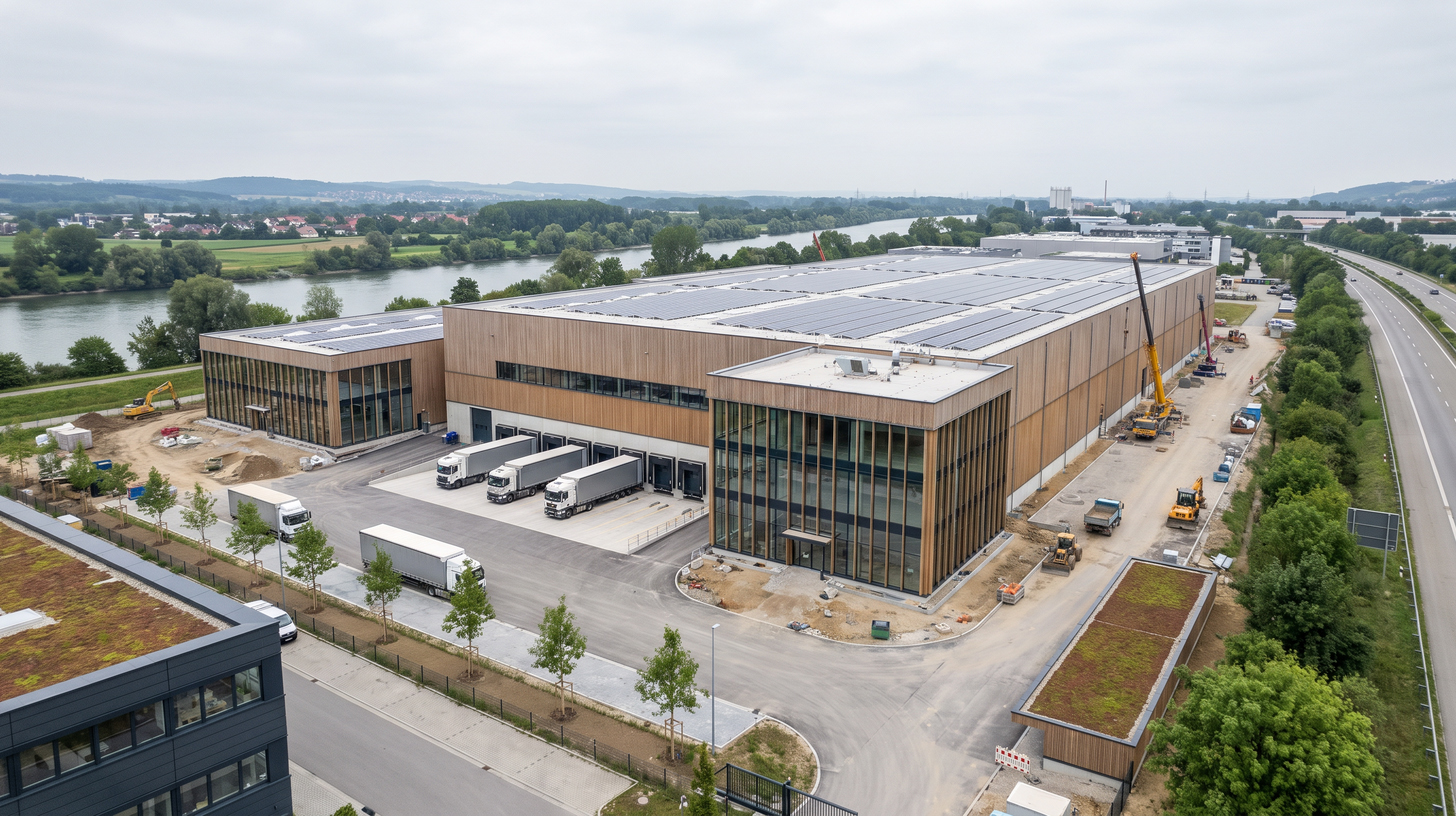
In 2026, resilience will determine which locations, networks, and business models survive – Twelve news items, one common structural break – Creative image on the topic, with AI: Xpert.Digital
AI, Energy & Geopolitics: The three new survival factors for global networks
Logistics in a pincer grip: Why efficiency in supply chains will no longer be enough from 2026 onwards
The end of pure cost optimization: Why resilience is now a matter of survival
A weak IPO in Asian e-commerce, new industrial buildings in rural Germany, billions in defense spending on the Rhine, geopolitical tensions in the Persian Gulf, and a historic labor dispute at Volkswagen: At first glance, the current economic news seems hardly to fit together. But when viewed in a strategic context, these developments all reveal the same profound structural shift. The era of purely cost-driven just-in-time supply chains is definitively over.
In 2026, the resilience of locations, networks, and business models will determine who survives in global competition. Logistics will no longer be seen as a simple physical link between production and consumer, but will transform into critical strategic infrastructure. Here, capital commitment, energy availability, data sovereignty, and geopolitical security will intersect. Those who still attempt to optimize supply chains solely for maximum centralization and minimal inventory risk their very existence. The following analysis combines twelve current news reports to create a clear economic picture and shows that the next major wave of productivity will not arise solely from further automation, but from the intelligent fusion of robust geography, controllable energy, and trustworthy data.
Economic analysis: Logistics caught in the grip of geopolitics, capital, and AI – those who only optimize supply chains lose them
The current news landscape appears heterogeneous at first glance: two new warehouses in Pohlheim, a smaller e-commerce warehouse in Emmerich, a sensor for load carriers, two changes in management, a corporate restructuring at DHL, a weak IPO, an arms and AI project, a labor dispute at Volkswagen, and two geopolitical oil announcements. Economically, however, these events describe the same shift. Logistics is no longer simply organized as the most cost-effective connection between production and sales. It is becoming a strategic infrastructure in which capital commitment, energy availability, data sovereignty, regulation, and geopolitical security are all simultaneously determined.
The most important observation, therefore, is not that companies continue to build warehouses or use trackers. What matters is why they do so. Pohlheim is consolidating an existing site, Temu is relocating inventory closer to European customers, Sensolus is making previously invisible operating resources data-enabled, BASF and Porsche are streamlining management responsibilities in complex production networks, and Rheinmetall is connecting manufacturing, research, and safety-critical technology. These decisions are responses to an economy in which delivery times, financing costs, and political risks are no longer stable enough to rely solely on maximum centralization and minimal inventory.
At the same time, physical geography is making a comeback. The A5 motorway near Pohlheim, the A3 motorway and the Dutch border near Emmerich, the Rhine River and the port in Neuss, and the Strait of Hormuz are not interchangeable points on a digital map. They determine accessibility, redundancy, energy access, and insurability. Digital control does not replace this geography. It merely makes it clearer earlier where a network is reaching its limits. This leads to the central thesis: The next wave of productivity will not arise from automation alone, but from the combination of resilient locations, controllable energy, and trustworthy data.
Halls are being transformed into energy and data hubs
The 20,000 square meters in Pohlheim and the 4,000 square meters in Emmerich represent two different real estate logics. Pohlheim is a planned, still adaptable infill development with completion scheduled for 2027. Emmerich is an existing, already occupied building that offers speed and locational advantages. In the first case, technology can be integrated into the building envelope and infrastructure; in the second, it must be retrofitted. This results in different investment profiles. A new building can derive load-bearing capacity, roof layout, cable routes, transformers, loading bays, and automation zones from a single system design. An existing warehouse requires prioritized retrofit packages with shorter amortization periods.
Economically, this increases the value of each square meter of technically prepared space. The pure rent for the warehouse is becoming less and less indicative of total operating costs. Electricity connection capacity, local grid bottlenecks, rooftop solar panels, battery storage, fire protection, data connectivity, and expandability determine whether a property is suitable for automated warehouse technology or electric vehicle fleets. This is especially true when peak loads from conveyor technology, cooling, and charging coincide. A storage system can then combine several functions: optimizing self-consumption, peak shaving, bridging short-term disruptions, and, in the future, marketing flexibility. Its value does not derive from the battery alone, but from its management against load profiles and grid fees.
Pohlheim also demonstrates why brownfield infill development is becoming more economically attractive. Infrastructure is already in place, permitting risks are reduced with a positive decision, and the existing address facilitates phased development. However, this is offset by construction costs, risks associated with contaminated sites and demolition, as well as potential limitations of grid connection. For investors, this means not treating ESG (Environmental, Social, and Governance) as a mere label, but translating it into tangible, rentable features. A rooftop PV system without a clearly defined tenant electricity model or a charging station without sufficient grid capacity creates less value than a smaller, but economically integrated system.
Emmerich demonstrates the opposite priority: E-commerce users need space immediately. Six loading ramps and proximity to the A3 motorway are more important for throughput and cross-border distribution than architectural perfection. This is precisely why modular technology is gaining in importance. Mobile conveyor technology, cloud-enabled WMS solutions, retrofittable sensors, and scalable charging points reduce the risk of tying up capital in a leased existing property. For project developers and equipment suppliers, this results in a two-tiered market: long-term integrated energy and automation packages for new buildings and standardized retrofit solutions for existing buildings.
E-commerce is localizing itself without truly becoming local
Temu's use of space in Emmerich and Shein's IPO illustrate two sides of the same business model. On the operational side, inventory is being brought closer to European consumers. On the capital side, the market is valuing this growth engine considerably more cautiously than in 2022. The decline from around $100 billion to approximately $26.5 billion is more than just a correction of inflated expectations. It signals that investors are permanently pricing in higher costs for tariffs, regulation, customer acquisition, returns, and local infrastructure.
The Chinese online marketplace Temu (PDD Group) has acquired an additional warehouse in Emmerich am Rhein through an Asian logistics provider to bring its inventory closer to European customers. The space was brokered by Logivest.
Localizing warehousing does not mean fully regionalizing the value chain. Production and large parts of procurement remain global, while selected inventory, customs clearance, and last-mile delivery shift to Europe. This shortens delivery times and allows for the consolidation of individual shipments. At the same time, inventory risk and the need for forecasting increase: goods already stored in Emmerich tie up capital and can lose value due to rapidly changing fashion trends. This shifts the competitive landscape from pure transport costs to the accuracy of sales forecasts. Those who anticipate demand more precisely can achieve the same delivery readiness with less safety stock.
For European logistics providers, this presents a mixed opportunity. Additional fulfillment, returns, and parcel volumes generate revenue. However, platforms with significant purchasing power squeeze margins and can shift volumes at short notice. A warehousing contract is therefore only strategically valuable if the service provider develops reusable capabilities: standardized interfaces, multi-client capability, automated quality control, customs expertise, and a dense network of alternative customers. Otherwise, the property becomes a customer-specific fixed-cost trap.
Regulatory developments are reinforcing this shift. European requirements for product safety, platform responsibility, customs, and sustainability are increasing the costs of the direct small consignment model. Local inventory facilitates controls and consolidated imports, but makes the European operator more visible and liable. This presents a selective opportunity for locations in Central and Eastern Europe, including Bulgaria. Lower land and personnel costs, as well as the location between Turkey, the Black Sea region, and the EU single market, favor regional hubs. However, depending on the location, these hubs may face lower purchasing power, longer distances to Western Europe, and differences in infrastructure and administrative reliability. Bulgaria is therefore not automatically the most cost-effective location, but it can develop a distinct function for Southeast European distribution, returns, and light assembly.
Visibility becomes a production factor
The TRACK 1105 illustrates an inconspicuous yet crucial productivity driver. Unpowered load carriers are a blind spot in many networks. Trailers, IBCs, special racks, and reusable packaging move between plants, service providers, and customers; their nominal quantity is known, but their actual location and condition are often unknown. Companies compensate for this uncertainty with additional inventory, manual searches, and buffer times. A tracker, therefore, not only reduces search costs but can also free up tied-up capital.
The TRACK 1105 is a battery-powered IoT asset tracker from the Belgian provider Sensolus, designed for non-powered load carriers and equipment such as trailers, swap bodies, tank containers, IBCs and reusable transport packaging.
The economic benefit can be understood as the avoided system buffer. If a company owns 10,000 specialized load carriers and maintains a 10 percent reserve due to a lack of transparency, the data gap equates to 1,000 additional units. Even at just a few hundred euros per carrier, this results in a six-figure capital block; for specialized racks, it can be significantly higher. Added to this are production interruptions, express deliveries, and losses. Therefore, the investment decision must be weighed not only against the price of the tracker, but also against the total expected damage resulting from a lack of transparency.
AI queries in natural language lower the barrier to entry, but they don't replace data architecture. Crucial factors are event quality, battery status, network coverage, master data, and integration with TMS, WMS, and ERP systems. A voice-based interface can only present an inaccurate or incomplete data set more conveniently. The sustainable competitive advantage arises where companies derive operational rules from location data: prioritizing routes, escalating downtime, triggering maintenance, and redesigning networks.
This transparency is also crucial for the circular economy and CO₂ accounting. Reusable packaging is only ecologically and economically superior if return rates, reuse frequency, and cleaning costs are managed. Digital identity transforms the load carrier into an asset that is accounted for. This simultaneously raises new questions about data sovereignty: Does movement data belong to the owner, the user, the platform operator, or the sensor provider? European companies should clarify these rights contractually instead of tacitly delegating them to a cloud interface.
Public procurement can create markets or neutralize innovation
The continuation of KOINNO is more significant from an economic policy perspective than its limited institutional format might suggest. Public procurement is not merely a cost center, but a major consumer that shapes technical standards and reference markets. Particularly in the areas of photovoltaics, storage, charging infrastructure, municipal logistics, and digital administration, an initial public reference can facilitate market entry for medium-sized suppliers. This requires that tenders reflect functional objectives and life-cycle costs, rather than simply prescribing established technologies in detailed specifications.
KOINNO stands for Competence Center for Innovative Procurement — the central nationwide contact point for promoting innovation-oriented public procurement in Germany. It was established in 2013 and is operated on behalf of the Federal Government by the German Association for Materials Management, Purchasing and Logistics (BME), headquartered in Eschborn (KOINNO, BME).
The typical barrier to innovation isn't solely due to procurement law. Public contracting authorities fear operational risks, a lack of interoperability, and future vendor lock-in. Suppliers, in turn, shy away from complex procedures with unclear scope. KOINNO can reduce this information asymmetry through market research, pilot projects, and standardized processes. The greatest leverage is achieved when a pilot project isn't a one-off, but rather scaled via open interfaces and repeatable service models.
This mechanism is crucial for the energy transition. A municipality doesn't just procure solar panels or charging points, but an entire operating system encompassing generation, grid connection, storage, billing, and maintenance. If each component is contracted separately, interface risks and perverse incentives arise. If everything is tied to a single general contractor, dependency and limited comparability are likely. Innovation-oriented procurement must therefore be both modular and results-oriented: defined performance metrics, open data formats, clear accountability, and measurable availability.
For B2B providers, this translates into a concrete sales logic. Technical superiority alone is not enough. Solutions whose benefits can be translated into award-winning key performance indicators (KPIs) are successful: euros per avoided peak load, percentage increase in plant availability, reduced lead time, guaranteed return rate, or avoided tons of CO₂. Providers who establish such proof early on not only gain access to public sector clients but also create references for industrial and logistics properties.
LTW Intralogistics Solutions

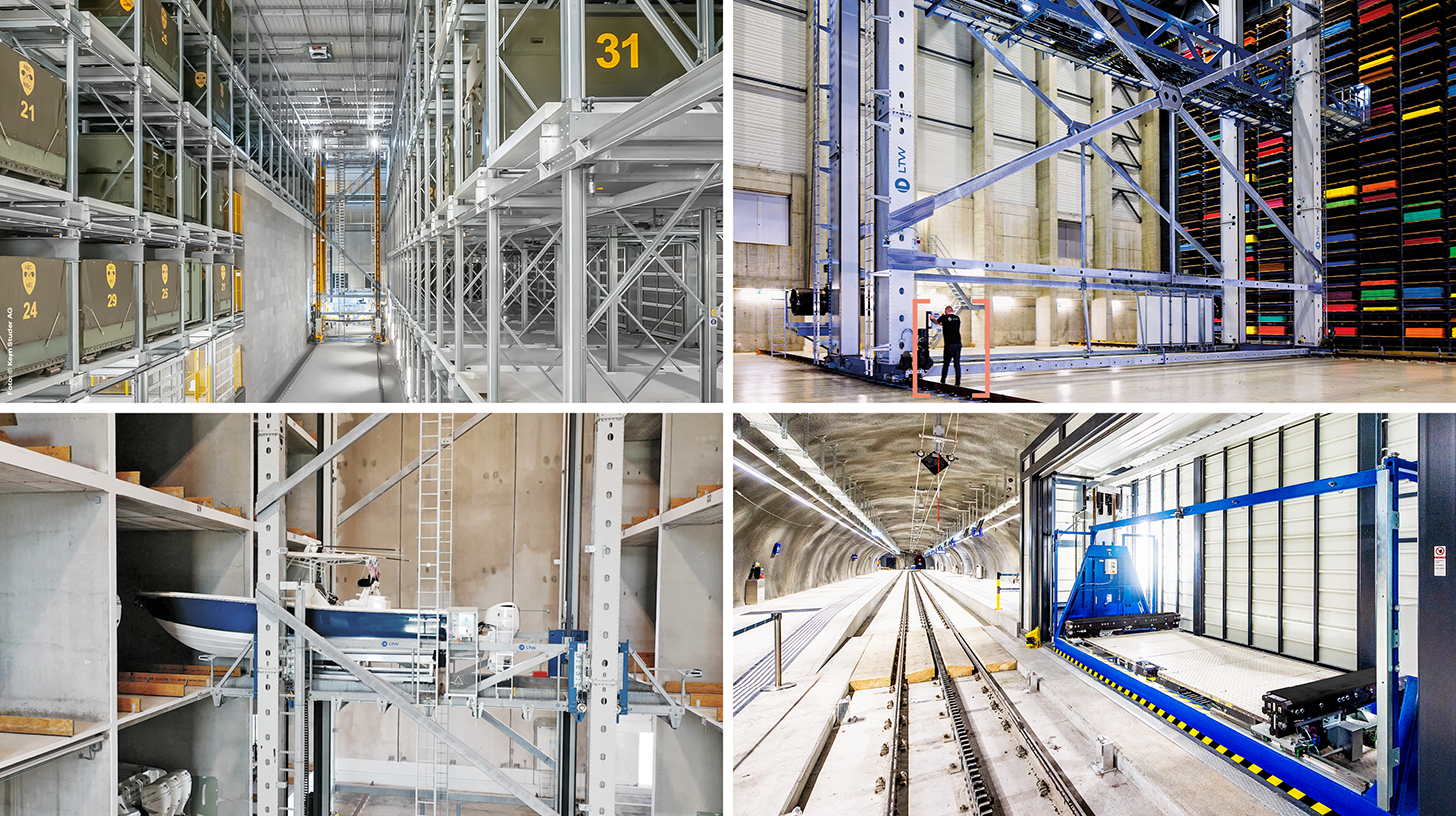
LTW Intralogistics – Engineers of Flow - Image: LTW Intralogistics GmbH
LTW offers its customers not individual components, but integrated complete solutions. Consulting, planning, mechanical and electrotechnical components, control and automation technology, as well as software and service – everything is networked and precisely coordinated.
In-house production of key components is particularly advantageous. This allows for optimal control of quality, supply chains, and interfaces.
LTW stands for reliability, transparency, and collaborative partnership. Loyalty and honesty are firmly anchored in the company's philosophy – a handshake still means something here.
Related to this:
From growth to profitability: What companies need to prioritize when restructuring their value chains
Management appointments are measured by investment discipline
The changes at Porsche and BASF are more than just personnel news. Production and logistics are central to capital allocation in both companies. At Porsche, the department must manage an international production network through volatile demand, electromobility, and high quality requirements. At BASF, site logistics connects hazardous materials, energy-intensive integrated production, and multimodal transport. Both functions determine whether transformation is managed as an additional cost burden or as a productivity program.
Christian Friedl is taking over a Porsche network whose flexibility is particularly valuable given uncertain powertrain and sales paths. Rigid capacities become riskier when model mix and regional demand fluctuate. A robust strategy must therefore evaluate platforms, plants, and suppliers not only in terms of unit costs but also their adaptability. Logistics can support this flexibility by modularizing material flows, making supplier risks transparent, and preparing alternative transport routes. At the same time, resilience should not be confused with blanket double stockpiling; otherwise, working capital will grow faster than safety.
At BASF, the challenge is systemic. Site logistics not only manages transport but also connects production facilities, tank farms, the port, rail, road, and technical infrastructure. A disruption can trigger cascading effects across the entire network. The already initiated digital truck dispatching system demonstrates how operational data can become a control instrument. The next step lies in an integrated situational awareness picture that links production planning, hazardous materials, traffic capacity, water levels, energy, and plant availability.
For both companies, decarbonization must be compatible with availability. Electric trucks and factory traffic require charging capacity that cannot coincide with peak production times. Photovoltaics can cover daily loads, storage can smooth out peaks, but only joint planning of energy and logistics prevents costly oversizing. Leadership quality is therefore increasingly measured by whether investments are orchestrated across departmental boundaries.
Rheinmetall demonstrates the new industrial policy in its purest form
The planned center in Neuss brings together the key elements of European industrial policy: defense demand, technological sovereignty, artificial intelligence, satellite technology, regional employment, and the repurposing of automotive expertise. The announced €250 million and 500 research positions will not have an isolated impact. Together with the expansion of the plant from approximately 300 to 1,000 employees, the prospect of a cluster of research, production, and suppliers is emerging.
Such a cluster generates agglomeration advantages. Specialized personnel move more easily between employers, suppliers gain multiple customers, university collaborations become more attractive, and shared infrastructure distributes fixed costs. The port location amplifies these advantages because heavy and bulky goods can be transported multimodally. At the same time, concentration risks arise: Safety-critical production requires redundancy, cyber defense, and a secure energy supply. A single network or IT failure must not affect the entire network.
For energy providers, this project is therefore more than just a standard commercial connection. Research, computing power, manufacturing, and potentially cleanroom or testing processes generate diverse load profiles. Rooftop PV can supply a portion of the consumption, storage can improve quality and resilience, and reliable connections remain essential. A hierarchical supply approach makes economic sense: efficiency first, followed by local generation, storage for load management and bridging, and grid and emergency power for guaranteed capacity.
The shift from automotive to defense production is also a warning signal for suppliers. Similar manufacturing capabilities do not automatically translate into the same approvals, margins, or payment profiles. Dual-use markets demand stricter information security, export controls, and proof of origin. Those who overcome these hurdles can benefit from long-term government budgets; those who rely solely on a short-term demand boom risk overinvestment. This is also relevant for Bulgaria: The country can be integrated as an EU and NATO location in electronics, component manufacturing, and logistics, but must demonstrably meet security, quality, and network requirements.
Oil remains the price anchor, even though electricity is gaining strategic advantage
The Venezuela agreement and the attack in the Strait of Hormuz have opposing effects. One promises additional supply in the long term, while the other threatens a key transport corridor in the short term. For companies, this simultaneity is crucial. Energy prices are determined not only by physical supply, but also by time, quality, transportability, insurance, and political control. 65 billion barrels in the ground do not represent a readily available market supply.
Venezuela's heavy oil requires investment in fields, pipelines, power supply, processing, ports, and suitable refineries. Even the $100 billion in pledged private capital would only have a gradual impact. Furthermore, the contract duration, ownership rights, and sanctions remain politically contentious. A sound European procurement plan must therefore not assume a rapid price reduction. The agreement is more of a long-term option for additional supply than an immediate boost to volume.
In contrast, the Strait of Hormuz operates through real-time risk premiums. An attack doesn't need to completely halt traffic to generate costs. Higher insurance premiums, slower passages, escort services, and precautionary stockpiling are sufficient. Energy-intensive industries and the transport sector feel these effects through diesel, kerosene, ship bunkering, and gas prices. Additionally, an LNG shortage can increase European electricity prices if gas-fired power plants set the price margin.
For PV and storage, volatility improves the strategic value of local energy, but it is not an automatic guarantee of returns. High electricity price spreads help storage, while high financing costs and uncertain grid fee regulations counteract this. Companies should therefore combine several benefit streams: self-consumption, peak load reduction, resilience, and, where applicable, market marketing. The economic comparison must not only consider the average energy price but must also include extreme events and production downtime costs.
DHL separates brand, legal entity and operational responsibility
The rebranding of the publicly listed parent company to DHL AG and the continuation of the German mail and parcel business as Deutsche Post AG appear customer-neutral, but have strategic significance. The group name follows the global brand, while the regulated and politically sensitive domestic business is consolidated in a separate company. This clarifies responsibility, profit allocation, and investment logic without altering the customer experience in the short term.
For business customers, the immediate task is administrative: master data, billing addresses, contracting parties, supplier declarations, and electronic interfaces must clearly differentiate between parent and subsidiary companies. Such changes may seem trivial, but they can trigger blocks in automated procure-to-pay processes. The announced legal succession reduces contractual effort but does not eliminate the need for data maintenance in ERP and compliance systems.
In the long term, the new structure can improve capital discipline. Global express, freight, and supply chain businesses follow different return and growth profiles than the German postal network. Investments in electric delivery fleets, sorting centers, parcel lockers, depot solar PV, and charging infrastructure can be allocated more clearly. At the same time, the separation must not create data silos, because a shared network view is precisely what generates economies of scale.
From a European perspective, the global corporate structure strengthens DHL's position as an integrated logistics group. This increases the pressure on competitors to offer similar end-to-end services. While medium-sized partners still have room for specialized regional services, interface and quality standards are largely dictated by the platform leader. Therefore, companies that integrate must remain both technically compatible and economically independent.
Volkswagen makes regional dependencies visible
The plant closures and up to 100,000 job losses being discussed at Volkswagen affect far more than just direct employment. Automotive plants are the anchors of large supply and service clusters. A decline in production often impacts freight forwarders, contract logistics providers, packaging suppliers, maintenance companies, and energy providers earlier than official employment figures would suggest. Companies whose revenue depends on a single plant, platform, or just a few part numbers are particularly at risk.
The conflict between management and the IG Metall union also illustrates the political economy of industrial adaptation. While capacities can be written off relatively quickly on the balance sheet, regional skills and municipal infrastructure cannot. Maintaining a plant at all costs can perpetuate inefficient structures; however, closure without a credible plan for future use destroys productive capital and public acceptance. The better alternative is often a conditional restructuring: continued operation in exchange for measurable productivity, investment, and skills development targets.
For the energy transition, the repurposing of existing infrastructure is crucial. A decommissioned factory reduces load, but doesn't automatically free up existing grid capacity for new users. Conversely, battery, recycling, or component projects can utilize existing connections, buildings, and logistics areas. Storage and photovoltaics are not replacement industries, but rather infrastructure building blocks for new production. Economic value only arises with a viable product, guaranteed demand, and qualified personnel.
Suppliers should therefore operationalize scenario planning. A baseline scenario with a moderate decline in volume is insufficient. Plant closures, model shifts, strikes, accelerated electric vehicle ramp-up, and delayed transformation are required as separate cases. For each scenario, revenue exposure, receivables risk, transport capacity, personnel requirements, and alternative customers must be quantified. This transforms risk management from reporting into investment decision-making.
Capital markets penalize growth without reliable unit returns
Shein's IPO sends a signal that extends beyond online retail. A company can continue to grow rapidly and still be valued significantly lower if investors place greater emphasis on regulatory risks, margin pressure, and capital requirements. The reduction compared to the 2022 valuation demonstrates that revenue volume alone is no longer sufficient without demonstrable profit quality. This is important for logistics partners because lower-valued platforms can more aggressively push for lower costs, shorter payment terms, and flexible capacity.
This changes investment contracts. A service provider should not base customer-specific automation solely on expected volume growth. Minimum volumes, contract durations, adjustment clauses, and the reusability of the technology will become crucial. Modular conveyor technology and software-defined processes can reduce residual value risk. Real estate should be designed so that a new tenant can move in without a complete renovation.
At the same time, the weak IPO is no proof of a business model collapse. Shein is raising around $1.7 billion in fresh capital and, with a market capitalization of approximately $26.5 billion, remains a major player. The correct conclusion is not withdrawal, but rather risk-adjusted pricing. Service providers can benefit from high volumes if they actively manage variable costs, creditworthiness, and dependency.
For Europe, the value of compliant infrastructure is increasing. Warehouses that link customs, product, and sustainability data with physical goods flows are becoming more important. The same applies to traceability for textiles and packaging. The competitive advantage lies not in the cheapest square meter, but in the most reliable documentation for authorities, platforms, and brand owners.
What companies should prioritize now
The twelve reports do not yield a uniform forecast, but they do reveal a clear hierarchy of capabilities. First, site selection must integrate energy, grid, transport, and data. A warehouse without guaranteed power and digital connectivity will have limited future usability. Second, transparency must extend to mobile equipment. Those who cannot reliably track load carriers, inventory, and transport events will pay for uncertainty with capital and time.
Third, resilience requires a financial logic. Safety stock, alternative routes, second suppliers, and battery storage are options against disruptions; each option has costs and a limited scope of protection. Good decisions compare expected damage, restart time, and investment requirements, rather than demanding maximum redundancy across the board. Fourth, compliance is becoming part of the product. Public procurement, chemicals, defense, and cross-border e-commerce reward suppliers who provide documentation and interfaces from the outset.
Fifth, companies should not plan energy separately from logistics. Loading docks, automation, cooling, data centers, and production compete for grid connection capacity. PV and storage create value when integrated into load management and when outage costs are taken into account. An isolated payback calculation underestimates their resilience benefits; a purely strategic justification without operational data overestimates them.
For suppliers targeting Bulgaria, the opportunity lies in a clear functional positioning. The country can serve as a production, nearshoring, and Southeast European logistics hub, particularly for components, e-commerce, reverse logistics, and dual-use industries. However, reliable networks, qualified personnel, cross-border data processes, and adherence to European standards are crucial for success. Low costs alone do not create resilience.
The winner is the orchestrated network
New logistics spaces are being planned more as energy platforms, existing buildings are being digitally and electrically retrofitted, platform retailers are keeping more goods in Europe, and industrial companies are integrating supply chain management with security and energy policies. AI will be particularly economical where it encounters reliable event data and accelerates concrete decisions. A chat window based on poor data remains a demonstration; automated inventory management with clear accountability will lead to productivity.
The greatest risks lie in a false sense of security. Venezuelan reserves do not guarantee short-term supplies, a tracker does not guarantee complete master data, a new corporate structure does not guarantee simpler processes, and a building permit does not guarantee profitable leasing. Likewise, government demand does not guarantee a permanently profitable defense cluster. Every report contains an option whose value only arises through action.
For decision-makers, this translates into a pragmatic approach. Investments should be modular, data-driven, and energy-efficient. Contracts must mitigate volatility without hindering cooperation. Locations need redundancy without unnecessary duplication. And European companies must not only meet regulatory requirements but also translate them into trustworthy services.
The provocative conclusion is this: by 2026, efficiency is not the opposite of resilience, but rather its result. Those who treat resilience as a mere cost surcharge build up buffers. Those who understand it as a system design reduce inefficient operation, downtime, and tied-up capital. The reports from Pohlheim to Hormus demonstrate that precisely this capability determines competitiveness.
Consulting - Planning - Implementation

Konrad Wolfenstein
I would be happy to serve as your personal advisor.
You can contact me at wolfenstein∂xpert.digital or
Just call me on +49 7348 4088 965 .
Your intralogistics experts

Consulting, planning and implementation of complete solutions for high-bay warehouses and automated storage systems - Image: Xpert.Digital
More information here: