
Klaus-Michael Kühne: The Last Patriarch of the World's Oceans – How a Hamburg Merchant's Son Became the Architect of Global Trade Flows
Xpert Pre-Release

Available in 27 languages 📢
Prefer Xpert.Digital on GoogleⓘPublished on: August 24, 2026 / Updated on: August 24, 2026 – Author: Konrad Wolfenstein
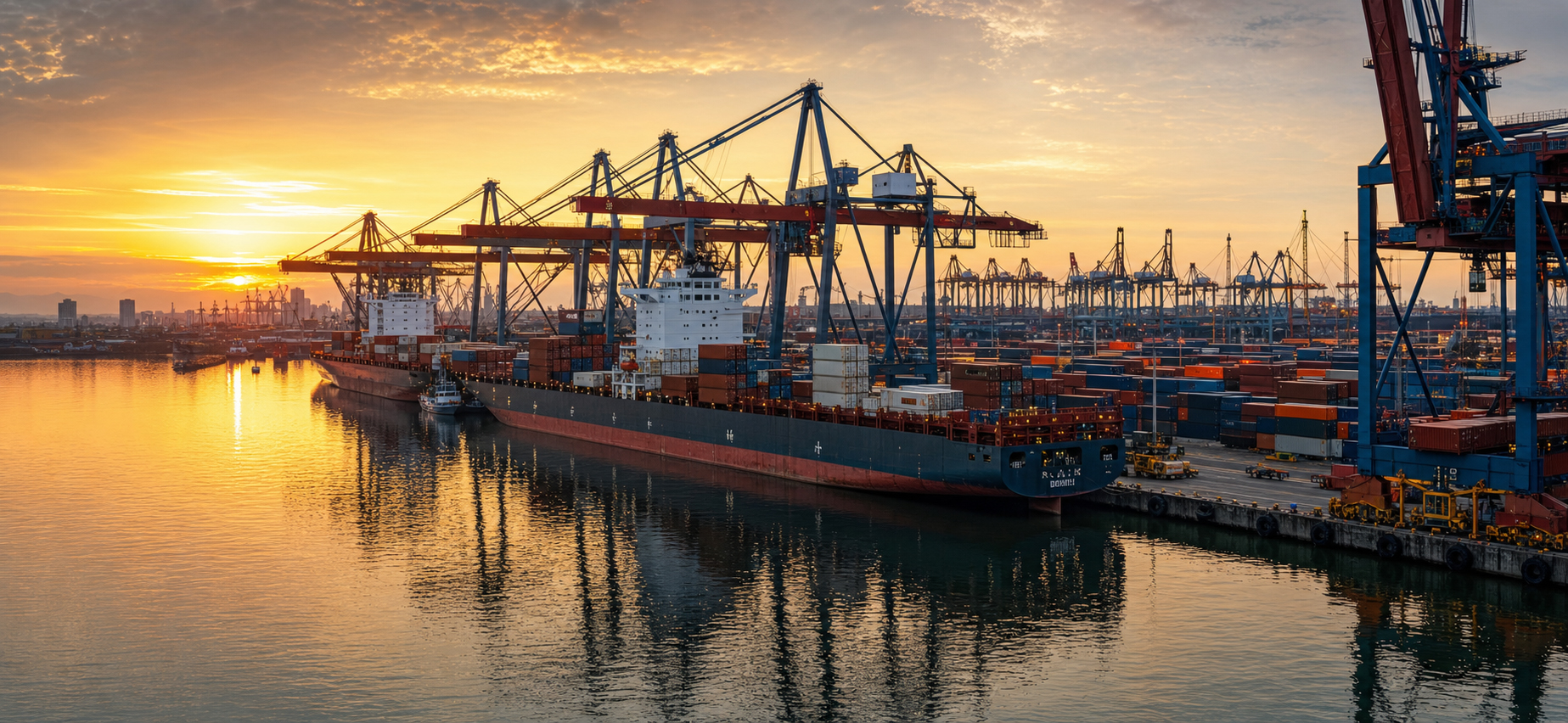
Klaus-Michael Kühne: The Last Patriarch of the World's Oceans – How a Hamburg Merchant's Son Became the Architect of Global Trade Flows – Creative Image on the Topic, with AI: Xpert.Digital
Mourning for the logistics patriarch: HSV patron Klaus-Michael Kühne dies at the age of 89
The fascinating life of Klaus-Michael Kühne
Klaus-Michael Kühne, the undisputed patriarch of the global logistics industry and, according to recent estimates, the richest German, has died at the age of 89. For over seven decades, he transformed the once medium-sized family business Kühne+Nagel into a global giant of sea and air freight, without ever relinquishing control. But Kühne was far more than just a brilliant corporate leader: as a major investor in Hamburger SV, a controversial local patriot, and a multi-billionaire philanthropist, he also shaped the public image of a modern business magnate. His death not only marks the end of an unprecedented entrepreneurial era, but also raises the pressing question of how his immense fortune, estimated at up to 42 billion US dollars, will be preserved for the future through his foundation structures. A look back at the complex and sometimes ambivalent life's work of a man who shaped the international flow of goods in our time like few others.
From bank trainee to corporate leader – the beginnings of an exceptional career
Klaus-Michael Kühne was born on June 2, 1937, in Hamburg, the only child of freight forwarding agent Alfred Kühne and his wife Mercedes. His entrepreneurial roots stretched far back: as early as 1890, his grandfather August Kühne and the merchant Friedrich Nagel had founded a maritime forwarding company in Bremen, specializing in logistics for shipping companies. After graduating from the Heinrich-Hertz-Gymnasium, where Kühne shared a classroom with the future singer-songwriter Wolf Biermann, he first completed a commercial apprenticeship at a Hamburg bank before gaining practical experience at affiliated forwarding companies and shipping lines both in Germany and abroad.
In 1958, the young Kühne joined his father's company, Kühne & Nagel, as a trainee and learned the business from the ground up. As early as 1963, at the age of just 26, he joined the company's management as a personally liable partner – a remarkably early step into a position with far-reaching entrepreneurial responsibility. Only three years later, in 1966, he assumed the chairmanship of the board of the newly founded Kühne + Nagel Speditions-AG (Kühne + Nagel Forwarding AG). This meteoric rise at a young age laid the foundation for a tenure at the company's helm that would span well over four decades.
The strategic breakthrough into Switzerland
One of Kühne's most consequential business decisions was relocating the company headquarters to Switzerland. In 1974, or according to other sources, 1975, the company moved to Schindellegi on Lake Zurich, where Kühne also subsequently lived privately. This choice of location proved to be strategically astute, as it provided the company with tax advantages, political stability, and direct access to international financial markets, while simultaneously maintaining the operational and emotional connection to its founding city of Hamburg.
In the following decades, Kühne systematically transformed the company from a nationally based freight forwarding firm into a globally operating logistics group. Overseas locations were established, and the service portfolio was expanded to include air freight and complex supply chain solutions. A challenge arose in the 1980s with the acquisition of fifty percent of the company's shares by the British conglomerate Lonrho in 1981. Kühne initially accepted this partnership but bought back all of Lonrho's shares in 1991, thereby regaining its entrepreneurial independence. This episode reveals a characteristic that permeated Kühne's entire career: the absolute priority of maintaining control over his family business, even if this sometimes required compromises.
The stock market launch as a turning point
In 1994, Kühne took another decisive step by taking Kühne + Nagel public, while retaining a controlling stake of approximately 55.75 percent. This balance between access to public capital markets and family control proved to be a successful model and remains a core feature of the company structure to this day. Through his Kühne Holding AG, he most recently held a stake of around 53 percent in the group, while further voting rights were controlled through his charitable foundation.
In 1996, Kühne officially assumed the chairmanship of the board of directors of the newly formed Kühne + Nagel International AG and remained active in day-to-day operations as its Chief Executive Officer until 2011. Under his leadership, the company grew into one of the world's largest logistics providers, with a portfolio encompassing sea and air freight, warehousing, and complex supply chain solutions for customers in over one hundred countries. Even after his formal retirement from operational management, Kühne, as majority shareholder and honorary chairman of the board of directors, remained the key figure behind the Group's strategic direction.
A corporate empire with global reach
The sheer size of the company built by Kühne illustrates the extent of his economic influence. Kühne + Nagel developed into the world's largest ocean freight forwarder and simultaneously the number two in Europe in the air freight sector, with a turnover that amounted to more than fifteen billion euros over the years. The company achieved this market position in an environment of intense competition, in which established rivals such as Deutsche Post DHL and DB Schenker vied for market share. Under Kühne + Nagel's leadership, the company frequently demonstrated above-average profitability, which garnered both recognition and envy from its competitors.
Kühne's entrepreneurial endeavors, however, were not limited to the logistics sector in the narrow sense. Over the course of his life, he built a diversified portfolio of investments and became one of the most influential investors in other key industries within the German economy. He was a major shareholder in Deutsche Lufthansa AG and held significant stakes in the shipping company Hapag-Lloyd. These investments underscored his strategic acumen regarding the closely intertwined sectors of transport, aviation, and shipping, which together form the backbone of international trade.
Between business leader and local patriot
Despite his global entrepreneurial activities, Klaus-Michael Kühne remained closely connected to his hometown of Hamburg throughout his life, even though he officially resided in Switzerland from the 1970s onward. Reports indicate that he invested around one billion euros in various projects and institutions in the Hanseatic city over the years. A particularly visible expression of this connection was his long-standing financial commitment to Hamburger SV, where he was the most prominent investor and financial backer for many years.
This combination of a global business empire and local roots made Kühne a flamboyant, and sometimes controversial, figure in German business life. Critics repeatedly complained that a significant portion of his investments in HSV had been financially unsuccessful, while supporters praised his willingness to assume responsibility for his home region as a patron, even though there was no tax or legal obligation to do so.
The Kühne Foundation as a legacy of institutionalized support
As early as 1976, the Kühne family established the non-profit Kühne Foundation, of which Klaus-Michael Kühne became the sole beneficiary in the following decades. Through this foundation, as well as the separately established Klaus-Michael Kühne Foundation in Hamburg, he continuously channeled substantial financial resources into three key areas of support: logistics research, academic education, and humanitarian disaster relief. Traditionally, around two-thirds of the foundation's funds went toward supporting the Kühne Logistics University in Hamburg, which, under his patronage, developed into one of Europe's leading universities in the field of transport economics and logistics.
This institutionalization of his philanthropic commitment demonstrates a strategic vision that extended beyond short-term charity. Kühne recognized early on that the long-term competitiveness of the logistics industry depends crucially on the availability of highly qualified specialists and sound scientific research. By founding and permanently funding a specialized university, he created an infrastructure that will have an impact far beyond his own death and strengthen the skilled workforce for the entire industry.
According to several media reports, his entire fortune is to be transferred to the foundation he established after his death. This arrangement aligns with the well-known fact that Kühne's marriage to his wife Christine, to whom he had been married since 1989, remained childless. Without direct heirs, Kühne apparently consciously chose to transfer his life's work into a permanent institutional structure rather than passing it on to distant relatives or external investors.
Awards reflecting industry-wide recognition
Klaus-Michael Kühne's exceptional importance to the international logistics industry received institutional recognition when he was inducted into the Logistics Hall of Fame in 2005. This award explicitly acknowledged both his entrepreneurial achievements in the freight forwarding sector and his personal commitment as a philanthropist to promoting education, training, and research in the field of transportation economics. Such an honor from within the industry often carries more weight in its professional significance than general public popularity, as it is bestowed by experts who can assess the true entrepreneurial substance of a lifetime's work.
Beyond this specialist recognition, Kühne established himself in the general economic consciousness of Germany and Switzerland as one of the most influential entrepreneurial figures of his generation. His continuous presence in the rankings of the wealthiest Germans and Swiss over several decades underscores the sustainability of the economic value he created, which endured far beyond short-term market fluctuations.
Why Kühne's death marks a turning point for the industry
The death of Klaus-Michael Kühne comes at a time of profound structural change in the global logistics industry, characterized by geopolitical tensions, the reorganization of international supply chains in the wake of the pandemic, and the increasing digitalization and automation of transport processes. Kühne himself had personally shaped this industry for the longest period ever achieved by a single entrepreneur in this sector, and his succession plan via the foundation structure raises interesting questions about the future strategic direction of the group.
The transfer of the majority stake to the Kühne Foundation should initially secure the continuity of the company's strategy, as foundations are typically geared towards long-term stability rather than short-term profit maximization. At the same time, Kühne's death eliminates the charismatic and authoritative leader who, for decades, served as the final authority on strategic matters. Whether the institutionalized succession structure can fill this void as effectively as the personality of its founder did will only become clear in the coming years.
An overall economic assessment of his life's work
From a purely economic perspective, Klaus-Michael Kühne's career embodies a rare example of successful, multi-generational corporate leadership that combined both organic growth and astute strategic decisions. The relocation to Switzerland, the IPO while maintaining majority control, the repurchase of external holdings, and the consistent international expansion demonstrate an entrepreneurial mindset that consistently subordinated short-term capital market logic to long-term strategic autonomy. This approach clearly distinguishes Kühne from many managers of listed companies who are primarily focused on short-term quarterly results and share price performance.
At the same time, his life's work reveals the limits and ambivalences of concentrated entrepreneurial power. The close connection between personal wealth, corporate control, and philanthropic engagement raises fundamental questions about the social role of business magnates in democratic societies. Kühne's ability to exert lasting influence on educational institutions and research agendas through his foundation structures illustrates how strongly private economic power can shape social institutions without being subject to democratic legitimacy in the classical sense.
Overall, Klaus-Michael Kühne leaves behind a legacy that defies easy categorization. He was undoubtedly one of the most successful and influential entrepreneurs in postwar German history, whose strategic acumen transformed a medium-sized freight forwarding company into a world-class global logistics corporation. At the same time, his biography remains inextricably linked to the historical entanglements of the family business and to fundamental questions surrounding the concentration of economic power in the hands of individuals. This ambivalence makes him one of the most complex and influential figures in recent German economic history, whose actions significantly shaped the global flow of goods in the twenty-first century.








