

Published on: July 30, 2025 / update from: July 30, 2025 – Author: Konrad Wolfenstein
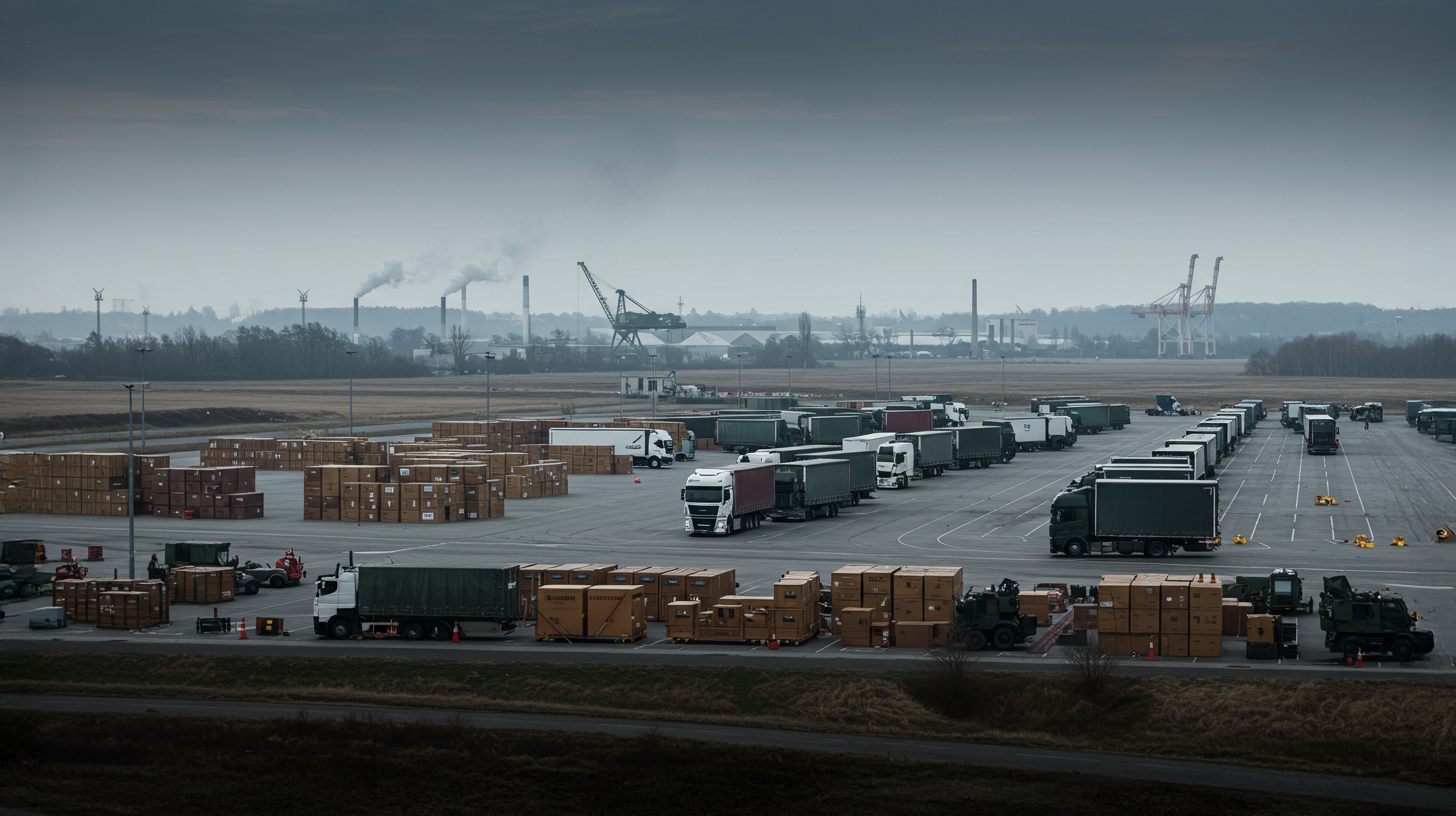
The SPEDITION AND LOGISTICS Baden-Württemberg (VSL) places requirements for logistics – creative image: xpert.digital
Trade and security: The growing responsibility of the logistics industry in Germany
Why does the Spedition and Logistics Association give Baden-Württemberg (VSL) to a look at defense issues?
Why has a regional association of commercial logistics dedicated its annual general meeting of Germany's defense ability?
The VSL represents around 450 freight forwarding, transport and logistics companies with around 60,000 employees in Baden-Württemberg. These strongly export -oriented companies feel the effects of geopolitical conflicts, trade restrictions and increased security risks. Late chains are increasingly influenced by fragile, transit paths and global traffic flows from customs and sanction regimes. From this, the association concludes that economic resilience and military defense ability belong together: If Germany is poorly cared for in the event of seriousness or alliance, trade and prosperity are also under pressure.
What threats for peace, freedom and supply chains do the VSL name?
What specific risks does the association see?
Two levels of threats are outlined in the speeches of the general meeting. First, wars and conflicts- especially Russian aggression against Ukraine- – traffic – and energy and raw material flows. Second, tariffs, sanctions and a global subsidiary race create new barriers for exporters; Small and medium -sized companies in particular suffer from sudden diversions and higher handling times. The association warns that a combination of both factors ultimately attacks free world trade and thus the basis of the German industrial model.
As VSL President Dr. Micha does the demand to logistically support the Bundeswehr?
What is behind the guiding principle "our logistics companies can and must support the Bundeswehr"?
Dr. Stege draws a parallel to the NATO double decision of the 1980s: At that time, the economy carried political decisions to protect freedom and market economy. Today the industry has to show responsibility again and offer its skills – warehouse, transport, IT control – as a strategic backbone. The President emphasizes that large military transports, depots and repairs in the event of a crisis rarely do without civilian capacity. The Logistical System Bundeswehr (LogsBW) already explicitly provides for third parties to embed by third parties into national care processes.
What realignment calls CDU parliamentary group leader Manuel Hagel and how does the truck toll go?
What key statements did Hagel do in front of the association members?
Hail states that the "old rules" – cheap gas from Russia, American security guarantee, are obsolete from China – He calls for new free trade agreements and partners because the global competition does not sleep. On the logistics policy, he stated that with the CDU there will be no tolls in the upcoming legislative period on state and local roads and praised the principle "Strasse Financed Straße", which strengthens the purpose commitment of federal toll revenue. His attitude has prehistory: As early as 2022, he positioned himself against a state -owned enlargement because inflation and energy crisis put the industry. The VSL welcomes this position because additional toll loads would further weaken competitiveness.
What economic consequences from the turn of the times described ARD stock exchange chief Markus Gürne?
Why does a financial journalist evaluate the special fund positively?
Gürne reminds that Germany's business model is based on export flows and therefore depends on stable supply routes. Geopolitical tensions increase the risk of expensive interruptions. A strong European security architecture, financed by a targeted special fund, is therefore a commandment of business reason. He argues that investments in defense and modern infrastructure reduce future costs of avoidable disorders and at the same time create high-tech orders for industry.
How is the 100-billion special assets designed and where is it going?
What can the money be used for and what shares are logistic projects for?
The Basic Law and the Bundeswehr Financing and Special Assessment Act stipulate that the funds should close ability gaps and strengthen alliance and defense ability. Specifically, the spectrum of armor investments, ammunition, infrastructure, IT security, key technologies and logistics includes. The full 100 billion euros are contractually bound by the end of 2024; For 2025, the business plan provides for around 22 billion euros, including transports, depots and military IT networks.
Why does the VSL demand that special funds do not result in social expenditure?
Why emphasizes Dr. Do the purpose binding?
The association president points out that special funds represent debts. They are only legitimate if they increase productivity, security and growth. Floss funds in ongoing social transfers, the investment effect fizzles out; Then companies would have to bear a higher interest and tax revenue without receiving competitive framework conditions. The point of view coincides with financial policy debates in the Bundestag, where several factions strive for a strict purpose commitment for armaments and logistics investments.
Hub for security and defense – advice and information

Hub for security and defense – Image: Xpert.digital
The hub for security and defense offers well-founded advice and current information in order to effectively support companies and organizations in strengthening their role in European security and defense policy. In close connection to the SME Connect working group, he promotes small and medium -sized companies (SMEs) in particular that want to further expand their innovative strength and competitiveness in the field of defense. As a central point of contact, the hub creates a decisive bridge between SME and European defense strategy.
Suitable for:
How the Bundeswehr and private logistics will have to work together in the future
What does the required “economic turn” mean for logistics companies?
What structural changes does the association require?
Dr. It states that the logistics industry has been in the most severe crisis for decades – weak industrial production, rising energy costs and shortage of skilled workers also meet investment congestion in ports, rail networks and digital customs systems. An economic transition must accelerate approval procedures, ensure planning security for infrastructure projects and create tax incentives for low-CO₂ driving techniques. Without these levers, the goal of covering both climate neutrality and defense ability remains illusional.
How is military logistics in Germany structured today and where does it need a civil addition?
Is the Bundeswehr logistics enough for a large march?
The Bundeswehr's logistics command in Erfurt plans and controls all national and international logistics operations; Six mobile logistics battalions, depots, schools and a special pioneering battalion are assumed. Nevertheless, the Bundeswehr concept admits that organic capacities alone are not sufficient. Host Nation Support and framework contracts with freight forwarders should secure transport, envelope and warehouse with simultaneous NATO marches. The Bundeswehr sees Germany as a “logistical hub” on the NATO-East flank, which requires dense cooperations with private freight guides and terminal operators.
Which legal instruments regulate the integration of private logistics?
On what basis can freight forwarders be obliged or commissioned?
In peace times, federal authorities conclude transport framework contracts with logistics service providers; The Federal Office for Infrastructure, Environmental Protection and Services of the Bundeswehr is the billing position. In the event of a voltage or defense, the Transport Service Act and host nation support agreements that confiscate, regulate march loans, priorities and compensation also apply. The VSL warns to adapt these standards in a modern way so that there is legal and cost security if truck fleets or warehouses have to serve military purposes at short notice.
What role do customs policy, sanctions and trade dispute play in the current situation?
How do trade barriers affect operational logistics?
Each new duty or sanction catalog generates additional documentation, control and warehouse risks. Containers are stowing because dual-use goods are checked more closely; Spare parts achieve production late. Companies therefore need larger buffer stores and more transport capacity, which is difficult to finance in the recession. At the same time, sanctions can move logistical routes unexpectedly, for example from the country path to the sea route or through third – with cost and time risks, which also affect military installation planning if civil networks are to be used in parallel.
How do defense budget and special funds change the overall German household?
Do defense spending increase permanently?
The draft of the Federal budget in 2025 shows 53.25 billion euros for the core individual plan 14; Including special funds, defense expenditure is a good 75 billion euros and for the first time in decades exceed the NATO-two percent mark. From 2028, after the special fund was exhausted, considerable additional budget funds would have to be provided in order to keep the level or to lift to three percent of GDP. Without budgetary consensus – there is therefore a risk of financing gaps- a risk that also brakes private armaments and logistics investments.
What digital requirements do military and civilianogistics come up?
Why is digitization a core topic of the special fund?
Modern warfare requires networked position, real-time tracking and cyber resilient supply chains. Radio devices, satellite-based data links and cloud-based warehouse management make transport faster and are suitable for dual-use between military and civilian fleets. Speditions that want to remain interoperable in these networks must train your IT interfaces and to meet NATO standards for encryption or EDI formats.
How can the connection between climate goals, technology open to technology and national defense?
Do CO₂ reduction and military robustness exclude?
Hail advocates technology open to climate -friendly drives. The logistics industry tests biofuels such as HVO100 and e-fuels, which according to the association projects can save up to 90 percent emissions. At the same time, fuels must remain in a military manner and are available internationally. Hybrid approaches – diesel electrical trucks with modules batteries – could drive green in peace and use conventional fuel in an emergency. It remains crucial that investments can be planned; Constant regulatory changes slow down fleet changes and endanger the achievement of goals.
What recommendations for action does the VSL formulate for politics and companies?
What specific steps does the association recommend after the general assembly?
First, the federal and state governments for infrastructure should limit a maximum of two years in order to quickly expand roads and rail freight corridors. Second, the VSL requires a crisis mechanism that prioritously prioritized military and civil logistics-needs transparently so that companies can adapt their capacity planning. Third, he calls for tax supervisures for alternative drives and digital safety technology. Fourthly, the Bundeswehr and the economy should realize joint exercises in order to test IT interfaces, customs processes and march routes.
What lessons do the logistics industry from the 2025 annual meeting draw?
What remains of the Esslingen meeting?
The event made it clear that supply chain security, military state defense and economic competitiveness cannot be treated separately. Speditors, reladers, politicians and media share the diagnosis that geopolitical tensions remain permanently and that a robust security architecture is essential. The Bundeswehr gives the Bundeswehr to the 100-billion special assets, but only in close interlinking with private logistics is there real through retain ability. At the same time, fiscal and regulatory policy must relieve the industry instead of burdening it with additional taxes. The VSL sees the core of an economic transition, freedom, infrastructure and climate protection together.
Your dual -use logistics expert
Dual-use logistics expert – Image: Xpert.digital
Advice – planning – implementation

Markus Becker
I would be happy to serve as your personal advisor.
Head of Business Development
Chairman SME Connect Defense Working Group
Advice – planning – implementation
Konrad Wolfenstein
I would be happy to serve as your personal advisor.
contact me under Wolfenstein ∂ Xpert.digital
call me under +49 89 674 804 (Munich)


