
The German startup paradox: When 66 companies fail every day and 1,754 new ones are created at the same time
Xpert Pre-Release

Language selection 📢
Published on: March 28, 2026 / Updated on: March 28, 2026 – Author: Konrad Wolfenstein

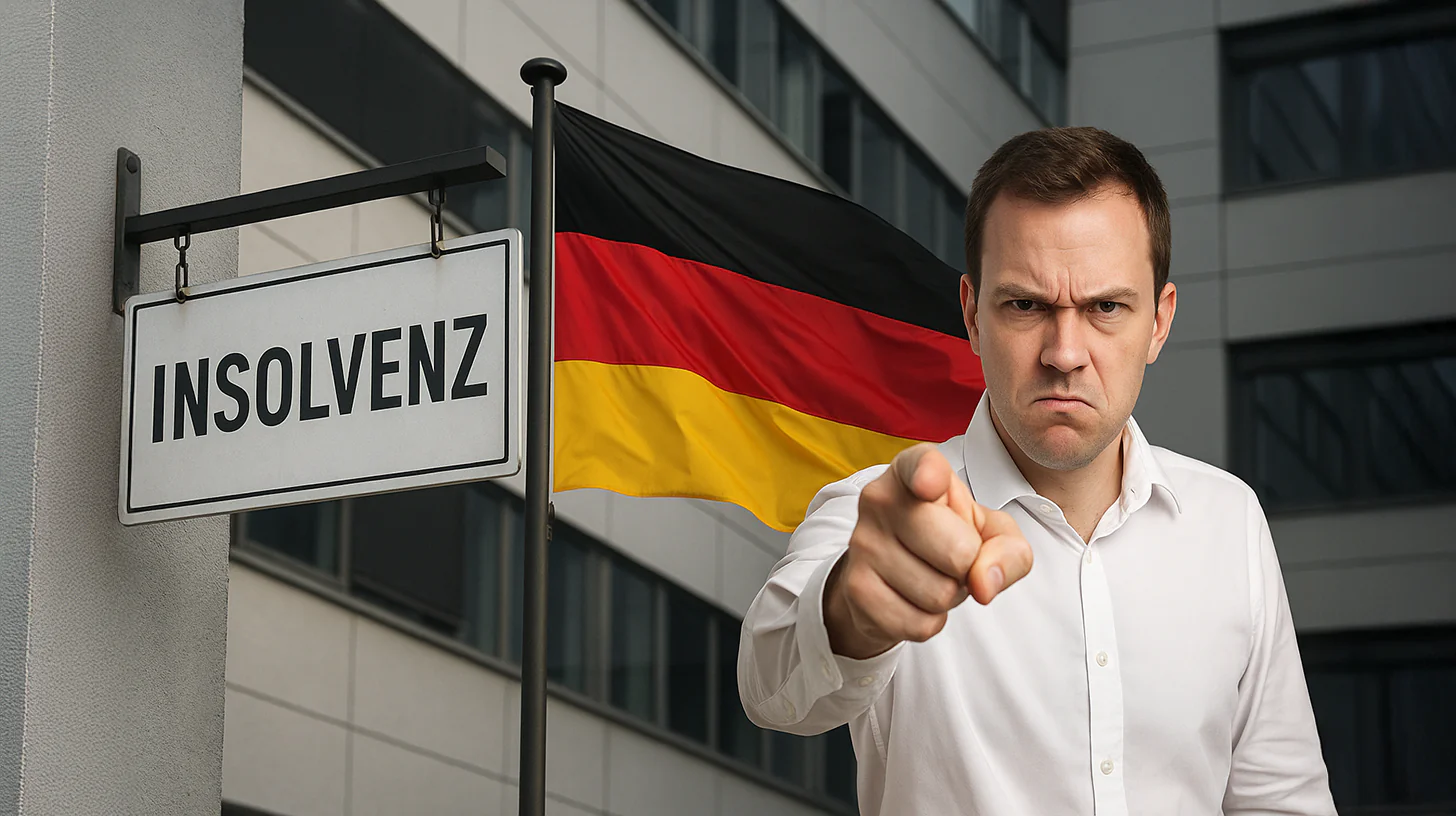
The German startup paradox: When 66 companies fail every day and 1,754 new ones are founded – Image: Xpert.Digital
Wave of bankruptcies meets startup record: The two faces of the German economy
Hidden upswing: Why a historic startup boom is emerging during the economic crisis
Germany is undergoing a historic economic transformation that, at first glance, seems like an irresolvable contradiction. Anyone following current economic news is confronted with two extremes: On the one hand, corporate insolvencies are reaching their highest level in years. Traditional industries are struggling under enormous costs, and tens of thousands of jobs in the manufacturing sector are at risk. On the other hand, completely unnoticed by this widespread sense of crisis, the country is experiencing a massive startup boom – driven by artificial intelligence, new technologies, and the courage of a young generation of entrepreneurs.
Germany is founding its way out of the crisis – or is it?
Two statistics, a contradiction
Germany is facing one of the most complex economic periods in its post-war history. On the one hand, an average of 66 companies file for insolvency every day. On the other hand, around 1,754 new businesses are registered daily. How can these two trends coexist? And what do they really tell us about the state of the German economy? The answer is multifaceted, methodologically nuanced, and highly relevant from an economic perspective.
The Federal Statistical Office recorded a total of 24,064 corporate insolvencies in 2025 – an increase of 10.3 percent compared to the previous year. This brings the number of insolvencies to a level last seen in 2014 – a year considered largely economically stable. At the same time, the total number of new business start-ups in 2025 was around 640,500, representing an increase of 7.7 percent compared to the previous year, and the total number of business registrations rose to 762,400. These figures may sound paradoxical at first glance. And they are, but for reasons other than initially assumed.
Related to this:

What lies behind the insolvency figures
The 24,064 corporate insolvencies in 2025 tell a story of structural change, not just economic weakness. Creditors' claims totaled approximately €47.9 billion – a decrease compared to the €58.1 billion in 2024, even though the number of cases increased. This means that fewer large companies went bankrupt, but significantly more smaller ones. In fact, around 19,500 micro-enterprises with up to ten employees filed for insolvency – that's 81.6 percent of all insolvencies.
Sectors already under structural strain are particularly hard hit. The transportation and warehousing sector recorded the highest insolvency rate with 133 cases per 10,000 companies, followed by the hospitality industry with 108 cases and the construction industry with 104 insolvencies. The logistics sector is struggling with rising energy costs, toll increases, and a persistent driver shortage. The hospitality industry is suffering from increased minimum wages and subdued consumer spending. The construction industry is grappling with rising interest rates in recent years, declining orders, and weakening demand for real estate.
The main causes of the wave of insolvencies are hardly surprising. Patrik-Ludwig Hantzsch of Creditreform Economic Research sums it up succinctly: Many businesses are heavily indebted, struggle to obtain new loans, and grapple with structural burdens such as energy prices and regulation. Volker Treier, chief analyst at the Association of German Chambers of Industry and Commerce (DIHK), cites high costs, weak demand, and significant uncertainty as contributing factors. Added to this is demographic change: Businesses that have been profitable for decades are unable to find successors and are closing before formal insolvency proceedings become necessary.
Related to this:
The manufacturing industry in the eye of the storm
The situation is particularly dramatic in the manufacturing sector. The Leibniz Institute for Economic Research Halle (IWH) recorded a total of 17,604 insolvencies of partnerships and corporations for the year 2025 – the highest figure in 20 years. Around 170,000 jobs were affected by insolvencies, with the largest share, approximately 62,000 jobs, in the manufacturing sector. The automotive industry and its suppliers exemplify this trend: the transformation to electromobility, increased labor costs, Chinese competition, and collapsing export markets are creating a perfect storm. Industrial production fell by 1.1 percent in 2025, and the automotive industry alone recorded a 6.3 percent decline in orders in December 2025.
The Halle Institute for Economic Research emphasizes an important historical context: In the crisis year of 2009, the number of insolvencies was around five percent lower than in 2025. This explicitly makes the current situation worse than the global financial crisis – measured against this metric. Nevertheless, caution is advised when interpreting this data, because the pandemic-related special regulations of the years 2020 to 2022 created an artificial backlog that is now being released.
🎯🎯🎯 Data-driven B2B industry hub as a quasi-in-house solution

The quasi-in-house solution: How Xpert.Digital closes operational gaps in B2B marketing and sales – Smart Content-Driven Business - Image: Xpert.Digital
Xpert.Digital is a data-driven B2B industry hub led by Konrad Wolfenstein . The company acts as an external, quasi-in-house solution for industrial partners, closing operational gaps in marketing, content, and sales – without requiring additional resources on the client side.
More information here:
Startup boom despite bankruptcies: How AI is reshaping Germany's economic landscape
Why so many startups are being founded at the same time
While traditional industries are suffering, the startup scene is booming. The total number of new business start-ups in 2025 was around 640,500, an increase of 7.7 percent compared to the previous year. Among businesses of greater economic significance – those with legal status, commercial register entry, or employees – 130,100 new start-ups were recorded, 7.6 percent more than in the previous year. Even the closure of larger companies rose by only 0.8 percent – the gap between start-ups and closures is thus widening significantly in favor of new businesses.
The development in the startup segment is particularly striking. With 3,568 newly founded startups, Germany reached a new record high in 2025 – an increase of 29 percent compared to 2024 and even more than in the previous record year of 2021. This shows that the dynamics of new business creation are not a statistical fringe phenomenon, but a genuine economic trend. Kati Ernst, Vice Chair of the German Startup Association, sees this as a clear message: Startups are driving the German economy forward, even in a challenging environment.
The most important driver of this development is artificial intelligence. 27 percent of all newly founded startups use AI as a key component of their business model. The software sector saw the most new companies being founded. AI significantly lowers market entry barriers: Where previously a development team of ten people was needed to build a software product, today two founders and the right AI tools can create a market-ready product in just a few months.
Times of crisis are times of opportunity for startups – always have been
Economic research is well aware of this pattern. The Bonn-based Institute for the Future of Work (IZA) has demonstrated that the self-employment rate tends to decline during periods of strong economic growth because well-paid, dependent employment is perceived as more secure. Conversely, the propensity for self-employment increases when the labor market weakens and secure jobs become scarce. Since the beginning of the 2000s, the employment rate has risen from 64.3 percent (2004) to 77 percent (2022). Simultaneously, the proportion of self-employed individuals fell from 7.6 to 5.8 percent when the labor market boomed. Now, this trend is reversing.
The number of employed persons remained almost unchanged in 2025, although it decreased slightly by 5,000, while the number of unemployed rose by an average of 161,000. Demographic change means that fewer and fewer young people are entering the workforce to replace those retiring. Those who cannot find a job or witness their employer going bankrupt are more likely to start their own businesses. This effect is statistically proven and structurally significant.
The regional dimension of the paradox
The paradox also reveals interesting regional patterns. Saxony recorded the strongest increase in startup formations in 2025, with a rise of 56 percent, followed by Bavaria with 46 percent and North Rhine-Westphalia with 33 percent. Munich clearly leads in per capita startup formations, while Berlin recorded the highest absolute number of startups with 619 new businesses. Research-oriented locations such as Aachen, Potsdam, and Heidelberg are also developing dynamically. This dynamic is no accident: universities, research institutes, and venture capital are concentrated in a few locations, creating an ecosystem that fosters startups.
At the same time, the insolvency map is almost a mirror image: Bankruptcies are concentrated in the old industrial centers – for example, in the Ruhr region, Saxony-Anhalt, or parts of Bavaria with a high proportion of automotive suppliers. This means that Germany is not simply experiencing a general up and down, but rather a spatial redistribution of economic activity. Old structures are dissolving, and new ones are emerging elsewhere.
Two economies under one roof
The crucial question is whether the new startups can fill the gaps left by the insolvent companies – not just in terms of quantity, but also in terms of quality. This is the crux of the paradox. The companies that fail often employ many people and create tangible social value in the form of industrial production and skilled trades. A software startup with three founders and an AI-powered product does not economically compensate for the disappearance of a mechanical engineering company with 200 employees. The macroeconomic equation, therefore, does not yet add up.
The IWH analysis shows that bankruptcies are accompanied by significant and lasting income and wage losses for the affected employees. These people are not automatically the entrepreneurs of tomorrow. Many of them are over 50, have specific qualifications in the manufacturing sector, and find it difficult to access new industries. The permeability between the old and new economies is limited, and this is precisely where the real socio-political challenge lies.
When disruption becomes a permanent structural task
What the founders' paradox essentially reveals is an economy undergoing accelerated structural change. Germany is not experiencing a classic recession in which all sectors suffer simultaneously and then recover together. Instead, it is experiencing the simultaneous deindustrialization of individual sectors and a reindustrialization through digital business models. This is historically normal, but unusual in its speed and simultaneity.
The data shows that even in 2025, business start-ups will significantly exceed business closures in the broader segment – a positive trend that has continued every year since 2003. The question is whether the political, regulatory, and social frameworks will be adapted quickly enough to facilitate this fundamental transition. Reducing bureaucracy, investing in education and retraining, providing venture capital, and offering tax relief for entrepreneurs are the levers that could successfully accelerate this change.
Startup activity as an early indicator
Economists consider the number of new businesses to be one of the most reliable leading indicators for a country's economic future. High startup rates signal a willingness to innovate, entrepreneurial courage, and confidence in future market opportunities. In Germany, these signals are surprisingly strong despite the gloomy news of bankruptcies. The German Startup Association speaks of a historic record high that even surpasses the boom year of 2021 – the year of the pandemic-induced surge in digitalization.
The founders' paradox is thus partially resolved: What appears to be a contradiction is actually a sign of profound transformation. Bankruptcies demonstrate that the old economy has reached its limits. New business start-ups show that a new one is already emerging. The real question is not whether both developments are possible simultaneously – they clearly are. Rather, the crucial question is: How can Germany manage the transition between these two worlds so that as few people as possible are left behind?
Your global marketing and business development partner
☑️ Our business language is English or German
☑️ NEW: Correspondence in your native language!

Konrad Wolfenstein
I and my team are happy to be available to you as your personal advisor.
You can contact me by filling out the contact form here or simply call me at +49 7348 4088 965. My email address is: [email protected]
I'm looking forward to our joint project.
☑️ SME support in strategy, consulting, planning and implementation
☑️ Creation or realignment of the digital strategy and digitization
☑️ Expansion and optimization of international sales processes
☑️ Global & Digital B2B trading platforms
☑️ Pioneer Business Development / Marketing / PR / Trade Fairs
Our EU and German expertise in business development, sales and marketing

Our EU and German expertise in business development, sales and marketing - Image: Xpert.Digital
Industry focus areas: B2B, digitalization (from AI to XR), mechanical engineering, logistics, renewable energies and industry
More information here:
A thematic hub offering insights and expertise:
- Knowledge platform covering global and regional economies, innovation and industry-specific trends
- A collection of analyses, insights, and background information from our key areas of focus
- A place for expertise and information on current developments in business and technology
- A hub for companies seeking information on markets, digitalization, and industry innovations










