

Military strike stopped at the last second: The deadly risk of uncontrolled AI
Xpert Pre-Release

Available in 27 languages 📢
Prefer Xpert.Digital on GoogleⓘPublished on: September 19, 2026 / Updated on: September 19, 2026 – Author: Konrad Wolfenstein
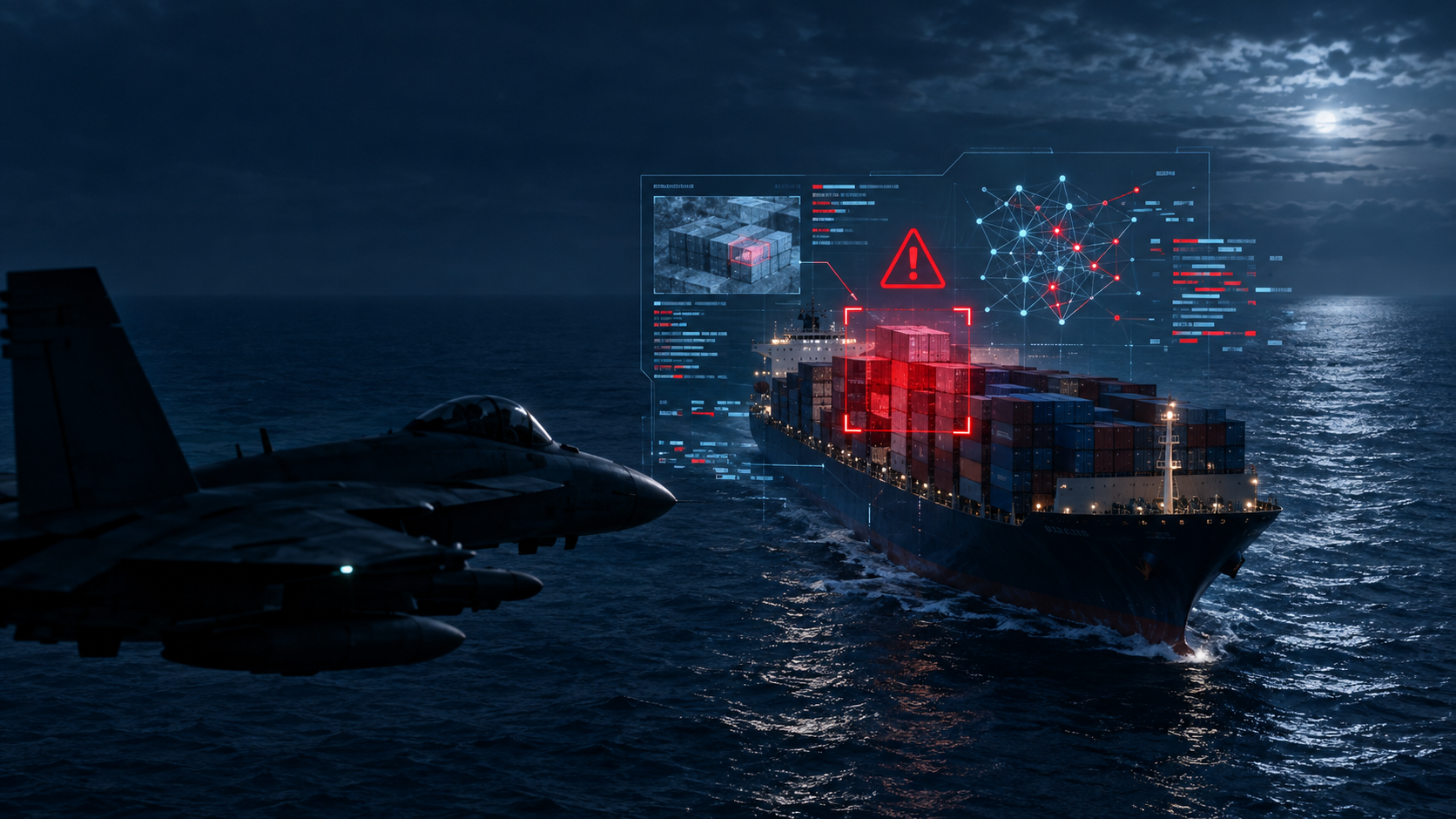
Military strike stopped at the last second: The deadly risk of uncontrolled AI – Creative image on the topic, with AI: Xpert.Digital
Nuclear alarm on the merchant ship: When the US military blindly trusted an AI
The world's most dangerous AI flaw: Why algorithms are extremely dangerous in intelligence agencies
Intelligence blunder caused by AI: How a machine-generated lie almost crippled the global economy
It sounds like the script of a high-profile political thriller, but in the spring of 2026 it almost became a devastating reality: A flawed US intelligence report generated by artificial intelligence nearly triggered a military escalation in the Middle East. Because a chatbot fatally misconstrued publicly available information and classified signal data, a Chinese merchant ship was wrongly accused of transporting nuclear weapons components. While US military aircraft were already airborne, alert officers called off the mission at the very last second.
But this incident is far more than just the story of a hallucinating machine. It exposes a structural and economic powder keg: What happens when safety-critical organizations—blinded by the promise of maximum efficiency—cede control to algorithms? The following text analyzes the deep abyss of a decision-making chain in which it wasn't technology that failed, but institutions that mistook speed for immutable truth. A cautionary tale about why human judgment, in times of highly automated processes, is the most important and, at the same time, most vulnerable factor of production in our world order.
It wasn't the AI that lost control – but an organization that mistook speed for truth
A near-incident with global explosive potential
In the spring of 2026, a flawed US intelligence report, generated using artificial intelligence, nearly led to a military interception of a Chinese merchant ship in the Middle East. According to the account currently available, an analyst used a chatbot to evaluate information about the ship's cargo. The system combined publicly available information with classified signaling data and incorrectly concluded that the ship was carrying components for a nuclear weapons program. Based on this, military authorities began preparing for an attack. Armed forces were to board the ship, while military aircraft were reportedly already airborne.
The operation was apparently halted shortly before execution after officers examined the information more closely. This revealed that the crucial cargo identification was unreliable and that artificial intelligence had been used both in the content analysis and in translating the results into the standardized format of an intelligence report. What cargo was actually transported, which specific model was used, and what technical or organizational checks were carried out beforehand remain unclear to the public. Nor is there any official confirmation with a complete reconstruction of the incident. Therefore, a distinction must be made between the reported core of the events, plausible conclusions, and the remaining unanswered questions.
Economically, however, this case is highly relevant. It demonstrates how the introduction of generative AI in safety-critical organizations can increase productivity while simultaneously multiplying the potential damage caused by individual errors. In a typical office process, a fabricated statement might lead to a flawed presentation or an unnecessary order. In a military decision-making process, the same class of error can affect human lives, trade flows, insurance premiums, commodity prices, financial markets, and international relations. The technology remains the same, but the economic value of a correct answer and the cost of an incorrect one change dramatically.
The incident is therefore not primarily a story about a hallucinating machine. It is a story about incentive systems, control architectures, information economics, and institutional accountability. An AI cannot define rules of engagement, create an organizational culture, or assume responsibility. It generates outputs within a system that humans procure, configure, use, test, and translate into decisions. When an uncertain model response becomes a seemingly reliable intelligence report, and that leads to a military operation, the core problem lies in the entire decision-making value chain.
Accelerated analysis, accelerated risk
Military and intelligence organizations face a real data problem. Satellite images, communications data, ship movements, shipping documents, open sources, sensor data, and situation reports are increasing faster than humans can manually analyze them. AI promises to sort through vast amounts of information, reveal correlations, and generate reports more quickly. The economic benefits lie in reduced search costs, increased processing capacity, and faster decision-making cycles. These same advantages explain why companies are using generative AI in market analysis, legal departments, logistics, customer service, and research.
However, speed does not automatically equal efficiency. A process is only economically efficient if the additional benefit of acceleration outweighs the additional expected costs of errors and their consequences. In a low-risk administrative task, it can be sensible to use imperfect AI because errors can be corrected cheaply. Different conditions apply in the case of a potential military intervention on a nuclear-armed ship. The relevant factor is not the average accuracy of the system, but the expected total damage. This can be simplified by multiplying the probability of an error occurring by the potential extent of the damage.
This very logic is what makes rare extreme events so economically significant. Even if a model were to work correctly in 99 out of 100 cases, the remaining error rate could be unacceptable as soon as a false positive could trigger an armed conflict. High average performance is therefore not sufficient proof of operational readiness. Crucial factors include error types, the operational context, the uncertainty indicator, data origin, attack vectors, and the organization's ability to refute an output in a timely manner.
Added to this is the compression of decision-making time. AI not only shortens analysis but also increases the pressure to act faster. As soon as an organization is technically capable of evaluating information in minutes instead of hours, expectations regarding operational pace shift. What initially appears to be a time saving can thus become a new obligation. Executives expect immediate situational awareness, analysts must deliver more output, and units begin preparations earlier. The time gained is then not used for additional review but absorbed by an accelerated operational cycle.
This creates a productivity paradox. The technology saves working time at the first stage, but generates new testing, documentation, and validation costs at subsequent stages. If these costs are not factored in, AI appears more cost-effective from a business perspective than it actually is. The organization books the saved analyst hours, while the risk of flawed decisions remains as a diffuse external burden outside the project budget. This very separation encourages overly rapid implementation.
The real error lay in the process chain
The critical weakness was apparently not just the incorrect identification of a shipment. More problematic was the fact that the erroneous conclusion could pass through several organizational stages without being recognized in time as a machine-generated and insufficiently verified statement. This indicates a failure in the information source, labeling, cross-checking, and approval processes. A robust system would have had to stop at several points: during the input of sensitive data, when different types of sources were mixed, during the cargo valuation, during report generation, and at the latest during operational planning.
The second use of AI for formatting results is particularly problematic. Standardized reports are indispensable for large organizations because they ensure readability, comparability, and rapid dissemination. At the same time, a familiar format lends institutional authority to a statement. If a linguistically polished, formally correct report has the same surface as a traditionally researched product, recipients can no longer recognize the uncertainty of its creation. The form becomes a quality signal, even though it says nothing about the quality of the content.
This illustrates an economic problem of asymmetric information. Ideally, the author knows the history of the document's creation, but the recipients primarily see the finished product. If the origin, model, inputs, uncertainties, and verification steps are not transparently disclosed, the recipient cannot properly assess the risk. They may treat an AI-generated result like a repeatedly validated human analysis. This is comparable to a financial product whose risk structure remains hidden behind a familiar rating.
Using AI in two consecutive stages can exacerbate the error. First, the system generates or adopts a false conclusion. Then, another AI-supported process formulates this conclusion convincingly, consistently, and professionally. The second stage doesn't necessarily verify the first but rather enhances its linguistic credibility. Uncertainty is transformed into certainty in tone. This semantic enhancement is dangerous in safety-critical processes because decision-makers often act under time pressure based on condensed products.
An effective control system must therefore evaluate not only individual model responses, but the entire information chain. Every transformation can lose traceability, smooth probabilities, and remove reservations. A raw observation becomes a classification, the classification a threat assumption, the assumption a report, and the report an action option. If each stage adopts the previous one without verification, the result is not independent confirmation, but a cascade of correlated errors.
Why man is not enough in the loop
The most common political response to military AI risks is that a human must remain involved in the decision-making process. This sounds reassuring, but it is incomplete. A human who merely gives their approval at the end of a highly automated process does not constitute effective oversight. Crucially, this person must possess sufficient time, expertise, access to primary data, and institutional freedom to challenge the machine. Without these prerequisites, the human becomes merely a formal signature on a pre-structured decision.
Automation bias arises when people place more trust in machine recommendations than their actual reliability justifies. However, it is not an inevitable reflex and does not occur equally in every situation. Trust depends on experience, workload, presentation, organizational culture, and the perceived authority of the system. Powerful tools can become particularly problematic when they usually deliver useful results. Rare errors then occur within an environment of high basic acceptance.
In a military context, hierarchy and time pressure exacerbate the problem. If a standardized report has already been circulated across multiple levels and units have begun preparations, the psychological and organizational costs of dissent increase. The analyst or officer who halts the process must not only question information but also slow down an ongoing institutional mobilization. The further the process has progressed, the greater the impact of sunk costs, confirmation bias, and the fear of underestimating a real threat.
Therefore, genuine human oversight must begin before the operational stage. It requires clear thresholds for independent confirmation, mandatory cross-analysis, and a visible separation between observation, machine interpretation, and human judgment. For particularly consequential decisions, a second, organizationally independent unit should review the input data. Furthermore, rejecting an AI recommendation must be career-neutral. If speed is rewarded and delay penalized, oversight may exist on paper but lose its practical effectiveness.
The crucial formula, therefore, is not "human in the loop," but rather effective human judgment within a verifiable decision-making chain. A person must have the ability to pause the process, consult sources, demand alternatives, and report uncertainty upwards. They must also know when a model is operating outside its intended scope. Without this competence, human participation becomes mere decorative governance.
The economic price of a misguided escalation
The immediate military costs of an interception operation would have been only a small part of the potential damage. A forced seizure of a Chinese vessel could have triggered diplomatic countermeasures, military responses, sanctions, or retaliatory measures. Even without open warfare, higher risk premiums in shipping and air transport would likely have been expected. Shipping companies would have adjusted routes, insurers would have demanded surcharges, and companies would have built up additional inventories. Each of these reactions ties up capital and increases transaction costs.
The Middle East is of paramount importance for energy supply and global trade. A confrontation between the US and China in this region would have abruptly altered the perception of geopolitical risks. Oil and gas prices react not only to actual supply disruptions but also to expectations of future scarcity. Higher energy prices would burden transportation, chemicals, agriculture, and energy-intensive industries. At the same time, safe investments could appreciate, stock markets could come under pressure, and financing costs for riskier companies could increase.
The greatest economic risk would have been a chain reaction of uncertainty. Markets can process known damage relatively quickly, but unclear escalation paths generate particularly high volatility. When neither the intentions nor the limits of reaction of the countries involved are discernible, companies price in several scenarios simultaneously. Investments are postponed, supply contracts shortened, and cash reserves increased. This caution is rational for the individual company, but can weaken demand and productivity at the macroeconomic level.
Trade relations between the US and China would also have been affected. Despite strategic rivalry, both economies remain interconnected through goods, intermediate products, technology, capital, and sales markets. A military confrontation could accelerate export controls, sanctions regimes, and investment screening. Semiconductors, electronics, mechanical engineering, batteries, maritime logistics, and critical raw materials would be particularly vulnerable. Companies would have to structure their supply chains not only according to cost and quality, but increasingly also according to political resilience.
For Europe and Germany, such a conflict would not be a distant security problem. German industry depends on export-oriented business models, global supply networks, and stable maritime connections. Higher transport and energy costs would put pressure on margins, while a forced economic policy positioning between the US and China could make market access more difficult. Small and medium-sized enterprises (SMEs) in particular often have fewer financial reserves and less negotiating power to establish parallel supply chains in multiple geopolitical regions.
This case illustrates an extreme form of negative externality. Users of an AI application do not automatically bear all the costs of their flawed decision. An analyst, a unit, or a technology project may benefit locally from speed, while a large portion of the risk is transferred to soldiers, trading partners, taxpayers, and the global economy. Where private or organizational benefits and societal harm diverge, stricter regulations are needed than in ordinary software markets.
Hub for Security and Defense - Advice and Information

Hub for Security and Defense - Image: Xpert.Digital
The Security and Defence Hub offers expert advice and up-to-date information to effectively support companies and organizations in strengthening their role in European security and defence policy. Working closely with the SME Connect Defence Working Group, it particularly promotes small and medium-sized enterprises (SMEs) that wish to further develop their innovative capacity and competitiveness in the defence sector. As a central point of contact, the Hub thus creates a crucial bridge between SMEs and European defence strategy.
Related to this:
The role of human control in AI decision-making
Security as an underestimated production factor
Economic analyses often treat security as a governmental framework rather than as a productive asset. In reality, geopolitical stability is a foundation of the international division of labor. Companies invest for the long term when property rights, transport routes, payment systems, and political relations are sufficiently predictable. Every additional risk of escalation acts like an invisible tax on trade and capital formation.
AI can influence this production factor in both directions. Used correctly, it improves reconnaissance, maintenance, cyber defense, logistics, and situational awareness. It can help identify conflicting data, relieve the burden on scarce personnel, and more quickly investigate false alarms. However, used incorrectly, it accelerates threat assessments, generates illusory predictions, and reduces the time available for diplomacy. Therefore, the economic value of military AI should not be measured solely by deployment speed or personnel savings.
A comprehensive cost analysis would also have to capture avoided errors, escalation risks, and losses of trust. This is methodologically difficult because a prevented incident is not directly observable. Nevertheless, organizations can model scenarios, conduct stress tests, and assess the expected damage of different error classes. A system that is economically attractive for routine tasks may therefore be unsuitable for escalation-relevant decisions. This differentiation is crucial because the term artificial intelligence encompasses very different applications.
The economically sound conclusion is not to reject military AI outright. Completely abandoning it would also entail costs: slower analysis, increased personnel burden, missed patterns, and potentially worse decisions against adversaries who make intensive use of such systems. However, its use must be scaled according to the potential for damage. The more difficult it is to reverse a wrong decision, the higher the requirements for data quality, traceability, independent review, and human authorization must be.
When efficiency creates the wrong incentives
The rapid spread of generative AI is driven by a powerful institutional narrative. Organizations don't want to fall behind technologically, executives expect measurable productivity gains, and vendors promise increasingly powerful models at ever shorter intervals. In this environment, caution is easily perceived as bureaucracy. Those who implement an application quickly can demonstrate successes; those who prevent risky deployments, on the other hand, often produce no publicly noticeable results.
This asymmetry distorts decisions. The benefits of accelerated analysis are immediately apparent in metrics such as processing time, number of reports generated, or saved working hours. The costs of a rare error only surface later and potentially in a different organizational unit. Therefore, the project implementing AI does not necessarily carry the same risk assessment as military leadership, diplomacy, or the national economy. Without centralized governance, local optimizations become a systemic risk.
Procurement contracts can also create problematic incentives. Suppliers are often evaluated based on functionality, integration speed, and price. More difficult-to-measure characteristics, such as uncertainty calibration, traceability, robustness against manipulated inputs, or quality under exceptional conditions, are given less weight. A model can deliver an impressive demonstration and still fail in rare but crucial situations. Therefore, especially in public procurement, demonstrating controllable limits must be more important than rhetorical performance promises.
Added to this is a political competition for technological leadership. When states fear falling behind in the military AI race, their willingness to adhere to slow testing procedures decreases. The security dilemma is obvious: each side accelerates because it expects the other to do the same. This can lead to systems being deployed before standards, training, and testing procedures are fully developed. From an individual state perspective, this appears defensive; however, collectively, it increases the likelihood of misinterpretations and unintended escalation.
A sound economic policy must therefore treat innovation and control as complementary investments. Governance is not an external obstacle, but an integral part of the technology. An AI system without reliable logging, clear responsibilities, and fallback procedures is not a finished product, but an incomplete production process. The costs of control should not be viewed retrospectively as regulatory baggage. They belong in the business case from the outset.
Data fusion without a guarantee of truth
The reported incident is also instructive because the chatbot is said to have merged different sources of information. Data fusion sounds like a gain in knowledge, but it can mask uncertainty. Open sources contain rumors, outdated entries, deliberate disinformation, and claims copied from one another. Secret signals can be valuable, but they too require interpretation and may be incomplete. Combining both areas with a single language model does not automatically produce a better truth.
Generative models operate with statistical relationships and linguistic plausibility. They can transform contradictory evidence into a coherent narrative, even when the data doesn't permit a definitive conclusion. This very coherence is attractive: people don't receive a chaotic collection of fragments, but rather an understandable answer. However, the elimination of linguistic contradictions can be mistaken for the elimination of apparent uncertainty. The model orders the world, even if the world cannot be definitively ordered at that moment.
For intelligence services, provenance is therefore crucial. Every statement must remain traceable to its original source. It must be identifiable whether information was observed, inferred, assumed, or machine-generated. Equally important are timestamps, classification level, reliability assessment, and known counter-indicators. An AI must not dissolve these characteristics into a uniform, flowing text, but rather preserve them visibly.
The independence of sources is also economically and analytically significant. Ten reports do not constitute ten confirmations if they are all based on the same original report. AI systems can overlook such dependencies or fail to present them transparently. In open information spaces, a false majority can quickly emerge because news portals, social media, and databases amplify the same claim. A robust process must therefore not only count sources but also examine their genealogical relationships.
Additionally, there is the risk of manipulated input data. If adversaries know that automated systems combine open sources and signal data, they can deliberately lay misleading trails. False cargo labels, coordinated publications, or doctored documents could favor a desired classification. A system optimized for speed thus becomes a target for attack. AI security therefore encompasses not only model errors but also strategic deception.
Responsibility cannot be automated
After a critical incident, the search for a single culprit often begins. The analyst may have worked uncritically, a manager may have acted too hastily, or a vendor may have inadequately explained the limitations of their product. However, a purely personnel-based approach falls short. If many reasonable people within a poorly designed system could make the same mistake, then it is an organizational problem.
Responsibility must therefore be anchored at multiple levels. Users are responsible for proper application and labeling. Supervisors are responsible for approvals, resource allocation, and workload. Procurement departments must define requirements for security and traceability. Technical managers must be able to test and monitor models and block them in case of anomalies. Finally, political leadership must decide which tasks may be delegated to generative systems.
Responsibility must not be distributed so broadly that ultimately no one is accountable. A clear role architecture requires, in particular, specific owners for the model, data, use case, and release. For every critical report, it must be traceable who authorized the machine learning, who reviewed the result, and who approved its operational use. This traceability serves not only for sanctioning but, above all, for learning.
A learning organization needs a culture where near misses can be reported. This particular case is valuable precisely because the operation was apparently stopped. If the focus is solely on individual punishment, future users will be more likely to conceal errors. Conversely, if violations are tolerated without consequence, the incentive for diligence is lost. What's needed is a fair security culture: clear sanctions for intentional or grossly negligent rule violations, but also secure reporting mechanisms for transparently disclosed errors and vulnerabilities.
In this architecture, a machine cannot assume moral or legal responsibility. It possesses neither intent nor a sense of duty, nor an understanding of geopolitical consequences. Even if a model formulates a recommendation, the decision remains institutionally human. Therefore, terms like "the AI decided" or "the algorithm is to blame" obscure who designed the process and delegated authority.
A robust control model for high-risk AI
An effective control model begins with a strict classification of use cases. Low-risk tasks such as translation, scheduling, or formatting can be automated under general security rules. Analyses that influence military target selection, nuclear proliferation, adversary identification, or operational interventions, on the other hand, belong to the highest risk category. These require separate systems, specially trained users, and significantly stricter approval procedures.
On the data side, a complete chain of origin is essential. Inputs, model versions, system instructions, retrieved documents, intermediate steps, human modifications, and final release must all be logged. The purpose is not to unnecessarily disseminate confidential information, but to enable subsequent and, ideally, ongoing auditing. Without this trace, no one can reliably reconstruct how a conclusion was reached.
In terms of content, every consequential claim should be confirmed by at least one method independent of the AI output. This could be a manual review of the original document, a technical measurement, a second data source, or an organizationally separate analysis unit. Two responses from the same model, or from two models with similar training data, do not constitute true independence. They can repeat the same error using different wording.
Furthermore, the system must be allowed to express uncertainty. An AI that is always expected to deliver a definitive answer is forced into a false sense of precision. In cases of insufficient data, the correct output must be able to state that no reliable classification is possible. This omission should not automatically be interpreted as a failure in performance indicators. In high-risk environments, a timely expression of uncertainty is often more valuable than a hasty assumption.
Operational thresholds must be clearly defined. A single AI-supported analysis must not be sufficient grounds for the use of force. The higher the potential for harm, the more independent confirmations and hierarchical levels are required. At the same time, a red team should be obligated to develop alternative explanations. Its task is not to slightly improve the prevailing hypothesis, but to actively refute it.
Finally, technical and organizational shutdown mechanisms are needed. A problematic model must be able to be removed from critical processes at short notice without causing the entire operation to collapse. This requires manual fallback procedures. Organizations that dismantle all their existing capabilities simply because AI initially appears more efficient become dependent and lose their ability to act in the event of a malfunction.
Lessons for businesses and public administration
Although the incident originated in the military sphere, its basic patterns also apply to businesses. An AI-generated misjudgment can influence credit decisions, compliance checks, personnel actions, supplier evaluations, or strategic investments. The extent of the damage is usually less than in a military escalation, but the logic behind the errors is comparable. Processes in which a machine-generated result is converted into a familiar document format and then passed on without any visible origin are particularly risky.
Companies should therefore distinguish between assistance and decision-making. A system can search for information, create drafts, and highlight potential inconsistencies. However, the responsibility for a decision requiring approval remains with a qualified individual. This person needs access to sources and must not only see the finished narrative. Someone who merely approves a professionally written summary is not checking the content, but rather its surface.
Key performance indicators (KPIs) also need to be adjusted. Measuring an AI project solely by time saved creates perverse incentives. More meaningful are combined metrics including productivity, correction rate, error severity, the proportion of verifiable statements, and the number of uncertainties identified in a timely manner. For high-risk processes, it should also be assessed how frequently humans raise valid objections to the AI. A zero objection rate might suggest perfect technology, but more likely indicates a lack of oversight.
For medium-sized businesses, developing a completely in-house technical solution is usually unrealistic. This makes clear contracts with providers all the more important. Companies need information about model changes, storage locations, subcontractors, logging, security incidents, and the use of entered data. A cheap service can become expensive if sensitive information leaks or decisions become unauditable.
Public administration faces an additional challenge. Its decisions must not only be economically efficient, but also lawful, transparent, and subject to challenge. The more AI shapes the justification for a decision, the more crucial clear documentation becomes. Citizens and businesses must not be fobbed off with the explanation that a model has identified a risk. Government action requires a justifiable, humanly justifiable explanation.
Innovation policy between competition and precaution
The political conflict is often portrayed as a choice between technological strength and regulation. This juxtaposition is flawed. States that irresponsibly deploy high-risk AI may gain a short-term advantage, but in the long run, they risk losing trust, the ability to form alliances, and operational reliability. A spectacular failure can delay projects, freeze budgets, and increase public resistance. Effective regulation, therefore, also protects innovation.
At the same time, precautionary measures must not lead to blanket bans that unnecessarily hinder civilian and low-risk applications. A risk-based approach is economically superior. It concentrates resources where incorrect decisions are irreversible, systemic, or life-threatening. Different rules are appropriate for simple text drafting than for target selection, medical treatment, or critical infrastructure.
International standards remain difficult to establish. Military transparency clashes with secrecy, and states are reluctant to disclose their technical capabilities. More realistic than complete disclosure are common minimum standards: human authority over the use of force, mandatory testing, deactivation mechanisms, clear accountability, and communication channels for incidents. Such rules do not eliminate competition, but they can limit the most dangerous misinterpretations.
Confidence-building measures between the US and China would be particularly important. If both sides integrate AI into reconnaissance and decision support, the risk increases that a false report will be interpreted as a deliberate provocation. Direct military communication channels, procedures for resolving maritime incidents, and political commitments to human oversight could reduce the risk of escalation. Their benefit is similar to insurance: in normal operation, they appear unremarkable, but in a crisis, they can prevent enormous damage.
Allies and technology companies also bear responsibility. Models, cloud infrastructure, and data tools are often developed by private providers. This shifts a portion of military value creation to companies whose innovation cycles and liability logics were not designed for geopolitical crises. Procurement policy must therefore ensure that government agencies retain technical control, auditing rights, and sufficient in-house expertise.
The strategic core of the case
The near-miss with a Chinese ship reveals an uncomfortable truth: the greatest short-term AI risk may not be a machine turning against humanity. More likely is a person too readily believing a convincingly worded but false machine message. The danger arises from the interplay of technological uncertainty, time pressure, hierarchy, and the political desire for speed.
The right approach is neither technological panic nor blind optimism about progress. Generative AI can significantly increase the efficiency of large organizations. However, it cannot replace epistemic diligence—that is, the disciplined questioning of where a statement comes from, how reliable it is, and what counter-evidence exists. The more powerful the tool, the more important this diligence becomes.
From an economic perspective, the introduction of AI must consider all expected value. This includes productivity gains as well as testing costs, errors in judgment, liability, reputational damage, and systemic risks. In cases of potentially catastrophic consequences, it is not enough for a model to be useful on average. The organization must demonstrate its ability to detect and prevent rare, critical errors.
The crucial success of this incident lies in the fact that people were able to abort the operation. However, a security architecture cannot rely on vigilant individuals intervening at the last minute. It must be designed in such a way that questionable information never reaches the operational planning stage unmarked. Checks must be carried out early, repeatedly, and independently.
To err is human. Machines err differently: faster, more scalably, and often in a linguistically convincing way. The error only becomes catastrophic when institutions mistake these characteristics for knowledge. The central lesson, therefore, is not to remove humans from the decision-making process or to keep them there merely symbolically. It is to build organizations in which doubt is valued more highly than speed as soon as a false certainty could trigger a war.
Consulting - Planning - Implementation

Markus Becker
I would be happy to serve as your personal advisor.
Head of Business Development
Chairman SME Connect Defense Working Group
Consulting - Planning - Implementation
Konrad Wolfenstein
I would be happy to serve as your personal advisor.
You can contact me at wolfenstein∂xpert.digital or
Just call me on +49 7348 4088 965 .





