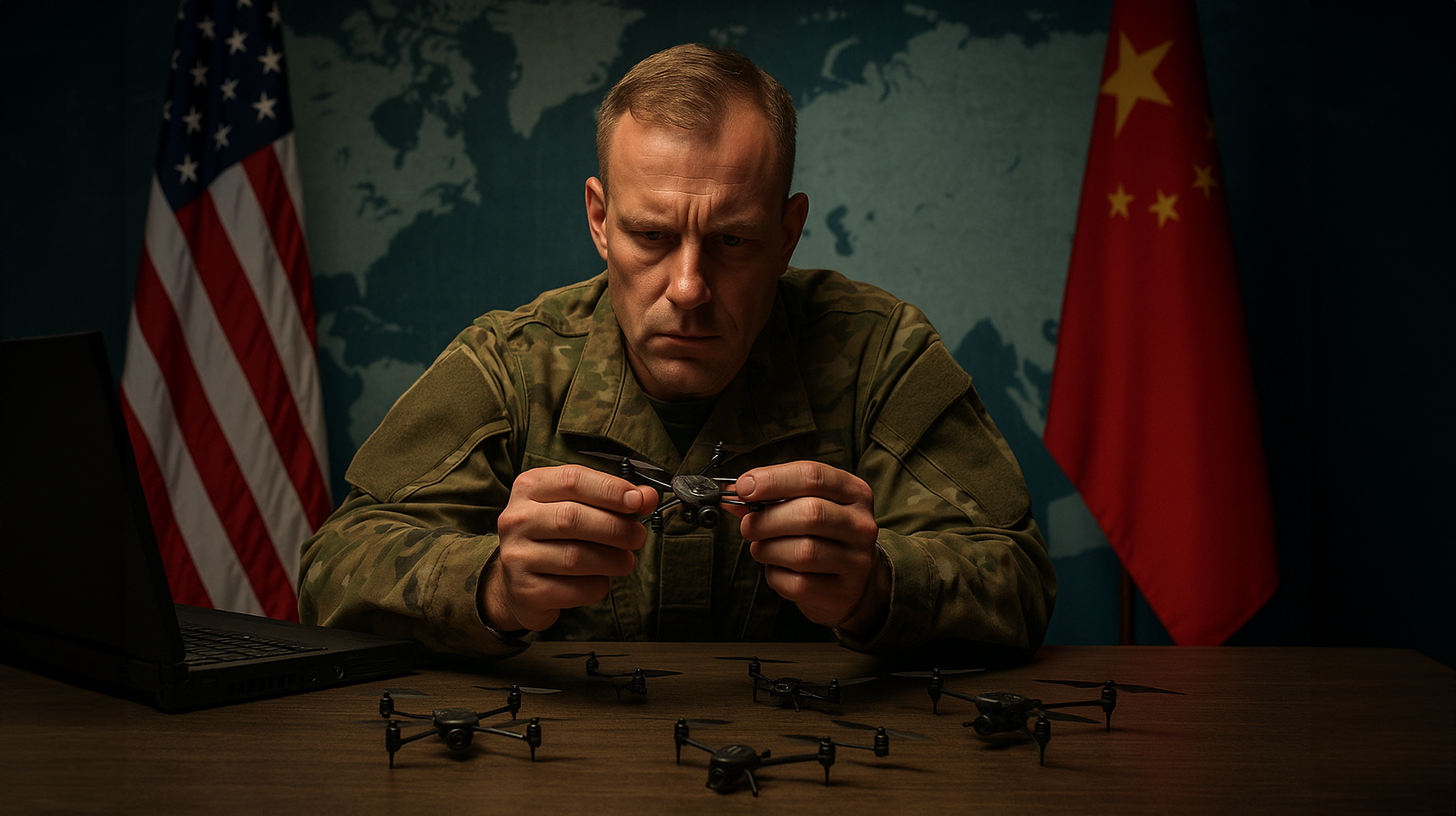
Global race for micro-drones: International development status at a glance – Spy drones for the military – Symbolic image: Xpert.Digital
Miniature drones the size of insects trigger an international technology race
The future of espionage: How mosquito-sized drones are changing security technology
The development of mosquito-sized spy drones has triggered an intense global race, with various nations exploring advanced miniaturization technologies for military and civilian applications. The recent unveiling of a mosquito-sized drone by China's National University of Defense Technology marks a significant milestone in this field.
Related to this:

China's breakthrough in micro-drones
Technical specifications of the Chinese development
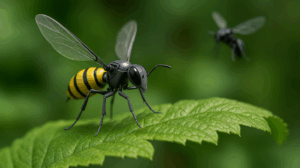
The micro-drone developed by Hunan University of National Defense Science and Technology represents a remarkable technological advancement. The aircraft features two leaf-shaped wings attached to a rod-like body, complemented by three hair-thin "legs" that create an authentic insect-like design. An additional four-winged prototype can be controlled via smartphone and demonstrates the versatility of Chinese development approaches.
Strategic integration into the People's Liberation Army
China is pursuing a comprehensive strategy to integrate small, inexpensive, AI-powered drones into the People's Liberation Army. This development is part of a "step-by-step leap" in unmanned combat technology, which initially expands the use of drones, then envisions deep integration into military operations, and ultimately aims for complete autonomy. China's drone fleet is now estimated to be ten times larger than those of the US and Taiwan combined.
International developments and competitiveness
Norwegian Black Hornet series from Teledyne FLIR
The Black Hornet series from defense contractor Teledyne FLIR Defense currently represents the gold standard for military micro-drones. The fourth generation, the Black Hornet 4, was introduced in 2023 and features a 12-megapixel daytime camera with improved low-light performance and a high-resolution thermal imager. These 70-gram drones have a flight time of 30 minutes, a range of two kilometers, and can withstand winds of up to 25 knots. They are already in use by over 40 nations, including the Ukrainian defense forces.
Harvard RoboBee Project – Advances in Biomimetics
The Harvard RoboBee project made significant progress in 2025, finally achieving a successful landing after more than a decade of development. The latest version is equipped with crane-fly-like, articulated legs that act as miniature shock absorbers, cushioning impacts upon landing. Weighing less than one-tenth of a gram and with a wingspan of 3 centimeters, the RoboBee has demonstrated hovering, diving, and clinging for over a decade.
Regional developments and national programs
European Initiative and Eurodrone Programme
The European Union has prioritized drone development and countermeasures, coordinating research and capability development through the European Defence Fund. The Eurodrone program, spearheaded by Germany, France, Italy, and Spain, received an additional €100 million in 2024 to develop new capabilities. While the program focuses on larger MALE (Medium Altitude Long Endurance) drones, it demonstrates Europe's commitment to developing autonomous defence systems.
Asian developments
Japan
Japan has assembled a 30-member internal group to modernize its military capabilities for the development of drones and next-generation AI warfare strategies. The Japanese Ministry of National Defense plans to acquire approximately 310 small suicide drones by 2027. The Japanese military drone market was valued at US$11.75 billion in 2024 and is projected to grow at an annual rate of 11.2% from 2026 to 2033.
South Korea
South Korea has deployed small, stealth drones with low detectability in Gangwon Province. This development was a response to North Korean drone violations of South Korean airspace in December 2022.
Other international actors
Israel
Israel has confirmed the first operational use of its Spike Firefly drones, designed as loitering munitions. These 3-kilogram drones are equipped with an electro-optical observation system with a thermal imaging channel and can remain airborne for 15 to 30 minutes.
Russia
Russia developed the "Microbe" drone, which is equipped with artificial intelligence and can effectively resist electronic warfare systems. Approximately 3,000 "Killer Whale" and "Microbe" drones are already deployed in combat zones.
Australia
Australia has initiated the Country 156 program, which aims to develop an integrated system for combating small drones. Basic operational capability is expected by December 2025, while a fully functional solution is planned for 2032.
Technological challenges and market development
Miniaturization challenges
The development of microdrones faces significant technical hurdles. Sensors, power sources, control circuits, and other components must fit into extremely limited spaces, requiring collaboration between various disciplines such as microdevice engineering, materials science, and bionics. Limited energy capacity, restricted radio range, and robustness under field conditions remain crucial factors for their practical application.
Market development and growth forecasts
The global nanodrone market grew from USD 1.3 billion in 2022 to USD 1.7 billion in 2023, representing a compound annual growth rate (CAGR) of 31.2%. The market is projected to reach USD 4.81 billion by 2027, with a CAGR of 29.7%. North America was the largest region in the nanodrone market in 2022, while the Asia-Pacific region is expected to be the fastest-growing region during the forecast period.
Military applications and strategic implications
Operational deployment options
Microdrones offer significant advantages for military operations due to their covert reconnaissance and surveillance capabilities. They can provide real-time information on enemy movements and positions, enabling precise target identification. In urban and densely populated areas, they can conduct surveillance and reduce the risk of misidentifying targets.
US Response and Replicator Initiative
In response to Chinese developments, the Pentagon launched the $1 billion Replicator Initiative, which aims to deploy thousands of aerial, sea, and land drones by August 2025. The US is pursuing a "hellish scenario" strategy of saturating contested areas with unmanned systems to counter China's numerical advantage.
From RoboBees to Black Hornets: The international battle for the world's smallest drones
The global race for micro-drones is intensifying, with China demonstrating a remarkable technological lead with its mosquito-sized development. While other nations, such as the US, Israel, Europe, and various Asian countries, are pursuing their own programs, the diverse approaches—from Harvard's biomimetic RoboBees to Norway's operational Black Hornets—show the variety of strategies being pursued.
The technical challenges remain significant, particularly regarding energy storage, communication range, and operational robustness. Nevertheless, market forecasts and continued military interest indicate that microdrones will play a central role in future warfare and security architecture.
Related to this:
Consulting - Planning - Implementation

Markus Becker
I would be happy to serve as your personal advisor.
Head of Business Development
Chairman SME Connect Defense Working Group
Consulting - Planning - Implementation
Konrad Wolfenstein
I would be happy to serve as your personal advisor.
You can contact me at wolfenstein∂xpert.digital or
Just call me on +49 7348 4088 965 .
Hub for Security and Defense - Advice and Information

Hub for Security and Defense - Image: Xpert.Digital
The Security and Defence Hub offers expert advice and up-to-date information to effectively support companies and organizations in strengthening their role in European security and defence policy. Working closely with the SME Connect Defence Working Group, it particularly promotes small and medium-sized enterprises (SMEs) that wish to further develop their innovative capacity and competitiveness in the defence sector. As a central point of contact, the Hub thus creates a crucial bridge between SMEs and European defence strategy.
Related to this: