
STABL Energy: Second life for electric car batteries – Critical assessment, strengths, limitations and unresolved questions
Xpert Pre-Release

Available in 27 languages 📢
Prefer Xpert.Digital on GoogleⓘPublished on: June 29, 2026 / Updated on: June 29, 2026 – Author: Konrad Wolfenstein
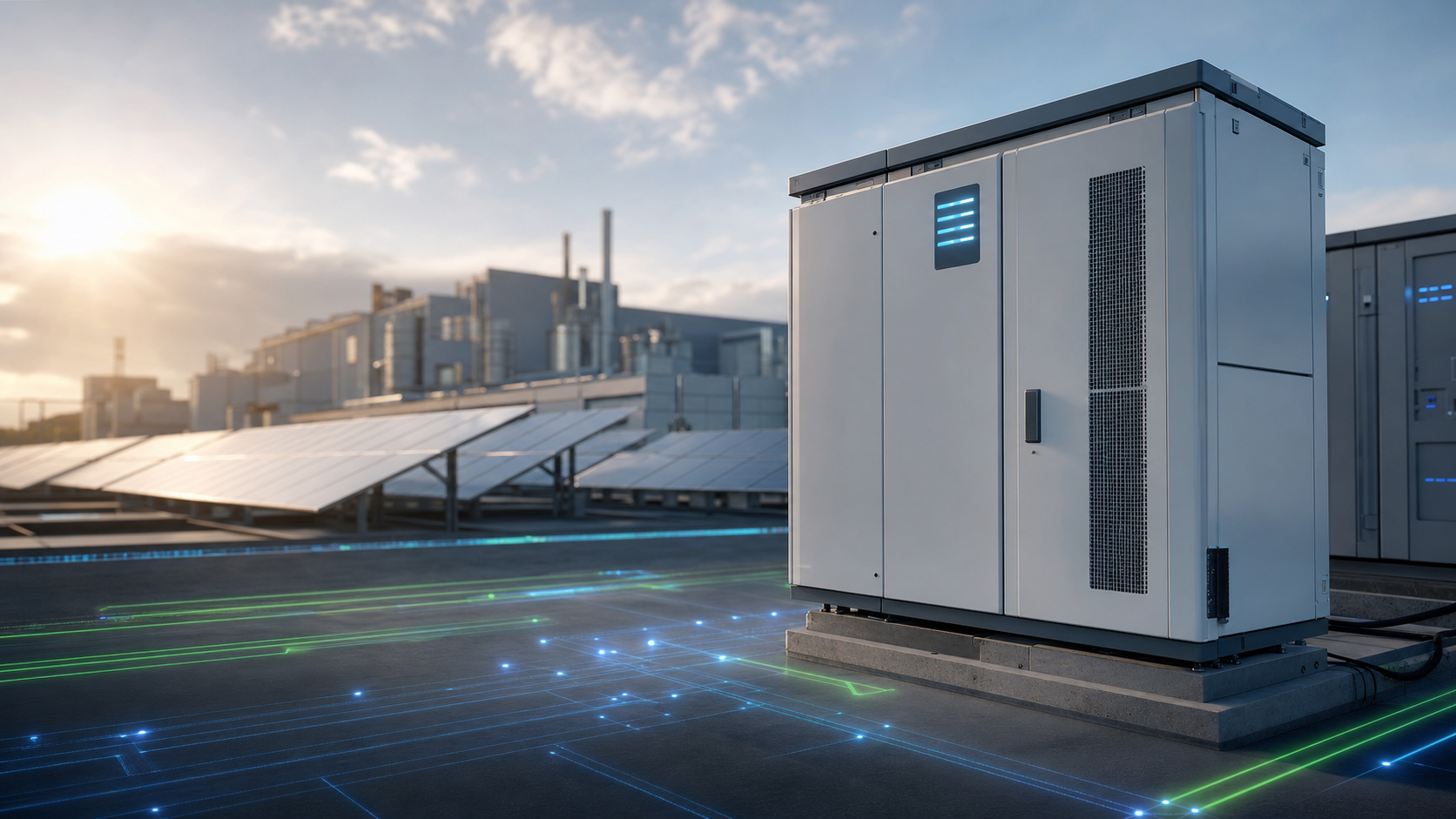
Used batteries to combat record electricity prices: Is this ingenious idea enough for a billion-dollar market? – Image: Xpert.Digital
Used batteries as a substitute for record electricity prices: Is this ingenious idea enough for a billion-dollar market?
Between pioneering spirit and market success: How the Munich-based start-up STABL is fueling the energy transition
Germany's energy transition faces two massive challenges: skyrocketing industrial electricity prices and mountains of used electric vehicle batteries. The Munich-based deep-tech startup STABL Energy is turning these two problems into a highly profitable solution. With a revolutionary inverter technology, the spin-off from the Technical University of Munich enables the safe and highly efficient reuse of used vehicle batteries as large-scale stationary energy storage systems. The key innovation: even batteries with significantly different states of aging can be easily combined thanks to software-based, dynamic balancing – a first in the industry that ensures safety and drastically reduces costs.
But STABL Energy isn't stopping at hardware innovation. To attract risk-averse medium-sized businesses as customers, the company offers its storage systems as part of an "Energy-as-a-Service" subscription. Commercial customers save on electricity costs from day one without having to make large initial investments. This model has not only earned the startup prestigious awards and strategic partnerships – such as with Scandinavia's largest bus operator, Nobina – but also millions in growth financing.
In a macroeconomic environment characterized by resource scarcity, CO₂ reduction targets, and the rapid rise of electromobility, STABL Energy is perfectly positioned to capitalize on current trends. Nevertheless, the young company faces crucial years in its development. It must manage the enormous upfront financing costs of its subscription model, overcome regulatory hurdles, and assert itself against growing, well-capitalized competition in the multi-billion-dollar global market for second-life batteries. Can the startup successfully complete its scaling phase and grow into a true heavyweight in the circular economy?
When used car batteries become a weapon in the energy price war – but is the idea alone enough to win a billion-dollar market?
The company and its context of origin
Amid Germany's energy transition and a growing global awareness of resource scarcity, four scientists and engineers founded a company in Munich in 2019 that, until then, hardly anyone had considered economically viable: STABL Energy, then operating under the name m-Bee, emerged as a university spin-off from research projects at the Technical University of Munich and the Bundeswehr University Munich. The founders, Dr. Arthur Singer, Dr. Nam Truong, Martin Sprehe, and Christoph Dietrich, combined specialized knowledge in power electronics, battery technology, and business management. They succeeded in transforming an electrotechnical idea, which Singer had already outlined in his diploma thesis in 2012, into a market-ready product. The Federal Ministry for Economic Affairs and Climate Action supported the early phase through the EXIST research transfer program, providing the company with a solid scientific foundation.
The strategic starting point was cleverly chosen: With the ramp-up of electromobility, rapidly increasing numbers of used vehicle batteries are being produced. Their capacity is no longer sufficient for automotive use, but they could provide decades of service in stationary storage applications. At the same time, industrial electricity prices in Germany are rising to record highs, and companies are urgently seeking ways to become less dependent on grid price fluctuations. STABL Energy positions itself precisely at this intersection – and offers a technological answer to several pressing questions of our time: How can energy storage be made more economical? How can the lifespan of valuable battery raw materials be extended? And how can the barrier to entry be lowered for commercial customers who want to benefit from the energy transition without having to shoulder capital-intensive investments?
The core technology: Modular multilevel inverters as a unique selling point
The technological heart of STABL Energy is a so-called Modular Multilevel Converter, abbreviated MMC, which replaces conventional inverters and battery management systems in energy storage systems. The crucial difference to the previous state of the art: While conventional battery storage systems operate all battery modules in a fixed electrical series connection, meaning that the entire system is only as efficient as its weakest module, STABL technology treats each individual battery cell as a separately controllable unit. Software-based, the system dynamically compensates for different residual capacities, aging states, and manufacturing tolerances of the individual modules.
This technological shift has far-reaching consequences. First, it avoids the dangerous high-voltage operation of conventional storage systems – a significant safety improvement, particularly important when using used batteries with varying cell properties. Second, the company states that losses can be reduced by up to 70 percent compared to conventional systems, and operating costs and CO₂ emissions are expected to decrease by up to 40 percent per year. Third – and this is the most strategically important advantage – it allows the use of used batteries from electric vehicles, which can differ considerably in capacity and condition. This was simply not economically feasible with previous inverter technology, because a single degraded module would negatively impact the entire system.
For the technology partnership with Infineon Technologies, whose MOSFETs enable STABL's power electronics, this is a significant endorsement of quality. Infineon is one of the world's leading semiconductor manufacturers, and the decision to collaborate with a relatively young start-up speaks to the technological maturity of the developed solution. Patents protect this core development and create a technological buffer zone that makes it difficult for imitators to enter the market. The first prototype, a storage system made from 24 used KIA Soul EV battery modules with an energy capacity of 72 kWh, was successfully commissioned in 2022 – an important proof of concept that demonstrated that the concept works not only on paper.
Business model: The subscription as a strategic lever
A technologically compelling product alone is not enough to tap into a market – the history of the cleantech sector has repeatedly demonstrated this. STABL Energy has clearly learned this lesson and complements its technological differentiation with a clever sales business model: the energy storage subscription. Instead of selling a system – a one-off event that burdens the customer with investment risks, warranty issues, and maintenance responsibilities – STABL Energy offers the operation of the storage system as an ongoing service. The customer pays a monthly subscription fee, immediately receives the benefits of an energy storage system, and STABL Energy takes care of all operation, maintenance, and service-related obligations.
This so-called Energy-as-a-Service (EaaS) model is enjoying increasing popularity in the commercial energy sector because it eliminates a fundamental economic bottleneck: Many medium-sized businesses, from bakeries to manufacturing companies, recognize the benefits of battery storage – but shy away from the high initial investments and operational complexity. With its subscription model, STABL Energy effectively lowers the barrier to entry to zero. Immediate savings, no amortization calculations, no hidden maintenance costs – this approach is not only financially attractive but also psychologically appeals to the risk aversion of the typical medium-sized business.
Furthermore, STABL Energy's subscription model enables long-term customer loyalty and a stable, predictable cash flow – strategic advantages that are highly attractive to growth investors. At the same time, the company retains ownership of the storage systems, can reclaim them at the end of the contract, upgrade them, or supply them to a new customer, thus creating a kind of circular economy at the device level. CEO Dr. Nam Truong describes the product concept as a unique storage solution that is not disposable because individual battery modules can be replaced even after years of use – an approach that introduces repairability to a sector previously characterized by the rapid replacement of entire units.
Market environment: Tailwinds from all directions
Rarely has a technology start-up encountered such a favorable macroeconomic environment as STABL Energy in the years following its founding. The European battery storage market is experiencing explosive growth: In 2025, 36 gigawatt-hours of newly installed battery storage capacity were recorded in the European Union – a 48 percent increase compared to the previous year. For the first time, more than half of this new capacity was accounted for by large-scale storage systems. The cumulative installed battery storage capacity in Europe thus exceeded 100 gigawatt-hours for the first time.
The forecasts for the coming years are even more impressive: SolarPower Europe expects annual new installations to quadruple to around 138 gigawatt-hours by 2030. Within the EU-27, the total battery storage capacity is projected to more than sixfold, reaching approximately 470 gigawatt-hours by the end of the decade. Germany, the UK, and Italy will remain the largest individual markets in Europe. At the same time, the industry association warns that even this ambitious growth scenario will not be sufficient to meet the actual flexibility requirements of a fully decarbonized European energy system.
More specifically for STABL Energy is the market for second-life battery storage: Various market research sources forecast different, but consistently strong, market volumes. IDTechEx puts the CAGR for this segment at 28.4 percent for the period from 2025 to 2035. Straits Research estimates the global market volume for used EV batteries at around US$1.2 billion in 2025 and expects it to rise to over US$7.6 billion by 2034. According to calculations by researchers at RWTH Aachen University, the European submarket for the reuse of electric vehicle batteries already comprised around €250 million in the mid-2020s, with the potential to increase sixfold to up to €1.6 billion by 2030.
This growth is driven by several mutually reinforcing trends: the rapidly increasing number of electric vehicles, whose batteries will soon reach the end of their mobility use phase; the political pressure to decarbonize, which is pushing companies to generate and store their own electricity; the rising industrial electricity prices in Germany, which are creating pressure to reduce costs; and last but not least, the shortage of raw materials such as lithium, cobalt and nickel, which makes using existing cells for as long as possible an economic imperative.
Growth financing and strategic partnerships
Investors responded to the opportunity. In August 2023, STABL Energy closed a €15 million growth financing round – one of the largest growth financing rounds in the German DACH region that year. The round was led by UVC Partners, a Munich-based venture capital firm focused on deep-tech startups. The company had previously received €4.5 million in seed funding. These funds enabled the expansion of production facilities, further development of the technology, and expansion into new market segments.
Of particular strategic importance is the partnership announced in 2025 with Nobina, Scandinavia's largest public transport company. Nobina operates a fleet of over 1,000 electric buses and thus faces the challenge of managing large quantities of decommissioned bus batteries within a few years. The cooperation involves installing these batteries in stationary storage systems at Nobina's depots in Sweden, Finland, Norway, and Denmark. The model is unusual: Nobina does not sell the batteries to STABL Energy but retains ownership of the storage systems and can trade surplus electricity on the spot market. For STABL Energy, this is an elegant solution that transforms the company from a battery buyer into a technology and operations service provider – a scaling option with considerable potential if similar fleet operators adopt similar models.
Further reference projects document market penetration: a 72 kWh storage system made from used KIA modules at a train station in Germany, a 98 kWh system in a Swiss residential area, a 147 kWh storage system with 67.5 kW output at the International School Augsburg, acquired via a subscription model – the project list is constantly growing. The ees Award 2022, presented at the renowned Intersolar trade fair in Munich, gave the company early visibility in the industry and validated its technological innovation before a specialist audience.
Innovative photovoltaic solution for cost reduction (up to 30%) and time savings (up to 40%)

Innovative photovoltaic solution for cost reduction and time savings - Image: Xpert.Digital
More information here:
Second-life batteries in series production: opportunities, risks and the major scaling question
Competitive positioning: Differentiation in an increasingly competitive market
The fact that the market for second-life battery storage is now attracting more players is both a strength and a weakness. The Australian sustainability debate has long since spawned German counterparts: Voltfang from Aachen also builds energy storage systems for industry from discarded car batteries. Other competitors such as B2 Energy, Spiers New Technologies, and – on the OEM side – direct programs from car manufacturers like Volkswagen, BMW, and Renault are pushing into the market with their own second-life concepts. At the ees Award 2022, in addition to STABL Energy, the then-young competitor Voltfang also won an award, demonstrating that the field is not uncontested.
STABL Energy differs from these competitors in one crucial aspect: While most second-life providers primarily work with selected, more homogeneous used batteries and integrate them into modified, but fundamentally conventional, system architectures, STABL's MMC technology is designed to utilize even highly heterogeneous battery stocks – such as those generated by decommissioned electric bus fleets – safely and efficiently. This advantage becomes strategically more important, not less important, as the supply of used batteries of diverse origins, chemistry, and age states grows.
Furthermore, the subscription model is a tangible differentiator compared to competitors who primarily sell. It shifts the customer relationship from a transactional to a partnership-based logic – a model that has long been standard in the software industry but is still uncharted territory in the hardware sector for energy storage. At the same time, it requires significant capital investment from the company: those who lease storage systems instead of selling them must hold the value of these systems on their own balance sheet and pre-finance them.
Regulatory framework: A tailwind and a bureaucratic burden at the same time
The regulatory context for STABL Energy is a double-edged sword. On the one hand, the European Union, with the Battery Regulation (EU) 2023/1542, which has been directly applicable law in Germany since February 18, 2024, has created a framework that actively promotes second-life batteries. The regulation sets out clear requirements for extending the battery lifecycle, defines obligations for documenting battery condition, and, with the digital battery passport (mandatory from 2027), creates a transparency structure that significantly simplifies the reuse of used batteries.
On the other hand, the same regulation imposes increased requirements for safety certificates and conformity assessments for remanufactured batteries. Companies like STABL Energy that remanufacture used batteries for reuse and market them as system components are considered manufacturers under the regulation and therefore bear extended producer responsibility. This means additional compliance effort and potentially longer certification processes, which can act as a growth inhibitor for a small, rapidly expanding company.
At the same time, the standards landscape for second-life battery storage systems is still partly under development. The IEC 62619 and IEC 63056 standards, according to which STABL certifies its products, cover the general area of stationary battery applications. However, specific standards for second-life systems are currently being developed, which presents both opportunities and risks: STABL Energy can participate in standardization processes and shape standards, but simultaneously operates in a regulatory environment that is not yet fully defined, and whose future requirements are uncertain.
Critical evaluation: Strengths, limitations and unresolved issues
Any serious company analysis must look beyond the success story and also examine structural limitations and open questions. Several of these can be identified in the case of STABL Energy.
The scaling question is perhaps the most important. The subscription model requires significant upfront financing: capital costs must be covered for each installed system before cash flow is recouped through monthly subscription payments. The €15 million raised so far will allow for the establishment of a solid market presence in the commercial sector, but not for achieving market leadership in a market that will reach billions in size within a few years. The question of when and at what level the next financing round will be needed, and under what conditions, remains unanswered.
Another structural issue concerns battery availability. Currently, the supply of qualified used electric vehicle batteries is still limited, as electromobility itself is only just getting started and the first major battery generations are only now reaching their end-of-life. This will change rapidly in the coming years – but not immediately. STABL Energy needs to bridge the growth phase in which the technology is already market-ready, but the supply of raw materials is still sluggish. The strategic move with Nobina specifically addresses this problem by tapping into large, predictable battery flows from bus fleets – but this approach also requires time and capital for development.
The quality variation of used batteries remains an ongoing technical challenge. While MMC technology promises to handle heterogeneous battery pools, its practical reliability on a large scale, with hundreds or thousands of systems in the field and batteries from a dozen different manufacturers and series, has not yet been widely proven. The existing reference projects are limited in both number and size. The first system comprised 72 kWh – respectable for a prototype, but far from the megawatt-hour projects that are becoming standard in large-scale energy storage.
Added to this is the question of technological defensibility. Patents offer protection, but it doesn't last forever, and technology companies like CATL, Samsung SDI, or BYD have research budgets that far exceed the annual budget of the entire German Second Life startup ecosystem. When the market grows large enough, the big players will also enter the fray—with their own capital, their own supply chains, and their own brand power. By then, STABL Energy must either have established a sufficiently strong market position or made itself indispensable as a technology partner to these large corporations—which is also a valid strategy, but fundamentally different from that of an independent market leader.
Economic analysis: What STABL Energy means for the energy transition
Beyond the entrepreneurial perspective, STABL Energy has macroeconomic relevance that extends beyond its direct market share. The company solves a fundamental problem of the circular economy: electric vehicle batteries are resource-intensive, highly complex industrial products whose production causes significant CO₂ emissions and whose recycling, although necessary, is itself energy- and cost-intensive. Every year that a battery operates in a stationary storage system before being recycled represents a significant resource saving from a macroeconomic perspective.
According to the company, using EV batteries in second-life applications saves up to 70 percent CO₂ emissions compared to using new batteries. This is an ecological dividend that is not fully reflected in purely business-related key performance indicators, but carries considerable weight in a macroeconomic context – and will become more clearly visible in monetary terms in the future due to increasing CO₂ pricing.
At the same time, STABL Energy contributes to the security of supply for businesses: In an environment of rising electricity prices and increasing grid stability problems due to volatile feed-in from wind and solar power, local battery storage offers a kind of energy sovereignty for SMEs. The subscription model democratizes this access by enabling not only capital-rich industrial companies, but also medium-sized businesses, schools, and farms to use it economically.
For Germany as a business location and for Europe's ambitions to hold its own in the field of green industrial technologies against American inflation-reduction policies and Chinese advances in the battery sector, companies like STABL Energy are systemically important. They occupy a technological niche with global scalability, are developed and manufactured in Germany, and solve a problem that will arise simultaneously in dozens of countries with the worldwide ramp-up of electromobility.
Outlook and strategic options
STABL Energy faces several strategic development paths that are not mutually exclusive but have different risk-return profiles. The straightforward path of organic expansion in the German-speaking market leads through further reference projects in the commercial and industrial sectors, building a robust portfolio of subscription customers, and deepening existing partnerships. This path is the least risky but also the slowest, and it requires the financing structure to keep pace with growth.
The partnership with Nobina points to a second path: entering the European public transport ecosystem as a system supplier for fleet battery storage. This path has enormous potential because the electrification of public transport in Europe is in full swing, and all major public transport companies face the same challenges as Nobina. Successfully scaling this partnership model to other fleet operators in Central Europe and Scandinavia would catapult STABL Energy into a completely different league.
A third path involves licensing the MMC technology to other providers or positioning it as a technology platform on which third parties can build their own second-life products. This approach is more capital-efficient but requires strong patent protection and a clear positioning as a technology leader vis-à-vis potential licensees. Finally, there remains the option of a strategic acquisition or exit by a larger energy supplier, automotive manufacturer, or industrial conglomerate that wants to integrate the technology into its own portfolio. This option is clearly financially attractive for founders and early investors but would limit the potential for independent market development.
Overall rating
STABL Energy is a company that combines genuine technological innovation with a smart business model and a market moment that couldn't be more favorable. Its MMC technology elegantly solves a real-world problem, its subscription model lowers the barrier to market adoption, and the growth potential of the second-life segment has been repeatedly confirmed by independent market research. Previous funding rounds, awards, and partnerships indicate that the company is on the right track.
At the same time, STABL Energy is still in the early stages of its journey from an innovative start-up to an established market player. The challenges of scaling, raising capital, developing technological defenses, and navigating a still-developing regulatory framework are real and should not be underestimated. The decisive years for the company lie just ahead: With the rapidly growing supply of used electric vehicle batteries, the accelerating battery storage market, and increasing political and economic pressure for decarbonization, the next two to three years will determine whether STABL Energy achieves the critical mass it needs to remain relevant in the emerging multi-billion-dollar market.
If successful, the Munich-based spin-off could actually deliver on its founders' promise: a new era of battery storage in which circular economy, cost efficiency, and energy autonomy are no longer competing goals, but rather an integrated offering. This would not only be a business success – it would be a genuine contribution to the energy transition.
🎯🎯🎯 Data-driven B2B industry hub as a quasi-in-house solution

The quasi-in-house solution: How Xpert.Digital closes operational gaps in B2B marketing and sales – Smart Content-Driven Business - Image: Xpert.Digital
Xpert.Digital is a data-driven B2B industry hub led by Konrad Wolfenstein . The company acts as an external, quasi-in-house solution for industrial partners, closing operational gaps in marketing, content, and sales – without requiring additional resources on the client side.
More information here:
Your global marketing and business development partner
☑️ Our business language is English or German
☑️ NEW: Correspondence in your native language!

Konrad Wolfenstein
I and my team are happy to be available to you as your personal advisor.
You can contact me by filling out the contact form here [email protected]:or simply call me at +49 7348 4088 965. My email address is
I'm looking forward to our joint project.







