
Retail Media | The supermarket as advertising space: How the point of sale becomes a digital media space
Xpert Pre-Release

Available in 27 languages 📢
Prefer Xpert.Digital on GoogleⓘPublished on: February 5, 2026 / Updated on: February 5, 2026 – Author: Konrad Wolfenstein
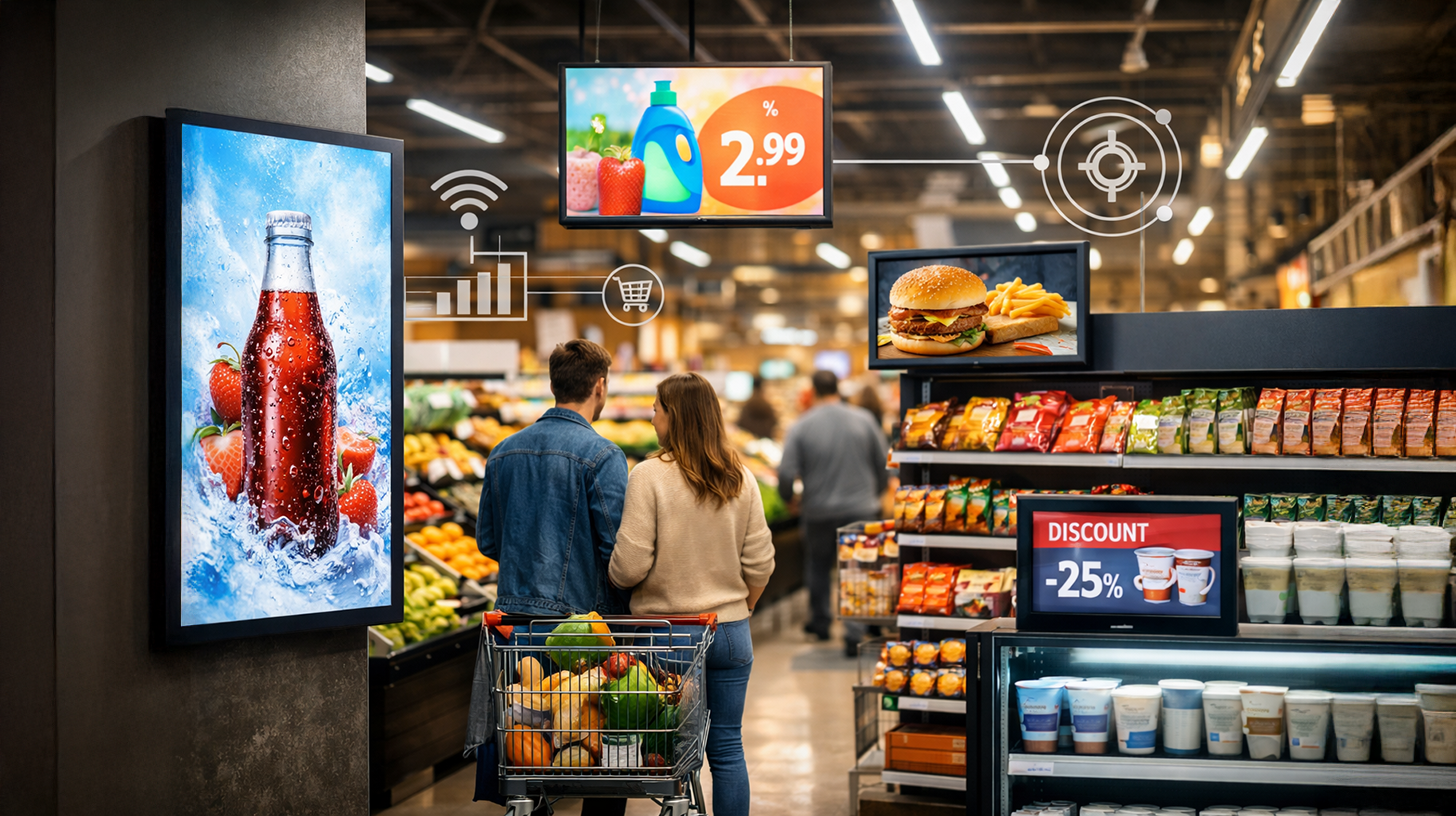
Retail Media | The supermarket as advertising space: How the point of sale becomes a digital media space – Image: Xpert.Digital
The third wave of digital advertising: Why there's no way around retail media anymore
From retailer to media company: How retail media is revolutionizing advertising budgets
The world of digital advertising is currently undergoing one of the most significant shifts of the last decade. After search engine and social media advertising dominated budgets for a long time, a "third wave" is emerging with retail media, fundamentally changing marketing. Retailers are no longer just points of sale, but are transforming into fully-fledged media companies that monetize their most valuable resource: exclusive first-party data and direct access to the customer at the moment of purchase.
This shift marks the transition from an experimental playground to a key strategic component of the media mix. Retail media today is far more than simply placing banners in an online shop. It's a complex ecosystem that blurs the lines between e-commerce and traditional marketing. Whether through precise targeting on retailer websites (onsite), extending retail data to the open internet (offsite), or digitizing the physical sales floor (in-store), brands gain the ability to seamlessly and measurably engage consumers throughout their entire customer journey.
The following analysis examines how technology and data strategies are redefining the point of sale, why combining different channels is the true driver of success, and how platforms beyond industry leader Amazon are positioning themselves to ensure scalability and relevance for advertisers. Retail media is no longer a trend, but the operational answer to the question of how advertising can remain efficient and sales-driving in a privacy-conscious world.
Retail Media: From experimental field to key column in the advertising budget
Retail media is a branch of digital advertising where retailers use their own channels—website, app, marketplace, or even physical stores—to offer advertising space for brands. Essentially, it's about placing ads directly where customers are already in a buying mood: in the shop, on the product page, in the search results, or before checkout. Unlike traditional online advertising, which is placed on largely neutral websites or social media, retail media takes place in the context of the actual purchase, i.e., "at the moment of purchase.".
From the growth phase to the maturity phase
Retail media is undergoing an acceleration typical of a new media category catapulting itself from practical application into strategic planning. Starting with individual hands-on projects and test runs between 2013 and 2016, the market has now consolidated significantly. Technology stacks, data models, and media formats are considerably more sophisticated, leading advertisers to increasingly focus not on individual campaigns, but on a sustainable retail media ecosystem. The early years were characterized by high expectations, moderate technical prerequisites, and a limited understanding of how to effectively monetize retail data across various touchpoints. Now, a comprehensive suite of post-side media, e-commerce platforms, and harmonized data analyses has emerged, forming the basis for scalable, measurable campaigns. This transition is significant for brands because retail media is no longer viewed as a "nice to have" channel, but rather as an independent insertion point within the media mix, with its own goals, budgets, and performance metrics.
The point of sale becomes a media room
Retail media begins where the purchase decision is made: at the point of sale. In-store retail media utilizes the physical store's spaces, services, and technologies as media channels. Digital signage, electronic shelf labels, and touch displays at the checkout or central gathering points are no longer merely informational channels but are actively integrated into media planning. The advantage lies in the proximity to the decision-making phase: when the customer is already in the store and interacting with prices, products, and promotions, the likelihood increases that targeted advertising messages will lead to a purchase. In-store formats such as dynamic shelf tags, display-guided combination offers, or personalized suggestions on POS displays can be explicitly tailored to individual purchase histories or seasonal trends, without retailers having to rely entirely on traditional discount advertising.
Another aspect is the increasing technical integration of warehouse systems, POS systems, and backend platforms, enabling real-time coordination of inventory, availability, and advertising messages. For example, an advertisement can be displayed only when a product is actually in stock. This transforms retail media at the point of sale from a mere advertising tool into an integral part of day-to-day retail operations. Consequently, more and more retailers are developing their own media platforms where brands can book campaigns, define target groups, and measure performance – similar to traditional online platforms, but with a focus on physical interactions.
Advertising where purchasing decisions are made
Onsite retail media refers to all advertising formats placed directly within the retailer's e-commerce ecosystem. This includes classic placements such as search engine-like product listings, banner ads on product pages, cross-sell or upsell recommendation blocks, and promotional slots on the homepage or in the checkout area. Unlike traditional online advertising channels, onsite retail media is characterized by its reliance on retail data collected directly within the shop system, encompassing customer behavior, purchase history, and product movements. This depth of data enables highly targeted advertising based on actual purchase intent and the specific contents of the shopping cart, not just general online interests.
The relevance of these formats is increasing because most online purchases are now made not via traditional search engines, but through the retailers' own platforms. Advertising where the customer is already in a buying mood generally has a significantly higher conversion rate than advertising used before the actual purchase process. Furthermore, onsite retail media is closely linked to the product range strategy: advertising can be targeted to specific products, categories, or seasonal campaigns without jeopardizing the overall media budget return. For advertisers, this means a shift in planning: retail media is increasingly viewed not as a low-funnel tool, but as an organic component of the overall e-commerce strategy.
📈🔵 Market knowledge vs. marketing knowledge: Why SMEs block their own growth 💡

Market vs. Marketing Knowledge: Why SMEs Block Their Own Growth - Image: Xpert.Digital
A persistent, pragmatic misconception exists among small and medium-sized enterprises (SMEs): that those who know their customers and the market also know how marketing works. However, this very equation is increasingly becoming a strategic trap for many SMEs.
The following article analyzes the often overlooked tension between operational market knowledge (looking in the rearview mirror) and strategic marketing knowledge (the high beam for future market share). Learn why a sole focus on sales targets leads to interchangeability in the long run and how SMEs can mature from "short-distance runners" to distinctive brands by consciously separating and realigning these two disciplines. Because those who understand marketing merely as "colorful pictures for sales" surrender 95 percent of tomorrow's potential customers to the competition without a fight.
More information here:
Mastering the Customer Journey: Why Onsite and Offsite Advertising Belong Together
Trading data on the open internet
Offsite retail media expands the use of retail data beyond a retailer's own platforms. It's no longer just about in-store advertising, but about the targeted use of shopping and purchase data to place ads on external platforms such as social media channels, display networks, or search engines. The basic idea is that the retailer's customers or potential customers for specific product categories can be reached outside the retailer's own shop, ideally with campaigns based on actual purchasing behavior and product movements. For example, a retargeting campaign can be created for customers who have already added a product to their shopping cart but haven't completed the purchase, or for subscribers of a specific product category who receive a seasonal offer.
By using data collaborations, shared data ecosystems, or clean room technologies, retailers and advertisers can process their data sets without revealing the individual identity of customers. This offers a way to leverage the benefits of retail data outside their own online store without violating data protection regulations. Offsite retail media thus becomes a crucial tool for increasing reach and frequency without sacrificing measurability and proximity to the purchase process. For brands, this means a shift in media strategy towards hybrid approaches: Onsite retail media is linked with offsite platforms to address the entire customer journey – from the initial advertising message through the purchase decision to the post-purchase phase.
Platforms as drivers of scalability
The professionalization of retail media is closely linked to the development of platform ecosystems. Individual retailers, marketplaces, and platform operators are building their own media platforms, enabling brands to book advertising through a unified interface, define target groups, and measure performance. These platforms offer a central interface through which advertisers can book not only individual formats but also complete campaign packages. They simplify technical integration, reduce operational effort, and increase transparency regarding budget allocation and ROI.
A key driver for scaling is the comparability of data and metrics. Platforms that provide standardized metrics and reporting structures enable advertisers to compare the performance of retail media with other channels or even integrate it into a unified media ROAS model. This is crucial for evolving retail media from an experimental channel to a firmly established pillar within the media mix. At the same time, platforms provide the technical infrastructure to aggregate data sources from various retailers, refine targeting options, and orchestrate campaigns across multiple partners. For brands, this means an increasing focus on platforms that offer scalable, data-driven solutions, rather than relying on isolated retailer relationships.
The effect comes from combination, not from individual channels
The effectiveness of retail media depends less on individual formats than on the combination of different channels and locations. A purely onsite setup, which only displays advertising within the company's own shop, can achieve high short-conversion rates, but its reach remains limited. Conversely, offsite campaigns can expand reach, but without proximity to the purchase process, their measurable impact diminishes. Current trends show that the strongest effects occur where onsite and offsite formats are effectively coordinated.
One example of this is an integrated retail media approach, where brands first reach potential customers via offsite channels, then convert these customers into concrete purchase decisions through targeted onsite placements. In-store formats can further support sales in physical stores by specifically targeting in-store advertising to products that have already been found online. This transforms retail media into an end-to-end channel that maps the entire customer journey – from initial contact through the purchase decision to repeat business. For advertisers, this means that retail media is no longer viewed as an isolated channel, but rather as an integral part of an integrated media and marketing strategy.
Amazon remains the benchmark – but not the only model
Amazon remains the benchmark for retail media, primarily due to its scalability, the depth of its purchase data, and its sophisticated data infrastructure. The platform offers not only enormous reach but also a wide variety of formats, from sponsored products to display and video ads, all directly integrated into the purchasing decision process. At the same time, other retailers and platforms have begun developing their own retail media approaches, modeled on the Amazon approach while leveraging their own strengths. These strengths might include, for example, proximity to local markets, the integration of physical and digital channels, or specialization in specific product categories.
The main difference between Amazon and other retail media providers lies in their data structure and target audiences. While Amazon offers global reach and a broad product range, other retailers can focus more precisely on specific segments or regions. For brands, this means that retail media is no longer seen as a monolithic channel, but rather as an ecosystem of multiple platforms, each offering different strengths and target audiences. Advertisers' task is to intelligently combine these diverse channels to achieve both reach and depth. Retail media is thus evolving from a single channel into a multi-layered, data-driven system that seamlessly integrates into the overall strategy – forcing advertisers to fundamentally rethink their media strategies.
Your global marketing and business development partner
☑️ Our business language is English or German
☑️ NEW: Correspondence in your native language!

Konrad Wolfenstein
I and my team are happy to be available to you as your personal advisor.
You can contact me by filling out the contact form here or simply call me at +49 7348 4088 965. My email address is: [email protected]
I'm looking forward to our joint project.
☑️ SME support in strategy, consulting, planning and implementation
☑️ Creation or realignment of the digital strategy and digitization
☑️ Expansion and optimization of international sales processes
☑️ Global & Digital B2B trading platforms
☑️ Pioneer Business Development / Marketing / PR / Trade Fairs
📈🔵 Ambidexterity or doom: The only management concept that still works in the triple crisis💡

When proven strategies fail: Organizational adaptability in the digital transformation of ambidexterity - Image: Xpert.Digital
We are currently experiencing a period of economic turmoil that differs fundamentally from previous recessions. A deceptive silence prevails in the boardrooms of European and international companies – broken only by the sound of failing strategies that were considered a guarantee of success just yesterday. This is not merely a cyclical downturn, but a profound structural break. The tools with which companies achieved growth for over two decades simply no longer work.
More information here:
📈🔵 Order acquisition and organizational development: From classic sales to a strategic business function💡

Order acquisition and organizational development - Image: Xpert.Digital
Xpert.Digital supports companies in this complex transformation, whether it's building a modern order acquisition function from the ground up or optimizing existing processes. With comprehensive expertise in marketing, sales, data analysis, digital transformation, and organizational development, we guide your company toward strategic repositioning. Our approach is holistic: We not only optimize processes but also develop the people and organizational culture necessary to achieve sustainable, measurable success.
More information here:










