
Pimax Dream Air: 4K-per-eye VR headset with eye tracking – how Meta Quest and Apple Vision Pro could fall behind
Xpert Pre-Release

Available in 27 languages 📢
Prefer Xpert.Digital on GoogleⓘPublished on: March 6, 2026 / Updated on: March 6, 2026 – Author: Konrad Wolfenstein
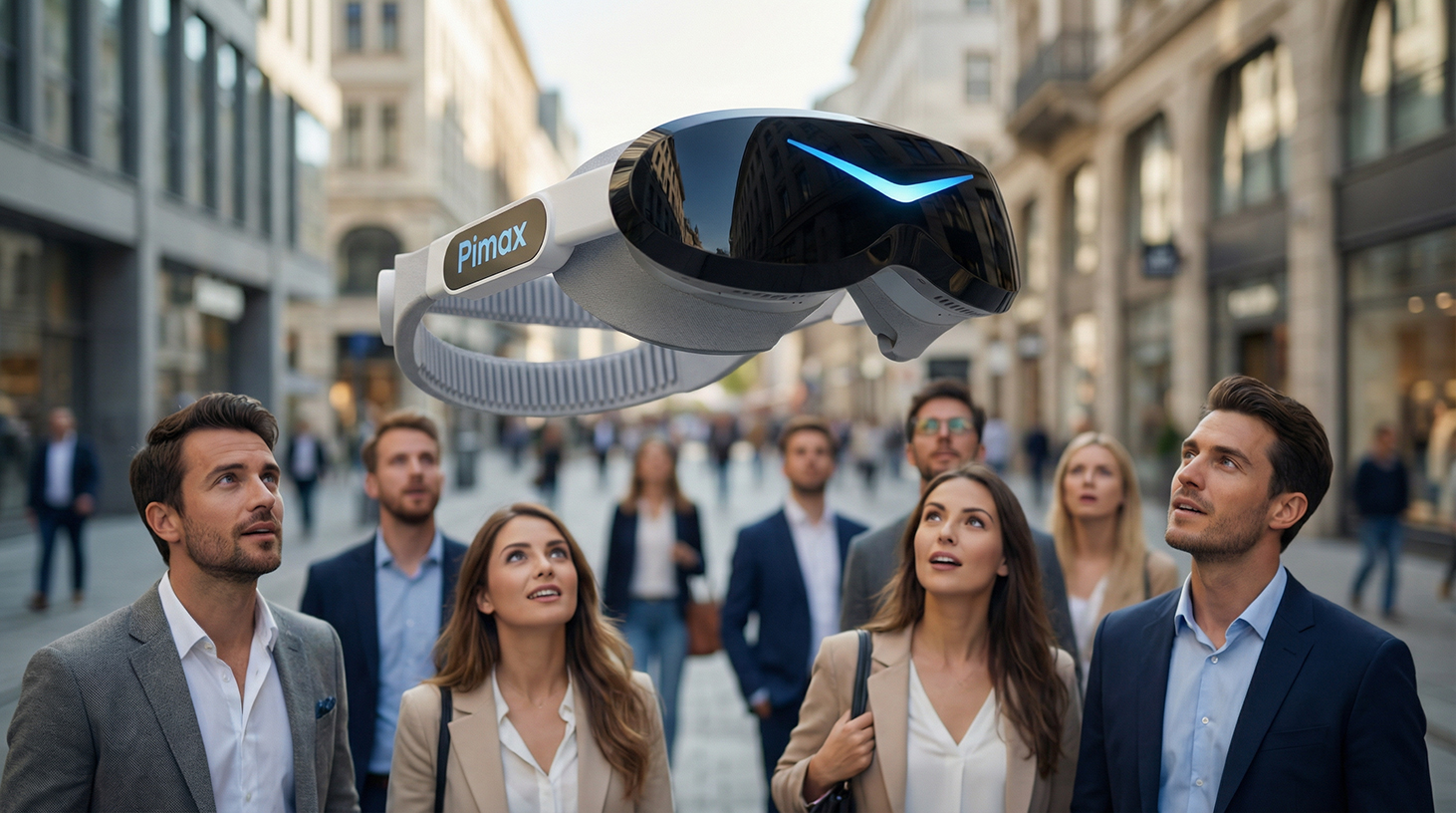
Pimax Dream Air: 4K-per-eye VR headset with eye tracking – how Meta Quest and Apple Vision Pro could fall behind – Image: Xpert.Digital
Pimax Dream Air review: The 4K Micro-OLED marvel that's turning the PCVR market upside down
Pure premium VR: Better than the Vision Pro? Why this 170-gram headset is captivating the entire VR industry
The Pimax Dream Air is a technological masterpiece that redefines the rules of virtual reality. Weighing in at under 170 grams and boasting stunning 4K Micro-OLED panels from Sony, the Chinese niche manufacturer suddenly outclasses industry giants like Meta, Samsung, and Apple in terms of image quality and form factor. Perfect black levels, integrated eye tracking, and a radical departure from the previous, bulky "brick" design make the headset the ultimate dream for PCVR enthusiasts. But this technological brilliance comes with a catch: Pimax is chronically plagued by delivery delays and operational weaknesses. In this analysis, we'll determine whether the Dream Air, priced at over $2,000, can make the leap from an ambitious enthusiast project to a sustainable industry standard—or whether the company will ultimately fail due to its own ambitions.
Related to this:

A 170-gram headset poses the question to the entire industry: why didn't anyone manage to do this before?
In March 2026, the Chinese company Pimax shipped a product that surprised even seasoned VR enthusiasts. The Dream Air was the first VR headset to combine the best available display technology – Sony 4K Micro-OLED panels with a resolution of 3840 by 3552 pixels per eye – with a form factor weighing less than 170 grams. What sounds like an incremental upgrade on paper turns out, upon closer inspection, to be an economic game-changer: A relatively small company from Shanghai, which has struggled with chronic delivery delays since its founding in 2015, suddenly defined the state of the art in an industry dominated by corporations like Meta, Sony, and Samsung.
The Dream Air is being released almost a year later than originally announced. Delivery was scheduled for May 2025; in reality, the first units of the Lighthouse version will only reach buyers at the end of February 2026. This delay is typical for Pimax and reflects a structural problem that goes far beyond logistical bottlenecks. The central question of this analysis is therefore not only whether the Dream Air is technically convincing, but whether Pimax as a company possesses the economic substance to develop a sustainable business model from an excellent product.
The anatomy of a paradigm shift in VR optics
At the heart of the Dream Air are Sony's 4K Micro-OLED panels, currently considered the most powerful displays available for VR applications. These are combined with Pimax's proprietary concave pancake lenses, an optical architecture also used in the significantly larger Crystal Super Micro-OLED. The result is an image that surpasses everything currently available on the market in terms of contrast, color reproduction, and pixel density.
The brightness of the Sony panels significantly surpasses the BOE 4K panels used in competing devices like the Shiftall Meganex or the Play For Dream. Perfect black levels, vibrant colors, and a contrast range that puts high-end OLED TVs to shame make the Dream Air the current benchmark for visual quality in virtual reality. The lenses have a generous sweet spot, glare is reduced compared to the competition, and the distortion profile reaches the level of mainstream devices like the Meta Quest 3.
The horizontal field of view is 110 degrees, the vertical 89 degrees. This places the Dream Air firmly in the mid-range, without reaching the extreme values of older Pimax models that offered up to 200 degrees of horizontal field of view. The 83 percent binocular overlap provides a natural viewing experience, enabling hours of VR sessions without eye strain. FOV profiles are planned that will extend the horizontal field of view to up to 120 degrees, but the vertically limited field of view remains a structural limitation of the compact form factor.
Eye-tracking as a strategic competitive advantage
The integrated Tobii eye-tracking isn't an afterthought, but a core architectural element of the Dream Air. Calibration takes about 20 seconds, and the tracking is stable and reliable. This is more than just a technical feature: it's an economic advantage. Eye-tracking enables dynamic foveated rendering, where only the area the user is looking at is rendered in sharp focus. With a headset offering 4K resolution per eye, this isn't optional, but essential to reduce the enormous processing load to manageable hardware requirements.
The market for eye-tracking technology in AR and VR applications is growing rapidly and is projected to reach a volume of $6.38 billion by 2033. Pimax's decision to integrate high-quality eye-tracking components into a 170-gram device positions the company in a segment that is likely to become increasingly standard. Furthermore, the "Pimax Magic" software solution extends compatibility to games that do not natively support eye-tracking, significantly increasing the practical relevance of this feature.
Build quality and comfort: The end of the brick era
The Dream Air marks a decisive break with Pimax's previous product philosophy. Where the Crystal series was characterized by mass, inertia, and a feeling of laboratory equipment, the Dream Air focuses on an ultra-lightweight, compact form factor. Weighing in at just 170 grams, it is one of the lightest fully equipped VR headsets on the market, comparable to the Shiftall Meganex 8K Mark II, which weighs 179 grams.
The choice of materials, however, falls short of the price point. The plastic construction feels solid, but not premium. Devices like the Bigscreen Beyond 2 or the Meganex convey a more premium feel in the hand. For a headset in the $1,999 to $2,299 price range, this is a valid criticism. The face interface attaches magnetically and allows for good proximity to the lenses, but the padding itself is comparatively hard and creates noticeable pressure on the forehead after about 30 minutes.
The dual-cable solution, where two cables run from the audio stems and converge behind the head, does distribute the weight evenly, but it also presents its own set of problems. The connection point gets noticeably warm, and when turning the head, the thicker section of the cable touches the upper back. Whether this design is actually superior to a single cable remains questionable. The included 2D headband is far from the self-tensioning mechanism that Pimax promised at the time of the announcement, but it does its basic job.
The VR market is in flux: Between mass market and premium niche
The global VR headset market reached a volume of approximately US$17.68 billion in 2025 and is projected to reach US$23.12 billion in 2026. This represents growth of over 30 percent within a single year. According to various forecasts, the market is expected to grow to between US$171 and US$237 billion by 2035, with an annual growth rate of 25 to 30 percent. The high-end segment, to which the Dream Air belongs, already accounted for 57 percent of the market share by revenue in 2025.
The PCVR market in the narrower sense, meaning wired, PC-dependent VR headsets, was valued at $3.8 billion in 2025 and is projected to grow to $7.9 billion by 2034. This is a significantly slower growth trajectory than the overall market, highlighting the strategic challenge for Pimax: The company operates in a sub-segment of a sub-segment and must serve the enthusiast niche willing to spend over $2,000 for a headset without controllers and without standalone capability.
At the same time, the micro-OLED display market is growing explosively. From an estimated $712 million in 2025, it is projected to rise to $2.84 billion by 2032. As a supplier of premium 4K panels, Sony holds a key strategic position in the value chain. Pimax's dependence on Sony as a panel supplier is a double-edged sword: it ensures the best available image quality, but simultaneously makes the company vulnerable to supply shortages and price controls.
Pimax as a company: Ambition, capital and chronic weaknesses
Pimax was founded in 2015 and gained international attention in 2017 through a Kickstarter campaign that raised over $4.2 million, setting a Guinness World Record for the most successful VR crowdfunding project. Since then, the company has raised a total of approximately $82.7 million in investment capital, most recently $13.6 million in a Series C-II funding round in early 2025, led by Zhuji Jingkai Capital with participation from long-term investor Ivy Capital.
The company reports having nearly doubled its revenue in each of the past three years. Up to 80 percent of Pimax users come from markets outside China, underscoring its international focus. The new funds will be used to expand the research and development team in the US and establish a new development center in Europe.
But the growth story has cracks. Pimax is notorious for exceeding delivery deadlines. The Dream Air arrived almost a year late. The Crystal Super experienced similar delays. While customer service has improved, it still cannot be recommended without reservation. For a company selling devices costing well over $2,000, this poses a serious reputational risk. In the premium segment, buyers expect not only technical excellence but also reliable service and on-time delivery.
🗒️ Xpert.Digital: A pioneer in the field of Extended and Augmented Reality

Finding the right Metaverse agency, planning office, or consulting firm - Image: Xpert.Digital
🗒️ Finding the right Metaverse agency, planning office, or consulting firm – Search and search: Top Ten Tips for Consulting & Planning
More information here:
The VR revolution weighs only 170 grams: What the new display technology can really do
Competitive landscape: Three philosophies, one target market
The Dream Air is entering a market that is becoming increasingly differentiated. The relevant competitors are pursuing fundamentally different approaches.
| Headset | Price (USD) | Weight | Panels | Resolution per eye | Field of view (H) | Tracking | Special feature |
|---|---|---|---|---|---|---|---|
| Pimax Dream Air | 1.999 – 2.299 | 170 g | Sony 4K Micro-OLED | 3840 x 3552 | 110 degrees | Lighthouse / SLAM | Eye-tracking, DisplayPort |
| Shiftall Meganex 8K MK2 | approximately 1,900 EUR | 179 g | BOE 4K Micro-OLED | 3552 x 3840 | comparable | SteamVR Lighthouse | 10-bit HDR, Panasonic subsidiary |
| Samsung Galaxy XR | 1.799 | 550 g | Sony 4K Micro-OLED | 3552 x 3840 | 109 degrees | Inside-Out | Standalone, Android XR, wireless |
| Apple Vision Pro | 3.499 | 650 g | Sony Micro-OLED | 3660 x 3200 | approximately 100 degrees | Inside-Out | Spatial Computing, M2 chip |
The Samsung Galaxy XR, available since October 2025 for $1,799, uses the same Sony 4K Micro OLED panels and, as a wireless standalone device running Android XR, offers a significantly wider range of uses. It can also wirelessly play PCVR titles via foveated streaming, but it doesn't achieve the uncompressed image quality of a direct DisplayPort connection. Weighing 550 grams and with a standard refresh rate of 72 Hz, Samsung is also targeting a different user group than Pimax.
The Shiftall Meganex 8K Mark II, a product of a Panasonic subsidiary, is the most direct competitor to the Dream Air. It offers a slightly better vertical field of view, more binocular overlap, and a currently more comfortable headband. However, the Meganex's lenses produce more glare and distortion in the peripheral areas, and the company's return policy leaves much to be desired.
Related to this:

Software Transformation: From Weak Point to Selling Point
Pimax Play, the software platform of the Dream Air, has undergone a remarkable transformation. What was considered the biggest weakness of the Pimax ecosystem for years now works stably, intuitively, and reliably. Installation is straightforward, the headset is recognized instantly, and eye-tracking calibration is seamlessly integrated. SteamVR and OpenXR compatibility works, including demanding titles like Microsoft Flight Simulator 2024. The device works with both AMD and Nvidia graphics cards, which is not a given in the high-end VR segment.
The only significant software weakness remains Smart Smoothing, i.e., motion interpolation at low frame rates. SteamVR-native headsets like the Meganex or the Bigscreen Beyond benefit from SteamVR's sophisticated motion smoothing algorithm. Pimax's own solution hasn't yet reached this level. However, thanks to powerful eye tracking and dynamic foveated rendering, the native frame rate is often high enough to minimize the reliance on reprojection. This technological elegance—a hardware feature compensating for a software deficiency—demonstrates the maturity of the overall package.
The economics of the enthusiast niche
The Dream Air defines a market that is both economically fascinating and risky. With a starting price of $1,999 for the Lighthouse version (without controllers or base stations), the total investment for a new customer quickly reaches $2,500 to $3,000 when base stations, controllers, and a powerful gaming PC are included. This is a price range that definitively makes PCVR a hobby for the well-to-do.
Pimax's business model is based on the premise that a sufficiently large number of enthusiasts are willing to pay this price. The fact that the company has almost doubled its revenue annually in recent years suggests that this calculation has worked so far. However, the growth potential is naturally limited. The total market for PCVR headsets is worth between $3.8 and $4.2 billion, and Pimax only addresses the top price segment of that.
The strategic question is whether Pimax can make the leap from niche provider to established premium manufacturer with the Dream Air. The Dream Air SE, a stripped-down version with a lower entry price and a lighter weight of under 140 grams, suggests an attempt to expand the product range downwards. At the same time, Pimax is investing in international research and development capabilities, which indicates ambitions beyond mere hardware manufacturing.
The Micro-OLED Revolution and its Industrial Consequences
The technological core of the Dream Air, silicon-based micro-OLED technology, is at the beginning of an exponential growth phase. The OLED microdisplay market is projected to grow from $1.76 billion in 2026 to $8.85 billion by 2031, representing an annual growth rate of 38.23 percent. Sony's vertical integration across the entire manufacturing chain gives the Japanese corporation a dominant position as a supplier. Samsung Display is pursuing an aggressive catch-up strategy and has unveiled a micro-OLED with 5,000 pixels per inch and a peak brightness of 20,000 nits in 2025.
This dynamic has far-reaching consequences for Pimax. As a customer of Sony panels, the company relies on good supplier relationships. At the same time, increasing production volumes will make the panels cheaper in the medium term, which could democratize access to the premium VR segment. RGB OLED-on-silicon technology, which accounted for over 54 percent of market revenue in 2025, will be further consolidated by Samsung's acquisition of eMagin. For Pimax, this means that its technological moat (its strategic competitive advantage) is narrowing. What is a unique selling point today could become the industry standard tomorrow.
Between genius and chaos: The Pimax paradox
The story of Pimax is the story of a company that is both technologically visionary and operationally fragile. The Dream Air represents both in concentrated form. On the one hand, there's a device that several independent reviewers have hailed as the best VR headset Pimax has ever built, and one of the best on the market. Sebastian Ang of MRTV describes it as a fundamental shift for the company. "VR Flight Sim Guy" calls it a monumental leap forward for PCVR. User reviews speak of it as the best headset they've ever owned.
On the other side is a company with a documented history of overpromising and underdelivering. The delays, the lack of communication, the uncertainty surrounding delivery dates—all of this undermines the trust that a $2,000 product absolutely requires. Pimax states that orders should be delivered by the end of March or the beginning of April 2026, but whether this timeline will be met remains to be seen.
The Lighthouse version's tracking is flawless and stable, the audio via the integrated off-ear stems is on par with a Meta Quest 3 and pleasantly surprising, and the microphone is clear enough for streaming and content creation. There are no showstoppers, but rather a pattern of minor weaknesses that, in total, mark the gap between a very good and a perfect product.
What Dream Air means for the industry
The Pimax Dream Air is not a mass-market product and never will be. It's a statement, showing where VR technology is headed: ultra-lightweight form factors with a display quality that rivals the human eye. The missing piece of the puzzle – a significantly larger vertical field of view that replicates the natural human perspective – remains the next major challenge.
For the industry, the Dream Air means this: A Chinese startup with less than $100 million in total funding can set the benchmark in the premium segment, while Meta is posting billions in losses in its Reality Labs and Apple is promoting the Vision Pro in a completely separate (and far more expensive) orbit. This speaks to the immense efficiency of Pimax's research and development, but also raises the question of how long a company of this size can remain at the forefront of innovation without the economies of scale of large corporations.
With the Dream Air, Pimax has proven its ability to operate at the absolute cutting edge of technology. The economic challenge now lies in translating this technological excellence into a sustainable business model that includes reliable supply chains, professional customer service, and sound finances. The Dream Air is the most compelling evidence to date that Pimax can pursue this path. Whether the company will actually see it through to the end will only become clear in the coming quarters.
Your global marketing and business development partner
☑️ Our business language is English or German
☑️ NEW: Correspondence in your native language!

Konrad Wolfenstein
I and my team are happy to be available to you as your personal advisor.
You can contact me by filling out the contact form here or simply call me at +49 7348 4088 965. My email address is: [email protected]
I'm looking forward to our joint project.









