
Despite HoloLens cancellation: Microsoft's secret XR strategy? What Microsoft patent 12536692 reveals about the future of spatial computing
Xpert Pre-Release

Language selection 📢
Published on: February 17, 2026 / Updated on: February 17, 2026 – Author: Konrad Wolfenstein

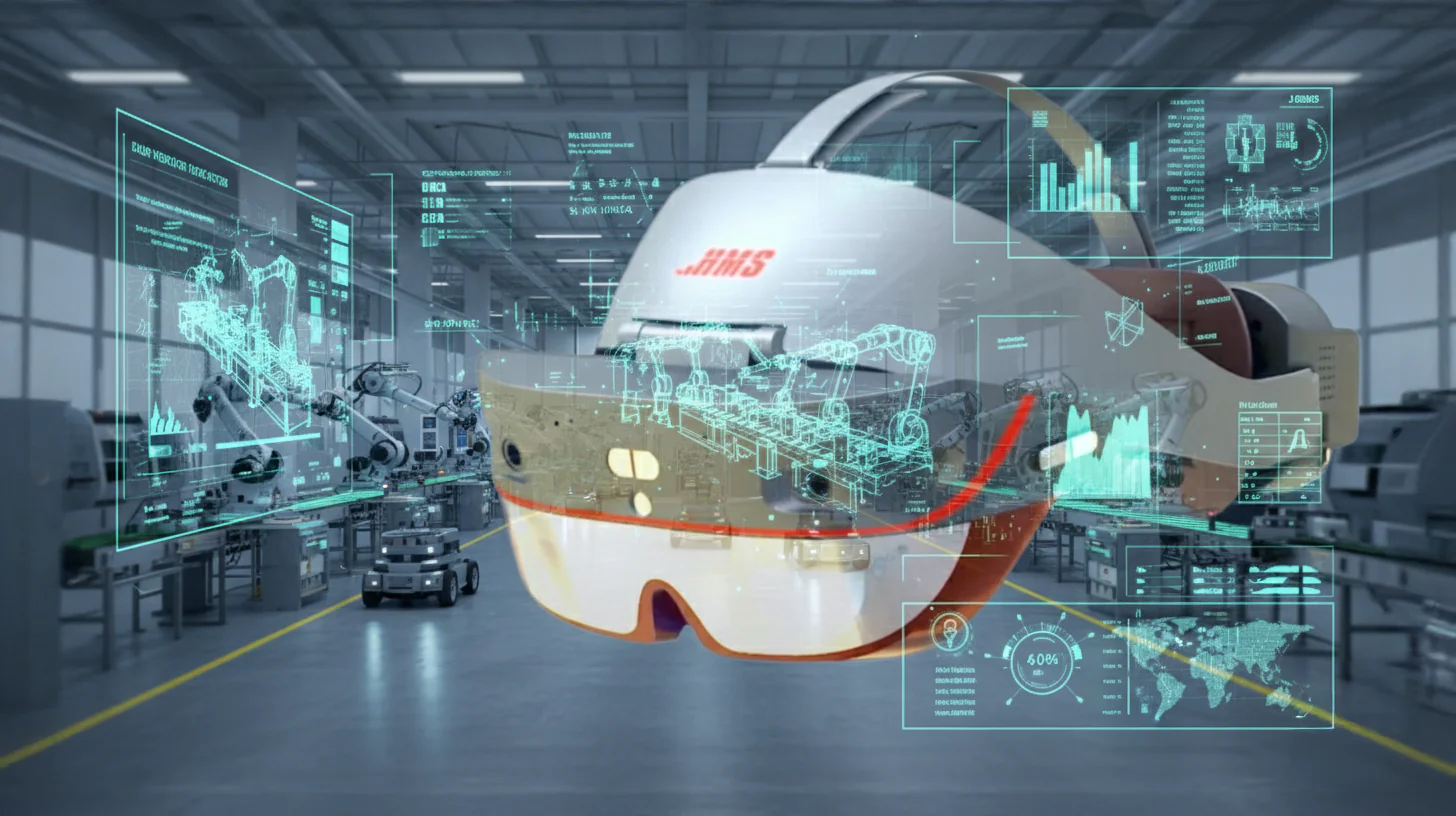
Despite HoloLens cancellation: Microsoft's secret XR strategy? What Microsoft patent 12536692 reveals about the future of spatial computing – Image: Xpert.Digital
More important than you think: Why Microsoft's multi-camera patent is making the competition nervous
A return through the back door? Microsoft secures key spatial computing technology
On February 17, 2026, the US Patent and Trademark Office published a document under number 12536692 that, at first glance, appears to be an ordinary technical specification. However, those who read between the lines of the abstract description of the "alignment of 6-Degrees-of-Freedom poses" will discover a remarkable strategy paper from Redmond. At a time when Microsoft has ended HoloLens hardware production and discontinued prestigious projects like Mesh, this new patent seems paradoxical. Why is the tech giant continuing to invest in highly complex mixed-reality technologies if it is officially withdrawing from the market? The analysis reveals that Microsoft is not planning a departure, but rather a fundamental role change – from hardware manufacturer to the invisible architect of the entire ecosystem.
The publication of patent US12536692, granted to Microsoft Technology Licensing, LLC, marks a strategic turning point in the field of spatial computing. While the public and many market observers interpreted the halt of HoloLens 2 production and the transfer of the military IVAS development to Anduril Industries as a capitulation, this patent suggests the opposite: an aggressive securing of technological supremacy.
The patent describes an advanced method for aligning image data from integrated headset cameras with that of external sensors in real time and with the highest precision. Technically known as "multi-camera alignment," this is the key to the next generation of industrial and military applications—areas where Microsoft intends to set the standards despite withdrawing from hardware production. The focus is no longer on building the end device, but on owning the licensing rights, the cloud infrastructure, and the AI algorithms, without which no competitor—be it Meta, Apple, or defense contractors—can survive.
This article examines the technological architecture behind the patent, analyzes the economic logic of Microsoft's IP strategy, and explains why the apparent withdrawal is in reality a clever repositioning in a market projected to grow to nearly $60 billion by 2031. Microsoft is following a pattern reminiscent of Qualcomm's dominance in mobile communications: You don't have to manufacture the device to earn substantial profits on every unit sold.
Related to this:
Those who abandon hardware must strike even harder when it comes to intellectual property
On February 17, 2026, US patent 12536692 was published, assigned to Microsoft Technology Licensing, LLC. What at first glance appears to be a routine patent application in the field of extended reality reveals itself upon closer analysis as a strategic signal of considerable significance. The patent describes an advanced system for aligning six degrees-of-freedom poses across multiple cameras in XR environments and builds upon a patent family that Microsoft has been systematically expanding since July 2020. At a time when Microsoft has officially exited HoloLens hardware production, transferred its military IVAS development to Anduril Industries, and discontinued its Mesh mixed-reality platform in December 2025, a key question arises: Why does a company continue to invest in patents for a technology it supposedly no longer pursues?
The answer lies in the economics of intellectual property and Microsoft's long-term platform strategy. This patent is not a relic of past ambitions. It is a strategic anchor for the next generation of industrial and military mixed reality solutions.
The technological architecture behind the patent
Patent US12536692 belongs to a family of patents originating from application US16/932,415, filed on July 17, 2020, by Raymond Kirk Price, Michael Bleyer, and Christopher Douglas Edmonds. The core innovation addresses a fundamental problem in mixed reality: How can images from a camera permanently mounted on the head-mounted display be precisely aligned in real time with images from an external, physically separate camera?
The solution utilizes a three-dimensional feature-map approach combined with simultaneous localization and mapping. Both cameras, the integrated and the remote, use a shared 3D feature map to relocate themselves in space and determine their respective 6DOF poses. The HMD receives the image from the external camera along with its position data and generates a superimposed image by reprojecting the perspective of the external camera onto the perspective of the integrated camera. A depth map of the environment enables correct spatial mapping.
Particularly noteworthy is the system's flexibility: the integrated camera can be a sight-light camera, a low-light camera, or a thermal imaging camera. This specification clearly points to military and industrial application scenarios where different sensor modalities need to be combined. The supplementary patent application US20220021860 extends the concept to stereoscopic camera pairs with external camera alignment, including parallax correction. Taken together, this creates a coherent technological framework that goes far beyond simple passthrough improvements.
A company in retreat or undergoing realignment?
The chronology of the past two years initially reads like an orderly surrender. In October 2024, Microsoft halted production of the HoloLens 2. In February 2025, the company confirmed its complete withdrawal from HoloLens hardware development. Simultaneously, industry leadership for the military IVAS program was transferred to Anduril Industries, a defense technology startup co-founded by Palmer Luckey, the former Oculus VR founder. The contract with the US Army, originally valued at up to $21.88 billion and signed in 2021, had previously been plagued by delays, hardware issues, and complaints from soldiers.
In the summer of 2025, the Mesh mixed reality platform was discontinued. The Mesh Toolkit was withdrawn in June 2025, and the Mesh apps for PC and MetaQuest, as well as the integration with Teams, were shut down on December 1, 2025. Microsoft positioned this as a move toward a more Teams-integrated solution, but the reality was clearer: Mesh had never achieved a critical mass of users, and the return of many companies to in-person work, along with the dominant AI hype, had overtaken the Metaverse narrative.
And yet: precisely during this phase of apparent retreat, Microsoft publishes a highly specialized patent for multi-camera alignment in XR environments. This apparent contradiction resolves itself when one understands Microsoft's strategy not as a retreat, but as a targeted repositioning.
The economic logic of patent consolidation
In patent law, a principle often underestimated in the public perception applies: the accumulation of intellectual property rights is an independent strategic measure, regardless of whether a company is currently selling products based on these patents. Microsoft's HoloLens patent portfolio comprises hundreds of intellectual property rights in areas such as gesture control, spatial audio technology, real-time environment mapping, and holographic displays. The publication of patent 12536692 signals that Microsoft is not allowing this portfolio to be diluted, but rather is actively expanding it.
The economic significance lies on several levels. First, these patents secure licensing revenue. Any manufacturer of XR devices who wants to implement multi-camera alignment with 6DOF poses must consider Microsoft's intellectual property. Second, the portfolio creates negotiating power for cross-licensing agreements with competitors like Meta, Apple, or Samsung. Third, it forms the technological foundation upon which Microsoft can return to hardware development at any time, whether through in-house development or partnerships with specialized manufacturers.
🎯🎯🎯 Benefit from Xpert.Digital's extensive, five-fold expertise in one comprehensive service package | BD, R&D, XR, PR & Digital Visibility Optimization

Benefit from Xpert.Digital's extensive, five-fold expertise in a comprehensive service package | R&D, XR, PR & Digital Visibility Optimization - Image: Xpert.Digital
Xpert.Digital possesses in-depth knowledge across various industries. This allows us to develop tailored strategies precisely aligned with the requirements and challenges of your specific market segment. By continuously analyzing market trends and monitoring industry developments, we can act proactively and offer innovative solutions. The combination of experience and expertise generates added value and provides our clients with a decisive competitive advantage.
More information here:
Less hardware, more power: Microsoft's secret plan for the XR market?
The XR market as a strategic battlefield
The global extended reality (XR) market is experiencing rapid growth. Mordor Intelligence estimates that the market will reach $10.64 billion in 2026 and is projected to grow to $59.18 billion by 2031, representing a compound annual growth rate (CAGR) of 40.95 percent. Other research firms, such as ABI Research, forecast an even larger increase for the total XR software and services market, from $44.7 billion in 2024 to $299.3 billion by 2030, with enterprise XR revenue alone expected to reach $129.9 billion.
Meta dominates this market with a 50.8 percent share of hardware shipments in the first quarter of 2025 and year-over-year growth of 65.9 percent. However, IDC predicts a fundamental shift: pure VR shipments will decline significantly, while mixed reality and extended reality will become the dominant forces. MR shipments are projected to increase from 3.3 million units in 2025 to over 15.2 million units by 2029. Microsoft's historical strength lies precisely in this growing MR segment.
Related to this:

Microsoft's dilemma between platform control and partnership dependency
The strategic partnership with Meta, in which Microsoft makes its enterprise software such as Dynamics 365 and Teams available for MetaQuest headsets, carries a fundamental risk reminiscent of the Windows Phone episode. Microsoft is becoming an application provider on a platform controlled by a competitor. The parallel is obvious: Just as with the mobile revolution, Microsoft could be relegated to a mere software supplier in spatial computing, without any influence on the hardware platform and its associated ecosystem.
Patent 12536692 can be interpreted in this context as a safeguard against precisely this scenario. The technology of multi-camera 6DOF alignment is a key competency that cannot be replicated at will. It requires in-depth expertise in computer vision, spatial sensing, and real-time processing—areas in which Microsoft has built a significant lead through years of HoloLens development. This knowledge is not lost by discontinuing hardware production; rather, it is transferred to another form of commercialization.
The military dimension as a hidden growth driver
The transfer of IVAS industry leadership to Anduril Industries does not mean that Microsoft is abandoning military extended reality. On the contrary, Microsoft Azure remains the preferred hyperscale cloud provider for all IVAS workloads and Anduril AI technologies. Palmer Luckey himself emphasized that Microsoft has exceptional developments in the pipeline in the areas of AI and cloud computing that will continue to drive IVAS.
This situation is economically revealing. Microsoft is shifting from the capital-intensive and risky hardware business to the higher-margin cloud and AI segment, but retains technological control over the overall system through its patents and cloud infrastructure. Patent US12536692 fits precisely into this picture: Multi-camera alignment with various sensor modalities, including thermal imaging cameras, is a core military requirement. Anduril builds the hardware, but the underlying alignment technology and cloud infrastructure remain within Microsoft's sphere.
The original IVAS contract had a potential revenue of up to $21.88 billion over ten years. Even if Microsoft only captures the cloud and IP portion of this volume, it still represents a multi-billion dollar revenue stream with significantly higher margins than in the hardware business.
Apple Vision Pro and the redefinition of the enterprise segment
While Microsoft recalibrates its strategy, Apple entered the spatial computing market in February 2024 with the Vision Pro. Apple's approach combines Ultra HD displays with its own silicon and a visionOS operating system that integrates seamlessly into the Apple ecosystem. Companies like SAP, Microsoft 365, and Zoom have already developed applications for the platform.
However, Apple also faces challenges. Its $3,499 price tag significantly limits market penetration, and early enterprise adopters are still in the experimental stage. Sony and Apple dropped out of the top five XR hardware manufacturers in the first quarter of 2025, primarily because distributors held large inventories that didn't sell as expected. For Microsoft, this means the enterprise XR window isn't closed yet. The technology described in patent 12536692 addresses precisely the requirements that enterprise customers prioritize: precision, multi-sensor integration, and spatial coherence in complex work environments.
Industrial application scenarios as market anchors
The patented capability to align image streams from separate cameras in real time opens up industrial application scenarios of considerable economic value. Collaborative workspaces, where multiple HoloLens devices or external sensors share the same scene, become technically feasible. Industrial training and simulations requiring precise spatial alignment benefit directly from this technology. Mixed AR/VR experiences, where stability between different video streams is crucial, become possible for the first time with the necessary reliability.
The integration with Microsoft's existing enterprise stack, particularly Dynamics 365, Azure Digital Twins, and the remaining Teams immersive functionality, creates an ecosystem that no other competitor can offer in this combination. While Meta dominates the consumer market with low-cost Quest headsets, it lacks the deep enterprise integration that Microsoft has built over decades.
The innovation paradox: Less hardware, more strategic control
The counterintuitive insight from Microsoft's latest XR strategy is that withdrawing from hardware can strengthen, not weaken, its strategic position. By focusing on patents, cloud infrastructure, and AI technologies, Microsoft is positioning itself as an indispensable enabler in the XR ecosystem, regardless of which manufacturer produces the physical devices.
The model is similar to Qualcomm's position in the mobile communications industry: you don't have to build smartphones to profit from every smartphone sold. Microsoft's 6DOF alignment patents, the Azure cloud backbone, and enterprise software integration could collectively generate similar leverage in the XR market.
Investors and market observers who prematurely dismissed Microsoft's XR ambitions after the HoloLens discontinuation and the Mesh withdrawal may have overlooked a crucial dimension. Patent 12536692 is not an obituary for the HoloLens era. It is a building block for a strategy in which Microsoft controls the technological foundations of spatial computing without having to bear the risks and costs of hardware production. In a market projected to grow to nearly $60 billion by 2031, this position could prove to be the economically superior one.
Whether Microsoft will actually take the next leap in extended reality, or whether the patent merely serves as a defensive measure to protect its portfolio, will become clear in the next two to three years. The technological foundation is there. The question is whether the strategic will will keep pace.
Your global marketing and business development partner
☑️ Our business language is English or German
☑️ NEW: Correspondence in your native language!

Konrad Wolfenstein
I and my team are happy to be available to you as your personal advisor.
You can contact me by filling out the contact form here or simply call me at +49 7348 4088 965. My email address is: [email protected]
I'm looking forward to our joint project.









