
Poland closes Rzeszów and Lublin airports after Russian missile attack on Ukraine: NATO alert, airspace security and consequences
Xpert Pre-Release

Available in 27 languages 📢
Prefer Xpert.Digital on GoogleⓘPublished on: February 17, 2026 / Updated on: February 17, 2026 – Author: Konrad Wolfenstein
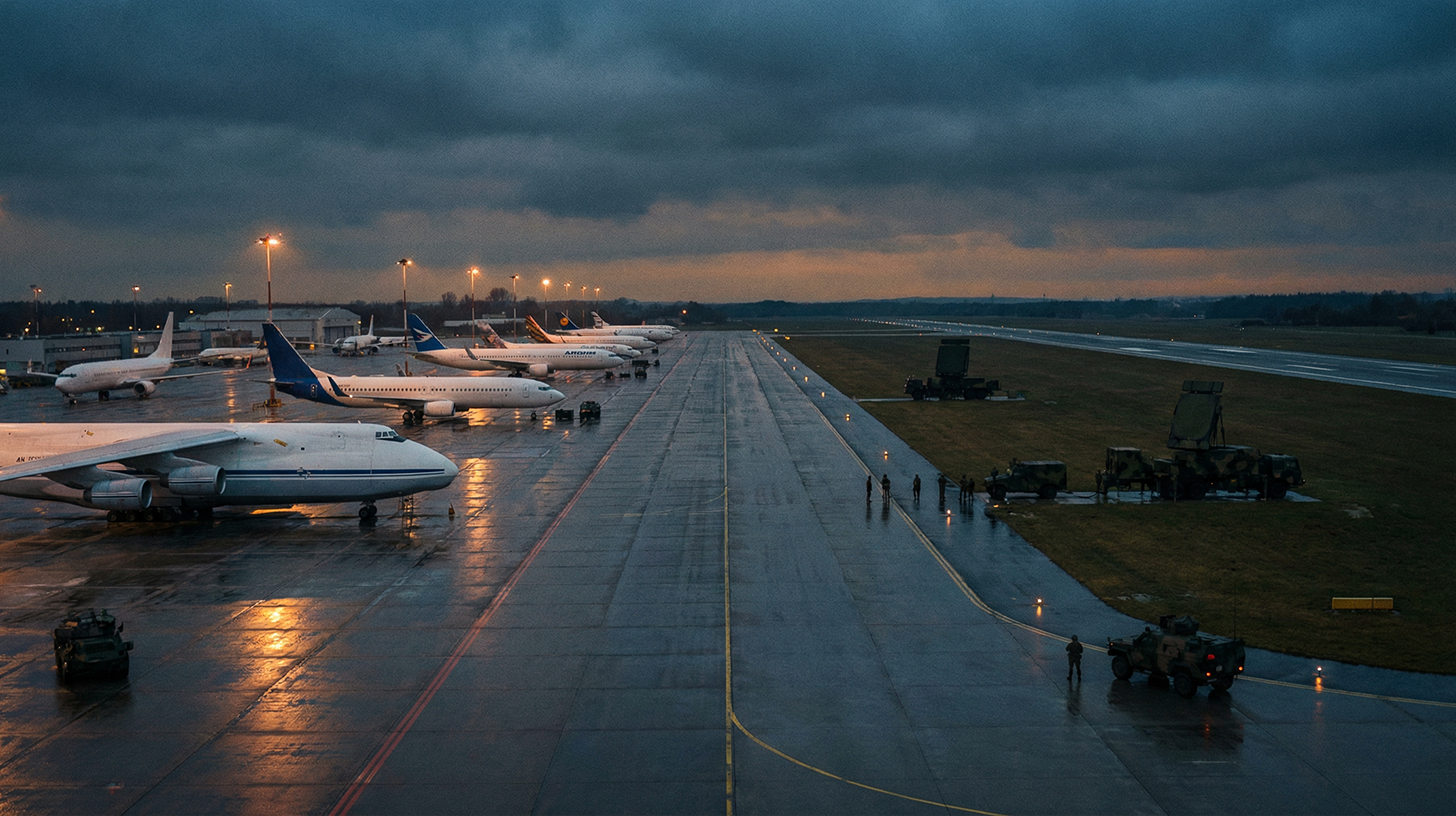
Poland closes Rzeszów and Lublin airports after Russian missile attack on Ukraine: NATO alert, airspace security and consequences – Creative image: Xpert.Digital
Response to massive shelling: Why Poland closed its airspace on February 17th
Fighter jets instead of passenger planes: The serious reasons behind the airport closure in southeastern Poland
In the early morning of February 17, 2026, the security situation in southeastern Poland escalated dramatically. In response to a large-scale Russian missile and cruise missile attack on targets in neighboring Ukraine, the Polish Air Navigation Services Agency (PANSA) was forced to temporarily suspend operations at the strategically important airports of Rzeszów and Lublin. While a nationwide air raid alert was in effect across the border, the Polish Armed Forces' Operational Command activated all available military resources to respond to the activity of Russian long-range bombers.
This preventative measure, which halted civilian air traffic to grant scrambled Polish and allied fighter jets operational freedom, underscores the fragile reality on NATO's eastern flank. Although no direct violation of Polish airspace was reported, authorities prioritized maximum security and the "disentangling" of airspace to minimize risks from potential misdirection or debris. The incident, which bears similarities to events in early February, vividly demonstrates the profound and lasting impact of the war in Ukraine on civilian infrastructure and defense readiness in the border region. The following sections provide a detailed analysis of the background to the events, NATO's role, and the implications for airspace security.
What exactly happened on February 17, 2026?
On February 17, 2026, Poland temporarily closed the Rzeszów and Lublin airports because military aircraft were scrambled in response to a large-scale Russian missile attack on neighboring Ukraine. The Polish Air Navigation Services Agency (PANSA) suspended flight operations at both southeastern airports to allow military aviation to operate freely. Simultaneously, the Polish Armed Forces' Operational Command reportedly activated all available forces and resources due to activity by Russian long-range bombers. Reports from Ukraine indicated that Russian forces had launched massive cruise missile attacks on Ukrainian cities in the early morning of February 17, triggering air raid sirens nationwide.
Why does an attack on Ukraine lead to Poland closing airports?
Even if the attack is not directed against Poland, the risk of threats impacting the border region increases for Poland. These threats include, in particular, malfunctions or misdirection of missiles, navigational errors, the drift of debris from launched missiles, and the increased density of military air traffic near the border. In such a situation, a state must set priorities in the short term: civilian air traffic can be planned, while military responses must be possible immediately and without delay. A temporary closure is therefore a tool to "unbundle" the airspace and maximize the operational flexibility of air defense.
What does "NATO alert" mean in this context?
In public discourse, the term "NATO alert" often refers to NATO member states on the eastern flank increasing their readiness measures due to a threat approaching alliance territory. This can include, for example, scrambling fighter jets, activating additional radar and reconnaissance capabilities, increased airspace surveillance, and coordination with allies. It is important to note that such measures are not automatically a step towards escalation, but rather a precautionary and preventative approach. They are designed to ensure that one's own airspace remains under control in a dynamic and potentially complex situation, and that a rapid response is possible in an emergency.
What role did PANSA play, and why is air traffic control crucial?
PANSA is the Polish air traffic control authority and thus centrally responsible for ensuring that civil aviation operates safely and smoothly. In exceptional situations, however, air traffic control must not only coordinate routine traffic but also implement new airspace regulations very quickly, adjust flight routes, halt or safely resume takeoff and landing clearances, and cooperate with military authorities. When military aircraft operate in Polish airspace, defined procedures are necessary to prevent dangerous close encounters between civilian aircraft and military interceptors. The suspension of flight operations at two airports is therefore also a measure to minimize risks for passengers and crews.
According to the text, what defensive measures has Poland taken?
Poland placed fighter jets on alert and raised its air defense systems to maximum alert as missiles were launched toward western Ukraine, bringing the threat closer to NATO's eastern flank. Ground-based air defense systems and radar reconnaissance units were also placed on standby. Meanwhile, Polish and allied aircraft began operating in Polish airspace. The Polish military described these measures as preventative, citing the need to protect the areas bordering the danger zone.
What does "preventive" mean in military situation reports?
"Preventive" here does not mean that Poland itself is planning an attack or actively intends to create a new military situation. Rather, it means that measures are being taken before an immediate violation of its airspace occurs, in order to be prepared for a rapidly changing threat landscape. Preventive measures typically include alerting, reconnaissance, deploying standby resources, adjusting rules of engagement, and ensuring that interceptor forces can launch immediately. This is a particularly sensitive task in close proximity to an active theater of war, because reaction times are short and decisions are often made under time pressure.
Has Poland reported a violation of its airspace?
According to the available information, Warsaw did not report any airspace violations during the incident. This is an important point because it supports the classification as a precautionary measure: the mechanism was activated even though there was no confirmed airspace incursion. At the same time, it shows that the threshold for protective measures is lowered as soon as high-intensity attacks occur in the immediate vicinity. Even without an airspace violation, a situation can become dangerous due to debris, misdirected aircraft, or unclear flight paths.
Why are Rzeszów and Lublin so relevant in particular?
Both airports are located near the Polish-Ukrainian border. Rzeszów is considered a key NATO logistics hub for arms deliveries to Ukraine. Since the start of the large-scale Russian invasion in February 2022, these locations have become increasingly important transit points, not only for military support but also for humanitarian supply chains, diplomatic travel, international delegations, technical support teams, and crisis logistics. The closer an airport is to the border, the more a pattern of attack in western Ukraine impacts the security assessment of air traffic.
Why might a logistics hub like Rzeszów have a special security profile?
A logistics hub, considered a center for support deliveries, is viewed differently from a security policy perspective than a purely regional civilian airport. Even though civilian infrastructure is protected under international law, risks are assessed differently in hybrid conflict situations: disinformation, threats, cyberattacks on operations, navigation disruptions, increased intelligence gathering, and a generally heightened situational awareness are commonplace. This does not mean that a concrete attack is imminent, but rather that authorities make more conservative decisions when weighing normal operations against maximum security.
How is the decision made to put fighter jets on alert?
The text indicates that the decision was made in accordance with existing procedures for responding to emergencies near NATO borders. In practice, this means that there are tiered alert models based on situational indicators, such as radar detection, reported missile launches, long-range bomber activity, flight paths toward the border region, and the overall intensity of attacks. Once defined thresholds are reached, alert forces are activated. The crucial purpose is to avoid having to react only when time is already running out in the event of an unclear approach to NATO airspace.
What is the role of ground-based air defense and radar reconnaissance in such a situation?
Ground-based air defense and radar reconnaissance form the backbone of airspace security because they can continuously monitor and react in an emergency. Radar and reconnaissance units provide the situational awareness: What aircraft are in flight, how fast, at what altitude, and in which direction? Depending on their type and rules of engagement, ground-based air defense systems can counter potential threats if they penetrate the protected area. Even if they are not deployed, their readiness has a stabilizing effect: It signals responsiveness, increases decision-making certainty, and can help to classify incidents more quickly.
Why did the airports have to close completely, instead of just diverting individual flights?
In the event of rapidly developing military situations, a complete airspace closure is often the quickest and clearest measure because it drastically reduces complexity. Diverting individual flights requires that alternative routes and slots are available, that the security situation is stable enough for additional coordination, and that no short-term airspace restrictions are anticipated. However, when military aircraft are taking off, intercepting, patrolling, or operating on standby, it can be beneficial to halt civilian air traffic in the immediate vicinity of the operational area. Furthermore, takeoff and landing phases are the most critical parts of a flight. Reducing these movements lowers the risk during a period when the situation can change rapidly.
Hub for Security and Defense - Advice and Information

Hub for Security and Defense - Image: Xpert.Digital
The Security and Defence Hub offers expert advice and up-to-date information to effectively support companies and organizations in strengthening their role in European security and defence policy. Working closely with the SME Connect Defence Working Group, it particularly promotes small and medium-sized enterprises (SMEs) that wish to further develop their innovative capacity and competitiveness in the defence sector. As a central point of contact, the Hub thus creates a crucial bridge between SMEs and European defence strategy.
Related to this:
The new normal at the NATO border: When civilian jets make way for fighter jets
What impact does such a closure have on passengers and airlines?
For passengers, a short-notice airport closure usually means delays, diversions, missed connecting flights, and organizational uncertainty. Airlines have to adjust flight schedules, recalculate crew duty times, arrange for replacement aircraft, and ensure passenger care. Ground infrastructure is also affected: baggage handling, security checks, refueling, de-icing, catering, and gate scheduling sometimes have to be stopped spontaneously and then restarted later. The region can also experience economic repercussions due to delays in air freight and business travel. At the same time, it's important to remember that in an acute security situation, protecting human life and preventing aviation incidents takes precedence over planning.
What happened on February 7, 2026, and why is that relevant?
A similar incident occurred on February 7, 2026: PANSA suspended operations at both airports during another wave of Russian attacks on Ukrainian energy infrastructure. The airports reopened after approximately two hours. It is also mentioned that aircraft from the Polish and German air forces assisted in securing Polish airspace. This is significant because it reveals a pattern: the closures are not isolated events, but rather part of a recurring crisis mode along the eastern flank. When an event occurs repeatedly, authorities typically develop standardized decision-making processes to enable faster and more consistent responses.
Why are such closures described as "spillover effects" of the war?
"Split effects" means that a war does not end at the national border, but indirectly affects neighboring countries: through security risks, economic burdens, refugee movements, disruptions to energy and supply chains, military preparedness costs, and psychological effects on the population and businesses. In this case, civil-military airspace use is a particularly visible example: Poland is not a belligerent, but, being in close proximity to intense attacks, it must organize its airspace security in such a way as to minimize the spillover of risks.
How must Polish authorities balance civil aviation and military security?
The balancing act is essentially a decision made under uncertainty. On the one hand, civil aviation is a critical component of the economy, mobility, and international networking. On the other hand, emergency air defense responses are time-critical and tolerate hardly any delays. Authorities must therefore answer questions such as: How likely is a threat in the border region in the next few hours? What would be the extent of the damage if flight operations continue and an incident occurs? How much does civilian traffic hinder military operations in this specific situation? What alternatives are available, such as diversions to airports further west? As a rule, the safety margin is deliberately set high in such situations because the potential consequences of a single serious incident would be disproportionate.
What is the meaning of the statement that all available forces and resources have been activated?
This wording signals a high level of readiness. It does not necessarily mean that "everything" is in place in the sense of a full mobilization, but rather that the designated response resources are being fully utilized within the responsible command area: quick reaction alert aircraft, radar, air defense, command and communication structures, and coordination with allied forces. In public communication, this is intended to both reassure and deter: reassure, because it demonstrates operational capability, and deter, because it makes clear that the airspace is not unprotected.
Why is the activity of Russian long-range bombers being particularly emphasized?
In the context of the Ukraine war, long-range bombers are often associated with the deployment of cruise missiles capable of long-range launches. When such platforms are active, the likelihood of large-scale attack series spanning multiple regions increases. For neighboring states, this means the situation is not locally confined but can evolve dynamically along potential flight paths. Therefore, the mere activity of such bombers can indicate the need for heightened vigilance, even if the immediate front line remains unchanged.
What are the specific risks associated with cruise missile attacks near the border?
Cruise missiles typically fly long distances and can choose routes based on terrain, air defenses, and navigation parameters. In a scenario of high attack density, malfunctions, course deviations, or navigational disruptions can never be completely ruled out. Furthermore, air defenses on the Ukrainian side can engage targets, potentially causing debris to fall near the border. While rare, this compels neighboring countries to adopt a conservative security approach. Especially in the early morning hours, when attacks are frequent and reaction windows are short, there is a greater willingness to temporarily restrict civilian air traffic.
What role do "Polish and allied aircraft" play in Polish airspace?
The mention of allied aircraft indicates NATO-typical cooperation in airspace security. As a sovereign state, Poland bears responsibility for its airspace but can coordinate with allies within alliance structures. This can take various forms: joint patrols, coordinated alert levels, exchange of situational information, or support from allied fighter jets, which are integrated into the security effort according to agreed procedures. Crucially, command and control and the rules must be clearly defined to prevent misunderstandings in a rapidly escalating situation.
What significance does the deployment of the air force have for the issue of deterrence?
The involvement of the German Air Force in the incident of February 7, 2026, underscores that securing airspace on NATO's eastern flank is not solely a national responsibility of Poland, but can be embedded within an alliance context. This sends two messages to the public: First, allies are making a practical contribution to deterrence and security. Second, the situation is being taken seriously because support is not merely theoretical, but is operationally visible. For Poland, this can also be a relief, as the constant strain of recurring alerts ties up resources.
How likely is it that such closures will become more frequent in the future?
The described "persistent pattern" suggests that temporary restrictions are no longer an exception, but a recurring tool as long as high-intensity attacks occur near borders. Depending on how attack routes, intensity, and weapon systems evolve, the frequency can increase or decrease. Crucially, processes also depend on their efficiency: if authorities and airports have learned to close and reopen very quickly, the threshold for short-term measures can decrease because operational costs become more manageable. At the same time, political communication can be carefully managed to avoid unnecessarily disrupting normalcy. The result is often a pragmatic middle ground: short, clearly justified interruptions instead of prolonged shutdowns.
What economic and logistical consequences are conceivable for the region?
Southeastern Poland's strategic border location makes it particularly vulnerable to indirect disruptions. Repeated airport closures can impair the predictability of supply chains, especially for time-critical air freight, spare parts, medical supplies, and humanitarian logistics. This increases the need for redundancies for businesses: alternative routes, larger inventories, and more flexible transport contracts. The regional service sector can also be affected, including hotels, conferences, and international projects. At the same time, the strategic importance of hubs like Rzeszów can lead to investments in security, infrastructure, and capacity, which may have positive long-term effects. In the short term, however, uncertainty usually prevails because a single incident can trigger cascades of planning and cost overruns.
How does the situation affect the population?
For the population in border regions, such a situation can be psychologically stressful. Visible military activity, reports of missile attacks in the vicinity, and the news of airport closures reinforce the feeling of being "close to the action." At the same time, preventative measures can also have a reassuring effect because they demonstrate that the state is not waiting but taking protective precautions. In public communication, it is therefore important to explain the reasons objectively: neither dramatizing nor downplaying the situation. In this context, emphasizing that there was no airspace violation is a typical element used to put the situation into perspective.
What conclusion can be drawn from the described pattern regarding NATO's eastern flank?
The pattern suggests that NATO's eastern flank has entered a state of sustained heightened vigilance, without this automatically implying a direct confrontation. The boundary between "war next door" and "security management at home" is made visible in practice by measures such as alert launches, air defense readiness, and temporary disruptions to civilian infrastructure. For NATO and its member states, this means that resilience is not just a matter of weapons and troop strength, but also of robust procedures, clear communication, effective civil-military cooperation, and the ability to manage recurring disruptions without permanently paralyzing public life.
What is the central message of the incident of February 17, 2026?
The central message is that Poland reacted very quickly, preventively, and with procedural safeguards in place to protect its airspace during a period of high-intensity Russian missile launches toward Ukraine. The temporary closure of Rzeszów and Lublin airports was less a sign of acute, immediate threat from an attack on Poland, but rather a sign of consistent risk management: military operational capability, clear airspace control, and maximum security take precedence in such situations. At the same time, a comparison with February 7, 2026, shows that such situations are recurring and have thus become a new reality on NATO's eastern border.
Consulting - Planning - Implementation

Markus Becker
I would be happy to serve as your personal advisor.
Head of Business Development
Chairman SME Connect Defense Working Group
Consulting - Planning - Implementation
Konrad Wolfenstein
I would be happy to serve as your personal advisor.
contact me at wolfenstein ∂ xpert.digital
Just call me on +49 7348 4088 965 (Munich) .





