

Published on: February 16, 2025 / update from: 16. February 2025 - Author: Konrad Wolfenstein
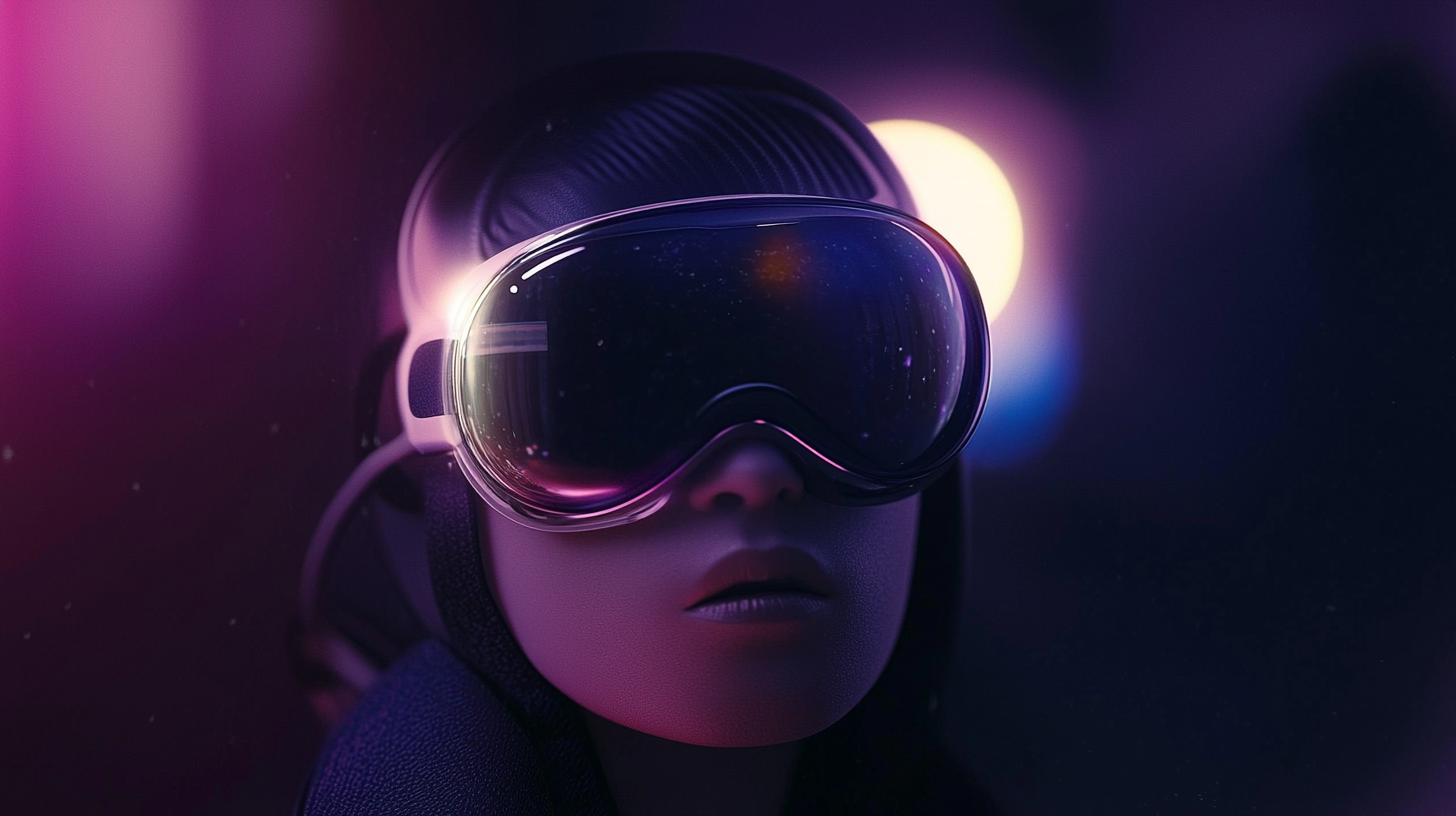
Visionos 2.4, AI and Spatial Media Toolkit with the Apple Vision Pro: Media Revolution in Mixed Reality or Ripe Crops? - creative image: xpert.digital
Vision Pro reveals AI secret weapon: revolutionizes Visionos 2.4 Everything?
Apple Vision Pro: AI integration and spatial media revolution as a strategic realignment
With the software update Visionos 2.4, the Apple Vision Pro experiences a comprehensive transformation that repositions the mixed reality headset through AI functions, a new spatial media app (toolkit) and improved user interactions. The core of the innovations is the first integration of Apple Intelligence-a AI platform that enables text generation, emoji creation and image processing directly on the device. At the same time, Apple reacts to the limited media diversity through an app that bundles external 3D content, and optimizes the device frame via iPhone-controlled guest mode. These updates, planned for April 2025, aim to keep the Vision Pro competitive with Google's Android XR and Samsung's headset. Technically supported by the M2 chip and 16 GB RAM, Apple not only demonstrates hardware strength, but also the ability to process AI locally-a crucial step for data protection and latency times.
Suitable for:
The development of Apple Intelligence in the Vision Pro
AI tools as a productivity booster
With Apple Intelligence, Apple for the first time transfers AI functions from iPhone and Mac to a mixed reality device. The writing tools enable context -based text suggestions and optimizations, while _GenMojis_ personalized avatars generate in real time -a feature that develops potential especially in social VR environments. The _image Playground_-app allows users to create photo-realistic images through simple prompts that can be integrated directly into spatial scenes.
Interestingly, Apple initially dispenses with Siri AI upgrade, instead Chatgpt from Openaai is seamlessly embedded in the writing tools. This decision reflects technical hurdles in language processing in immersive environments, where contextual precision is crucial. Developers suspect that the spatial audio interaction requires more complex models that only follow in later updates.
Technological basics and performance
The Vision Pro uses the M2 chip with 16 GB Unified Memory to perform AI models locally-an architecture that minimizes latencies and addresses data protection concerns. Benchmarks show that the M2 is able to process transformer models with up to 10 billion parameters in real time, which enables applications such as real-time translations in multinational meetings.
An often overlooked detail is the integration of the Apple Neural Engine CocroCessor, which is especially optimized for matrix operations. This enables energy -efficient inferencing, even at full load - a critical factor for the battery life of the headset. Developers can access this hardware directly via new Visionos APIs to implement custom AI pipelines.
The Spatial Media Toolkit: A paradigm shift for media
Architecture and content strategy
The new Spatial Media app acts as a curatorial platform that aggregates 3D models, 360 ° panoramas and volumetric videos of partners such as National Geographic, Getty Images and Independent Creative. Unlike existing app stores, it follows a hybrid model: basic content is free of charge, while premium collections are accessible via in-app purchases or subscriptions.
Technically, Apple relies on the USDZ file standard (Universal Scene Description), which guarantees consistent reproduction across devices. Developers can submit their own content via Realitykit APIS, which are checked for quality and compatibility by a AI-based moderation tool. A highlight is the Dynamic Lod technology (Level of Detail) that adapts model details based on a view and device performance-essential for liquid rendering complex scenes.
Content partnerships and exclusive offers
On February 21, 2025, Arctic Surfing starts an exclusive immersive video that users put it into the waves off Norway's coast using 180 ° -3D camera. This project, produced with Canon-EOS-R7 cameras and Apple's Spatial Video Workflow, demonstrates the ambitions to redefine documentary formats.
In the long term, Apple is planning cooperations with museums such as the Louvre to make digital twins of works of art to be experienced in life-an use case that combines education and entertainment. Critics note that the success of this strategy depends on the willingness of the content industry, to adapt existing license models to spatial media.
Suitable for:
User-centered interaction: guest mode and device sharing
Revolutionation of the multi-user experience
The revised guest mode addresses one of the biggest hurdles in high-end headsets: the limited divisibility. Users can now create temporary profiles via iPhone app, limit the app access and shield personal data. An innovative feature is the _ session Mirroring_, in which the main user can monitor the guest screen in real time on his iPhone - ideal for guided tours or training courses.
Technically, this is based on sandboxed iOS virtualization within visionos that provide isolated user environments. Data protection experts praise the implementation of _ON-DEVICE FACE RECOGNITION_, which authenticate guests without a cloud comparison.
Enterprise applications and collaboration
For companies, the vision per new dimensions of remote cooperation opens. Apps such as Microsoft Teams and Cisco Webex use the spatial API to integrate 3D-whites and holographic avatars (_persenas_) into meetings. A breakthrough was achieved with the integration of JIGSPACE, which projects CAD models in life size and enables multi-user processing in real time.
The challenges remain with the UI/UX adaptation: While simple gestures such as pinch-to-zoom are intuitive, complex interactions (e.g. 3D model rotation) still require learning effort. Field Studies show that training times of an average of 45 minutes are necessary to achieve full productivity.
Competition analysis and market strategy
Google's Android XR as a opponent
With Android XR, Google positions a more open ecosystem that integrates Gemini-KI deep into the system UI. The Samsung headset expected for Q3 2025 relies on modularity-interchangeable lenses and controllers-while Apple insists on a closed premium system.
A crucial difference lies in the AI philosophy: while Apple Intelligence priorities local processing, Google uses Google Cloud-based Gemini models for computing-intensive tasks such as real-time environmental scanning. Market analysts predict that this could create fragmented AI experiences, similar to the smartphone market.
Apple's price strategy and target groups
Despite the price reductions at $ 2,999, the Vision Pro remains a niche product. Counterpoint Research estimates that only 480,000 units will be sold by Q4 2025 - far below Apple's original forecast. The new features clearly aim at Early Adopter in creative industries and tech enthusiasts, as the cooperation with Adobe Lightroom for spatial photo editing shows.
An underestimated aspect is the B2B offensive: through partnerships with SAP and Siemens, Apple plans to integrate the Vision Pro into industrial workflows (e.g. machine maintenance via AR instructions). The decision to delete the planned AR glasses in favor of the Vision Pro underlines this focus.
Heavyweight with potential: Vision Pro between criticism and future vision
Software ecosystem and developer engagement
With over 2,000 native apps and 1.5 million compatible iOS apps, visionos shows impressive adoption. The introduction of HealthKit in Visionos 2.4 is paving the way for medical applications, such as holographic anatomiest studies or surgical training tools.
Nevertheless, developers complain about restrictive app guidelines and lack of monetarization tools. The integration of Unity and Unreal Engine 5 is intended to remedy the situation by offering game developers powerful porting tools.
Hardware limitations and future versions
Current criticisms such as the weight (650g) and limited battery life (2h at full load) should only be remedied with the vision per 2, which is expected for 2026. Insiders report prototypes with microled displays and carbon fiber chassis that reduce the weight to 420g.
The development of Brain-Computer interfaces is exciting: Patents indicate EEG sensors that could enable gesture control via machine learning through thoughts. Such innovations could make the Vision Pro a goal in a new era of human-computer interaction.
Mixed reality on the crossroads
The Visionos 2.4 updates mark a turning point for the Vision Pro, which changes from the experimental device to a serious work tool. Due to the symbiosis of powerful AI, curated spatial content and enterprise focus, Apple addresses central weaknesses of the first generation. The decision to prioritize Chatgpt instead of Siri underlines a pragmatic approach that integrates external specialist knowledge, while their own AI models mature.
Nevertheless, the Vision Pro remains a high -risk product in an immature market. Success depends on whether Apple manages to build a convincing contents of the contents and at the same time optimize the hardware for mass markets. With Android XR and Meta's Project Nazare in the starting blocks, the 2025 competition will win decisively - a field of tension that could accelerate innovations and also strengthen fragmentation. The next 12 months will show whether spatial computing will make a breakthrough or a niche field for special applications remains.
Suitable for:
Your global marketing and business development partner
☑️ Our business language is English or German
☑️ NEW: Correspondence in your national language!

Konrad Wolfenstein
I would be happy to serve you and my team as a personal advisor.
You can contact me by filling out the contact form or simply call me on +49 7348 4088 965 (Munich) . My email address is: wolfenstein ∂ xpert.digital
I'm looking forward to our joint project.