
Meta between antitrust law and gambling allegations: Is the company now losing Instagram and WhatsApp?
Xpert Pre-Release

Available in 27 languages 📢
Prefer Xpert.Digital on GoogleⓘPublished on: January 22, 2026 / Updated on: January 22, 2026 – Author: Konrad Wolfenstein
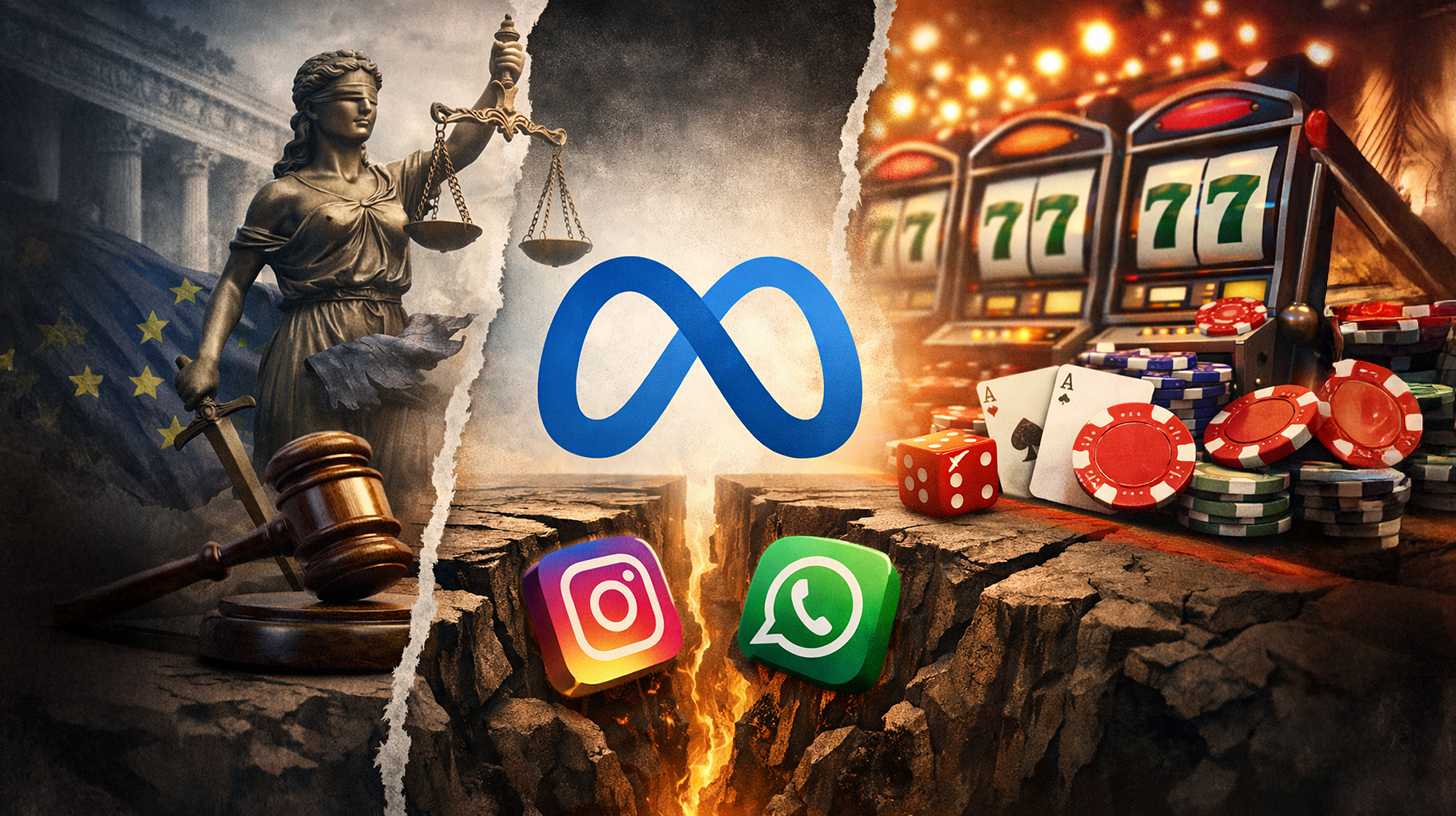
Meta between antitrust law and gambling allegations: Is the company now losing Instagram and WhatsApp? – Image: Xpert.Digital
Open window to crime: Serious gambling allegations against Instagram
Billion-dollar bet in jeopardy: How courts could destroy Meta's AI dream
A regulatory pincer movement is shaking Silicon Valley: While Meta is pumping billions into the AI future, the company is being caught up by the sins of the past and the negligence of the present.
In what appears to be a coordinated offensive, Meta Platforms suddenly finds itself facing a two-pronged attack that threatens the very foundations of the company. The US Federal Trade Commission (FTC) has returned with unexpected force, challenging the ruling that was supposed to give Meta the all-clear in the monopoly dispute – the goal remains the spin-off of its "crown jewels," Instagram and WhatsApp.
But that's not all: At the same time, the British Gambling Commission across the Atlantic is leveling serious accusations. It accuses the tech giant of knowingly tolerating illegal gambling advertising and prioritizing profit over the protection of addicts. The market reaction was swift: The stock price plummeted below key technical levels, and investors are alarmed.
In this article, we analyze the explosive mix of antitrust threats and compliance scandals that is hitting Meta at the very moment when the company needs every available dollar for its expensive AI infrastructure. Is its business model facing a forced restructuring?
Stock in free fall? Analysts warn of a break below the $600 mark
When the US Federal Trade Commission (FTC) announced its appeal against a federal judge's ruling on January 21, 2026, and the UK Gambling Commission simultaneously leveled serious accusations of illegal gambling advertising, a fundamental vulnerability of the world's dominant social media company was revealed. Meta Platforms faces a regulatory double blow with not only legal but, above all, economic implications that extend far beyond short-term stock market fluctuations.
The stock reacted with a decline of over two percent, closing at around $604 on the day of the appointment announcement, after already having been under pressure. Year-to-date since the beginning of 2026, the stock has recorded a loss of more than four percent, with the technical weakness underscored by a break below the 50-day moving average. Analysts are now closely monitoring whether the psychologically important $600 mark holds or whether a deeper correction is imminent.
Antitrust offensive from Washington
The FTC's decision to appeal Judge James Boasberg's November 2025 ruling marks a remarkable persistence on the part of the agency. Boasberg had dismissed the lawsuit at the time, arguing that Meta did not currently hold a monopoly in the social networking market. His reasoning relied particularly on the existence of strong competitors such as TikTok, YouTube, and Snapchat, which had significantly fragmented the social interaction market.
The FTC sees things fundamentally differently. Daniel Guarnera, director of the Bureau of Competition, stated the agency's position unequivocally: Meta achieved its dominant market position not through legitimate competition, but through the strategic acquisition of its most significant competitors. The focus is on the acquisitions of Instagram in 2012 for approximately one billion dollars and WhatsApp in 2014 for what ultimately amounted to about 22 billion dollars. The agency argues that Meta built an illegal monopoly over a decade by simply buying potential rivals instead of facing competition.
The legal challenge for the FTC lies in precisely defining the market. The agency defines the relevant market as platforms for personal social networking, in which Meta, according to its calculations, controls a market share of over 80 percent of user time. This definition deliberately excludes platforms like TikTok, YouTube, or Pinterest, as these primarily serve entertainment and passive consumption, not direct networking between friends and family.
Meta counters with the argument that these very platforms represent the main competition. Internal documents show that Facebook considered Instagram highly disruptive in 2012. Zuckerberg wrote in emails at the time that what they were actually buying was time. This statement provides the FTC with key evidence that the acquisitions were not primarily driven by entrepreneurial innovation, but rather by defensive market hedging.
The economic dimension of the threatened breakup is significant. Instagram has become a key revenue driver, generating a substantial portion of Meta's advertising revenue. In the second quarter of 2025, the entire family of apps generated $47.1 billion in revenue, with Instagram and WhatsApp being integral parts of this ecosystem. A forced spin-off would not only reduce the revenue base but also destroy significant synergies that Meta has systematically built up over years.
Legal experts, however, give the FTC little chance of success in the appeal. Brian Albrecht, chief economist at the International Center for Law and Economics, describes the agency's challenge as extremely difficult. The FTC must prove that Judge Boasberg made a legal error in defining the market or improperly excluded important evidence. Since Boasberg has thoroughly examined standard antitrust instruments and rejected the FTC's market definition as unconvincing, a successful appeal appears unlikely.
The political dimension of the case is remarkable. The original lawsuit was filed in December 2020, at the end of Donald Trump's first term. The fact that the Trump-Vance administration, led by FTC Director Andrew Ferguson, is now pursuing the case demonstrates a bipartisan continuity in the criticism of Big Tech. At the same time, Zuckerberg has demonstratively aligned himself with the new administration in recent months, abolishing fact-checking and bringing Trump confidants into leadership positions. This strategic realignment, however, could be undermined by the persistent antitrust lawsuit.
Gambling allegations from Great Britain
Parallel to the US proceedings, Meta is facing significant regulatory pressure on the other side of the Atlantic. The UK Gambling Commission accuses the company of knowingly allowing illegal online casino advertising on Facebook and Instagram. The accusation is serious: Meta is alleged to have placed ads for so-called Not on GamStop sites, i.e., gambling offers that deliberately circumvent the UK's self-exclusion program for problem gamblers.
Tim Miller, Executive Director of the Gambling Commission, sharply criticized the situation at the ICE conference in Barcelona. He stated that Meta's searchable advertising library was an open window to criminal activity. If the Commission could identify illegal advertisers with simple keyword searches, then Meta could do the same. However, the company deliberately chose to ignore this and readily accepted money from criminals until someone protested loudly.
The Gambling Commission reported intensive enforcement activity between April and December 2025, with 592 cease-and-desist notices and hundreds of thousands of reported URLs. Despite these efforts, numerous illegal gambling advertisements continue to appear on Meta's platforms. Particularly problematic are advertisements explicitly targeting people who have self-excluded from gambling via GamStop. GamStop has been mandatory for all licensed online gambling operators in the UK since 2018 and allows users to exclude themselves from all participating platforms for a minimum of six months and up to five years.
Meta rejects the allegations and points to strict internal guidelines. The company emphasizes that gambling providers must hold a valid license for the target region and that any advertisements violating these guidelines are removed immediately upon identification. Meta called on the Commission to continue its cooperation in protecting users and legitimate advertisers from malicious actors.
The British regulator disagrees: Meta's reactive approach is insufficient. It is implausible that one of the world's largest tech companies is unable to proactively filter its own systems. The authority rejected Meta's proposal that the Commission should use AI tools to report illegal ads, which Meta would then remove. Miller described this as an attempt to shift responsibility onto the regulator.
The economic consequences could be significant. The UK is an important market for Meta. A conviction could lead to substantial fines and stricter advertising regulations. Meta has already been fined €5.85 million in Italy for violating the country's gambling advertising ban. Should the UK Gambling Commission take tougher action, this could set a precedent for other European jurisdictions.
From a broader perspective, the case reveals a structural weakness in Meta's business model. The company generated $46.6 billion in advertising revenue in the second quarter of 2025, representing over 98 percent of its total revenue. This extreme reliance on advertising makes Meta particularly vulnerable to regulatory interventions affecting ad quality or compliance requirements. An internal Reuters investigation found that Meta projected internally that up to 10 percent of its total 2024 revenue, or about $16 billion, could come from ads linked to scams and prohibited goods. This figure illustrates the scale of the problem and explains why regulators are increasingly scrutinizing the company.
Our US expertise in business development, sales and marketing

Our US expertise in business development, sales and marketing - Image: Xpert.Digital
Industry focus: B2B, digitalization (from AI to XR), mechanical engineering, logistics, renewable energies and industry
More about it here:
A topic hub with insights and expertise:
- Knowledge platform on the global and regional economy, innovation and industry-specific trends
- Collection of analyses, impulses and background information from our focus areas
- A place for expertise and information on current developments in business and technology
- Topic hub for companies that want to learn about markets, digitalization and industry innovations
Meta's Fall Height: Why the highly profitable advertising business is now becoming the biggest danger
Structural vulnerability and investment dilemma
The double regulatory offensive hits Meta at a time of intense strategic realignment. The company has increased its capital expenditures for 2025 to between $64 billion and $72 billion, significantly more than the $37.2 billion planned for 2024. The majority of these investments are going toward data centers and AI infrastructure. Meta has even announced investments of up to $600 billion by 2028 to expand its position in artificial intelligence and create a personal superintelligence for everyone.
These enormous capital expenditures are significantly impacting margins. The Reality Labs division, which works on augmented and virtual reality, recorded an operating loss of $4.97 billion in the fourth quarter of 2024 on revenue of just $1.08 billion. For the full year 2024, losses totaled $17.73 billion, a 10 percent increase year over year. Since 2020, Reality Labs has accumulated more than $60 billion in losses, with no clear path to profitability in sight.
Zuckerberg described 2025 as a pivotal year for the metaverse and announced that Reality Labs' operating losses would continue to rise. This strategic bet is financed by the still highly profitable advertising business of the Family of Apps segment. In the second quarter of 2025, the Family of Apps segment's operating income reached $25 billion, while Reality Labs posted an operating loss of $4.5 billion.
The Family of Apps boasts 3.43 billion daily active users worldwide, a year-over-year increase of six percent. This enormous reach allows Meta to continuously raise advertising prices. The average price per ad rose by nine percent globally in the second quarter of 2025, with Europe experiencing the strongest price growth at 17 percent. Average revenue per person climbed to $13.65, an increase of nearly 15 percent.
This solid operational foundation gives Meta the financial flexibility to invest billions in long-term bets. At the same time, however, it increases the downside risk in the event of an antitrust breakup or stricter advertising regulations. Despite the regulatory risks, analysts remain largely optimistic. Of the 68 experts surveyed, 44 recommend buying, four advise holding, and none recommend selling. The average price target is $846, representing an upside potential of over 30 percent.
Rosenblatt Securities leads with a price target of $1,117, while more conservative voices like BMO Capital are at $710. This range reflects uncertainty surrounding the monetization of AI investments and the impact of regulatory interventions. JPMorgan lowered its price target from $875 to $800 after the Q3 results but reaffirmed its overweight rating. The key point, according to JPMorgan, is that Meta plans to invest significantly more in 2026, rather than at a similar level. Its costs are considerably higher compared to Google and Amazon, as these companies have cloud businesses that allow them to monetize AI directly.
Competitive dynamics and market fragmentation
Judge Boasberg's argument that Meta currently does not have a monopoly is largely based on the changed competitive landscape. With 1.9 billion monthly active users worldwide at the beginning of 2025, TikTok had become the fifth-largest social media platform. The average usage time is almost 70 minutes per day, significantly more than Instagram at 32 minutes or YouTube at 60 minutes. TikTok's engagement rate reaches 4.7 percent, twice as high as Instagram's and 75 times higher than Facebook's.
YouTube Shorts recorded 200 billion daily views in 2025, an explosive growth of 186 percent in just a few months. This dynamic demonstrates the highly competitive nature of the short video content market. YouTube as a whole reaches 2.7 billion monthly active users worldwide and offers creators better monetization options than TikTok or Instagram Reels, leading to a migration of content.
The FTC argues, however, that these platforms address different user needs. TikTok is primarily an entertainment platform, YouTube focuses on video content, while Facebook and Instagram are geared towards personal networking with friends and family. This functional differentiation justifies a narrower market definition, in which Meta is indeed dominant.
The antitrust debate centers on whether users can switch between these platforms if Meta raises its prices or lowers quality. Since the services are free, the classic argument of higher prices for consumers doesn't hold water. The FTC argues instead that the quality of Meta's apps has declined due to weakened competition, for example through more intrusive advertising, reduced privacy, or decreased innovation.
Meta counters that the acquisitions involved entrepreneurial risk and that Instagram only achieved its current relevance through massive investments. WhatsApp was bought for $22 billion in 2014 because it was showing explosive growth rates and posed a potential threat. Facebook had observed usage trends via its VPN app Onavo and recognized WhatsApp's rapid expansion. The high purchase price reflects strategic importance, not an attempt to eliminate competition.
Political economy of tech regulation
The Meta case illustrates a fundamental tension in the political economy of digital platforms. On the one hand, network effects and economies of scale have led to a few platforms accumulating enormous market power. On the other hand, the technology sector is highly dynamic, with new competitors capable of challenging established players. TikTok reached one billion monthly active users in less than six years, faster than any platform before it except Facebook Messenger, which, however, benefited from Facebook's existing user base.
The regulatory challenge lies in distinguishing between legitimate economies of scale and anti-competitive behavior. Meta argues that acquiring innovative competitors instead of developing its own products is a legitimate business strategy. The FTC counters that a dominant company should not be allowed to acquire potential competitors to solidify its position.
Meta has already suffered substantial fines in Europe. In November 2024, the European Commission imposed a fine of €797.72 million for competition violations related to Facebook Marketplace. The company had linked its classifieds service to the social network Facebook, thereby disadvantaging other providers. In April 2025, a further €200 million fine followed for violations of the Digital Markets Act. These fines go into the EU budget and reduce the contributions of member states.
Tensions between the US and the EU are escalating. Andrew Ferguson, chairman of the FTC, stated that the Digital Markets Act appears to be a form of taxation of American companies. At the same time, the Trump administration is now pursuing its own aggressive antitrust policy against Meta, underscoring the bipartisan nature of the concerns.
Between AI hype and margin pressure: Meta's silent fight for its own future
Meta faces a complex strategic dilemma. The company must simultaneously manage several challenges: the antitrust threat in the US, stricter regulations in Europe, specific compliance requirements such as the British gambling allegations, massive investments in AI infrastructure and reality labs while facing increasing margin pressure and intense competition from TikTok, YouTube and other platforms.
The rapprochement with the Trump administration appears to be an attempt to stabilize at least one front. Zuckerberg has emphasized conservative values, abolished fact-checking, discontinued diversity programs, and brought Trump confidants like Dina Powell McCormick into management. This strategic realignment is being discussed controversially internally, but it signals Zuckerberg's priority: to protect and expand the company, if necessary through ideological adaptation.
The key economic question is whether Meta can translate its enormous AI investments into profitable growth before regulatory interventions erode its business foundation. Analysts like Morgan Stanley's Brian Nowak see the internal superintelligence unit as an undervalued value driver and believe that share prices around $1,000 are conceivable in the long term, roughly 50 percent above current levels. This optimistic view is based on the assumption that Meta can make its advertising products significantly more effective through AI integration and unlock new revenue streams.
The bear-case scenario, on the other hand, envisions share prices between $550 and $650 if AI investments fail to generate the anticipated returns and regulatory interventions simultaneously weigh on the core business. A forced spin-off of Instagram would significantly reduce the revenue base and could lead to a loss of investor confidence. Stricter advertising regulations in Europe and the UK would complicate monetization and squeeze margins.
Meta's most likely base-case scenario projects share prices between $875 and $980 by the end of 2026. In this scenario, revenue grows solidly to $205 billion to $215 billion, but operating expenses rise significantly faster than the 23 percent projected for 2025. Operating margins decline, and free cash flow is impacted by capital expenditures, but the core business remains profitable enough to fund long-term bets.
The regulatory offensive of January 21, 2026, marks a turning point. Meta can no longer rely on antitrust lawsuits being dismissed or on regulators tolerating compliance violations. The company must adapt its business practices, implement proactive moderation systems, and simultaneously demonstrate that its AI strategy not only incurs costs but also generates genuine added value.
The outcome of the FTC appeal is expected to take years. Should Meta win outright, the FTC is likely to appeal again. If the court rules in favor of the FTC, another trial will follow regarding remedial measures. This uncertainty weighs on valuations until it is resolved.
The British gambling allegations will be decided more quickly. Should the Gambling Commission impose fines or stricter regulations, this could serve as a blueprint for other European jurisdictions. Meta must demonstrate that it is willing and able to proactively combat illegal content, not just reactively remove it.
In the long term, Meta faces the challenge of developing a sustainable business model that is no longer extremely dependent on advertising. Reality Labs could become a new revenue stream if AR glasses like the Ray-Ban Meta Smart Glasses achieve mass-market acceptance. Integrating AI into advertising products could increase monetization per user. New business areas like WhatsApp Business show growth potential, but accounted for only 0.8 percent of total revenue last quarter.
The double regulatory blow of January 21, 2026, demonstrates that despite its market power and financial resources, Meta remains vulnerable to coordinated government intervention. The coming months will show whether the company can overcome these challenges or whether the era of unbridled expansion by tech giants is drawing to a close.
Your global marketing and business development partner
☑️ Our business language is English or German
☑️ NEW: Correspondence in your national language!

Konrad Wolfenstein
I would be happy to serve you and my team as a personal advisor.
You can contact me by filling out the contact form or simply call me on +49 7348 4088 965 (Munich) . My email address is: wolfenstein ∂ xpert.digital
I'm looking forward to our joint project.
☑️ SME support in strategy, consulting, planning and implementation
☑️ Creation or realignment of the digital strategy and digitalization
☑️ Expansion and optimization of international sales processes
☑️ Global & Digital B2B trading platforms
☑️ Pioneer Business Development / Marketing / PR / Trade Fairs
🎯🎯🎯 Benefit from Xpert.Digital's extensive, five-fold expertise in a comprehensive service package | BD, R&D, XR, PR & Digital Visibility Optimization

Benefit from Xpert.Digital's extensive, fivefold expertise in a comprehensive service package | R&D, XR, PR & Digital Visibility Optimization - Image: Xpert.Digital
Xpert.Digital has in-depth knowledge of various industries. This allows us to develop tailor-made strategies that are tailored precisely to the requirements and challenges of your specific market segment. By continually analyzing market trends and following industry developments, we can act with foresight and offer innovative solutions. Through the combination of experience and knowledge, we generate added value and give our customers a decisive competitive advantage.
More about it here:










