
The marketing trap: What 99.9 percent actually means – Why your disinfectant doesn't protect against gastrointestinal viruses
Xpert Pre-Release

Available in 27 languages 📢
Prefer Xpert.Digital on GoogleⓘPublished on: March 5, 2026 / Updated on: March 5, 2026 – Author: Konrad Wolfenstein
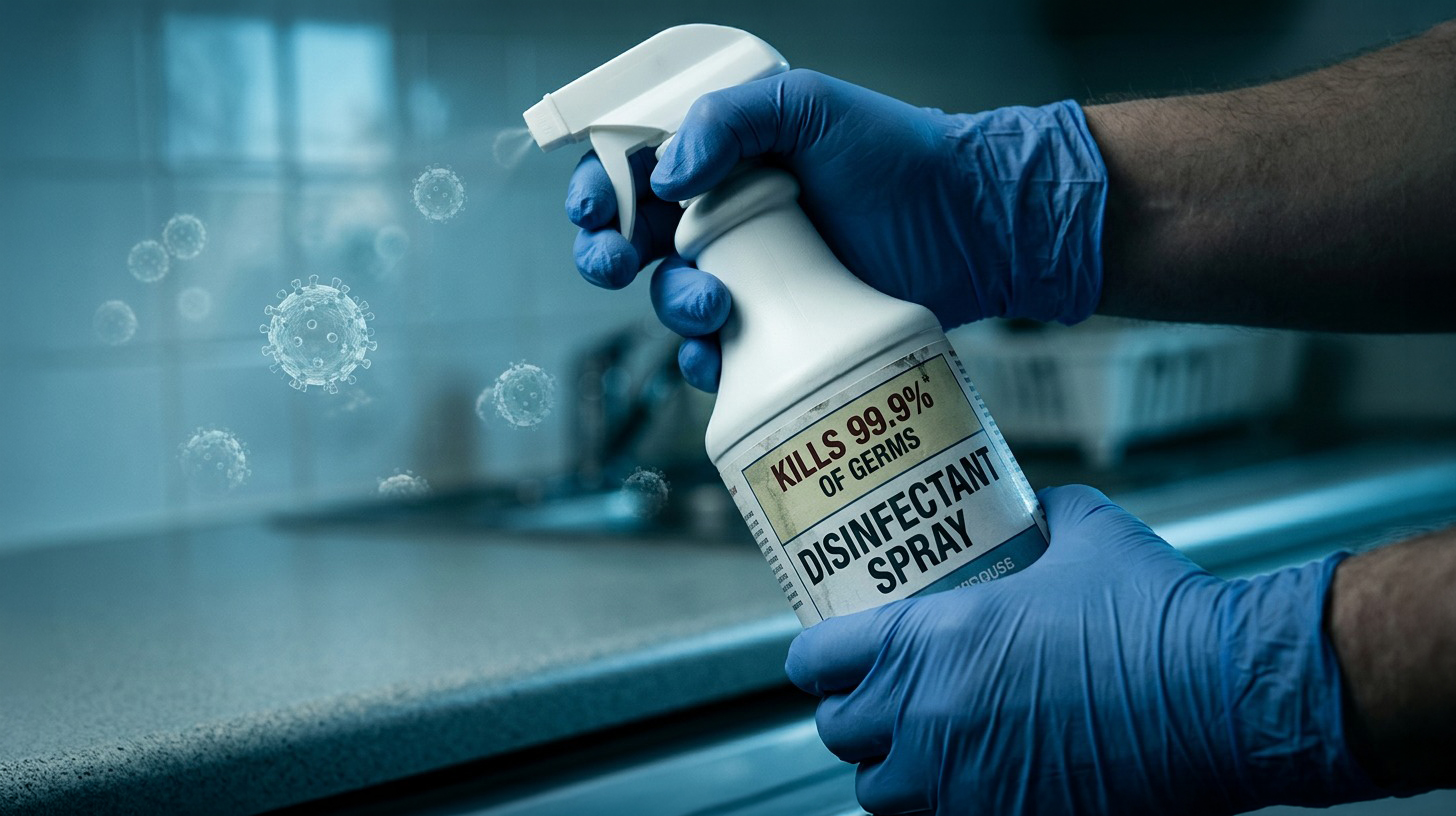
The marketing trap: What 99.9 percent actually means – Why your disinfectant doesn't protect against stomach viruses – Image: Xpert.Digital
Dangerous false sense of security: Why coronavirus disinfection is completely useless against noroviruses
Gastroenteritis epidemic: You need to know this inconspicuous detail on the disinfectant
Unprotected despite disinfection? RKI experts explain: This is why almost all supermarket disinfectants fail in winter
In everyday life, "things are going around": In daycare centers, schools, nursing homes, and community facilities, the risk of gastrointestinal infections is currently elevated, especially in winter and spring. Parents with children, in particular, can attest to the suffering caused by this. In fact, the level of misinformation in this area is alarmingly high, and has been for decades: Common disinfectants, even those intended to combat coronaviruses, are ineffective against gastroenteritis! This widespread misconception allows persistent pathogens like norovirus and rotavirus to spread almost unchecked, while consumers are lulled into a false sense of security. Those who stock up on supposed hygiene miracles against germs in drugstores or supermarkets all too often fall for clever marketing promises. The prominently printed "99.9 percent" on the labels may sound reassuring, but it conceals a crucial virological detail: the extremely resistant pathogens that cause gastroenteritis are simply unaffected by standard disinfectants. To truly protect yourself and your family effectively, you need to understand the labeling system precisely – but these labels are often worded in such a way that they can almost only be deciphered by medical professionals.
The great disinfection lie: Why 99.9% doesn't equal protection
Clean doesn't equal safe: How millions of consumers fall prey to a dangerous misconception
Anyone who goes to the supermarket and reaches for a disinfectant will see the same reassuring message on almost every product: "Removes 99.9% of bacteria and enveloped viruses." Since the coronavirus pandemic, these products have become a staple in almost every handbag, desk, and kitchen. What hardly any consumer realizes is that these very products fail precisely where it matters most during the winter months: in protecting against the pathogens that cause the dreaded stomach flu. Noroviruses, the most common cause of severe gastroenteritis, are resistant to most commercially available disinfectants. What sounds like a contradiction is microbiological reality and a lesson in the limitations of advertising, the complexity of virology, and the widespread misunderstanding between perceived and actual safety.
The biology of resistance: Enveloped versus non-enveloped viruses
The key to understanding viruses lies in their structure. Virology fundamentally distinguishes between two categories: enveloped and non-enveloped viruses. Enveloped viruses, such as the influenza virus, SARS-CoV-2, or HIV, possess an outer lipid membrane, a fatty envelope, that surrounds them. This membrane is their Achilles' heel. Alcohol-based disinfectants, which are usually based on ethanol at concentrations between 60 and 95 percent, can effectively dissolve this lipid layer and thus inactivate the virus. The destruction of the envelope renders the virus infective.
Non-enveloped viruses, on the other hand, lack such a protective lipid membrane. Instead, they have a robust protein shell, a so-called capsid, which is significantly more resistant to chemical and physical influences. Noroviruses, as well as rotaviruses and adenoviruses, belong precisely to this category. Because they lack the lipid envelope, they simply offer no surface for alcohol to attack. Commercially available disinfectants that bear the label "limited virucidal" are effective only against enveloped viruses. They are ineffective against noroviruses. Sandra Niendorf, head of the reference laboratory for noroviruses at the Robert Koch Institute, has summarized this in a simple formula: Noroviruses do not have a lipid envelope, which makes them particularly resistant, and they are therefore very stable against disinfectants.
The three-stage system: A guide that hardly anyone knows about
The scientific community has established a three-tiered system for classifying the effectiveness of disinfectants against viruses. This system has been defined since 2004 and was expanded in 2017 with an intermediate level. The first level, designated "limited virucidal," means that the product is effective only against enveloped viruses such as influenza or coronaviruses. The second level, "limited virucidal PLUS," was introduced to additionally cover the three most common non-enveloped pathogens: noroviruses, rotaviruses, and adenoviruses. The third and highest level, "virucidal," signifies effectiveness against all enveloped and non-enveloped viruses.
| Spectrum of activity | Effective against | Examples of pathogens |
|---|---|---|
| Limited virucidal activity | Only enveloped viruses | Influenza, SARS-CoV-2, HIV, Hepatitis B/C |
| Limited virucidal PLUS | Enveloped viruses: Norovirus, Rotavirus, Adenovirus | Additionally, gastrointestinal pathogens |
| Virucide | All viruses (enveloped and non-enveloped) | Complete virus spectrum including enteroviruses |
This classification system is scientifically precise, but it has a crucial weakness: it exists almost exclusively in specialized contexts. On the packaging of commercially available disinfectants in supermarkets or drugstores, the average consumer rarely finds these terms presented in a way that is actually understandable. Instead, marketing promises dominate, conveying a sense of comprehensive safety that is not scientifically supported.
The marketing trap: What 99.9 percent actually means
The claim of "99.9 percent" on disinfectants is one of the most misunderstood figures in the entire consumer goods sector. This value does not refer to all existing pathogens, but exclusively to specific types of bacteria tested in laboratory tests within the specific spectrum of activity of the respective product. The renowned news magazine 'Der Spiegel' analyzed this using Sagrotan as an example and determined that the 99.9 percent merely describes the reduction of a narrowly defined spectrum of bacteria, including pathogens that cause gastrointestinal illnesses, diarrhea, pneumonia, or wound infections.
A look at the actual product information of leading disinfectant brands reveals the discrepancy between advertising claims and scientific reality. Sagrotan Disinfectant Cleaner Spray, for example, correctly declares its spectrum of activity as "99.9 percent of bacteria, enveloped viruses, and specific fungi" and is classified as "limited virucidal." Specifically, this means that this product offers no protection against noroviruses, by far the most common cause of acute gastrointestinal infections in adults. Only the specially developed "Sagrotan Med Spray Disinfectant" is effective against both noroviruses and rotaviruses.
The Hessian Consumer Protection Association (Verbraucherfenster Hessen) has explicitly pointed out in an analysis that by no means all commercially available disinfectant sprays, hygiene gels, or wipes are effective against viruses, including influenza and coronaviruses. Many products on offer primarily target bacteria. For consumers to actually receive viral protection, the packaging must, in addition to stating that it eliminates 99 percent of bacteria, also include the terms "limited virucidal," "limited virucidal PLUS," or "virucidal.".
The justice system intervenes: Courts take action against misleading advertising
That this marketing practice is not merely an academic problem has also been recognized by the German judiciary. In a landmark ruling in September 2020, the Munich I Regional Court prohibited the advertising of a disinfectant manufacturer who promoted its product with the promise that it removed 99.99 percent of harmful bacteria and viruses from the entire air and from all surfaces. The court deemed this statement a misleading business practice within the meaning of the Act Against Unfair Competition (UWG). The judges justified their decision by stating that particularly stringent requirements regarding accuracy, unambiguity, and clarity must be applied to health-related efficacy claims. The manufacturer was unable to provide scientific evidence to support its advertising claim.
In times of a pandemic, the court stated, the question of whether and how viruses can be removed from indoor air and surfaces is one of the most pressing and globally important health issues. The ruling concerned the product AMOAIR, but the law firm representing the plaintiff competitor explicitly pointed out that numerous other manufacturers advertise with similar claims and urgently need to adjust their advertising promises.
Our EU and German expertise in business development, sales and marketing

Our EU and German expertise in business development, sales and marketing - Image: Xpert.Digital
Industry focus areas: B2B, digitalization (from AI to XR), mechanical engineering, logistics, renewable energies and industry
More information here:
A thematic hub offering insights and expertise:
- Knowledge platform covering global and regional economies, innovation and industry-specific trends
- A collection of analyses, insights, and background information from our key areas of focus
- A place for expertise and information on current developments in business and technology
- A hub for companies seeking information on markets, digitalization, and industry innovations
Protection against norovirus: Why soap is more effective than expensive disinfectants
The underestimated threat: Norovirus in numbers
The epidemiological significance of noroviruses is enormous and systematically underestimated by the general public. In 2024, the Robert Koch Institute registered 136,994 norovirus cases in Germany alone. In the current year, 2025, 51,057 cases of norovirus gastroenteritis had already been reported by calendar week 20, compared to 46,763 in the same period of the previous year. At the same time, rotavirus case numbers rose dramatically: By calendar week 47 of 2024, 35,083 cases had been reported, compared to 19,914 in the same period of the previous year, representing an increase of approximately 76 percent.
Noroviruses are responsible for up to 50 percent of all viral gastroenteritis cases in adults, 30 percent in older children, and 20 percent in infants and toddlers. A study by the Johns Hopkins Bloomberg School of Public Health estimated the global economic burden of norovirus gastroenteritis at $4.2 billion in direct healthcare costs and $60.3 billion in societal costs annually. By far the largest share of these costs stemmed from lost productivity, accounting for between 84 and 99 percent of the total costs, depending on the region.
Norovirus: The perfect pathogen
What makes noroviruses particularly dangerous is not just their resistance to common disinfectants, but a combination of biological properties that make them exceptionally successful pathogens. The infectious dose is extremely low: as few as 10 to 100 virus particles are enough to infect a person. By comparison, one gram of stool from an infected patient can contain up to ten million virus particles.
Noroviruses exhibit remarkable environmental stability. They can survive on dry surfaces for at least two weeks and only die at temperatures above 60 degrees Celsius. Transmission occurs via the fecal-oral route through contact with contaminated surfaces, such as hands, surfaces, doorknobs, toilet seats, towels, or food. Particularly insidious is transmission via virus-containing droplets released during vomiting, which can then be inhaled.
Furthermore, noroviruses undergo significant genetic changes, and new variants are constantly circulating against which the population has not yet developed immunity. Lasting immunity is not established after infection, so repeated illnesses are common. Even after symptoms subside, the virus can continue to be shed in stool for up to two weeks, and in some cases even longer.
The laboratory findings: Commercially available products fail the tests
A laboratory test conducted by 'stern TV' in collaboration with microbiologist Dirk Bockmühl from Rhine-Waal University of Applied Sciences confirmed the sobering findings. Several of the supposed hygiene products were less effective at bacteriosis than a control sample of just water. The study concluded that antibacterial gels and sprays are largely unnecessary in a normal household without any illnesses. The commercially available products are mostly effective only against bacteria, not against viruses.
This finding is particularly significant given the massive increase in disinfectant production in Germany during the COVID-19 pandemic. According to the Federal Statistical Office, disinfectant production between January and September 2020 was 80 percent higher than in the same period of the previous year. A peak of 14,800 metric tons of active ingredient was reached in April 2020, representing a 161 percent increase compared to April 2019. The global disinfectant market is projected to reach a volume of US$98.04 billion by 2034 and to grow at an annual rate of 10.99 percent between 2026 and 2034.
What actually protects: Evidence-based measures
Those who want to effectively protect themselves against noroviruses must rely on specific products and, above all, on mechanical hygiene measures. For private households and especially for communal facilities, the Robert Koch Institute and the Federal Ministry of Health explicitly recommend disinfectants labeled "limited virucidal PLUS" or "virucidal." These products are primarily available in pharmacies and differ fundamentally from standard products found in drugstores.
The most effective and simplest protective measure remains thorough and frequent handwashing with soap. Sandra Niendorf from the Robert Koch Institute has emphasized this unequivocally: "Wash your hands, wash your hands, wash your hands." The mechanical effect of washing physically removes the viruses from the skin, even if soap does not inactivate them like a chemical disinfectant. During the coronavirus pandemic, when particular attention was paid to hand hygiene and masks were worn, norovirus outbreaks were significantly less frequent, impressively demonstrating the effectiveness of consistent hygiene measures.
An interesting research approach comes from basic research: Scientists at the German Cancer Research Center in Heidelberg have discovered that citric acid binds to noroviruses and may prevent them from infecting human cells. X-ray crystallography has shown that citrate binds precisely to the site where the virus comes into contact with body cells during the infection process. Whether this can be developed into a practical disinfectant is the subject of further research.
The structural information deficit: A political problem
The discrepancy between what consumers believe about disinfectants and what they actually do is not solely a problem of the advertising industry. It is a structural information deficit with political and regulatory dimensions. In Germany, there are approximately 600,000 nosocomial infections (hospital-acquired infections) annually, resulting in up to 20,000 deaths. Up to a third of these infections are considered preventable. Nosocomial infections increase the average length of stay for patients in intensive care units by 5.3 days.
If even professional medical facilities struggle with the correct use of disinfectants, expecting private households to understand the intricacies of virological efficacy is simply unrealistic. While labeling requirements for disinfectants as biocidal products exist, they don't reach consumers in a way that enables informed purchasing decisions. The result is a market generating billions in revenue with the promise of safety that doesn't hold up against one of the most common infectious diseases.
Economic dimension: The costs of false security
The economic costs of this miscalculation are considerable. The Kiel Institute for the World Economy estimated that, for the illness wave of winter 2023/2024 alone, sickness-related work absences could cause a loss in gross value added of 32 to 36 billion euros for the German economy. Although these calculations primarily focused on respiratory illnesses, gastrointestinal infections caused by norovirus and rotavirus contribute significantly to sickness, especially in the winter months when case numbers regularly reach their seasonal peak.
On a global scale, the figures are even more striking: The estimated annual societal costs of norovirus gastroenteritis amount to US$60.3 billion, with children under five years of age disproportionately accounting for US$39.8 billion of these costs. However, the highest costs per case are incurred by adults over 55. These figures clearly demonstrate that the economic burden of norovirus is a global problem affecting countries of all income levels.
Recommendation: What consumers need to know
The key finding of this analysis can be summarized in one sentence: A disinfectant that is effective against coronaviruses does not automatically protect against gastrointestinal viruses. Consumers should consider the following points to effectively protect themselves and their families:
First: When buying disinfectants, don't rely on the claim of "99.9 percent of bacteria," but specifically look for the spectrum of activity. Only products labeled "limited virucidal PLUS" or "virucidal" offer protection against noroviruses.
Secondly, thorough handwashing with soap for at least 30 seconds remains the most effective everyday protective measure against noroviruses and other gastrointestinal pathogens, as the mechanical removal of viruses is more effective than most chemical products.
Thirdly: In cases of acute illness, specially labeled disinfectants from the pharmacy should be used, both for hand disinfection and for surface disinfection of door handles, toilets, and sinks. The contact time of the products must be strictly observed, as too short an application time significantly reduces their effectiveness.
Fourthly: Infected individuals should remain isolated for at least 48 hours after symptoms have subsided and should pay particular attention to consistent hand and toilet hygiene during the following two weeks, as the viruses continue to be shed long after the acute phase of the illness.
The disinfectant industry profits from a deeply ingrained need for safety and cleanliness, which has been further intensified by the coronavirus pandemic. But true safety doesn't begin with marketing, but with an understanding of the biological principles. The 99.9 percent on the label may refer to bacteria, but against the invisible enemy of the winter season, the norovirus, it is in most cases nothing more than an expensive illusion.
Your global marketing and business development partner
☑️ Our business language is English or German
☑️ NEW: Correspondence in your native language!

Konrad Wolfenstein
I and my team are happy to be available to you as your personal advisor.
You can contact me by filling out the contact form here or simply call me at +49 7348 4088 965. My email address is: [email protected]
I'm looking forward to our joint project.
☑️ SME support in strategy, consulting, planning and implementation
☑️ Creation or realignment of the digital strategy and digitization
☑️ Expansion and optimization of international sales processes
☑️ Global & Digital B2B trading platforms
☑️ Pioneer Business Development / Marketing / PR / Trade Fairs
Our EU and German expertise in business development, sales and marketing
Our EU and German expertise in business development, sales and marketing - Image: Xpert.Digital
Industry focus areas: B2B, digitalization (from AI to XR), mechanical engineering, logistics, renewable energies and industry
More information here:
A thematic hub offering insights and expertise:
- Knowledge platform covering global and regional economies, innovation and industry-specific trends
- A collection of analyses, insights, and background information from our key areas of focus
- A place for expertise and information on current developments in business and technology
- A hub for companies seeking information on markets, digitalization, and industry innovations










