
"State Tank" Leopard – The Billion-Dollar Deal: Why Germany is suddenly investing in tank manufacturer KNDS
Xpert Pre-Release

Available in 27 languages 📢
Prefer Xpert.Digital on GoogleⓘPublished on: May 21, 2026 / Updated on: May 21, 2026 – Author: Konrad Wolfenstein
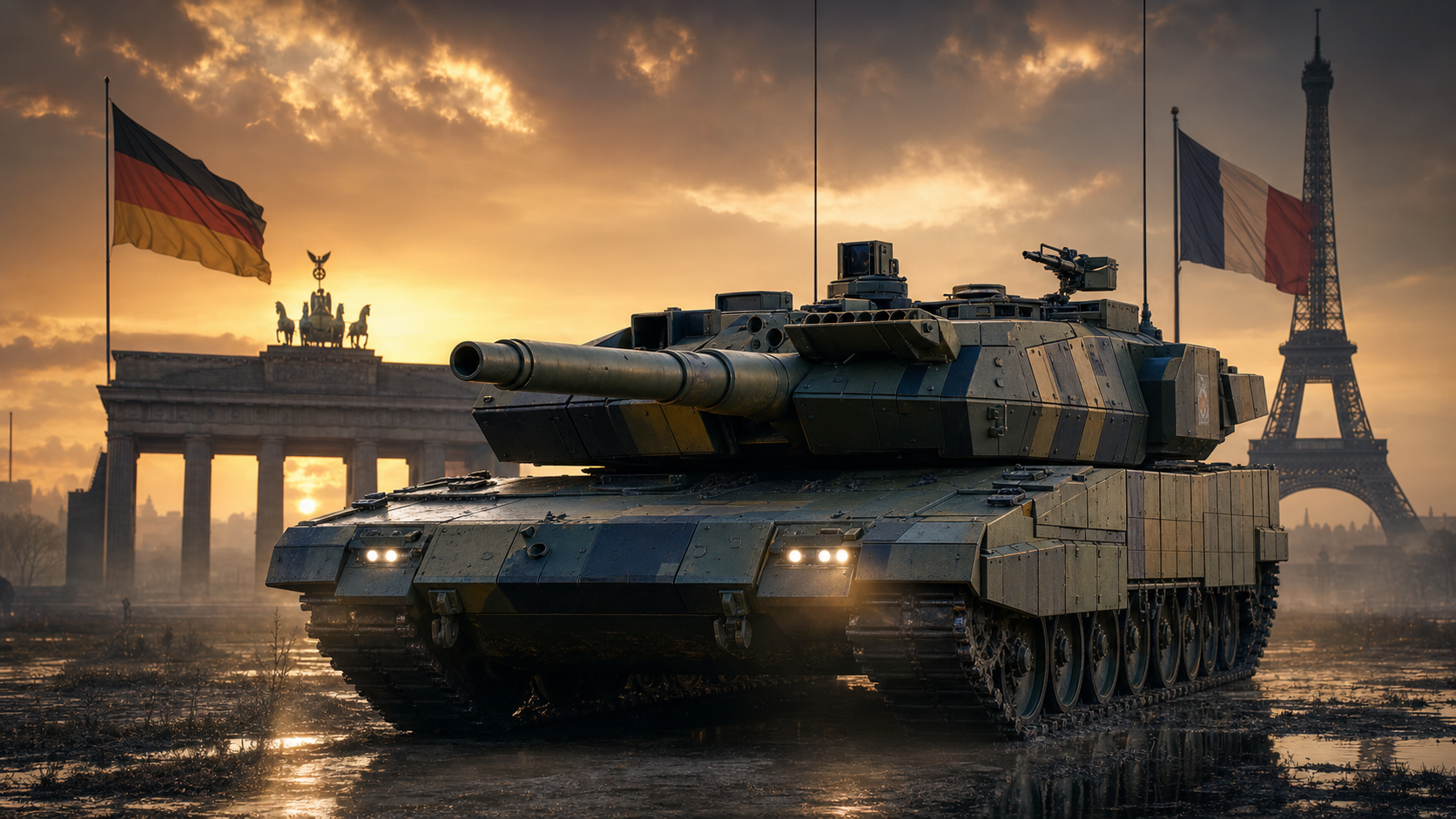
"State Tank" Leopard – The Billion-Dollar Deal: Why Germany is suddenly investing in tank manufacturer KNDS – Creative image: Xpert.Digital
On equal footing with Macron: Germany's ingenious move in the European tank poker game
Tank giant KNDS prepares for mega IPO: This is why the state is now becoming an arms shareholder
Historic turning point in the arms market: When the government buys Europe's most important tank manufacturer
In a historic shift in industrial policy, the German government is acquiring a stake in the Franco-German defense giant KNDS. To avert a threatened takeover by foreign investors and secure strategic control over the production of the Leopard 2 tank, Berlin is initially acquiring 40 percent of the company's shares. The multi-billion-euro deal, finalized just before a planned mega-IPO, guarantees Germany a lasting strategic parity with France. It also marks an unprecedented paradigm shift: security policy and industrial policy are merging as Europe prepares for the development of the next generation of main battle tanks. The following in-depth analysis explores why the German state is becoming an arms shareholder now, how a Czech billionaire dictated the pace of the deal, and what this step means for the European defense architecture.
State tank: Germany's strategic bet on the Leopard
The backstory: Family capital meets raison d'état
On Wednesday, May 20, 2026, a months-long marathon of negotiations between the coalition partners in Berlin ended with a decision that extends far beyond the day-to-day business of budget policy. The center-right/center-left federal government agreed to acquire an initial 40 percent stake in the Franco-German defense company KNDS. This secures the German state the same influence as the French government, which already controls half of the company through its state-owned holding company APE. The decision sounds pragmatic, but in reality, it is the result of a profound geopolitical assessment that has taken on a completely new dimension since Russia's war of aggression in Ukraine.
KNDS is no ordinary industrial company. The corporation, formed in 2015 from the merger of the German company Krauss-Maffei Wegmann (KMW) and the French tank manufacturer Nexter, and legally headquartered in Amsterdam, produces the Leopard 2 and the Leclerc, the two most important main battle tanks for NATO land forces in Western Europe. Its product portfolio also includes the Boxer armored personnel carrier, the Panzerhaubitze 2000 self-propelled howitzer, the Caesar artillery system, and a wide range of ammunition, bridging systems, and battle management solutions. Whoever controls KNDS largely controls the foundation of Western European tank architecture for the foreseeable future.
The immediate reason for the decision now made lies in the ownership structure. The German Bode and Braunbehrens families, who collectively hold 50 percent of KNDS through the Wegmann Group holding company, have signaled their intention to withdraw for months. The families, who built up the German side of the company over generations, want to liquidate their tied-up capital and withdraw from the arms business. This withdrawal was foreseeable, but the exact timing was not. When it became known in early May 2026 that the Czech arms company CSG had made the families a cash offer for their stake, Berlin came under immense time pressure. Had the families accepted the Czech offer, a strategically important company would have passed, at least partially, into the hands of Eastern European arms manufacturers overnight—a scenario considered unacceptable in the capitals of Paris and Berlin.
The core structure of the deal: Equal power with asymmetric flexibility
The agreed-upon structure is remarkably well-conceived from both a legal and political perspective. Germany will initially acquire a 40 percent stake, exactly matching France's remaining share after Paris announced its intention to reduce its previous 50 percent stake to 40 percent. This formally places both countries on an equal footing. However, the core of the agreement lies not in the percentage itself, but in the associated governance arrangement: even if Germany were to reduce its stake to 30 percent within two to three years, voting rights would remain equally distributed between the two nations. Strategic decisions regarding jobs, production sites, or export licenses can therefore only be made by mutual agreement. Paris cannot outvote Berlin—and vice versa.
This arrangement is politically astute because it reconciles two seemingly contradictory objectives. The Ministry of Defense under Boris Pistorius had favored starting at the full 40 percent level to guarantee maximum influence, while the Ministry of Economic Affairs under Katherina Reiche and the Federal Chancellery advocated for a smaller share of around 30 percent to protect the state budget. The formula now agreed upon—a high starting point with a contractually secured option to reduce the stake, coupled with a permanent guarantee of parity—allows both ministries to present themselves as winners. It is classic coalition arithmetic in the service of national interest.
The purchase price is deliberately structured to avoid any political attack. It is intended to be based on the IPO price of KNDS shares at the planned stock market launch, meaning it will not include any premium or discount for the stake. This avoids accusations of state subsidies to the selling families, as well as accusations that the state overpaid due to duress. Nevertheless, given a company valuation that financial circles place between 18 and 25 billion euros, a 40 percent stake represents a state investment in the mid- to upper single-digit billions – likely between seven and ten billion euros.
The company's financial figures: Growth in times of arms race
To understand why this deal is financially justifiable, one must examine KNDS's operational dynamics. The company is experiencing unprecedented growth. In fiscal year 2024, KNDS achieved record sales of €3.8 billion, an increase of 15 percent compared to the previous year. Even more telling is the order intake: it rose by more than 40 percent in 2024 to €11.2 billion, bringing the order backlog to a record level of €23.5 billion. This backlog represents more than six times the annual sales and guarantees the group capacity utilization visibility for at least five to seven years. The previous year, 2023, saw an even more spectacular increase in order intake, with growth of over 130 percent to €7.8 billion—giving KNDS the strongest order growth among the 15 largest European defense companies.
The main drivers of this growth are the Leopard 2 A8 variant program, the Caesar artillery system for the export market, the RCH 155 wheeled howitzer for Ukraine, and the Boxer system for NATO partners. The workforce grew to over 10,000 employees in 2024 with nearly 1,000 new hires, and 11,000 are planned for 2025. The company is simultaneously building new production facilities, including one in Görlitz, to address capacity bottlenecks arising from its overflowing order books. The company does not provide precise figures on profitability but speaks of a development satisfactory for the industry—a phrase that in the defense industry typically describes EBIT margins in the single-digit to low double-digit percentage range.
These key figures provide the rational basis for the government's investment decision. Germany is not buying into a company undergoing restructuring, but into a growth corporation with full order books, established products, and a clear demand logic. The state is not a savior, but a strategic investor—a significant distinction that will also be relevant for justifying the expenditure to the Bundestag.
The IPO Calculus: When the State Becomes a Stock Market Stabilizer
The government's stake is inextricably linked to KNDS's planned IPO. The company has appointed the investment bank Lazard as its lead bank for the IPO, scheduled for early 2026, and plans a dual listing on the Frankfurt and Paris stock exchanges, with Deutsche Bank and Goldman Sachs leading the consortium. A market capitalization of between €20 and €25 billion is targeted, with up to 20 to 25 percent of the shares to be placed as free float. The first steps are expected in mid-2026, specifically in June or July.
Germany's government stake serves a dual purpose. On the one hand, it is a necessary prerequisite for the IPO: Without clarity regarding the ownership structure following the family's exit, the IPO roadshow could not have presented a credible governance narrative to institutional investors. A KNDS without a German government anchor would be seen by foreign investors as a politically uncertain entity—a company where strategic influence is not clearly distributed among the partner countries. On the other hand, the federal government's stake acts as an IPO stabilizer: A state holding 40 percent is unlikely to sell its shares in the short term. This lowers the volatility expectations of institutional investors and allows for a higher valuation during the placement.
A special dividend is also planned before the IPO, and current owners are speculating about it: market reports suggest a payout of one to two billion euros to the French state and the Bode-Wegmann family. This is structurally standard practice in IPO preparations, when the balance sheet is cleaned of excess liquidity before the listing. For the new federal government stake, this would mean that the state essentially acquires its shares at the IPO price without participating in this advance distribution—a point that is likely to spark further debate in parliament.
The Czech factor: How Michal Strnad dictated the pace to Berlin
The CSG offer is more than just a side issue. Czech billionaire Michal Strnad, owner of the Czechoslovak Group (CSG), has consistently pursued a European defense consolidation strategy in recent years and is considered one of the most aggressive buyers in a market currently undergoing fundamental restructuring. The offer to the Bode-Wegmann family for their full 50 percent stake was reportedly formulated primarily in cash—a currency that liquidity-hungry private families find particularly attractive.
From Berlin's perspective, the scenario of CSG's acquisition was problematic for several reasons. First, a Czech majority shareholder on the German side would have destroyed the bilateral power structure with France, which was based on the premise of equal national ownership. Second, an industrial conglomerate primarily driven by commercial profit motives would potentially have pursued different priorities regarding export decisions, location issues, and strategic cooperation than a state-owned anchor shareholder, who is also bound by security policy considerations. Third—and this is the most sensitive point—the precedent set by a foreign partial acquisition of one of Germany's most sensitive defense companies would have raised political and legal questions that would have affected the arms export framework, NATO secrecy obligations, and bilateral agreements with France.
The families themselves clearly signaled that an IPO and a partial sale by the state took precedence—CSG would only be considered as a second option if industry consolidation seemed sensible. However, the mere existence of a serious alternative offer significantly accelerated Berlin's willingness to negotiate and its decision-making speed. Without the Czech threat, the coalition dispute between the Defense and Economics Ministries might have remained unresolved for weeks longer.
Hub for Security and Defense - Advice and Information

Hub for Security and Defense - Image: Xpert.Digital
The Security and Defence Hub offers expert advice and up-to-date information to effectively support companies and organizations in strengthening their role in European security and defence policy. Working closely with the SME Connect Defence Working Group, it particularly promotes small and medium-sized enterprises (SMEs) that wish to further develop their innovative capacity and competitiveness in the defence sector. As a central point of contact, the Hub thus creates a crucial bridge between SMEs and European defence strategy.
Related to this:
Industrial policy as security policy: The geopolitical meaning behind the KNDS deal
Geopolitical depth layer: State industrial control as security policy
The KNDS deal is not an isolated event, but rather part of a larger paradigm shift in German industrial policy. Since the Russian invasion of Ukraine in 2022, the German state's willingness to invest in or secure strategic industries has increased considerably. Consider, for example, the federal government's stake in Uniper, the debates surrounding a state investment in ThyssenKrupp, or the efforts to keep critical infrastructure out of foreign control. KNDS fits into this logic, but its security policy significance is in a class of its own. It concerns the Bundeswehr's main battle tank and the most important main battle tanks of numerous NATO partners in Central and Eastern Europe.
France has never abandoned this understanding of the close interrelationship between state power and the arms industry. The APE, Agence des Participations de l'État, has been a major shareholder in Airbus, Thales, Naval Group, and KNDS for decades. Paris views strategic industrial investments not as a market-economy anomaly, but as an expression of state sovereignty. Germany has historically viewed this approach with more skepticism, but in the recent shift in thinking, it has noticeably moved closer to the French understanding of the state. The KNDS deal is an institutional sign that Berlin is learning to treat security policy and industrial policy as two sides of the same coin.
The agreement that voting parity applies regardless of shareholding also sends a long-term message to Paris. Germany is signaling: We are not entering the partnership as a silent investor, but as an equal strategic partner. This is a political quality that extends far beyond the legal realm. It obligates both governments to reach consensus decisions on export licenses, production relocations, or future collaborations—a bilateral veto right that, in the practiced Franco-German defense cooperation, has thus far been informal and is now being formally enshrined for the first time.
The future project: MGCS as a mega-transformation with a 20-year perspective
Behind the current KNDS deal lies a bet on the more distant future. The Main Ground Combat System (MGCS) is intended as the successor to the Leopard 2 and Leclerc main battle tanks and is slated to be operational by 2045 at the latest. In April 2025, the German Federal Cartel Office approved the establishment of MGCS Project Company GmbH, in which KNDS Germany and KNDS France, as well as Rheinmetall Landsysteme and Thales, are involved. The estimated project volume amounts to around €100 billion—a figure that makes the MGCS one of the most expensive single armaments projects in European history.
MGCS is not intended to be a conventional main battle tank, but rather a networked combat system that connects a main battle tank with unmanned support drones and advanced C4I systems in an integrated data network. The technological building blocks for this are already being tested in current platforms: The Leopard 2 A-RC 3.0, which KNDS presented at Eurosatory 2024 in Paris, is considered internally to be a precursor model, incorporating technologies that are intended to be directly integrated into MGCS. However, because MGCS will not enter series production before 2045, the German Federal Cartel Office has granted a special permit for an interim solution: KNDS and Rheinmetall are allowed to jointly develop a new main battle tank for the German Armed Forces, which is already being referred to in the defense press as a potential Leopard 3.
A state-owned KNDS shareholder with a permanent seat on the supervisory board therefore not only influences day-to-day operations but also the strategic direction of the MGCS project—a project that will shape the industrial foundation of European land forces for generations to come. Whoever holds 40 percent of KNDS today will have a say tomorrow in which technologies are produced in which countries, what national value-added contributions are made, and which export rules apply to the new system. This strategic dimension has received little attention in the public debate so far, but it constitutes the true value of the German stake.
The competitive context: KNDS and Rheinmetall between cooperation and competition
No picture of German tank manufacturing would be complete without considering Rheinmetall, the publicly traded Düsseldorf-based arms giant whose stock has soared from record to record in recent years. KNDS and Rheinmetall are not simply competitors, but are linked in a complex relationship of competition and structural dependence. Rheinmetall supplies cannons and turret systems for the Leopard 2, making it a key supplier for KNDS—while simultaneously, both companies compete for the same pool of defense budgets and procurement decisions.
While Rheinmetall recorded an order backlog of almost €40 billion at the end of 2023, KNDS's stood at €23.5 billion—a significantly lower absolute figure, but with a considerably stronger percentage growth rate. The planned IPO of KNDS, with a target capitalization of €20 to €25 billion, would make the company a fully-fledged listed competitor of Rheinmetall, whose market capitalization was recently valued at a significantly higher level. The market launch of a second major European tank manufacturer would undoubtedly revitalize the sector, attract institutional investors, and potentially trigger new consolidation.
The strategic question that concerns analysts and industrial policymakers alike is: Will the joint MGCS development framework lead to a lasting industrial alliance, or will it remain a project-based cooperation driven by national and commercial ambitions? The government's investment in KNDS alters the balance of power in this matter. A state-owned KNDS shareholder may have different preferences regarding the industrial division of labor than a purely private one—and thus different interests vis-à-vis Rheinmetall, with whom the next half-century of European tank technology is to be developed.
Governance risks: State participation as Segen and a burden
Despite all the strategic and rational arguments in favor of German investment in KNDS, a sober economic analysis should not ignore the risks of state participation. Historically, state-owned defense companies have not always distinguished themselves through strategic brilliance and entrepreneurial efficiency. State influence often slows down decision-making processes when political considerations override business necessities. Location decisions that would be made based on sound business principles in a private company—such as closing inefficient production lines, relocating manufacturing, or cutting jobs in non-core areas—can, under state influence, become protracted political debates.
The governance structure agreed upon by Berlin and Paris also harbors a structural tension. With both sides having a veto on strategic decisions, every major course of action becomes a negotiation process between two governments with differing national interests, export philosophies, and defense priorities. France has traditionally pursued a less restrictive arms export policy than Germany, which regularly puts the brakes on deliveries to third countries. This latent tension did not originate with the KNDS deal, but it is being drawn into corporate governance by it.
Nevertheless, the alternative—a KNDS under the influence of Czech financial investors or with an unclear ownership structure awaiting a mega IPO—is even riskier from a government perspective. The investment provides clarity. It secures German influence over a company that is, quite literally, systemically important for Europe's defense capabilities. And it enables the planned IPO, which will provide KNDS with fresh capital intended for urgently needed capacity expansion. In this assessment, the strategic arguments for the investment clearly outweigh the risks—even if the government, as a shareholder, brings a less agile entrepreneurial profile than a private investor.
Structural implications: What this deal means for the European arms landscape
The KNDS deal is not an isolated case, but rather a symptom of a broader transformation of the European defense industry. In France, state control of industry in sensitive sectors never went out of fashion. In Germany, however, it was considered an anachronism after the wave of privatizations in the 1990s. This turning point has shifted this perspective. The fact that even the CDU-led federal government is prepared to invest billions in an arms company demonstrates the extent of this political and economic shift in thinking.
The deal sends a signal at the European level. It strengthens the argument for a more coordinated European defense industry policy, in which key national companies are protected by state anchors—not as protectionist isolation, but as a prerequisite for credible joint defense projects like MGCS or FCAS. The European Commission and the EDA (European Defence Agency) recently identified industrial fragmentation as one of the core problems facing European defense capabilities. Two sovereign democracies jointly controlling their most important tank manufacturer and operating on an equal footing represent an institutional model that could be emulated.
The crucial open question, which the deal itself doesn't answer, is: What specific purchase price will Germany pay, and how will it be presented in terms of budget policy? Whether structured through the KfW, the state-owned development bank, or directly through the federal budget, whether as a lump sum or in installments—these details are not yet public. They will dominate parliamentary debate in the coming weeks. For between the geopolitical promise of a sovereign Europe and the fiscal reality of a strained German budget lies a tension that cannot be resolved by press releases. The Leopard remains German. The question of what this is worth to the German taxpayer remains to be answered.
On the evening of May 20, 2026, the German Federal Government agreed to an initial 40 percent stake in KNDS, with the explicit intention of reducing this share to 30 percent within two to three years, while maintaining equal voting rights with France in perpetuity. With a company valuation of 18 to 20 billion euros, this represents a state investment of unprecedented scale in post-war German industrial policy—but whose strategic logic in a time of arms race is difficult to dispute.
Consulting - Planning - Implementation

Markus Becker
I would be happy to serve as your personal advisor.
Head of Business Development
Chairman SME Connect Defense Working Group
Consulting - Planning - Implementation
Konrad Wolfenstein
I would be happy to serve as your personal advisor.
me at wolfenstein∂xpert.digital contact
Just call me on +49 7348 4088 965 .





