
The biggest supply disruption in history: How the oil shock is now driving up food and freight costs
Xpert Pre-Release

Available in 27 languages 📢
Prefer Xpert.Digital on GoogleⓘPublished on: April 20, 2026 / Updated on: April 20, 2026 – Author: Konrad Wolfenstein
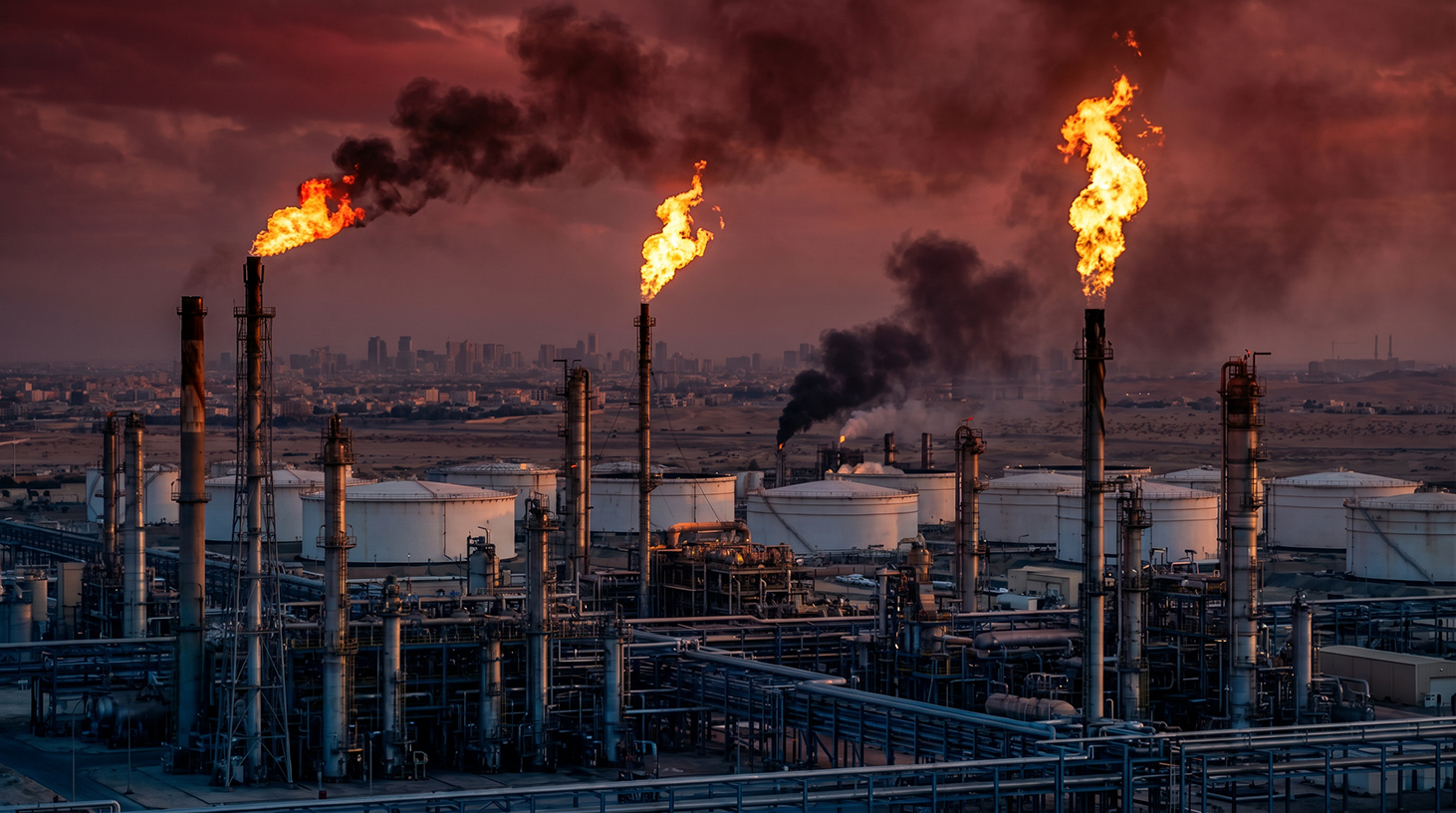
The biggest supply disruption in history: How the oil shock is now driving up food and freight costs – Image: Xpert.Digital
500 million barrels missing: Why the end of the war isn't causing prices to fall immediately
The second wave of price increases is rolling in: $50 billion wiped out – Why the US-Iran war is shaking our economy
The escalating conflict between the US and Iran has created a historic gap in the global energy supply in just 50 days. Half a billion barrels of crude oil are missing from the world market – a shortfall that is already costing the global economy $50 billion and is considered the largest supply disruption in modern energy history. But the true impact of this shock is not only evident on the trading floors of London and New York, but is directly impacting the real economy. Exploding diesel prices, drastically rising freight rates, and a looming new wave of inflation are affecting logistics, agriculture, and consumers alike. Our detailed analysis of global supply chains reveals why this oil shock is unfolding completely differently from all previous crises, why the diesel market in particular is collapsing so dramatically, and why prices are likely to remain high even if the war ends quickly.
$50 billion in 50 days – how the US-Iran war is shaking the global economy
When bombs fall, the real economy pays – in diesel, not in headlines
The figures circulating on trading floors in London, Singapore, and New York for the past few days are no longer mere snapshots of volatile commodity markets. They represent the first reliable assessment of a military conflict that is spreading like a shockwave through the global energy infrastructure from the Persian Gulf. According to an analysis by Wood Mackenzie, based on ship tracking data from the data provider Kpler and summarized by the Reuters news agency, the global economy lost more than fifty billion US dollars in lost oil production during the first fifty days of the US-Iran war. Five hundred million barrels of crude oil and condensate were withdrawn from the world market during this period—a quantity that Kpler's senior oil analyst, Johannes Rauballa, describes as the largest supply disruption in modern energy history.
To make this scale more tangible, consider the comparison offered by Wood Mackenzie's senior analyst, Ian Mowat: Five hundred million barrels are equivalent to either an eleven-day complete standstill of all global road traffic or five days during which the world economy would have no oil at all. Both are hypothetical scenarios, but they illustrate what has actually happened over the past seven weeks – only spread across all consumers, all industries, and all continents simultaneously. The price has settled at around one hundred US dollars per barrel during the conflict, resulting in a calculated loss of fifty billion dollars.
The anatomy of a record-breaking supply gap
To understand why this particular conflict is causing such a deep disruption to global energy supplies, one must consider the geographical concentration of crude oil production, processing, and shipping. The Strait of Hormuz, that 32-kilometer-wide waterway between Iran and Oman, is the most sensitive artery of global energy supply. Before the war began, around 20 million barrels of crude oil and liquefied natural gas passed through it daily – roughly one-fifth of global consumption. Any disruption of this route, whether through direct military action, mines, attacks on tankers, or simply the refusal of insurers to cover cargo, has an immediate impact on global balances.
The 500 million barrels are comprised of several sources. Part of it stems from the direct loss of Iranian exports, which, despite sanctions, still amounted to around 1.6 million barrels per day before the war, particularly to China. A second, quantitatively larger part results from delayed or diverted shipments from Saudi Arabia, Kuwait, Iraq, and the United Arab Emirates. Tankers sailing at increased risk, taking longer routes, or waiting for clearance in secure ports reduce effective availability on the global market, even if production itself has not been halted. In addition, attacks on refineries and pumping stations have either temporarily shut down or preemptively reduced production capacity in both the Gulf region and neighboring countries.
This combination of physical failure, logistical inefficiency, and insurance-related caution explains why the number is climbing so rapidly to such dramatic heights. Unlike previous shocks, such as the attack on the Saudi facilities in Abqaiq in 2019, this is not a one-off event with a limited window of opportunity, but rather a sustained, self-reinforcing disruption of the entire supply chain.
Why the diesel market collapses first
When 500 million barrels disappear from supply, the refinery products are not affected uniformly. Gasoline, diesel, kerosene, heating oil, and petrochemical precursors follow different demand curves, and, most importantly, they have different levels of strategic reserves. Diesel—the fuel that powers trucks, ship engines, agricultural machinery, construction vehicles, emergency generators, and large parts of the industrial infrastructure—occupies the most prominent position in this hierarchy. It becomes scarce first, its price reacts first, and it recovers last.
The latest data from the United States clearly demonstrate this structural vulnerability. Diesel prices are now fifty percent higher than last year, while gasoline has risen "only" thirty-one percent. This twenty-point spread between two products from the same source is not statistical noise, but a symptom. It shows that refinery capacity for medium distillates was already scarce worldwide before the war, that strategic diesel reserves are significantly lower than gasoline stocks, and that demand for diesel, due to its reliance on industrial processes, is considerably less elastic than demand for gasoline.
When a commuter feels the impact of rising gasoline prices, they can quickly switch to public transportation, work from home, or combine trips. When a freight forwarding company feels the impact of rising diesel prices, it doesn't have this flexibility. The truck either runs or it doesn't. The excavator operates, or the construction site is idle. The combine harvester harvests, or the crop spoils. This is precisely why the diesel shock translates directly into the cost structures of the real economy – into freight rates, food prices, construction costs, and industrial raw materials.
The second wave of price increases – from the gas pump to the balance sheet
The first wave of price increases was visible to consumers at the gas stations. The second, significantly larger wave is now impacting companies' balance sheets. Logistics providers reported increased fuel surcharges as early as the second week of the war, ranging from 15 to 35 percent depending on the route and provider. Bunker prices for ships in the Mediterranean and the Indian Ocean have risen by more than 40 percent, as shipping companies are either circumventing the Gulf or paying higher passage premiums. Air freight, which already incorporates every kerosene price directly into its yield calculations, has passed on surcharges of between 12 and 20 percent.
The situation becomes particularly critical where energy and chemicals are closely intertwined. Fertilizer manufacturers depend on natural gas and ammonia supplies, the prices of which have risen in tandem with oil. Farms in the European Union and North America are facing decisions this season that will impact harvest volumes for the next twelve months. A fertilizer price that remains 20 to 30 percent above the average of the last five years leads to reduced application rates, lower yields per hectare, and—with a delay of six to nine months—higher prices for grain, sugar, and animal feed.
For German industry, particularly the manufacturing sector in Baden-Württemberg, Bavaria, and North Rhine-Westphalia, this complex situation is doubly burdensome. Firstly, dependence on diesel fuel in intralogistics, factory transport, and the supply chain remains high, even though electrified industrial trucks and other industrial vehicles have gained market share in recent years. Secondly, higher energy prices are impacting an industrial electricity market that, due to the phasing out of Russian gas, is already operating at a structurally higher price level than before 2022. The war in the Middle East adds another layer to this burden, without resolving the underlying problems – infrastructure, grid capacity, and permitting speed.
Historical context – what distinguishes this shock from previous ones
A comparison with previous oil shocks helps to put the current situation into perspective, but also highlights its unique nature. The 1973 oil crisis was primarily a political embargo that led to a fourfold increase in crude oil prices within a few months. The 1979 shock following the Iranian Revolution resulted in a production interruption of approximately seven percent of global supply. The Iraq War of 1990/91 temporarily removed four million barrels per day from the market. The Abqaiq attack in 2019 cost 5.7 million barrels per day in the short term, but this loss was largely offset within a few weeks.
The current war differs from all the aforementioned cases in three dimensions. First, it is not regionally limited but affects the entire supply route from the Gulf across the Indian Ocean to the Mediterranean. Second, it occurs at a time when the strategic oil reserves of many industrialized nations—particularly the US Strategic Petroleum Reserve—are at historically low levels following expenditures between 2022 and 2024. Third, it impacts a global economy already operating with a fragile interest rate environment, high levels of public debt, and weak trade growth.
This means that even if the conflict were defused militarily in the coming weeks, the economic fallout would be significantly longer than after previous shocks. Replenishing reserves, renegotiating long-term supply contracts, adjusting insurance and freight rates, and realigning trade corridors all take time – and each of these adjustments comes at a price.
🎯🎯🎯 Global Sourcing & Commodity Trading with integrated logistics

Raw materials, global procurement & trade - Image: Xpert.Digital
State-of-the-art cargo planes, optimized transport routes, and multimodal logistics chains are interchangeable—they can be bought, leased, or outsourced. What money can't buy are direct contacts with producers in Peruvian mines, reliable supply relationships in the CIS countries, and years of built-up trust in markets that are unfamiliar to outsiders. The decisive competitive advantage in global commodity trading lies not in transporting the good from A to B, but in knowing where the good comes from, who produces it, and how to gain access before others even know the market exists. Whoever owns the network sets the price. Everyone else pays it.
More information here:
From just-in-time to resilience: Why the oil war is redefining supply chains – and what companies need to do now
OPEC+ and the question of substitutability
A frequently heard counterargument is that spare production capacity within OPEC+ should be sufficient to compensate for the shortfall. Saudi Arabia, the United Arab Emirates, and, to a lesser extent, Kuwait together possess a theoretical reserve capacity of around four million barrels per day. In a normal market environment, this would be more than enough to compensate for an Iranian shortfall.
However, the current situation undermines this argument. First, the aforementioned quantities must be physically transported, which again requires crossing the same Strait of Hormuz that the conflict is destabilizing. The Saudi east-west pipelines to the Red Sea, which allow for a partial bypass, have a capacity of around five million barrels per day—a significant amount, but not enough to replace all Gulf traffic. Second, some of the reserve oil fields are located in close proximity to potential combat zones, delaying investment and personnel deployment. Third, OPEC+ has no political incentive to push prices below the perceived equilibrium range of ninety to one hundred dollars per barrel, as Gulf state budgets are precisely calibrated to this price level.
This leads to a paradoxical situation: Actors who possess the capacity for stabilization have a rational incentive to use this capacity only partially. The global market therefore does not receive the full supply that would be technically possible, but rather that which is politically expedient.
The role of the United States as producer and consumer
The United States is now the world's largest producer of crude oil, with an output of around 13.5 million barrels per day. In public discourse, this fact often leads to the assumption that North America is largely decoupled from a Middle East shock. This assumption is analytically flawed and operationally dangerous. Oil is a globally traded commodity, and the price a Texas refinery operator pays for crude from the Permian Basin essentially follows the same global benchmark as the price of Brent crude in Rotterdam.
Furthermore, the American refining landscape is historically geared towards heavier crude oil grades from the Middle East, Venezuela, and Canada. The light shale oil from American fields is a suboptimal input for many refineries, which is why the US continues to import millions of barrels of crude oil per day despite a net trade surplus. A disruption in the Middle Eastern supply therefore also impacts the American refining industry—especially those on the Gulf Coast—and increases the cost of producing medium distillates, the very diesel fuel that sustains supply chains.
Systemic effects on inflation and monetary policy
The macroeconomic dimension of the shock can be roughly estimated. A sustained oil price of one hundred dollars per barrel adds, depending on the model used, between 0.4 and 0.8 percentage points to global consumer price inflation. In open economies with high energy import ratios—such as Germany, Japan, South Korea, or India—the effect can be significantly higher. The European Central Bank, which only just began its interest rate-cutting cycle in 2025, now faces the uncomfortable question of whether the emerging disinflation will be halted once again.
The combination of increased import inflation, higher freight rates, uncertainty about the duration of the conflict, and an already weak European economy creates a classic stagflation risk – a situation for which monetary policy tools are only partially suited. Central banks cannot combat energy price shocks with interest rate instruments without placing additional strain on the real economy. The likely result is a prolonged period of restrictive policies coupled with weaker growth.
Diesel, agriculture and food security
One aspect often overlooked in Western reporting on the conflict is food security in oil-importing developing countries. States like Egypt, Pakistan, Bangladesh, Kenya, and the Philippines finance the import of wheat, rice, and vegetable oil in US dollars, while their national budgets are further strained by higher energy prices. The combination of rising diesel and fertilizer costs and increasing freight rates is creating a scenario reminiscent of the 2008 food crisis, when bread riots destabilized several governments worldwide.
Should the conflict continue for another hundred days, the world faces not only an energy crisis but also a humanitarian crisis. International organizations, most notably the Food and Agriculture Organization and the World Food Programme, have already pointed to the growing gap in their funding plans. Every extra dollar an Egyptian baker has to pay for diesel fuel is one dollar less available for flour.
What it means for supply chains and purchasing
For purchasing and logistics managers in medium-sized and large industrial companies, the situation presents both strategic and operational challenges. Strategically, the question is no longer whether this disruption is significant, but rather how long it will last and which procurement channels will remain operational. Operationally, buffer stocks, which have been continuously reduced over the years of just-in-time optimization, must be recalibrated. Supplier networks designed for seamless global trade require redundant alternatives – not as backups for emergencies, but as standard practice.
Three patterns are emerging. First, a return to regionalized procurement structures, particularly for energy-intensive intermediate products such as steel, aluminum, chemical and plastic granules. Second, the upgrading of transport modes that are less dependent on liquid fuels – rail, inland waterway transport, and electrified road transport. Third, the diversification of fuel sources themselves, from renewable diesel and biomethane to hydrogen-based logistics concepts, which were considered niche topics in 2025 and are now becoming a strategic lever.
For Germany, with its strong export orientation, its landlocked location, and its complex supply chain, this is no abstract exercise. An automobile manufacturer whose semiconductor supply relies on container ships from Asia, whose bunker fuel has become forty percent more expensive, feels the war in its profit margin. A machine manufacturer whose customers in emerging markets are postponing their investments due to increased financing costs feels it in its order book. A logistics company whose customers are unwilling to pass on the full cost of higher fuel surcharges feels it in its operating results.
Political economy and the end of the war that isn't one
A sober look at comparable conflicts shows that energy wars rarely end the day the guns fall silent. Even after a ceasefire or a negotiated agreement, insurance risk premiums, logistical detours, and mistrust surcharges remain factored into the price. Studies of past events—from the Iran-Iraq War and the invasion of Kuwait to the tanker wars of the 1980s—suggest that it takes an average of six to eighteen months for prices and volumes to return to normal.
Furthermore, the current conflict is politically intertwined with the American election cycle, the European security debate, and developments in China. Beijing sources a significant portion of its crude oil imports from the Gulf and has a strategic interest in a swift de-escalation, but possesses only limited diplomatic leverage in the conflict between Washington and Tehran. Russia benefits in the short term as an alternative supplier, but in the long term loses negotiating power as the world learns to live with higher prices and diversified sources.
A sober assessment – what remains after the first fifty days?
The fifty billion dollars that Wood Mackenzie and Kpler have now documented are not the final word, but an interim assessment. They mark the moment when a geopolitical event leaves its buffer zone and seeps into the balance sheets of the real economy. They show that, despite digitalization, trade agreements, and an impressive refinery infrastructure, modern supply chains are still dependent on a single geographical bottleneck.
The sober interpretation is this: The conflict has exposed the structural vulnerability of a system that has been optimized for efficiency rather than resilience for decades. Anyone in positions of responsibility in industry, logistics, trade, or politics today can no longer rely on the assumption that global trade is a mere background condition of business. Like any infrastructure, it is vulnerable, politically contested, and its pricing is the result of decisions made far beyond the reach of individual companies.
For the coming months, therefore, what classical economics describes as the most uncomfortable of all insights will apply: scarcity is not an exception, but the norm. The 500 million barrels lost in 50 days will not return in that form. What will return is the realization that security of supply comes at a price – and that this price is included in every tank of fuel, every shipment of freight, every food price, and every industrial investment decision.
The world will not be the same after this war as it was before. Not because oil reserves are physically smaller, but because confidence in its smooth availability—the very lifeblood of global trade—has suffered measurable damage. Fifty billion dollars in fifty days is just the first consequence.
Your contact for raw materials ⛏️ Global sourcing 🚢🌐 & trading 📦

Konrad Wolfenstein
I would be happy to serve as your personal advisor.
• Contact: [email protected]
• Tel: +49 7348 4088 961
Our EU and German expertise in business development, sales and marketing

Our EU and German expertise in business development, sales and marketing - Image: Xpert.Digital
Industry focus areas: B2B, digitalization (from AI to XR), mechanical engineering, logistics, renewable energies and industry
More information here:
A thematic hub offering insights and expertise:
- Knowledge platform covering global and regional economies, innovation and industry-specific trends
- A collection of analyses, insights, and background information from our key areas of focus
- A place for expertise and information on current developments in business and technology
- A hub for companies seeking information on markets, digitalization, and industry innovations





