
AI pioneer and Euro newcomer: The surprising secret of Bulgaria's economy
Xpert Pre-Release

Available in 27 languages 📢
Prefer Xpert.Digital on GoogleⓘPublished on: September 6, 2026 / Updated on: September 6, 2026 – Author: Konrad Wolfenstein
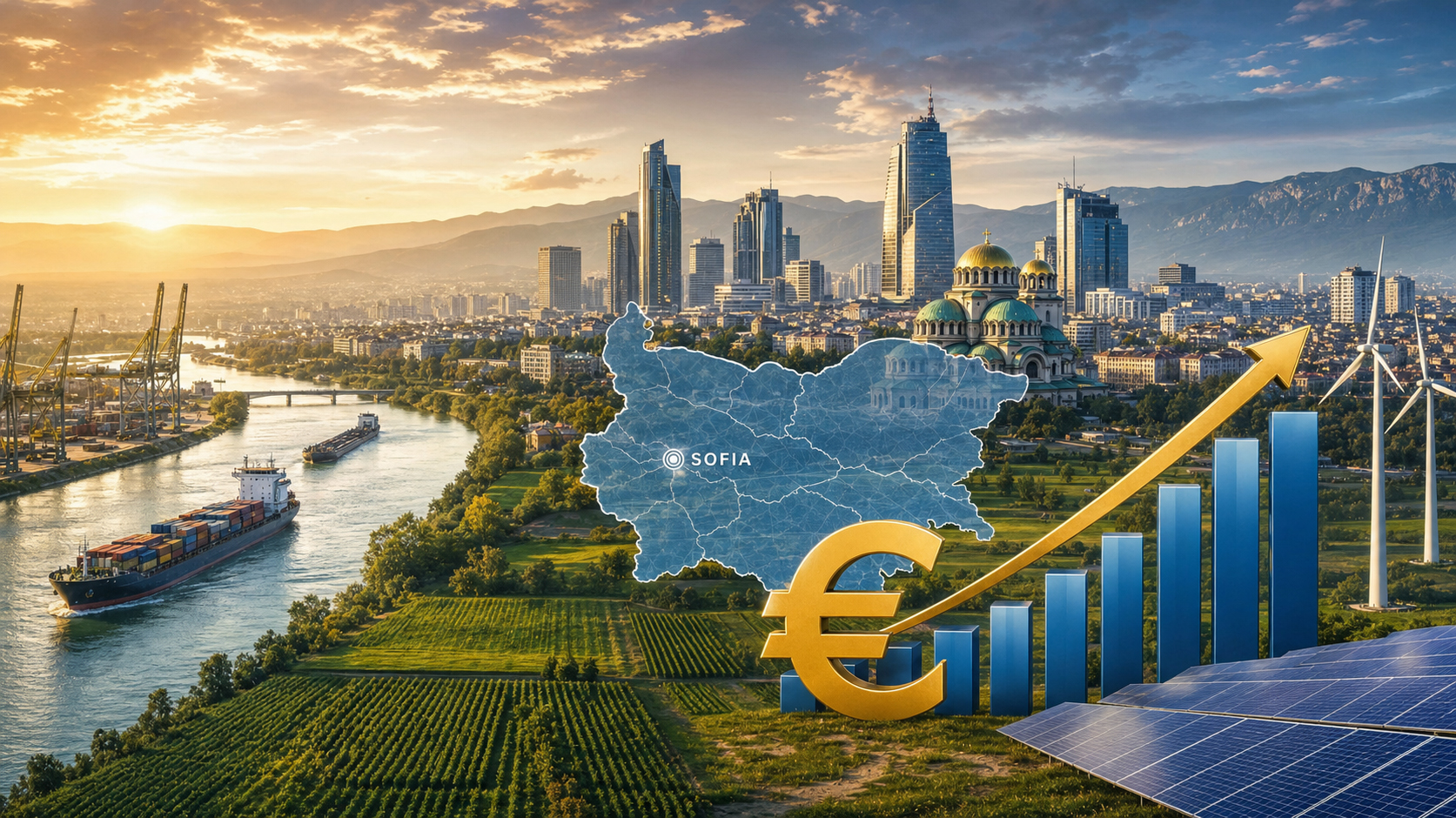
AI pioneer and Euro newcomer: The surprising secret of Bulgaria's economy – Image: Xpert.Digital
Better than Germany? The unvarnished truth about the Bulgarian economic miracle
87% wage increase in 5 years: Bulgaria's risky path to European prosperity
In 2026, Bulgaria stands in the economic spotlight of Europe. As the newly minted 21st member of the Eurozone, the country initially boasts impressive growth rates that far surpass the struggling EU average. But this rapid boom is deceptive: behind the macroeconomic facade lies an economy grappling with profound structural distortions. While massively rising minimum wages and a surprisingly strong AI and IT sector fuel domestic consumption, the traditional export engine is sputtering alarmingly. A weakening European economy, volatile energy prices for industry, and growing bureaucratic hurdles are putting the Bulgarian business model to a severe test. The crucial question is: Is Bulgaria on the right track to becoming a modern European service center, or is its rapid growth increasingly decoupled from its economic foundation? This is an in-depth analysis of a country caught between a historic catch-up and structural vulnerability.
Bulgaria's economy in a state of tension: record growth and structural fault lines
When growth figures are misleading: Why Bulgaria, despite its boom, stands on shaky ground
Bulgaria is currently presenting itself to the European public as a small-scale success story. With a real gross domestic product that grew by 2.9 percent year-on-year in the first quarter of 2026, the country is among the fastest-growing economies in the European Union, outperforming the Eurozone, which only managed 0.8 percent in the same period, by more than three times. The European Commission confirms this trend in its autumn forecast, expecting Bulgaria to grow by 2.7 percent this year and 2.1 percent next year. This development is particularly significant because Bulgaria adopted the euro on January 1, 2026, thus taking a historic step as the 21st member of the monetary union. However, those who focus solely on the aggregate growth figure overlook the deeper disruptions emerging in the country's foreign trade, labor market, and energy supply. Although the Bulgarian economy is growing faster than most of its European neighbors, it is increasingly driven by domestic consumption and government transfers, while its once vital foreign trade is noticeably losing substance.
An export engine that's sputtering
Export data from the last three years paints a picture that contradicts the euphoric rhetoric of growth. According to the National Institute of Statistics, Bulgarian goods exports have declined for the third consecutive year: In 2025, Bulgarian companies exported goods worth €42.9 billion, a decrease of 3.2 percent compared to the previous year, following a decline of 0.2 percent in 2024 and even 6.5 percent in 2023. The main reason is considered to be the ongoing contraction of EU sales markets as a result of the war in Ukraine, with exports to Germany and Italy being hardest hit, each falling by 7.5 percent, while deliveries to France declined by 4.8 percent. Together, 64.3 percent of Bulgarian exports within the European Union go to Germany, Romania, Italy, Greece, and France, highlighting the country's dependence on a small group of Western European trading partners. The start of 2026 was also sobering: In January, total exports fell by 1.4 percent to €3.3 billion, primarily due to a 9.0 percent drop in sales to non-EU countries, while the trade balance remained significantly negative with a deficit of around €1 billion. Although June 2026 saw a short-term recovery with a 13.7 percent year-on-year increase, driven by sales to the European Union, this single data point cannot compensate for the structural weaknesses of previous years. Bulgaria traditionally exports mainly fuels, finished goods such as clothing and footwear, machinery, transport equipment, and chemicals, with Germany, Turkey, Italy, Greece, and Romania being its most important markets. The recurring calls for the opening and modernization of shipping lanes on the Danube and the Black Sea illustrate that part of the country's competitiveness is linked to a logistics infrastructure that has so far failed to keep pace with its growth ambitions. These infrastructure deficits increase the cost of transporting bulk goods and weaken the position of Bulgarian exporters compared to competitors with better-developed waterways.
The labor market between skills shortage and politically mandated wage dynamics
The Bulgarian labor market is undergoing a profound transformation that goes far beyond typical cyclical fluctuations. Since January 2026, Bulgaria has had a statutory gross minimum wage of €620.20 per month, representing a 12.6 percent increase compared to the previous year and a 30 percent increase compared to 2024. This continues a multi-year trend in which Bulgarian gross wages rose by approximately 87 percent between 2020 and 2025, reaching an average of €15,972 per year. Another increase is already anticipated for 2027: according to Bulgarian National Radio, the minimum wage is expected to rise to €660, although the final figure still requires government approval. The planned system change in wage determination is noteworthy: Instead of the previous automatic formula, which always set the minimum wage at 50 percent of the average wage, a catalog of four criteria will apply in the future, including purchasing power taking into account the cost of living, the general wage level, the wage growth rate, and the long-term development of labor productivity. Asen Vasilev, head of the "We Continue the Transformation" party, publicly called for a minimum wage of €690, citing the debate surrounding productivity criteria as the main argument of the opposing side for a lower rate. A range between €620.20 and €672.80 has already been established as a negotiating framework between employers and unions for the coming year. This institutionalization of a multi-year negotiation mechanism signals greater planning certainty for companies, but also carries the risk that political considerations will continue to outweigh business realities in labor-intensive sectors. At the same time, there is a clear regional and sectoral wage disparity: While the national average wage is around €1,290 to €1,370 gross per month, Sofia, as the economic center, already reaches around €1,732, and senior managers earn between €3,500 and €7,800. More than 500,000 employees in Bulgaria earn at or near the minimum wage, making the annual adjustment a macroeconomically significant lever that directly impacts consumer demand, unit labor costs, and international competitiveness.
Find a partner in Bulgaria 🇧🇬 🔍🤝 and become a partner ➕

Bulgaria - Find and become a partner - Image: Xpert.Digital
Bulgaria is transforming from an underestimated EU market into a strategic nearshoring hub for European industrial SMEs. With low location costs, EU legal certainty, access to the Eurozone, and strong logistics networks on the Black Sea, the country offers robust alternatives to Asian supply chains.
At the same time, Bulgarian companies also benefit from this growing economic network, which serves as a strong springboard for their own expansion into Germany, Europe and global markets.
More information here:
A thematic hub offering insights and expertise:
- Knowledge platform covering global and regional economies, innovation and industry-specific trends
- A collection of analyses, insights, and background information from our key areas of focus
- A place for expertise and information on current developments in business and technology
- A hub for companies seeking information on markets, digitalization, and industry innovations
Bulgaria's economy in transition between AI boom and structural challenges
Bulgaria as an unexpected pioneer in the AI-supported service economy
Why Bulgaria is surprisingly high in the global AI outsourcing ranking
While industry grapples with structural trade issues, Bulgaria has positioned itself surprisingly strongly in a completely different economic sector. In the "2026 Global Outsourcing AI Readiness Index" by the consulting firm Ataraxis, Bulgaria ranks ninth among 25 outsourcing locations worldwide, achieving a total score of 62.8 out of a possible 100 points. Particularly noteworthy is the category of AI acceptance among the population, where Bulgaria, with 82 points, achieves fifth place among all 32 countries surveyed, surpassing established economies such as Canada, the United States, Germany, and Japan. This high level of societal openness towards artificial intelligence forms an important foundation for the further development of the already well-established IT and business process outsourcing sector, which has been among the country's most dynamic industries for years. In a regional comparison, Bulgaria performs better than Poland (61.2 points) and Romania (59.4 points), but lags behind the Czech Republic (66.9 points) and the regional leader, Hungary (69.1 points). This position in the upper middle of the global ranking offers Bulgaria the opportunity to establish itself as an attractive location for higher-value digital services and thus partially compensate for its weakness in traditional goods exports. However, whether this potential is actually realized depends crucially on whether investments in education and in-company training can keep pace with rapid technological change, as the study identifies significant shortcomings in the country's lagging behind leading nations in the implementation of AI in businesses and its digital education pipeline.
Bureaucratic burdens and the fine line between consumer protection and competitiveness
A recurring theme in Bulgarian economic debates is the growing administrative and financial burden on companies due to regulatory interventions, which are perceived as disproportionately high compared to other European countries. For example, industrial companies complain about significantly higher eco-taxes on industrial batteries compared to neighboring Romania, which puts energy-intensive production sectors at a competitive disadvantage. At the same time, the issue of government price controls on basic foodstuffs and pharmaceuticals is repeatedly raised in public discourse—a policy area caught between the public's need for social protection and businesses' demand for free pricing. The introduction of the euro at the beginning of 2026 further fueled this debate, as many consumers feared the currency change could be used for hidden price increases, prompting the government to implement stricter controls and transparency requirements. In practice, this means an increase in reporting obligations and control mechanisms for companies, disproportionately burdening small and medium-sized enterprises (SMEs) with limited administrative resources. This complex situation of consumer protection concerns and competition policy interventions exemplifies how a rapidly growing but institutionally not yet fully mature EU member state attempts to guarantee social stability and entrepreneurial freedom simultaneously, without losing the balance.
Electricity prices as a treacherous uncertainty factor for industry
Energy costs for Bulgarian companies are subject to volatility, significantly complicating long-term investment planning. The Bulgarian Energy and Water Regulatory Commission has approved an average increase of 3.05 percent in electricity prices for residential customers for the regular twelve-month tariff period starting in July 2026. The actual impact varies regionally: Elektrohold customers in the west of the country, including the capital Sofia, will pay 3.14 percent more; EVN customers in the south 3.28 percent more; and Energo-Pro customers in the north 2.53 percent more. District heating prices will rise by an average of 4.54 percent over the same period, with Sofia (5.5 percent) and Varna (5.19 percent) being particularly affected. The regulator emphasized that these increases are below the inflation rate, which was 4.6 percent in 2025 and is expected to be even higher this year, and that Bulgarian household electricity prices remain among the lowest in the EU, surpassed only by Hungary and Malta. However, these figures primarily pertain to the regulated residential sector, while commercial and industrial consumers are far more exposed to the fluctuations of the liberalized electricity market, where daily and monthly price swings significantly undermine the predictability of production companies. For export-oriented industries already struggling with declining sales, this uncertainty in energy costs further exacerbates their competitive position compared to producers in countries with more stable or subsidized energy prices.
Green transformation as a growth promise fraught with contradictions
Despite the challenges posed by volatile energy prices, significant investment flows are being channeled into the transformation of Bulgaria's energy and circular economy. Multi-million-euro projects are emerging in the renewable energy sector, such as the construction of solar parks on disused landfill sites in the Balkans, and the increasing adoption of photovoltaic systems for self-consumption by Bulgarian businesses and households. Simultaneously, circular economy approaches are gaining traction, including the industrial use of seaweed from the Black Sea and innovative waste management concepts designed to close material cycles and reduce dependence on imported primary raw materials. At the same time, certain segments of the green transformation, particularly the hydrogen economy, are experiencing significant setbacks, as ambitious project announcements frequently fail due to financing problems, technological immaturity, or a lack of demand. This dual picture—solid progress in established renewable technologies and disappointment with more experimental future technologies—reflects a Europe-wide trend in which ambitious political targets regularly clash with the reality of limited capital availability and technological maturity. For Bulgaria, as one of the lower-income EU members, the question of how much of its own capital can be mobilized for the green transformation is particularly pressing, which is why EU funding and private foreign direct investment play a disproportionately important role.
Agriculture under pressure from epidemics, drought and structural change
The Bulgarian agricultural sector, traditionally known as "Stopanstwo," faces a confluence of risks that increasingly threaten its economic stability. Climate-related droughts have intensified noticeably in recent years, particularly impacting yields of cereals and other water-intensive crops. At the same time, African swine fever remains a serious threat to Bulgarian pig farming: according to various European monitoring reports, between 245 and 277 cases were consistently recorded in wild boar in Bulgaria during the first half of 2026, placing the country among the more affected European nations, although these figures are lower than Poland's peak of over 1,300 cases. This ongoing disease situation is forcing Bulgarian farms to make significant investments in biosecurity measures and is also impacting pork exports, as many trading partners are imposing regional exclusion zones and import restrictions. In addition, recurring cartel allegations along the agricultural value chain, particularly concerning price formation between producers, processors, and the food retail sector, undermine the confidence of smaller farms in fair market conditions. Given this accumulation of risk factors, Bulgarian agriculture is undergoing a remarkable structural transformation: numerous traditional family farms are evolving into technology-driven, diversified businesses that focus more on irrigation efficiency, precision agriculture, and alternative distribution channels. Forestry, supported by institutions such as the University Forestry Institute and regional forestry operations, is also becoming increasingly professionalized through the implementation of modern stand management practices. A particularly interesting social trend is the growing role of women in agriculture, who are increasingly transforming traditional farm structures into innovative family businesses, often focused on direct marketing and niche products, thereby opening up new economic opportunities for rural areas.
A country caught between catching up and structural vulnerability
The overall picture that emerges from these individual developments is considerably more complex than the pure GDP growth rate suggests. Bulgaria undeniably benefits from its EU and now also Eurozone membership, from dynamic wage growth that strengthens the purchasing power of broad segments of the population, and from a surprisingly advanced position in the AI-driven service sector. At the same time, the ongoing decline in exports, the volatility of energy prices for businesses, the increasing regulatory burden, and the multiple risks in agriculture demonstrate that the country's growth model rests on shaky foundations as long as it remains primarily domestically and consumption-driven, without a resurgence in industrial foreign trade. The geopolitical turmoil caused by the war in Ukraine, protectionist tendencies in key export markets, and an overall weakening economy in the Eurozone act as external headwinds, further highlighting the structural weaknesses of the Bulgarian economy. For companies deciding whether or not to locate in Bulgaria, the picture is nuanced: Those wishing to operate in the service sector, the IT industry, or renewable energy will find favorable conditions and an open-minded, increasingly well-educated workforce. However, those planning export-oriented industrial production must factor in uncertain energy prices, the still inadequate logistics infrastructure along the Danube and Black Seas, and a labor cost base that is rising faster than average compared to other European countries. The coming years will show whether Bulgarian economic policy succeeds in striking a balance between social development and industrial competitiveness, or whether the country enters a phase in which high growth rates are increasingly decoupled from structural stability.
🎯🎯🎯 Data-driven B2B industry hub as a quasi-in-house solution

The quasi-in-house solution: How Xpert.Digital closes operational gaps in B2B marketing and sales – Smart Content-Driven Business - Image: Xpert.Digital
Xpert.Digital is a data-driven B2B industry hub led by Konrad Wolfenstein . The company acts as an external, quasi-in-house solution for industrial partners, closing operational gaps in marketing, content, and sales – without requiring additional resources on the client side.
More information here:
Your global marketing and business development partner
☑️ Our business language is English or German
☑️ NEW: Correspondence in your native language!

Konrad Wolfenstein
I and my team are happy to be available to you as your personal advisor.
You can contact me by filling out the contact form here [email protected]:or simply call me at +49 7348 4088 965. My email address is
I'm looking forward to our joint project.





