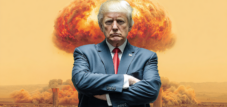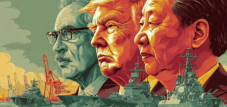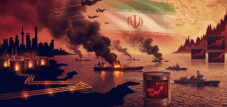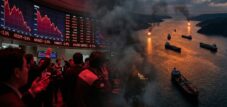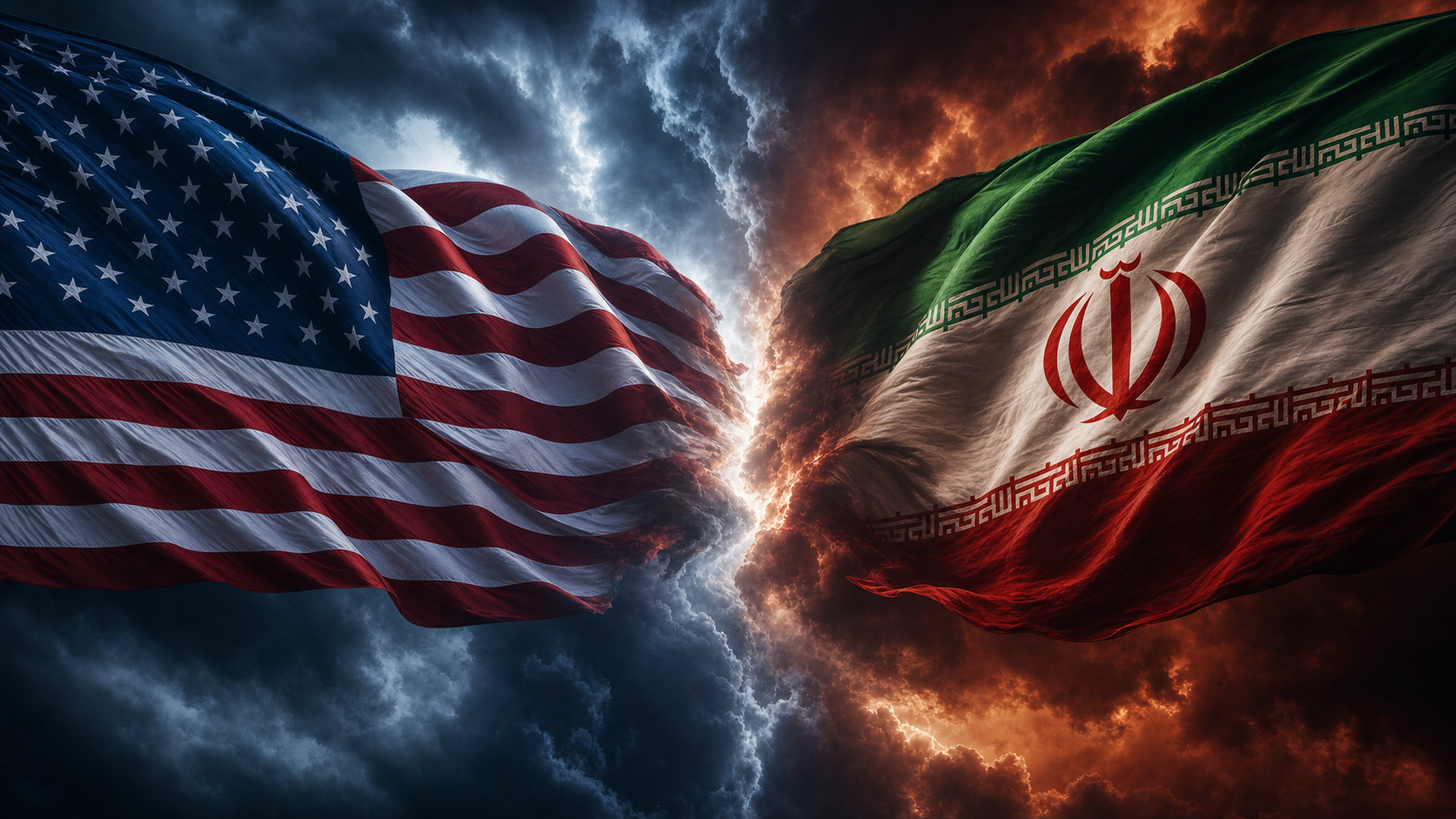
No peace, just empty promises – The Iran conflict as a geopolitical chess game against China – Image: Xpert.Digital
Trump and the broken agreement: Why the peace plan for Iran was worthless from the start
“Strategy of Denial”: The unscrupulous US plan behind the apparent peace in Iran
China as a secret target: Why the Iran war is actually an attack on Beijing
Behind the moral facade, the global economy is ablaze: The conflict in the Gulf, which escalated in February 2026, is being sold to the Western public as a necessary act against a nuclear-ambitious regime in Tehran. But anyone who looks behind the diplomatic lip service and fragile ceasefire agreements sees a completely different picture. The Iran war is, in reality, a ruthless geo-economic chess game. At its core, it is not about liberating the Iranian people or containing nuclear weapons, but about controlling global energy flows – and thus the proverbial carotid artery of its main rival, China. By blocking the Strait of Hormuz, Beijing is being deliberately cut off from vital resources. While the US arms industry is reaping record profits and the Trump administration is pushing ahead with its "Strategy of Denial," the global economy is bearing the brunt of the consequences in the form of exploding oil prices, disrupted supply chains, and massive inflation. An in-depth analysis of the bitter reality of an endless conflict in which Iran is merely a pawn – and we all pay the price.
Moral facade meets brutal power politics: How Washington is using the Gulf War as a tool to contain Beijing
The Iran war, which began on February 28, 2026, with American-Israeli attacks on Iranian territory, is primarily discussed in the Western public sphere as a security policy measure against a nuclear-armed regime. However, anyone who analyzes the structural economic interests, the geostrategic objectives of the Trump administration, and the systemic dependencies of the global energy market arrives at a different conclusion: It is less about Iran as such, and even less about the Iranian people, than about controlling energy flows as a weapon in the grand systemic rivalry between the US and China. The narrative of humanitarian intervention and non-proliferation of nuclear weapons provides the moral legitimacy that is indispensable domestically to rally a war-weary America behind a foreign policy that, in its essence, is purely power-political.
Framework agreement or temporary ceasefire?
In mid-June 2026, the US and Iran, with Pakistani mediation, signed the Islamabad Memorandum of Understanding (MoU). The agreement calls for an immediate and permanent end to military operations on all fronts, including the front in Lebanon, and is intended to serve as the starting point for 60 days of negotiations on a final peace agreement. Key elements include the reopening of the Strait of Hormuz to international shipping, the gradual lifting of the US naval blockade against Iran, the suspension of existing sanctions, and a vague reference to a reconstruction fund of at least $300 billion, to be provided by the US and partner countries without direct American financial participation.
However, the reality after the signing paints a sobering picture. Less than 72 hours after the agreement came into effect, US forces again attacked Iranian targets, including air defense sites, drone bases, and surveillance infrastructure. The responsible regional command, CENTCOM, cited an Iranian attack on a Panamanian-flagged oil tanker carrying over two million barrels of crude oil as the reason. Just hours earlier, the British security service UKMTO had reported that another ship had been hit by an unidentified projectile. Iran, in turn, confirmed retaliatory attacks on US facilities in Kuwait and Bahrain, naming the Ali Al-Salem US Air Force Base in Kuwait and the US Fifth Fleet in Mina Salman, Bahrain, as targets. The agreement, which had been presented to the outside world as a historic breakthrough, quickly revealed itself to be a fragile construct that failed to resolve the underlying conflicts of interest.
US President Donald Trump used drastic language on his platform TruthSocial. He described the latest Iranian ceasefire attempt as another breach of the agreement and explicitly threatened that if Iran's behavior continued, the Islamic Republic of Iran would cease to exist. These statements cannot be dismissed as mere rhetorical exaggeration. They fit a pattern that has been consistently followed since the beginning of the war: Every gesture of de-escalation is paired with a maximalist threat that leaves the adversary little room for maneuver and simultaneously perpetuates the spiral of retaliation and counter-reaction.
The bottleneck of the global economy: The Strait of Hormuz as a strategic weapon
The Strait of Hormuz is the narrowest and most important sea route for global energy supplies. Before the war, around 20 million barrels of crude oil flowed through this roughly 50-kilometer-wide strait between Oman and Iran daily, representing almost one-fifth of global oil consumption and one-quarter of total global maritime oil trade. In addition to crude oil and refined petroleum products, the strait also carries approximately 19 percent of the world's trade in liquefied natural gas (LNG), primarily from Qatar, as well as around 30 percent of the world's traded fertilizers. Countries such as Iran, Iraq, Kuwait, Qatar, and Bahrain are almost entirely dependent on this route for their energy exports. Only Saudi Arabia and the United Arab Emirates have alternative export pipelines capable of handling a maximum of 2.6 million barrels per day.
When Iran effectively sealed off the Strait of Gibraltar at the start of the war, it struck the global economy with a force that surpassed all historical comparisons. Goldman Sachs described the resulting oil supply shortfall as the largest in the history of global energy markets, larger than the 1973 Arab oil embargo and larger than the 1990 invasion of Kuwait. The chief economist of the International Energy Agency (IEA), Fatih Birol, warned of what could be the most severe energy crisis in decades and estimated the oil shortfall at eleven million barrels per day, equivalent to more than two major oil shocks of the 1970s combined. The price of Brent crude, which was still around $70 at the end of February 2026, surged to over $111 in the second week of the war, thus exceeding the $100 mark for the first time since the start of Russia's war of aggression against Ukraine in 2022. European natural gas (TTF) temporarily doubled to over 50 euros per megawatt hour.
The economic damage was not evenly distributed. For Germany, the German Economic Institute (IW) calculated that the impact of oil prices alone would result in losses of €40 billion by the end of 2027. An economy flight ticket from Munich to Bangkok temporarily cost over €3,200, an increase of approximately 160 percent compared to pre-war levels, due to the disruption of two key international air traffic hubs, Qatar and Dubai. Fertilizer prices rose sharply, which, with a delay, led to higher food prices. The World Bank reported in its Commodity Markets Outlook that energy costs had risen to their highest level since 2022. The war with Iran cost the US up to $2 billion per day in military operations alone.
The dismantling of the agreement: Cui Bono?
The question of who benefits from the ongoing escalation is central to understanding the dynamics of this conflict. The answers are multifaceted, but they converge in one direction. On the American side, the defense industry stands out. Even during the Gaza War, US defense contractors like Lockheed Martin, Raytheon, and General Dynamics recorded substantial profits that significantly outperformed the S&P 500 index. In 2023, the year following the Hamas attacks, Lockheed Martin achieved a total return of 54.86 percent, while the S&P 500 delivered only 36.89 percent. Raytheon, manufacturer of the precision munitions used extensively in the Iran-Iraq War, even recorded a total return of 82.69 percent during the same period. A protracted war in the Gulf, requiring continuous orders for munitions and systems, is an extremely attractive financial scenario for this industry.
Far more significant than the direct return on investment in arms, however, is the strategic dimension: control over energy flows as an instrument of geopolitical power vis-à-vis China. In 2025, 13.4 percent of China's crude oil imports by sea came from Iran. China purchased 94 percent of all Iranian oil exports, making it the only economically reliable lifeline for the sanctioned regime in Tehran. Around 50 percent of China's total oil imports passed through the Strait of Hormuz. Whoever controls this route and can open or close these energy flows at will wields a gigantic economic lever that extends far beyond the mere price of oil. It interferes with the basic industrial supply of the entire Chinese economy.
The underlying concept, known in the Trump administration's strategic planning documents as the "Strategy of Denial," is attributed to Under Secretary of Defense Elbridge Colby. Its fundamental principle is disturbingly clear: China is to be gradually deprived of access to markets and raw materials until Beijing agrees to a unilateral trade agreement that serves American interests and permanently hinders China's rise to superpower status. In this context, the new US National Security Strategy includes the stated goal of redirecting China's economy toward private consumption, which is a euphemism for a radical restructuring of the global economy: China is to cease being the world's factory. In plain terms, this means attempting to deprive the main rival of the foundations of its economic ascent.
This approach extends beyond Iran. The same strategic pattern can be found in the regaining of control over the Panama Canal, which was under Chinese influence; in the takeover of Venezuelan oil, which until then had been primarily supplied to China; and in the exertion of influence over Greenland to control the Arctic route that Beijing is developing as an alternative to the strategically vulnerable Strait of Malacca. Control of Iranian oil would have completed this encirclement of China, depriving the country of both a major supplier of raw materials and a key transit point on the Eurasian land route.
The structural logic of the escalation spiral
But why is the framework agreement so easily undermined? Why is every gesture of de-escalation inevitably followed by a new provocation? The answer lies in the structural asymmetry of interests. For Iran, the Strait of Hormuz is not only a means of exerting external pressure, but also a domestic political trump card with which the regime demonstrates its own relevance in a conflict in which it is clearly militarily outmatched. Every tanker attack, every blockade of the strait, every missile strike on a Gulf state sends a message: The regime is still capable of action; it can generate costs. At the same time, the Iranian leadership is internally divided between the Foreign Ministry, which seeks compromises, and the Revolutionary Guard, which prefers military escalation because it has tied its institutional survival to the mobilizing rhetoric of resistance.
On the American side, every Iranian breach of the agreement offers a welcome opportunity for further retaliatory strikes without having to portray them domestically as aggression. The moral narrative of the attacked action is crucial to avoid alienating the war-weary US public. Every renewed escalation can be sold as a reaction to Iranian aggression. The framework agreement thus serves a dual function: domestically, it signals a desire for peace, while externally, it sets a deadline that Iran systematically breaks or at least can be described as having broken. Both sides play an active, albeit unequal, role in this pattern.
The Gulf states of Bahrain, Kuwait, Saudi Arabia, and the United Arab Emirates are the real victims of this situation. Thousands of Iranian drones and missiles have struck the region's energy infrastructure since the start of the war. The damage to oil and energy facilities is considerable; the Gulf states' business model, based on the uninterrupted export of oil and gas, has been fundamentally shaken. Some representatives of the Emirates have described Iran's tactics as economic terrorism. At the same time, the Gulf states are so closely tied to Washington in their security policies that they have little room to pursue an independent de-escalation initiative.
Our global industry and economic expertise in business development, sales and marketing


Our global industry and economic expertise in business development, sales and marketing - Image: Xpert.Digital
Industry focus areas: B2B, digitalization (from AI to XR), mechanical engineering, logistics, renewable energies and industry
More information here:
A thematic hub offering insights and expertise:
- Knowledge platform covering global and regional economies, innovation and industry-specific trends
- A collection of analyses, insights, and background information from our key areas of focus
- A place for expertise and information on current developments in business and technology
- A hub for companies seeking information on markets, digitalization, and industry innovations
China's oil backup: How Beijing's reserves cushion the global energy storm — and where they fail
China's strategic resilience and its limits
The widespread expectation that China, as the world's largest oil importer and the main recipient of Iranian energy supplies, would be particularly hard hit by the crisis has not materialized to the anticipated extent. In the years leading up to the conflict, the People's Republic systematically built up strategic oil reserves, which at the beginning of 2026 amounted to approximately 1.2 to 1.5 billion barrels, enough to cover roughly 109 to 200 days of oil imports. A significant portion of these reserves was acquired at heavily discounted prices from sanctioned Iranian shipments. In addition, substantial Russian deliveries served as a backup source until the outbreak of war. China deliberately increased its oil imports by 16 percent in the first two months of 2026 to further bolster its reserves, in conscious strategic preparation for foreseeable tensions.
Nevertheless, the limits of this resilience become apparent upon closer examination. The so-called teapot refineries in Shandong province, small-scale private refineries that account for about a quarter of China's refining capacity and rely on heavily discounted Iranian oil, are coming under considerable pressure due to the increased oil price and disrupted supply chains. The price of diesel per liter in China has risen by more than 30 percent since the start of the war. The cost structure of these refineries, which already operate with low or negative margins, is being fundamentally challenged by the price increases. Beijing subsidizes fuel prices and sets maximum prices every ten days to support private consumption. The economic pressure is real, even if it has not yet materialized into an immediate supply shortage.
For China's state strategists, the crisis represents a bitter lesson: years of dependence on sanctioned Iranian cheap oil, which lowered import costs in the short term, is proving to be a strategic vulnerability. A country that supplies 94 percent of its energy exports to a single customer is vulnerable to blackmail, and a country that sources 13.4 percent of its imports from a sanctioned nation makes itself susceptible to the sanctions regime of the sanctioning party. Beijing is now accelerating the diversification of its energy sources, expanding further strategic reserve capacities by 2028, and pushing ahead with electrification as a substitute for imported hydrocarbons.
The geopolitical paradox: Washington needs Beijing to weaken Beijing
At the heart of this strategic dilemma lies a fundamental contradiction, described by the European Security School as "Trump's China Dilemma": Washington wants to exert pressure on China through control of oil flows and sanctions, yet it needs China, whose influence it actually seeks to contain, to do so. While Pakistan and Qatar played a key role in mediating the Islamabad Memorandum, the crucial behind-the-scenes maneuvering involved the relationship with Beijing. Iran is so deeply embedded in Chinese structures economically, financially, and in terms of energy policy that a lasting ceasefire can only be sustained if Beijing actively supports it or at least refrains from actively undermining it. Should China continue to keep Iran afloat through parallel economic relations, covert financial transfers, or technical supplies, any US sanctions regime will lose its effectiveness.
At the same time, Beijing has a strong strategic incentive to portray itself as a peace-making power. If a lasting ceasefire in the Gulf were to be brokered by China, its position in this region, so crucial to the global economy, would be significantly strengthened. The regime in Tehran, in turn, is existentially dependent on Chinese sales: without the Chinese market, Iran's oil export model would collapse entirely. This mutual dependence creates a dynamic in which neither a complete military defeat of Iran nor a permanent Chinese withdrawal from business with Iran appears realistic.
Energy price shock and global economic disruptions
The economic consequences of the Iran war extend far beyond the price of oil and encompass the entire global supply chain system. With Dubai and Qatar, two of the most important international air traffic hubs have been shut down or severely restricted, lengthening flight routes, driving up freight costs, and significantly extending delivery times for just-in-time-dependent industries. Qatar, which handles almost all of the world's LNG exports through the Strait of Hormuz, has been effectively cut off from the global market by the blockade. Europe, which had relied heavily on LNG after diversifying its Russian gas supplies, is once again facing significant supply insecurity.
Fertilizer prices, roughly 30 percent of which are transported across the Strait of Hormuz, have risen dramatically. This development has a delayed impact on global agriculture: if farmers cannot fertilize sufficiently or only at exorbitant costs, crop yields decrease, and food prices rise in the next harvest season. This secondary effect makes the Gulf War a globally significant cost factor, far beyond direct energy prices. The IEA chief had already warned in March 2026 of a threat to the global economy that would spare no country.
For Germany, which has diversified its oil supply and is thus better positioned than most economies, the conflict nevertheless represents a considerable economic burden. Price increases are expected at the pump, for heating, and across a wide range of products dependent on energy costs. Expert Michael Hüther from the German Economic Institute estimates the total damage to Germany by the end of 2027 at around 40 billion euros. In an already fragile economic phase, where the expected growth of one percent already factors in one-off effects, these disruptions act as a multiplier of structural weakening.
The 60-day clock is ticking: Scenarios for the coming weeks
The Islamabad Memorandum sets a 60-day deadline for negotiations to reach a final peace agreement. This deadline is exceptionally short, given the complexity of the issues to be addressed. Negotiations are to cover the Iranian nuclear program, the gradual lifting of sanctions, the release of frozen Iranian assets, the terms of a $300 billion reconstruction fund, and the question of future control over the Strait of Hormuz. Iranian Foreign Minister Abbas Araghchi has stated unequivocally that the strait will be fully returned to Iranian control within 30 days and that any interference or parallel structures would only complicate the situation.
Three realistic scenarios are emerging. In the first scenario, which could be described as technical progress in the negotiations, the negotiators manage to make enough progress in certain areas to extend the deadline and prevent an open relapse into conflict. The structural conflicts would only be postponed, not resolved. In the second scenario, complete failure, the negotiations collapse within the 60-day period, leading to another massive escalation with unforeseeable consequences for energy markets and security in the Gulf region. In the third scenario, which appears least likely, a genuine breakthrough is achieved, allowing Iran a face-saving return to the international community while simultaneously meeting the minimum American demands regarding its nuclear program. This scenario, however, would require a fundamental reorientation of the Trump approach, one that would be incompatible with the "Strategy of Denial.".
Of particular note in this context is Iran's claim to regain sole control of the Strait of Hormuz and to use force to block ships using the alternative route proposed by Oman and the UN Maritime Organization off the Omani coast. This claim directly contradicts international maritime law, which guarantees the passage of international straits as an inalienable right of all states. It suggests that Tehran views control of the strait as a permanent strategic asset and will not relinquish it without substantial concessions.
The domestic political dimension: Trump's dilemma between hardliners and exhaustion
Domestically, Trump is navigating a narrow corridor. Support for military adventures in the Middle East is limited among the American public, deeply traumatized by the experiences in Afghanistan and Iraq. At the same time, Trump's announcement that he would bring freedom to the Iranians and end their nuclear regime has raised expectations that imply a swift military victory. These expectations cannot be met by either a fragile framework agreement that could crumble within 48 hours or by a protracted war of occupation that would be politically untenable.
The fig leaf of humanitarian justification is functionally indispensable. It allows every new retaliatory strike to be framed as a reaction to Iranian aggression, rather than as active warfare in pursuit of economic and strategic interests. The escalation, so the implicit message goes, always lies with the other side. In this pattern, the framework agreement is a particularly useful instrument: it defines clear rules that Iran must break, or at least portray as having broken them, thus providing ever-new justifications for retaliatory measures that can be presented domestically as a reaction to Iranian aggression. The war, which is actually supposed to be ended, is thus maintained in a state of permanent low escalation that appears militarily manageable, economically productive, and politically defensible.
The economics of endless conflict
The Iran conflict, which Western media primarily portrays as a security policy dispute over nuclear non-proliferation rights and regional stability, is in its deeper structure a geo-economic maneuver. Control over Iranian oil reserves and sovereignty over the Strait of Hormuz serve as leverage in a broader systemic struggle between Washington and Beijing. The Islamabad Memorandum is not a peace agreement in the classical sense, but rather a temporary, trial ceasefire that stabilizes the escalation spiral at a lower level without resolving the fundamental contradictions.
For the global economy, this situation represents a continuing strain: increased energy prices, disrupted supply chains, more expensive food, and a structurally unstable investment climate in one of the world's most resource-rich regions. For China, it demonstrates that its strategic vulnerabilities are real and provides a significant incentive to accelerate energy diversification and reduce dependence on routes controlled by US sanctions. For Iran, it means the bitter realization that its regime is fighting a war in which it is being used as a pawn in a much larger game.
The real losers in this scenario are the ordinary people in Iran, the Gulf States, and around the world, who are bearing the brunt of rising energy, food, and transportation prices while the strategic players readjust their positions on the geopolitical chessboard. The war that Trump began with the promise of liberating the Iranian people has so far brought them bombs, economic collapse, and an uncertain future under a regime that, despite all the blows, is proving remarkably resilient. And the strategic goal of permanently weakening China by controlling energy flows is running up against the structural limits of a global economy where dependencies are so tightly interwoven that every blow against a rival inevitably hits the striker as well.
Your global marketing and business development partner
☑️ Our business language is English or German
☑️ NEW: Correspondence in your native language!

Konrad Wolfenstein
I and my team are happy to be available to you as your personal advisor.
You can contact me by filling out the contact form here wolfenstein@xpert.digital:or simply call me at +49 7348 4088 965. My email address is
I'm looking forward to our joint project.
☑️ SME support in strategy, consulting, planning and implementation
☑️ Creation or realignment of the digital strategy and digitization
☑️ Expansion and optimization of international sales processes
☑️ Global & Digital B2B trading platforms
☑️ Pioneer Business Development / Marketing / PR / Trade Fairs
🎯🎯🎯 Data-driven B2B industry hub as a quasi-in-house solution


The quasi-in-house solution: How Xpert.Digital closes operational gaps in B2B marketing and sales – Smart Content-Driven Business - Image: Xpert.Digital
Xpert.Digital is a data-driven B2B industry hub led by Konrad Wolfenstein . The company acts as an external, quasi-in-house solution for industrial partners, closing operational gaps in marketing, content, and sales – without requiring additional resources on the client side.
More information here: