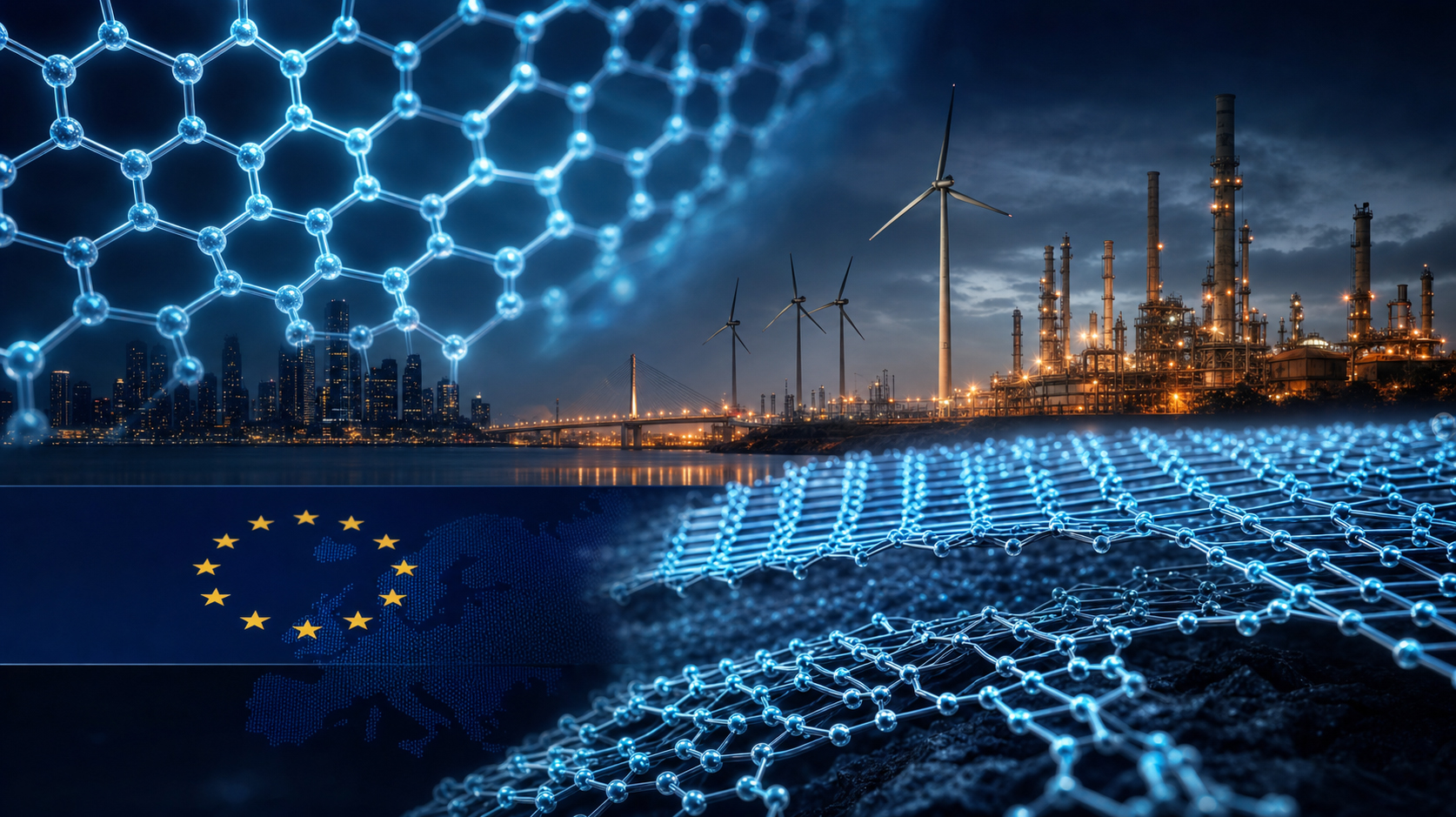
From the lab to industry: Europe's new raw material weapon? How graphene makes us independent of China and the USA – Image: Xpert.Digital
Concrete, batteries, semiconductors: How this invisible material could change our economy forever
Stronger than steel, thinner than a hair: How graphene is revolutionizing the climate killer concrete
The battery of the future charges 60 times faster: Why the real graphene boom is only just beginning
Graphene was once considered the undisputed wonder material of the 21st century: harder than diamond, extremely conductive, and only a single atom thick. But the Nobel Prize in Physics and enormous media attention were quickly followed by disillusionment when industrial mass production failed due to complex hurdles. The public turned away – but research quietly continued. Today, more than a decade later, this carbon material is making a remarkable comeback. Away from the limelight, European researchers, startups, and large corporations have transformed the material from a laboratory curiosity into a tangible economic factor. Whether as a CO₂-saving super additive in concrete, as a crucial efficiency booster for the batteries of the future, or as a geopolitical trump card in the fight against dependence on rare earths: graphene is no longer just a promise, but is fundamentally changing the rules of the game in global industry. Europe now stands at a turning point: the technology is ready, but will it succeed in scaling up for mass production?
Graphene as an economic factor – Why the “miracle material” graphene is suddenly worth billions
The wonder material is back – and this time with serious industry in tow
Graphene has a turbulent history. When Andre Geim and Konstantin Novoselov first isolated a single atomic layer of carbon at the University of Manchester in 2004, and received the Nobel Prize in Physics for this achievement in 2010, scientific enthusiasm exploded. The media outdid themselves with superlatives: harder than diamond, more conductive than copper, more flexible than rubber, virtually transparent – the material would change everything. Then came the long period of disillusionment. Scaling up production proved more complicated than expected, costs remained prohibitively high, and industry waited in vain for the promised products.
But while the media lost interest, European research institutions, startups, and large corporations quietly continued their work. The result of this quiet decade is remarkable: graphene is no longer a laboratory object, but an emerging industrial material with concrete applications, validated production processes, and a global market that is just beginning to develop its own momentum. The global graphene market, which stood at around US$432.7 million in 2023, is projected to grow to nearly US$2.96 billion by 2030 – an annual growth rate of almost 31 percent. Europe is positioning itself as the second-largest market worldwide.
The return of graphene to the economic policy debate is no coincidence. It coincides with Europe's urgent need to make its industry more resource-efficient, climate-friendly, and competitive – without sacrificing production capacity. Graphene offers precisely that: it is not a replacement for existing infrastructure, but an additive that fundamentally improves existing materials. This role as an invisible amplifier makes graphene a far more economically interesting player than it initially appears.
Ten years of a billion-euro project – Europe's graphene flagship in review
Europe recognized early on that the transition from basic research to industrialization of new materials must be actively managed. The result was the Graphene Flagship Initiative – the largest European research initiative ever launched, with a total budget of around one billion euros over ten years. The initiative officially concluded at the end of 2023. Its final report reads like an industrial history in fast forward.
Nearly 5,000 scientific publications, more than 80 patents, and 20 spin-off companies emerged from the project. The 17 startups founded as a result raised a total of more than €130 million in venture capital. According to an analysis by the economic research institute WifOR, the Graphene Flagship generated added value of approximately €5.9 billion in the participating countries and created more than 80,000 new jobs in Europe. The analysis concluded that its impact exceeded that of comparable, shorter EU projects by more than tenfold.
The consortium boasted significant industrial representation: 48 percent of its members came from European industry – including Airbus, ABB, Nokia, VARTA, Lufthansa Technik, MEDICA, Tetra Pak, and Fiat-Chrysler. This industrial weight is not merely decorative. It demonstrates that graphene is no longer just a subject of academic interest, but is being tested as a potentially transformative material in concrete product development processes. In addition, the European Commission funded a pilot line for graphene-based electronics, optoelectronics, and sensors with a further €20 million. In 2024, BeDimensional, a spin-off of the flagship project, secured €20 million in EIB funding to scale up graphene production.
Fraunhofer ISI, which is significantly involved in analyzing the innovation potential, assumes that from 2025 onwards, industry will be able to translate the latest innovations into concrete products and applications – from batteries and solar cells to medical technologies. Whether this assessment is accurate can be verified by examining the individual application areas.
Stronger, lighter, greener – graphene as a new binding agent in concrete
The global cement sector is one of the largest industrial CO₂ emitters worldwide. Cement clinker production alone accounts for around eight percent of global greenhouse gas emissions. For Europe, which has committed to climate neutrality by 2050, this sector is a key problem without a simple solution. Current substitutes for clinker – such as fly ash or granulated blast furnace slag – have inferior binding properties and make the concrete less durable. Graphene could offer a structural solution here.
The approach is conceptually elegant: Adding just a few hundredths of a percent of graphene – approximately 0.03 percent by weight – is sufficient to significantly improve the structural integrity of concrete. This additive allows the cement content in concrete to be reduced by up to 50 percent, while maintaining or even increasing structural strength. One study calculated a saving of around 446 kilograms of CO₂ per ton of concrete. At the same time, graphene increases the compressive strength of concrete by up to 44 percent, improves water resistance, and accelerates curing.
In 2025, the Australian company First Graphene, collaborating with the British building materials group Breedon Group, reported on initial large-scale field trials using graphene-enriched concrete and mortar solutions. Initial applications followed in other international markets, including infrastructure projects that must meet ESG (Environmental, Social, and Governance) requirements. The startup Concrene Ltd. has also demonstrated that even minimal graphene addition leads to long-term cost advantages – despite currently higher production costs – as material consumption decreases and the lifespan of structures increases significantly.
This use case is particularly relevant for Europe. The construction industry is one of the continent's largest economic sectors, and the densification of urban areas as well as the renovation of aging infrastructure require massive investments. Graphene-reinforced concrete could not only reduce emissions but also lower life-cycle costs – an argument that is gaining increasing weight in public tenders.
The battery of the future – graphene between evolution and revolution
No area in the public debate surrounding graphene has garnered more attention than energy storage. And no area better illustrates the difference between scientific potential and industrial reality. Graphene is not a standalone battery type that simply replaces lithium-ion technology. It is an additive and reinforcing material that improves existing systems – which sounds less spectacular, but is economically far more relevant.
In a widely acclaimed publication in 2025, the Fraunhofer ISI analyzed the innovation potential of graphene in lithium-ion batteries and reached a clear conclusion: graphene as an additive in silicon-carbon composites enables up to 30 percent higher energy density. In collaboration with VARTA, the graphene flagship spin-off BeDimensional is developing graphene-enabled silicon batteries that also exhibit a 30 percent increase in capacity. Furthermore, graphene improves fast-charging capability and extends battery lifespan by reducing the swelling of silicon anodes during charging.
More advanced experimental approaches go significantly further: In laboratory tests, graphene-aluminum batteries from the Australian Graphene Manufacturing Group achieved charging speeds reportedly 60 times faster than conventional lithium-ion batteries, with a storage capacity three times that of conventional aluminum batteries. Theoretical energy densities of up to 1,000 Wh/kg contrast sharply with the 180 to 250 Wh/kg of today's lithium-ion batteries. However, proof of industrial scalability for such systems is still lacking.
Graphene supercapacitors are significantly closer to market readiness. Unlike batteries, these energy storage devices can absorb and release large amounts of energy extremely quickly – making them ideal for balancing power peaks in electric vehicles or industrial applications. In the EU-funded ElectroGraph project, ten partners from research and industry, led by the Fraunhofer IPA, developed new supercapacitors with graphene electrodes that achieved a storage capacity 75 percent higher than previous activated carbon-based systems. The difference is due to their structure: activated carbon has specific surface areas of 100 to 800 m²/g, while graphene reaches up to 2,600 m²/g. The million-charge-cycle limit that graphene supercapacitors can theoretically exceed (compared to the 2,000 to 3,000 cycles of conventional batteries) also makes them an economically attractive long-term energy storage solution.
Smart electrodes – graphene replaces the scarce indium
In modern electronics production, there is an invisible bottleneck: indium tin oxide (ITO). This composite material is now used as a transparent, conductive electrode in almost every touchscreen, OLED display, and solar cell. The problem: Indium is a critical raw material resource whose availability depends on geopolitical factors and limited deposits. The European electronics industry is thus facing a structural dependency that is becoming increasingly critical with the growing demand for displays, flexible electronics, and photovoltaics.
Graphene offers a natural alternative here. It is transparent, highly conductive, and mechanically flexible – properties that ITO also possesses, but which graphene can deliver in thinner layers and without the use of rare earth elements. In its GLADIATOR project, Fraunhofer FEP demonstrated the integration of graphene as an electrode in OLEDs and found that graphene-based devices exhibit higher service stability than their ITO counterparts. In 2024, researchers at the Georgia Institute of Technology and Tianjin University achieved another milestone: the production of the first practical graphene semiconductor.
Graphene is particularly interesting as an ITO replacement for photovoltaics. The Helmholtz-Zentrum Berlin has developed a method for applying a completely transparent graphene layer directly onto the sensitive perovskite surface of tandem solar cells with perovskite layers – without the open-circuit voltage losses typical of ITO. This also eliminates the sputtering process, which can damage the perovskite layer in ITO applications. At the same time, graphene, due to its near-complete transparency, theoretically offers no energy conversion losses as a front contact. Research groups have already achieved efficiencies that surpass those of ITO-based comparison cells.
In electronics as a whole, the development of graphene semiconductors is perhaps the most transformative promise. First presented in 2024, graphene semiconductors exhibit ten times the electron mobility of silicon. This makes them faster, more efficient, and less prone to overheating. For the European semiconductor industry, which is to be specifically strengthened under the European Chips Act, this opens up a strategically relevant differentiation opportunity against Asian competitors, who are predominantly focused on silicon technology.
Clean water through atoms – graphene membranes in water treatment
The global drinking water crisis is one of the most pressing economic challenges of the 21st century. Conventional seawater desalination via reverse osmosis is energy-intensive, expensive, and relies on pressure gradient membranes made of plastic polymers functioning reliably for decades. Graphene offers a fundamentally different approach.
Scientists at the University of Manchester have developed a graphene oxide membrane with pores smaller than one nanometer – just large enough to allow water molecules to pass through, but too narrow for sodium chloride and other salts. The underlying principle, which makes pores controllable at the atomic level, is considered a conceptual breakthrough. The research group led by Rahul Nair was the first to demonstrate that the pore size can be precisely controlled, thus enabling reliable desalination performance. At ETH Zurich, ultrathin graphene membranes have been developed that are suitable not only for seawater desalination but also for filtering nanoparticles from drinking water.
In parallel, graphene as an electrode material opens up an electrochemical desalination pathway: Because graphene transports electrical charges extremely efficiently, ionic salts can be dissolved directly from the water. Tests have shown that this alone can reduce the salinity by 60 percent before downstream membrane filtration takes over. The combination of an electrochemical precursor and graphene membrane filtration could significantly reduce the energy consumption of desalination – a substantial economic advantage in regions with high energy costs.
Graphene aerogels expand the range of water applications in a new direction. These three-dimensional graphene structures exhibit sponge-like porosity and can absorb 900 to 1,000 times their own weight in oil or organic solvents. From an oil-water mixture, they absorb the oil highly efficiently and selectively without binding the water. The absorbed substances can then be removed by distillation or incineration, allowing the aerogel to be reused multiple times. For industry, this translates into a reliable, reusable cleaning agent for oil spills, production wastewater, and industrial wastewater.
🎯🎯🎯 Global Sourcing & Commodity Trading with integrated logistics


Raw materials, global procurement & trade - Image: Xpert.Digital
State-of-the-art cargo planes, optimized transport routes, and multimodal logistics chains are interchangeable—they can be bought, leased, or outsourced. What money can't buy are direct contacts with producers in Peruvian mines, reliable supply relationships in the CIS countries, and years of built-up trust in markets that are unfamiliar to outsiders. The decisive competitive advantage in global commodity trading lies not in transporting the good from A to B, but in knowing where the good comes from, who produces it, and how to gain access before others even know the market exists. Whoever owns the network sets the price. Everyone else pays it.
More information here:
Resource revolution with graphene: Independence, efficiency and geopolitical opportunities for Europe
Fuselage, tires, rotor – graphene in vehicles and aviation
The automotive and aerospace industries thrive on lightweight construction. Every kilogram saved reduces fuel consumption, increases range, and lowers emissions. Carbon fiber reinforced plastics (CFRP) have triggered a revolution in this field over the last two decades. Graphene cannot replace this development, but it can significantly enhance it.
Graphene opens up remarkable possibilities in tires. As an additive in rubber, it increases mechanical strength and flexibility, improves heat dissipation, and reduces rolling resistance. This directly impacts energy consumption and lifespan – two parameters that are crucial for fleet costs in logistics. Sports cars like the British BAC Mono already use graphene as a lightweight structural material. Simultaneously, First Graphene is working on integrating graphene into 3D-printed aerospace components, where complex, high-strength geometries are required. Embedded graphene nanoplates form a high-density barrier in plastic structures, which is expected to reduce hydrogen permeability by a factor of 48 – relevant for hydrogen storage in future aircraft propulsion systems.
The EU research project GRAPHICING developed functional graphene-based composite materials that can be used in aerospace structures for de-icing and fire resistance. Graphite and graphene-related materials are integrated into polymer composite matrices – a method that does not fundamentally change existing CFRP production processes, but rather complements them. As a member of the Graphene Flagship Consortium, Airbus supported and validated this development.
For the European automotive and aerospace industries, which are under pressure to both reduce emissions and maintain technological leadership against US and Asian competitors, graphene is a strategically relevant material. It improves existing systems without requiring entirely new production lines – thus significantly lowering the barrier to adoption.
Protective layer consisting of a single atomic layer – graphene in corrosion protection
Corrosion causes global economic damage amounting to several trillion US dollars annually. In Europe alone, the maintenance of steel infrastructure – from bridges and pipelines to industrial plants – accounts for a huge portion of operating and repair costs. Conventional corrosion protection coatings are often based on zinc-containing paints, which are both expensive and environmentally harmful.
Graphene-based epoxy coatings have delivered remarkable laboratory results in this regard. In a comprehensive review study published in 2026 in the journal "Farbe und Lack" (Paint and Coatings), graphene nanofillers in epoxy coatings demonstrated a corrosion protection effect of over 99 percent in chloride-rich environments. Graphene coatings consistently outperformed pure epoxy coatings in their protective performance. This makes them particularly relevant for maritime applications, offshore structures, and coastal infrastructure.
Researchers at Monash University and Rice University found that a graphene coating makes copper approximately 100 times more resistant to corrosion than untreated copper—a factor that surpasses other known corrosion protection methods by a factor of 20. The crucial advantage over polymer coatings lies in its mechanical stability: while polymers are susceptible to scratches and can lose their protective effect as a result, graphene, as an extremely thin layer, is significantly more difficult to damage. Graphene polymer coatings based on graphene encapsulated in poly(p-phenylenediamine) protect steel for very long periods because the layer combination ensures both a diffusion barrier against corrosive media and electrical insulation.
The economic leverage is particularly high in this application area. Graphene coatings don't need to transform a core industry – they simply replace an ingredient in existing coating formulations. Dosage is minimal, processing infrastructure remains the same, and the effect is immediate. This makes corrosion protection one of the most advanced and market-ready application areas.
Diagnosis, therapy, tissue – graphene in medicine
Medical research surrounding graphene is as diverse as in almost no other field of application. This is due to a rare combination of properties: biocompatibility, nanometer-precise controllability, electrical conductivity, and thermal stability make graphene a versatile candidate for diagnostic, therapeutic, and regenerative applications.
In the field of biosensors, graphene sensors can detect biomolecules such as glucose, cholesterol, glutamate, or hemoglobin with high sensitivity. The European CORDIS research program funded studies on the development of medical products and sensors for the detection and management of diseases of the nervous system. The Graphene Flagship project also laid the foundation for graphene-based brain-computer implants intended to help reduce symptoms of Parkinson's disease. Furthermore, a retinal implant was presented that converts light into electrical signals and transmits them to the optic nerve via a graphene interface.
For drug delivery, graphene-based carrier systems offer the possibility of targeted and controlled release of active ingredients – an approach that reduces side effects and enhances therapeutic effects. The thermal conductivity of graphene is also used therapeutically: In thermolesion, a method for tumor treatment, heat stored by graphene is used to specifically destroy cancerous tissue. In the field of textiles, graphene is used to create integrated ECG shirts, thermally regulating wraps, and rehabilitation suits with embedded sensors.
The antibacterial properties of graphene ultimately open up another area of application: as an alternative to antibiotics in topical infection control and in medical wound dressings. In light of the global antibiotic resistance crisis, this could become one of the most significant health economic applications of graphene in the long term – even if regulatory approval processes will still take considerable time.
The crux of scaling – what's still holding graphs back
Given the multitude of positive findings, one question arises: If graphene can do all this, why isn't it already in widespread use? The answer lies in the production realities and market structure challenges that are often overlooked amidst the public enthusiasm.
Graphene is not all the same. Depending on the manufacturing process, materials with fundamentally different properties and quality levels are produced. Chemical vapor deposition (CVD) yields high-quality, single-layer graphene films for electronics applications, but is capital-intensive and difficult to scale. Liquid-phase exfoliation (LPE) produces powders and solutions for composite and energy applications in larger quantities, but struggles with quality variations in terms of particle size, defect density, and purity. Without uniform quality standards and testing methods—for parameters such as monolayer content, D/G ratio, or electrical conductivity—market access for customers remains difficult, and product comparability is limited.
While costs have decreased, they are not yet at a level that allows for widespread mass application. One kilogram of graphene nanoplatelets in powder form currently costs between 50 and 200 US dollars. Experts assume that this price needs to fall to around 5 US dollars per kilogram to enable truly widespread use. Companies already producing 10 to 100 tons annually are driving this price decline. The history of semiconductor technology shows that such price curves can be achieved in just a few years under the right scaling pressure – but time is the crucial factor.
Another structural problem is regulatory uncertainty. Toxicological questions surrounding graphene nanoparticles have not yet been definitively answered, leading to delays in market approval, particularly for consumer applications. At the same time, harmonized quality standards are lacking at the European and global levels – both ISO and IEC are working on corresponding standards, but the process is lengthy. For investors, this combination of technical complexity, regulatory uncertainty, and, in some cases, unsecured demand translates into an increased risk profile.
Strategic resource independence – graphene as a geopolitical asset
The debate surrounding critical raw materials has gained new political urgency in recent years. Rare earths, lithium, cobalt, indium – Europe sources the majority of these materials from China or other geopolitically volatile regions. Graphene offers a structurally different starting point: it is produced from carbon, which is abundant worldwide in the form of graphite. In principle, the processing capacities could be established in Europe.
However, the graphite market is not without its dependencies: China controls around 80 percent of global graphite production and processing. Complete raw material independence therefore requires not only graphene production in Europe, but also the diversification of raw material supplies. The EU Raw Materials Alliance is working on a European graphene factory as a contribution to industrial integration, but significant technical and financial hurdles still lie between planning and mass production.
What makes graphene geopolitically attractive, however, is its function as a multiplier for other strategic industries. A more efficient battery system through graphene additives reduces the lithium requirement per unit of energy. Graphene as an ITO substitute reduces indium consumption. Graphene-reinforced concrete reduces cement use, which in turn depends on clinker. In each of these cases, graphene acts as an indirect lever for resource relief – a systemic function that is often overlooked in simple material comparisons, but is economically significant.
Europe's opportunity – between pioneering role and strategic gap
Europe has taken a leading position worldwide in graphene research. The Graphene Flagship has strengthened this position, and the industrial involvement of European corporations in technology development gives cause for optimism. Nevertheless, the real commercialization threatens to happen elsewhere: Asian companies – particularly from China, South Korea, and Taiwan – are investing heavily in graphene production capacities and already have initial scalable products on the market.
The European graphene market is growing at a projected compound annual growth rate (CAGR) of 30.7 percent, and the global market volume for graphene-based materials is expected to grow from approximately US$196 million in 2023 to several billion US dollars by 2032. The market for graphene chips alone is estimated at US$3.86 billion in 2026 and is projected to reach US$8.78 billion by 2031. These are markets where technological leadership has not yet been definitively established.
The political consequence is clear: Europe doesn't need any more purely research-based programs – this phase is largely over for graphene. What's needed now are industrial policy instruments for scaling: purchase guarantees for public procurement, targeted subsidies for pilot production lines, fast-track regulatory corridors for graphene applications in areas such as construction and coatings, and standardization leadership through active participation in ISO and IEC processes. The technology is ready. The only question is whether the political and economic will will follow.
Between laboratory and market – a realistic assessment
The economic analysis of graphene leads to a nuanced conclusion that contradicts both the initial euphoria and the more recent cynicism. Graphene is not a miracle material that will transform all industries simultaneously and overnight. Rather, it is a highly specialized material with unique properties that surpasses existing materials in specific application areas in a way that is both technically and economically significant.
The most mature application areas – corrosion protection coatings, concrete reinforcement, and battery additives – may not be glamorous, but they are highly effective economically. They don't require entirely new infrastructure, fit into existing supply chains, and offer measurable cost-benefit advantages that directly impact business decisions. In these areas, the transition from laboratory to market is no longer a question of if, but how quickly.
For Europe as an industrial location, graphene has a threefold strategic function: as a key to decarbonizing resource-intensive sectors such as construction and the automotive industry, as a means of reducing critical raw material dependencies through material substitution, and as a technological differentiation opportunity in global markets where performance and efficiency determine market share. Anyone who takes this function seriously will realize: graphene is no longer the technology of the future. It is the technology that – quietly and effectively – is entering the present right now.
Your contact for raw materials ⛏️ Global sourcing 🚢🌐 & trading 📦

Dmitry Kovalenko
I would be happy to serve as your personal advisor.
Dmitry Kovalenko
Tel: +49 7348 4088 961
Your contact for raw materials ⛏️ Global sourcing 🚢🌐 & trading 📦

Konrad Wolfenstein
I would be happy to serve as your personal advisor.
Konrad Wolfenstein
Email: wolfenstein@xpert.Digital
Our global industry and economic expertise in business development, sales and marketing

Our global industry and economic expertise in business development, sales and marketing - Image: Xpert.Digital
Industry focus areas: B2B, digitalization (from AI to XR), mechanical engineering, logistics, renewable energies and industry
More information here:
A thematic hub offering insights and expertise:
- Knowledge platform covering global and regional economies, innovation and industry-specific trends
- A collection of analyses, insights, and background information from our key areas of focus
- A place for expertise and information on current developments in business and technology
- A hub for companies seeking information on markets, digitalization, and industry innovations