
Hainan and the Maritime Silk Road: How Beijing's free trade port, the size of Belgium, is launching its "attack" on Singapore and Dubai
Xpert pre-release

Available in 27 languages 📢
Prefer Xpert.Digital on GoogleⓘPublished on: January 6, 2026 / Updated on: January 6, 2026 – Author: Konrad Wolfenstein
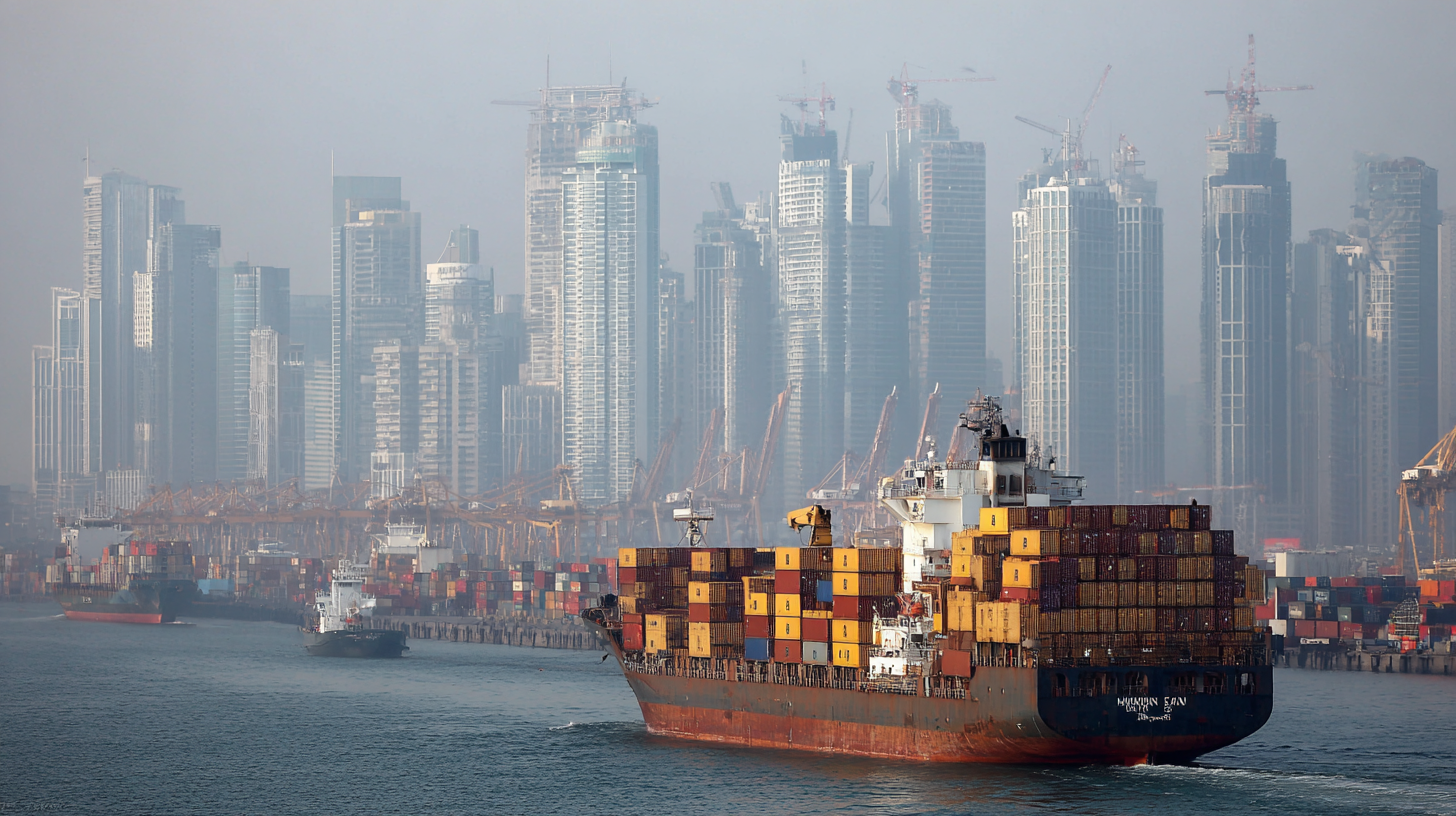
Duty-free in the South China Sea: China's radical answer to Western protectionism – Creative image: Xpert.Digital
Duty-free in the South China Sea: China's radical answer to Western protectionism
Hainan: China's gateway to the world and anchor of the Maritime Silk Road
For a long time, the tropical island province of Hainan in the far south of China was known primarily for one thing: its endless sandy beaches, luxurious resorts, and its reputation as the "Hawaii of the East." But while tourists still relax in Sanya Bay, one of the most ambitious economic and political transformations in recent history is taking place in the background. Beijing is transforming the island, which is larger than Belgium or Taiwan, into the world's largest free trade port. This project is far more than just another special economic zone; it is a geostrategic cornerstone of the "Maritime Silk Road" and China's answer to an increasingly fragmented global economy.
In an era of erecting trade barriers and decoupling supply chains, China is attempting the opposite on Hainan: a radical opening – albeit under strictly controlled laboratory conditions. Since its complete customs decoupling from the mainland at the end of 2025, the island has functioned as a kind of economic decompression chamber. Here, the Communist Party is testing how much market economy, data freedom, and tax competition are possible without losing political control.
Geographically, the situation could hardly be more volatile. Hainan lies like an unsinkable aircraft carrier in the center of the South China Sea, precisely at the crossroads where the Silk Road trade routes branch off towards Southeast Asia (ASEAN), India, and Africa. By eliminating tariffs, lowering taxes to levels that rival those of Singapore and Dubai, and easing visa requirements, Beijing aims to create a new focal point for global trade. The goal is twofold: on the one hand, Hainan is to attract foreign investment and expertise; on the other, it serves as a safety valve to circumvent Western sanctions and make Chinese companies more resilient.
But is Hainan truly the promised El Dorado for investors, or rather a golden trap in a geopolitical chess game? How does the complex system of "two lines" that separates the island from the rest of China actually work? And what risks does this experiment pose for European companies?
The following analysis examines the architecture of this gigantic customs laboratory, its role in the Belt and Road Initiative, and its strategic implications for the global economy.
Suitable for:
Bigger than Belgium, more important than Hong Kong? Hainan's role in the new global economy
With the complete customs separation of the island province of Hainan from mainland China and its transformation into a free trade port the size of a European country, China is deliberately setting a counterpoint in an increasingly protectionist world. Since December 2025, Hainan has operated as an independent customs zone, where most import duties have been eliminated and a particularly investor-friendly regime applies to trade, capital, and services. Hainan is thus the world's largest free trade port by area: at more than 35,000 square kilometers, the island is about fifty times the size of Singapore and slightly larger than Belgium.
This opening comes at a time when global trade flows are under pressure. The World Trade Organization forecasts a decline in global merchandise trade of approximately 0.2 percent in 2025, and even up to 1.5 percent in a worst-case scenario, driven by new tariffs, retaliatory tariffs, and political uncertainty. At the same time, analyses warn of a continued rise in protectionist measures, particularly in the G20 countries. While many economies are thus pursuing isolationist policies, China is demonstratively opening a large "window" with Hainan – albeit in a way that is closely linked to security and industrial policy interests.
Economically, Hainan is therefore less a classic free trade zone like Singapore or Dubai, but rather a large-scale institutional experiment within the Chinese system. Beijing is testing how far market opening, tax breaks, and deregulation can go without jeopardizing political and regulatory control. Hainan is simultaneously a laboratory, a showcase, and a potential lever in trade disputes.
From holiday paradise to strategic hub in the South China Sea
For a long time, Hainan was primarily known as a tropical holiday destination – a “Hawaii of China” with beaches, tourist resorts, and relatively weak industry. Economically, the province was considered a laggard, heavily dependent on domestic tourism and basic services. The decision to transform this particular region into a free trade port only becomes clear when considering the interplay of geography, security interests, and China’s long-term opening-up strategy.
Hainan lies in the heart of the South China Sea, at the crossroads of mainland China, the ASEAN states, and the Pacific shipping routes to India and the Middle East. It is estimated that between 60 and 70 percent of Chinese imports and exports pass through the sea lanes of this region. This makes the island not only a logistical hub but also a geostrategic platform in an increasingly contested maritime area.
Moreover, Hainan is building on a long tradition of controlled opening up. Since the late 1970s, China has used special economic zones like Shenzhen, Xiamen, and the Shanghai Free Trade Zone to test market-oriented reforms in defined areas and later scale up successful elements nationwide. In this sense, Hainan represents the most ambitious continuation of this logic to date: not just a city district or a port area, but an entire province is becoming a testing ground for new rules in trade, taxation, capital flows, and data flows.
There is also a domestic political motive: Promoting structurally weaker regions has been part of Beijing's stated agenda for years. By upgrading Hainan to a "premium free port" with special rights, the province is given the opportunity to transform its economic profile from tourism-heavy to a diversified service and manufacturing hub. The customs reform is therefore also an instrument of regional development policy.
Architecture of the customs regime: How the “first line” and “second line” work
The core of the new system is a three-tiered customs model, which can be roughly described as an "outer opening with an inner fence." Officially, it is referred to as "opening at the first line, control at the second line, and free flow within the island.".
The logic can be outlined as follows:
| level | function | Economic impact |
| First Line (Hainan – World) | Extensive duty exemption, simplified import | Low import costs, strong incentives for goods flow |
| Second line (Hainan – mainland) | Routine or targeted customs inspection | Protection of the internal market, prevention of arbitrage |
| Inland area (within Hainan) | Free movement of goods and people | Integration of the island economy, efficiency gains |
Along the "first line," between Hainan and the rest of the world, tariffs are being eliminated on a large portion of imported goods. Approximately 74 percent of all tariff lines—about 6,000 out of roughly 8,000 items—are exempt from import duties, import VAT, and excise taxes, provided the goods are destined for Hainan's own use. This percentage has been significantly increased from approximately 21 percent previously. The exemption primarily covers raw materials, production equipment, and numerous consumer goods.
On the "second line," meaning the transfer from Hainan to mainland China, the usual customs and tax rules largely apply. Goods that leave Hainan for other parts of the country without significant further processing are treated as if they were imported directly from abroad – including customs duties and taxes. This prevents Hainan from being misused as a mere transit point to circumvent national customs regulations.
The role of local value creation is therefore crucial. Products that undergo a value increase of at least 30 percent in Hainan—for example, through processing, assembly, or additional services—can then be imported to the mainland duty-free. This creates a strong incentive not only to conduct trade but also to relocate actual production and processing operations to the island. A frequently cited example is imported beef: If it is further processed, portioned, and incorporated into locally designed products in Hainan, it can enter the domestic market without incurring the original import duty on its entire value.
The practical implementation of this architecture relies on a combination of physical checkpoints and digital surveillance. At a number of designated "regulatory ports," goods transfers between Hainan and the mainland are handled using automated, data-driven procedures to keep processing times short while simultaneously curbing arbitrage and smuggling. In this way, Beijing is attempting to combine efficiency gains and security interests within a single system.
Economically, this structure results in a hybrid space: Hainan is highly liberalized externally, while internally the border to the vast domestic market remains deliberately "porous and controlled." This intermediate status can be highly attractive for companies with suitable business models.
Taxes, capital, internet: The complete package for investors
The customs regime alone does not explain Hainan's attractiveness. The tax and regulatory framework that Beijing has established around the free trade port has a decisive influence on investment decisions.
The key feature is the significantly reduced corporate tax rate. Companies in certain government-favored sectors in Hainan pay a rate of 15 percent, considerably less than the standard 25 percent rate in the rest of China. The list of these "promoted industries" includes tourism, modern services, high-tech sectors, and other strategically relevant areas. The plan is to extend this reduced rate to all companies in Hainan by 2035, with the exception of those on a negative list.
In addition, there are generous income tax breaks for skilled workers. Highly qualified and in-demand talent effectively only have to pay around 15 percent income tax on certain incomes, while the top national tax rate is 45 percent. In practice, this is implemented through a partial refund of the tax burden exceeding 15 percent. From 2025, the tax rates in Hainan for certain groups of people are to be permanently capped at 3, 10, and 15 percent – significantly lower than the regular progressive rates.
This tax package is complemented by a series of regulatory relaxations. Companies in Hainan can open special bank accounts through which capital movements are subject to less stringent mainland exchange controls. In selected sectors, particularly modern services, foreign companies will gain access to otherwise heavily regulated markets – from legal services to cloud computing. The education sector is also set to benefit: foreign universities will be permitted to establish independent campuses in Hainan without necessarily having to involve local partners.
The partial opening of the internet is of particular interest. Companies in Hainan can – under defined conditions – apply for significantly expanded access to the global network, going beyond the normal level behind the so-called "Great Firewall." For technology- and knowledge-intensive industries, this is an important location factor, as access to international platforms, data pools, and communication services can increase productivity and innovation.
In summary, this creates a configuration that, in terms of tax burden, access to capital, and regulation, places Hainan close to Hong Kong, Singapore, or Dubai – at least on paper. However, the comparison remains incomplete as long as issues of legal certainty, institutional stability, and political influence are not considered.
Industrial policy objective: For which industries Hainan should become a lever
The design of the customs and tax regime is clearly geared towards industrial policy. Hainan is not intended to become just any free port, but rather an instrument for strengthening specific sectors considered strategic in the Chinese development model.
Priority is initially given to high-quality services and tourism. Visa-free entry rules have already been introduced in recent years for a large number of countries to attract international visitors and business travelers. The combination of its tropical location, simplified entry procedures, and lower taxes is intended to position Hainan as a conference, health, and leisure center with an appeal extending beyond the domestic market.
Secondly, the policy targets modern, high-value-added manufacturing industries. Sectors such as pharmaceuticals, medical technology, food processing, aerospace maintenance, and electric vehicle components particularly benefit from the fact that intermediate products can be imported duty-free and, after sufficient local processing, sold duty-free within the single market. These sectors are typically characterized by complex value chains and are sensitive to tariff and tax differences.
Thirdly, China aims to establish Hainan as a hub for the digital economy and data-driven services. Numerous programs focus on e-commerce, fintech, cloud services, and other IT-intensive sectors. The comparatively more liberal network access and the testing of new regulatory formats for data flows are intended to position Hainan to address both export and domestic markets.
Fourth, the energy sector is playing an increasingly important role. Official statements and analyses highlight new energy technologies, hydrogen, offshore wind, and other green industries that can benefit from facilitated imports of sophisticated equipment and an international investment environment.
Economically, Hainan can thus be interpreted as a multi-layered platform: tourism and services provide foreign exchange and employment in the short term, while the industrial and technology sectors are expected to generate productivity gains and export potential in the medium term. The customs architecture with value-added thresholds links these two levels and compels companies to establish real processes locally, rather than simply engaging in tax and customs arbitrage.
Our China expertise in business development, sales and marketing

Our China expertise in business development, sales and marketing - Image: Xpert.Digital
Industry focus: B2B, digitalization (from AI to XR), mechanical engineering, logistics, renewable energies and industry
More about it here:
A topic hub with insights and expertise:
- Knowledge platform on the global and regional economy, innovation and industry-specific trends
- Collection of analyses, impulses and background information from our focus areas
- A place for expertise and information on current developments in business and technology
- Topic hub for companies that want to learn about markets, digitalization and industry innovations
A nail-biting wait before the Supreme Court: Will this ruling overturn the entire US economic policy?
Hainan in the context of global fragmentation: A release valve in bloc formation
Perhaps the most important aspect of the Hainan experiment lies not in the island's interior, but in the global context. As the trading order increasingly fragments along political fault lines—with new US tariffs on a wide range of imports, tightened controls on Chinese goods in Europe, and growing protectionism in many emerging economies—China is deliberately cultivating a narrative of "open access" and "high standards" in Hainan.
Beijing is positioning the free trade port as proof that the country is prepared to make extensive commitments regarding market access and regulatory transparency. Several analyses indicate that the construction of Hainan is also intended as a signal to members of the CPTPP trade agreement: China wants to demonstrate that it can, in principle, meet high standards for tariff reductions, opening up services, and investment protection.
Hainan's complete separation from the mainland customs territory allows for the geographical concentration of particularly far-reaching regulations without the need for immediate national implementation. This facilitates negotiations, as special solutions within the Hainan regime can be presented as pilot projects that can later be expanded or adapted depending on the political situation. Ideally, Hainan thus serves as a gateway for China's accession to highly standardized agreements; in a less favorable scenario, it remains a functional loophole through which foreign companies retain access to parts of the Chinese market despite geopolitical tensions.
At the same time, Hainan serves as a domestic “pressure relief valve”: In a world with potentially ever-tightening US and EU sanctions against Chinese companies and products, the free trade port offers a way to channel trade and investment flows through a formally different customs and regulatory framework. Companies from third countries that face political pressure to invest directly in mainland China can use Hainan as an “intermediate platform”—with the possibility of still achieving integration into the domestic market through value chains and service structures.
This presents a dilemma for Western policymakers. A hard line against China as a whole would also affect the potentially more liberal island, thus penalizing companies that operate under more transparent and market-oriented regulations. Conversely, a differentiated approach to Hainan could give Beijing leeway to partially circumvent sanctions and restrictions via the free trade port.
Suitable for:
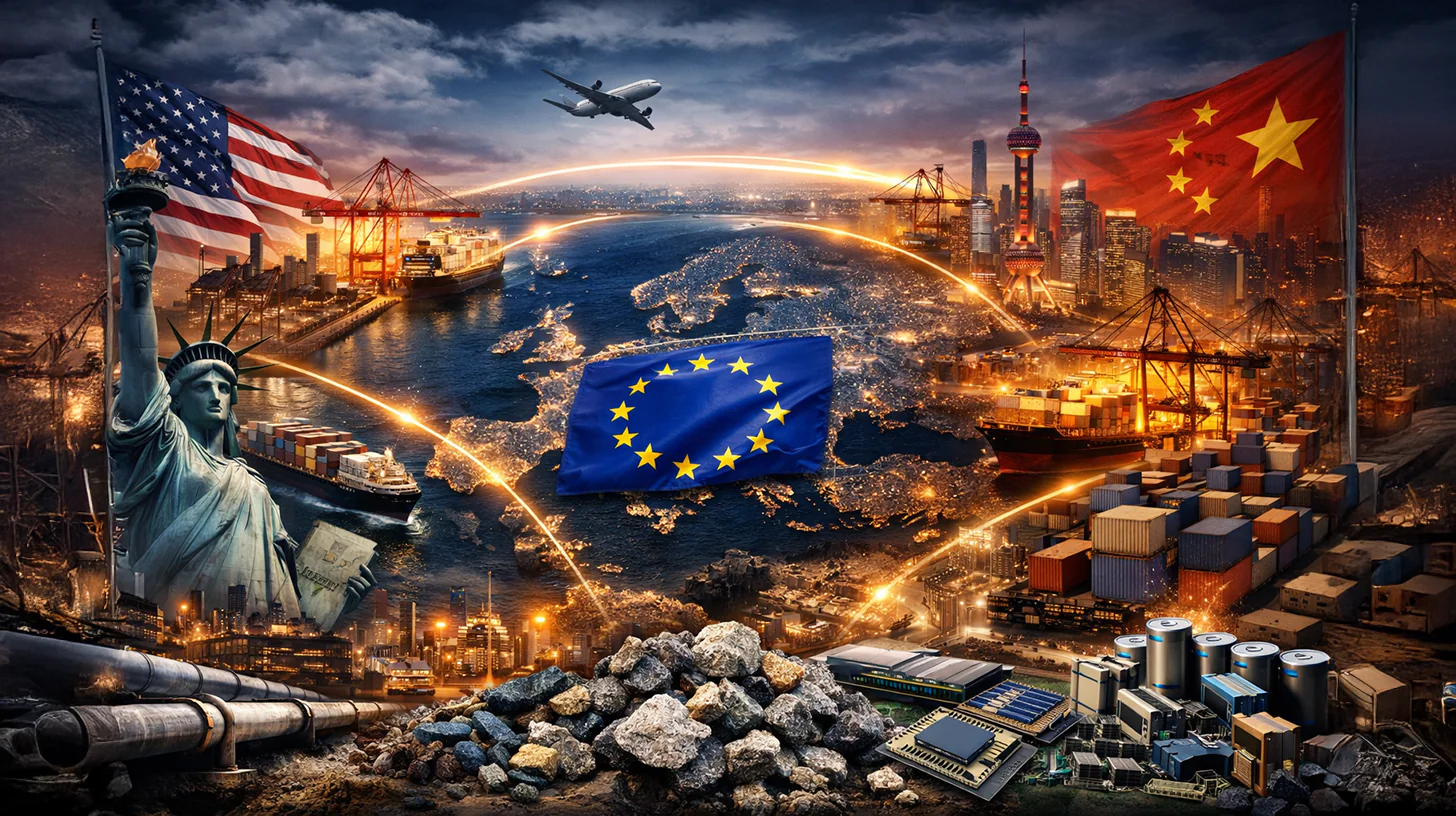
Shifting value chains: Impact on Europe and Germany
For European – and especially German – companies, the symbolic dimension of the project is less important than the question of whether Hainan offers realistic location advantages compared to other Asian hubs and how this affects existing value chains.
From a production economics perspective, Hainan is particularly interesting when companies pursue a combination of the following goals:
- Reduction of import costs for intermediate goods through zero tariffs and tax exemptions.
- Access to the Chinese domestic market without subjecting all operations to the full regime of the mainland.
- The possibility of relocating parts of the value creation to a zone with lower corporate and income taxes.
For manufacturers of complex products – for example, in mechanical engineering, medical technology, food processing, or renewable energy components – a production or finishing step in Hainan can reduce the overall tax burden and create flexibility in market access. If, for instance, highly specialized European components are delivered duty-free to Hainan, combined there with locally produced parts, and the final products reach the 30 percent value-added threshold, they could be exported to the mainland duty-free. At the same time, Hainan would offer a platform for exporting to other Asian markets.
However, competition for such investments is fierce. Singapore, Malaysia, Vietnam, and other ASEAN countries have invested heavily in recent years to cultivate their reputation as stable, predictable locations with attractive tax and investment regimes. For many European companies, the legal environment also remains crucial: property protection, contract enforceability, independent courts, and political predictability cannot be compensated for solely by low tax rates.
For Germany, the situation is further complicated by the fact that its own industry is increasingly becoming the target of geopolitically motivated protectionist measures. At the same time, there is growing pressure to "de-risk" supply chains and reduce dependence on China. In this context, Hainan could appear quite ambivalent: on the one hand, as an opportunity to restructure engagement with China under more favorable conditions, and on the other hand, as an attempt by Beijing to deepen economic ties despite political tensions.
For European policymakers, the question is therefore less whether Hainan will be successful, but rather how to deal with an arrangement that specifically targets Western companies without mitigating fundamental political differences.
Opportunities and risks for foreign investors: A sober assessment
From an investor's perspective, Hainan offers a remarkably attractive bundle of tax and customs benefits, but this is embedded in an institutional environment that differs significantly from traditional offshore or free trade hubs. A structured analysis reveals the key advantages and disadvantages:
| dimension | Potential / Advantage | Risk / Limitation |
| Steer | 15% corporate tax, effective 15% income tax for qualified talent | Uncertainty about the long-term stability of the special rules, possible political reversals |
| Customs and trade | 74% of customs tariff lines are duty-free; 30% value added threshold for duty-free access to the mainland | Complexity of proof, risk of strictly interpreted rules of origin and value chain |
| regulation | Opening up sensitive service sectors, simplified capital flows, expanded internet access | Overarching national security laws, intervention options of the central government |
| Location profile | Tropical location, proximity to ASEAN markets, growth potential in tourism and services | Insufficiently developed local industrial and supplier structure, setup costs and start-up risks |
| geopolitics | Potential special status in international relations, pilot function for "high standards" | Risk of being drawn into sanctions and countermeasure dynamics between China and the West |
The key insight is that while Hainan appears more market-oriented and open than the average Chinese environment, it nevertheless remains entirely subject to the political logic of the Communist Party. Unlike Hong Kong under British rule, it lacks a legally enshrined status under international law that guarantees certain economic freedoms in the long term. Hainan is a domestic political project whose parameters can, in principle, be unilaterally altered.
In practice, this means that investment decisions are always linked to the question of how robust business models are against regulatory changes, stricter security laws, or international sanctions. Companies that want to use Hainan as an export hub to Western markets must also examine to what extent products of "Hainan origin" are exempt from or covered by trade policy measures against China as a whole.
At the same time, the attractiveness of the overall conditions should not be underestimated. For companies primarily focused on the Asia-Pacific region, which are less affected by the political tensions between China and the West, Hainan can certainly be a rational component in a diversified Asia strategy – especially if existing hubs like Hong Kong lose their relative appeal.
Domestic political motives: Controlled opening and institutional experiments
Hainan is not only a foreign trade project, but also an instrument of domestic political control. On several levels, the free trade port supports key objectives of the Chinese leadership.
First, the experiment fits into the strategy of initially testing reforms in defined areas. Whether it's negative lists for foreign investment, new customs models, or data regulation – many things have been tested in special zones for years before a decision is made about possible nationwide expansion. Hainan offers a particularly large and diverse testing ground for this, encompassing both urban centers and rural areas.
Secondly, the free trade port allows for a form of openness that appears formally far-reaching but can, in practice, be closely monitored. The "customs fence" to the rest of the People's Republic creates a legal boundary along which financial and trade flows can be precisely measured and controlled. From the leadership's perspective, this results in an attractive balance between openness and control: International actors can operate in a more flexible environment without this automatically leading to an uncontrolled liberalization of the entire system.
Third, Hainan serves as a symbolic project. The goals formulated by the party leadership range from the "institutional maturity" of the free trade port by 2035 to "strong global influence" by mid-century. Such formulations are not merely technocratic planning targets, but also political messages to the domestic population and foreign observers: despite all international tensions, China wants to be perceived as a driving force of trade and globalization.
Fourth, Hainan aligns with the narratives of the "New Silk Road" and other major projects with which Beijing underscores its claim to shape global infrastructure and trade flows. The free trade port can be seen as a maritime complement to the land corridors, with a focus on Southeast Asia and the Indo-Pacific region.
This domestic political embeddedness is ambivalent for foreign actors. On the one hand, such political support increases the likelihood that the project will not fizzle out after a few years. On the other hand, the symbolic significance means that, in the event of conflict, Hainan could also become the scene of domestically motivated displays of power – for example, through targeted campaigns against specific industries or countries.
Path to 2035: Scenarios for the development of the free trade port
The Chinese leadership has defined a clear timeframe for Hainan. By the end of 2025, the free trade port's basic infrastructure is to be in place, including island-wide customs closures and centralized tax regulations. By 2035, "institutional maturity" is targeted, at which point the regime is to be considered largely stabilized, while by mid-century, a globally visible influence is envisioned.
Economically, three rough development scenarios can be outlined:
In an optimistic scenario, Hainan achieves a profile that clearly distinguishes itself from other Chinese regions and competing Asian hubs. Foreign and Chinese companies widely utilize the island as a bridge between international markets and the domestic market, particularly in knowledge- and service-intensive sectors. The institutional framework remains largely stable, and customs and tax regulations are reliably enforced. In this case, Hainan could indeed rise to the level of Singapore or Dubai as a globally recognized trade and service location.
In the baseline scenario, Hainan establishes itself as an important, but not dominant, hub within the Chinese economic landscape. Some investments are diverted from other regions, while others are newly acquired. The free trade port improves the efficiency of certain supply chains and serves as a useful option for companies seeking to flexibly manage their China footprint without necessarily establishing an entirely new hub. Internationally, Hainan remains more of a complement to, rather than a replacement for, established locations.
In a pessimistic scenario, the project becomes entangled in geopolitical and domestic tensions. Escalating trade conflicts, sanctions, and countermeasures make it more difficult to use Hainan as a bridge to Western markets. At the same time, a domestic policy shift toward greater centralization and security orientation could erode the openness of the rules. The island would then formally remain a free port, but would effectively lose its appeal, similar to what some observers have diagnosed for Hong Kong since the tightening of the national security law.
Which of these paths is more likely depends less on the technical details of the customs system than on the further development of Chinese politics and the global order. Hainan is an offering to the world – but one whose conditions can change not only economically, but also politically.
Strategic added value and lessons for Europe
Hainan is far more than just another dot on the map of global free trade and special economic zones. China is concentrating several strategic objectives in this free trade port the size of Belgium:
First, the project demonstrates that Beijing is prepared to go significantly further in a clearly defined area than currently seems possible or politically desirable at the national level. The combination of extensive customs exemptions, significantly reduced taxes, conditional capital and data liberalization, and sectoral opening to foreign service providers is unique in this scope within the Chinese context.
Secondly, Hainan provides a blueprint for a mode of opening up that aims to reconcile international demands with domestic control interests. The “first line” of liberalization and the “second line” of control allow for experimental market openings to be demonstrated externally, while selective control continues internally. For the global order, this means that China is expanding its role as a rules-setting actor without simply copying Western models.
Third, Beijing is attempting to establish a counter-narrative to the current wave of protectionism with Hainan. While many industrialized countries are raising tariffs and tightening investment controls, China is presenting a large-scale market opening – albeit on its own terms and with a clear expectation that international players will enter this arena.
This has several implications for Europe, and especially for export-oriented economies like Germany. Companies don't necessarily have to see Hainan as their primary production location, but they should include the free trade port as an option in their scenario planning and location strategy. Where value chains are being restructured anyway – for example, in the automotive, mechanical engineering, or chemical industries – Hainan can, under certain conditions, be a building block for both reducing costs and securing market access.
Politically, the question arises as to how differentiated or blanket the relationship with China should be in the future. An approach that treats special regimes like Hainan fundamentally differently from the rest of China presents both opportunities and risks. It allows for a more fine-tuned adjustment of incentives and sanctions, but at the same time opens up leeway for Beijing that is difficult to calculate.
From an economic perspective, Hainan is primarily a large-scale attempt to combine the advantages of open global trade with the logic of a tightly controlled, party-led system. Whether this experiment succeeds will be significant not only for China but also for the global economic order. For European decision-makers, the challenge lies in soberly weighing the attractiveness of the conditions offered there against the political and institutional risks – while simultaneously strengthening their own competitiveness so that a single free trade port in the South China Sea does not become the dictator of their own strategic options.
Your global marketing and business development partner
☑️ Our business language is English or German
☑️ NEW: Correspondence in your national language!

Konrad Wolfenstein
I would be happy to serve you and my team as a personal advisor.
You can contact me by filling out the contact form or simply call me on +49 7348 4088 965 (Munich) . My email address is: wolfenstein ∂ xpert.digital
I'm looking forward to our joint project.
☑️ SME support in strategy, consulting, planning and implementation
☑️ Creation or realignment of the digital strategy and digitalization
☑️ Expansion and optimization of international sales processes
☑️ Global & Digital B2B trading platforms
☑️ Pioneer Business Development / Marketing / PR / Trade Fairs
🎯🎯🎯 Benefit from Xpert.Digital's extensive, five-fold expertise in a comprehensive service package | BD, R&D, XR, PR & Digital Visibility Optimization

Benefit from Xpert.Digital's extensive, fivefold expertise in a comprehensive service package | R&D, XR, PR & Digital Visibility Optimization - Image: Xpert.Digital
Xpert.Digital has in-depth knowledge of various industries. This allows us to develop tailor-made strategies that are tailored precisely to the requirements and challenges of your specific market segment. By continually analyzing market trends and following industry developments, we can act with foresight and offer innovative solutions. Through the combination of experience and knowledge, we generate added value and give our customers a decisive competitive advantage.
More about it here:










