
Urban areas and the future of inner cities: Lohr's Cristal transport system as a solution for sustainable mobility and urban development
Xpert pre-release

Available in 27 languages 📢
Prefer Xpert.Digital on GoogleⓘPublished on: September 19, 2025 / Updated on: September 19, 2025 – Author: Konrad Wolfenstein
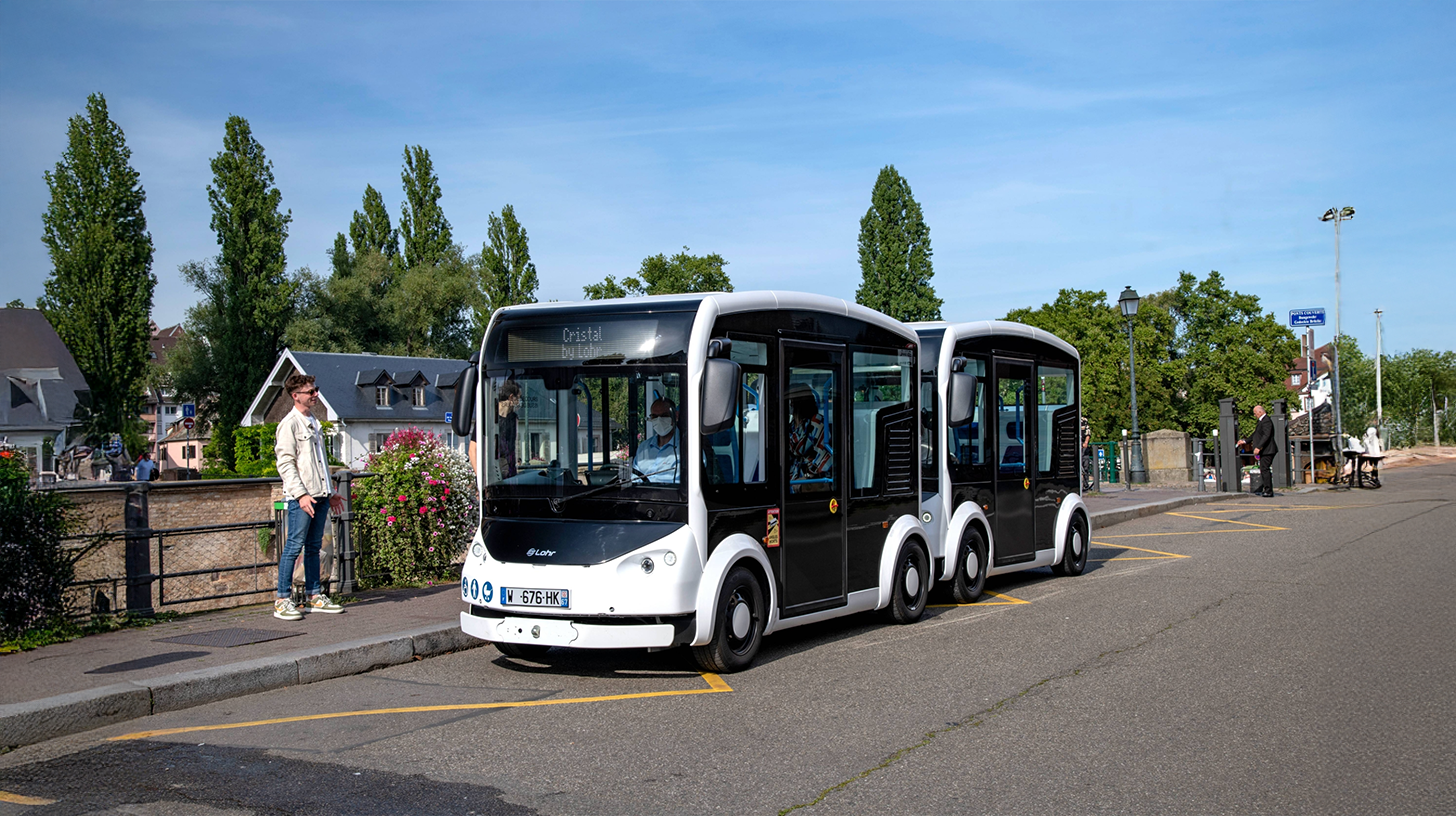
Urban areas and the future of inner cities: Lohr's Cristal transport system as a solution for sustainable mobility and urban development – Image: Lohr Group
People, packages, zero emissions: Why this French modular vehicle aims to revolutionize urban transport
The challenges of modern inner cities
German inner cities face a multitude of complex challenges that threaten their attractiveness and viability. Central to this is the problem of land sealing, which not only impairs natural soil functions but also contributes to the formation of urban heat islands. In addition, changing consumer behavior and the rise of online commerce are leading to the progressive desolation of city centers. With its innovative Cristal transport system, the French company Lohr Industrie has developed a solution that could revolutionize both passenger and freight transport and contribute to the revitalization of urban spaces.
Suitable for:

The problem of land sealing in Germany
Current situation and development
At 5.1 percent of its land area, Germany has the highest proportion of sealed surfaces in Europe, significantly above the European average of 2.3 percent. Every day, over 50 hectares of land are used for new residential and transport infrastructure in Germany, which is equivalent to the size of a city the size of Hanover per year. Over the past three decades, the amount of sealed surfaces in Germany has increased by 4,943 square kilometers.
A study by the non-profit research network CORRECTIV shows that, despite official commitments to climate adaptation, soil sealing is increasing in all German cities examined. In Leipzig, for example, eight square kilometers of green space were lost between 2018 and 2024, despite the city's goal of planting 1,000 new trees annually. Hamburg even recorded 14 square kilometers of newly sealed surfaces during the same period.
Impact on the urban climate
Intensive surface sealing significantly exacerbates the urban heat island effect. Materials like asphalt and concrete store solar heat during the day and release it only slowly at night, leading to a continuous rise in temperature. The German Weather Service (DWD) is already recording temperature differences of up to 10 Kelvin between densely built-up cities and their surrounding areas; in smaller towns, the difference is still as high as 4 Kelvin.
These urban heat islands not only exacerbate the effects of climate change but also significantly impair the quality of life of city dwellers. Vulnerable populations, such as the elderly and children, are particularly vulnerable to heat-related health problems. Furthermore, energy consumption for air conditioning increases, leading to higher costs and additional greenhouse gas emissions.
Surface water and hydrological problems
Sealing soils with artificial building materials dramatically limits natural soil functions. Sealed surfaces cannot absorb rainwater, leading to increased surface runoff and flooding during heavy rainfall events. This problem is further exacerbated by climate change and the increasing frequency of extreme weather events.
Urbanization is changing the entire water cycle, generating increased precipitation above and downwind of cities. At the same time, it is leading to an intensification of surface runoff. The lack of evaporation due to a lack of vegetation also exacerbates the dry island effect in cities, which is characterized by lower humidity and reduced wind speeds.
The urban heat island phenomenon and its consequences
Formation and intensity of urban heat islands
The urban heat island effect describes the phenomenon of urban areas experiencing higher temperatures than surrounding rural areas. Studies show that heat islands increase daytime temperatures in urban areas of the United States by approximately 1 to 7 degrees Fahrenheit and nighttime temperatures by 2 to 5 degrees Fahrenheit. In highly developed urban areas, midday temperatures can be as much as 15 to 20 degrees Fahrenheit higher than in surrounding vegetated areas.
The intensity of the urban heat island effect depends largely on the size of a city, its building density, building height, and the degree of sealing. Even within a city, there are significant temperature differences. Districts with more heat-absorbing buildings and asphalt surfaces, as well as fewer cooling green spaces, experience the highest temperatures.
Suitable for:

Health and socioeconomic impacts
Extreme heat is the deadliest natural hazard in the United States, with children and adults over 65 among the most vulnerable populations. A recent study estimates that heat islands in 93 European cities cause approximately 6,700 premature deaths per year, representing four percent of all summer deaths.
The impacts of urban heat islands do not affect all population groups equally. Marginalized and disadvantaged groups, such as low-income, unemployed, and homeless people, as well as those with chronic illnesses, are disproportionately affected. These social inequalities exacerbate health risks and create additional challenges for urban planning.
Energy consumption and ecological footprint
Heat islands increase energy consumption and associated emissions by increasing the demand for air conditioning. A study shows that every 1-degree Celsius temperature increase increases energy demand by 0.5 to 5 percent, depending on the local air conditioning level. Peak electricity consumption and highest heat island intensity tend to be concentrated during the same periods, often on hot summer afternoons.
This increased energy demand can lead to energy system overloads during extreme heat events and contributes to the exacerbation of cities' ecological footprints. Furthermore, heat islands worsen air quality by trapping pollutants, leading to longer-term health risks.
The crisis of German city centers
Structural change and vacancy
German city centers are undergoing profound structural change, accelerated by various factors. The coronavirus pandemic and growing online commerce have forced many businesses to close, leading to increasing desertification of city centers. Many municipalities in Germany are already actively working on redesigning their city centers and central shopping streets to counteract this trend.
Researchers have identified three complex problem areas that are crucial for the development of city centers: first, multiple vacancies of retail space; second, vacant department stores; and third, competition from e-commerce. These challenges require integrated urban planning approaches that go beyond traditional retail concepts.
European revitalization approaches
Several European cities are developing innovative approaches to revitalizing their historic city centers. The HUB-IN project is working in eight European cities to transform and regenerate historic urban areas while preserving their unique cultural and social identities and the environment.
The objectives of these projects include reversing trends of neglect and deterioration of historical heritage, creating new sustainable opportunities for local traditional businesses, developing new creative skills and jobs, and stimulating new ideas and solutions by combining tradition and innovation.
The NiCE project works to revitalize declining urban centers by promoting more circular and sustainable local trade and consumption. The partners are developing innovative urban planning approaches focused on creating multifunctional resource centers and leveraging empty spaces for circular offerings.
The Cristal transport system: Innovation for urban mobility
Technical basics and properties
The Cristal system from the French company Lohr Industrie represents a revolutionary solution for urban mobility challenges. A 100% electric, modular, and connected mobility solution, Cristal was specifically designed to offer operators flexible public transport options. The system is based on autonomous electric shuttles that can also be linked together to form larger units.
The technical specifications of the Cristal system are impressive: The automated mechanical coupling system enables single-lane operation and tight turning circles, while safety is ensured by the absence of gaps between the shuttle modules. The battery's range on a full charge is sufficient for a full day of use, with a total range of 120 to 170 kilometers at a top speed of 50 kilometers per hour.
The fast charging time is particularly noteworthy: The system achieves a 100% charge in 2.5 hours and a 50% charge in just one hour. The 20% slope climbing capability allows for use even in topographically challenging urban environments. An automatic electric ramp also ensures accessibility for people with limited mobility.
Modular design and adaptability
A key advantage of the Cristal system is its modular design. The system can be continuously adapted to passenger volumes by forming trains with one to four vehicles. This flexibility enables optimal use of resources and economical operation even with fluctuating demand.
The modules can be connected and disconnected in less than two minutes, allowing for rapid adaptation to changing operating requirements. This modularity distinguishes the Cristal system from conventional bus systems and offers operators unprecedented flexibility in operational management.
The Lohr vehicle range includes both driver-driven shuttles (Cristal) and autonomous shuttles (iCristal), which can be operated with or without a driver. This diversity is tailored to municipal mobility needs and can be used for new wholly-owned Cristal lines or integrated into the existing network for multiple use in scheduled or on-demand service.
Freight transport and replenishment strategies
Urban freight logistics as a challenge
Urban freight transport plays a crucial role in the urban economy, yet is often viewed as a nuisance rather than an essential service. Although the delivery of goods is vital to residents and industries in urban areas, governments have done relatively little to facilitate essential goods flows in urban areas and reduce the negative impacts of urban freight transport on the communities served.
This situation has led to increasing problems related to goods delivery, including competition with passenger transport for access to road infrastructure and parking and delivery facilities. Urban freight transport is inherently interdisciplinary and seeks to reconcile different areas of study and analysis.
Freight movements are a function of economic activities and their spatial organization, which fall into the realms of urban geography and economics. They are also a function of consumer demand and are managed by competing transport and logistics service providers who are constantly seeking new efficiencies.
Innovative replenishment concepts
The concept of replenishment with mobile depots offers innovative solutions to urban logistics challenges. In numerous practical vehicle routing applications, larger vehicles are used as mobile depots to support a fleet of smaller vehicles performing specific tasks. Mobile depots offer the possibility of keeping task vehicles operational by supplying specific resources while on the move.
In two-tiered distribution systems, for example, small task vehicles are used to navigate narrow streets and deliver or collect goods, while larger vehicles serve as mobile depots to restock goods for delivery or to receive collected goods on the outskirts of town. Access restrictions may also be imposed by emissions regulations, making some areas accessible only to environmentally friendly vehicles such as battery-powered electric vehicles.
Especially when the corresponding refueling infrastructure is sparse, mobile refueling stations appear to be an interesting alternative. The vehicle routing problem with time slots and mobile depots is characterized by fleets of task vehicles and support vehicles, where the support vehicles can serve as mobile depots to restore either the loading or fuel capacity of the task vehicles.
Advantages for historic city centers
The Cristal system offers particular advantages for accessing historic city centers. Its compact design and narrow vehicle body allow it to navigate even the narrow streets of older neighborhoods. The low floor allows people to board and alight easily, which is particularly advantageous in historic areas with limited infrastructure.
The system's ability to handle both passenger and freight transport opens up new possibilities for replenishment, even during daytime. This is particularly important for supplying shops and services in pedestrian zones or traffic-calmed areas that are difficult to access for conventional delivery vehicles.
The electric drive technology and quiet operation make the system ideal for use in sensitive historic areas where noise and air pollution must be minimized. Furthermore, the modular design can switch between passenger and freight transport depending on the time of day and transport needs, enabling optimal use of the infrastructure.
Fully automated logistics centers as a starting point
Development of warehouse automation
The logistics industry is experiencing a revolution thanks to fully automated warehouse centers, which can serve as a starting point for innovative urban transportation systems. A fully automated warehouse offers many advantages for fast-moving, high-volume warehouses, with automation being particularly critical for building supply chain resilience. In 2022, 51 percent of companies reported plans to increase automation in response to labor shortages.
The "dark warehouse" concept represents fully automated and autonomous warehouses that rely on robots, automated guidance machines, autonomous mobile robots, and automated storage and retrieval systems for everything from receiving goods to order fulfillment. A central warehouse management system monitors operations and manages logistics to keep everything running smoothly and precisely.
Practical implementation examples
Germany already has several examples of fully automated logistics centers. DHL Supply Chain operates its largest fully automated, robot-assisted fulfillment center in Staufenberg, Lower Saxony, using the AutoStore system. The system covers 6,000 square meters and is one of the largest fully automated warehouse and order processing systems in Germany.
The AutoStore system enables complete inventory monitoring and control, ensuring high efficiency in storage and picking. This enables faster and more reliable processing and shipping of customer orders. The interaction of the flexible and modularly expandable robotics solution with local employees reduces lead times for individual customer orders.
REWE has created another example of advanced warehouse automation in Magdeburg. The 49,500-square-meter logistics center, developed in partnership with Swisslog, features advanced automation technology capable of processing up to 286,000 parcels daily. The distribution center exemplifies REWE's commitment to improving the efficiency, reliability, and sustainability of its supply chain.
Integration into urban transport systems
The combination of fully automated logistics centers with innovative urban transport systems like Cristal opens up entirely new possibilities for urban logistics. This integration enables a seamless connection between highly efficient storage and flexible urban distribution. The modular design of the Cristal system can be optimally synchronized with the outputs of automated warehouse systems.
Automation in warehouse logistics ranges from simple transport of empty pallets to fully automated material flow. These systems can be perfectly combined with the Cristal transport system to create a seamless automated chain from the warehouse to the end customer in the city center.
Modern warehouse management systems with integrated pick-by-light solutions can significantly increase picking accuracy and minimize picking errors. This precision is crucial for the efficiency of urban delivery systems, where any error can lead to delays and additional trips.
Your intralogistics experts

Advice, planning and implementation of complete solutions for high -bay warehouse and automated storage systems - Image: Xpert.digital
More about it here:
Quiet, electric, efficient – this is how Cristal is changing city centers
Employment effects and job development
Transformation instead of job destruction
Contrary to widespread fears that automation will destroy jobs, fully automated logistics centers and innovative transport systems are creating new employment opportunities in areas where none previously existed. Digitalization and automation are changing the way people work, with the human factor becoming less important in the practical implementation of simple tasks but remaining essential for strategy and control.
Robots are already helping with work: Sorting robots, picking robots, shelf-loading robots, autonomous forklifts, and autonomous drones are no longer a vision of the future in modern logistics centers and warehouses, but rather everyday reality. These so-called assisted picking robots support their human colleagues, without whom, for example, the shipping volumes of online retail would be impossible to handle.
New qualification profiles and career paths
Automation is creating new skill profiles and career paths in the logistics industry. Technological advances, for example in the field of bionics, are enabling exoskeletons that can relieve the strain on warehouse workers and protect their health. Extended reality with smart glasses displays useful information directly in the field of vision and makes it easier for employees to find the right location for products.
Companies like WITRON offer diverse career opportunities in automated logistics, from design and assembly to project management for fully automated logistics centers. These new jobs require higher qualifications and offer better working conditions than traditional warehousing and transportation jobs.
The development of automated systems also creates jobs in research and development, plant engineering, systems integration, and technical support. These positions often pay higher wages and offer better development opportunities than the manual jobs they replace.
Regional development impulse
Fully automated logistics centers act as regional development stimuli and create jobs not only directly in the facility but also in the surrounding service sectors. The installation and maintenance of complex automated systems requires specialized service providers and technicians on site.
The establishment of such centers can contribute to the revitalization of structurally weak areas and stimulate new economic activities. The connection with innovative urban transport systems such as Cristal amplifies these effects by creating an efficient connection between the logistics centers and urban centers.
In addition, new business models and services are emerging around automated logistics and transport systems. These range from data analysis and optimization to predictive maintenance and specialized financing and insurance services.
Suitable for:

Sustainability and environmental benefits
Electromobility and emission reduction
The Cristal system contributes significantly to reducing urban emissions because it is designed as a 100% electric solution. In the context of freight transport, which accounts for eight percent of global greenhouse gas emissions, the electrification of urban transport systems represents a crucial step toward reducing emissions. While almost three-quarters of global freight is transported by ocean-going vessels, road vehicles such as trucks and vans account for the majority of freight emissions.
Road transport can emit over 100 times more carbon dioxide than ships to transport the same amount of cargo over the same distance. The Cristal system can make a disproportionate contribution to emissions reduction by electrifying the last kilometer of the supply chain, as urban freight transport is particularly emissions-intensive.
Reduction of noise pollution
In addition to reducing emissions, the electric Cristal system contributes significantly to noise reduction in urban areas. Traditional diesel vehicles for freight transport cause considerable noise pollution, especially in densely populated inner cities. The quiet operation of electric drives also enables nighttime deliveries without disturbing residents, which can increase the efficiency of urban freight transport.
Noise reduction is particularly important for quality of life in historic city centers, where residential and commercial functions are often located close together. The Cristal system can contribute to creating quieter, more pleasant urban spaces, thus increasing the attractiveness of city centers as places to live and stay.
Space efficiency and infrastructure optimization
The modular design of the Cristal system enables optimal use of existing infrastructure. The system's adaptability allows transport capacity to be scaled as needed, resulting in better vehicle utilization and thus a reduction in the number of trips required. This increased efficiency contributes to reducing traffic volumes and thus relieving the burden on urban infrastructure.
The compact design and the ability to utilize existing infrastructure reduces the need for additional roads and parking areas. This is particularly important for combating land sealing, as fewer new traffic areas are required. Instead, existing areas can be used more efficiently and, in some cases, even desealed.
Technological integration and smart city concepts
Connected mobility solutions
The Cristal system is designed as a connected mobility solution that can be seamlessly integrated into smart city concepts. As a mobility-as-a-service solution, it complements collective mass transit and can be operated intermodally. This connectivity enables optimal coordination of different modes of transport and contributes to increasing the efficiency of the entire urban mobility system.
The integration of different modes of mobility into a coherent system is crucial for the future of urban mobility. The Cristal system can act as a link between different modes of transport, connecting, for example, train stations, bus stations, and parking lots on the outskirts of cities with city centers.
Data collection and analysis
Modern automated transport systems like Cristal generate extensive data on traffic flows, usage patterns, and system performance. This data can be used for continuous system optimization and urban transport planning. Predictive analytics can help predict maintenance needs and minimize downtime.
Data integration also enables better coordination with other urban systems such as traffic signal control, parking management, and emergency management. This comprehensive networking contributes to the creation of intelligent, responsive urban systems.
Autonomous technologies and future prospects
With the continued development of autonomous vehicle technologies, the Cristal system with its iCristal variants already offers a glimpse into the future of fully autonomous urban transportation systems. This development can contribute to further increasing efficiency and reducing costs.
Autonomous systems enable more precise control and coordination of traffic flow, which can contribute to improved capacity utilization and reduced congestion. At the same time, new possibilities for flexible, demand-oriented transport services are opening up.
Economic aspects and financing models
Investment costs and amortization
Implementing the Cristal system requires significant initial investments in vehicles and charging infrastructure. However, experience with similar electric transportation systems shows that these investments can be recouped through lower operating costs over the lifetime of the vehicles. Electric vehicles typically have lower maintenance costs than diesel vehicles because they have fewer moving parts and components subject to wear.
The modular design of the Cristal system enables gradual implementation and scaling, reducing initial investment and minimizing financial risk. Operators can start with smaller fleets and expand them based on demand and available resources.
Public-private partnerships
Financing innovative urban transportation systems often requires collaboration between public and private actors. Public-private partnerships can leverage the advantages of both sectors, with the public sector providing strategic objectives and regulatory frameworks, while the private sector contributes technological expertise and efficiency.
Such partnerships can also enable risk sharing and create innovative financing models such as performance-based compensation or leasing arrangements. This flexibility is particularly important for municipalities with limited financial resources.
External effects and social benefits
The economic evaluation of the Cristal system must also consider external effects that are not directly reflected in operating costs. These include improved air quality, reduced noise pollution, lower healthcare costs, and improved quality of life in the areas served.
These societal benefits can have significant economic value, although they are difficult to quantify. Studies show that the health benefits of reduced air pollution alone can often justify the investment costs of clean transportation systems.
Regulatory framework and approval procedures
Approval requirements for innovative vehicles
The introduction of the Cristal system requires the adaptation of existing regulatory frameworks. Innovative vehicle concepts such as modular, detachable electric vehicles often do not fall under existing vehicle categories and require special approval procedures. The development of suitable approval standards is crucial for the widespread introduction of such systems.
Regulatory sandboxes, where innovative technologies can be tested under controlled conditions, have proven to be useful tools for developing appropriate regulations. These approaches allow for practical experience to be gained before final regulatory frameworks are established.
Traffic regulations
The integration of the Cristal system into existing traffic systems may require adjustments to road traffic regulations. Issues such as priority rules for coupled vehicles, speed limits, and the use of specific lanes must be clarified.
The system's ability to accommodate both passenger and freight transport may also create new categories of transport services that require special regulatory treatment. The development of flexible, adaptive regulations is necessary to encourage innovation while ensuring safety.
Environmental and planning law
Implementing the Cristal system can have a positive impact on environmental permits and planning procedures. As a zero-emission system, it can contribute to meeting air quality standards and climate protection targets. This can be beneficial in the approval of development projects and the designation of environmental zones.
However, integration into urban planning requires careful coordination between transportation, environmental, and urban planning experts. Incorporating the system into land-use plans and development plans can ensure its optimal integration into urban development.
Pilot projects and first implementations
Testing in different urban contexts
The successful implementation of the Cristal system requires comprehensive pilot projects in various urban contexts. Different city types, from historic city centers to modern business districts, place different demands on urban transportation systems. Pilot projects can provide valuable insights into the system's adaptability and performance in different environments.
The trials should cover various operating modes, from pure passenger transport to mixed-use and specialized freight transport applications. This diversity is necessary to understand and demonstrate the full potential of the modular system.
Measurable success criteria
Clear, measurable success criteria must be defined for the evaluation of pilot projects. These should include both quantitative metrics such as passenger numbers, punctuality, and energy consumption, as well as qualitative aspects such as user satisfaction and social acceptance.
The measurement of success should also consider external effects, such as impacts on air quality, noise pollution, and urban quality of life. Long-term studies can help document the sustainable benefits of the system and serve as a basis for further implementation.
Scaling and replication
The lessons learned from successful pilot projects must be systematically documented and prepared for scaling to larger areas and replication in other cities. The development of standardized implementation procedures can reduce implementation costs and increase the likelihood of success.
Creating networks between cities implementing similar systems can promote the exchange of experiences and best practices. Such networks can also assist with joint procurement and the development of standardized solutions.
Cristal System: Rethinking Roads — Mobility of the Future
Technological advancements
The future of the Cristal system will be heavily influenced by further technological developments. Advances in battery technology can increase range and further reduce charging times. Developments in artificial intelligence and machine learning can improve the efficiency of autonomous systems and open up new application possibilities.
The integration of vehicle-to-grid technologies could make the Cristal system an active component of smart grids. The vehicle batteries could act as decentralized energy storage units and contribute to grid stabilization, particularly when integrating renewable energy.
Expansion into new application areas
The modular design of the Cristal system opens up opportunities for expansion into new application areas. Specialized modules could be developed for the transport of specific types of goods, such as food, medical products, or e-commerce packages. The development of temperature-controlled modules could open up new markets in the pharmaceutical and food industries.
Integration with other modes of transport could be further deepened to create seamless intermodal transport chains. Connections to ports, airports, and logistics centers could make the system an integral part of global supply chains.
Social transformation
The widespread adoption of systems like Cristal could lead to a fundamental transformation of urban mobility and urban development. Reducing the need for private vehicles could create space for new urban uses and contribute to the desealing of parking spaces.
Improved accessibility to historic city centers could contribute to their renaissance as vibrant, multifunctional urban centers. The combination of improved mobility and reduced environmental impact could enable new forms of urban living and working.
This development could also lead to the emergence of new business models and services. From mobility-as-a-service platforms to specialized logistics service providers, new economic ecosystems based on innovative transport systems could emerge.
The Cristal transport system from Lohr Industrie represents a promising approach to solving the complex challenges of urban mobility and urban development. Combining electric drive technology, modular design, and the ability to transport both people and goods, it offers an innovative solution for revitalizing inner cities and combating land sealing and urban heat islands. Combining it with fully automated logistics centers creates new opportunities for efficient urban supply chains and can contribute to the creation of sustainable, livable cities. However, the success of this technology will depend on careful planning and implementation in collaboration between public and private stakeholders, as well as on the development of appropriate regulatory frameworks and the social acceptance of innovative mobility solutions.
Advice - planning - implementation

Markus Becker
I would be happy to serve as your personal advisor.
Head of Business Development
Advice - planning - implementation
Konrad Wolfenstein
I would be happy to serve as your personal advisor.
contact me under Wolfenstein ∂ Xpert.digital
call me under +49 89 674 804 (Munich)










